What If They Look Closer?

Track the fear of being found out through related tarot cards and reading insights from sessions shaped by visibility.

Imposter Exposure Fear

What does this feel like?

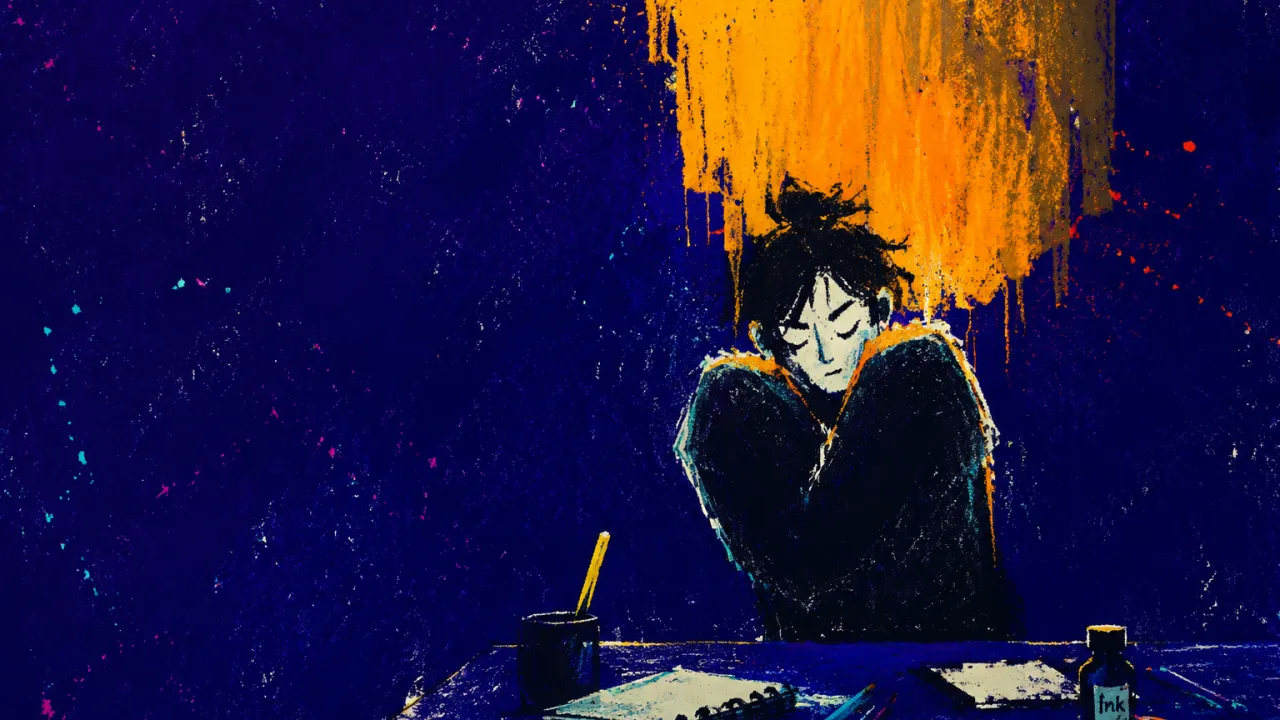
Imposter Exposure Fear — you can be sitting in a meeting, seminar, studio, or group chat with your face arranged into calm, but your stomach has already gone tight, as if the room has started checking every word before you say it. You know how to sound fluent enough; you can nod at the right time, reference the right thing, wear the role well enough to pass at a glance, and still feel a hot little pulse under your ribs asking, what if they look closer? The fear is not just that you will make a mistake. It is that a mistake will pull the whole surface open, that one pause, one awkward answer, one follow-up question, one blank moment will make everyone see the private unfinishedness you have been trying to keep behind the polished version of yourself. Your body starts behaving like it is under lights: jaw held still, shoulders lifted, laugh slightly managed, hands busy with a pen or phone so they do not have to admit how tense they are. Even praise can feel weirdly exposing, because being noticed means the table gets brighter and the next performance has to hold. Inside, you may keep rehearsing credentials, receipts, reasons you are allowed to be here, while another part of you refuses to feel convinced. It is the fear of being seen before you feel internally verified, much like The Magician with every tool laid out on the table, wand, cup, sword, and pentacle visible, while the body behind them has to look like it knows exactly what to do.

Why you're feeling this?

Imposter Exposure Fear makes sense when being seen feels faster than feeling settled inside yourself. You are not wrong for tightening around visibility. Some part of you is trying to protect the space between what you can already do and what has not yet become easy to inhabit.

Imposter Exposure Fear in Tarot Cards

That tight stomach and managed face inside Imposter Exposure Fear give the feeling a clear outline: visibility arrives before inner certainty. This is a universal emotional experience, especially when competence has to be displayed while the body still feels unfinished. Tarot can mirror that pressure without turning it into a verdict. Here are the Tarot Cards that tend to appear around Imposter Exposure Fear.

The Magician Reversed
The Magician stands front-facing with props laid out in full view, as if the entire scene could be inspected. In its reversed current, the controlled gaze and ritualized posture can feel like a stage pose that must keep working because the tools are visible and the audience is imagined. In personal growth, this maps to the sharp feeling that progress has made you more exposed rather than more secure. You may read every achievement as something that has to be proven again, and the card gives that fear a clear image: mastery arranged on the table while the body quietly braces for scrutiny.
The High Priestess Reversed
The Priestess sits at the entrance of the sanctuary, framed by pillars that separate the outer world from a protected interior. The scroll suggests mastery, yet it is partially hidden, making knowledge feel both possessed and withheld. In academic settings, that threshold can become the fear that your competence is only a surface arrangement. You may look like you belong in the room while waiting for a question, grade, supervisor comment, or defense moment to expose the gap you think everyone else will see. Imposter Exposure Fear names that tense anticipation of being found out. The card ties it to the guarded threshold: the part of you seeking entry into knowledge while fearing the gate will reveal you were never fully admitted.
The Emperor Reversed
The crown, raised throne, and controlled gaze announce authority, but armor beneath the robe keeps the body prepared for impact. The Emperor appears fully installed in the role, yet the image still carries a private layer of defense under the public surface. Imposter Exposure Fear enters career questions through that hidden armor. A promotion, senior meeting, or visible project can make you perform solidity while privately scanning for the moment your competence might be questioned. The card does not treat this fear as proof that you are false. It shows the gap between external role recognition and internal safety, giving shape to the fear that the crown is visible before the body has stopped bracing.
The Hierophant Reversed
The initiation scene places the two learners with their backs exposed before a seated figure whose gaze and gesture organize the room. Their faces are hidden, so the image gives more weight to being seen than to seeing back. Imposter Exposure Fear emerges when the academic space feels like a ceremony of recognition you might not pass. You may be attending the seminar, writing the essay, or entering grad school, yet a part of you waits for the authority in the room to notice the uncertainty under your robe and question your place there.
The Lovers Reversed
The two figures are completely uncovered beneath a brilliant sun and an observing angel, with the man’s face turned in visible hesitation. The scene offers no desk, robe, wall, or role to hide behind; the body itself becomes the surface that can be seen. In academic settings, that exposure translates into the fear that a draft, presentation, or advisor meeting will reveal the gap you have been trying to manage. Imposter Exposure Fear is not simple nervousness; it is the feeling that your work will strip away the competent surface and let everyone see the unfinished, uncertain person underneath.
The Chariot Reversed
The laurel crown, armor, and wand place a young figure in a role of visible competence, while the shoulder moons carry split expressions beside a composed face. The city behind him keeps the sense of public visibility in the frame. Imposter Exposure Fear in academic settings is the dread that the polished seminar voice, supervisor meeting, or high grade will not protect you from being found unsure. The Chariot shows the cost of holding a commander shape while part of you is still negotiating whether you belong in the room.
Strength Reversed
The white robe, crown-like flowers, and hovering loop frame the woman as composed and elevated, while the red lion keeps something raw directly under her hands. The image pairs a polished figure with a visible force that has not been made polite. In personal growth, that combination can feel like exposure waiting to happen. The more capable you appear, the more the unedited part of you can feel like evidence that you do not really belong at the level you are entering. Imposter Exposure Fear names the pressure of becoming visible before you feel internally seamless. The card shows that your raw force is not proof against your growth; it is part of the material being integrated.
The Hermit Reversed
The Hermit's hood hides the face while the lantern exposes a precise point of light. The body stays rigid and composed on the ridge, as if the same light that guides could also reveal too much. His gaze remains lowered, not outwardly offered, which makes the visibility of the lamp feel controlled and vulnerable at once. Imposter Exposure Fear grows from that split between inner illumination and hidden self-presentation. In personal growth, the more you develop insight, skill, or self-awareness, the more frightening it can feel to be seen as someone who should already know, already lead, or already embody the lesson perfectly. The card does not accuse you of being false. It shows the pressure created when real growth becomes tangled with the fear of being evaluated under your own light, especially when the parts still unfinished feel more visible to you than the wisdom you have actually earned.
Justice Reversed
The frontal gaze and balanced scale make the scene feel like a review of evidence, while the curtain behind the figure keeps the final reading out of sight. The sword is upright but restrained, which makes its possible use feel more charged than dramatic. Imposter Exposure Fear forms when achievement does not settle the nervous system, because success feels like it has opened the door to closer inspection. In personal growth, the image names the sensation of waiting for your progress to be weighed and found less solid than it looks from the outside.
Death Reversed
The fallen crown and discarded scepter strip the ruler of the symbols that once made his position legible. Above him, the skull’s exposed face under the helmet carries no social mask, only the bare structure underneath. Imposter Exposure Fear in personal growth is the fear that real transformation will reveal the distance between your curated self-improvement identity and the parts of you that still feel unfinished. The card makes that fear visible through the collapse of status markers and the unhidden face beneath the armor. This emotion is not about being fraudulent; it is about the vulnerability of having your protective roles audited by change. The image shows that what gets exposed may not be a fake self, but a self that has been relying on symbols of certainty because it has not yet learned how to stand without them.
The Devil Upright
The two human figures are naked, horned, and placed directly beneath the horned ruler's raised hand, with no soft boundary between being seen and being judged. Their chains are visible, their bodies are visible, and the scene gives them almost nowhere to hide from the gaze that organizes the image. In academic settings, that exposure turns into the fear that one seminar answer, draft comment, or supervisor meeting will reveal the hidden flaw you have been trying to manage. Imposter Exposure Fear is not simple nerves; it is the charged sensation that evaluation will strip away your working persona and show that you never really belonged in the room.
The Tower Upright
The crown falling from the top of the tower makes status physically separate from structure. At the same time, the figures are thrown into view and the windows burn from within, turning what was enclosed into something suddenly visible. For personal growth, this image touches the fear that your progress is only a convincing exterior. The card shows how a built identity can feel impressive from the outside while still carrying a private terror that pressure will expose the parts you have not integrated. Imposter Exposure Fear is not simply insecurity. It is the emotional shock of realizing that achievement, language, and self-discipline may have moved faster than your felt sense of legitimacy.
Reversed
Seen as an inward pressure chamber, the tower holds a terrifying mismatch: the crown still marks authority while the windows burn and the walls can no longer contain what is happening inside. The structure looks official from a distance, but its interior signals have already started escaping. That is the career texture of Imposter Exposure Fear. Praise, promotion, or a bigger role may not land as reassurance; it can intensify the sense that the polished work identity is now closer to inspection. The Tower gives this fear a sharp architecture. You are not simply doubting yourself; you are sensing the gap between external elevation and inner readiness, and that gap feels dangerously visible.
The Moon Reversed
The moon looks down over an exposed path where there is no sheltering crowd, no bright daylight, and no easy way to hide the act of crossing. Its solemn face creates a sense of being witnessed by something quiet but impossible to ignore. In personal growth, that atmosphere turns progress into inspection. The moment you try to claim a higher standard, a stronger identity, or a more disciplined self, the inner question appears: what if this reveals that you were never really that capable? Imposter Exposure Fear belongs to the reversed Moon because the card's watchful uncertainty presses on identity. The fear is not only failing; it is being revealed as unready at the exact moment you try to become more visible to yourself.
The Sun Reversed
The child is visible, uncovered, and carrying a red flag that makes the scene impossible to miss. Reversed, the same openness can turn into the fear that any sign of success will draw attention to what still feels uncertain inside. For personal growth, this is not just ordinary insecurity. It is the specific dread that your visible progress will create a brightness you cannot live up to, as if every achievement becomes a larger surface on which the unfinished self might be noticed. Imposter Exposure Fear names that charged intersection of recognition and vulnerability. The Sun’s full light explains why the feeling intensifies around growth: the clearer your capacities become, the harder it feels to keep doubt hidden in the background.
Three of Cups Reversed
Three cups lifted in mutual congratulations place achievement in full view of the group. The circle witnesses the result, while the messy labor behind the harvest remains outside the frame. Imposter Exposure Fear grows in that split between polished recognition and private process. In personal growth, it names the fear that praise has landed on a version of you that looks more complete than you feel, and that the circle may notice the gap before you can explain it.
Seven of Cups Reversed
The human face in one cup and the veiled figure in another split identity into display and concealment. One image can be seen, admired, or recognized; the other remains covered, making the self feel divided between presentation and hidden truth. In personal growth, that split becomes the fear that your upgraded identity is only a face you have learned to show. Achievements, confidence, and self-development language may feel fragile when they do not yet feel fully embodied. Imposter Exposure Fear names the dread of being seen before you feel internally integrated. The reversed Seven of Cups reveals why visibility can feel unsafe when the public self and the private self have not yet been reconciled.
Nine of Cups Reversed
The bright yellow background leaves the figure with almost nowhere to disappear, and the cups behind him make his record visible. Yet the closed arms keep the center of the body sealed, creating a split between outward composure and inner guardedness. That split is the visual basis for Imposter Exposure Fear in a career reading. The more polished the success looks, the more vulnerable the body can feel under the gaze of people who might ask whether the display truly matches the person sitting in front of it. This card does not claim that the fear is accurate. It gives the feeling a clean shape: public evidence of competence pressing against a private uncertainty that still has not found enough room to relax.
Page of Cups Reversed
The Page's polished posture places a delicate inner object on display. The fish looking back from the cup makes the presentation feel reciprocal, as if the thing being shown is also inspecting the one who shows it. Seminars, office hours, grading, and supervision can turn knowledge into this exposed chalice. You may perform competence while fearing that one question will reveal how provisional your understanding still feels. Imposter Exposure Fear fits the reversed Page of Cups because the card shows a beginner caught between sincerity and display. The fear is not simply being seen; it is being seen before the fragile inner material has had enough time to mature into confidence.
Ace of Pentacles Reversed
The bright pentacle is whole, polished, and unmistakably visible in the hand. When reversed, that visibility can feel less like support and more like a spotlight on whether the hand is qualified to hold it. Imposter Exposure Fear grows from that mismatch between the object and the grip. In personal growth, the new opportunity may be real, but the inner experience turns it into evidence that you are about to be measured and found insufficient. The card reflects the uneasy moment when achievement does not yet feel integrated into identity. You are not lacking potential; you are standing at a threshold where your system has not caught up with what is now visibly in your possession.
Three of Pentacles Reversed
The sculptor stands raised on the worktable with two figures watching from below, and the narrow arch pulls attention toward the moment before the tool lands. The card's collaborative scene can also feel like a brightly framed evaluation space when the body reads every gaze as a test. Imposter Exposure Fear forms inside that frame. In personal growth, the fear is not simply that you lack skill; it is the sharper sensation that your unfinishedness will become visible at the exact moment you try to improve. The blueprint nearby can feel less like support and more like a standard you might fail to embody. Three of Pentacles gives this fear a precise shape because it places work, feedback, and visibility in the same scene. The card shows how growth can activate the old reflex to hide from being measured. Seeing that structure clearly gives you back a point of agency: the gaze may be intense, but it is still focused on the work, not a final verdict on who you are.
Ten of Pentacles Reversed
The child peering from behind the mother creates a small hidden body inside a very public architecture of belonging. Around that half-concealed figure, the crest, arch, coins, and estate markers make legitimacy visually loud. Imposter Exposure Fear belongs to the academic moment when the seminar room, lab, admissions result, or supervisor meeting feels like that archway. You are inside the scene, yet part of you stays braced for one question or draft to reveal that your membership still feels provisional.
Ace of Swords Reversed
The crown is not resting on a head; it is suspended on the sword’s point in open sky. Recognition is visible, elevated, and exposed, with no body beneath it to make the achievement feel fully inhabited. Imposter Exposure Fear appears when progress or praise feels like evidence waiting to be challenged. In personal growth, you may have reached a new level of competence or self-awareness, but the inner atmosphere keeps asking whether one precise question will puncture the whole presentation. The card holds achievement in the air until you can see how fragile it feels when it has not yet become yours internally.
Three of Swords Upright
The heart in the Three of Swords is not hidden inside a body; it is suspended in the open, pierced and displayed. With no face, hands, or room around it, the image removes every social layer and leaves only the vulnerable center under examination. Imposter Exposure Fear appears in academic life when feedback or performance feels capable of revealing that you never fully belonged in the room. A seminar answer, a marked essay, a failed exam, or a supervisor’s silence can feel like a sword because it seems to point straight through the outer role of student, researcher, or high achiever. The card anchors this fear in exposure rather than truth. It shows how assessment can make you feel publicly opened up, while the deeper work is to separate the fact of being evaluated from the fear of being unmasked.
Reversed
The card removes the human figure and leaves only the heart exposed in the center of the scene. There is no mask, no posture, no controlled expression, only the vulnerable part placed directly under pressure. In personal growth, achievement can feel like this when visibility increases faster than inner permission. A win, promotion, public milestone, or visible upgrade can make the inner system feel less protected, not more secure. Imposter Exposure Fear is anchored in the way the swords reach the heart from outside and meet at the most sensitive point. The card names the fear that success will not confirm your growth, but reveal the place where you still feel unready to be seen.
Seven of Swords Reversed
The figure smiles while looking back at the camp, as if the tools in his hands could still call attention to him. The two swords left standing keep the scene from closing cleanly, leaving a visible remainder of what was not carried away. Imposter Exposure Fear grows from that unfinished trail. You may have made real progress, but part of you experiences the achievement as borrowed, fragile, or one question away from being challenged.
Eight of Swords Upright
The red-robed figure is visually exposed in the center of the scene, but the blindfold prevents her from checking the actual conditions around her. The castle in the distance adds the presence of a larger system, one that can be sensed but not directly read. Imposter Exposure Fear appears in academic settings when visibility and uncertainty fuse together. A class discussion, supervisor meeting, critique, or grade can feel like the moment someone will finally see through the performance of competence. The Eight of Swords makes this fear less vague by showing how exposure becomes frightening when feedback is hidden from view. The emotional pressure comes from being seen while unable to verify what the seeing means.
Nine of Swords Upright
The figure is dressed for sleep, unarmored and private, while the swords occupy the space where thought and self-protection should be. The hands hide the face, but the body remains exposed beneath a wall of sharp horizontal judgment. Imposter Exposure Fear forms when achievement does not create safety, because the next level seems to sharpen the possibility of being seen too closely. In a personal growth context, the card points to the moment success feels less like evidence and more like a spotlight aimed at every place you still feel unfinished.
Page of Swords Reversed
The young squire stands alone on a high ridge with a raised sword and a solemn face, carrying the symbol of a role that requires precision. The open sky and rugged height make the figure visible before the ground feels fully secure. In personal growth, Imposter Exposure Fear forms when achievement or visible progress seems to place you on display before your inner authority has caught up. The card reflects the fear that becoming more capable will also make your uncertainty easier to see.
Queen of Swords Reversed
Her turned face and raised sword create the feeling of an evaluator who can see through fog and cut straight to the weak point. The throne lifts that gaze above ordinary ground, making the space feel formal, exposed, and hard to soften. In seminars, supervision meetings, viva prep, or research presentations, that structure can become the fear that one question will reveal you were only passing as competent. You may have done the work, but the body still waits for the blade to find the gap. Imposter Exposure Fear belongs to this reversed Queen because the threat is not just failure. It is the dread of being seen too clearly by an academic gaze that feels sharper than your own self-trust.
King of Swords Reversed
The solemn face and upright sword create the visual feeling of being examined by a standard that will not blink. The King sits above the landscape, separated by throne, crown, and blade, as if whatever is presented before him must withstand a clean test. Imposter Exposure Fear appears in personal growth when your achievements or insights feel fragile under that kind of inspection. You may look composed from the outside, but internally there is a pressure that the next challenge will reveal you were only performing competence. The card gives that fear a shape: not a lack of ability, but a harsh inner standard turning every success into something that still has to prove itself. The sword does not need to humiliate you; it exposes the emotional cost of living as if proof is never complete.
Four of Wands Reversed
The figures face outward with garlands raised, dressed in clean ceremonial robes beneath a public canopy. The private house remains in the distance, so the image puts visible recognition in front of the quieter place where self-belief would actually live. In personal growth, this captures the fear that praise is arriving before you feel internally legitimate. You may look like the person who has changed, but the card reveals the exposed gap between being seen as evolved and feeling securely rooted in that evolution.
Five of Wands Upright
The struggle takes place in open daylight, with no curtain, desk, or interior wall to soften the visibility of each participant. Every figure is caught mid-action, and the raised wands make their uncertainty physically public. In academic settings, that exposure can attach itself to seminars, critique sessions, thesis meetings, group work, or any moment where unfinished thinking has to be seen by others. You may feel that one imperfect comment, one confused pause, or one rough draft could make your belonging in the room feel suddenly unstable. Imposter Exposure Fear is anchored in the card because the scene is not private struggle; it is visible struggle. The Five of Wands reflects the specific pressure of having to think, compete, and prove yourself while still in the middle of becoming competent.
Six of Wands Reversed
The promoted rider sits above the crowd with the crowned wand held where everyone can see it, while the surrounding staffs narrow attention toward his role. The image gives him a title, a route, and an audience before it gives him any visible private space to adjust. The psyche can read that elevation as a gap between what is being displayed and what feels internally ready. You may fear that recognition has moved faster than your sense of self, and that the polished role could be questioned the moment your hidden uncertainty shows.
Seven of Wands Reversed
The figure is elevated, visible, and under direct challenge, while his footing is split across rough ground and a narrow stream. His body occupies a higher position, but the terrain underneath refuses to feel fully stable. Imposter Exposure Fear grows from that mismatch between visibility and uncertain footing. In personal growth, it is the sharp inner sense that once you have advanced, everyone will notice the wobble under your stance and decide you never belonged on that height in the first place.
Nine of Wands Reversed
The gap in the fence is not abstract; the figure stands directly in it, using his own body and the held wand to make the line look complete. That placement turns the weak point of the structure into something personal and visible. In academic spaces, Imposter Exposure Fear feels like being the person holding the gap shut. A question in seminar, a supervisor's comment, or a peer's fluent explanation can seem capable of pointing directly at the part of your knowledge you are trying to cover. The card supports this emotion because the defense line is real but incomplete. You may have genuine preparation, yet the mind fixates on the opening, treating one exposed area as evidence that the whole academic self could be seen through.
Page of Wands Reversed
The Page wears ornate colors and stands in a role of proclamation, but the desert around him offers very little material proof beneath the pose. The costume and wand create visibility before experience has had time to settle into the body. In academic settings, Imposter Exposure Fear appears when a seminar comment, essay, or presentation makes you feel as if everyone can see the gap between the role you are playing and the certainty you do not yet feel. The card does not confirm that gap as truth; it shows how exposure can make a developing self feel falsely counterfeit.
Queen of Wands Reversed
The Queen faces the viewer while her gaze slides toward the sunflower and the distance, creating a subtle mismatch between public presentation and private attention. Around her, the crown, throne, wand, and bright flower all make competence visible, almost too visible to hide behind. Imposter Exposure Fear takes shape when achievement becomes harder to privately digest than failure. In personal growth, the more your progress is recognized, the more your inner system may scan for the moment someone looks closely and decides the image is not solid. The open desert intensifies that feeling because the card gives the figure little shelter from being seen. The emotional logic is precise: success has not removed fear; it has made the fear more exposed by giving it a brighter stage.
King of Wands Reversed
The crown, throne, wand, and lion emblems place competence on display as if the role must be readable from every angle. Beneath that display, the clenched hand and fixed gaze create a quiet mismatch between public authority and private strain. Imposter Exposure Fear appears in academic settings when being evaluated feels like being inspected for hidden incompetence. You may know enough to participate, but the seminar room, office hour, or assessment panel starts to feel like a place where the costume of capability could slip.

Imposter Exposure Fear in Tarot Card Reading Insights

Imposter Exposure Fear often enters readings as the sense that one question or one pause could make the polished surface slip. Others have brought that charged visibility into readings too, especially when recognition feels brighter than inner certainty. Tarot Reading Insights from related sessions.

Psychological emtions related to Imposter Exposure Fear