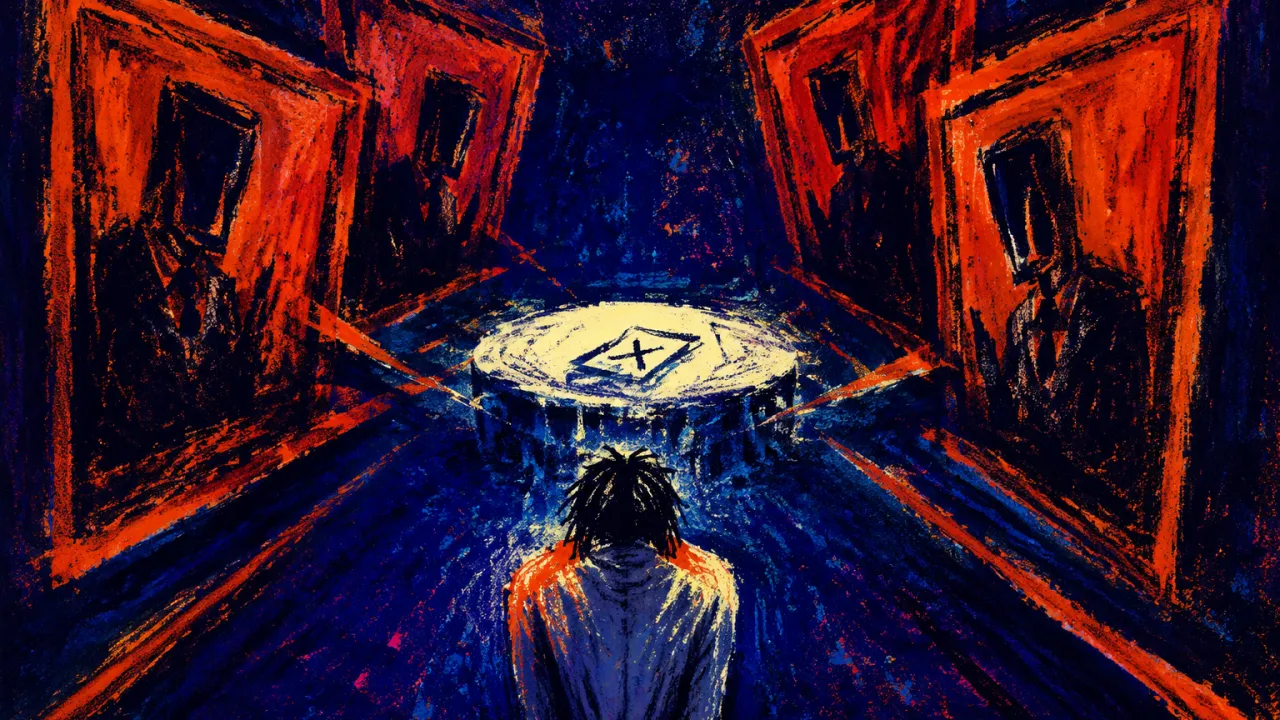
Who Sets The Terms?

Explore the uneven relationship frame, related tarot cards, and reading insights around timing, silence, access, and control.

Relationship Power Play

What is this situation?

Relationship Power Play — you notice it the first time a simple question turns into a negotiation over whether you were allowed to ask it. Maybe it starts in a text thread where they reply warmly when the topic is light, then go vague the moment you ask where things stand; maybe it happens over dinner, when your concern gets translated into being “dramatic,” “needy,” or “starting something,” until the original issue disappears and the conversation becomes about your tone. Plans move when they want them to move, labels stay undefined until they are ready, apologies come with fine print, and clarity is treated like a favor instead of a shared baseline. In public they may seem affectionate, funny, composed, even generous, but inside the relationship the frame keeps tilting toward them: they decide when the talk begins, when it ends, which feelings count, which questions are too much, and which version of events becomes the one everyone has to work around. You start editing messages before sending them, waiting for the right mood, picking the least risky hour, softening every sentence so it cannot be used against you later. The daily cost is not just conflict; it is the constant management of access, timing, warmth, silence, sex, attention, commitment, and explanation. Your chest tightens before you open a reply, not because you are confused by love itself, but because the relationship has become a room where one person keeps rearranging the furniture while asking why you keep bumping into things, much like the figure on The Magician, standing over the table with every tool in view while one hand controls the wand, the gaze, and the direction of attention.

Why it's not you?

The problem is not that you need too much clarity; the problem is that this setup makes clarity something one person can grant, delay, or redefine. When access, timing, affection, labels, or the meaning of an argument are controlled from one side, the relationship stops functioning as a mutual exchange. That pressure belongs to the arrangement itself, not to your ability to phrase things correctly.

Relationship Power Play in Tarot Cards

In a Relationship Power Play, the tightness in your chest before opening a reply is not random; it comes from being placed inside a frame where clarity, timing, and permission are controlled unevenly. The pattern is environmental, structural, and dynamic: it is built into how the relationship conversation is set up, not into whether you asked the question perfectly. The cards below do not decide who is right or wrong; they reflect the shape of the power arrangement underneath the exchange. These Tarot Cards map the visible pressure points of this situation.

The Magician Reversed
The central figure controls the wand, the table, the gaze, and the direction of attention. The tools are visible, but their use is mediated by one person standing in the dominant position. In a relationship, that image can describe a hidden power arrangement where one partner keeps control over the frame. They may decide when clarity is allowed, which topic is valid, what counts as too much, or how every disagreement gets translated. The closed-loop belt and fixed table intensify the structure. You are dealing with a system where the terms keep returning to the same controlling center, and the most important insight is not who wins an argument but who has been setting the rules of the argument in the first place.
The High Priestess Reversed
The High Priestess sits at the exact point where access is granted or denied, with the scroll and veil under her control. The scene is calm on the surface, but the layout gives one position more control over what is known and when it is revealed.\n\nIn love, that becomes a power play when mystery is used to manage leverage rather than protect intimacy. You are navigating a relationship stage where silence, timing, and selective disclosure shape who has to chase clarity.
The Empress Reversed
The scepter beside her face, the throne beneath her, and the Venus shield at her feet combine affection with visible authority. Reversed, the scene shows softness carrying power, where love is not only felt but managed through access, approval, and presentation. Relationship Power Play fits when closeness becomes the place where leverage is exercised. You may be dealing with charm, withdrawal of warmth, selective generosity, or beauty-coded influence rather than open negotiation. The Empress makes the power structure legible because the symbols of love and sovereignty occupy the same visual field.
The Emperor Reversed
The Emperor's frontal gaze, armored body, raised foot, and command objects make the relationship between person and territory visibly hierarchical. The scene is not built around mutual exchange; it is built around the right to define the terms. In a relationship spread, that becomes a precise image of power being negotiated through rules, access, timing, and permission. You may be encountering a dynamic where love is present, but one person's need to control the frame is deciding what can be said, when decisions count, and whose boundaries become the default.
The Hierophant Reversed
One figure controls the speaking position, the raised hand, the staff, and the symbolic keys, while the two lower figures are seen from behind in receptive posture. The image concentrates interpretive power in one place: who explains the rules also controls access to them. Reversed, that structure can show a relationship where one person or one surrounding social system defines what counts as loyalty, maturity, commitment, or respect. The other person is left responding to rules that shift under the surface but still claim moral authority. The card makes the power dynamic visible without turning it into a diagnosis. It helps identify where communication is not just disagreement, but a struggle over who gets to define the terms of the relationship.
The Lovers Reversed
The serpent speaks from behind one figure, while the couple themselves do not meet each other directly. Influence moves through a side channel instead of through mutual contact. This is the visual logic of a relationship power play. The issue is not open disagreement; it is the indirect management of attention, information, jealousy, silence, or access so that one person gains leverage without naming the game. The garden still looks calm, which is why the pattern can be hard to challenge. You are being shown a relationship space where the surface remains intimate, but the real decision-making is being shaped by what is withheld, implied, or strategically introduced.
The Chariot Reversed
The command staff, armor, square chariot body, and fixed central posture can form a closed system of control. The figure is not walking beside the sphinxes; he is elevated above the forces in front of him, protected by structure and staged as the one who decides the route. Reversed, that visual pressure becomes a relationship power play. Direction-setting stops being a mutual act and starts becoming leverage: who defines the pace, who withholds clarity, who gets to decide when the relationship moves, pauses, becomes public, or stays undefined. The card exposes the machinery behind the dynamic. You are dealing with a structure where movement may still happen, but the steering is unequal, and the first point of clarity is seeing where control has been disguised as confidence, certainty, or romantic intensity.
Strength Reversed
The lion's mouth is the contested site of the image, and the woman's hands decide when it opens, closes, and releases force. In the reversed texture, the same contact stops looking like mutual regulation and starts looking like control over expression, access, and timing. That visual tension fits a relationship power play because the issue is not simple disagreement; it is who gets to define the rules of closeness. You are dealing with a stage where affection, silence, desire, or withdrawal may function as leverage, and the first act of clarity is naming the lever.
Wheel of Fortune Reversed
The sword-bearing Sphinx sits above the wheel, while the other figures are locked into rising and falling positions around it. The image shows a system where movement exists, but leverage is unevenly distributed. In love, this becomes a relationship shaped by timing control, withheld clarity, tests, or strategic silence. One person may decide when the relationship speeds up, when it stalls, and when the other person is allowed to feel secure. The card does not reduce the situation to personal weakness or bad communication. It exposes the power structure inside the romantic cycle, making visible where consent, pace, and emotional access are being managed by one side more than mutually negotiated.
Justice Reversed
The judge holds both the sword and the scales, and the hall offers no visible side exit. When that image tightens, the person in the center becomes the one who controls the record, the rules, and the timing of the verdict. In a relationship, this describes a conflict dynamic where one partner's version of fairness dominates the room. You may not be arguing only about the issue; you may be arguing over who gets to define what counts as reasonable, excessive, loyal, selfish, or true. The curtain behind the figure matters because the full process is not visible. The card points to power hidden inside procedure: the relationship can look like it is discussing fairness while one person quietly controls the terms of the discussion.
The Hanged Man Reversed
The whole body hangs from one rope, and that single point determines every possible movement. The living tree still looks stable, but its stability has become a leverage system. In love, this becomes a power play when one person controls timing, access, or commitment without openly negotiating those terms. You are dealing with a structure where the relationship may look calm from the outside while one person's position keeps carrying the strain.
Death Reversed
The ruler under the horse and the cleric pleading from below make authority visible as a contested arrangement. Some figures can only react from the ground while the armored rider controls the direction, pace, and symbolic frame of the scene. That is the architecture of a relationship where affection is mixed with leverage, withholding, status, silence, or moral superiority. You are not looking at a simple disagreement; the card exposes the unequal rule system that decides whose needs become negotiable and whose movement sets the terms.
The Devil Upright
The horned figure occupies the top of the frame, raises one hand, and anchors both chains to the black cube beneath him. The couple's bodies are visible, but the governing point of the scene is not between them; it is above them, where authority, desire, and control are staged as one structure. In a relationship, that geometry exposes a power arrangement rather than a simple disagreement. You are not just dealing with mixed signals; the card shows how access, approval, silence, or withdrawal can become tools that decide who gets emotional leverage and who keeps adapting to it.
The Tower Upright
The crown is knocked away before the falling bodies reach the ground. The highest symbol on the tower loses position first, making the visual center a collapse of rank, control, and assumed authority. In love, this speaks to a bond organized around leverage rather than mutual ground. Approval, access, commitment, money, sex, attention, or silence can become tools for one person to stay above the other in the relationship structure. The card does not reduce the issue to one bad argument. It shows a vertical arrangement being exposed, so you can see where affection has been routed through control instead of direct reciprocity.
Nine of Cups Reversed
The cups sit higher than the figure, arranged like valuables under controlled access. His arms are crossed, the table creates a second barrier, and the emotional goods of the scene are visible without being freely available. In love, that becomes a power structure around affection, reassurance, attention, or approval. One person may not need to leave the relationship to control it; they can simply regulate access to the cups and make the other person negotiate for closeness. The card’s realism is in the display. What is withheld does not disappear, which makes the dynamic harder to name: the relationship can look abundant while one person’s security depends on another person’s permission.
King of Cups Reversed
The crown, scepter, and cup place emotional material inside a hierarchy of control. Soft water is present everywhere, yet the visible authority belongs to the figure who decides what is held, shown, or withheld. In love, that visual order points to a dynamic where calmness can become a lever. You may be dealing with someone who controls the pace of disclosure, repair, or commitment by appearing composed while keeping the emotional terms in their own hands.
Two of Pentacles Reversed
The high hat and controlled hands place the figure in charge of the entire exchange. Both coins are linked, but the rhythm still passes through one performer, which gives the image a subtle structure of control rather than mutual pacing. In a relationship, that can show up as one person deciding when the connection advances, when it pauses, what gets named, and what stays vague. You are not looking at random mixed signals; the card reveals a timing system where access and definition are being managed from one side.
Three of Pentacles Reversed
The worker stands high on the bench, but the plan and the gaze sit outside his control. Reversed, the card turns that arrangement into a hierarchy where one person performs, another evaluates, and the relationship stops feeling like a shared build. That is the structure of a relationship power play. The issue is not ordinary disagreement; it is the way approval, standards, timing, or access to commitment can become leverage. One partner may keep setting the terms while the other keeps trying to meet them. The card's architecture matters because the imbalance is not only emotional; it is spatial and procedural. You can see who holds the design, who carries the labor, and where mutuality has been replaced by a quiet system of permission.
Four of Pentacles Reversed
Both hands wrapped over the central pentacle, feet planted on the lower coins, and the crown coin balanced above the head create a body that cannot relax without losing control. In love, that image becomes a relationship stage where affection, time, labels, or practical support are not simply shared; they are guarded and released only when the power balance feels favorable. You are not dealing only with a difficult mood or a communication glitch. The structure around you rewards stillness, leverage, and strategic withholding, so clarity starts with naming where access is being controlled and where mutual choice has been replaced by negotiation under pressure.
Six of Pentacles Reversed
The standing figure towers over two kneeling recipients while the scales remain in his hand. Access to coins, timing, and judgment all sit with one body, so the scene turns support into a vertical arrangement rather than a shared exchange. In love, that vertical arrangement becomes a power play when one partner controls approval, plans, money, affection, or commitment and the other has to ask upward for basic clarity. The card gives the structure a shape: the issue is not only what is being given, but who gets to decide when giving counts.
Nine of Pentacles Reversed
The hooded falcon sits close to the woman, but its access to sight and flight is controlled through the glove, hood, and trained posture. The image is intimate, yet the terms of that intimacy are set by one side of the contact. In a relationship, this points to a power play that may not look aggressive on the surface. You may be facing managed access, selective information, one-sided pacing, or a partner who frames control as care while keeping the relationship inside rules they alone define. The card’s reversed pressure is about agency inside closeness. It shows how a bond can remain elegant and functional from the outside while one person’s movement, timing, or visibility is quietly regulated by the other.
Ace of Swords Reversed
The blade passes through the crown, joining speech, rule, and status into one commanding line. In a reversed relationship context, the problem is not only what gets said; it is who gets to define the terms of reality. A power play can look like calm logic, superior maturity, selective facts, or a partner deciding which feelings are reasonable enough to count. The sword becomes a tool for framing the argument before the other person can fully enter it. The landscape below sits far from the elevated crown, which mirrors the gap between abstract authority and lived relational impact. You may be facing a dynamic where clarity is claimed by one person while the relationship itself becomes less mutual.
Five of Swords Upright
The foreground figure stands wide, armed, and visually dominant while the others move away with their heads lowered. The scene has the geometry of a relationship exchange where one person has seized the upper position and the others have lost both voice and leverage. This is why the card maps cleanly onto a relationship power play. In introspection, the outer context is not only the argument itself, but the social arrangement that follows: who gets to define what happened, who must absorb the shame, and who has to retreat to keep the situation from getting sharper. The Five of Swords makes that hierarchy physical. You can examine the power move without collapsing into self-blame or moral superiority, because the card keeps attention on the structure of control, withdrawal, and the cost of winning contact by overpowering it.
Seven of Swords Upright
The swords in the figure’s arms are not just objects; they are leverage. He does not meet the camp directly, yet the camp’s balance changes because he controls what is removed, what is left, and when the shift becomes visible. Inside a romantic dynamic, this points to indirect control: delayed replies used as pressure, jealousy introduced as a test, vulnerability withheld as punishment, or key information released only when it gives one person the upper hand. The conflict may never look like an open fight, but the structure still distributes power unevenly. The card’s value is in making the tactic visible without turning it into a moral lecture. You can track where the relationship has become a chessboard instead of a shared conversation, and where direct negotiation has been replaced by moves designed to manage the other person’s position.
Eight of Swords Reversed
The red robe is wrapped by white bands and held inside a field of upright swords, making personal force visible but contained. The hands are tied behind the body, so movement is shaped by rules the figure did not set. In love, this maps to a power play where access, clarity, affection, or timing become leverage. You can still see the outline of the relationship, but the structure keeps your choices narrow until the hidden rule of the exchange is named.
Nine of Swords Reversed
The bed-frame carving shows a one-up, one-down confrontation built into the furniture beneath the sleeping body. Above it, the swords press through the private space of the head, throat, and heart, turning the room into a map of pressure. In a relationship, this points to power becoming embedded in ordinary intimacy: who gets to define the story, who must defend themselves, and whose silence or accusation sets the terms. You are looking at a dynamic where conflict does not end after the argument; it keeps shaping the space where closeness is supposed to recover.
Ten of Swords Reversed
The blades are placed with precision, and the open ground offers the fallen figure no cover. The scene reads as impact plus exposure: force has landed, and the environment provides no neutral buffer. In love, this maps to power games where timing, withheld information, or strategic coldness keeps one partner cornered. You are not looking at a normal disagreement; the structure shows leverage being used in ways that make repair harder to initiate and harder to trust.
Knight of Swords Reversed
The armored figure dominates the center of the card while the sword extends forward and the surrounding trees bend backward under the same directional force. The image is not simply active; it shows one will taking up the whole field. In love, that can describe an argument or decision structure where speed, certainty, and verbal pressure crowd out mutual pacing. One person may push for an answer, frame the issue on their terms, or use intensity to make the other person react before they can locate their own position. The card helps name the power play without turning it into a character verdict. The issue is the structure of the exchange: who sets the tempo, whose language defines reality, and whether the relationship can return to shared ground after one person's momentum has been allowed to dominate the whole scene.
King of Swords Reversed
The throne sits above the landscape, and the King occupies the center as the one who sees, decides, and defines. In the reversed field, that elevation becomes less like perspective and more like a relational hierarchy. In love, this describes a dynamic where one person controls the frame: what counts as reasonable, when the conversation ends, whose memory is trusted, which needs are excessive, and what version of the relationship is allowed to be named. The bond starts to feel less like mutual discovery and more like appearing before a private court. You are being shown the power map underneath the argument. The card does not require you to win the courtroom; it asks you to notice whether the relationship has space for two full subjectivities or only one ruling interpretation.
Ace of Wands Reversed
The wand can be a tool of growth, but in the image it is also a staff held with authority, thumb braced forward and grip fully closed. The source of movement is concentrated in one hand, while the landscape below receives the force without holding the object itself. In a relationship, that concentration of initiative can become a power problem when one person decides the pace, the access, the tone, or the terms of affection. The card makes the control structure visible: desire is not the issue by itself; the issue is who gets to define what the spark demands from the other person.
Five of Wands Reversed
The uneven ground under braced feet makes every stance slightly unstable. With all five wands lifted at once, the tools are not supporting the group; they are being used as leverage inside a shifting contest. That is the visual logic of a power play in love. You may be facing a relationship field where withdrawal, testing, control, strategic silence, or escalation keeps changing the ground under the conversation, making genuine repair difficult because the structure rewards leverage before openness.
Six of Wands Reversed
One figure is lifted above the crowd, crowned with laurel, and handed the central standard. The composition makes authority visible: one person carries the symbol of victory while the surrounding figures become the validating field. Reversed, that hierarchy can show up in love as a power play built through charm, status, popularity, or public approval. One partner may control the relationship story because other people already see them as impressive, desirable, reasonable, or victorious. The card gives the imbalance a clear outline. It helps You distinguish shared pride from a structure where one person's social capital keeps deciding whose version of the relationship gets believed.
Seven of Wands Reversed
Height dominates the image, but the footing is uneven and split by a stream. The elevated position gives leverage, yet it is not a stable throne; it is a contested ledge that can turn advantage into pressure. In a relationship, that structure becomes a power play when one person uses position, silence, social backing, superior certainty, or the language of being right to keep the other person defending. The issue itself becomes secondary to who controls the frame of the argument. The card exposes the mechanics of that frame. You can see how an unstable hierarchy keeps one person visible and answerable while other forces remain harder to name.
Queen of Wands Reversed
The crown, throne, lion emblems, sharp gaze, and fixed grip make authority visible before anything else in the scene. The Queen's tools are not passed across the space; they are held as extensions of command. In a relationship, that visual order maps onto control struggles around attention, pacing, money, sexuality, or emotional access. You may be dealing with a dynamic where affection is present, but the structure keeps turning closeness into leverage.
King of Wands Reversed
The long wand can read as a staff pressed into the ground, while the sealed fist and elevated throne hold the body in a rigid command posture. The space around the figure has to organize itself around one fixed center. In a relationship, that visual structure maps a power imbalance where one person's preferences, timing, or rules dominate the shared field. You are being shown the mechanics of the dynamic: who gets to define the terms, who has to adapt, and where negotiation has been replaced by positional control.

Relationship Power Play in Tarot Card Reading Insights

Relationship Power Play often enters readings through questions about timing, silence, labels, access, and who gets to define what the relationship means. The shift from cards to readings shows how other people have brought this same kind of uneven relationship frame into a spread. Tarot Reading Insights for this situation are gathered below.

Psychological contexts related to Relationship Power Play