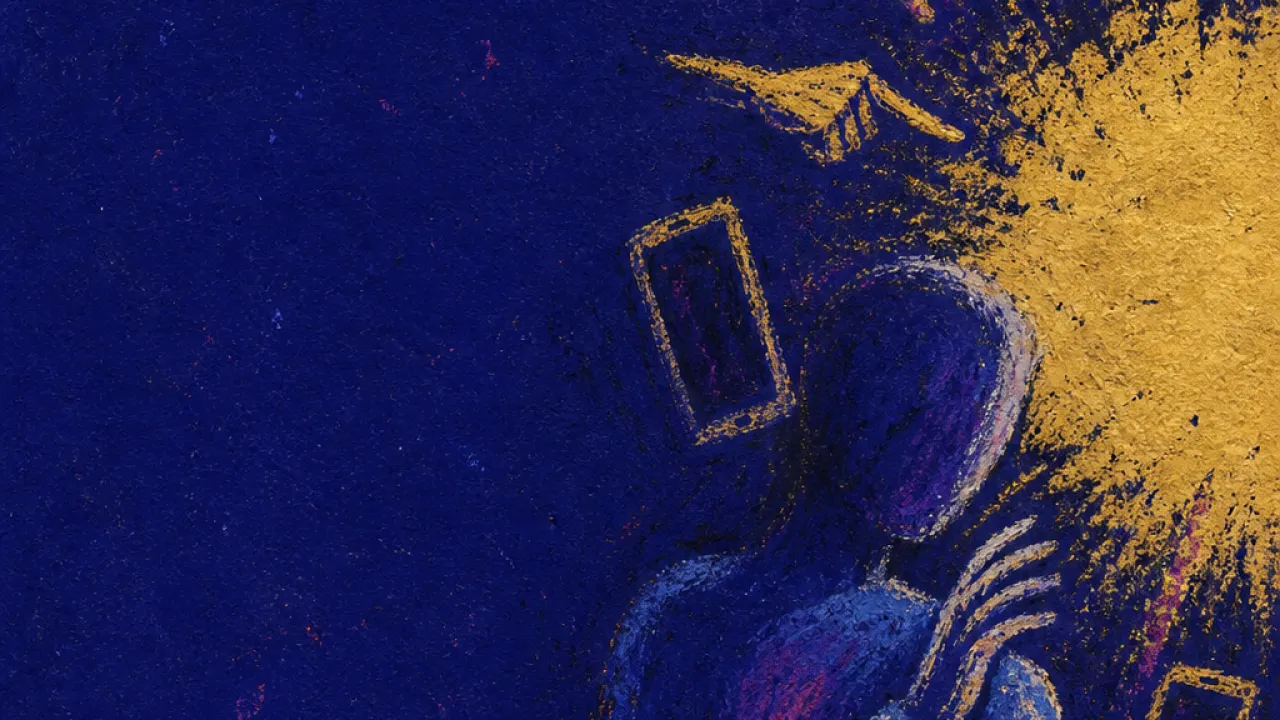
In a Main Character Friend Dynamic, the friendship keeps bending back toward one person's updates, crises, image, and timing until everyone else is managing the orbit. The tight shoulders you carry after another hangout are not random; they track how much attention and response work the room keeps placing on you. This is an environmental and structural dynamic, not a personal flaw, because the group has learned to distribute space around one central role. The Tarot Cards below reflect that social shape without telling you what to excuse, confront, or cut off.
The Magician ReversedThe solitary figure commands the entire foreground, with the tools, flowers, gesture, and visual hierarchy all arranged around one person. In a friendship group, that composition mirrors a dynamic where one friend's updates, crises, preferences, or image become the stage everyone else must orbit. The table is not just a workspace here; it is a performance surface. A main-character friend dynamic often looks charismatic and organized from the outside, but the social cost is that other people become audience, helper, fixer, or supporting cast. You regain agency by noticing who gets to be a full person in the room. The card makes the hierarchy visible: if every conversation bends back to one center, the friendship is no longer distributing attention like a mutual bond.
The Empress ReversedThe Empress is visually unmistakable as the center: crown above her, scepter beside her face, throne beneath her, shield at her side, and the whole garden arranged around her presence. In a reversed friendship field, that centrality can stop being leadership or warmth and become social gravity. Everyone else's role starts to orbit one person's needs. In a friend group, this shows up when one person's updates, crises, taste, schedule, romantic life, or self-image quietly sets the room temperature. The group may still look affectionate from the outside, but attention is distributed unevenly and support becomes a performance around the central figure. You are not just dealing with a loud personality. The card points to an organizing structure: who gets witnessed, who gets interrupted, whose milestones are treated as group events, and whose needs disappear because the friendship stage has only one spotlight.
The Emperor ReversedThe Emperor occupies the visual center so completely that the territory beyond him is implied rather than shown. His crown, throne, and regalia make the whole scene orbit around a single authorized presence. In friendship, that becomes a group dynamic where one person's story, moods, and priorities take up the throne. You may still be physically included, but the card exposes how participation shrinks when the circle keeps arranging itself around one dominant figure.
The Lovers ReversedThe gaze pattern does not create a simple mutual exchange. One figure's attention is fixed across the scene, while the other is oriented toward a higher point and backed by the more active visual field of fruit and serpent. In friendship, that becomes a main character dynamic when one person's story, crisis, crush, timeline, or identity arc repeatedly takes over the shared space. The other friend is still present, but mostly as audience, emotional technician, or stabilizing witness. The card's hierarchy of attention shows the hidden cost. You may not be openly excluded, but the friendship's center of gravity keeps sliding toward one person's experience until mutuality becomes decorative rather than real.
The Star ReversedOne large star holds the visual center while the smaller stars orbit as a supporting field. Below it, the kneeling figure is grounded and active, yet the eye is pulled upward toward the brightest point in the hierarchy. In a friend group, that pattern becomes a main character dynamic when one person's needs, drama, taste, or visibility quietly organizes everyone else's position. The card gives you a clean map of the group structure: who gets to be the central light, who becomes background, and whose care work keeps the scene looking harmonious.
The Sun ReversedThe sunflowers face one radiant center while the child lifts the red flag into full visibility. The entire image teaches the eye where to look, and everything around the center seems organized by that brightness. In a friendship circle, that structure becomes a problem when one person's life, mood, crisis, or celebration repeatedly becomes the gravity everyone else orbits. You may still care about them, but the card exposes an attention economy where your role is to witness, soothe, and react while your own visibility stays secondary.
Seven of Cups ReversedThe cups dominate the upper field while the human figure remains a dark observer below them. Recognition symbols like the wreath and face draw the eye upward, making the scene feel like a stage built around the displayed objects. In friendship, that structure maps onto a dynamic where one person's crisis, achievement, desirability, or persona repeatedly becomes the center of gravity. The card shows how you can be pushed into the audience role, and it clarifies the difference between supporting a friend and being absorbed into their performance.
Nine of Cups ReversedThe figure sits centered in front of a polished display, with the cups arranged like proof of his own satisfaction. The body does not reach outward; the scene asks to be viewed, acknowledged, and organized around one central presence. Reversed, that tableau becomes the social physics of a main character friend. You may be inside a group where one person's wins, tastes, dramas, and self-image take up the room, while everyone else becomes audience, validator, helper, or supporting cast. The card's visual pressure comes from how little relational movement is left once the display dominates the frame. It reveals a friendship dynamic where attention is not shared space but a resource pulled toward the person most invested in being seen.
Knight of Cups ReversedThe centered rider, ornate fish robe, winged ornaments, and fixed gaze on the cup turn the scene into a curated emotional presentation. In the reversed current, the performance of feeling can take up more space than the shared terrain around it. In a friend group, that becomes the dynamic where one person's revelations, crushes, disappointments, and symbolic moments become the main plot everyone else has to track. You may still care about them, but the structure keeps assigning the rest of the group to witness, validate, and orbit.
King of Pentacles ReversedEvery major line in the image returns to the seated king: throne, coin, scepter, estate, wall, and castle. The scene is not arranged as a shared gathering; it is arranged around one person's centrality. In friendship, that visual center becomes the friend whose moods, plans, preferences, crises, and milestones absorb the group's attention. Other people may still be physically present in the social world, but the emotional camera keeps returning to the same figure. The armored foot and heavy throne add a sharper edge. This context reveals how dominance can hide under charm, hosting, generosity, or stability, leaving you to orbit someone else's story while your own needs become secondary scenery.
Ace of Wands ReversedThe single wand dominates the card’s visual field, held with enough force that everything below it becomes the receiving landscape. Leaves fall outward from that central object, spreading its impact across space even when the rest of the terrain remains quiet. In a friendship, this becomes the structure where one person’s life keeps taking center stage. Their updates, crises, launches, crushes, conflicts, or identity shifts become the default storyline, while everyone else’s inner world is treated as background terrain. The reversed Ace of Wands points to initiative turning into occupation. You are not just noticing a loud personality; you are seeing a social arrangement where attention, responsiveness, and narrative space keep being pulled toward the same central flame.
Six of Wands ReversedThe rider's elevation, wreath, decorated horse, and raised wand pull every surrounding body into his orbit. In this configuration, the crowd is present, but its individuality is visually flattened into applause. As a reversed friendship context, the image exposes a social structure where one friend repeatedly becomes the event and everyone else becomes the audience. Their wins, crises, crushes, conflicts, and updates dominate the shared space until support stops being mutual and starts functioning as a status supply line. You are not being asked to resent visibility itself. The card points to the imbalance created when one person's need to be witnessed consumes the group's emotional bandwidth and leaves little room for anyone else's interior life.
Page of Wands ReversedThe Page's proclamation pose can harden into a one-person stage: bright clothing, raised chin, and a wand held like a public banner in an otherwise empty field. The image shows communication becoming performance before any shared response is visible. In friendship, that structure appears when one person repeatedly makes the group orbit their updates, crises, achievements, or dramatic pivots. You are not simply dealing with a talkative friend; you are inside a social arrangement where attention is being claimed as territory. The empty space around the Page is crucial. It shows how a friendship can feel crowded by one person's presence while still lacking mutual exchange, because the group has been positioned as audience rather than participant.
Knight of Wands UprightThe knight sits high above the rearing horse, framed as the obvious center of motion, color, and display. In a friendship system, that visual hierarchy becomes the friend whose entrances, crises, launches, crushes, conflicts, and announcements keep pulling the room back toward them. The wand is not hidden; it is carried like a public marker of importance. You may be dealing with a friend who does not simply ask for support, but unconsciously turns support into an audience role where your attention becomes proof of the bond. The card's social stage is top-heavy: one figure has movement, color, height, and symbolism, while the wider terrain recedes. That is the structure to audit in the friendship, because the issue is not whether the friend is exciting; it is whether their visibility leaves enough relational space for anyone else to exist fully.
ReversedThe rider dominates the frame while the horse's force lifts him above the ground. All symbolic channels point back to one figure: plume, wand, armor, emblem, and motion concentrate attention around a single display. In a friend group, that structure appears when one person's urgency, charisma, or drama organizes the room around them. The card reveals the social cost of a circle built around spectacle: everyone else becomes terrain for the performance instead of a full participant in the field.
Queen of Wands ReversedThe crowned figure, central throne, repeated sunflowers, and lion emblems create a scene where attention has a single gravitational center. In reversal, the same charisma can become a stage that requires everyone else to orbit the person holding it. This is the friendship structure where one person's drama, glow-up, crisis, or social image repeatedly becomes the main event. You may still care about them, but the card exposes how the circle's attention economy has been arranged so that your role keeps shrinking into audience, helper, or witness.
King of Wands ReversedThe slanted throne, command wand, and cloak swallowing the chair create a social stage where one person's presence occupies more room than the shared environment. Even the small fire lizard sits at the step like an extension of the central figure's domain. In friendship, this becomes the dynamic where one person's stories, crises, launches, preferences, and self-image pull everyone else into orbit. The card exposes how charisma can become a gravitational structure, making you question whether you are participating in a mutual bond or maintaining someone else's permanent spotlight.
No cards available for this filter.