When Thinking Blocks Choosing

Understand Analysis Paralysis through grounded struggle language, related tarot cards, and tarot reading insights on stuck choices.

Analysis Paralysis

What does this feel like?

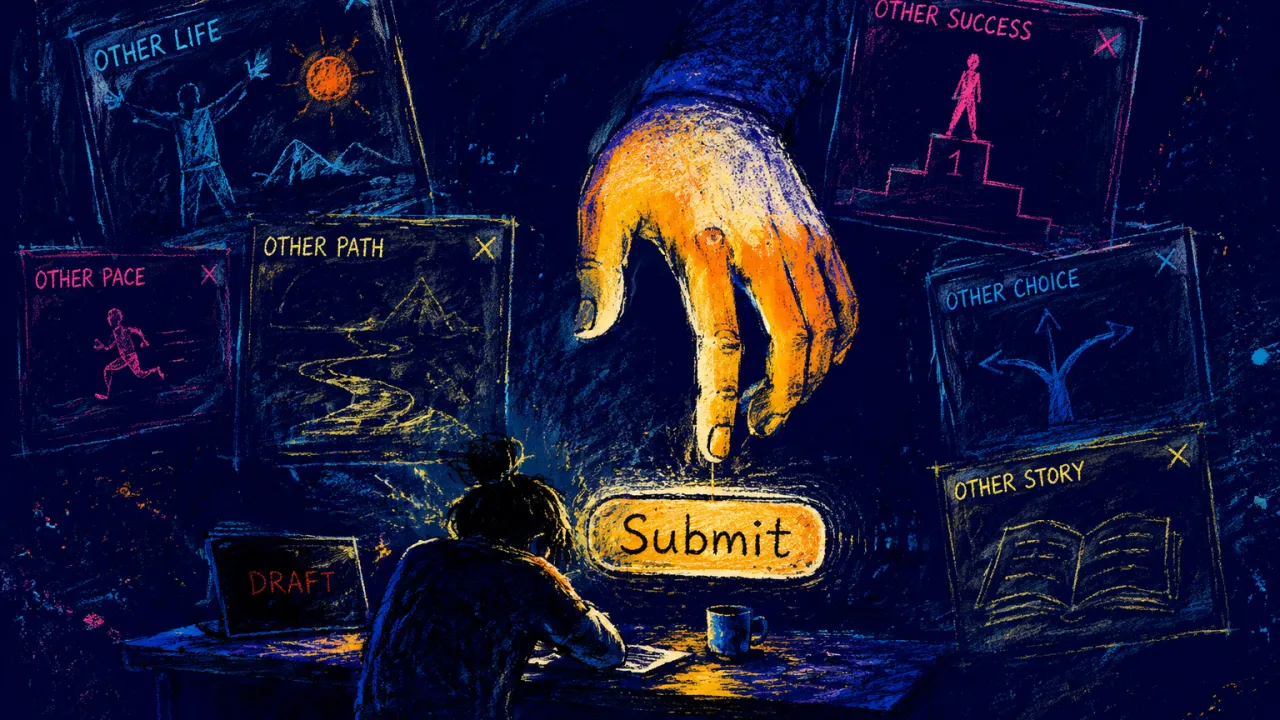
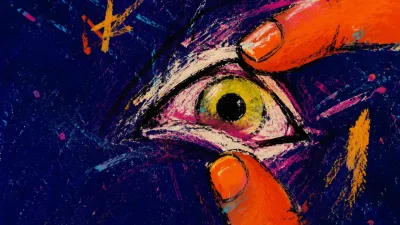
Analysis Paralysis — you are staring at a screen with a perfectly ordinary decision in front of you, and somehow it has started to feel like a tiny doorway into your whole future. It might be a job listing, a text you need to answer, a course to choose, a city to move to, a purchase that is not even that expensive, but your body reacts as if one click will lock an entire version of your life into place. Your shoulders rise without permission. Your jaw tightens. Your eyes keep moving across the same details, not because you missed something, but because each detail opens another possible consequence, and each consequence asks to be checked before you can move. You tell yourself you are being careful, and part of you is. You know how to think, compare, research, forecast, and spot the flaw other people miss. The problem is that the thinking no longer lands anywhere. It keeps circling the same pressure point, making smaller and smaller adjustments, waiting for a feeling of certainty that never quite arrives. You open another tab, ask one more person, reread the same review, rewrite the same message, imagine the future where you choose this and regret it, then the future where you choose that and regret it in a different accent. From the outside, it can look like responsibility. Inside, it feels like standing perfectly still while your mind runs laps around you. The strange cost is not only the missed deadline or the delayed reply; it is the slow loss of trust in your own ability to let a choice be imperfect and still be yours. Eventually the decision becomes less about what you want and more about whether you can survive the feeling of not knowing everything first, much like the figure before the Seven of Cups, close enough to see every possible life glowing in the air, but unable to close a hand around one.

What's pulling at you?

You are caught between wanting to make a careful, defensible choice and needing to move before every outcome can be fully known. Each new piece of information feels like it should help, but it also creates one more angle to check, so the search for clarity starts using up the energy that would have become action.

How It Shows Up?

  • You open your laptop to do one simple thing — pick a flight, choose a course, answer an email — and twenty minutes later you have twelve tabs open, three comparison charts half-built, and no decision made. Your eyes feel dry, your neck has gone stiff, and your thumb keeps tapping the trackpad like movement might become certainty if you do it long enough. The screen starts to feel like a row of Seven of Cups, each option vivid enough to matter and none close enough to hold. You can close a tab without closing the whole question; that can be enough contact for now.
  • A friend asks, "So what do you want to do?" and your face does that small polite pause while your mind starts running every version of the evening: cost, timing, distance, whether they actually care, whether your answer will make things awkward. Your chest tightens under your ribs, and your throat goes a little flat, as if even saying "I don't know" would count as choosing wrong. You hear yourself say, "I'm easy," even though you are not relaxed at all. It is allowed to name one small preference without having to defend your entire reasoning.
  • At work or school, you keep refining the plan before you begin: one more source, one more outline, one more tutorial, one more note that makes the first step feel almost ready. Your shoulders creep upward, your breathing gets shallow, and the task itself starts to look farther away each time you organize it. The Hermit's lantern is useful until the circle of light becomes the only place you stand. You can begin with a version that is incomplete; the first draft does not have to carry the final verdict.
  • In a group chat or at dinner, everyone seems to answer quickly, and you watch how easily other people pick a place, take a side, say yes, say no. You smile, nod, and keep scanning the room for clues, but inside you are holding two or three responses at once, like crossed blades you cannot lower without changing the air. Your jaw locks, your stomach pulls inward, and the longer you wait, the heavier the small decision becomes. You can take a breath before answering; speed is not the only form of clarity.
  • The same body signal keeps showing up: a tight band across your forehead, a clenched jaw, a small knot in your upper stomach whenever a choice moves from theory into the next click, message, payment, or sentence. You may look calm from the outside, but inside there is a constant micro-adjustment, like hands held carefully near a lion's mouth, keeping impulse contained while waiting for a cleaner endpoint. The tension is information, not a command; you can notice it before you decide what to do with it.

Analysis Paralysis in Tarot Cards

Analysis Paralysis lives in the gap between seeing too many possible routes and feeling unable to let one become the route you actually take. You can feel it in the dry eyes, the stiff neck, the clenched jaw, and the shallow breath that show up while the choice keeps expanding. From an existential perspective, the structural framework is about agency getting suspended when certainty becomes the price of movement. The Tarot Cards below make that suspended decision shape visible without forcing it into a simple answer.

Strength Reversed
In the reversed card, the woman's hands stay active at the lion's mouth while the face remains composed and inward. The visible movement is tiny and exact, but the scene offers no clear endpoint where the jaw is either released or fully closed. Analysis Paralysis takes that frozen micro-adjustment and turns it into a decision structure. Each new detail seems like it should produce clarity, yet it only creates another small correction at the same pressure point. For choice work, this card shows why more thinking can start to feel like more holding. You are not lacking intelligence; the decision has become organized around preventing the strongest impulse from moving, so analysis keeps circling the mouth of the lion instead of opening a path.
The Hermit Upright
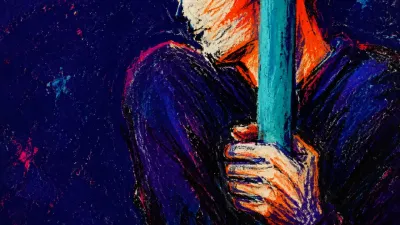
The lantern in The Hermit gives precise local light, but it does not flood the whole night. His gaze stays lowered into that limited radius, and the grey cloak keeps the rest of the body sealed inside a private field of attention. In academic work, that same structure appears when research, reading, and thinking keep narrowing into finer detail while commitment keeps receding. Each extra source or framework promises a little more certainty, but the card's light shows the trap: the illuminated circle can become the place where movement is endlessly postponed. You are not simply overthinking in a generic way. The card locates the struggle in a study system that treats total clarity as the entry fee for action, even though the academic path only becomes visible by stepping beyond the lantern's current edge.
Reversed
The Hermit's lantern still shines, but in the reversed structure its light can become trapped inside the same narrow circuit: hand, lamp, bowed head, private conclusion. The tool of clarity remains active while the surrounding terrain receives too little new contact. That is the shape of analysis paralysis in a choice reading. You keep refining the question, replaying the evidence, and seeking a cleaner signal, but each pass returns to the same radius of light instead of widening the decision field. The card does not frame the stall as laziness or lack of intelligence. It shows a working lamp caught in an overused loop, where the search for certainty keeps consuming the energy that would be needed to choose.
Justice Upright
The figure is seated, frontal, and composed, yet the upright sword makes the scene feel like the second before action. Nothing is physically chaotic; the tension comes from a decision apparatus that is fully assembled but still waiting for enough certainty to authorize the cut. In a choice reading, that stillness becomes the shape of analysis that has outgrown its purpose. The scale can keep accepting evidence, scenarios, risks, and counterarguments, while the sword keeps postponing the moment when thought becomes movement. You are carrying a judgment process that looks responsible from the outside but has started to consume the very agency it was meant to protect. Justice does not mock the need for clarity; it shows the exact point where clarity-seeking becomes a chamber you cannot leave.
The Hanged Man Upright
The Hanged Man’s illuminated head is closest to the ground, while his hands are folded away from use and his ankle is fixed to the tree. The card gives him a radically different view, but it does not give his body a way to test that view through ordinary action. In a decision spread, that structure mirrors the moment when every new perspective becomes another suspended angle instead of a step. You can keep reading, comparing, and reframing, yet the action channel stays tied off, so clarity gathers above the choice without ever becoming movement. Analysis Paralysis belongs here because the problem is not lack of thought; it is the separation between seeing and acting. The card holds that split in plain sight: the mind is lit, the body is immobilized, and the decision remains hanging between insight and execution.
Death Reversed
The card's horizon refuses to settle into a single reading, and the rider carries no visible weapon even though the scene has already been changed. The signs are powerful, but they do not organize themselves into one clean instruction. In a decision reading, that creates the exact pressure point where more analysis starts to multiply possibilities instead of reducing them. You can keep reading the sun as rise or fall, the flag as ending or renewal, the river as escape or passage, and each interpretation can remain partly true. Analysis Paralysis appears when the choice field becomes symbolically overdetermined. The card does not ask for less intelligence; it shows the moment when intelligence has run out of traction because every sign can support more than one ending.
Temperance Reversed
The angel's hands suspend the liquid in a precise exchange while the body stays rooted between two surfaces. The scene contains movement, but the motion is contained inside the cups instead of becoming a step onto the road. At a crossroads, that visual loop mirrors the mind that keeps refining the comparison while the decision itself remains unentered. The card gives shape to the point where more weighing stops producing clarity and begins to function as a holding pattern around the fear of consequence.
The Moon Reversed
The animals keep responding upward while the path below remains dim, and the moon's closed face offers light without direct confirmation. The whole scene becomes a feedback chamber where more attention does not produce more orientation. You are not stuck because you have failed to think hard enough. The struggle forms when every new comparison, reading, or scenario adds another reflected surface, leaving the decision system busier but no closer to a ground-level step.
Judgement Reversed
The raised bodies are caught in the first instant of response, with arms lifted and movement activated but no visible forward step. Above them, the cross on the trumpet flag turns the scene into an intersection where body, spirit, past, and future all meet at once. Analysis Paralysis emerges when a decision becomes too symbolically loaded to remain movable. You may keep re-examining the options because each one seems to carry an entire verdict about who you are, what the past meant, and what future you deserve. Reversed Judgement compresses choice into a suspended audit. The more meaning the decision carries, the less room the body has to perform the next simple act of choosing.
The World Reversed
Four corner figures, two wands, a circular wreath, and a suspended dancer create a complete coordinate system with no obvious exit vector. The scene is highly ordered, but its order gives every direction a formal place instead of giving one direction priority. In decision work, that structure mirrors analysis that keeps expanding the map until the map replaces movement. You are not short on inputs; the card shows a closed field where too many coherent reference points keep the body suspended above the actual step.
Seven of Cups Upright
Seven cups hover in front of the figure like a complete menu of possible lives, but none of them sits on a surface that can actually be reached. The raised arm suggests contact, while the body remains outside the cloud, suspended between scanning and choosing. That physical distance is the shape of Analysis Paralysis in personal growth. You are not simply choosing between options; you are standing before too many versions of improvement, each one demanding the emotional weight of a whole future self. The card locates the freeze at the point where vision outruns embodiment. Clarity is not missing because you have no options, but because every option has become symbolic enough to make commitment feel like a loss of all the others.
Eight of Cups Reversed
The gap between the cups acts like a question the eye can keep returning to. The moonlit path, the water, and the competing baselines make the scene readable enough to analyze but not stable enough to settle. You may have enough information to keep comparing and not enough trust in the field to move. The card locates the paralysis where evidence, doubt, and possible departure keep feeding one another, turning choice into a loop that feels productive while preventing the crossing.
Page of Cups Reversed
The Page looks into the cup as the fish looks back, creating a closed circuit of attention. His body is present, the sea is moving, and the cup is raised, yet the visible action stays locked inside the act of watching. Analysis Paralysis takes shape when the decision becomes something to maintain rather than something to move through. You keep the option alive by studying it, revisiting it, and asking what it means, but the repeated observation starts to consume the agency the choice was supposed to release. The card’s reversed tension sits in that loop between message and motion. The fish keeps offering material to interpret, while the Page’s stillness shows how a search for the right reading can become a substitute for the next act of choice.
Knight of Cups Reversed
The Knight can keep moving along the riverbank without actually crossing it. The horse's slow step, the protected cup, and the undefined far side create a scene where motion can continue while the decisive threshold remains untouched. That is the structure of analysis paralysis in a choice reading: the mind stays active, the option stays emotionally preserved, and the decision remains suspended at the edge where testing would create consequence. You may keep gathering impressions because the possibility is easier to hold than the result of choosing. The card does not reduce this to overthinking. It shows a whole system arranged around preserving the cup before the crossing, where review becomes a substitute for movement and the threshold becomes a place to live.
King of Cups Reversed
The king already holds the emotional object and the authority object, yet his body remains seated while the sea moves around him. In reversal, the gaze into the Cup becomes a loop of checking, rechecking, and extracting one more layer of meaning before motion is allowed. The distant ship matters because movement exists in the same visual field, but not in the king’s body. The decision system has instruments, information, and symbolic authority, yet every new reading keeps the throne fixed in place. This is analysis paralysis as an inner structure, not a lack of intelligence. The card shows how interpretation can become a substitute for choice when the mind keeps asking the Cup for certainty that only movement can test.
Two of Pentacles Reversed
In its reversed texture, the infinity cord stops reading as elegant coordination and starts behaving like a closed circuit. The hands keep moving, the eyes keep tracking, and every correction gives the loop more energy without creating a place for either pentacle to land. Analysis Paralysis appears here as motion without decision. You may be researching, comparing, asking, calculating, and rehearsing outcomes, but the process has shifted from clarifying the choice to preserving the loop that delays the choice. The reversed Two of Pentacles gives this paralysis a hard outline: the mind is not empty; it is overactive inside a system with no landing surface. The point of the image is not that thought is bad, but that thought has been trapped in circulation instead of allowed to become commitment.
Three of Pentacles Upright
The raised hammer hovers beside the stone while the blueprint is held by another figure and the doorway remains unused. The scene is full of valid inputs, but the physical action is suspended at the exact point where planning would have to become irreversible contact. In a choice reading, that geometry mirrors the pressure of having enough information to move and still feeling unable to let one option become real. You are not simply lacking data; the decision field has become a workshop where every plan, risk, and observer keeps the strike from landing.
Six of Pentacles Reversed
The scale is lifted in public view while coins are suspended in midair, freezing the scene between calculation and outcome. The tool of balance stays active even as the actual distribution is already underway. Analysis Paralysis forms when weighing becomes safer than landing the choice. You may keep asking for one more metric, one more sign, or one more comparison, but the card shows a decision system where the measure itself has started to hold the body in place.
Page of Pentacles Upright
The Page holds the pentacle at eye level, with both hands and gaze gathered into one small circular object while his boots remain on an open field. The visual system is built for examination before movement: the world is available, but the body has narrowed its bandwidth to a single thing that can be inspected again. That is the anatomy of Analysis Paralysis in a decision spread. You are not simply lacking information; the structure shows information becoming a substitute for agency, where every option demands one more scan before the first step can be allowed.
Knight of Pentacles Upright
The Knight's eyes look past the pentacle toward the horizon, while the pentacle stays fixed in his gloved hand. The object of evaluation is close enough to inspect, but the field beyond keeps multiplying possible implications. In a decision spread, this creates a loop where attention can keep traveling while the body never enters the road. You are not simply lacking information; the card shows a structure where each new layer of analysis expands the field faster than it creates movement.
Ace of Swords Upright
The sword is built for decisive movement, but the image holds it at the exact point where action has not yet entered the world. Its double edge makes clarity sharp in both directions, so the mind can keep rotating around consequences instead of letting the blade fall into a choice. In personal growth, Analysis Paralysis appears when a breakthrough opens too many possible versions of the future at once. You can feel the clean line of the decision, but every line also cuts away another identity, another option, another imagined self. The crown balanced on the sword point intensifies the burden. The card does not show a lack of intelligence; it shows intelligence carrying so much symbolic weight that execution becomes suspended in the air.
Reversed
The hand holds the sword in a suspended sky, with no body, path, or grounded follow-through visible beneath it. In the reversed texture, the blade's sharpness circles back into the grip: the system keeps preparing to cut while the cut never lands. This is the anatomy of Analysis Paralysis around a decision. You are not short on thought; the thought has become a closed circuit, sharpening the question until movement feels less available than one more round of review.
Two of Swords Upright
The blindfolded woman sits with two swords crossed over her chest, creating a perfect visual stalemate: the tools of clarity are active, but they are held in a posture that prevents movement. Her body is not resting; it is spending energy to preserve a decision state that cannot last. That structure mirrors the personal growth moment where every possible next step is tested, compared, and re-tested until the act of deciding becomes the whole system. You are not simply thinking too much; the card shows a body using mental force to hold competing futures in suspension. The sea behind her keeps moving even while she stays fixed, which gives the struggle its pressure. Growth keeps asking for timing, risk, and release, while the crossed swords keep the threshold frozen until analysis becomes the very thing blocking evolution.
Four of Swords Upright
The knight lies completely still in armor, with the body stretched like a decision placed on hold and the hands compressed into one narrow point of focus. Three swords hang above the head and chest, so the space where thought should move is crowded by suspended consequences. In a choice reading, this posture shows a mind trying to prevent a wrong move by removing movement altogether. The pause has structure: the body is protected, the danger is visible, and the exit is delayed because every possible action seems to reactivate the blades above. Analysis Paralysis appears here as a survival strategy that has exceeded its useful edge. You are not simply lacking information; the card locates the struggle in the moment where review, prayer, and risk scanning become a sealed chamber around the choice itself.
Six of Swords Reversed
The swords are arranged with precision, but none of them can row. Their clean order turns mental structure into visible cargo, while the actual motion comes from one oar pressing against the water. You may keep producing reasons, forecasts, comparisons, and risk maps, yet the choice remains heavy because thought is accumulating faster than movement. Analysis Paralysis names the state where clarity tools become a barrier around the decision instead of a passage through it.
Eight of Swords Upright
The Eight of Swords places a blindfolded woman inside a loose fence of upright blades, with clear gaps present but no trusted line of sight. The swords are not touching her body, yet their arrangement turns thought itself into a perimeter; every possible route feels like it has to be evaluated before it can be inhabited. In personal growth work, this is the moment where research, frameworks, and self-audits stop being support and start acting like blades around the next step. You are not blocked by the absence of insight; you are pinned between too many mental constraints and a body that no longer receives a clean signal to move.
Nine of Swords Upright
Nine swords run across the sleeping space like a rigid mental grid, while the figure sits up without being able to leave the bed. The body is awake, but the lower half remains covered, and the hands close over the face instead of reaching toward any point of exit or repair. That physical arrangement mirrors a decision state where thought has become too sharp, too horizontal, and too crowded to become movement. Each option can be inspected, but the inspection itself keeps adding pressure across the same head-heart axis. For choice work, this is the structure of Analysis Paralysis: You are not lacking information in a simple way. You are caught in a system where every new thought becomes another blade in the field, making action feel less like agency and more like exposure.
Ten of Swords Upright
The swords belong to the realm of thought, but here they do not cut a clean path. They repeat the same downward function until thought itself becomes the thing that holds the body in place. The raised hand still forms a meaningful gesture, yet the rest of the figure cannot move toward the river or the dawn. That mismatch is the core of Analysis Paralysis in a choice reading: the mind keeps producing reasons, signs, principles, and final checks while the action system remains pinned. The card does not shame the need for clarity. It shows the point where more mental force no longer creates discernment, because every additional argument enters the same immobilized structure instead of opening a path.
Page of Swords Upright
The Page of Swords holds the blade as if clarity is already in hand, yet the body is turned across itself: sword one way, face another, feet negotiating a rough ridge under unsettled clouds. The card does not show stillness; it shows movement interrupted by the need to keep reading the field. That interruption is the physical shape of Analysis Paralysis in a decision spread. You are not failing to think clearly; the structure keeps making every thought responsible for preventing the wrong move, so analysis becomes a safety posture instead of a path toward choice. The sword wants a clean line, but the terrain and sky keep multiplying variables. This card locates the struggle at the point where mental sharpness stops serving agency and starts holding the whole decision in suspension.
Knight of Swords Reversed
The gallop becomes a closed mental circuit: horse, sword, shout, and wind all generate motion, but the target remains outside the frame. Force keeps circulating through the system without a confirmed point of contact. That structure locates Analysis Paralysis as movement without landing. You can compare, research, ask for signs, and rehearse every possible outcome while the decision itself stays just beyond reach, like the sword cutting through air instead of meeting an object.
Queen of Swords Reversed
The sword is still raised, but the seated body has nowhere to release the force. Held too long, the tool of discernment becomes a posture of suspension: alert, exacting, and physically unresolved. This is the decision field of analysis that no longer produces movement. You may keep testing the options for one more layer of certainty, but the card shows the moment when the mind's sharpest tool becomes the structure that keeps the choice from landing.
King of Swords Reversed
The King’s sword stays lifted in a perfectly serviceable position, but its power can become trapped in the act of evaluation itself. The open sky suggests mental range, yet the body is still pressed into the throne, turning air into a chamber of repeated inspection. In personal growth, this is the loop where research, self-audit, personality frameworks, productivity systems, and endless reflection feel like movement because the mind is busy. The blade keeps cutting finer distinctions, but the cut never becomes a lived step. The card gives analysis paralysis a precise shape: not stupidity, not laziness, and not lack of desire, but an overactive judgment channel that consumes the energy needed for action. You are not short on thoughts; the structure is spending motion before it reaches the ground.
Two of Wands Reversed
The globe gives the figure a model of the world, and the horizon gives him somewhere to project that model. Yet his body does not descend from the wall; the scene concentrates thought, distance, and control into a posture that keeps action suspended. In friendship, Analysis Paralysis takes shape when every possible boundary conversation becomes another globe to rotate in the mind. You may know the friend, the history, the likely reaction, and the stakes so well that the actual moment of speaking keeps getting replaced by more internal rehearsal. The reversed card shows planning becoming a closed circuit. The struggle is not lack of insight; it is the way insight keeps circling the relationship from above while the real terrain of contact remains untouched.
Three of Wands Reversed
The reversed structure turns the figure’s watchfulness into a closed circuit: the hand remains fixed, the gaze keeps scanning, and the ships continue at a distance. Information keeps entering the scene, but the body does not convert that information into a crossing. Analysis Paralysis is not shown here as a lack of options. It is shown as a surplus of horizon, where every new detail appears useful but quietly extends the distance between observation and agency. In a choice reading, this card gives the loop a boundary. You are not failing because you have not thought hard enough; the structure itself has made more looking feel like movement while the actual point of transfer remains untouched.
Five of Wands Upright
The raised wands cross the air without forming a shared target, and every body seems to answer a different problem at the same time. The scene has movement everywhere, but no single line of force lands cleanly enough to become a decision. That is the exact shape of Analysis Paralysis in a choice reading: options stay active because each one keeps producing another angle, another objection, another possible consequence. You are not failing to think hard enough; the card shows a decision field where thinking itself has become a collision pattern. The clear sky matters because the confusion is not caused by darkness or missing information alone. The struggle sits in the overload of competing vectors, where clarity cannot arrive until the field stops treating every possible move as equally urgent.
Eight of Wands Reversed
The same eight wands can become a locked airborne system: every shaft repeats the same line, and none has touched the ground where feedback would begin. Motion is organized, but it remains suspended in the zone before confirmation. For a decision, this is the structure of overthinking that still feels active. You can compare, simulate, and re-run the same set of options with increasing precision, while the absence of contact keeps the system from learning anything new. The reversed tension names paralysis as a feedback failure, not a lack of intelligence. The wands show mental movement without grounded reception, where more velocity inside the decision field creates less actual choice.
Nine of Wands Upright
The figure's eyes keep searching while his body stays locked to the wand and fence. Information is still being gathered, but the body has already decided that movement is unsafe unless the whole defensive line can remain intact. That is the card's decision paralysis: the search for clarity continues after the real problem has moved below logic. You may keep looking for one more reason, one more sign, or one more risk calculation, while the deeper structure is a braced body trying not to expose the gap.

Analysis Paralysis in Tarot Card Reading Insights

When Analysis Paralysis turns every option into another round of review, people often bring that same stuck decision field into readings. These pieces move from the card list into the kinds of readings where choice, timing, and self-trust are already on the table. Tarot Reading Insights for this struggle are gathered below.

Psychological struggles related to Analysis Paralysis