Explore a career pivot under scrutiny through Tarot Cards, then browse Tarot Card Reading Insights from similar professional crossroads.
Career Pivot Validation Trial
What is this situation?
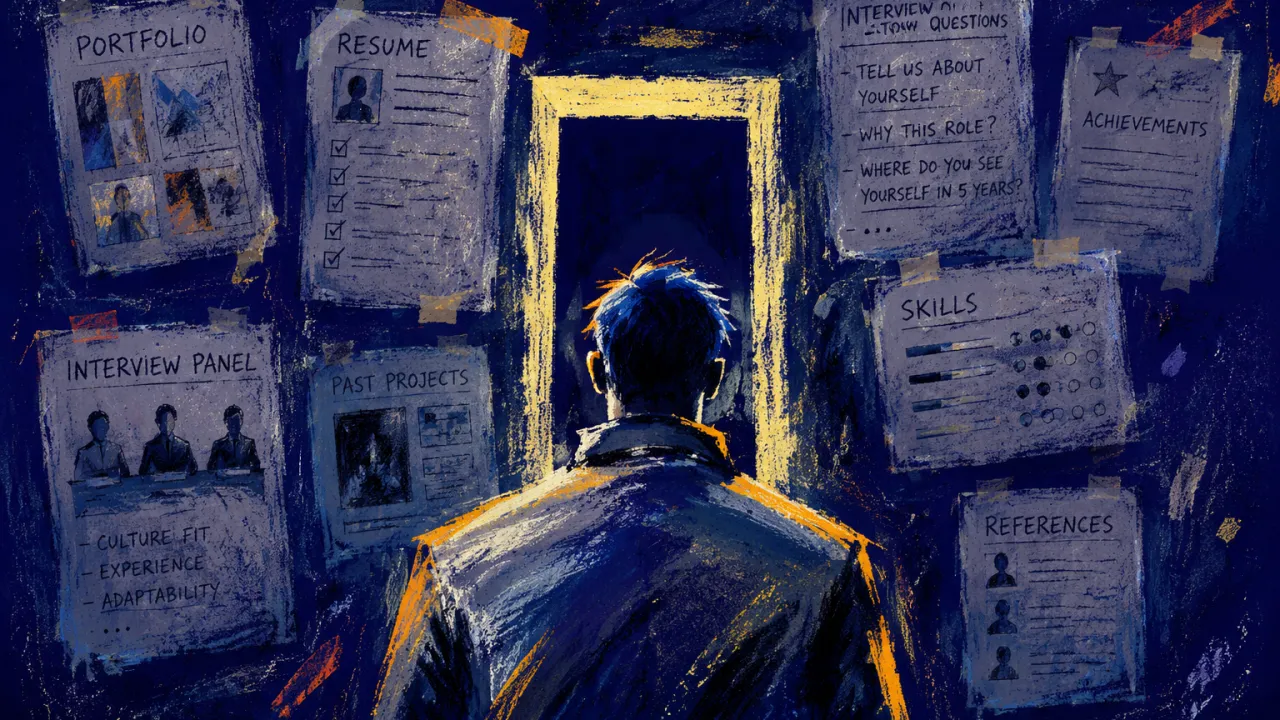
Career Pivot Validation Trial - you enter it the moment you decide to move toward a different field and every conversation starts sounding like an exam. A recruiter scans your resume for proof that your old role transfers; a hiring manager asks why you are leaving, what you have built, and whether you can perform at the new level without being given much room to learn. Friends or colleagues may say the move makes sense, then add a practical warning about salary, seniority, or starting over. Applications disappear after automated filters, interviews circle back to the same doubt, and trial projects ask you to demonstrate a future you have not yet been hired to practice. You keep revising your portfolio, translating your experience into unfamiliar language, and collecting certificates, testimonials, or small wins because the people with the power to open the next door want evidence before they offer access. The standard keeps moving: enough experience to be credible, but not so much that your previous work defines you; confidence, but no visible uncertainty. By the time you reach another interview, your shoulders are held high and your notes are crowded with proof points. The pivot starts to feel less like a choice being explored and more like a position you must defend before anyone will let you occupy it, much like the figure on the Seven of Wands, standing alone on higher ground while six wands rise toward the platform from below.
Why it's not you?
The problem is not that your experience is lacking or that you are asking for too much; the trial is built by a hiring system that demands proof of a future role before granting you a chance to build it. Resume filters, credential expectations, and skeptical gatekeepers belong to the structure of this situation, not to any failure on your part.
Career Pivot Validation Trial in Tarot Cards
Career Pivot Validation Trial places you in a cycle where every application, interview, and portfolio review asks you to prove the move before the door opens. The shoulders held high after each skeptical question point back to an environmental, structural dynamic in the way access is being granted. The cards below mirror that outline without deciding whether the pivot should happen. Here are the Tarot Cards for this kind of career transition under scrutiny.
The raised wand, grounded tools, and four suit emblems place multiple forms of capability on one working table. You already possess material that can travel across fields, but the pivot requires you to reorder it into a portfolio, story, or trial project that the new audience can read. The vertical gesture from table to sky captures the translation problem: practical experience has to become a credible claim about future performance. Recruiters may see only the old job title unless the evidence is deliberately arranged around the competencies the new role values. The structure gives you an active point of leverage without pretending the gate is open. Your resources are real, yet their professional value is mediated by the format, vocabulary, and proof standard controlled by the receiving field.
The armored ruler, stone throne, ram symbols, and scepter place authority inside a rigid professional structure. You are presenting a career pivot to people who control the title, level, and risk budget, so the question of transferability is also a question of who gets to define competence. The throne shows why salary and seniority become part of the trial. The new field may recognize your potential only at a lower rung, while the old field has already given you status that the new hierarchy does not automatically honor. The card names a power relationship that can be negotiated only after it is visible. The hiring manager is not just receiving information about your experience; that person is positioned to determine whether the past can authorize your place in the future organization.
The seated teacher, two students, pillars, and crossed keys depict learning as a formal passage controlled by an institution. You can acquire new knowledge, but the career pivot remains under review until that knowledge is packaged in a route the new field knows how to recognize. The scene makes the certificate more than a document. It is a social signal that places your learning inside an accepted lineage, while the hiring system uses that signal to manage uncertainty about an applicant arriving from elsewhere. The card also keeps the limitation visible: institutional study can clarify the new field's language without automatically granting the practical role. Your portfolio and trial work still have to bridge the distance between being trained and being trusted.
The seated figure, balanced scales, and upright sword create the exact visual grammar of a hiring review. You bring a mixed record of old-field achievements and new-field preparation into a process that weighs, ranks, and finally cuts the application into an admissible or inadmissible result. The scales clarify why translating your experience matters: the new field needs a recognizable comparison between what you have done and what the role demands. The sword also shows the limit of that translation, because a single criterion can turn a complex pivot into a quick professional verdict. This is an audit of legibility rather than a moral judgment. The structure can be rigorous when its standards are explicit, but the burden becomes visible when a resume filter or interviewer treats unfamiliar experience as irrelevant before examining what it can transfer.
Reversed
The scales tipped out of balance and the lowered sword make the assessment process physically uneven. You can supply certificates, testimonials, and carefully translated achievements, yet the system may weigh a familiar title more heavily than evidence that actually maps to the new work. The reversed image separates procedure from fairness. A recruiter may be following a filter, a manager may be protecting a seniority band, and an application may be rejected before anyone has to account for the value hidden in your previous role. The standard looks technical while its access effects remain structural. The card does not turn the rejection into a verdict about your ability. It identifies an evaluation architecture in which the criteria, timing, and decision authority can be opaque, making the career pivot carry the cost of a rule you were never allowed to negotiate.
The angel's one foot on land and one in water, with two cups joined by a measured stream, gives a physical image of a professional identity being rebuilt through integration. You are carrying real capabilities from one field into another while learning which parts need translation, expansion, or a new name. The scene resists the idea that growth requires deleting the past. Your previous role remains a source of evidence, but the new field demands that you reorganize that evidence around a different set of outcomes and expectations. The balanced flow also makes the external pressure visible. A hiring system may ask for a finished new identity before granting the access through which that identity could develop, so the growth task unfolds inside a credibility trial rather than in private.
The angel's trumpet, the figures rising from enclosed spaces, and the open sky make a past identity answer a public call. You are not merely leaving one job for another; you are asking a new field to retrieve useful evidence from a professional history it may otherwise classify as finished. The rising figures show why every interview can sound like an examination of the whole career. Recruiters and managers decide whether your earlier responsibilities can be reassembled into a credible next role, and their decision controls whether the pivot becomes an actual position or remains a defended proposal. The card makes reassessment active and consequential. The past is not erased, but neither is it automatically accepted as transferable; the hiring system chooses which parts it will resurrect as legitimate proof.
The cloaked figure, eight stacked cups, moonlit sky, and mountain path show a person leaving a completed arrangement without a visible guarantee at the destination. You are moving away from a professional identity that has become insufficient, while the new field remains distant and requires you to explain why the departure is credible. The cups left behind represent real investment, status, and familiarity rather than disposable history. Their arrangement makes the cost of the pivot legible: friends and colleagues can understand the desire for change while still warning you about salary, seniority, and the possibility of starting over. The mountain path gives the direction a demanding horizon. The career pivot is not validated by desire alone, and the receiving system may ask for evidence of the destination before allowing you to develop the experience that would make the departure look justified.
The craftsperson inside the unfinished structure, the two observers, and the plan held between them create a direct image of work being evaluated in context. You are asked to produce something that lets a new field inspect not only your technical ability but also how your experience fits its shared way of working. The architectural setting explains why a portfolio can matter more than a persuasive explanation. Reviewers need to see the work in a recognizable frame before they can assign it a level, especially when your previous role does not provide an obvious professional category. The card makes validation collaborative and institutional. Your output may be strong, but entry depends on other people agreeing that it belongs to their structure and is worth developing further.
The two figures walking through snow, the bright window, and the building's closed boundary create a direct image of exclusion beside an institution that could provide shelter. You may have relevant experience and visible preparation, yet the new field can still place you outside because your previous role does not fit its familiar category. The physical cold makes the cost of the trial concrete. Repeated applications, unpaid or low-paid projects, lower seniority, and salary compromise are not abstract inconveniences; they are the material conditions created when access is delayed until proof arrives. The lit window also keeps the structure visible. The opportunity exists within the system, but its nearness does not make it available, and the rejection should be read as an access barrier rather than as evidence that your decision to pivot lacks substance.
The craftsperson at the bench, the hammer, and the row of completed pentacles show learning made visible through repeated production. You are not collecting knowledge as an abstract interest; you are building artifacts that allow a new field to inspect whether your study can become usable work. The sequence of pentacles mirrors the pressure to accumulate proof before the career gate opens. Each course, certificate, and small project gives employers a familiar signal, but it also places the financial and time cost of legitimacy on the person making the pivot. The card distinguishes real practice from the title of being ready. Study can create a credible bridge, yet the hiring system still decides whether the bridge counts as professional evidence or merely as more preparation.
Reversed
The craftsperson, workbench, and repeated pentacles retain their physical promise of skill, but the reversed arrangement makes the repetition feel disconnected from advancement. You can keep completing projects and certificates while the hiring system adds another requirement instead of converting evidence into an interview or offer. The card separates productive practice from credential accumulation without progress. A trial assignment may show that you can work in the new field, yet the institution can still treat the result as preparation rather than as grounds for access, leaving you to finance and perform an unofficial apprenticeship. The blocked rhythm names a structural test with no visible passing condition. Your review is whether each new proof point changes the decision architecture, or whether it simply allows gatekeepers to keep the future role at a distance.
The young student, focused gaze, and single pentacle give learning a concrete object that can be shown to an evaluator. You are building new knowledge in public view because the career pivot requires more than private interest; it requires an artifact that signals serious entry into the field. The cultivated ground suggests potential, while the learner's posture keeps the work at an early stage. That combination mirrors the pressure of courses and certificates that promise preparation but do not remove the employer's demand for a level of performance the training is still developing. The card names a legitimate learning position inside an unforgiving validation process. The issue is not whether study is real, but whether the institution will treat emerging competence as enough to open the next professional door.
The figure with a globe in hand, two wands at the wall, and a distant landscape makes the old and new career paths physically simultaneous. You can see the security of the territory you already occupy while also measuring the field that would require you to rebuild credibility. The wall gives the existing career a material advantage, not merely an emotional one. Salary, seniority, and a known professional vocabulary are already under your feet, while the new route remains exposed to interviews, filters, and the possibility of starting lower. The card holds the choice open without treating hesitation as failure. The external trial keeps asking whether the future field is sufficiently legible to justify the cost of leaving the platform that already recognizes you.
The rider's laurel, raised wand, and surrounding crowd are arranged for public recognition; in reverse, that display becomes recognition delayed, questioned, or withheld. You may have certificates, testimonials, and visible wins, yet the hiring system keeps the applause separate from actual access to the new role. The reversed procession shows why external validation can become its own trial. Proof is no longer simply evidence of work; it is a social signal that must be endorsed by the particular gatekeepers controlling the next title, level, and salary. The card identifies a conversion problem rather than an empty record. Your achievements exist, but the structure deciding professional legitimacy has not yet translated them into belonging in the new field.
The lone figure on higher ground, the six wands rising from below, and the tightened defensive stance make professional access look like contested territory. You arrive with a real history behind you, yet every recruiter or hiring manager positions that history as evidence to be challenged rather than as a bridge into the new field. The elevated ground gives you a position to defend, but it does not give you automatic admission. You keep translating old achievements into unfamiliar language, assembling portfolio pieces and certificates while the system asks for proof of a future role before allowing you to practice it. The card holds the structural contradiction in view: you can protect the pivot through visible evidence, but the pressure comes from a gatekeeping process whose standard keeps moving. Your task is therefore not to prove your worth in the abstract, but to identify which parts of the new field's scorecard are actually controlling access.
Reversed
The lone defender, the high ground, and the wands converging from below become more constricted when the position is viewed in reverse. You can still have relevant experience, but the visible defense no longer changes the terms of entry as applications disappear and interviews return to the same doubt. The blocked angle makes the system's catch-22 concrete. You are asked to demonstrate the future role, yet the missing opportunity is precisely what would let you accumulate uncontested evidence of that role. The result is not a neutral test of competence but a narrowing access route shaped by credentials, filters, and risk-averse hiring. This orientation names a loss of negotiating room rather than a lack of ability. The useful audit is the gate itself: which requirement is genuinely about performance, and which requirement simply protects the institution from recognizing transferable experience?
The bandaged figure, upright wand, and uneven wall of eight wands show someone protecting a position after repeated contact with opposition. You return to interviews with notes, examples, and prepared answers because the process keeps asking you to defend the same decision in slightly different language. The wall is not a completed professional pathway; it is a temporary defense built from what you have gathered. That physical fact mirrors the pivot's unstable status: your evidence may be enough to keep the possibility alive, while the hiring system still withholds the title and access that would make the new identity ordinary. The remaining reserve is real, but the card makes its cost visible. A process that repeatedly tests the same legitimacy claim can turn stamina into an unofficial requirement, shifting the burden of an uncertain hiring structure onto the person attempting the change.
No cards available for this filter.
Career Pivot Validation Trial in Tarot Card Reading Insights
Career Pivot Validation Trial can follow you through applications, interviews, and portfolio reviews, and others have brought that same career-change pressure into readings. Here are Tarot Reading Insights from people navigating a new field while gatekeepers ask for proof.