Responsible, But Not Authorized?

Explore this split through grounded struggle language, relevant tarot cards, and Tarot Reading Insights from related readings.

Responsibility-authority Split

What does this feel like?

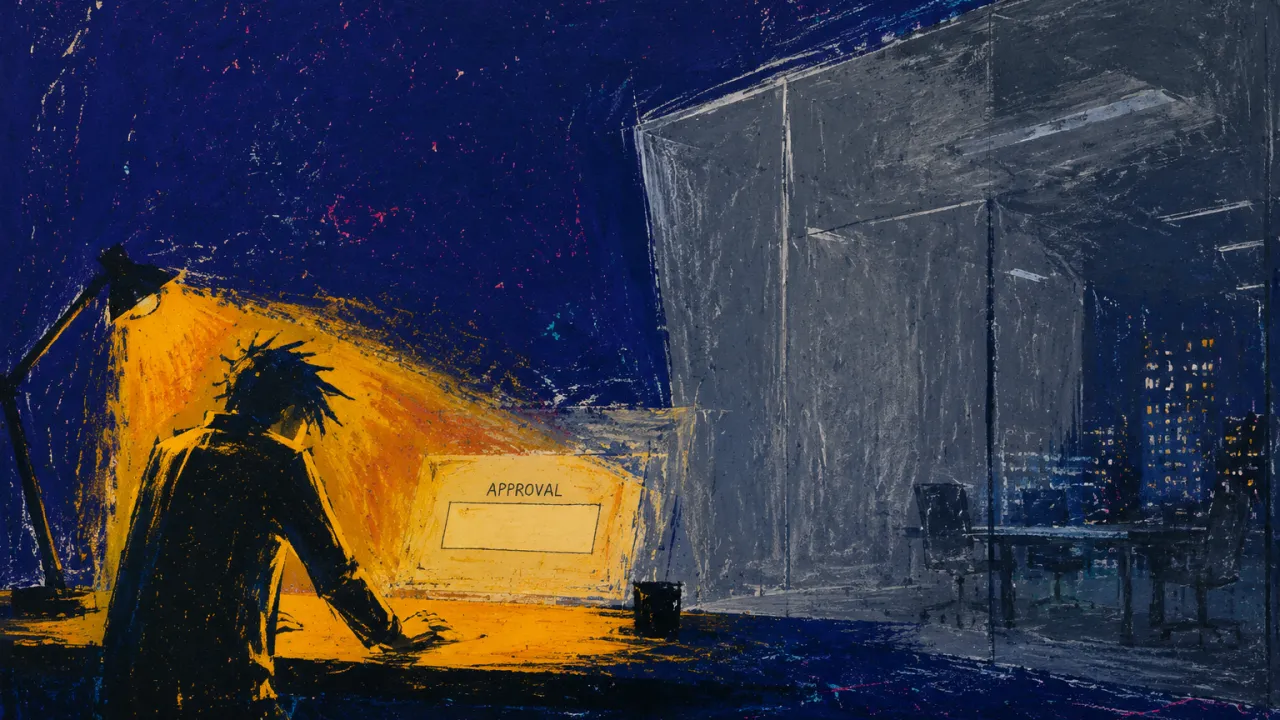
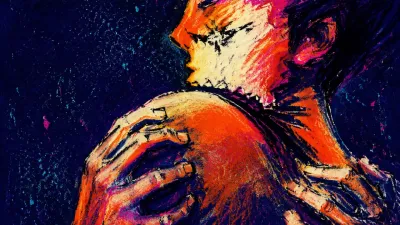
Responsibility-Authority Split — you feel it the moment someone says, "Can you own this?" and your body answers before your mouth does: shoulders tightening, jaw setting, eyes moving across the room to find the person who actually has the power to approve, pause, fund, hire, escalate, or change the terms. You are the one in the thread, the meeting, the family chat, the group project, the relationship repair talk; your name is attached to the outcome, your tone is expected to stay steady, your response is supposed to sound capable, but the levers that would make capability possible are somewhere else. You keep making things work with borrowed permission and careful wording, trying to sound decisive without overstepping, trying to be reliable without becoming the container for every consequence. The strange part is that people may call it trust, leadership exposure, maturity, or being "the safe pair of hands," and some part of you wants to believe that, because it feels better than admitting you are being measured against a result you were never fully allowed to design. So you learn to move in half-gestures: saying yes with conditions no one hears, raising concerns in a tone soft enough to survive the room, carrying the emotional weather of decisions made above you, then going home with a tight chest because the workday is over but the accountability is still sitting on your body. Over time, the cost is not just stress; it is the quiet shrinking of your own sense of authorship, the feeling that your effort is always visible and your authority is always just out of frame. You can become fluent in responsibility while growing unsure whether you are allowed to choose, object, redirect, or stop. And that is the wound of this split: not that you lack strength, but that strength keeps being asked to stand where power should have arrived, much like the figure on Strength, hands placed at the lion's mouth with no weapon, no crown of command, only steadiness at the point of risk.

What's pulling at you?

You are not stuck because you cannot handle responsibility; you are stuck because responsibility and power have been placed in different rooms. One part of you is trying to deliver, protect, smooth, and answer for the outcome, while another part knows you were never given enough authority to shape the conditions that create that outcome. That mismatch can make even competent action feel strangely trapped.

How It Shows Up?

  • You open Slack or Teams and see your name tagged on a deadline thread you do not control — the scope changed twice, the budget is fixed, and the people who can approve the fix are quiet. Your shoulders rise before you finish reading, your breath gets short, and your fingers hover over the keyboard while you try to write something calm enough to buy time. You can answer the message without pretending the whole system is in your hands.
  • A friend or partner says, "Why don't you just tell them no?" and you feel your face go still, because from the outside it looks simple: speak up, push back, set the line. Inside, your stomach tightens because you know the title on your email signature does not match the consequences already landing on you. You can let the sentence be incomplete for a moment instead of defending every detail of why it is complicated.
  • You are in a meeting where everyone looks at you when the project starts slipping, even though the decision that caused the delay was made above your level. You nod, take notes, and feel heat move up your neck while your jaw locks into that polite, contained expression you use when you cannot say the obvious out loud. The room has the feeling of the Three of Pentacles when the tool is in one hand and the blueprint is somewhere else; noticing that split is allowed.
  • Late at night, you replay a conversation with your manager and draft three different versions of what you should have said. Your chest feels tight, your eyes burn from the screen, and every sentence sounds either too sharp or too careful, as if one wrong word could make you look difficult instead of precise. You do not have to solve the hierarchy at 1:17 AM; naming the pressure is enough for tonight.
  • Your body starts recognizing the pattern before your mind does: the same knot between your shoulder blades, the same clenched teeth, the same shallow inhale when someone says "Can you own this?" You feel the weight of the Ten of Wands in the way your arms seem busy before you have even picked anything up. You can pause before agreeing and check what is being handed to you, not just what is being asked of you.

Responsibility-authority Split in Tarot Cards

Responsibility-Authority Split lives in the gap between being made answerable for outcomes and not being given the levers to shape them. You can feel it in the clenched jaw, tight shoulders, and shallow inhale that show up when someone asks you to "own" work you cannot fully direct. From an existential perspective, the structural framework here is about agency being requested from the body before power has been placed in the role. The Tarot Cards below make that outline visible without smoothing over the mismatch.

Strength Upright
The figure is responsible for the lion's mouth, but the card gives her no external instrument of command. Her authority exists only through the live contact of her hands, the steadiness of her posture, and the trust created inside a risky exchange. That visual structure mirrors a career bind where you are expected to deliver outcomes without the title, budget, mandate, or escalation power that would normally support those outcomes. The work asks you to close the lion's mouth, but the organization hands you influence instead of authority. The struggle becomes structural when accountability and power no longer arrive together. You are not imagining the friction: the card shows responsibility placed at the point of danger while formal control remains absent from the scene.
The Hermit Upright
The lantern reaches forward while the staff stays planted on a small, icy platform. The figure can signal direction and hold himself upright, but the scene gives him no road, no team, and no structure around him. In career terms, that is the pressure of being treated as a source of judgment before the role gives you authority, budget, mandate, or protection. You may be asked to mentor, stabilize, translate, or guide decisions while still standing outside the official power line. The card locates the strain in the mismatch between responsibility and leverage. It shows why carrying the light for others can feel heavy when the system has not given you the ground to move with it.
Justice Upright
Justice sits in the exact center of the card, holding the scales in one hand and the sword in the other. The body is still, but both instruments extend outward from the same seated figure, forcing measurement and enforcement to share one physical frame. That arrangement mirrors the family position where You are treated as responsible for keeping things fair, calm, or workable, while the actual authority to change the rules remains elsewhere. The card does not show free movement; it shows a body holding consequences in place under a structure larger than itself. In family conflict, this becomes the split between being blamed for the outcome and not being allowed full authorship over the terms. Justice makes that pressure visible as a burden of position: the person in the middle is asked to carry the verdict, even when they did not build the court.
Reversed
The sword stands upright, but its color nearly disappears into the gray pillar behind it, while the balanced scales remain easier to read. The image places accountability in plain sight and authority in partial camouflage. In a career structure, that is the pressure of being measured against outcomes while the power to decide, protect, or enforce stays elsewhere. You may be treated as the owner of the result without being given the instrument that would let ownership become real agency. Justice makes the bind visible by separating what is demanded from what is executable. The struggle has a hard edge: responsibility keeps landing on your desk, while authority remains attached to the institution, the manager, or the hidden rulebook.
The Hanged Man Upright
The tied ankle carries the whole body's load while the hands, the part of the body built to intervene, are folded out of sight. The figure is responsible for staying aligned in the frame, but the tools for adjustment are physically removed. That visual strain fits a work role where accountability lands on you before authority does. You may be expected to stabilize projects, absorb consequences, or act like a leader, while the real levers of budget, hiring, scope, or decision rights remain above you in the frame.
Death Upright
The fallen ruler's crown and scepter lie apart from his body while the rider remains elevated and moving. Authority is visible in the image, but it is no longer located where the old symbols say it should be. This is a precise career structure when accountability moves faster than power. You may be expected to carry the consequences of a team transition, failed strategy, leadership gap, or new mandate while the actual authority to reshape the conditions remains elsewhere. Responsibility-Authority Split names the strain of being made answerable without being made truly empowered. The card grounds that strain in the separation between fallen symbols and active force: the title, task, or burden may land on you, but the leverage required to alter the outcome has not landed in the same place.
The Sun Reversed
The rider carries the flag, not the reins. The body is placed in a position of public declaration while the animal's movement is not visibly governed by the rider's hands. In a career reading, that image gives Responsibility-Authority Split a concrete shape. You may be asked to represent the project, absorb the pressure, motivate others, or own the outcome, while the actual levers of budget, priority, hiring, scope, or decision rights sit elsewhere. The reversed structure makes the gap harder to name because it can look like trust, freedom, or leadership exposure from the outside. The card identifies the hidden cost: accountability is loaded onto the body, while authority is missing from the hand that is supposed to steer.
Judgement Reversed
The angel holds the trumpet, flag, altitude, and timing while the people below carry the bodily response. The command originates from a place the figures cannot reach, and the landscape offers no route from their coffins to the source of authority. Career systems often reproduce that geometry when delivery, transformation, or team outcomes are placed on you while decision rights stay elsewhere. You are made responsible for movement, but the levers that define movement remain above the ground you stand on. Responsibility-Authority Split names that misalignment without turning it into a personal flaw. The card's structure shows why effort alone cannot resolve a role that asks the body to answer a call it does not control.
Page of Cups Reversed
The chalice is in the Page's hand, so the immediate duty is his to hold. The fish, the sea, and the question of what should happen next are larger than the cup and larger than the authority visible in his posture. This is the workplace structure of being made accountable for the emotional surface of a system without being given the power to alter the system itself. You may be expected to keep clients reassured, keep the team calm, smooth over tension, or carry the relational fallout of decisions made above you. The card gives that strain a boundary. It shows responsibility placed in the hand, but authority dispersed into the sea, which is why trying harder to hold the cup cannot solve what only structural power could change.
King of Cups Reversed
The shell throne appears royal, but it floats without visible shore, dock, or supporting structure. The King carries the cup and scepter, yet the surrounding water sets the conditions under which that authority has to operate. In career terms, this becomes the reversed burden of being held accountable for emotional climate, team stability, or stakeholder reactions without being given the levers to change the environment. You are placed at the center of the turbulence, and the card shows why responsibility can feel heavier when authority is mostly symbolic.
Three of Pentacles Upright
The craftsman touches the stone, but the blueprint stays in another figure's hands. The visible labor and the authority to define the work are split across two bodies, so the person doing the repair is not the person holding the frame. In a family system, that split becomes a precise form of pressure: You are expected to fix the atmosphere, translate old rules, manage contact, or keep the structure functional while someone else still decides what the family story is supposed to look like. The card locates the struggle in the gap between responsibility and authorship, where effort becomes heavy because the plan was never fully yours to revise.
Reversed
The hammer touches the pillar, but the authority of the design sits in another person's hands. The card places responsibility and direction in separate bodies, so the person doing the visible work is not the same person defining what the work is supposed to prove. In love, this becomes a relationship structure where one person carries the emotional labor of fixing, explaining, softening, or adjusting, while the other controls the standard for whether the repair counts. The problem is not effort alone; it is the separation between who must act and who gets to define adequacy. Responsibility-Authority Split is the reversed Three of Pentacles locked into a relational form. It shows how repair turns exhausting when accountability is demanded from one side while the power to name the relationship's needs, pace, and success remains elsewhere.
Six of Pentacles Reversed
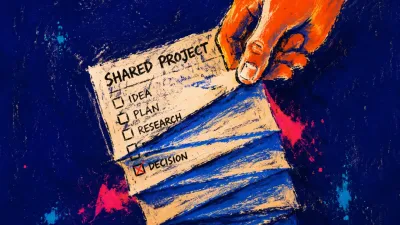
The card places the power to measure, decide, and distribute in one standing body, while the bodies most affected by the exchange remain lower, waiting, and open-handed. The platform is shared, but authority is not evenly held. Reversed, that spatial arrangement describes a personal growth bind where responsibility and authority split apart. You are still the one who must change your habits, direction, and life structure, yet the felt right to choose can sit in a mentor, framework, expert, metric, or imagined evaluator outside you. The red glimpsed through the receiver's torn blue cloth complicates the hierarchy: the capacity is not entirely absent from the one who waits. The struggle is that the part capable of authoring the next move has been placed beneath the part that asks to be authorized.
Eight of Pentacles Reversed
The tools are in the craftsman's hands, but the wider measuring system is not. The row of completed pentacles, the distant town, and the makeshift bench define what the work must answer to, while the body only controls the next strike. That is the family structure of being responsible without being authorized. You may be expected to manage tension, maintain contact, protect someone's feelings, or keep the family functioning, yet the rules about what counts as acceptable are set outside your reach. The card clarifies the specific unfairness of the split. It is not that you lack effort; it is that effort has been assigned to you without matching power to alter the frame that keeps creating the work.
Ten of Pentacles Upright
The seated elder occupies the foreground while the standing adults hold the threshold and the staff remains upright but unused for forward motion. Authority, continuity, and operational presence are all visible, yet they are not held by the same body. In a career reading, this becomes the structure of carrying leadership without the corresponding decision rights. You may be asked to stabilize projects, manage stakeholders, or absorb consequences, while the real permission to move the gate remains seated elsewhere in the system.
Page of Pentacles Upright
The young Page is entrusted with the pentacle and raises it like a formal notice, but the image gives him the posture of a carrier rather than the command of an owner. The material symbol is in his hands, while the larger terrain of decision, distance, and destination remains outside his control. That arrangement makes Responsibility-Authority Split especially sharp in career questions. You can be asked to safeguard outcomes, deliver value, hold client pressure, manage up, or represent a project, while the authority to set direction, claim credit, negotiate scope, or change the rules sits elsewhere. The struggle is not simple unfairness; it is a structural mismatch between what your hands are made responsible for and what your role is allowed to decide. The card names the tension at the exact point where visible accountability rises higher than actual power.
Reversed
The young messenger displays the pentacle with both hands, but the image shows no council, contract, or visible recipient who shares the load. The object is solid and public, while the body holding it remains junior, exposed, and mechanically occupied by the task. In family systems, this structure names the strain of being made responsible for stability without being given authority over the rules. You may be expected to manage tension, money narratives, emotional updates, or parental reactions, while the actual power to redefine the arrangement stays elsewhere.
Knight of Pentacles Upright
The knight carries the equipment of responsibility: armor, reins, horse, pentacle, and the weight of a future field. Yet the scene offers no clear permission line, no marked road, and no visible act of command that turns burden into chosen direction. In a family system, this is the split between being held accountable and being allowed authority. You may be expected to manage emotions, money, logistics, peace, or reputation, while the actual power to decide remains elsewhere; the card makes that split visible as a rider loaded with duty but held at the threshold of action.
Queen of Pentacles Reversed
The pentacle is carried in the Queen's hands, while the stone throne carries the public signs of command around her. In reversal, the hand-held burden becomes heavier than the crown, and the body is fixed in the seat without a visible gesture that can redirect the system. At work, that structure names the split between being accountable for outcomes and actually holding the authority to shape them. You can be the person who protects the work, absorbs the pressure, and keeps the resources moving, while the power to set limits or claim recognition remains outside your reach.
King of Pentacles Upright
The image separates the tools of responsibility and authority into different hands: the pentacle carries value, while the sceptre carries command. Around the king, stone, wall, and castle establish a vertical order that makes control look stable and natural. In family dynamics, this maps onto the experience of being asked to carry adult weight while still being denied adult authority. You may be expected to be practical, available, reliable, or financially sensible, but your right to choose the terms of your own life remains quietly conditional. The card names the split between what you are responsible for and what you are allowed to decide. That split is why doing more does not necessarily create more freedom inside the family system.
Reversed
The sceptre stands upright in the king's hand, but the body is reclined and locked into the throne while the pentacle is braced on the knee. The signs of command are visible, yet the posture shows how much of the body is occupied with stabilizing the asset. At work, this shape names the pressure of being made answerable for outcomes without receiving the lived authority needed to move the system. You can be held responsible for delivery, team morale, or strategic results while still needing permission for the decisions that would make those outcomes possible. The reversed weight of the card is ceremonial power: enough visibility to carry blame, not enough leverage to change the structure.
Ace of Swords Upright
The hand grips the sword firmly enough to hold the crown, palm, and olive in alignment, but all of that symbolic weight rests on a narrow point suspended in the air. The image gives the hand responsibility for balance without giving it ground, footing, or a visible support structure. In career terms, that is the pressure of carrying outcomes before the workplace has matched your load with authority. You may be asked to decide, lead, fix, absorb risk, or represent a direction while the title, mandate, budget, or political cover remains elsewhere. Responsibility-Authority Split names that structural mismatch. The Ace of Swords shows the force of decision, but it also shows the cost of being made the stabilizing hand for a crown you do not fully control.
Eight of Swords Upright
The figure is required to stay upright in a field of blades while her hands, the tools of adjustment and defense, are fixed behind her back. The swords create consequences around her, but none of the instruments that could change the arrangement are in her control. In career terms, Responsibility-Authority Split names the strain of being measured against outcomes while decision rights, scope, budget, or strategic context sit elsewhere. You are not simply busy; the card locates the deeper bind where accountability lands on your body while authority remains outside your reach.
Page of Swords Upright
A young Page grips a full sword with both hands while standing on terrain that demands balance from every joint. The tool is larger than the role has fully grown into, and the scene gives him responsibility before it gives him stable ground. This is the family logic of Responsibility-Authority Split. You can be asked to mediate, soothe, explain, translate, protect, or be the reasonable one, while the actual power to change the family rules remains outside your hands. The card gives form to the exhaustion of carrying the weapon without owning the command structure. It shows why effort alone cannot resolve the strain: the body is doing adult-level stabilizing inside a system that still treats your authority as conditional.
King of Swords Upright
The armless stone throne gives the King a seat of command without much lateral support, while the long sword places the visible weight of decision in one hand. His posture looks composed, but the structure concentrates authority, exposure, and load into a narrow physical channel. In career terms, that is the shape of being held responsible before the support system catches up. You may be asked to own outcomes, manage conflict, or make calls, while the actual authority, resources, or protection needed to carry those calls remains partial.
Six of Wands Upright
The raised wand looks like command, but it is not the rein that steers the horse. The rider holds the emblem of authority while the actual mechanics of direction remain distributed across the horse, the crowd, and the ceremonial lane. In a workplace role, that split marks accountability arriving in public before control arrives in practice. You may be asked to lead, represent, or own outcomes while the levers that would let You shape those outcomes remain partial, borrowed, or controlled by the surrounding system.
Seven of Wands Upright
One wand is tasked with holding a whole slope, yet the six opposing wands arrive from hands that are not visible. The figure has the higher ground, but his footing is split by uneven terrain and a small stream, so advantage does not equal control. At work, this mirrors being made answerable for outcomes while the real levers sit below, beside, or behind you. The pressure is structural: you are asked to defend the position, absorb the escalation, and keep the line intact without being given matching authority over the forces entering the field.
Nine of Wands Upright
Eight wands stand by themselves, but the ninth must be held by the wounded figure to make the defense look complete. The line depends on a person where a structure should be. That visual logic is sharp in career readings where responsibility expands faster than authority. You may be expected to hold the team, project, client, process, or emotional climate together while lacking the mandate, title, budget, or decision rights that would make the burden legitimate. The card does not frame this as simple workload. It shows the difference between being trusted with impact and being used as the missing support in a system that has not formally given you power.
Ten of Wands Upright
The man bends forward under ten lifted wands, holding the entire structure with his own arms while the building ahead remains separate from the strain required to reach it. The load is not resting on the ground, delegated to a cart, or distributed across a team; it depends on his body as the missing infrastructure. That physical arrangement gives Responsibility-Authority Split its shape. You may be asked to carry outcomes, stabilize projects, protect deadlines, or absorb pressure, while the authority to change scope, reset expectations, or negotiate resources stays somewhere else. In a career reading, the distance between the carrier and the building matters. It shows a workplace path where arrival is demanded, but the power to redesign the route is not placed in the same hands as the burden.
Page of Wands Upright
The wand is held like a personal spark and a court instrument at the same time. The Page can announce, but the posture also suggests delegated speech, as if the voice has to carry a message from a structure larger than the young body holding it. In a family system, that double use becomes a sharp split. You may be expected to act mature, mediate tension, represent the family well, or handle emotional labor, while your actual authority over boundaries, timing, and self-definition remains conditional. The card gives that imbalance a visible form: responsibility is placed in the hands, but authority does not fully enter the body. The struggle is the repeated demand to carry weight without being granted the right to decide how that weight should be carried.
King of Wands Upright
The crown, lion throne, and long wand all announce command, but the king sits in a barren field with no visible court, workers, or structure around him. The throne itself is slanted while the wand creates a separate vertical line, so authority appears real but its base is not fully level. In a career setting, this becomes the experience of being made accountable for outcomes before the matching authority has been granted. You may be expected to lead a project, carry a team, manage risk, or own the result, while the actual decision rights, resources, or institutional backing remain partial. The card gives shape to the specific strain of carrying leadership weight from an unstable base. It does not erase your agency; it shows why the burden feels disproportionate when responsibility has arrived faster than structural power.

Responsibility-authority Split in Tarot Card Reading Insights

Responsibility-Authority Split often enters readings when someone is carrying the outcome while the power to change scope, timing, or rules sits elsewhere. The shift from cards to readings shows how others have brought that same mismatch into a spread. Tarot Reading Insights on this struggle are collected below.

Psychological struggles related to Responsibility-authority Split