Cold Tea, Open Tabs, and the Seven-Day Test That Interrupted the Loop

The 10:45 p.m. Waiting Room
“You can explain the pros and cons of every career pivot in your color-coded spreadsheet, but the application is still a draft because nobody has explicitly said, ‘Yes, this is the right move,’” I said as Alex (name changed for privacy), a 28-year-old non-binary customer success associate in Toronto, settled into our video call.
It was 10:45 on a Tuesday night. On Alex’s kitchen table, three career tabs sat beside two course pages and a Google Sheet arranged in careful shades of green, amber, and red. I could hear the refrigerator humming through the call. Their tea had gone cold, and they kept turning a warm phone over in one restless hand while the cursor blinked inside an unfinished application.
Their current job was stable enough to keep paying Toronto rent, but it no longer offered a convincing direction for growth. They had bookmarked adjacent roles, short courses, and a small creative project. Each possibility produced a brief spark, followed by the same contraction: more tabs, another comparison, and a message to the group chat asking, “Which one makes the most sense for me?”
“I know what I want until someone asks me to defend it,” Alex said. “Then I start thinking excitement isn’t evidence. I keep calling it research when I’m really waiting for a green light. I’m tired of being almost ready.”
I watched their shoulders climb as they spoke. The powerlessness had a physical architecture: it was like sitting in a clinic waiting room where no appointment had been booked, listening for a name that no one was scheduled to call. Alex wanted to choose their next direction under their own authority, yet they withheld even reversible action until someone else made the choice feel legitimate.
“Research and advice have been trying to protect you from regret,” I said. “I’m not going to turn that carefulness into a character flaw. I do want us to notice where protection has become suspension. Let’s use the cards as a map of the permission loop, then look for one route through it that respects your rent, work, privacy, time, and energy.”

Choosing the Transit Map: The Transformation Path Grid
I invited Alex to place both feet on the floor and take one unforced breath while holding the question, “Why do I keep waiting for permission to choose my next direction?” I shuffled slowly. The pause was not a mystical performance; it was a practical transition from rehearsing every possible defence to examining one pattern at a time.
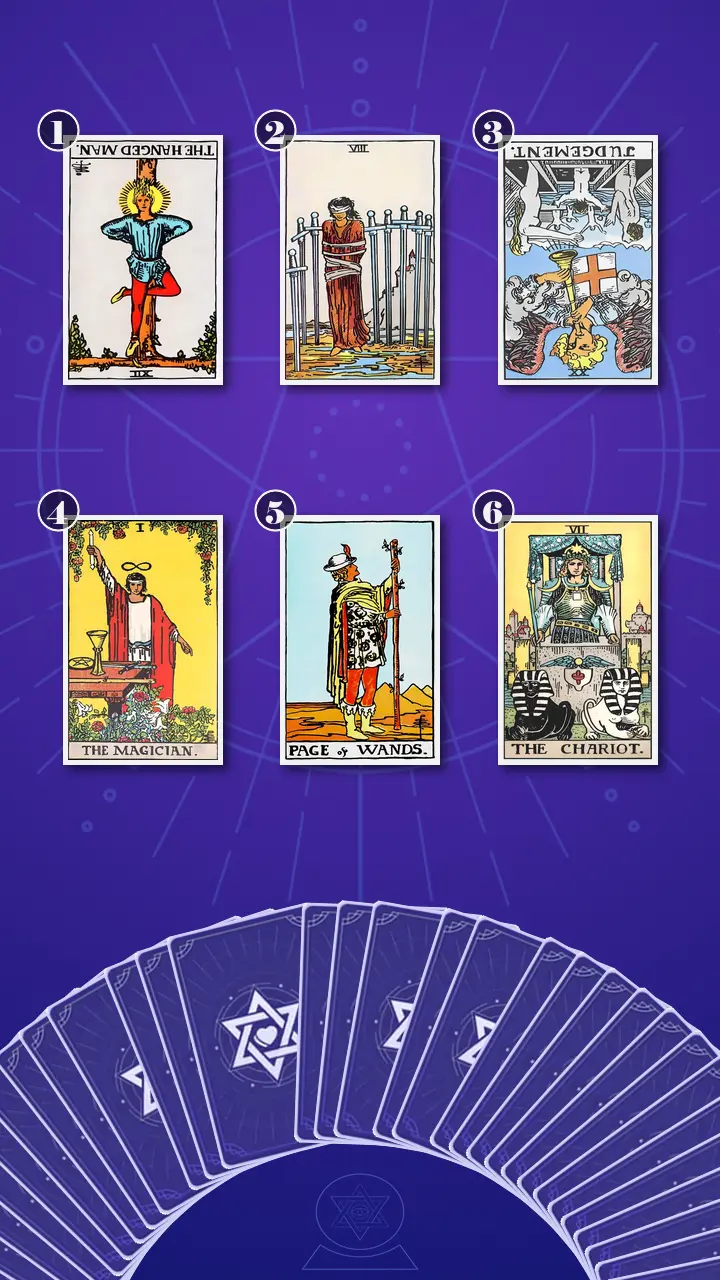
I chose the Transformation Path Grid · Context Edition, a six-card tarot spread for permission-seeking decision paralysis. I selected it because Alex was not facing a simple yes-or-no decision. They were caught in a self-reinforcing system: notice a possibility, seek endorsement, feel briefly safer while responsibility is shared, delay the test, create no firsthand evidence, and trust personal judgment even less the next time.
I arranged the cards in two rows of three. The upper row would reveal the observable waiting-room pattern, the restriction that made movement feel unavailable, and the root rule demanding an outside verdict. The lower row would answer those positions with a catalyst, a reversible seven-day experiment, and a way to choose, review, and redirect without giving away the steering role.
To me, the layout looked like a TTC map. The upper line kept circling the same station; the lower line created a route Alex could actually travel. The vertical pairs would matter too: suspension answered by agency, enclosure answered by exploration, and an external summons answered by internally coordinated movement.
I also made the boundary explicit. Tarot would not select Alex’s correct career, predict a guaranteed outcome, or become the new authority whose approval they needed. I would use the card meanings in context as a structured reflective tool. Alex would decide what counted as relevant, what fit their practical circumstances, and what action, if any, remained theirs to take.
The Upper Line That Kept Circling
Position One: The Halo Above the Untouched Form
Now I turned over the card representing the observable waiting-room pattern in which Alex researched, consulted, and repeatedly postponed a self-directed next step. It was The Hanged Man, reversed.
I pointed to the figure suspended by one ankle. The halo showed that awareness was already present, while the crossed leg held the body in a fixed position. Reversed, the card showed suspension in excess: reflection had stopped producing a genuinely different perspective, but it was still being used as a respectable substitute for movement.
“This is your 10:45 p.m. kitchen table,” I said. “You can explain three career paths accurately. You can revise every criterion after a friend’s voice note. Yet the application stays untouched because waiting still feels more responsible than choosing one reversible test. The delay is no longer teaching you anything new. It is preserving the role of the person who is always preparing to move.”
I let the image settle before adding, “Research stops being neutral when it keeps you from the evidence only action can create.”
Alex gave a short laugh, but there was no amusement in it. Their fingers tightened around the cold mug, then loosened. “That is painfully specific,” they said. “I know enough to explain every option, but apparently not enough to let myself choose one. That sounds right, and honestly a little brutal.”
“It would be brutal if I were calling you lazy,” I replied. “I’m not. The card shows insight that has become blocked at the point of conversion. It also warns against the opposite overcorrection. You do not need to prove independence by making a sudden, irreversible commitment. The useful question is much smaller: which decision already contains enough information for one reversible step?”
When I asked what they had left untouched most recently, Alex named a free information session for a short professional course. The registration form had required less than five minutes. They had sent the course link to three friends instead.
Position Two: The Door That Was Never Fully Locked
Now I turned over the card representing the learned-helplessness blockage that made available movement feel inaccessible without explicit permission. It was the Eight of Swords, upright.
The blindfold narrowed the figure’s attention. The bindings looked serious, but they were loose, and the swords formed an uneven enclosure with visible gaps. I read the energy as Air in excess: analysis, imagined evaluation, and defensive reasoning had crowded out Alex’s capacity to notice what was still negotiable. Agency felt deficient, not because every path was open, but because one absent reply had been given the authority of a locked door.
“A free course information session closes at midnight,” I said, “and an unanswered message from a friend starts to feel as if the registration page itself has been disabled. It is like a browser permission setting that says ‘admin approval required,’ even though the edit button is active.”
I did not dismiss the material concerns. “Toronto rent is real. Workload is real. Privacy and energy are real. Those facts can rule out quitting tomorrow, paying an unbudgeted fee, or making a public announcement. They do not automatically rule out a free inquiry or a private rough sample. The card asks us to separate the actual boundary from the internal rule that has expanded around it.”
“An unanswered message is not automatically a locked door,” I said.
Alex’s breath paused. Their gaze shifted away from the cards as if they were replaying a Slack exchange. Then their shoulders lowered by a fraction. “My manager said, ‘Have a think about it,’ when I mentioned an adjacent role,” they said. “I heard, ‘If I wanted you to do it, I would have encouraged you more.’ I closed the expression-of-interest draft.”
“So the external fact was that the response was ambiguous,” I said. “The internal rule was that ambiguity meant permission had been withheld. Both deserve attention, but they are not the same thing. You could still ask a factual follow-up or complete a private sample without pretending the practical risk is zero.”
Position Three: The Invisible Panel Convenes
Now I turned over the card representing the root rule beneath the repetition: an internally recognised preference was treated as invalid until an outside authority confirmed it. It was Judgement, reversed.
In the upright image, a trumpet sounds above figures rising to answer a call. Reversed in the root position, the call was not absent. Its energy was blocked by harsh evaluation. Alex could recognise a direction privately, but the recognition was immediately converted into a presentation for an invisible panel of managers, mentors, friends, and sensible future selves.
“You notice that an adjacent role or creative project feels alive,” I said. “Then wanting to investigate it becomes a courtroom case. You prepare exhibits about salary, credibility, timing, and whether someone more established would agree. Until the panel announces your preference back to you in official language, you treat your own recognition as inadmissible evidence.”
Alex looked down at their spreadsheet. “I know what I want until I imagine having to defend it,” they said quietly. “Then I need it to be objectively correct.”
“That is the root distinction,” I said. “Wanting to investigate something is not the same as claiming it will definitely become your career. Your preference does not need a closing argument before it becomes data.”
Their jaw tightened first. Then their eyes moved across the open tabs, slower now, as if the familiar screen had acquired a new caption. Finally, they exhaled into their chest. “I keep asking people to approve a trial as though I’ve already handed in my resignation,” they said.
I nodded. “Judgement reversed does not tell me that every private preference is correct. It shows me that you have been demanding a level of proof from preference that only experience could begin to provide.”
When the Magician Put the Tools Within Reach
Position Four: Core Artifacts on the Table
The refrigerator motor on Alex’s side of the call clicked off. In the sudden quiet, I turned over the card representing the leverage point that could interrupt the permission loop by restoring attention to resources and actions already under Alex’s control. It was The Magician, upright.
The Magician stood before a table holding the emblems of all four suits. Sword discernment, Cup preference, Wand initiative, and Pentacle practicality were already present. The energy was balanced and available. The missing element was not another opinion, assessment, tool, or credential. It was the deliberate selection and use of one existing resource.
The basic reading met Alex exactly where the loop usually tightened. At 10:45 p.m., three career tabs and a color-coded comparison sheet were still open. Their chest contracted as they typed, “Which one makes sense for me?” and waited, leaving the smallest information-generating action untouched.
The card carried me back to archaeological work and the long tables where objects from a collapsed structure are cleaned, classified, and examined. I have learned that an old system can fall without destroying everything of value within it. I call this Core Artifact Excavation: identifying what must survive a transition, even when the trajectory built around it no longer holds.
Alex’s enduring artifacts were not unanimous approval or a perfectly defensible five-year plan. I heard financial care, curiosity, meaningful contribution, room to learn, and the wish to make responsible choices without abandoning themselves. Those values could guide a small experiment. The approval ritual was scaffolding from an older organising system, not a sacred object that had to be carried into the next one.
Stop treating permission as the missing ingredient, start using what is already on your table, and let the Magician’s first deliberate action create the evidence your self-trust needs.
I left a deliberate pause. Then I put the central insight into one further sentence:
Permission is not the missing ingredient. The missing evidence begins when you use one thing already within your control to test what you want.
First, Alex’s inhale stopped. Their right hand hovered above the phone, fingers suspended as though another group-chat message had been interrupted before it could form. Their eyes widened, then lost focus for several seconds. I could see the recognition moving behind their face as the untouched course form, the closed role draft, and the bookmarked creative brief seemed to replay in sequence.
Then resistance arrived. Their eyebrows drew together, their cheeks flushed, and they pushed the mug away. “But doesn’t that mean I’ve been wrong this whole time?” they asked, sharper than before. The anger lasted only a moment before their voice thinned. “I’ve lost so much time.” Their shoulders released, but the release left them looking briefly unsteady, as if putting down a heavy box had revealed how tired their arms were.
“It means the strategy protected you longer than it remained useful,” I said. “That is different from saying you were foolish. I’m not asking you to condemn the person who needed witnesses. I’m asking whether that strategy still deserves control of the next five minutes.”
Their eyes reddened slightly. Their fist opened against the tabletop, one finger at a time. A long breath left them with a faint tremor, followed by a small, uncertain laugh. Relief was there, but so was the vulnerability of realising that no perfect authority would arrive to remove responsibility.
“Now, with this new perspective, think back to last week,” I said. “Was there a moment when this insight could have made the situation feel different?”
Alex returned to the manager’s “Have a think about it.” “I could have heard room to choose instead of a quiet no,” they said. “I could have opened the draft for ten minutes before asking what anyone thought.”
That answer marked the reading’s central emotional crossing. I did not see a jump from doubt to perfect confidence. I saw the first movement from contracted powerlessness and shame around an unapproved choice toward curious, grounded ownership based on firsthand evidence. Alex was beginning to replace “Who will validate this?” with “What can I learn using what I already control?”
From One Sprouting Wand to the Driver’s Seat
Position Five: The Seven-Day Curious Scout
Now I turned over the card representing one reversible seven-day experiment that could create firsthand information without requiring a permanent commitment. It was the Page of Wands, upright.
The Page studied one sprouting wand in an open landscape. I placed it mentally beneath the Eight of Swords, and the contrast was immediate: eight enclosing arguments above, one living possibility below. The Page restored Fire in a contained form. This was not reckless momentum or a demand to reinvent a life in a week. It was balanced beginner energy, enough to approach one possibility with curiosity.
“This looks like selecting one bookmarked direction and running a seven-day field sample,” I said. “Three short sessions. One deliberately rough output. A private note about curiosity, energy, and friction. You are not announcing a permanent career identity, proving your talent, or promising to continue. You are claiming the right to investigate.”
I watched Alex close two tabs while we spoke. “So I’m not choosing my forever identity,” they said. “I’m gathering seven days of evidence.”
“Exactly,” I replied. “One sprouting wand can generate information that eight more arguments cannot. If the experiment feels flat, difficult, unexpectedly absorbing, or simply impractical, each response becomes evidence. None of it has to become a verdict on your worth.”
Position Six: Steering While the Sphinxes Disagree
Now I turned over the card representing cognitive integration: the repeatable capacity to choose, test, review, and redirect while Alex retained ownership of the steering role. It was The Chariot, upright.
I pointed to the black and white sphinxes facing forward and to the absence of visible reins. The Chariot’s energy was directed but not simplistic. Desire, doubt, financial caution, and curiosity did not need to reach unanimous agreement. They needed coordination around the next checkpoint.
“After the seven-day test, you can set a two-week checkpoint,” I said. “You can continue, modify, or stop using your recorded evidence alongside practical limits. Feedback can still help, but it becomes information rather than permission. You might ask someone, ‘What is one skill gap you can see in this sample?’ instead of, ‘Do you think I should pursue this?’”
Alex traced the edge of the card with their gaze. “Mixed feelings can ride with me without taking the wheel,” they said.
“Yes. The Chariot does not promise a flawless destination. It changes the standard of progress. Self-trust is not perfect certainty; it is keeping the steering role while you learn.”
The spread’s final vertical pair now became clear to me. Judgement reversed had shown Alex waiting for a verdict from above. The Chariot showed them moving from within, still able to listen to other people, still accountable to real constraints, but no longer requiring unanimous approval before every reversible checkpoint.
The Stratigraphic Review: Finding Clarity by Layers
When I read the grid as a whole, I saw an old organising system reaching the end of its usefulness. At Cambridge, I learned that the boundary between historical epochs rarely means that everyone vanished overnight. It means the structures organising daily life changed. Alex’s stable role, analytical intelligence, and careful consultation had not become worthless. They had simply stopped being sufficient structures for the future.
The upper row showed why the waiting room kept rebuilding itself. Reflection had become suspension. Serious practical concerns had expanded into a total enclosure. A private preference had been sent before an invisible panel for approval. The lower row answered each layer precisely: use one existing resource, investigate one living possibility, then review the evidence without surrendering direction.
The cognitive blind spot was not merely “overthinking.” Alex had been treating a preference as a claim that needed proof and a low-risk test as though it were a permanent verdict. The transformation was not from caution to recklessness or from interdependence to isolation. It was from seeking full endorsement to completing one self-authorised, reversible experiment before asking for feedback.
“I can already feel myself turning this into a massive Notion dashboard,” Alex said.
“Then the dashboard is not invited,” I replied. “We will use two bounded practices. Each one has an exit. Neither requires resignation, enrollment, public disclosure, or spending outside your existing budget.”
Two Small Moves That Create New Evidence
- The Weekend Stratigraphic Review.On Saturday at your kitchen table, before opening LinkedIn or an advice thread, set a 20-minute timer and divide one page into three layers: “surface noise,” for peer timelines, ambiguous reactions, and imagined judgment; “real boundaries,” for rent, work, money, privacy, time, and energy; and “core artifacts,” for the values that must survive any transition. Finish with three lines: “If nobody replied, I would test...”; “The resource already on my table is...”; and “The smallest reversible move is....”If 20 minutes starts becoming another research project, use the seven-minute version. Stop when the timer ends, circle one action under 30 minutes, and treat the answer as data rather than an instruction.
- The One-Tool, Seven-Day Field Test.On Tuesday evening, mute the advice group chat for 30 minutes and use one tool you already own to make a rough sample connected to one bookmarked direction. Add no more than two further 20-minute sessions during the next seven days. After each session, record curiosity before, energy after, willingness to return, and one unexpected friction point. The next morning, take 15 minutes to choose “continue,” “modify,” or “stop” before requesting any feedback.Keep the test private and zero-to-low-cost. The minimum version is opening the relevant file for five minutes. If feedback would add useful information, ask one bounded question about the work rather than asking someone else to choose the route.
I told Alex that either experiment could be shrunk, paused, or stopped. A tarot reading that replaces one external authority with another has missed its purpose. The cards had organised the pattern and offered symbolic language; Alex remained the person with the right to decide what happened next.

Eight Days Later: Evidence on the Table
Eight days later, I received a photo of a rough customer-education sample beside the three-line “If nobody replied” note. Alex had completed three short sessions and scheduled the review before asking the group chat what the result meant.
“I slept through the night,” they wrote. “This morning my first thought was, ‘What if I’m wrong?’ I laughed, opened the file, and added one more paragraph anyway.”
I did not call that a solved career decision. I called it the first credible piece of evidence that the waiting room was no longer the only available structure. Alex still had Toronto rent, a stable job, mixed feelings, and unanswered questions. What had changed was their relationship to the next checkpoint.
For me, this is how the six-card Transformation Path Grid tarot spread for permission-seeking decision paralysis earns its usefulness. It does not name a fate. It makes a pattern visible, helps preserve the values that matter, and returns the practical work of choosing to the person whose life will contain the consequences.
If a choice matters to you, I know the tightness in your chest may hold more than uncertainty. It may hold the fear that moving without a witness will turn every wrong turn into proof that you were never fit to steer. I hope Alex’s reading leaves a gentler possibility on the table: within a bounded experiment, a wrong turn can remain information rather than a verdict on your authority.
If no reply were coming this week, which core artifact would you protect, and which one tool already on your Magician’s table would you use to test one small, reversible direction for seven days?