Safe Enough To Stay?

Explore Comfort Entrapment through lived signs, related tarot cards, and tarot reading insights from sessions shaped by this quiet bind.

Comfort Entrapment

What does this feel like?

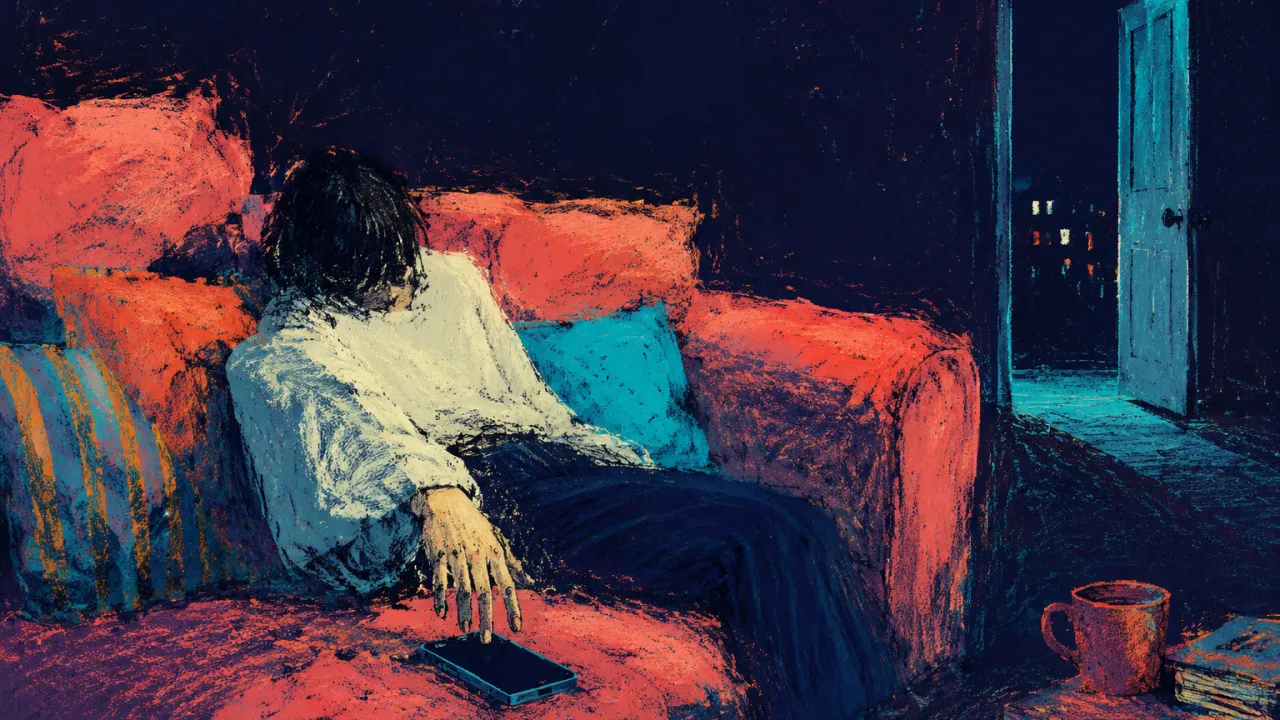
Comfort Entrapment is what it feels like when the life that soothes you also starts quietly holding you in place. You notice it on a slow evening when nothing is technically wrong: the room is warm, the couch knows the shape of your body, your phone is within reach, the same show is ready to play, and every possible change feels just slightly too much effort. You are not in crisis, and that is part of what makes it hard to name. The setup works. The job pays enough, the relationship is kind enough, the group chat is familiar enough, the room is comfortable enough, the routine reduces friction enough that leaving it can feel unreasonable, even dramatic. So you stay, not because you are choosing with your whole self, but because the familiar option keeps making the smallest demand on your body. Your shoulders drop when you cancel the plan, but the relief has a stale aftertaste. Your chest loosens when you postpone the conversation, then tightens again later when you realize nothing has changed. You keep telling yourself you are resting, waiting, being realistic, protecting your peace, and sometimes you are. But somewhere underneath the softness, a quieter part of you is counting the days you have traded for ease that no longer gives anything back. The cost is not loud; it is the slow narrowing of your range, the way your future starts getting edited by whatever feels least disruptive tonight. You begin to confuse comfort with alignment, stability with permission, and low friction with yes. And over time, the question stops being whether your life is good enough to defend — it becomes whether it is still alive enough to move, much like the Empress seated among cushions, grain, robe, and garden, surrounded by everything that can nourish growth while the body itself remains sunk in a softness that has become difficult to leave.

What's pulling at you?

You are caught between the part of you that genuinely needs safety, softness, and a lower-effort life, and the part of you that knows the same setup is starting to decide for you. The trap is that nothing has to look bad for it to become too small; comfort can keep proving itself reasonable while your next move keeps losing oxygen.

How It Shows Up?

  • You wake up on a free Saturday with no urgent plans, and somehow the open day feels harder than a packed one. You stay under the blanket, checking the same apps, letting the room stay dim because turning on the light would make the day feel more definite. Your hips feel heavy in the mattress, your throat is dry, and your chest has that quiet flatness that comes from knowing you could move but not quite wanting to disturb the softness around you. You can let the morning be exactly what it is without turning it into a verdict on your whole life.
  • Your partner or friend asks what you want to do next month, next year, or even just tonight, and you hear yourself choose the option that keeps everything easy. The restaurant you always go to, the trip you keep postponing, the conversation you keep smoothing over — all of it feels reasonable in the moment. Your smile arrives quickly, but your stomach tightens a second later, like something in you noticed the choice before you did. It is allowed to notice the small contraction without having to force a dramatic answer right away.
  • You sit down at your laptop to update your portfolio, apply for something harder, or clean up the system that keeps your week running, and instead you start adjusting harmless details. One tab becomes six, your shoulders creep toward your ears, and the old routine begins to feel like the shaded spot under the Four of Cups: familiar, quiet, hard to leave. The task itself may not be huge, but your body treats it like stepping off the only stable floor. You can begin by naming the friction, even if the first movement is smaller than you expected.
  • You are out with people who know the old version of you well, and the night is warm, funny, and easy enough to make your restlessness feel rude. You laugh at the same references, stand in the same corner, order the same drink, and feel the group rhythm close around you like a decorated pavilion that was never meant to become a permanent home. Your face is relaxed, but your jaw aches by the time you get back to the bathroom mirror. You can enjoy what is pleasant while still admitting that pleasant does not always mean spacious.
  • There is a particular body signal that keeps showing up: a heaviness behind your ribs when your room is too comfortable to leave, a dull pressure in your lower back when the sofa has held you too long, a tightness in your hands when you think about changing something that technically still works. Nothing looks dramatic from the outside, which makes the signal easy to dismiss. The body is not giving you a slogan; it is giving you texture, pressure, and timing. You can treat those signals as quiet data rather than commands you have to obey immediately.

Comfort Entrapment in Tarot Cards

Comfort Entrapment lives in the moment a life feels gentle enough to stay in while quietly making movement feel less available. You may notice it as heaviness in the mattress, a tight stomach after choosing the easy option, or an ache in your jaw after another familiar night. From an existential perspective, the structural framework of this struggle is about safety becoming the place where choice gets softened until it nearly disappears. The Tarot Cards below make that outline visible without explaining it away.

The Empress Upright
The throne is layered with cushions, and the garden around it is fertile, warm, and complete. Nothing in the scene looks hostile, yet the body remains seated while the living world keeps moving around it. Old friendships can work the same way when comfort becomes a soft enclosure. You are not trapped by conflict alone; you are held by the memory of ease, the group rhythm, and the fear that growth will make you the one who disturbs what once felt safe.
Reversed
The Empress is sunk into an upholstered throne, with cushions and loose fabric absorbing the body's weight while the garden remains bright and fertile around her. The openness of the landscape is real, but her usable path is narrowed by softness, wheat, and the fixed geometry of the seat. As a reversed struggle, Comfort Entrapment forms when support becomes immobilizing rather than restorative. You may have enough safety, beauty, and permission to grow, yet the body keeps choosing the low-friction position that preserves comfort over contact with challenge. The card does not condemn comfort; it shows where comfort has become the hidden architecture of avoidance. The stuckness has a shape, and that shape is softer than it looks.
The Lovers Reversed
The garden offers abundance, shelter, and luminous order, but the figures remain separated and motionless inside it. The space looks open from a distance, while the trees, serpent, angel, and mountain turn the open ground into a contained decision chamber. You may be staying with the safe option because it still provides enough beauty, logic, or stability to make leaving feel irrational. Comfort Entrapment names the choice paralysis that forms when the known world is not bad enough to reject, yet too enclosing to let your agency breathe.
The Devil Upright
The chains run to a ring set into a heavy black cube, yet the collars around the figures' necks are not visibly tight. The foreground has space, but the most organized part of the scene is the structure that keeps everyone near the altar. Comfort Entrapment appears here as a route that still functions well enough to be mistaken for safety. You may know the path is small, repetitive, or spiritually expensive, but its familiarity gives it a kind of shelter that makes freedom feel less stable than captivity. In a direction spread, this is the dead end that does not look dramatic from the outside. The Devil shows a contained world with heat, habit, and recognizable rewards, which is exactly why leaving it can feel more frightening than staying stuck.
Reversed
The chains around the two figures are visible, but they hang with enough slack that the restraint does not have to tighten. The dark chamber gives them room to stand, look, and remain, while the black pedestal and ring quietly define how far that room extends. In personal growth, Comfort Entrapment is the kind of stuckness that does not feel dramatic enough to justify leaving. You may still have options, but the card locates the trap in a familiar enclosure that lets you function while slowly shrinking the distance between safety and surrender.
Four of Cups Upright
The figure sits in an open landscape, yet the tree's shade, crossed limbs, and closed attention make a private enclosure around him. The three cups already on the ground reinforce the comfort of the known, while the fourth cup asks the body to receive something that would disturb the existing arrangement. In personal growth, this is the quiet trap of a self-concept that feels stable enough to defend. You may know the familiar version of yourself is too small, but it still offers predictability, identity, and a controlled emotional climate. Comfort Entrapment is not laziness; it is the structural pull of a familiar enclosure that keeps growth from becoming necessary. The Four of Cups shows that enclosure as calm on the surface and costly underneath, because the new cup cannot be tested until the protected perimeter opens.
Reversed
The shaded ground under the tree offers a stable refuge, and the figure uses it so completely that the open landscape loses its practical meaning. Nothing blocks the path outward except the comfort of the closed posture itself. Within inner work, this is the trap of a safe retreat that quietly becomes the whole world. You may have built a private space to recover, but the card shows that refuge turning into a container where new feeling can approach without being allowed to change the room.
Six of Cups Upright
The children stand inside a protected courtyard where the sky is open but the path remains bounded by the estate. The cup is offered gently, the flowers are intact, and the whole scene is arranged around safety rather than departure.\n\nThat visual comfort carries a precise personal growth friction: the self is not trapped by obvious danger, but by an environment that makes staying small feel emotionally correct. You may be able to name your next level clearly, yet the body still reaches for the older container because it feels warm, known, and uncontested.\n\nComfort Entrapment appears here as the point where protection stops being recovery and starts becoming a ceiling. The card does not shame the need for safety; it shows the moment when safety becomes the shape your growth has to outgrow.
Reversed
The Six of Cups is bright and peaceful, but its peace is architecturally contained. The children, cups, garden, and manor form a safe enclosure where nothing has to face open weather, hard distance, or direct exposure. For studying, that protected beauty can become a closed academic habitat. You may stay with familiar notes, easy topics, old revision rituals, or low-risk tasks because they keep the system calm, even while the harder material outside the courtyard remains untouched.
Eight of Cups Upright
The red-cloaked figure has already shifted his weight away from the eight cups, yet the cups remain upright, ordered, and visibly capable of holding value. Nothing in the foreground has shattered. The pressure comes from the fact that the existing structure still works enough to make departure feel irrational from the outside. That visual tension mirrors a lifestyle system that has become too familiar to question cleanly. You may have routines, possessions, work rhythms, or comfort loops that create stability on paper while quietly absorbing the energy that would let you move toward a more truthful daily architecture. The card locates the struggle at the exact point where comfort stops being nourishment and starts becoming containment. The staff, the river crossing, and the dim ascent show that clarity is not waiting inside the old setup; it begins when the body admits that a functional system can still be too small for the life it is meant to hold.
Reversed
The cups still stand close to the stagnant water, orderly enough to look like a home base and incomplete enough to keep the figure restless. Under the image's inward pressure, the marsh becomes less like a place to leave and more like a baseline the body has learned to tolerate. In personal growth, comfort can become a closed circuit when your routines, self-image, and familiar explanations protect you from exposure while quietly keeping your potential underwater. The structure feels safe because it is known, not because it is alive. Comfort Entrapment is the bind where staying small feels more stable than crossing into a harder landscape. The card locates the trap in the way the cups can still hold enough past satisfaction to make the missing future seem unreasonable.
Nine of Cups Upright
The low wooden stool fixes the man in place beneath a row of cups that already looks complete. Nothing in the image chases him, yet the body has no visible transition into standing, turning, serving, or leaving. That is the inner shape of Comfort Entrapment: relief becomes a closed room when it no longer restores movement. You may have the conditions that should let you relax, but the scene shows comfort hardening into a posture that keeps the inner system paused. The Nine of Cups is powerful here because its pleasure is real enough to hold you, but orderly enough to immobilize you. The card does not accuse comfort; it marks the point where comfort stops breathing and starts functioning as containment.
Reversed
The figure sits firmly beneath the row of cups, arms locked and posture settled into a scene that already looks complete. Nothing in the image is falling apart; the trap is that the stable arrangement has become so comfortable that movement itself would disturb the whole structure. Friendship can take the same shape when an old bond still feels familiar, funny, or easy enough to keep, while the deeper exchange has stopped growing. You may know the role, the group rhythm, the shared references, and the emotional limits so well that leaving or renegotiating the bond feels more destabilizing than staying underfed. The card locates the struggle inside comfort that has become a container. It does not accuse the friendship of being empty; it shows how a pleasant, proven arrangement can quietly harden into the very thing that prevents honest movement.
Ten of Cups Upright
The house sits beyond a gentle river, the garden is established, and the family stands inside a landscape with no visible threat. The image offers nourishment from every side, yet the same arrangement leaves little unclaimed space for a next horizon. Comfort Entrapment appears when the safest structure also becomes the structure that narrows direction. You can recognize that a life is good for you and still feel the pressure of a future that keeps shrinking inside its stability.
Reversed
The house is secure, the land is green, the river is gentle, and the family stands inside a protected emotional field. In a reversed position, that safety can become so normalized that the open landscape no longer reads as possibility; it reads as a boundary around the life that already works. Comfort Entrapment describes the personal growth dilemma of being held by a life that is not visibly broken. You may want a larger self, a sharper edge, or a more demanding calling, while another part of the system keeps choosing the familiar warmth that prevents exposure. The card's softness is important because the trap is not built from punishment. It is built from pleasant conditions that quietly lower your tolerance for risk, friction, and transformation.
Ace of Pentacles Reversed
The garden is beautiful, green, and only lightly fenced, which makes the boundary feel gentle rather than confining. The archway promises passage, but the cultivated space already offers enough beauty and safety to make the harder road toward the mountain easy to postpone. In its reversed form, the card shows comfort becoming a soft enclosure. Nothing in the scene looks like a prison, yet the protected garden can quietly become the whole map if the threshold is treated as decoration instead of passage. You may keep improving the version of yourself that already feels safe while avoiding the terrain that would actually expand you. The struggle is subtle because the place that limits you also nourishes you, and leaving it can feel like betraying stability rather than choosing growth.
Four of Pentacles Upright
The stone seat supports the figure, but the support becomes inseparable from restraint. His feet press down on two pentacles, his arms close around another, and the coin on his head makes even a small shift costly. Comfort Entrapment lives in that exact mechanical bargain: the position is secure because it does not move. You may be looking at a future that is technically open, yet every route seems to require disturbing the stable arrangement that has made life feel manageable. The distant town remains visible, which matters. The card is not showing an absence of possibility; it is showing possibility separated from bodily permission. The trap is the safe life that can be defended more easily than it can be outgrown.
Reversed
The square stone seat holds the figure in a stable center while the empty foreground and distant town remain unused. The posture has adapted so completely to staying protected that the available space no longer functions as a path. In personal growth, this is comfort after it has hardened into a private enclosure. You may have built something that protects you, but the card shows the cost: the same structure that keeps you steady can quietly reduce the size of the life you are able to enter.
Nine of Pentacles Upright
The woman stands in a cultivated vineyard where every visible sign says the environment has been made safe, fertile, and beautiful. The distant hills and open sky are present, but her body remains inside the estate, close to the pentacles and the controlled rhythm of the garden. That arrangement gives Comfort Entrapment its physical shape. You are not stuck because nothing has grown; the friction comes from having built a life system that now protects you from the exact uncertainty required for the next stage of growth. In personal growth, this card locates the struggle at the border between stability and evolution. The garden proves your discipline, but it also shows how comfort can become a quiet enclosure when the next challenge asks you to leave the conditions that made you feel competent.
Reversed
The estate in the card is not a prison in any obvious way; it is beautiful, cultivated, and full of evidence that life has been managed well. In the reversed structure, that beauty becomes harder to question because the boundaries of the garden start to feel like the only safe shape love can take. Comfort Entrapment in a relationship forms when stability begins to absorb the need for truth. You may know the bond works on paper, in routine, or in public, while the more direct parts of desire, grief, anger, or longing are kept hooded so they do not disturb the life you have learned to maintain. The struggle is subtle because nothing has to collapse for you to feel caught. The card shows how a comfortable enclosure can become emotionally restrictive precisely because it looks so reasonable from the outside.
Ten of Pentacles Reversed
The Ten of Pentacles holds its figures inside a settled arrangement: the elder seated, the couple contained under the arch, the child partly hidden, the dogs moving through a route already claimed by the household. The scene is stable, but the stability depends on everyone accepting the given layout. In a lifestyle context, that becomes the quiet trap of comfort that is too functional to question. The apartment works well enough, the schedule looks responsible, the habits are familiar, and the material setup proves that life is technically secure, yet the body keeps sensing that the structure has stopped evolving. This card names comfort as a form of enclosure when it starts replacing active choice. You are not being asked to reject stability; the struggle is seeing where stability has become the reason the daily system cannot breathe, update, or make room for the person you are now.
Queen of Pentacles Upright
The Queen sits beneath a rose arch in a cultivated green enclosure, with a carved throne supporting her body while open hills and water remain behind her. Her gaze drops into the pentacle rather than traveling into the distance, so the image holds comfort and horizon in the same frame without letting them merge. For direction work, that visual geometry maps the strain of a stable life that has become too well fitted to the present. You can see a future beyond the garden, but the body has learned the security of the seat, the shade, and the held resource. Comfort Entrapment names the moment when ease stops being a base and starts becoming the boundary of motion. The card does not diminish the value of what has been built; it locates the exact point where what sustains you also begins to narrow the route you can imagine.
Reversed
The throne sits in a garden that looks safe, fertile, and complete, yet the Queen’s body remains enclosed by stone arms, draped fabric, shade, and roses. The open landscape is visible behind her, but the immediate body-space is protected and fixed. In personal growth, comfort becomes a structure when the safest seat starts defining the limits of movement. You can have stability, taste, and support while still feeling the pressure of a life arranged to preserve what already works instead of testing what could grow.
King of Pentacles Upright
The King sits inside a completed world: the throne is heavy, the estate is fertile, the coin is secure, and the body has no urgent need to rise. His comfort is not empty ease; it is supported by visible achievement, cultivated resources, and a domain that already works. That is where the pressure of Comfort Entrapment begins. The same structures that prove you can build stability also reduce the felt necessity of becoming someone larger, less familiar, or less optimized around what already succeeds. In personal growth, this card locates the struggle at the point where safety stops being a foundation and starts becoming a boundary. You are not blocked by lack of capacity; the card shows capacity surrounded by enough reward, ownership, and control that the next stage of evolution has to compete with the comfort of staying coherent.
Reversed
The King sits inside a lush estate that has grown around his body, throne, robe, and walls until comfort and containment share the same outline. The scene is fertile, but it is not mobile. That visual stillness maps cleanly onto old friendships that feel safe because they are familiar, shared, and socially established. You may know the rituals, the group chat, the memories, and the mutual history, while also sensing that the relationship has stopped giving you room to move. Comfort Entrapment appears when security becomes the reason you keep shrinking your truth. The card does not shame comfort; it shows how comfort can become a beautiful enclosure when the friendship has more history than present reciprocity.
Two of Wands Reversed
The open world is visible, but the figure's usable space is the castle wall. The wand, the battlement, and the elevated position all stabilize him, yet that same stability keeps the body from entering the landscape it surveys. In a long-term friendship, Comfort Entrapment appears when the familiar role has become the safest place to stand and the hardest place to leave. The old rhythm may protect the bond from sudden conflict, but it also compresses your ability to change your availability, name a new boundary, or stop performing the version of closeness that used to work. Reversed, the Two of Wands turns the castle from a base of confidence into a private enclosure. You are not trapped because there is no outside; you are trapped because the known arrangement has trained your nervous system to treat the outside as too costly to enter.
Four of Wands Reversed
The canopy is open, bright, and stable enough to stand under, while the road to the distant house still requires a crossing. The most comfortable part of the image is not false; it is simply not the whole route. For personal growth, that matters because a supportive phase can become a place to stop. You may be staying inside a routine, identity, or safe achievement that once protected your development, while the card shows that the next stage asks for movement beyond the frame that first made you feel secure.

Comfort Entrapment in Tarot Card Reading Insights

When Comfort Entrapment shows up, people often bring the same quiet bind into readings: the life that holds them also keeps narrowing their next move. These sessions turn from card images toward the lived question of what comfort is protecting and what it is postponing. Tarot Reading Insights on this struggle are gathered below.

Psychological struggles related to Comfort Entrapment