Do You Actually Fit Here?

A grounded look at this group-entry threshold, with related tarot cards and reading insights on belonging, pacing, and fit.

Community Integration Trial

What is this situation?

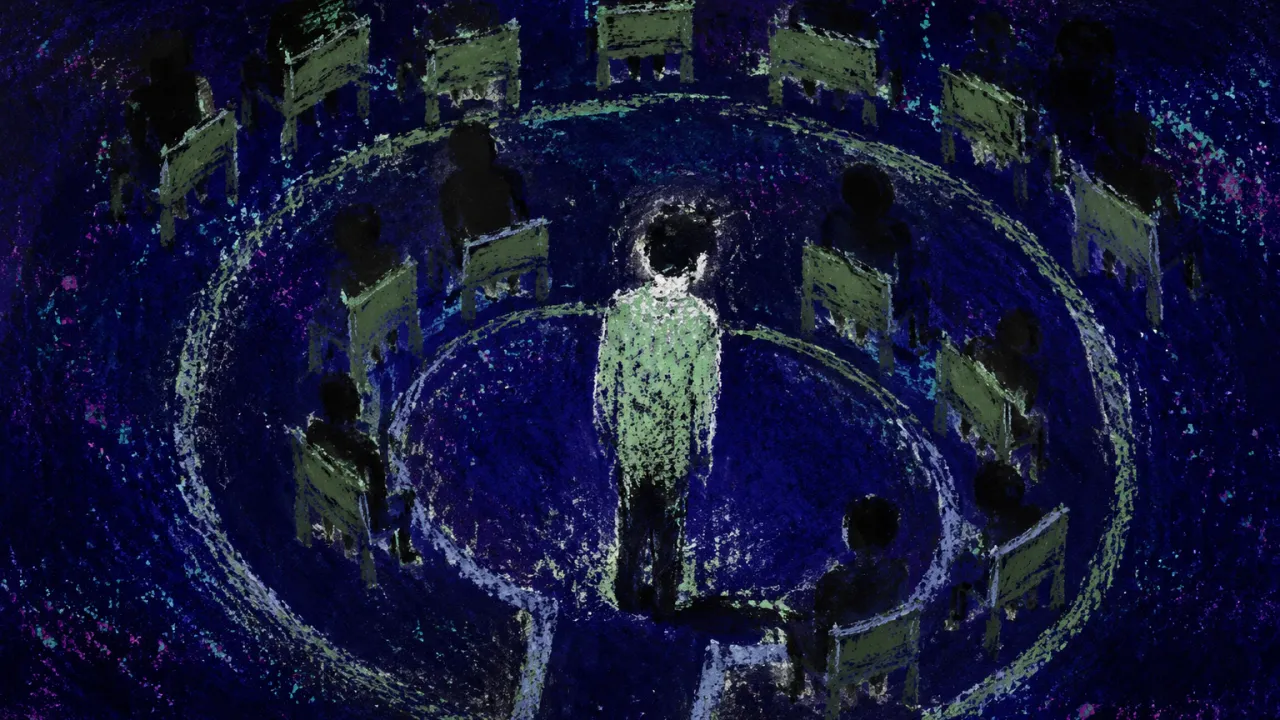
Community Integration Trial — you enter a new social space that looks promising from the outside: a friend group you keep getting invited around, a Discord server that already has inside jokes, a climbing gym crew, a class cohort, a workplace-adjacent circle, a mutuals-heavy group chat, or a local meetup where everyone seems relaxed because they already know the rules. At first, there is enough warmth to keep you coming back: someone remembers your name, tags you in a plan, asks what you do, or makes room for you at the table. But the longer you stay near the circle, the more you notice that belonging is not the same as access. People have shared references you missed, routines that were built before you arrived, private histories behind casual jokes, and a rhythm for replying, showing up, teasing, helping, disappearing, and returning that no one explains out loud. You start measuring tiny signals: whether your message gets a reaction or sits there, whether an invite includes a clear time or just a vague "you should come," whether people make space when you speak, whether you are included when plans move from public chat to smaller threads. The group may not be rejecting you; it may even be kind. Still, you are spending energy translating a social environment that has a gate, a pace, and a set of unspoken terms. You might leave events with your jaw tight from smiling at the right moments, your phone in your hand replaying whether you talked too much or not enough, your chest tightening before you accept the next invite because every small entry point feels like a test of how much of yourself can be shown without becoming a performance. What wears you down is the in-between state: close enough to see the garden, not yet sure whether there is a real place for your actual rhythms, interests, limits, and needs inside it, much like the cup, pentacle, wand, and sword on The Magician's table, all present in a prepared space, but still waiting to prove which tools can actually be used there.

Why it's not you?

The problem is not that you are bad at belonging, too cautious, or difficult to include. A new community already has codes, pace, history, and invisible access points, and those things take energy to read. Until the group offers clear, repeated signs of room for you, the strain belongs to the situation, not to a flaw in you.

Community Integration Trial in Tarot Cards

In a Community Integration Trial, the strain comes from being close enough to join while still having to read the group's timing, language, and return signals. The tight chest before you reply in the group chat, show up to the meetup, or decide whether to accept another invite is part of how your body tracks an unfinished social threshold. This is an environmental, structural dynamic: the room has rules, rhythms, and access points that shape how participation becomes legible. The Tarot Cards below reflect the outline of that trial without telling you to force belonging or walk away too early.

The Magician Upright
The cup, pentacle, wand, and sword sit together on the table, while the garden and flowers frame the scene as a contained living space. The image does not show random abundance; it shows a prepared environment where different forms of resource can be tested for use. Community Integration Trial appears when a new group looks promising but has not yet proven whether it can hold your real rhythms, interests, limits, and social needs. You are not simply joining; the structure is measuring whether the circle has enough emotional, practical, creative, and conversational range to become livable. The Magician's table matters because integration requires more than liking the vibe. The social environment has to support exchange without swallowing the person who brings the tools.
The Empress Upright
The crown of twelve stars and repeated Venus symbols make the garden feel governed by a rhythm, not by randomness. Around the seated figure, the throne, shield, robe, water, and grain create a social world with codes of value, access, and contribution. Community Integration Trial appears when you are entering a group that looks warm from the outside but still has rules you have to learn by contact. The Empress makes those rules visible as an ecosystem: you are not just trying to be liked, you are finding where your presence can become reciprocal without dissolving into performance.
The Hierophant Upright
The two acolytes kneeling inside the temple make belonging physically visible before any doctrine is even spoken. Their matching placement, shared orientation, and position below the central teacher show a community with roles, norms, thresholds, and a clear sense of who is already inside the room. In a personal growth setting, that room becomes the cohort, accountability circle, workshop, practice group, or online community where self-development is socially reinforced. You are not only learning ideas; you are learning the etiquette of a space that decides what counts as serious growth, committed practice, and acceptable uncertainty. The pressure comes from the same structure that provides support. The card frames community integration as a real trial: the group can stabilize your discipline, but it can also make you perform the local language of progress before your own process has fully taken shape.
The Chariot Upright
The city wall, moat, and sphinxes create a visible boundary system around belonging. The charioteer is close enough to the city to engage with it, but the armor, vehicle, and guardians show that entry is mediated through role, signal, and timing. In social life, that becomes the trial of integrating into a community that is not hostile but not instantly open. You are reading a field with established codes, and the card gives shape to the difference between being rejected and being in the slow process of becoming legible to a group.
The Hermit Upright
The lantern does not flood the whole landscape; it creates a small cone of workable visibility. The staff touches the ground while the elder stands at a distance, making contact without rushing into the entire field. That is how slow community entry often works. You are reading codes, pacing exposure, and testing whether a group can meet your signal without forcing you to drop your boundary at the door.
Wheel of Fortune Upright
The four winged figures sit at the corners with open books, creating a stable outer frame around the wheel's movement. Inside that frame, the side figures interact with the rim as part of the same mechanism, suggesting a system where participation requires learning the rhythm rather than forcing the whole structure to stop. Community integration works the same way when a group is real enough to have customs, references, and expectations that are not instantly obvious. The books and perimeter show that belonging is mediated through shared codes, while the turning center shows that entry happens through timing, repeated presence, and role adjustment. You are not outside because connection is impossible. You are in a trial phase where the social rules are becoming readable, and the task is to notice which forms of participation create genuine circulation rather than performative attendance.
Temperance Upright
The angel stands between shore and water while moving liquid from one cup to another without losing the stream. The image does not show instant belonging; it shows careful contact, paced exchange, and a body learning how to stay connected without collapsing into the environment around it. In a social context, that visual structure maps onto the trial period of entering a community. You may be testing how much access to offer, how quickly to respond, which parts of yourself are safe to show, and whether the group can meet you with enough steadiness to make deeper participation worth it. The rising path behind the figure matters because the connection is not static. It suggests that belonging is being built through repeated calibration, not granted through one perfect introduction. The leverage point is the quality of the exchange: whether the group allows gradual trust, mutual pacing, and enough space for you to remain intact while becoming part of something larger.
The Star Upright
Kneeling with one point of contact on land and another at the water's edge, the figure is not charging into the scene or hiding from it. She is testing contact through a slow, visible exchange, letting the vessels pour into two different environments without forcing either one to absorb everything at once. That posture mirrors the early stage of joining a social ecosystem where belonging is possible but still being negotiated. The open body, the clear sky, and the unfortified oasis all point to a setting where visibility can become connection, provided the group has enough space for honest presence rather than instant performance. For You, the social pressure is not simply whether people like you. The card highlights the trial of finding the right level of participation: enough openness to be known, enough boundary to avoid becoming overextended, and enough patience to let reciprocity prove itself over time.
The Moon Upright
The crayfish rising from the pool at the exact mouth of the path gives The Moon a social threshold rather than a settled home. The road exists, but it is lit by reflected lunar light and watched by two reactive animals, so every step into the group has to be read through partial cues instead of clear welcome. That is the structure of trying to integrate into a community before the norms, pace, and trust are stable. You are not outside because the path is absent; you are at the beginning of a route where belonging has to be tested through small signals, guarded spaces, and repeated low-risk contact.
The Sun Upright
The child rides into the open sunlight without reins, while the garden wall still stands behind the horse as a protective boundary. The scene shows participation becoming possible because the body is visible, supported, and no longer trapped behind the old enclosure. In a social context, that visual structure maps onto the first real tests of belonging: showing up, being seen, and discovering whether a group can receive you without forcing a performance. You are not just joining a crowd; you are crossing into a warmer social field where the quality of the container matters as much as the invitation.
The World Upright
The laurel wreath makes a complete container around the dancer while the four corner figures stabilize the edges of the scene. The body, boundary, and surrounding witnesses are arranged as one coherent social field, where visibility and protection can exist at the same time. That structure mirrors the stage where a new community is not yet casual but is becoming legible. You are testing whether your role, pace, and visibility can fit inside a group without having to dissolve your own rhythm to belong.
Ace of Cups Upright
The cloud-borne hand does not seize the chalice; it holds it lightly enough for the water to move. The cup stays upright while the streams pour into a larger pool, which gives the scene the texture of a social opening that requires tact rather than force. That structure mirrors the moment when a new group is available but not yet secure. You can read the room, offer something real, and let connection circulate, but the belonging is still being tested through pace, timing, and mutual receptivity. The Ace of Cups fits this context because its visual center is not private emotion locked inside a vessel. It is a controlled exchange between a hand, a cup, falling water, and a shared pool, which makes it a strong image for entering a community without flooding it or disappearing into it.
Two of Cups Upright
The clear sky and distant town behind the pair place the private exchange inside a wider social map. The two people are not sealed away from the world; their recognition sits on a threshold between one bond and a larger community. For social belonging, this matters because integration rarely happens all at once. One respectful connection, one returned invitation, or one steady point of recognition can become the bridge between standing outside a scene and having a readable place within it. The card frames this as a trial of fit, not a demand to perform. You are watching whether the community can meet you through mutual contact, or whether entry still depends on forcing yourself into a shape the group can accept.
Three of Cups Upright
Distinct robes, wreaths, hair colors, and body positions remain visible inside the shared dance. The card's circle is not a blank merger; it is a social field where separate identities have to find a rhythm without creating a ranking system. For personal growth, that maps onto the moment of entering a community, cohort, friend group, or practice space that could support your next stage. The pressure is not simply whether you belong; it is whether belonging requires you to flatten your own pace, language, or values. The card gives the situation a clear edge: growth communities can be powerful when they create equal space, and costly when integration turns into self-erasure. You can read the circle as a test of whether the environment expands your agency or quietly edits it.
Four of Cups Upright
The fourth cup held out from the cloud enters the scene from the side, not from the three familiar cups already on the ground. The offer is close enough to matter but separate enough to test whether it can become part of the seated figure's actual world. That is the social architecture of a community integration trial: a new group, workplace-adjacent circle, hobby space, or friend cluster opens a door before the body has learned its place inside it. You are reading whether the invitation has a real landing zone, not just the appearance of access.
Six of Cups Upright
The children stand inside a guarded courtyard where the symbols are orderly, the sky is clear, and the social exchange is small enough to approach. The scene presents belonging as something built through repeated, low-risk contact rather than through proving yourself to a crowd. For social life, this points to the stage where a community is not fully yours yet, but the conditions are gentle enough to keep showing up. The cups act like shared rituals, and the protected garden acts like a container where those rituals can become familiar. You are not being asked to merge with a group all at once. The card maps a slower process: entering a social ecosystem, learning its codes, checking whether your presence is welcomed, and allowing trust to accumulate through ordinary acts of recognition.
Ten of Cups Upright
The family standing under the arc of ten cups is not a private feeling hidden inside one person; it is a visible social arrangement. Bodies, home, children, river, and landscape all share the same field, so the card frames belonging as something built through repeated contact, shared space, and mutual recognition. In a social network, that image maps cleanly onto the moment when a group begins to feel possible but not yet fully proven. You may be near a circle that appears warm, low-friction, and emotionally available, yet the real question is whether the welcome can hold across ordinary routines, minor awkwardness, and different levels of need. The trial is not about forcing yourself to be more outgoing. It is about watching whether the group's structure actually has room for you: whether invitations recur, whether care is distributed, whether silence is tolerated, and whether the shared atmosphere remains open once the first glow of belonging settles into daily contact.
Page of Cups Upright
The Page stands as the youngest court figure on a narrow platform, holding the cup with care while the fish breaks the surface of that small vessel. The image places a beginner in front of a living social signal, not yet surrounded by a settled group but already responsible for reading tone, timing, and response. In a social ecosystem, that becomes the trial of entering a community before its rhythm is fully known. You are not dealing with simple awkwardness; the structure is asking whether the group can offer enough footing for your softer signals to become visible without forcing you to perform belonging too quickly. The open water behind the Page keeps the field fluid. Integration here depends on watching how the circle receives small bids for connection, how it handles newness, and whether its rules become clearer as you participate.
Knight of Cups Upright
The lone Knight holds the cup in front of his armor while the horse approaches the stream at a measured pace. The cup is visible, but the rider is not rushing; the river turns belonging into a threshold that has to be crossed with timing, protection, and a readable offer. In a social field, that visual structure maps cleanly onto Community Integration Trial. You are not outside because you lack social value; the scene shows a real offer meeting an untested group boundary, where entry depends on reciprocal movement, shared pace, and whether the other side has room for you.
Ace of Pentacles Upright
The cloud-borne hand steadies a single gold pentacle above a garden with a low fence and a flowered archway. The image is not a closed room; it is a prepared threshold where something tangible can be brought into a social field that already has shape, norms, and an entry point. In social life, this maps to the awkward but promising stage of entering a community before belonging feels automatic. You are close enough to test the path, visible enough to be read by others, and still responsible for deciding whether the garden's structure can actually hold your energy.
Two of Pentacles Upright
The two pentacles are not separate tasks; they are tied into one moving loop, and the figure has to learn the rhythm while the sea behind them keeps shifting. That visual structure fits a person entering a social ecosystem where old ties, new circles and personal bandwidth have to be coordinated in real time. For you, the card points to a trial phase of belonging rather than a completed arrival. The useful question is not whether you instantly fit, but whether the group can develop a rhythm that does not require you to over-handle every exchange.
Three of Pentacles Upright
Standing outside the church doorway, the craftsperson is not isolated from the group, but he is not fully inside the structure either. The monk and bishop face him with attention, and the blueprint turns the encounter into a structured exchange rather than casual contact. That threshold is the social reality of joining a community before belonging has become automatic. You are visible through what you contribute, but the circle still has its own standards, roles, and inherited ways of working. The card frames integration as a live negotiation between skill, access, and recognition. The social question is not whether you are allowed to need belonging; it is whether this group can make room for your actual role instead of only admiring your usefulness from the doorway.
Six of Pentacles Upright
Three bodies arranged on the same platform create a social map: one person stands at the center, two people approach from below, and the distant buildings keep the wider civic world in view. The scene is organized enough to show that belonging has positions, rituals, and visible terms of participation. For You, this points to the trial phase of entering a circle where support exists but must be navigated through roles. The card does not flatten the hierarchy; it shows the practical work of learning where to stand, how to ask, and what kind of contribution lets the connection become real rather than performative.
Seven of Pentacles Upright
The cultivator leaning on the hoe stands beside one vine rather than scattering attention across the whole field. Six coins remain attached to the plant, and one coin has reached the ground, so the scene is not a completed harvest but a cultivated environment beginning to show evidence. In a social context, that image maps onto the slow work of becoming recognizable inside a circle. You may have been showing up, remembering names, joining plans, and offering presence, while the group is only beginning to return clear signs that there is a place for you. The card's value is its timing logic. It frames belonging as something that needs repeated contact and visible return, while still asking whether this garden is fertile enough to justify continued investment.
Eight of Pentacles Upright
The craftsperson works in the open, close enough to the town to be seen but still seated at a separate bench. The finished pentacles hang in a clean row, making effort visible before the person is fully absorbed into the wider social setting. That arrangement mirrors a social field where belonging is earned through repeated presence, contribution, and recognizable standards. You are not outside the community entirely, but the card shows a threshold where participation has to become legible before the group fully makes room. In a social context, this points to the slow trial of joining a circle without forcing instant closeness. The structure asks for steady visibility, clean boundaries, and enough repetition for trust to form around what you actually bring into the room.
Ten of Pentacles Upright
The archway opens into a household that already has a crest, a wall, a chair of authority, and people occupying established positions. The space is accessible, but it is not neutral; entry means learning the codes of a private world that existed before you arrived. That makes the friendship context less about whether people are friendly on the surface and more about whether the circle has room for a new position. You are reading the gap between being invited near the gate and being recognized as part of the inner structure.
Page of Pentacles Upright
The Page stands alone, but the field around him is not hostile or collapsed. His feet have ground, the sky is clear, and the pentacle gives his presence a specific point of contact rather than leaving him socially undefined. That arrangement matches the trial phase of entering a community. You are not fully inside the group’s rhythm yet, but you are also not outside the field; the social task is to test whether your real contribution can meet the group’s norms without requiring you to over-adapt. The card’s grounded posture matters here because belonging is treated as something built through repeated contact, not instant chemistry. The structure gives you a way to distinguish slow integration from a circle that simply has no room for you.
Knight of Pentacles Upright
A young rider sits still on a strong horse, holding the pentacle in front of him while his gaze reaches past it into the field. The image is not a rush into the crowd; it is a controlled arrival where presence, timing, and steady contribution matter more than instant access. In a social setting, that becomes the slow work of being recognized by a group without overperforming for entry. You are not outside the field because you lack value; the structure shows a threshold where belonging is built through repeated, visible, low-friction contact.
Page of Swords Upright
Moving across broken ground with the sword upright, the Page looks like someone still learning how to carry a role in public. The distant birds and shifting clouds make the social field active, full of signals, but not fully translated yet. Community Integration Trial fits because the card shows entry before belonging has hardened into safety. You are reading the room, learning what is said out loud and what is only implied, and testing whether this group can become a place to stand rather than just a terrain to cross.
Ace of Wands Upright
The hand enters open air from the cloud while the living wand releases leaves into the landscape below. Nothing in the image is sealed off; energy is moving from the source into the environment. The riverbank and trees create a social container that is open but not chaotic. There is space to participate without immediately being swallowed by the group. For community integration, the card points to a trial phase where belonging grows through repeated contact, small exchanges, and a visible willingness to show up. You are reading whether the environment can receive your energy in a way that becomes reciprocal rather than merely exciting.
Three of Wands Upright
The two rear wands form a threshold behind the figure, while the wand in his hand marks the edge of the next field. The body has moved beyond the old boundary, but the ships and water show that circulation with the wider world still has to be established. You may be near a community without yet being inside its real exchange system. The card captures the trial phase of integration, where showing up is only the first layer and belonging depends on whether the group begins to carry contact back toward you.
Four of Wands Upright
The four wands make an entry point before the larger home, and the people in the scene are gathered around that entry rather than scattered randomly across the landscape. The image is social, but it is also staged: there is an inside, an outside, and a visible route toward fuller belonging. Community Integration Trial fits the moment when a friend group begins opening its rituals to you without fully absorbing you yet. You may be invited, introduced, included in photos, or brought into group plans, while still reading the room for the unspoken rules that decide who becomes central. The card's stability comes from structure rather than instant intimacy. It helps you audit whether this circle is creating a real place for you, or whether you are being kept at the decorated entrance while the actual home base stays out of reach.
Eight of Wands Upright
Eight separate wands share one airspace without colliding, which gives the card a social geometry of movement with boundaries intact. Below them, the stream divides the near edge from the greener land beyond, making belonging visible as a crossing rather than a fixed possession. The small house on the hill matters because the scene has a destination without making it instantly accessible. That fits the experience of entering a new circle, community, or scene where connection is possible, but trust and position still have to develop through repeated contact. You are not outside the field forever, and you are not fully inside it yet. The card names the trial stage: learning the pace, reading the routes, and finding a way to participate without abandoning your own spacing inside the group.
Nine of Wands Upright
The figure stands at the opening in the wand fence, close enough to participate in the structure but guarded enough to control the terms of entry. His body does not dissolve into the row behind him; it holds a threshold. That visual tension fits the trial period of joining a community after previous social friction. You may be showing up, attending the meetup, replying in the group chat, or testing a new circle, while still watching whether the space can handle your real boundaries. The upright posture matters because the scene still has footing, order, and a place to stand. Integration here is not instant belonging; it is a measured test of whether a group can become safe enough for deeper access.
Page of Wands Upright
The salamander-covered tunic and messenger posture make the Page readable as someone carrying a role, not just a personality. He stands before ancient structures that already have history, codes, and hierarchy while his own place in that landscape is still being formed. Community Integration Trial fits because the visual field separates visible participation from settled belonging. You may be showing up, contributing, and learning the local language of a group, while the deeper test is whether the group can make room for your actual shape rather than only your assigned function.
Knight of Wands Upright
Distant pyramids sit beyond the desert while the knight advances with the symbols of his own origin clearly displayed. The image holds a tension between personal style and an older social terrain that already has its own codes. That maps onto entering a community where the outer welcome is not the same as integration. The card points to the trial of bringing your energy into a group without letting first impressions become the entire relationship.

Community Integration Trial in Tarot Card Reading Insights

Community Integration Trial shows up when a group seems available, but your place inside it is still being tested through invites, replies, rituals, and repeated presence. Other people bring this same threshold into readings when they are moving from the card images into the question of whether a circle can actually hold them. Tarot Reading Insights from sessions where belonging, pacing, and group fit were on the table.

Psychological contexts related to Community Integration Trial