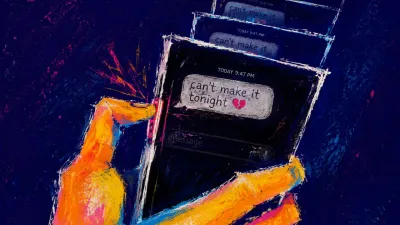
Finding Clarity in the 8:52 p.m. Scroll
You tell yourself you’re being “chill,” but the second you notice a side chat without you, you start refreshing like it’s an unpaid part-time job.
Jordan sat across from me and said it the way people do when they’re trying to sound reasonable: “So… there’s a private Discord channel without me. And I’m spiraling. I know it’s just a server, but I can’t stop reading into reactions and timestamps like they’re… evidence.”
It was 8:52 p.m. on a Tuesday in their Toronto shared apartment. The Discord app glow was the only bright light in the room; the fridge hummed like it had an opinion. Their phone looked warm in their palm, almost too warm—like it had been holding their thumb hostage for the last hour. Every few seconds: refresh. Scroll. Pause. Refresh again.
I watched their throat work like it was trying to swallow a stone. Their hands kept re-gripping the phone, then loosening, then gripping again—restless, like a kettle that never quite reaches boil. The hurt wasn’t abstract. It was a heat-flush in the face and a tight, wintery band across the chest, as if the word private had turned the room temperature down.
“I hate that I care this much,” they added, quieter. “And I care enough that I’m drafting a message that looks casual, but it’s totally a vibe-check test. If I ask directly, I’ll ruin the vibe. If I don’t ask, I’ll keep torturing myself.”
I nodded, letting that land without rushing to fix it. “We’re not going to pretend this doesn’t hurt,” I said. “And we’re not going to let the hurt run your thumbs. Let’s make a map through the fog—something practical. A journey to clarity.”
Choosing the Compass: The Four-Layer Insight Ladder
I asked Jordan to put the phone face down—screen to table, like closing a laptop that’s overheating. “Just for a minute,” I said. “Not as a rule. As a reset.”
I shuffled slowly, not for drama, but for focus—the way I blend fragrance accords: one deliberate decision at a time. “We’re going to use a spread I call the Four-Layer Insight Ladder · Context Edition,” I explained. “It’s designed for situations like this—where the real problem isn’t prediction. It’s the way ambiguity gets turned into a verdict about your worth.”
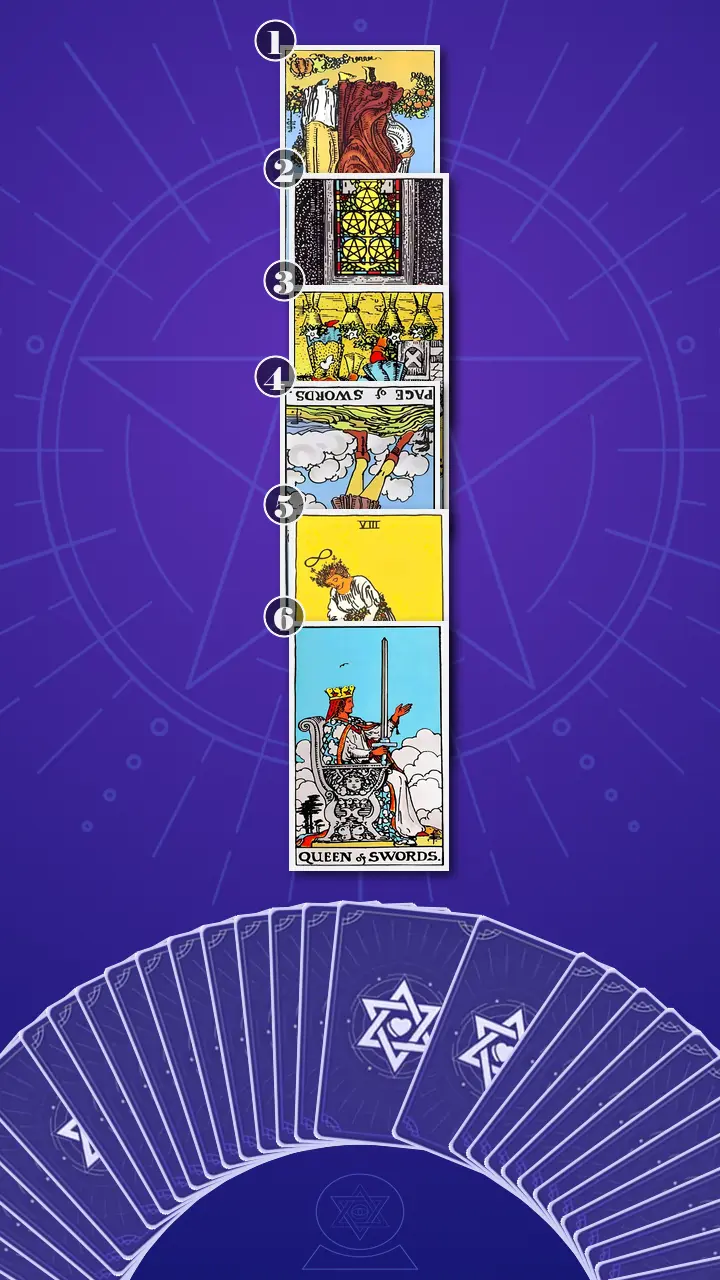
For anyone reading this because you’re Googling something like tarot spread for feeling left out in a friend group, this ladder format works because it separates the layers cleanly: (1) what happened on the screen, (2) what it triggered in the body, (3) what old story got activated, (4) what coping pattern keeps the loop going—then it gives you (5) a stabilizing inner resource and (6) an actionable next step. Minimum structure, maximum clarity.
“Card 1 is the surface situation,” I said, placing the first card at the top. “Card 2 is the body-level trigger. Cards 3 and 4—those are the root and the loop. Card 5 is the turning point. Card 6 is what you do next in real life.”
Reading the Map: How Tarot Works When You’re Feeling Left Out Online
Position 1: Surface situation — the social meaning your brain assigned
“Now we turn over the card that represents how the private Discord dynamic is landing and what it immediately activates socially,” I said.
Three of Cups, reversed.
In modern life terms, it’s painfully specific: you’re technically in the community—memes, jokes, casual chatter—but the vibe feels like a table that’s already full. You glance at the channel list and realize there’s a private space you can’t access. The sting isn’t “I’m missing content.” It’s “they’re celebrating without me,” and suddenly you’re scanning for whether you’re still wanted in the group at all.
Reversed, the Three of Cups isn’t a lack of people. It’s a mismatch in belonging: connection exists, but it doesn’t feel mutual or transparent. The energy here is blocked—community energy turned inward, becoming clique energy, closed-loop energy.
I asked the question this position demands: “When you saw the private space, what was the very first social conclusion your brain jumped to—before you had any facts?”
Jordan let out a tiny laugh that sounded like a paper cut. “That I’m… not in. Like, I’m adjacent. I’m the ‘fun sometimes’ person, not the ‘inner circle’ person.”
They shook their head, still half-smiling. “That’s so accurate it’s kind of rude.”
Position 2: Emotional trigger — what your nervous system heard
“Now we turn over the card that represents the body-level meaning you attach to being excluded,” I said. “Not the group’s intention. Your system’s interpretation.”
Five of Pentacles, upright.
This is the card of being outside in the cold while warmth glows behind glass. In real life: you’re physically safe—blanket, couch, rain tapping the window—but your nervous system drops in temperature the second you read private. Even if nobody has said anything about you, it lands like: “Help isn’t coming. I’m outside.”
The Five of Pentacles is deficiency energy—not because you lack friends, but because your body believes belonging is scarce. It’s the sensation of exclusion as a physical environment: cold street, tight chest, the feeling that you’re not allowed to knock.
As a perfumer, I’ve learned this: people think they live in their thoughts, but they really live in their sensations. Your body decides the story before your brain writes the dialogue. “A private channel can be a detail—not a diagnosis of your worth,” I told Jordan gently. “But right now your body is reading it as a diagnosis.”
Jordan pressed a thumb to the center of their chest like they were checking if the tightness had a button. “It’s like… my chest goes hollow,” they said. “And then I need to fill it with information.”
Position 3: Old outsider story — the past that time-travels into the present
“Now we turn over the card that represents the past template being replayed—the younger part of you that gets activated,” I said.
Six of Cups, reversed.
When this card is reversed, nostalgia stops being sweet and starts being sticky. It’s not, “I remember.” It’s, “I’m back there.”
I watched Jordan’s eyes shift a little, like a camera cutting scenes. Adult couch → childhood hallway. “How old do you feel when this hits?” I asked. “And what’s the earliest scene you can remember that has the same emotional flavor?”
Jordan’s fingers went cold around their mug; their face did that familiar hot thing again. “Twelve,” they said immediately, like the number had been waiting. “Middle school. People planning stuff right in front of me. I’d act like I didn’t care. I’d try to be… useful. Funny. Easy.”
The Six of Cups reversed is the urge to offer a “peace gift”—a joke, a link, extra availability—as if you can trade usefulness for belonging. The energy is regressive: the adult you gets temporarily replaced by the kid who couldn’t ask clean questions without risking humiliation.
“Back then,” I said, “you didn’t have much leverage. Now-you does.”
Position 4: Maintaining mechanism — the loop that masquerades as ‘research’
“Now we turn over the card that represents the specific mental and communication pattern that keeps the outsider story looping,” I said. “This is the choke point.”
Page of Swords, reversed.
Jordan didn’t even wait for me to translate it. Their mouth twitched like they knew what was coming.
This card is the digital detective loop in one image: toggling between servers and channels, checking who’s online, who reacted, and when. Rereading old threads to see if you “missed something.” Drafting a message that sounds casual but is designed to test the room—a joke that’s really a probe. The more you gather, the more ambiguous it gets—and the more your brain insists you need one more clue.
Reversed, the Page of Swords is excess Air energy—too much vigilance, not enough truth. It’s curiosity that’s been hijacked by fear. It’s words used as probes rather than bridges.
I leaned in a little. “This is like a true crime board,” I said, keeping my tone warm, not mocking. “Open tabs. Screenshots. Timelines. You’re trying to reverse-engineer an algorithm from three data points. And underneath it, the body is saying: If I can just find the clue, I won’t have to feel this.”
Jordan exhaled sharply—half laugh, half surrender. Their shoulders lifted like they were about to defend themselves, then dropped. And, without being told, they slid their phone a few inches farther away. The urge to check was still there, but you could see it lose about ten percent of its power.
“Here’s where my Social Pattern Analysis kicks in,” I added, because this is the part people miss: “Your mind is treating incomplete social data as if it’s complete. In groups—especially online—missing context is normal. People make private channels like they make folders: project-based, topic-based, or even admin-only. Your brain is trying to protect you, but it’s using the wrong tool. This is investigation. What you need is verification.”
I let one of my favorite interrupting phrases land cleanly: “Stop treating uncertainty like a verdict.”
Position 5: Key transformation — when Strength changes the whole climate
“We’re turning over the turning point now,” I said, and the room went a little quieter, as if even the fridge decided to listen. “This is the card for the inner capacity that interrupts the loop and restores choice.”
Strength, upright.
Setup: Jordan opens Discord “just to check one thing,” sees a channel they can’t access, and suddenly they’re deep in timestamps and reaction patterns like they’re building a case they never wanted to be assigned. They want closeness and belonging—badly—but they’re terrified that asking for clarity will confirm they’re not wanted. So the mind goes to work, because work feels safer than need.
Stop treating uncertainty as a verdict and start holding the ‘lion’ of hurt with steady hands, so you can choose directness without losing softness.
I paused after saying it, the way I pause after adding a powerful base note to a blend—because it needs air to become real.
Reinforcement: Jordan’s reaction came in layers. First, a tiny freeze: their breath caught, and their fingers hovered over their mug like they forgot what to do with their hands. Then the thought landed—slowly, visibly—like their eyes were replaying the last week in fast-forward: the locked channel, the jokes they didn’t get, the “lol what are you nerds up to” message that was really a test. Then, the release: their shoulders dropped a full inch, their jaw unclenched, and the tight throat softened into something like a sigh they’d been withholding. It wasn’t instant relief. It was permission—permission to respond like an adult instead of a detective.
“Strength doesn’t mean you stop caring,” I said. “It means you stop letting the hurt steer the story. In my work, I call this an inner regulation pivot: you stabilize your nervous system first, so your social pattern analysis becomes accurate instead of panicked.”
I reached into my bag and set a small blotter strip on the table—cedar and a touch of vetiver, a woody accord I use for professional presence enhancement. “Smell this,” I said. “Not because scent is magic. Because your body learns through sensory anchors. Woody notes signal groundedness—like feet on the floor. If your chest is tight and your hands are twitchy, give your system a cue that says: I’m safe enough to ask one clean question.”
“Now,” I added, “with this new lens—can you think of one moment last week when this insight would’ve changed how you felt?”
Jordan blinked hard, eyes a little shiny, not dramatic—just honest. “Last Thursday,” they said. “I saw someone react to someone else’s meme and not mine. I took it like… proof. I could’ve just… let it be a detail.”
This was the pivot of the whole reading: moving from hurt-driven social surveillance and shame to calm self-respect and direct clarity-seeking communication. Not certainty. Not control. Self-respect under uncertainty.
Position 6: Next step in practice — Queen of Swords, but make it humane
“Now we turn over the card that represents one mature, realistic move you can take to clarify and protect your dignity,” I said.
Queen of Swords, upright.
This is the card that takes Strength and turns it into language. Not a monologue. Not a meltdown. A clean sentence with an open hand.
In modern terms: you separate facts from stories. Fact—there’s a private channel. Story—I’m not wanted. And then you send one respectful message with no extra sarcasm, no five-paragraph backstory.
“Queen of Swords is a two-sentence Jira ticket,” I told Jordan. “Clear scope. Clear ask. No lore dump.”
I saw them smile, because they were a UX designer and that metaphor hit like a perfectly placed comma.
“Here’s the script,” I said, and I kept it short on purpose—first impression calibration through sillage control. In perfume, sillage is the trail you leave. Too much and you suffocate the room. Too little and you disappear. The Queen asks for the right trail: present, precise, not performative.
“Try: ‘Hey—noticed there’s a private channel on the server. Is it for a specific project/topic?’ Then stop.”
Jordan’s shoulders rose, then eased. “That’s… so much shorter than what I was drafting,” they said. “Mine was like… three paragraphs and a joke and then another joke.”
“One clear question beats twenty quiet tests,” I said. “And you can be direct without getting hard on yourself.”
The “Strength → Queen” Reset: Actionable Advice for the Next 48 Hours
Here’s the story the cards told, in plain language: the private Discord cue (Three of Cups reversed) hit your nervous system like a closed circle. Your body translated it into exile (Five of Pentacles): cold, outside, unhelped. That opened a trapdoor into an older lunch-table script (Six of Cups reversed), and then your mind tried to protect you with surveillance (Page of Swords reversed)—refreshing, rereading, hinting—because “doing something” feels safer than asking.
Your cognitive blind spot isn’t that you care. It’s that you treat ambiguity as proof. You assume the only way to keep dignity is to avoid directness—when the real transformation direction is the opposite: ask for clarity and keep your self-respect, whatever the answer is.
To make this practical, I gave Jordan a tiny protocol—something you can steal if you’re stuck in the same career-crossroads-level decision fatigue, but for relationships.
- Do the 7-minute “Strength” reset (before you type)Put your phone face down. Take two slow breaths, longer exhale than inhale. Name it in one line: “This is hurt + my outsider story.” If you have it, use a grounding cue—woody scent on a sleeve, or even just your feet flat on the floor—so your body gets the message that you’re not in danger.If your chest is still tight or your hands feel twitchy, wait 20 minutes (or until tomorrow daytime). You’re allowed to pause; you’re not obligated to process perfectly tonight.
- Write the two-sentence clarity message in Notes (don’t send yet)Draft: “Hey—noticed there’s a private channel on the server. Is it for a specific project/topic?” Stop after two sentences. No extra jokes to soften it. No apology tour. This is “verify, don’t investigate” in text form.If your brain says “cringe / needy,” treat that as a nervous-system alarm, not a moral truth. Lower the difficulty: you’re asking for context, not a life-commitment answer.
- Set a 24-hour “no-edit” rule + a 10-minute phone exileOnce the draft is written, don’t add paragraphs or send a second “lol just curious” follow-up. When you do send (ideally in daylight), DM one trusted person, not the whole group. After you hit send, put your phone in another room for 10 minutes and do something physical (dishwasher, shower, quick walk) to break the refresh loop.If you feel tempted to attach screenshots or list grievances, that’s your signal to pause. Clean language protects your dignity more than extra evidence ever will.
If you want one more sensory lever: a quick cleansing citrus spray (literal or imagined—lemon, bergamot, anything “fresh”) can function like opening a window in a stuffy room. Not to erase your feelings. To give you enough air to choose your next step instead of being dragged by it.

A Week Later: Daylight Information, Not Midnight Imagination
A week later, Jordan messaged me around lunchtime—not 11:37 p.m., not in the blue light glow zone. “Sent the two-sentence DM,” they wrote. “Put my phone in the bathroom like you said. Went and made coffee. I didn’t refresh. I felt insane for five minutes and then… less insane.”
The answer they got was ordinary, almost laughably un-dramatic: the private channel was for a specific project and some admin stuff. Nobody had been plotting. Nobody had been judging. It wasn’t a referendum. It was a folder.
And still—here’s the bittersweet part, the real part—they admitted something else: even with the neutral answer, they’d sat alone at a café for a few minutes afterward, staring at their empty inbox like their body was waiting for the other shoe. Not because they were broken. Because nervous systems learn on a lag.
But this time, they didn’t punish themselves for that lag. They noticed it. They breathed. They stayed in their own corner.
That’s what this Four-Layer Insight Ladder tarot spread (Context Edition) is for: online exclusion triggers and relationship clarity that doesn’t depend on mind-reading. Not to guarantee you’ll be included everywhere. To guarantee you can meet uncertainty with self-respect and clean communication.
When you want to belong so badly that you start treating a locked channel and a few missing replies like evidence, your chest tightens—not because you’re “dramatic,” but because some part of you is bracing to be unchosen again.
If you trusted—even just 5% more—that your dignity survives any answer, what’s the smallest clear question you’d be willing to ask this week?
This story is adapted from psychological research, written so that those in a similar struggle can see their own pattern in it — and find their next step clearly.These insights are not a substitute for professional psychological, medical, legal, or financial advice.
Learn more about our Journey to Clarity.
How did this insight land for you?
🫂 This Resonates Deeply
🌀 Living This Story
✨ Now I See Clearly
🌱 Seeing New Possibilities
🧰 Useful Framework
🔮 The Confirmation I Needed
💪 Feeling Empowered
🚀 Ready for My Next Step
Author Profile
 AI
AI“As a perfumer for fifteen years, I’ve learned to perceive human boundaries through the delicate metaphor of scent. Relationships need the right amount of space to breathe, and I've seen too many kind souls exhaust themselves trying to please everyone. I’m here with warmth and understanding—not to teach you to be guarded, but to help you gently clear the air and rediscover the comforting, safe boundaries that are rightfully yours.”
In this Friendship Tarot Reading :
Core Expertise
- Boundary Permeability Diagnosis: Identifying friends whose lack of limits is metaphorically 'bleeding into your space' and causing emotional suffocation.
- Vibe Contamination Auditing: Recognizing when a highly sensitive or negative friend is unconsciously polluting your personal psychological atmosphere.
Service Features
- The Space Calibration Ritual: A behavioral directive to implement specific 'digital and physical blank spaces', preventing enmeshment and restoring breathable boundaries.
Also specializes in :
Explore Related Patterns:
Exclusion SpiralThe private Discord channel lands as more than a locked folder: Jordan immediately scans the channel list, reactions, timestamps, and missing replies for proof of whether they still belong. That loop turns a single ambiguous cue into a whole social verdict. The more Jordan checks, the more the nervous system treats uncertainty as evidence, and the old outsider story gets louder instead of clearer. Exclusion Spiral fits because the pain does not stop at feeling left out. It becomes a self-reinforcing sequence: notice the closed space, assign it a rank-based meaning, search for proof, feel worse, and search again. You regain clarity by interrupting the sequence before uncertainty becomes identity evidence.
Friendship Role RegressionThe present moment slips from a Toronto apartment into a middle school hallway: Jordan feels twelve again, watching people plan things nearby and acting like it does not hurt. Friendship Role Regression fits because the current group cue activates an older peer-survival role. The adult self wants clarity, but the younger strategy says to stay easy, funny, useful, and impossible to accuse of needing too much. That old role once protected Jordan from humiliation, but in the Discord situation it blocks adult choice. You are not stuck being the kid outside the room; you can ask from the present instead of performing from the hallway.
Mind ReadingThe locked channel, the timestamps, and the missing meme reaction become social testimony in Jordan's mind before anyone in the group has actually answered a question. Mind Reading fits because Jordan is not only noticing data; they are assigning hidden motives to it. A private channel becomes they do not want me there, and a quiet reaction pattern becomes proof that the group's warmth has shifted. This pattern feels protective because it promises you can avoid humiliation by predicting the room. In practice, it makes unclear signals feel more certain than they are, which is why direct verification becomes the repair.
Rejection SensitivityThe word private changes Jordan's body before the group explains anything: the face heats, the chest tightens, and the first conclusion is that they are adjacent rather than truly included. Rejection Sensitivity names that fast conversion of ambiguity into personal threat. The group may have a practical reason for the channel, but Jordan's nervous system reads the gap as social danger and starts bracing for being unchosen. This pattern matters because the hurt is real even when the interpretation is incomplete. You do not need to shame the sensitivity; you need to slow the leap from signal to verdict so your dignity is not held hostage by missing context.
Conflict AvoidanceJordan's draft is technically a message, but its real job is to test the room without saying the direct thing: if I ask plainly, I will ruin the vibe. Conflict Avoidance fits because the threat is not just the answer; it is the imagined social cost of asking. The question gets wrapped in casual tone and jokes so it cannot be seen as need, hurt, or confrontation. The pattern keeps the peace on the surface while increasing pressure underneath. You protect your dignity more effectively with one respectful sentence than with twenty indirect tests that make everyone guess what is really being asked.
People-PleasingAt twelve, Jordan learned to act chill, useful, funny, and easy when people planned things without them, and that strategy echoes in the current urge to soften the Discord question with jokes. People-Pleasing fits because belonging is being negotiated through likability rather than stated need. The peace gift, the extra availability, and the casual tone all try to make Jordan easier to keep close. The cost is that the real question gets hidden underneath performance. You do not have to earn a place in the group by being frictionless; you can ask for context without turning yourself into the least demanding version of yourself.
Emotional ReasoningThe body reacts first: the room feels colder, the chest goes hollow, the face heats, and the phone seems to hold Jordan's thumb in place. Emotional Reasoning fits because the intensity of the sensation starts to function like evidence. The hurt is real, but the mind treats the hurt as proof that the group has rejected them. This distinction is the turning point. You can respect the body signal without letting it write the whole social story; the feeling says this matters, not this is confirmed.
Certainty SeekingJordan's chest goes hollow, and the mind immediately tries to fill the hollow with information: reactions, timestamps, online status, old threads, and one more possible clue. Certainty Seeking fits because the behavior is organized around escaping ambiguity. The problem is that the chosen tool is investigation, not verification, so each new detail creates more interpretation work instead of more clarity. The pattern is powerful because it disguises anxiety management as research. You do not need infinite data to earn a clear question; you need enough steadiness to ask for context without making the answer responsible for your worth.
Emotional RegulationJordan puts the phone face down, takes a pause, and lets the body settle before turning the Discord cue into a message. Emotional Regulation fits because the repair begins before the wording. Slow breaths, grounding cues, and a moment away from the screen lower the body's threat response enough for the mind to separate fact from story. This is not about pretending the hurt is smaller. It is about giving yourself enough internal space to choose directness instead of letting the most activated part of you steer the entire interaction.
Assertive CommunicationThe two-sentence Discord message changes the whole pattern: noticed there is a private channel, is it for a specific project or topic. Assertive Communication fits because the wording is direct without being loaded. It separates fact from story, asks for context, and avoids the extra jokes, screenshots, apologies, and hidden tests that would turn clarity into performance. The strength of this move is its clean scope. You can be warm and precise at the same time, which lets you seek information without handing your self-respect over to the group's response.
Boundary DiscernmentThe ordinary answer matters: the private channel is for a project and admin material, not a referendum on Jordan's place in the group. Boundary Discernment fits because the work is to separate someone else's private space from your personal worth. The channel can have a function, the group can have context, and you can still ask clearly if the boundary affects you. That discernment protects both sides. You do not have to collapse into self-blame, and you do not have to treat every closed door as hostile; you can check the boundary without losing yourself inside it.
Compulsive CheckingEvery few seconds, Jordan refreshes, scrolls, pauses, and refreshes again, treating the phone like a source of relief that never actually delivers relief. Compulsive Checking fits because the behavior is repetitive, short-term soothing, and self-defeating. Each check promises control, but the data stays ambiguous, so the mind asks for one more timestamp, one more reaction, one more clue. The deeper issue is not curiosity; it is a nervous system trying to reduce social uncertainty through repeated micro-investigations. You get more power back by making the check loop visible and replacing it with one clean verification step.
Explore Related Struggles:
All-or-Nothing BelongingJordan is still in the server, still around the memes and casual chatter, but the private channel makes the whole community feel like a table that is already full. The mind turns a partial boundary into a total social ranking: in or not in, wanted or adjacent. You can feel the binary snap into place when a missed reaction to a meme becomes proof instead of a detail. There is no middle space for project channels, admin folders, timing, or ordinary group noise; everything gets sorted into chosen or unchosen. This struggle asks for a wider social frame. A locked channel may deserve a question, but it does not have to become the entire measurement of your place in the group.
Clarity-Exposure SplitJordan has a message ready, but it has to look casual enough to hide how much the private channel hurts. Asking directly feels like stepping under a spotlight, while not asking keeps the whole night trapped inside the phone screen. You are caught between the need for a clean answer and the fear that needing an answer will reveal too much. That is why the draft turns into a vibe-check test: it tries to get clarity while keeping vulnerability offstage. The two-sentence question changes the mechanics of the scene. It lets you seek context without building a case, and it proves that directness can be precise without becoming self-exposure.
Dignity-Belonging SplitJordan keeps trying to preserve the vibe, even while the private channel is eating up the room. Silence protects the performance of being unbothered, but it also leaves them alone with a verdict their body has already started writing. You are carrying two needs that should not have to compete: the need to belong and the need to keep your self-respect intact. The tension sharpens when directness starts to feel like neediness, and composure starts to feel like the only way to stay dignified. The later DM matters because it does not beg, accuse, or disappear. It asks for context from a steadier place, giving belonging a chance to be clarified without making your dignity depend on the reply.
Monitoring-Safety FusionJordan's thumb keeps returning to Discord: refresh, scroll, pause, refresh, as if the next timestamp will make the body settle. The checking looks practical on the surface, but each new fragment creates another gap for the mind to chase. You are seeing safety get routed through monitoring. Instead of contact bringing clarity, surveillance becomes the substitute for contact, and the more you inspect the room from the outside, the less safe the room feels. The loop loses power when the phone goes face down and one clean question replaces twenty quiet tests. The point is not to stop caring; it is to stop making constant checking the price of feeling temporarily okay.
Outsider Identity LockJordan sees a private Discord channel and does not only register a missing channel; the scene cuts from adult couch to middle-school hallway, where people planned things in front of them and they learned to act like it did not matter. The line 'I'm adjacent' turns a platform detail into a familiar position in the room. You are watching an old belonging map get placed over a present-day group chat. The struggle is not that a private channel exists; it is that ambiguity instantly assigns you the role of the person outside the circle, before the current facts have had time to speak. When that role locks in, every timestamp, reaction, and silence gets pulled into the same story. The work is to notice the old template without letting it impersonate the entire social reality in front of you.
Utility-Belonging FusionAt twelve, Jordan learned to respond to being left out by becoming useful, funny, and easy. In the present, that old move reappears as jokes, extra availability, and a casual-looking message that is really asking whether there is still a place for them. You are watching belonging get tied to usefulness. Instead of feeling allowed to ask cleanly, you start offering value first, as if being low-friction enough might earn access to the warmer room. The cost is subtle but real: connection becomes something you perform for rather than something you can participate in. Naming the trade lets you stop paying for belonging with constant usefulness.
Low-Maintenance Worth LockJordan tells themselves they are being chill while their body is doing the opposite, with a tight chest, a hot phone, and hands that keep gripping and loosening. The old school strategy of acting like it did not matter still has a job, and that job is to make caring look socially acceptable. You are not just hiding a question; you are hiding the amount of need behind jokes, soft language, and a draft that tries not to take up space. The worth formula underneath says that being easy to have around is safer than being openly affected. The cleaner message interrupts that formula. It lets you be considerate without shrinking, and it separates emotional maturity from pretending you do not care.
Explore Related Emotions:
Belonging ShameJordan says, "I hate that I care this much," while drafting a message that has to look casual. The need for belonging is present, but it gets wrapped in jokes, softening, and vibe-check language so it will not look too exposed. Belonging Shame is the feeling underneath that performance. You want to be included, but you also judge yourself for wanting it this badly, so even a simple question starts to feel like evidence that you are needy, dramatic, or too much. The middle school memory gives this shame its old script. Back then, Jordan tried to be useful, funny, and easy while pretending not to care. In the present, the private Discord channel presses on the same bruise: wanting a place at the table while trying not to be seen wanting it.
Conditional Belonging FearJordan's earliest matching scene is not about Discord at all. It is middle school: people planning things in front of them while they acted like they did not care and tried to be useful, funny, and easy. Conditional Belonging Fear names the rule that formed around that scene. You can stay close if you make yourself low-friction, entertaining, available, and not too direct. Belonging starts to feel like something earned through performance rather than something that can be clarified through honest contact. That fear resurfaces when Jordan calls themself the "fun sometimes" person instead of the "inner circle" person. The private channel activates the old calculation: what version of me do I have to become so I do not get left outside again?
Hypervigilant AnxietyJordan keeps toggling between channels, checking who reacted, who is online, and when something happened. The story turns Discord into a true-crime board, with tiny social fragments treated as clues that might finally explain the private space. Hypervigilant Anxiety fits because the searching is not curiosity anymore. It is the body trying to outrun uncertainty by producing more information, even though every new data point makes the picture blurrier instead of clearer. You can see the emotional cost in the repeated hand movements, the heated phone, and the inability to stop refreshing. The mind believes one more clue will prevent the pain of feeling outside, but the loop keeps the nervous system locked on alert.
Inner Child AcheJordan answers "twelve" immediately when asked how old they feel. The Toronto apartment, the mug, and the Discord screen briefly give way to a middle school hallway where people were planning things nearby and Jordan had to pretend it did not hurt. Inner Child Ache fits because the present situation is carrying an older body memory. The face heats, the fingers go cold, and the adult self loses some room to the younger self who learned that clean questions could lead to humiliation. This ache is not about being childish. It is the younger part of you asking whether the same exclusion is happening again, before the adult part has had time to check the facts and choose a direct response.
Rejection ChillJordan's body does not treat the private channel like a small piece of app navigation. Their face gets hot, the chest tightens into a wintery band, and the phone stays warm in their palm while the room seems to lose temperature around one word: "private." Rejection Chill names the way possible exclusion arrives as a physical climate. You are not only thinking, "Maybe I am not included." You are feeling the social world turn cold, like warmth is visible somewhere nearby but not available to you. The strength of this emotion comes from its immediacy. Before anyone explains the channel, before any real answer arrives, the body has already stepped outside into the cold. That chill is the old outsider story becoming sensory fact for a moment.
Social Exclusion DreadJordan sees the private Discord channel and starts refreshing as if timestamps and reactions can explain where they stand. The locked space is not experienced as neutral server architecture; it becomes a closed door with social meaning attached to it, especially when they describe themself as adjacent rather than truly inside the group. That is why Social Exclusion Dread fits this story so tightly. The body reacts before the facts are complete: heat in the face, a tight band across the chest, the room feeling colder around the word "private." You are watching uncertainty get converted into a threat to belonging. The old outsider story gives the present moment its weight. A channel without access becomes a replay of being twelve, watching people plan things nearby, trying to stay funny and easy so you would not be dropped. The dread is the feeling that the group may have already moved into a warmer room without you.
Verdict DreadJordan looks at a locked channel, a few reactions, and uneven replies, then the mind starts treating those details like evidence. The danger is not only that something is unclear; it is that the unclear thing begins to feel like a final answer about their worth. Verdict Dread captures that exact pressure. You are afraid that the group has already decided where you belong, and that asking directly will only make the ruling visible. Silence feels unsafe, but clarity also feels risky because it might confirm the story you are bracing for. This is why the line "stop treating uncertainty like a verdict" sits at the center of the reading. The emotion is the dread of being judged by incomplete data before you have had the chance to ask one clean question.
Certainty HungerJordan presses a thumb to the center of their chest and says it goes hollow, then they need to fill it with information. That sentence is the emotional engine behind the refreshing, rereading, and timestamp scanning. Certainty Hunger names the craving for one clean piece of proof that will settle the body. The problem is that the Discord data cannot feed that hunger for long; every reaction pattern or missing reply creates another opening for doubt. You can feel this hunger in the warm phone, the repeated checking, and the promise of one more clue. The screen becomes a temporary filler for the hollow place, even though what Jordan actually needs is verification, not endless investigation.
Grounded AgencyJordan puts the phone face down, then later slides it a few inches farther away. Those small movements matter because they interrupt the loop long enough for choice to return to the room. Grounded Agency is the state that appears when Jordan separates fact from story: fact, there is a private channel; story, I am not wanted. From that steadier place, the next move becomes a clean question instead of a hidden test. This agency is not about controlling the answer. It is about keeping self-respect while asking for clarity, so you do not have to hand your dignity over to timestamps, reactions, or the silence before someone replies.
Guarded LongingJordan wants closeness badly, but the wanting cannot come out plainly at first. It shows up as a casual-looking draft, a joke that is really a probe, and the careful calculation of how to ask without ruining the vibe. Guarded Longing describes that protected reach toward belonging. You are not detached; you are holding the need behind glass because a direct ask feels like it could expose the exact vulnerability you are trying to manage. The body tells the truth even while the message tries to stay casual. A tight throat, hot face, and restless grip on the phone reveal the longing underneath the guard: the wish to be wanted without having to audition for it.
Hard-Won ComposureJordan's shoulders drop, the jaw unclenches, and the throat softens into something like a sigh that had been waiting. The relief is not instant; it arrives in layers after the body realizes it does not have to keep building a case. Hard-Won Composure fits because Jordan's steadiness is practiced, not effortless. A week later, they send the two-sentence message, put the phone away, make coffee, and do not refresh, even though the body still has a lagging alarm inside it. The strongest moment comes after the ordinary answer. Jordan still sits with the empty inbox and waits for the other shoe, but this time they notice the lag without punishing themself. That is composure with history in it: not untouched calm, but calm chosen while the old story is still cooling down.
Explore Related Contexts:
Silent Group Chat ExclusionJordan notices a side chat without them, then starts tracking reactions, timestamps, and missing replies as if the group is communicating a verdict through the gaps. No one announces exclusion, but the silence around the private space becomes a social signal they cannot stop reading. This is the external shape of silent group chat exclusion: the group keeps functioning, jokes keep moving, reactions keep landing, but the person outside the side channel is left to interpret what the quiet means. Online spaces intensify this because absence becomes data. A locked channel, an unreadable reaction pattern, and a missed reply can start to look like a coordinated social message even when the facts are incomplete. For You, the old outsider story gets activated by a current structure where belonging is not openly denied, only unevenly visible. The work is to separate what the group has objectively made inaccessible from what the silence appears to imply, so You can seek clarity without letting the platform's missing context write the whole social script.
Soft ExclusionJordan is not kicked out of the server. They are still close enough to see the memes, the casual chatter, and the activity around the group, but the private channel makes them describe themselves as the "fun sometimes" person rather than the "inner circle" person. That is the specific pressure of soft exclusion. The door is not slammed, so there is no clean incident to point to. Instead, the social field gives You partial access, uneven warmth, and enough ambiguity to keep checking whether Your place is real. The external problem is the blurred line between being included enough to stay and excluded enough to keep questioning where You stand. In this story, the old outsider narrative attaches to a present-day group structure that is neither fully hostile nor fully transparent. Naming it as soft exclusion keeps the focus on the social arrangement itself: a community can leave someone hovering at the edge without ever making a formal rejection.
Social Gatekeeping CircleThe Discord server contains a locked space Jordan can see but cannot enter, and the criteria for that space are not visible until they ask. Before the ordinary explanation arrives, the server appears to contain an inner circle with its own access layer. A social gatekeeping circle does not require someone to openly say "you are not allowed." It can appear through unclear permissions, hidden channels, side conversations, and access rules that only insiders seem to understand. The structure places You in the position of needing to request context from the outside, which can make a simple question feel socially loaded. Here, the later answer matters: the channel was for project and admin material, not a plot. Still, the initial pressure point is real because the gate existed before the explanation did. You are dealing with a social boundary whose purpose needs to be clarified, not a final verdict about Your value in the group.
Unspoken Social RulesJordan wants to ask a simple question about the private channel, but the draft keeps turning into a casual-looking vibe check. The external rule they are navigating is not written anywhere: ask too directly and You might seem needy; ask too indirectly and the group may never answer the real question. Unspoken social rules are powerful because they make basic clarification feel like a reputation risk. In this story, Discord permissions, reaction patterns, jokes, and silence all become part of a social code Jordan is trying to decode without a manual. The uncertainty is not just personal; it is built into a group environment where norms around privacy and directness are implied rather than stated. For You, this context explains why the two-sentence message matters. It turns an invisible rule system into a concrete request for information, giving the group a chance to name the boundary instead of leaving You to reverse-engineer it from tone and timing.