Keeping Every Future Alive?
A clear audit of Potential Hoarding, the tarot cards that mirror it, and reading insights that show how it appears.

Potential Hoarding
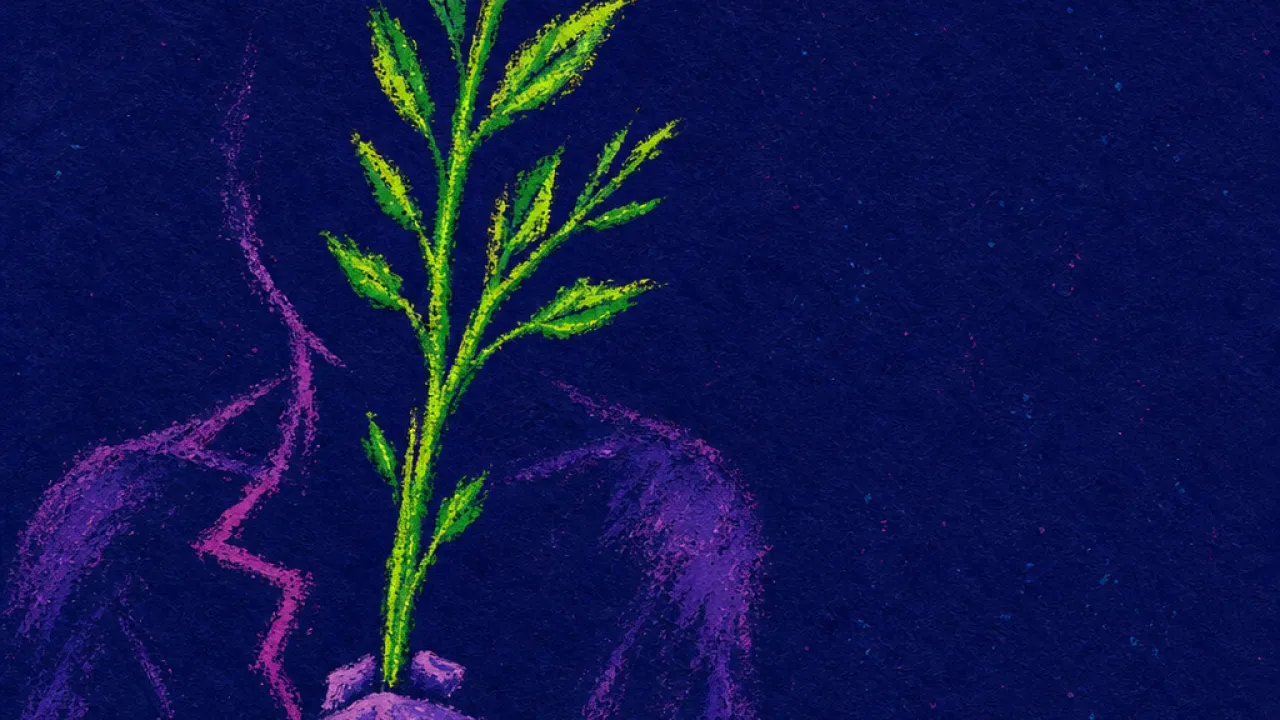
What is this really?
You collect options, concepts, plans, identities, and future versions of yourself with real care: saved job posts, course tabs, half-built decks, polished routines, draft names, relocation fantasies, and the quiet line, 'I know I could if I really tried.' This usually grows from a wish to protect the part of you that still feels wide open, because once one path becomes visible, it can meet feedback, limits, boredom, comparison, and the grief of everything you did not choose. Yet the more carefully you preserve possibility, the more your life can start to feel full of unopened doors and unused charge, as if your capacity is being admired from a distance rather than allowed to touch the ground, much like the Ace of Wands reversed, where the living wand is held above the landscape but never planted into soil.
Why did it happen?
At some point, keeping things possible may have helped you stay steady when choosing felt like losing too much at once. Your body learned that an untouched plan could hold confidence, identity, and relief without having to meet criticism or limits. Now that same inner pattern can become a quiet loop: the idea gives you a lift, the first concrete step brings a drop in the stomach, and you return to planning until the tiredness starts to outweigh the spark.
How does it feel?
- You keep a notes app full of project titles, course links, app ideas, reading lists, and future routines; your thumb hovers over one item, then slides away to add another instead. In that small pause, your chest may feel lifted by possibility and tight at the same time, like choosing one tab would make the others vanish. It can simply be noticed as a familiar way of keeping space open for now.
- At work, you talk about the portfolio update, the pivot, the certification, or the side project with sharp detail; when someone asks what the next concrete step is, you glance down, adjust your sleeve, and give a careful answer that keeps the timeline soft. Afterward, your shoulders may sit a little higher and your stomach may feel braced, as if the idea stayed safe but your body knows it dodged contact. Let that mixed signal be there without forcing it into a verdict.
- When you are alone, you open a blank document, rename the file, change the heading, maybe pick the perfect template, then close it before the first rough paragraph can exist. The cursor blinking on the page can make your jaw tighten or your breathing go shallow, not because the idea is gone, but because it is suddenly close enough to be measured. Unfinished does not have to mean failed; it can just be the current shape of hesitation.
- In conversations with friends, you say, 'I could totally do that if I really locked in,' and your face brightens for a second while your hand sketches the plan in the air. A few beats later, there may be a hollow dip under the excitement, like the room got quieter once nobody was looking at the imagined version anymore. That dip can be observed gently, without turning it into a character judgment.
- You compare apartments, masters programs, startup concepts, workout plans, or relocation options late at night, saving the strongest ones into folders with polished names. As the screen fills up, your eyes may feel wired while the rest of your body feels heavy, caught between expansion and stillness. It is okay to recognize the loop before deciding what, if anything, needs to move next.
Potential Hoarding in Tarot Cards
The habit of keeping every future alive can feel expansive until your chest lifts and tightens at the same time, as if one concrete move would make the other tabs vanish. Jungian archetypal theory gives this pattern a language for the self-image that stays protected while action stays suspended. The cards below reflect the unconscious dynamics of potential held above contact with the ground. Here are the Tarot Cards that map this pattern visually.
Potential Hoarding in Tarot Card Reading Insights
For anyone who keeps every future alive while the concrete next step stays soft, others have brought this same hesitation into readings. The shift from cards to readings shows how this pattern can appear when someone sits with the gap between possibility and action. Below are Tarot Reading Insights that speak to this pattern.

A Three-Hour Reply Turned Role Overload Into a Capacity Boundary
Topic:Direction Tarot Reading
Struggle:Opportunity-Compass Split
Context:Undefined Role Scope

When Waiting for Proof Became Avoidance: One Honest Ask After Flirting
Topic:Timing Tarot Reading
Struggle:Ambiguity Dependence
Context:Post-Flirt Limbo
When an IC Goal Feels Like a Verdict: Letting the Draft Be Data
Topic:Direction Tarot Reading
Struggle:Potential Overidentification
Context:Career Visibility Paralysis
Caught in a Slow Fade: Name the Change, Ask Directly, Set a Boundary
Topic:Choice Tarot Reading
Struggle:Boundary Ambiguity Lock
Context:Situationship Ambiguity
Three City Tabs and an Unanswered Lease: Learning to Test a Base
Topic:Direction Tarot Reading
Struggle:Freedom-Structure Conflict
Context:Digital Nomad Rootlessness

Replaying the Final Emoji, Then Keeping One “I Want” Sentence
Topic:Introspection Tarot Reading
Struggle:Ambiguity Dependence
Context:Insight Integration Window

Version 17 Stayed Closed: Publishing Became Contact, Not a Verdict
Topic:Career Tarot Reading
Struggle:Feedback Disconnection
Context:Safe Visibility Trial

Writing 164 Rough Words: Interrupting Grad School Procrastination
Topic:Study Tarot Reading
Struggle:Perfect Readiness Trap
Context:Attention Economy Study Trap
Grad Application Freeze: From Renamed PDFs to Three Rough Sentences
Topic:Study Tarot Reading
Struggle:Protection-Progress Split
Context:Safe Visibility Trial

A Cursor Over Publish, Then One Post Left Visible for 48 Hours
Topic:Direction Tarot Reading
Struggle:Feedback Disconnection
Context:Personal Brand Performance