Always Proving You Belong?

A grounded look at academic credibility pressure, related tarot cards, and tarot reading insights from sessions shaped by scrutiny.

Academic Legitimacy Scrutiny
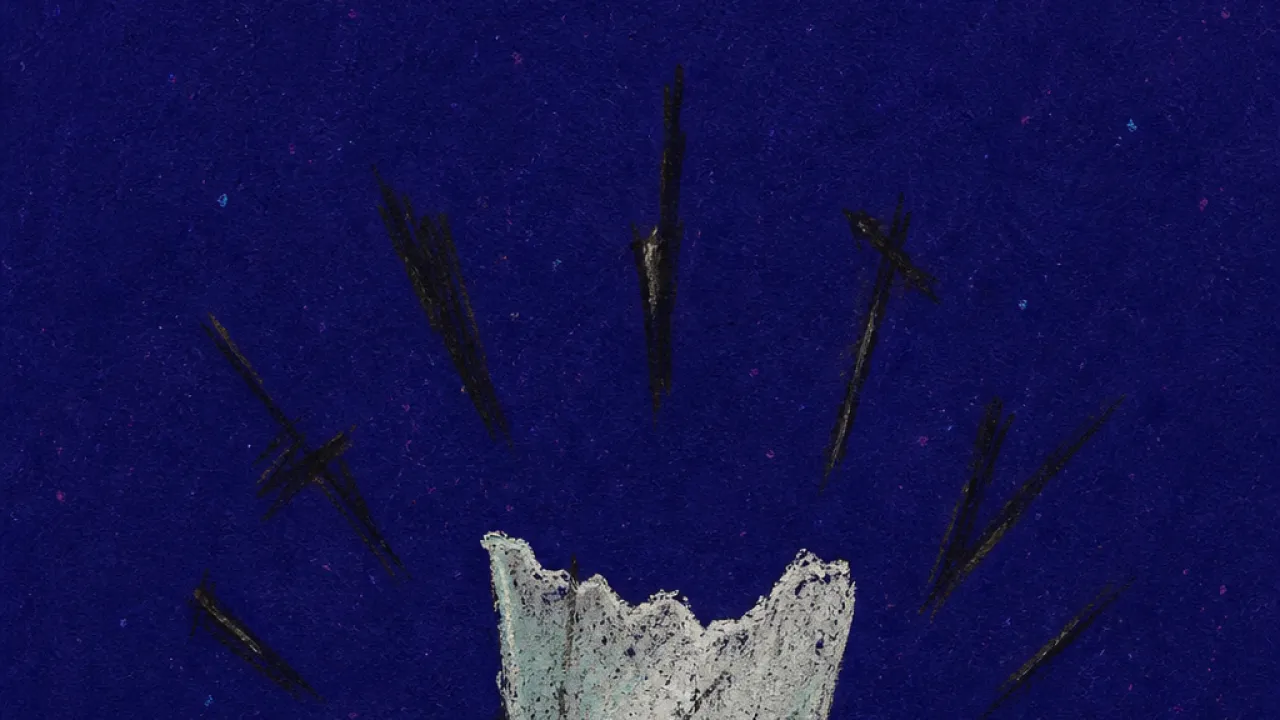
A solitary figure on uneven ground, shoulders rigid, holding papers as raised staffs press in from every side

What is this situation?

Academic Legitimacy Scrutiny — you enter the seminar room, lecture hall, lab meeting, studio critique, or supervisor call already aware that your work may be treated like it needs extra proof before it can be taken seriously. It can start with a small comment: someone asks how you got into the program, questions whether your topic is rigorous enough, repeats your point with more confidence and gets the nod, or frames your uncertainty as a flaw rather than a normal part of learning. Over time, the room starts to feel like a checkpoint. Your emails have to be polished before you send them, your citations have to be ready before you speak, your draft has to defend itself before anyone has fully read it, and even a casual question from a professor can feel like a test of whether you deserve the seat you are sitting in. The power sits with supervisors, committees, senior students, graders, reviewers, and institutional standards that rarely announce themselves clearly, so you end up tracking tone, wording, timing, and who is allowed to be unfinished without being dismissed. The daily cost is not only the workload; it is the extra layer of preparing evidence for your own credibility, carrying a quiet file of qualifications, explanations, and backup arguments into spaces where other people seem allowed to simply participate. By the time you get home, your shoulders are tight from holding a position you did not choose, much like the figure on the Seven of Wands, standing on uneven ground while raised staffs come at them from every direction.

Why it's not you?

The problem is not that your work is automatically less credible or that you are failing to belong. The scrutiny itself is the pressure point: unclear standards, gatekeeping comments, uneven benefit of the doubt, and authority figures who make legitimacy something you have to keep earning. That is a situation with a shape of its own, not a personal defect.

Academic Legitimacy Scrutiny in Tarot Cards

Academic Legitimacy Scrutiny turns study, research, and classroom participation into a repeated demand to prove you belong. The tightness in your shoulders before you speak is part of that pattern, not a private overreaction. This is an environmental and structural dynamic shaped by how authority, credentials, and peer comparison operate in the room. The Tarot Cards below reflect the outline of that pressure without telling you what you have to do next.

The Hierophant
Reversed
The Hierophant sits between stone pillars above two acolytes, while crossed keys rest at the institutional threshold beneath him. In the reversed orientation, those keys suggest controlled access: supervisors, committees, and disciplinary conventions can determine whose questions sound rigorous and whose unfinished work is treated as evidence of not belonging. You may therefore enter study spaces carrying citations, polished wording, and backup arguments before discussion has even begun. The obstructed hierarchy clarifies that this extra defence is a response to gatekept recognition, allowing you to distinguish the quality of your work from the institutional process used to authorise it.
Justice
Reversed
Justice holds an upright sword in one hand and a set of scales in the other, seated between pillars that frame formal evaluation. In the reversed orientation, the instruments remain visible but their neutrality is obstructed, mirroring academic standards that appear objective while being applied more harshly to some speakers, drafts, or research paths. You may be asked to document claims that peers can state provisionally, or see an ordinary mistake converted into a verdict about whether you deserve your place. The uneven scales separate the existence of academic standards from their selective enforcement, making unequal benefit of the doubt part of the evidence under review.
Judgement
Reversed
The angel's trumpet sounds over exposed figures rising from open coffins, making evaluation feel public, total, and impossible to ignore. Reversed, that summons becomes an unresolved verdict that can follow you out of the seminar room, leaving a supervisor's question or reviewer's phrase active long after the interaction has ended. You may replay comments while trying to determine whether they concerned one draft or your right to occupy an academic role at all. The obstructed call separates actionable feedback from the larger legitimacy judgment attached to it, giving the internal echo a visible source without treating that echo as proof that the judgment was accurate.
Three of Pentacles
Reversed
The craftsperson's visible work is examined beneath an institutional arch while two formally dressed figures consult a plan. Reversed, the review relationship loses reciprocity: assessment can begin from suspicion, and the maker may be required to defend competence before the evaluators have fully engaged with the work itself. You may submit a draft that is treated as a test of whether you belong in the field rather than one stage in an iterative learning process. The blocked workshop shows that feedback quality depends not only on the artefact but on whether reviewer and student are recognised as participants in a shared process.
Six of Pentacles
Reversed
A standing figure holds scales while dispensing coins to one kneeling person as another waits for access. Reversed, the distribution becomes conditional and uneven, mirroring the way supervisors and evaluators can allocate time, patience, sponsorship, and benefit of the doubt according to status rather than according to a consistent academic threshold. You may be required to provide more citations, accept more correction, or demonstrate greater polish before receiving the recognition that peers obtain provisionally. The controlled scales reveal legitimacy as a resource being distributed from above, making unequal access to trust part of the academic structure rather than evidence that your work inherently deserves less.
Eight of Pentacles
Upright
A seated craftsperson carves pentacles one by one, with completed pieces displayed in a visible sequence and the town set at a distance. Upright, the repeated work creates a legible record of skill, mirroring citations, revision histories, methods, and drafts that can make academic labour traceable rather than dependent on a gatekeeper's impression. You may produce this evidence because the room has taught you that competence must be documented before it will be presumed. The visible sequence preserves an important distinction: your craft can be demonstrated and developed, while an institution's refusal to grant equal benefit of the doubt remains a separate feature of the scrutiny system.
Eight of Swords
Upright
A blindfolded, loosely bound figure stands inside a partial enclosure of swords, with muddy ground underfoot and a distant structure beyond the barrier. The scene captures how external comments, opaque standards, and remembered corrections can become an internal monitoring system that narrows what feels speakable before anyone has responded. You may censor a basic question, avoid testing an unfinished idea, or treat uncertainty as dangerous because academic scrutiny has taught you that ordinary incompleteness can be used against your credibility. The gaps between the swords do not make the gatekeeping imaginary; they reveal a meaningful distinction between actual institutional rules and anticipated judgments that have begun operating in advance.
King of Swords
Reversed
The King of Swords sits frontally on an elevated stone throne with the sword of judgment held upright in one hand. Reversed, that concentration of intellectual authority hardens into unilateral standard-setting: a supervisor, reviewer, or professor can present personal preference as objective rigour while retaining the final power to classify the work. You may find that clarification is treated as incompetence, disagreement as disrespect, or interdisciplinary language as insufficiently serious. The elevated seat locates the bottleneck in concentrated evaluative power, making it possible to examine the authority's criteria without automatically treating its verdict as an exhaustive account of your work.
Seven of Wands
Upright
Standing on uneven ground, the figure raises one wand against six staffs advancing from below. The upright stance shows that a defensible position and active voice remain available, while the physical asymmetry captures a seminar in which one person must answer challenges arriving from several directions at once. You are not depicted as lacking an argument; the pressure comes from having to defend every claim before receiving the ordinary presumption of competence. The higher position makes your contribution visible, but the mismatched footing shows why maintaining it consumes more attention, evidence, and composure than simple participation should require.
Nine of Wands
Upright
A bandaged figure grips one staff while eight more form a barrier behind him, his attention fixed on the possibility of another challenge. Upright, the standing body still has endurance and a defensible boundary, but its guarded posture records the cost of having already faced repeated tests. You may arrive at a supervisor call with every citation open or brace for a routine seminar question as though it could become another examination of your right to be there. The wall of prior encounters explains this preparation as learned exposure management while also showing how much study capacity is being diverted into anticipating the next credibility challenge.
Ten of Wands
Upright
Ten staffs are gathered into one unwieldy load, bending the carrier forward and blocking a clear view of the nearby destination. Upright, the work still has momentum and an attainable endpoint, but every citation, qualification, caveat, and backup argument is being carried as though none can safely be left behind. You may produce a draft that has to anticipate objections before reviewers have engaged with its central idea, or enter discussion with an entire evidence archive ready for one casual question. The image distinguishes demanding academic work from the added requirement to make your credibility defensible at all times.

Academic Legitimacy Scrutiny in Tarot Card Reading Insights

When Academic Legitimacy Scrutiny follows you into seminars, office hours, applications, or research meetings, other people have brought that same pressure into readings too. These readings show how the situation can appear when the cards are laid out. Tarot Reading Insights from sessions shaped by this kind of academic pressure.

Grad Application Freeze: From Renamed PDFs to Three Rough Sentences

Grad Application Freeze: From Renamed PDFs to Three Rough Sentences

Topic:Study Tarot Reading

Struggle:Protection-Progress Split

Context:Safe Visibility Trial
Researching Instead of Writing: Let One Bounded Task Shape Direction

Researching Instead of Writing: Let One Bounded Task Shape Direction

Topic:Study Tarot Reading

Struggle:Freedom-Structure Conflict

Context:Unscaffolded Learning Environment

Productive Procrastination: How One Study Block Began to Count

Productive Procrastination: How One Study Block Began to Count

Topic:Study Tarot Reading

Struggle:Grade-Identity Fusion

Context:Academic Probation Limbo

When Highlighting Everything Means Fear: Choosing One Clear Question

When Highlighting Everything Means Fear: Choosing One Clear Question

Topic:Study Tarot Reading

Struggle:Knowledge-Output Gap

Context:Hidden Curriculum Gap
The New Tab Before Page One: Learning to Read Without a Permission Sl

The New Tab Before Page One: Learning to Read Without a Permission Sl

Topic:Study Tarot Reading

Struggle:Clarity-Exposure Split

Context:Academic Shortcut Pressure

Three-Tab Submit Freeze: Turning Overchecking Into Handoff

Three-Tab Submit Freeze: Turning Overchecking Into Handoff

Topic:Study Tarot Reading

Struggle:Avoided Closure

Context:Academic Legitimacy Scrutiny

When 'Graded' Feels Like a Verdict: Learning to Split Fact From Fear

When 'Graded' Feels Like a Verdict: Learning to Split Fact From Fear

Topic:Study Tarot Reading

Struggle:Grade-Identity Fusion

Context:Work Life Study Juggle

From Prestige Shame to a No-Disclaimer Intro About Your Major

From Prestige Shame to a No-Disclaimer Intro About Your Major

Topic:Study Tarot Reading

Struggle:Inner Tribunal Lock

Context:Direct Communication Trial

Red Comments Felt Like a Verdict, Then Revision Became a Craft

Red Comments Felt Like a Verdict, Then Revision Became a Craft

Topic:Career Tarot Reading

Struggle:Feedback Disconnection

Context:Academic Recovery Window

When Office Hours Feel Like a Verdict: Bring the Draft Into the Room

When Office Hours Feel Like a Verdict: Bring the Draft Into the Room

Topic:Career Tarot Reading

Struggle:Performative Competence Split

Context:Academic Collaboration Trial

Participation: 20% Made Them Go Mute—Until It Became Learning Out Loud

Participation: 20% Made Them Go Mute—Until It Became Learning Out Loud

Topic:Study Tarot Reading

Struggle:Grade-Identity Fusion

Context:Hidden Curriculum Gap

10:52 p.m., Two Drafts Open—And the Rule That Ended the Spiral

10:52 p.m., Two Drafts Open—And the Rule That Ended the Spiral

Topic:Study Tarot Reading

Struggle:Inner Tribunal Lock

Context:Safe Visibility Trial

Psychological Contexts Related to Academic Legitimacy Scrutiny