When the Group Chat Says Your Name
When Jordan, a 26-year-old junior UX designer in Toronto, sat down across from me, they brought the kind of question people often type into a search bar at 11 p.m.: why do I ghost new groups once people remember my name? I was already holding a sentence I hear from early-career city creatives all the time: you are not confused about first impressions; you are stuck on what happens when a group remembers you and continuity starts feeling like a performance review.
Over the warm smell of coffee, Jordan told me about 11:18 p.m. on a Tuesday in their west-end apartment: duvet half-kicked off, phone warm in their palm, blue light washing the blanket, a streetcar rattling past outside. The WhatsApp message from run club said, 'Jordan, you coming next week?' They had genuinely wanted that question right up until it arrived. 'The second my name is there,' they told me, 'it feels like I owe them a version of me.'
Then they gave me the line that made the whole pattern click. 'It's like a social version of Severance,' they said. 'One version of me can do the pilot episode. The recurring character is where I panic.'
I could hear the contradiction immediately: wanting belonging and ease in new groups, but fearing being seen, expected, and quietly judged the moment the connection becomes mutual. Jordan was good at first hellos. It was continuity that made their chest cinch tight, like a friendly lamp turning into a phone flashlight held too close to the face in a dark room.
I wrapped both hands around my mug and said the thing I needed them to hear early. 'You did not lose interest. The connection just stopped being anonymous.' Then I softened my voice. 'That doesn't make you flaky, and it doesn't mean the group was wrong for you. It means your nervous system is reading recognition as danger. Let me help you make a map for that fog, and see if we can find some real clarity.'

Choosing the Map: A Shadow Spread for Fear of Being Perceived
I asked Jordan to put both feet on the floor, take one long breath, and hold the question in mind while I shuffled. For me, that moment is never about theatre. It is a way to slow the inner scroll and let the body catch up with the mind.
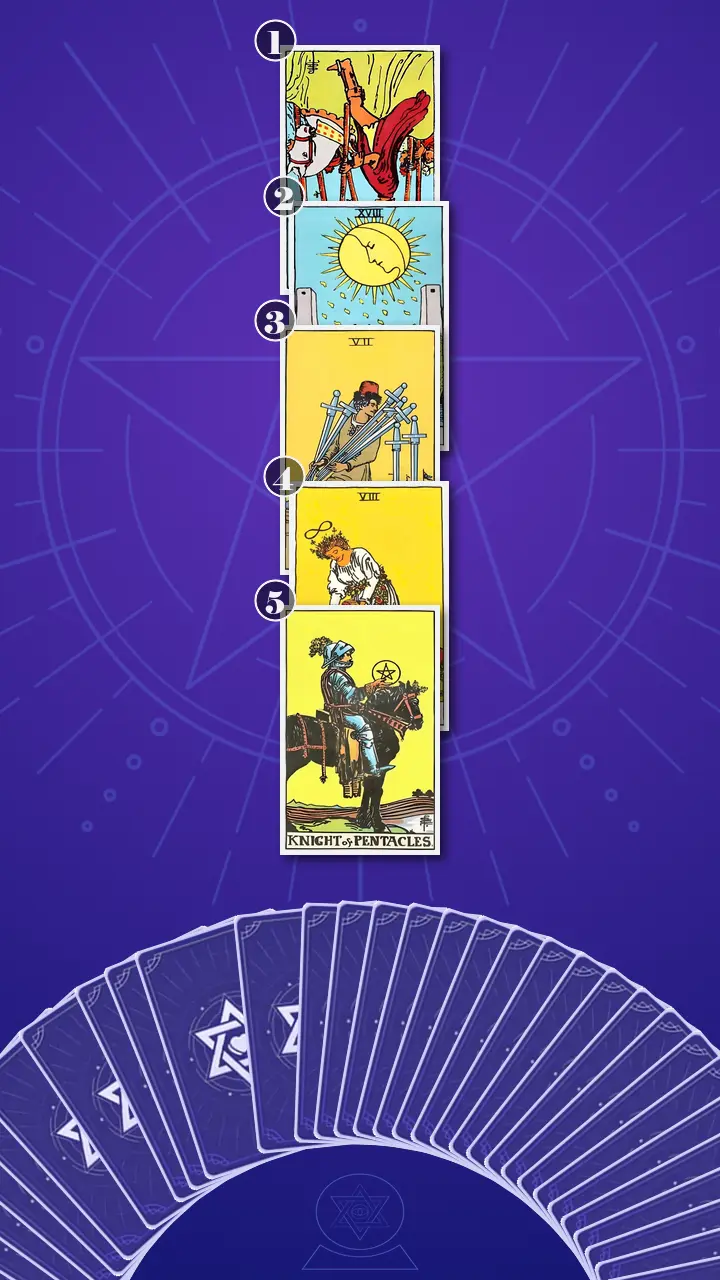
For this reading, I chose a five-card spread I trust when the real issue is not which group to choose, but why visibility itself makes someone want to disappear: The Shadow Spread · Context Edition. When readers ask me how tarot works for fear of being perceived in friendships, this is exactly the kind of structure I use. It moves in a clean line from symptom, to hidden fear, to defense, to antidote, to one grounded next step.
I explained it plainly. This case did not need a decision spread, because Jordan's problem was not whether the run club, the Discord, the workshop, or the meetup was the right fit. The real question was why a friendly follow-up felt like pressure instead of connection. Position 1 would show the visible pattern. Position 2 would name what being remembered activates underneath. Position 3 would reveal the protection strategy. Position 4, the key card, would show the antidote. Position 5 would give us a staying practice that could work in actual life, not just in theory.
The Cards That Named the Vanishing Point
Position 1: When Welcome Starts Feeling Like a Spotlight
I turned over the card for the presenting symptom, the moment Jordan pulls back when recognition in a new group starts to feel like a spotlight. It was the Six of Wands, in reversed position.
I showed Jordan what I meant by bringing it down into modern life. The first night at a Toronto run club or hobby Discord feels easy because you are just another person in the room. Two days later the chat pings, 'Jordan, you coming Thursday?' and the same friendliness suddenly feels like being pinned under a name tag you never agreed to wear. What felt warm on Tuesday reads like pressure by Wednesday.
Reversed, the Six of Wands is blocked Fire. Recognition is landing, but instead of warming confidence, it curdles into self-consciousness. A nice social mention feels like an annual review. The issue is not joining the group. The issue is the moment attention loops back and says, 'We saw you.' That is where Jordan's mind flips from 'Oh, they noticed me' to 'Now I have to get this right.'
Jordan gave a short laugh that had more salt in it than humor. 'Okay, wow,' they said, looking down at the card. 'That is accurate enough to be rude.' Their fingers tightened around the mug, then loosened. That bitter little laugh told me the card had landed exactly where it needed to: on the disappearing reflex itself.
Position 2: The Story the Mind Autocompletes in the Dark
Next I opened the card for the deeper trigger beneath the behavior, what being remembered activates underneath the surface. The card was The Moon, upright.
This is the part where a completely ordinary pause becomes a whole invisible jury. At 11:24 p.m., Jordan rereads a normal 'Hope you can make it!' and their brain autocompletes the worst possible meaning. Maybe I came off weird. Maybe they are being polite. Maybe next time I will disappoint them and prove I never really fit. The facts are minimal. The fear-story is loud.
The Moon is unstable Water. It does not invent everything from nothing, but it blurs what is happening with what is feared. A 27-minute reply gap turns into evidence. A typing bubble reads like a weather alert. Some people fear rejection. Some people fear recognition because rejection feels closer once they are known. That was the hidden trigger here. Jordan was not reacting to proof; they were reacting to imagined future disappointment wearing the mask of certainty.
When I said that, Jordan went very still. First their jaw set. Then their eyes unfocused for a beat, as if they were replaying half a dozen muted chats at once. Then came the long exhale. 'It really does feel like a Black Mirror plot my brain writes for free,' they said, and this time the smile was tired, not defensive.
Position 3: The Quiet Exit That Keeps You Orbiting
The third card mapped the defense strategy itself, the quiet withdrawal, the unread messages, and the slipping away before closeness can deepen. It was the Seven of Swords, upright.
After twenty years of listening to people untangle themselves over coffee, I have a very specific association with this card: the Notes app apology draft. The moment I saw it, I could practically picture the unsent line on Jordan's screen: 'sorry, work got hectic.' That, to me, is Seven of Swords in modern clothes. Not cruelty. Not indifference. Just stealth self-protection because invisibility feels safer than honest exposure.
In Jordan's life, this looked exactly like muting the Discord, switching off the notification badge, checking previews from the lock screen, and promising to jump back in later once they could do it casually. This is evasive Air. It lowers pressure fast, but it keeps the mind tethered from a distance, like leaving the party through the bathroom route and then watching everyone else's Stories on the ride home.
'I always tell myself I'll re-enter when I can sound normal,' Jordan said. I nodded. 'That makes sense,' I told them. 'But control and contact are not the same thing.' This was the hinge in the whole reading: Six of Wands reversed says being seen feels hot; Seven of Swords says disappearing cools it down. Relief arrives immediately. Belonging does not.
When Strength Put a Hand on the Lion
Position 4: The Antidote Is Not Better Performance
When I reached for the fourth card, the room seemed to quiet around us. The steam above our mugs had thinned. Outside, a streetcar bell clanged once and rolled away. This was the key card of the reading, the antidote. I turned it over: Strength, upright.
At 11:18 p.m., lying in bed with the group chat open and your name glowing back at you, you can want to go and still feel your stomach drop. That contradiction is not proof that you are broken. It is proof that the body alarm arrives faster than the interpretation.
Stop treating recognition like a spotlight you have to survive; place a steady hand on the inner lion and let being known become something you can hold.
I let that sit for a second before I added what Strength was saying in my own grounded language: recognition is not the exam. It is the first receipt that the room has started making space for you. Being remembered is not the same thing as being trapped.
This is where I brought in one of my own frameworks, something I call Obligation Decoupling. Jordan's nervous system had fused two separate events into one: someone saying their name, and some imaginary debt instantly becoming due. A tag had turned into a contract. A second invite had turned into a performance clause. Strength asks us to separate those wires. A message that says 'hope you come again' is contact, not conscription. The win is not sounding effortless; the win is regulating the first alarm and staying in contact one beat longer.
Jordan's reaction came in layers. First there was the freeze: breath paused halfway in, thumb suspended over the rim of the mug, shoulders held so high they looked borrowed. Then came the cognitive drop-through, that faraway look I know well, the one that means a person is replaying old scenes with a new caption under them. Then, finally, the release: a soft 'Oh.' Their shoulders fell. Their eyes brightened, not quite with tears, more with that strange lightheadedness that comes when a body sets down a bag it had mistaken for part of itself. Even then, the clarity had a fragile edge to it. Jordan looked at me and said, very quietly, 'So I don't actually need to feel socially perfect. I need to not obey the first alarm.'
'Exactly,' I said. 'Now use that lens and look back at last week. Was there a moment when this would have changed the feeling by even five percent?' Jordan nodded almost immediately: the run club thread, the Discord joke somebody remembered, the Partiful they nearly opened and then closed. This was the real shift of the reading, from exposure dread and stealth withdrawal toward steadier, repeated presence in community. Not instant ease. Not a personality transplant. Just a more honest kind of courage.
Position 5: The Boring Return That Makes Belonging Real
The final card was the embodied next step, one repeatable social action that helps Jordan stay in the group imperfectly instead of restarting somewhere new. It was the Knight of Pentacles, upright.
I smiled when I saw him. After Strength, this is my favorite kind of medicine: no drama, no social glow-up montage, just grounded Earth. In Jordan's world, it looks like adding the next meetup to Google Calendar, leaving the RSVP as a plain yes, taking the same TTC route, and letting one ordinary return count. Same cafe. Same faces. Same route. Same human being, even if that human being is only at 70 percent.
The Knight of Pentacles is balanced Earth. He is the opposite of the fresh-start cycle that feels good for a night and leaves you lonely a month later. Belonging gets built in boring repetitions, not dazzling entrances. It is closer to a Duolingo streak than a movie trailer. That is why this card matters so much for anyone asking why they like new friends until those friends expect them back, or why muting the chat once people know their name feels safer than staying. Community usually arrives looking unglamorous before it ever feels secure.
From Insight to Action: The One-Beat-Longer Practice
By the time I had all five cards in front of us, the story was clean. Jordan was not ghosting new groups because they did not care. They were going quiet after the second invite because recognition was creating pressure to perform and keep showing up. The Six of Wands reversed showed the social trigger: being noticed felt hot and exposing. The Moon showed the amplification point: the mind turned uncertainty into verdict. The Seven of Swords showed the protective move: quiet withdrawal, immediate relief, and no chance for trust to become ordinary. Strength interrupted that loop by teaching regulation instead of self-erasure. The Knight of Pentacles translated that inner shift into practice. This is exactly why I use a five-card Shadow Spread for fear of being perceived in groups: it gives the nervous system a map instead of a verdict.
I told Jordan the blind spot was simple and brutal: they had been treating recognition like obligation, and obligation like proof that they would eventually disappoint someone. That is why every second invite felt louder than it was. The direction of change was equally simple: treat recognition as early belonging, soothe the body alarm, and choose one boring return over dramatic re-entry.
I wrote down three next steps for Jordan, small enough to use this week and practical enough to survive real life:
- The 10-Minute Name-Tag ReplyTonight, save two low-pressure templates in your Notes app: 'Thanks for the tag — I saw this.' and 'I can't make this one, but thanks for thinking of me.' The next time a run club chat, Discord, or Partiful uses your name, put both feet on the floor, take one longer exhale, and send one plain reply within 10 minutes.If it feels robotic, good. That usually means you are interrupting perfectionism instead of feeding it. A plain reply is still contact. You do not owe anyone a polished return.
- Facts / Story, Two-Minute VersionAfter one triggering invite this week, open Notes, set a two-minute timer, and make two headings: Facts / Story. Write one literal fact from the message and one fear-story your mind added. Example: Fact = 'They said hope you come again.' Story = 'Now I have to be fun every time.'Stop at one line each. This is a clarity tool, not a courtroom. If you start writing paragraphs, close the app and take one breath.
- The VIP Section TestFor the next seven days, use my VIP Section Strategy. Choose one group to test for continuity this month, and treat your personal time as reservation only. Put the next event in Google Calendar with the transit route, start time, and a pre-decided exit point like 'leave after 30 minutes if needed.' Do not replace it with three brand-new socials where anonymity feels easier.The goal is not to become instantly close. The goal is one boring return: one RSVP, one appearance, or one honest no instead of silently drifting.

A Week Later, the Chat Was Still Unmuted
Four days later, Jordan sent me a screenshot. It was not dramatic. That was the whole point. The message they had sent to the run club chat read: 'Thanks for the tag — I saw this. I think I can make Thursday, will confirm tomorrow.' The next one came after the meetup: 'I stayed 35 minutes and left when I said I would. Nothing cinematic happened.' Then, after a beat: 'I still wanted to bail on the streetcar there. I just didn't let that decide everything.'
That is the kind of proof I trust. Not a personality transplant. Not a perfect new social life. Just a slightly steadier hand on the inner lion. In my work, that is what a real Journey to Clarity looks like: not becoming fearless, but becoming less ruled by the first wave of fear and more willing to let ordinary familiarity build.
When being welcomed makes your chest tighten instead of relax, it is often because part of you hears 'they remember me' as 'now do not mess this up.' If the next small sign of recognition felt a little less like a spotlight and a little more like the first reserved seat in the room, what would staying one beat longer look like for you?
This story is adapted from psychological research, written so that those in a similar struggle can see their own pattern in it — and find their next step clearly.These insights are not a substitute for professional psychological, medical, legal, or financial advice.
Learn more about our Journey to Clarity.
How did this insight land for you?
🫂 This Resonates Deeply
🌀 Living This Story
✨ Now I See Clearly
🌱 Seeing New Possibilities
🧰 Useful Framework
🔮 The Confirmation I Needed
💪 Feeling Empowered
🚀 Ready for My Next Step
Author Profile
 AI
AI“For twenty years, I’ve listened to stories unfold over the warm aroma of coffee. I don’t believe life’s complexities always require grand theories to be solved; often, we just need a safe place to tidy up our reality. I don’t offer high-minded preaching—just grounded, heartfelt insights to help you regain your sense of control amidst the clutter of daily life.”
In this Social Tarot Reading :
Core Expertise
- Social Clutter Sorting: Objectively classifying your broad network into 'core nourishing' versus 'energy draining' categories.
- Obligation Decoupling: Dismantling the guilt associated with declining invitations from low-value, high-maintenance acquaintances.
Service Features
- The VIP Section Strategy: A pragmatic 1-week rule to enforce a strict 'reservation only' policy for your personal time, eliminating casual energetic vampires.
Also specializes in :
Explore Related Patterns:
Emotional CutoffJordan's protection strategy shows up in the muted Discord, the unread messages, the lock-screen previews, and the quiet exit before closeness can deepen. The withdrawal is not framed as cruelty or indifference; it is a stealth way to lower pressure fast. The problem is that emotional distance starts doing the job that direct communication would normally do. Instead of sending a plain yes, a plain no, or an imperfect check-in, you disappear enough to feel safer while staying mentally tethered to the group from a distance. Emotional Cutoff fits because contact is interrupted at the exact moment it could become more real. The cutoff brings immediate relief, but it also prevents the repeated, ordinary contact that would let your nervous system learn that being remembered does not automatically mean being trapped or judged.
Fresh Start FantasyJordan can do the 'pilot episode' of a group, but panics at becoming 'the recurring character.' That line captures the pull of the clean slate: the first night is manageable because no one has enough continuity with you to expect anything yet. The fresh start protects you from being known, but it also keeps resetting the conditions for belonging. A new run club, Discord, workshop, or meetup can feel easier because anonymity lowers the pressure, yet the same problem returns once the group starts to remember your name. Fresh Start Fantasy fits because the promise of a new social context can feel like freedom from performance, when it is also a way to avoid the boring repetition that makes community real. The story's corrective is not a more exciting group; it is one ordinary return where you do not trade continuity for the temporary safety of starting over.
Relationship Performance AnxietyJordan's sentence, 'The second my name is there, it feels like I owe them a version of me,' names the pressure underneath the ghosting. The group is not only inviting them back; in Jordan's mind, the group is asking them to keep delivering the same acceptable self. That is a performance frame, not a connection frame. A second invite becomes an annual review, a tag becomes a contract, and a casual return becomes something that has to be handled correctly. You can want belonging and still panic when belonging starts to imply continuity. Relationship Performance Anxiety fits because the threat is not the group itself; it is the imagined requirement to keep being socially right. Waiting to re-enter when you can sound normal gives the anxiety a polished excuse, but it also keeps contact dependent on an impossible standard of effortless social consistency.
Visibility AvoidanceThe run club message saying 'Jordan, you coming next week?' is the exact point where the social temperature changes. Before the name appears, the group feels open and low-stakes; once the name is visible, the same friendliness starts to feel exposing, as if being remembered has turned into being watched. That shift shows a defensive move around visibility. You are not reacting to a demand that was clearly made; you are reacting to the nervous-system meaning attached to recognition. The group saying your name gets translated into pressure, evaluation, and the fear that you now have to maintain a version of yourself. The pattern becomes Visibility Avoidance because disappearing is used to reduce the heat of being perceived. Muting the Discord, checking previews, and waiting until you can sound normal all protect you from exposure in the short term, but they also keep you outside the ordinary repetition where belonging starts to feel safe.
Rejection SensitivityAt 11:24 p.m., Jordan rereads a normal 'Hope you can make it' and their mind starts filling in the worst social subtext. Maybe they came off weird, maybe the group is only being polite, maybe the next meetup will prove they never really fit. That is not a response to clear rejection; it is a response to the possibility of rejection becoming more imaginable once people know who you are. Recognition makes the stakes feel higher because being dismissed by people who remember you would feel more personal than being ignored as a stranger. Rejection Sensitivity fits because the mind treats small, ambiguous cues as early warnings of exclusion. You are not simply deciding whether to attend; you are scanning for future disappointment before it happens, and ghosting becomes a way to leave before the group can leave you psychologically exposed.
Spotlight EffectThe reading keeps returning to the same image: a friendly follow-up starts feeling like a spotlight. A group chat using Jordan's name is not described as simple warmth; it becomes a name tag, a phone flashlight, and a kind of social exposure. The cognitive distortion is that attention feels larger and harsher than the evidence supports. You may know, logically, that the group is probably just being friendly, but your attention narrows around the idea that everyone is noticing how you respond, whether you show up, and whether you can keep being acceptable. Spotlight Effect fits because the perceived audience becomes louder than the actual audience. The group remembering you is real, but the sense that this recognition has placed you under intense evaluation is the mental amplification that makes ghosting feel like relief.
Threshold ToleranceFour days later, Jordan sends the plain run club reply: 'Thanks for the tag - I saw this. I think I can make Thursday, will confirm tomorrow.' The shift is small on purpose; the body still wants to bail, but the first alarm no longer gets full control of the decision. This is the healthier pattern that starts to interrupt the loop. You do not have to feel socially perfect before responding, and you do not have to stay forever to prove you belong. You only need enough capacity to remain in contact one beat longer while keeping a real boundary. Threshold Tolerance fits because Jordan practices staying inside a manageable amount of discomfort without collapsing into disappearance. Attending for 35 minutes and leaving when they said they would turns belonging into something paced, embodied, and repeatable rather than something that requires instant ease.
Explore Related Struggles:
Visibility-Isolation SplitJordan does not cut the group out in one clean motion. They mute the Discord, switch off notification badges, read previews from the lock screen, draft a casual excuse, and tell themselves they will re-enter when they can sound normal. Visibility-Isolation Split shows up when the only manageable way to stay near people is to become less reachable by them. The withdrawal lowers the heat of being seen, but it also keeps belonging suspended at a distance, close enough to monitor and too far away to become ordinary. For you, this can feel like hovering around a community without letting the community actually have access to you. You are not choosing isolation because you do not care; isolation has become the control setting that makes visibility feel survivable, even while it quietly blocks the connection you wanted.
Visibility-Safety SplitJordan wants the run club message right up until it says their name. The same invitation that would normally signal welcome starts to feel like a spotlight, because being remembered makes the group feel less anonymous and more able to see, expect, and evaluate them. That is the core friction in Visibility-Safety Split: connection requires enough visibility for people to recognize you, but recognition is exactly where Jordan's sense of safety drops. You can want belonging and still flinch when belonging starts to include continuity, because the room no longer feels like a place you can pass through unnoticed. For you, this struggle can feel like disappearing right at the point when a group begins making space for you. The problem is not a lack of social interest; it is that being seen and being safe have become wired too tightly together, so the first clear sign of inclusion starts to feel like exposure.
Welcome-Perfection BindJordan describes the moment their name appears in the chat as feeling like they owe the group a version of themselves. A tag, a second invite, or a remembered Discord joke stops being casual contact and starts carrying the weight of a return performance. Welcome-Perfection Bind names that fused pressure. The group is offering a low-stakes opening, but Jordan receives it as an obligation to be consistent, fun, normal, and socially correct every time they show up. The invitation becomes heavier than the relationship has actually earned. You may recognize this as the point where friendliness stops feeling warm and starts feeling contractual. The struggle is not whether people like you enough; it is whether you can let welcome remain welcome without turning it into a private standard you must flawlessly meet.
Evidence DisconnectionJordan rereads a normal 'Hope you can make it' and the facts stay small: a message, a reply gap, a typing bubble, a friendly tag. The story built around those facts becomes much larger, with an invisible jury deciding that they were weird, tolerated, or about to disappoint everyone. Evidence Disconnection captures the point where the social data no longer carries its own weight. Ordinary ambiguity gets treated like proof, and the decision to disappear starts responding to an internal verdict rather than to anything the group has actually done. For you, this can feel like needing to leave before the imagined judgment arrives. The work is not to pretend the uncertainty feels easy; it is to separate what happened from what your mind completed in the dark, so one unclear signal does not get promoted into the full truth of the room.
Explore Related Emotions:
Belonging AmbivalenceJordan genuinely wants the question from the run club right up until it arrives. That contradiction matters because it shows a split between wanting to be included and wanting to stay unpinned by anyone's memory of them. Belonging Ambivalence sits in that split. For you, connection may feel warm when it is possible and heavy when it becomes mutual. The group remembering your name is both the thing you wanted and the thing that makes leaving feel safer, which is why the pull toward community and the impulse to vanish can arrive in the same notification.
Obligation DreadJordan says the second their name is there, it feels like they owe the group a version of themselves. That sentence is the emotional hinge of the whole case: a friendly tag stops being simple contact and becomes an imagined contract, complete with expectations, consistency, and the risk of letting people down. Obligation Dread names the pressure that makes the second invite louder than the first hello. For you, the group may only be offering another point of connection, but the body reads it as a bill coming due. Ghosting then becomes less about rejection of the group and more about escaping the sudden sense that being remembered means owing performance.
Performance FreezeJordan's body gives the pattern away before any explanation does: jaw set, breath paused, thumb suspended, shoulders held too high. Later, the same freeze shows up digitally as waiting to re-enter the chat only when they can sound normal. Performance Freeze names the lockup that happens when a simple response starts carrying the demand to be effortless, likeable, and socially correct. For you, the hard part may not be wanting connection; it may be trying to produce the perfect version of yourself before you allow contact. Silence then becomes a temporary relief valve for a body that thinks it has to pass before it can reply.
Social Exposure DreadJordan can do the pilot episode; the recurring character is where the body alarm begins. First hellos are manageable because they stay light, temporary, and anonymous, but continuity means the group now has a reference point for who Jordan was last time. Social Exposure Dread captures the fear that appears once a casual social setting starts to remember you. The threat is not exposure in front of a crowd; it is the quieter exposure of being expected back, compared against your last version, and seen long enough for people to form a view. The wish to disappear makes sense as an attempt to avoid becoming knowable too quickly.
Verdict DreadAt 11:24 p.m., a normal 'Hope you can make it!' becomes maybe I came off weird, maybe they are being polite, maybe next time I will disappoint them. The facts stay small, but the mind starts building a courtroom around them. Verdict Dread is the inner weather of being judged before judgment has arrived. For you, a reply gap, a typing bubble, or a second invite can feel like evidence in a case that nobody else knows they are holding. Ghosting interrupts the imaginary verdict, but it also keeps you from finding out whether the room was actually safer than the story your mind wrote in the dark.
Visibility PressureAt 11:18 p.m., the run club chat uses Jordan's name, and the welcome they wanted suddenly feels like a version of themselves is being requested. The phone is not just a phone in that scene; it becomes a small spotlight inside a private room, turning recognition into something physically close and hard to look away from. That is why Visibility Pressure fits the story so tightly. The emotional load is not about disliking people or losing interest; it is about the moment attention loops back and says, 'We saw you.' For you, being noticed can start to feel like being evaluated before anyone has actually made a demand, so disappearing becomes a way to dim the light fast.
Group Chat AnxietyThe WhatsApp tag, the muted Discord, the notification badge, and the lock screen previews are not background details. They are the exact places where Jordan's social life becomes both reachable and impossible to put down. Group Chat Anxiety fits because the chat compresses too many signals into one glowing interface: timing, tone, recognition, expectation, and the fear of being perceived. For you, the group chat may feel less like a casual tool and more like a room that follows you into bed. Muting it lowers the volume, but it does not answer the deeper question of how to stay connected without feeling watched.
Defensive LonelinessJordan does not simply leave; they keep orbiting from a distance through previews, muted threads, and other people's Stories. The exit protects them from direct exposure while keeping the connection close enough to monitor. Defensive Loneliness names the cost of that protection. For you, disappearing can create fast quiet, but it also blocks the ordinary repetitions that would let trust become less dramatic. The loneliness is not proof that you do not belong; it is the aftertaste of a defense that keeps you safe from judgment and separate from the belonging you were trying to reach.
Grounded BelongingThe next step in the story is deliberately ordinary: add the meetup to Google Calendar, take the same TTC route, decide an exit point, and let one return count. Belonging is moved out of the fantasy of the perfect entrance and into repeatable contact. Grounded Belonging names the kind of connection that can survive being only 70 percent available. For you, community does not have to be secured by dazzling first impressions or dramatic re-entry. It can be built through one plain RSVP, one honest no, one predictable return, and the slow evidence that ordinary familiarity does not have to trap you.
Regulated CourageFour days later, Jordan sends a plain reply to the run club chat and stays 35 minutes at the meetup. Nothing cinematic happens, and that is exactly why the moment matters: the body still wants to bail on the streetcar, but the first alarm no longer gets to decide everything. Regulated Courage is the courage of staying in contact while imperfectly steady. For you, the brave move is not becoming socially fearless or performing ease on command. It is putting both feet on the floor, letting the alarm pass through the body, and choosing one small action that keeps the door open.
Explore Related Contexts:
Conditional Belonging PressureWhen a run club text moves from a casual invite to 'Jordan, you coming next week?', you are no longer in the anonymous part of the room. The moment your name lands in the thread, the social exchange stops being casual and starts carrying the weight of continuity. You are dealing with belonging that feels conditional on keeping a version of yourself available for the group. Silence becomes the quickest way to drop the implied contract once the connection starts asking for a repeat performance.
Conditional Participation PressureThe WhatsApp thread and the later 'Jordan, you coming next week?' message turn one-off contact into a repeat ask. Once the group has your name, a reply stops being just a reply and starts carrying the expectation that you keep participating. You get immediate relief from muting the thread or promising to answer later because it lowers the demand to show up again. The pressure is less about the message itself and more about the role it assigns you in the next round.
Friendship Spotlight TestYou can hear it in Jordan's line about first hellos being easy, because the room stays loose until the group can name you and expect the next appearance. What starts as a light social edge turns into a visible stage once the connection stops being anonymous. You are not dealing with a hostile crowd. You are dealing with a setting where being remembered makes you readable, and that kind of visibility can turn an ordinary return into a spotlight test.