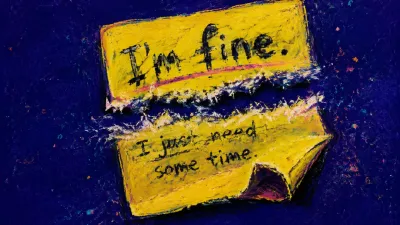
Why does being seen burn?

A clear audit of why attention feels exposing, with matching tarot cards and reading insights for the same visibility pattern.

Visibility Shame Loop
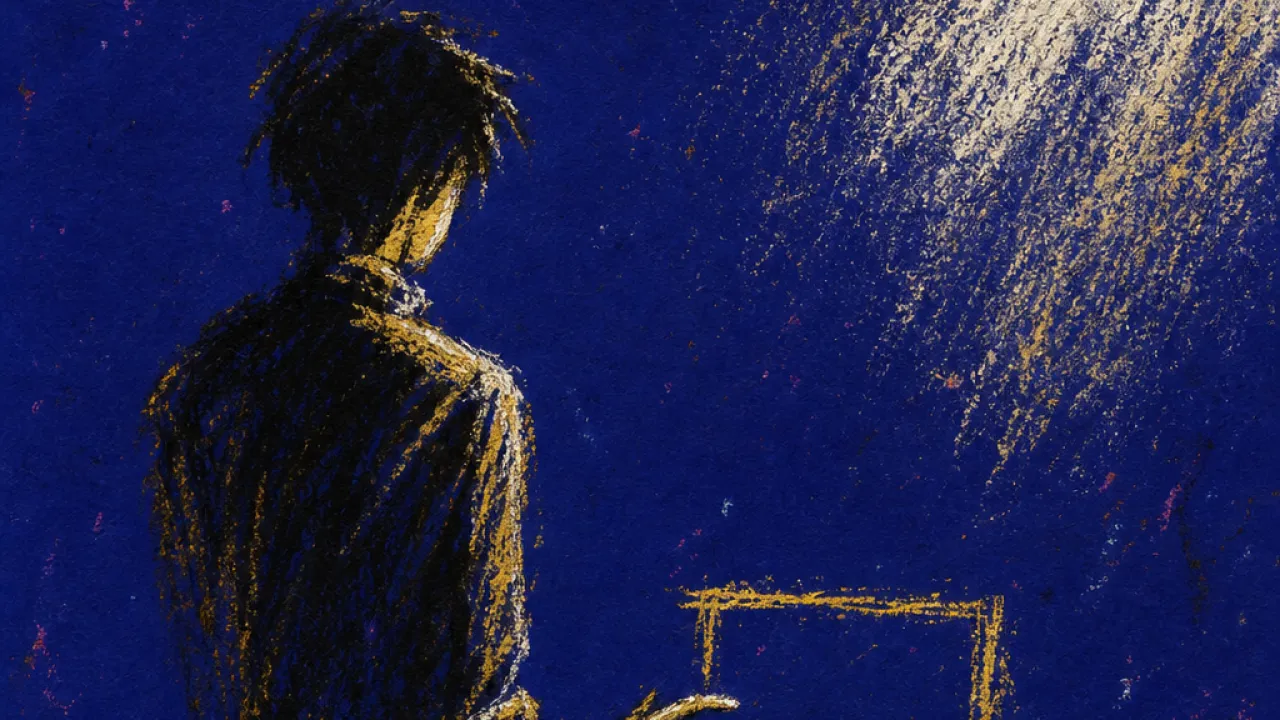
A side-turned figure with a thumb above an unsent caption window, amber light splitting into blue-black shadow at the throat

What is this really?

You draft the post, prepare the pitch, or start to speak, then shrink the moment attention turns toward you: you soften the claim, add a joke, delete the caption, or hand the spotlight to someone else. Underneath, visibility has become tangled with the need to stay readable, unimposing, and safe, so hiding works like a defense mechanism that buys instant relief from the heat of being perceived. Yet the relief turns into a shame loop: the part of you that wants to be recognized keeps meeting the part that expects exposure to cost you belonging, leaving your chest tight and your voice smaller, much like the Eight of Swords, where a bound, blindfolded figure stands among swords with open ground nearby but cannot step toward it.

Why did it happen?

At some point, being noticed may have meant being teased, corrected, singled out, or expected to perform perfectly, so your body learned to get smaller before the spotlight could land. Now that same subconscious loop can switch on when you post, present, flirt, share work, or simply take up space, even when no one has pushed you back. The relief after deleting, deflecting, or staying quiet can be immediate, but it often leaves a drained, restless feeling, like something unfinished is still sitting behind your ribs.

How does it feel?

  • You type a caption, reread it twice, and let your thumb hover over Post before adding 'lol this is probably dumb' or saving it as a draft. In that pause, your cheeks may warm, your shoulders creep up, and your stomach drop as if the room has gone quiet. You can let the draft exist for now without turning it into a verdict.
  • In a meeting, you inhale, lift one finger like you're about to add something, then lower it when someone else starts talking and say, 'I was just thinking the same thing.' Right then, your throat may narrow, your chest stays lifted, and your breathing gets shallow before you've decided anything. Noticing that held breath is enough for this moment.
  • When someone compliments your work, you look down, laugh through your nose, and point out the one part you rushed instead of letting the sentence land. Afterward, heat may travel up your neck, your fingers may pick at a sleeve, and the praise can feel too bright against your skin. You can let the words arrive in small pieces.
  • In a group chat or on a date, when the conversation turns toward your goals, you tilt your head, make a quick joke, and ask them another question before the attention settles. Once the topic moves away, your jaw may unclench a little while a buzzing behind your ribs keeps going. It's okay if relief and disappointment show up in the same breath.
  • Late at night, you open the application, portfolio, or pitch deck, zoom in to tweak one sentence again, then close the laptop before sending. Your eyes may sting, your neck goes stiff, and your body can feel wired and heavy at the same time. Uncertainty can stay in the room for a bit without needing an immediate answer.

Visibility Shame Loop in Tarot Cards

The reflex to soften your claim, delete the caption, or hand the spotlight away is the Visibility Shame Loop in motion. In that pause, your cheeks may warm, your shoulders creep up, and your stomach drop. From a Jungian perspective, archetypal theory gives this pattern a visual language without turning it into a verdict. Below are the Tarot Cards that mirror the unconscious dynamics behind that retreat from being seen.

The Magician
Reversed
The figure stands before a table containing the suit symbols, with one arm raised and the other pointing downward beneath an infinity sign. Reversed, the available tools remain visible while the channel between capacity and outward execution becomes unreliable. You may possess the skill for a pitch, leadership move, or creative claim yet dilute the message as soon as professional attention turns toward you. The roses, lilies, and arranged implements show developed resources rather than an empty starting point. Visibility shame can therefore produce a misleading workplace picture in which underexpression is mistaken for underqualification, including by you. The reversed card audits the conversion problem: the missing result may arise where competence must be publicly demonstrated, named, or claimed.
The Hermit
Reversed
The solitary figure occupies a remote peak and holds a lantern that can be seen despite the surrounding darkness. Reversed, the retreat becomes a conflicted social position: you want some form of recognition while keeping enough distance to prevent sustained attention. You may withdraw after a post gains traction, skip the next gathering after being noticed, or communicate from the edges of a group. The staff shows self-support, but the empty landscape reveals what prolonged self-protection removes from the social field. Withdrawal can regulate the intensity of being perceived, then generate shame or loneliness once the immediate relief fades. The reversed lantern makes the loop visible as alternating signal and retreat rather than a simple preference for solitude.
The Devil
Upright
The horned figure presides over two exposed people whose necks are encircled by chains loose enough to suggest movement remains possible. The scene maps the loop as a binding agreement between shame and relief: attention activates contraction, hiding reduces distress, and that reduction strengthens the next retreat. You may then attack yourself for disappearing, adding another chain of shame to a defense that originally sought safety. The figures' exposure beneath the looming authority shows how the fear of being perceived can persist even inside concealment. The loose collars do not trivialize the learned response; they reveal that awareness can create leverage where the cycle has presented itself as compulsory. The card makes the reinforcing structure visible so that bodily alarm, defensive action, immediate relief, and delayed self-judgment can be distinguished rather than experienced as one fixed identity.
The Star
Reversed
The naked figure works beneath a brilliant star with no wall, roof, or social mask separating her from the landscape. Reversed, that openness highlights a developmental conflict in which hope exists but becomes shame-charged when it requires visible embodiment. You may keep a vision private, diminish its importance, or stop before practice makes your emerging identity recognizable. The poured water shows growth as circulation rather than private possession. When shame redirects that energy inward, aspiration can remain vivid in imagination while producing little observable evidence. The reversed star identifies the missing bridge: not more idealization, but a safer relationship with being seen while the vision is still imperfect and becoming real.
Judgement
Reversed
The figures rise with open arms in response to a trumpet that makes continued concealment impossible within the image. Reversed, the call remains psychologically active but is repeatedly overruled by fear of what emergence will reveal. You may collect insight and imagine a larger self while refusing the visible actions that would allow that identity to take form. The coffins symbolize an older container that is familiar but no longer expansive enough. Visibility shame protects that container because transformation witnessed by others can feel harder to reverse or disown. The card reveals a growth threshold where the missing element is not more self-analysis, but recognition that self-judgment is controlling which changes are allowed to become observable.
The World
Reversed
The exposed central figure is enclosed by a wreath while the four corner figures look inward toward the completed scene. Reversed, the image captures work that has reached its natural boundary but is kept from final evaluation. You may reopen a finished assignment, research application, or thesis section because submission would turn private effort into an object that instructors or peers can judge. The wreath shows why the last step can feel qualitatively different from all the work before it. Continued refinement protects you from the visibility of completion even when it no longer improves learning. The reversed card separates academic diligence from shame-driven non-completion by asking whether the latest revision changes the work or merely delays being seen through it.
Four of Cups
Upright
The figure's folded arms and lowered attention block a cup that is being offered openly from the side. In friendship, that posture resembles brushing off encouragement or changing the subject when a close friend tries to celebrate you. You may preserve a familiar low-visibility role by making their recognition seem exaggerated, unnecessary, or embarrassing. The unreceived cup shows the interpersonal cost of the defense without casting the offer as an obligation. Repeated deflection can train friends to stop reflecting your strengths because their attempts never seem to land. The image reveals a support network whose resources are present but cannot become regulating evidence while visibility itself remains shame-charged.
Eight of Swords
Upright
The woman remains upright despite the blindfold and bindings, and the swords leave an unobstructed route beyond her feet. The scene captures a growth barrier maintained less by missing capacity than by a belief that visible movement will carry a relational penalty. You may accumulate insight, preparation, and private ability while repeatedly stopping at the point where development must become observable. The open terrain reframes growth as recovering choice from an automatic safety response. The loop can be examined at the exact transition between inner readiness and outer expression, where self-minimization usually takes over. The card does not reduce the fear to imagination; it shows that a once-useful defense can remain powerful while no longer being the only available structure.
Nine of Swords
Upright
The figure sits upright in bed with both hands covering the face while nine swords hang in a rigid row across the dark wall. The image captures the second half of the loop, when the external moment has passed but the mind keeps reconstructing how visible you were or how completely you disappeared. You may replay a sentence, facial expression, deleted post, or missed chance to speak until the memory feels like evidence against you. The swords remain on the wall rather than entering the present room, which distinguishes remembered threat from current danger. Post-event rumination can make hiding seem necessary next time while simultaneously punishing you for having hidden this time. The card exposes that double bind: shame is both the consequence of the defense and the mechanism that prepares the defense to recur.
Six of Wands
Reversed
The wreath-bearing rider occupies the visual center while the crowd confirms that his progress has become public fact. Reversed, this image captures difficulty allowing development to be witnessed and consolidated. You may complete meaningful inner work yet shrink when asked to name the change, claim a new identity, or let others update their view of you. The card reveals that recognition is not merely an external reward; it can be part of integrating growth into the self-concept. If every visible gain is dismissed, the older, smaller identity remains psychologically dominant despite contrary evidence. The reversed wreath marks the exact interruption point where earned development is denied admission into your own narrative.
Seven of Wands
Reversed
The elevated figure faces six incoming wands while balancing in mismatched shoes on uneven ground. Reversed, the scene captures the destabilization that can occur when an answer, argument, or presentation becomes publicly contestable. You may abandon a sound interpretation or pretend you were uncertain all along because peer challenge makes visibility feel like a social mistake. The incoming wands represent multiple reactions, not proof that the central position is wrong. Shame can collapse the distinction between being questioned and being exposed as inadequate, causing learning to become organized around avoiding defense of your thinking. The card reveals a more precise block than lack of knowledge: the difficulty lies in remaining cognitively present while your knowledge is visible to others.
Queen of Wands
Reversed
The crowned queen faces outward with a tall sunflower in one hand, a wand in the other, and a black cat seated directly before her throne. Reversed, this composed public presence becomes a site of intense self-monitoring, where taking up space can feel socially dangerous even when the capacity for warmth and expression remains intact. You may mute your style, lower your voice, or make yourself the facilitator so no one can accuse you of seeking attention. The sunflower and forward-facing throne show that visibility is part of the figure's natural social function, not an accidental excess. Shame can convert that function into embarrassment and compel you to manage how much aliveness others are allowed to perceive. The reversed queen reveals the difference between considerate participation and self-reduction driven by anticipated social judgment.

Visibility Shame Loop in Tarot Card Reading Insights

For anyone who deletes the caption, deflects praise, or goes quiet when attention lands, the same pull can enter a reading after the cards are on the table. Others have sat with this visibility pattern and the uneasy relief of disappearing before the spotlight settles. Tarot Reading Insights that speak to this pattern are below.

A Split-Screen Career Reset Led to a Four-Week Evidence Pilot

A Split-Screen Career Reset Led to a Four-Week Evidence Pilot

Topic:Personal Growth Tarot Reading

Struggle:Freedom-Structure Conflict

Context:Off-Script Career Path

Posting Pain for Belonging: Choosing an Audience That Can Respond

Posting Pain for Belonging: Choosing an Audience That Can Respond

Topic:Social Tarot Reading

Struggle:Visibility-Connection Split

Context:Care Reciprocity Test

Four Honest Ticks and One Plain Reply: Evidence Before Narrative

Four Honest Ticks and One Plain Reply: Evidence Before Narrative

Topic:Personal Growth Tarot Reading

Struggle:Visibility-Execution Split

Context:Self-Help Content Spiral
Portfolio Perfectionism: From a Worth Verdict to Version One

Portfolio Perfectionism: From a Worth Verdict to Version One

Topic:Choice Tarot Reading

Struggle:Control Lock

Context:Safe Visibility Trial

Version 17 Stayed Closed: Publishing Became Contact, Not a Verdict

Version 17 Stayed Closed: Publishing Became Contact, Not a Verdict

Topic:Career Tarot Reading

Struggle:Feedback Disconnection

Context:Safe Visibility Trial

When Preparation Becomes Postponement: One Honest Email to an Advisor

When Preparation Becomes Postponement: One Honest Email to an Advisor

Topic:Study Tarot Reading

Struggle:Clarity-Exposure Split

Context:Academic Isolation

Creative Visibility Paralysis: Her Hand Froze, Yet the Post Stayed Up

Creative Visibility Paralysis: Her Hand Froze, Yet the Post Stayed Up

Topic:Introspection Tarot Reading

Struggle:Inner Tribunal Lock

Context:Portfolio Career Launch

One Post Returned to FINAL_v4; the Next Stayed Visible 48 Hours

One Post Returned to FINAL_v4; the Next Stayed Visible 48 Hours

Topic:Personal Growth Tarot Reading

Struggle:Performance-Worth Fusion

Context:Personal Brand Performance

Performative Identity Burnout: From Collapse to One Bounded Promise

Performative Identity Burnout: From Collapse to One Bounded Promise

Topic:Personal Growth Tarot Reading

Struggle:Masked Self-Division

Context:Personal Brand Performance

When 'Refinement' Was Actually Delay: Leaving One Piece Visible

When 'Refinement' Was Actually Delay: Leaving One Piece Visible

Topic:Personal Growth Tarot Reading

Struggle:Perfect Readiness Trap

Context:Algorithmic Comparison Loop

A Cursor Over Publish, Then One Post Left Visible for 48 Hours

A Cursor Over Publish, Then One Post Left Visible for 48 Hours

Topic:Direction Tarot Reading

Struggle:Feedback Disconnection

Context:Personal Brand Performance

Mocking a Promotion, Reopening the Post—Choosing a Personal Measure

Mocking a Promotion, Reopening the Post—Choosing a Personal Measure

Topic:Social Tarot Reading

Struggle:Belonging-Authenticity Split

Context:Status Anxiety Circle

Psychological Patterns Related to Visibility Shame Loop