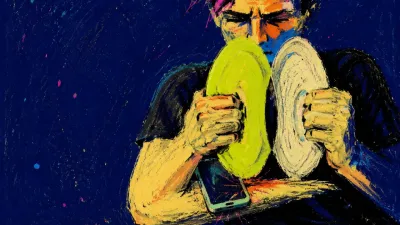
That tight, counted feeling around your chest and throat is part of what Self-Audit Anxiety can feel like: every ordinary detail starts to look like evidence. This is a universal emotional experience, even when the standards in your head sound deeply personal. Tarot offers visual mirrors for that suspended review state without turning it into a verdict. Here are the Tarot Cards that often reflect Self-Audit Anxiety.
Justice UprightThe forward gaze, balanced scale, and upright sword create a scene where every inner measurement appears capable of becoming evidence. The veil behind the figure keeps the full process hidden, so the visible tools carry a sharper charge than their stillness suggests. Self-Audit Anxiety comes from placing your growth under that kind of inspection. Habit trackers, values work, and personal metrics can start to feel like a tribunal inside the mind, even when the deeper need is simply to see clearly what is working and what is costing you.
ReversedThe same scales and sword can become a private courtroom when the figure's rigid frontality hardens. The neutral face, locked posture, and closed hall make every inner signal feel like it has to pass inspection. Self-Audit Anxiety forms when introspection stops being observation and starts feeling like cross-examination. You are still seeking clarity, but the card shows how the search for truth can tighten into constant internal surveillance.
The Hanged Man ReversedThe body is displayed like a diagram beneath the beam, with the haloed head drawing attention to interpretation while the blank field offers no feedback. Every part of the image invites inspection, yet nothing in the scene confirms whether the suspension is progress, pause, or restraint. In personal growth, this becomes the anxious habit of turning the self into an object under review. You are not only trying to change; the card reflects the inner pressure of constantly checking whether the change is real enough, visible enough, or happening fast enough.
Temperance ReversedThe lowered gaze and bright mark at the brow concentrate attention into a narrow field of inspection. The cups become instruments under review, and the controlled hands make the scene feel exacting rather than restful. Self-Audit Anxiety takes shape when personal growth becomes a constant internal review. The card reveals the pressure of watching yourself too closely, where reflection stops creating clarity and starts turning every gap into evidence that something still needs fixing.
The Devil ReversedThe man's gaze, the woman's blank distance, the inverted pentagram, and the public ring all pull private desire into harsh visibility. The scene feels less like a simple choice and more like a mirror aimed at the motives underneath the choice. Self-Audit Anxiety rises when deciding becomes an interrogation of character: Do I want this for clean reasons, or am I being pulled by comfort, status, leverage, or heat? The card helps separate motive-checking from self-attack by giving the hidden drivers a visible structure you can examine without surrendering your agency.
Judgement UprightThe scene of Judgement is built around response. A trumpet sounds from above, the red-winged angel becomes the only active color in a cold landscape, and every figure rises inside an open coffin as if private history has become visible evidence. Self-Audit Anxiety emerges when that image moves into academic life. Your mind starts reviewing the semester like a ledger: the unread chapters, the half-formed arguments, the weak citations, the emails delayed too long, the habits that looked manageable until the deadline made them visible. The card links this emotion to awakening because the anxiety contains information. It is not merely panic about performance; it is the discomfort of seeing your actual academic system clearly enough that avoidance loses its cover.
ReversedThe raised bodies are exposed inside open coffins while the trumpet sounds from a height they cannot reach. The red cross and wings are vivid against the cold blue field, making the call feel sharp, official, and difficult to ignore. Self-Audit Anxiety grows from that visual pressure. In its reversed texture, Judgement becomes the feeling of turning introspection into a private tribunal, where every buried motive and unfinished pattern is pulled into the light before you feel ready to hold it. You may be trying to understand yourself, but the inner review starts to sound like accusation instead of clarity. The card helps name that distortion: the problem is not awareness itself, but the way the inner signal has been routed through exposure, scrutiny, and fear of being found lacking.
Four of Cups ReversedThe cups are arranged like evidence around the seated figure: three on the ground, one offered from the side, all close enough to matter. Yet the closed eyes and unmoving posture keep the scene unresolved, as if the body is being watched by possibilities it cannot answer. Self-Audit Anxiety appears when introspection turns into a silent performance review of the self. The card’s stillness becomes tense because every unreceived cup can start to feel like proof that something inside should be working better than it is. This reversed reading gives that inner scrutiny a visible structure. You are not being handed a verdict; the card reveals the loop of measuring your response before you have actually reconnected to what you feel.
Two of Pentacles ReversedThe figure's gaze narrows onto one pentacle while the bright costume, green shoes, lifted foot, cord, and second coin keep the rest of the image busy. The body has to look coordinated, but the eyes reveal the exact point where attention has become inspection. In introspection, this becomes the pressure of watching your own inner life too closely. Every reaction can start to feel like evidence, every emotional shift like something to review, and every private motive like a coin that might expose imbalance if it drops. Self-Audit Anxiety fits the reversed Two of Pentacles because the card turns balance into surveillance. The emotional weather is not simple worry; it is the tense feeling of being both the performer and the evaluator of your own inner state.
Three of Pentacles ReversedThe workbench lifts the craftsman into a point of inspection, while the blueprint and robed figures hold a standard just outside his hands. The doorway becomes a review chamber where making, measuring, and being watched happen at the same time. Self-Audit Anxiety grows from that compressed structure. In introspection, you may feel as if every inner reaction has to be checked for defects before it is allowed to exist, turning self-knowledge into a constant performance review of the private self.
Four of Pentacles ReversedThe pentacle on the crown turns the head into part of the containment system. With another pentacle at the chest and two under the feet, the card places thought, feeling, and action inside one monitored arrangement. Self-Audit Anxiety appears when introspection becomes a constant internal inspection instead of a clear seeing. You may find yourself checking every reaction for meaning, every boundary for correctness, and every feeling for hidden evidence that something is wrong with you. The figure's fixed gaze gives the anxiety its edge. The card shows what happens when the inner witness becomes too rigid, watching the self so closely that even self-awareness starts to feel like pressure.
Seven of Pentacles UprightThe figure's eyes stay on the vine, not on the open sky behind him. The harvested coin sits near his feet while the remaining pentacles keep hanging, turning the whole scene into a quiet review of what has paid off, what is still pending, and what should be done next. In career terms, this creates an internal scoreboard. You may find yourself scanning every project, metric, late night, and stakeholder reaction for proof that your effort is becoming actual leverage. Self-Audit Anxiety arises when evaluation becomes the atmosphere around the work itself. The card does not reduce you to productivity; it exposes the moment when your nervous system starts treating every visible result as evidence in a case about your professional worth.
ReversedThe fixed gaze on the vine turns the garden into an inspection site. Six pentacles remain attached, one lies on the ground, and the whole image narrows around the question of what has matured, what has not, and what should be done with the result. Self-Audit Anxiety emerges when that evaluative posture turns inward. In introspection, You may keep checking whether you are healed enough, self-aware enough, calm enough, mature enough, or making enough progress to justify the effort. The card’s measured harvest becomes a mental review loop where every partial result feels like data and every delay feels like evidence to re-examine. The reversed pressure sits in the way attention stops being reflective and starts becoming surveillance. The psyche is not simply looking at the crop; it is scanning the self for proof that the inner project is working, and that scan can make even genuine growth feel unfinished.
Eight of Pentacles ReversedThe craftsman's gaze is locked onto the coin so tightly that the rest of the scene becomes secondary. Around him, the finished pentacles hang in a visible line, turning private effort into something that can be counted, compared, and inspected. Self-Audit Anxiety grows from that narrowed visual field. In introspection, the same careful attention that could create clarity starts behaving like an inner reviewer, scanning every reaction for proof of progress, failure, maturity, or hidden damage. You are not simply noticing yourself; you are watching yourself watch yourself. The card captures the pressure of an inner world that has become both the workspace and the supervisor.
Page of Pentacles ReversedThe Page holds the pentacle high enough that it becomes both object and standard. His eyes stay fixed on it, his hands maintain the display, and the open field gives the raised coin a quiet sense of exposure. Self-Audit Anxiety grows when that focused examination becomes too sharp inside you. In introspection, one reaction, flaw, memory, or unfinished piece of yourself can start to feel like the only thing that matters. The inner observer turns rigid, and the act of looking begins to feel like being evaluated. This card reveals the pressure hidden inside self-awareness when awareness is treated like a performance. The pentacle is still a tool for clarity, but the body around it shows what happens when every inner detail has to prove it is worthy of being kept.
Queen of Pentacles ReversedThe pentacle sits close to the Queen's body, held in both hands under a concentrated downward gaze. In a strained inner state, that same focus can stop feeling like grounded attention and start feeling like a private inspection room where one object, one feeling, or one flaw takes up the whole field. Self-Audit Anxiety grows from the card's density of symbol and posture: crown, throne, carvings, garden, and coin all gather around a single seated figure who appears composed while intensely oriented inward. The psychological structure is not simple worry; it is the pressure to examine the self until every hidden reaction has been accounted for. For you, this emotion may show up when introspection becomes a performance of being emotionally responsible. The card reflects the moment clarity turns into surveillance, when the wish to understand your inner world starts tightening around the very feelings it hoped to free.
Ace of Swords ReversedThe sword is held with a locked, precise grip, and its point pins the crown at the exact center. The symbol of mastery is not resting on a head; it is suspended on an instrument of judgment and division. For introspection, that arrangement turns self-knowledge into an internal review chamber. Self-Audit Anxiety is the pressure of feeling examined by your own sharpest standard, where every motive wants to be named before You are allowed to simply exist with it.
Six of Swords ReversedThe swords are arranged with strict regularity, turning the boat into a measured interior where every blade has a place. The figures look downward rather than outward, as if attention has been pulled into the enclosed system instead of the wider water. Self-Audit Anxiety arises when introspection becomes an inspection chamber. You may be trying to restore inner order, but each feeling starts to look like evidence to review, categorize, and judge. In the reversed Six of Swords, rational structure loses some of its softness and becomes pressure. The card reflects the moment when the search for clarity starts tightening around you, making inner work feel less like witness and more like a silent review you cannot step out of.
Seven of Swords UprightThe figure tiptoes away with five swords clutched against his body, yet his head turns back toward the camp as if the move still has to pass an invisible inspection. The blades are not packed safely away; they remain exposed in his hands, making the strategy visible as a mental load he has to keep managing moment by moment. That visual tension maps directly onto the inner climate of self-auditing before a serious choice. You may already have a plan, but the mind keeps checking the logic, the motive, the missing information, and the possible backlash, as if every step forward has to be internally cross-examined. In decision work, this feeling is not random nervousness. The Seven of Swords names the specific anxiety that appears when agency depends on seeing your own strategy clearly, including the parts you would rather not admit are influencing the choice.
ReversedThe figure's smile does not stop the backward glance, and the five swords in hand do not erase the two left behind. The image keeps progress and remainder in the same frame, making the mind return to what was missed, exposed, or not fully accounted for. In academic life, this becomes the habit of emotionally rechecking your own legitimacy after every grade, draft, comment, or strategic choice. You may have done the work, but the inner audit asks whether it was done correctly enough, honestly enough, or intelligently enough. Self-Audit Anxiety fits the Seven of Swords because the card makes self-review feel like surveillance. The task is no longer only to learn or produce; it becomes the pressure to prove to yourself that your method, effort, and result can survive inspection.
Eight of Swords ReversedWith the blindfold covering her eyes, the woman cannot verify the scene through sight; attention turns inward by force. Around her, the eight swords stand like hard reference points, creating a field that invites constant internal checking. Self-Audit Anxiety fits the reversed decision state because the question stops being only which option is right. It becomes whether your motive is pure enough, whether your fear is distorting the facts, whether your desire can be trusted, and whether you are missing the obvious. Eight of Swords gives that anxious self-review a precise container. The card shows the mind using scrutiny to recover control, while also revealing how too much scrutiny can become another band around agency.
Nine of Swords UprightThe card exposes the figure in white against a black background while the swords divide the upper body into separate pressure zones. Head, throat, and heart each receive their own blade, as if thought, expression, and feeling have all been placed under review. In choice work, that visual segmentation becomes an inner audit. The question is not only which option is better; it becomes whether the desire is clean, whether the fear is honest, whether the stated reason is hiding a quieter motive. Self-Audit Anxiety is the tension of being both the decision-maker and the examiner. The card makes that private review visible, allowing the user to distinguish useful self-scrutiny from a mental courtroom that never returns a verdict.
Page of Swords ReversedThe Page looks back over a rough path while the sword stands upright in his hands, as if perception has become an instrument of review. From the high ridge, every uneven step can be seen again, and the mind has enough distance to inspect what it once had to survive in motion. Self-Audit Anxiety forms when introspection turns into inner cross-examination. You are searching for insight, but the blade of analysis keeps pressing each reaction, motive, and memory for evidence of what went wrong. The card's visual tension lies in the split between looking back and needing to move forward. It reflects the feeling of being trapped in review mode, where self-knowledge is wanted deeply, yet the act of examining yourself starts to feel sharp, exposed, and never complete.
Knight of Swords ReversedThe knight’s gaze is sharp enough to turn the whole scene into a target field. Armor covers the body, and the sword becomes the main instrument of contact with the world. When this image turns inward, introspection can start to feel less like witnessing and more like prosecution. You may scan every motive, reaction, and inconsistency with the same blade that was meant to create clarity. Self-Audit Anxiety forms when the inner observer becomes too armed. The card reveals the emotional cost of using precision without mercy: the self becomes something to inspect, correct, and cut down before it has been fully understood.
Queen of Swords ReversedThe Queen's serious mouth, fixed gaze, and raised blade turn the throne into a chamber of evaluation. The body is upright and controlled, but the control has a braced quality, as if every movement has to justify itself before the sword. For personal growth, this maps to the inner weather of constant self-review. Your habits, goals, pauses, and unfinished changes become evidence in a private audit, and the same intelligence that could create freedom starts measuring whether you are evolving correctly.
King of Swords ReversedThe King's eyes lock onto the blade as if the whole scene has become an instrument of inspection. The high throne back and vertical sword tighten the space around him, making the open sky feel less like freedom and more like a courtroom of the mind. Self-Audit Anxiety appears when personal growth turns every choice into evidence. A missed habit, a stalled goal, or an old reaction does not stay small; it becomes part of an internal case file about whether you are evolving fast enough. The card reflects a mind trying to be fair by being severe. Its emotional pressure comes from the belief that clarity requires constant evaluation, even when the evaluating gaze is the very thing draining your capacity to move.
Three of Wands ReversedFrom the high ground, the figure surveys a horizon that is too large to fully enter from where he stands. The hidden face, planted wands, and sharply divided cliff edge make the scene feel like a private review platform, built for observation before contact. Self-Audit Anxiety forms when introspection stops being a mirror and becomes an internal performance review. The card reflects the tension of scanning every motive, trigger, and blind spot from above, trying to make the inner world accountable before it has been understood.
Five of Wands UprightThe figures in the Five of Wands do not look toward one shared destination; each face and body angle answers a different point of pressure. The wands are useful, intact, and active, but their crossing lines turn the field into a live review of competing positions. In a personal growth context, that image becomes the inner audit that never ends. You scan yourself through too many standards at once: whether you are disciplined enough, self-aware enough, productive enough, healed enough, confident enough, or still behind some invisible curve. Self-Audit Anxiety is the pressure of being both the person trying to grow and the person constantly scoring the attempt. This card gives the feeling a visible structure: the problem is not that you lack insight, but that the judging system has become as loud as the growth itself.
Seven of Wands ReversedFrom the high ridge, the figure can see the pressure rising from below, but his gaze is pulled into the immediate line of defense. The single wand becomes a divider, a measuring bar between the self and everything that appears to be coming for it. Self-Audit Anxiety begins when perspective becomes interrogation. In an introspective space, the mind may try to examine every feeling for hidden motives, every reaction for evidence, every boundary for whether it is justified. The card shows the cost of clarity when it loses softness. You are not lacking awareness; the emotional strain comes from awareness being organized like a defense system, where every inner movement must prove itself before it is allowed to exist.
Nine of Wands UprightThe figure's eyes are not settled on the wand in his hands; they are angled toward whatever might approach from the side. Behind him, the defensive row is nearly complete, but the visible gap makes his own body part of the inspection system. In inner work, that image becomes the feeling of scanning yourself for the next hidden flaw, reaction, or unresolved fragment. The mind keeps checking the boundary because the unfinished place is also the place where attention has been assigned to stand guard. Self-Audit Anxiety fits this card because the Nine of Wands turns vigilance inward. The emotional pressure is not only about what could happen outside you; it is the restless need to verify that your inner defenses, motives, and reactions are still under control.
No cards available for this filter.