Too Many Thoughts at Once?

Explore the pressure of mental overload through related tarot cards and session-based reading insights that map how overload shows up.

Cognitive Overwhelm
What does this feel like?

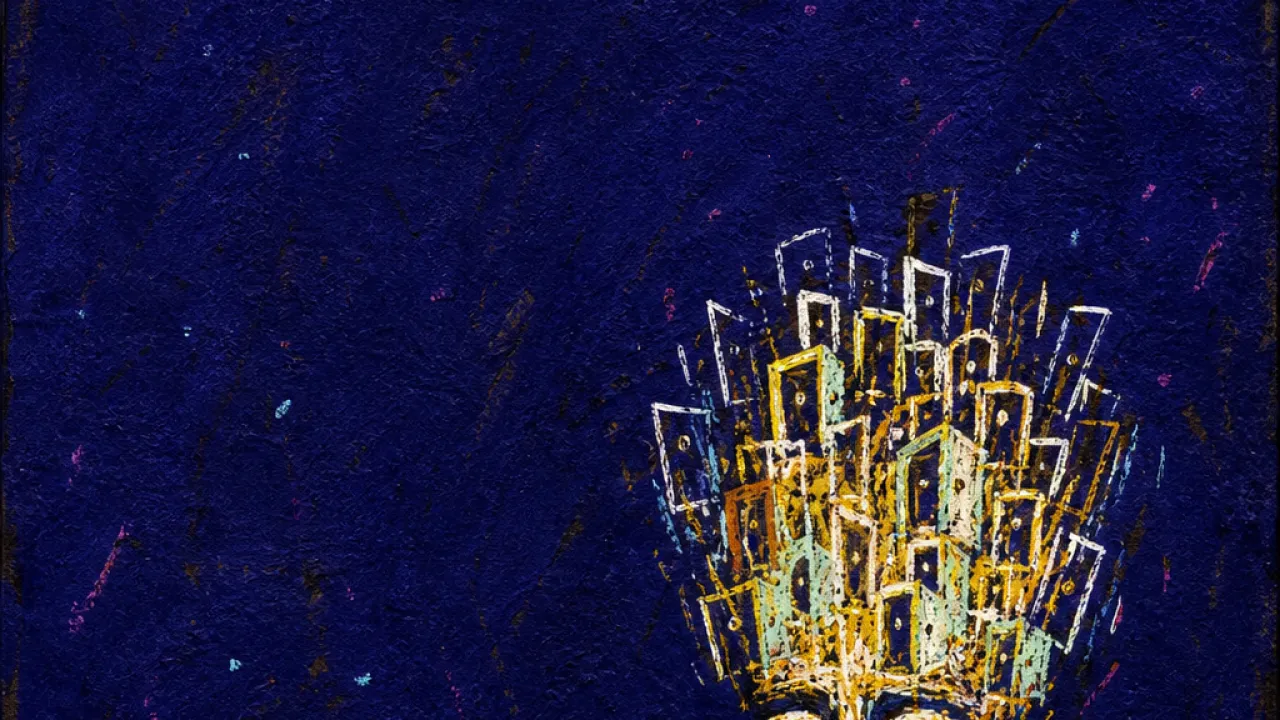
Cognitive Overwhelm — you feel it first as a hot, crowded pressure behind your eyes, like your brain has opened too many doors and every room is talking at once. Your jaw gets tight, your shoulders creep up, your breath turns shallow, and even simple things start to arrive as stacks: the unread message, the half-finished tab, the sentence you meant to reply to, the task you opened and immediately forgot why you opened it. Nothing is empty, but nothing is sorted either. Every thought seems to carry the same volume, the same blinking urgency, the same little alarm saying, look at me first. You try to make a list and the list becomes another thing to hold. You try to start and your mind jumps three steps ahead, then sideways, then back to what you might have missed. Inside, the voice is not always dramatic; sometimes it is just relentless: What comes first? What am I forgetting? Why can’t I just do one thing? The hardest part is that you may still care about all of it, which makes the overload feel even more crowded, because none of the signals feels easy to ignore. Cognitive Overwhelm is not having no thoughts — it is having too many sharp, lit-up thoughts pressing into the same narrow space, much like The Tower, where lightning, smoke, flames, falling bodies, scattered sparks, and a broken crown all hit the eye at once, leaving no single place for attention to land.

Why you're feeling this?

Cognitive Overwhelm is not a failure of intelligence; it is the feeling of too much meaning arriving faster than your inner space can sort it. You are not wrong for freezing, looping, or needing quiet. Your system is asking for fewer signals at once, not proof that you can hold everything.

Cognitive Overwhelm in Tarot Cards

That hot, crowded pressure behind your eyes is one of the clearest signatures of Cognitive Overwhelm. It can feel like every thought has the same volume and no place to land. This is a universal emotional experience: the mind flooded by signals before it can sort them into order. The Tarot Cards below mirror the shape of that overload.

The Tower Upright
Flames pour from several windows while smoke thickens around the tower, making the structure look overrun from multiple points at once. The lightning, falling crown, scattered lights, and falling figures all compete for attention in a single compressed scene. In personal growth, that visual overload mirrors the experience of too many self-realizations arriving together. One limiting belief points to another, one habit exposes a deeper fear, and the mind loses the ability to sort insight into a clean sequence. Cognitive Overwhelm is the feeling of being flooded by your own awareness. The card clarifies why more insight does not automatically create more agency when the inner container has not had time to digest what has been revealed.
The Moon Reversed
The Moon fills the scene with signals: rays, droplets, animals, water, towers, hills, and a path that keeps pulling the eye forward. Each element seems meaningful, but the total field refuses to organize itself into one clean hierarchy. In personal growth, that becomes the feeling of drowning in frameworks. Every podcast, metric, habit tracker, insight, and identity theory appears relevant, yet the mind cannot tell which signal should actually guide the next step. Cognitive Overwhelm belongs to the reversed Moon because the symbolic field becomes too crowded to metabolize. The card shows meaning without enough ordering power, where the search for insight starts consuming the clarity it was meant to create.
The Sun Reversed
The card is saturated with rays, flowers, flag, feather, wall, horse, and child, all under a sun that keeps emitting light. There is abundance here, but very little visual shade where the eye can rest. In study, that same brightness can become too much input: readings, notes, concepts, slides, deadlines, comments, and expectations all arriving as if every detail matters at once. The mind sees more, but metabolizes less. Cognitive Overwhelm is the inner weather of illumination without pacing. The reversed Sun does not remove clarity; it floods the system with more brightness than the academic mind can sort in one pass.
Ace of Cups Reversed
The cup is activated from above, spilling into five streams while droplets fill the space around it. When that motion is too crowded, the image stops looking like a clean channel and starts looking like an intake system with no pause, no sorting point, and no place to set one stream down before the next arrives. In academic life, this maps directly onto the mind facing readings, lectures, tabs, deadlines, feedback, and exam stakes all at once. You may still care about the material, but the system is flooded with inputs before it has enough space to organize them into knowledge.
Seven of Cups Upright
Seven chalices floating in mist create an information field with no table, ground, or ranking system. Each cup contains something vivid enough to pull attention, but the scene gives no ordinary sequence for what should be examined first. In academic life, that visual structure mirrors the moment learning stops feeling like a path and starts feeling like too many simultaneous portals. You are not simply distracted; your attention is being asked to evaluate readings, grades, research identities, and future options before any one of them becomes grounded enough to organize the rest. Cognitive Overwhelm fits this card because the pressure is not just volume, but symbolic density. The mind is full of meaningful material, yet the lack of hierarchy turns meaning into mental static.
Page of Cups Reversed
The sea behind the Page and the small cup in his hand create an uneven relationship between volume and container. The figure stands at the boundary, trying to hold a single living signal while a much larger field moves behind him. That is the academic feeling of too many readings, lectures, frameworks, tabs, notes, and feedback streams arriving at once. You are not empty; you are overfilled in a way that makes retention feel unstable and output harder to start. Cognitive Overwhelm fits the reversed Page of Cups because the card's water imagery becomes a problem of containment. The learning system is receiving material, but the container has not yet been rebuilt to match the amount and intensity of what is entering.
Three of Pentacles Reversed
The card is full of instructions: blueprint, pillars, pentacles, pointed arches, carved forms, and three separate roles gathered around one piece of work. The visual order is precise, but that precision can become dense when every element asks to be understood at once. Cognitive Overwhelm appears when academic structure stops supporting the mind and starts crowding it. Rubrics, citations, supervisor comments, lecture notes, methods, and deadlines can gather around a single task until even the next clean action becomes hard to locate. The paused hammer matters here. The card shows thought becoming so loaded with standards and cross-references that movement stalls, not because the work is meaningless, but because the mind is trying to hold too many architectural layers in the same moment.
Five of Pentacles Reversed
Snow fills the dark air until the path, the wall, and the distance lose clean edges. The crutch-led steps create a stop-start rhythm while the whole scene keeps throwing more sensation into the visual field. For you, readings, lectures, deadlines, and feedback can arrive like weather rather than separate tasks. Cognitive Overwhelm is the mind trying to walk through too many signals at once, with no clear horizon long enough to organize them.
Ace of Swords Reversed
The double-edged sword, the glowing marks, and the crown all compete for the same narrow vertical line in a wide sky. The image offers one clean axis, but it also concentrates too much meaning around a single mental instrument. Inside deep self-reflection, that compression becomes a bandwidth spike. Cognitive Overwhelm is the feeling of trying to cut every hidden impulse into a final answer, while the mind keeps generating more edges than You can hold at once.
Three of Swords Reversed
Three separate swords enter the heart from three different angles, but the pressure does not stay separate. Every blade meets at the same center, while the slanted rain fills the field with motion that offers no clear route through it. Cognitive Overwhelm in study has this converging quality. Readings, deadlines, feedback, citations, exam scope, and self-critique may begin as separate demands, but they collapse into one overloaded inner point where the mind cannot decide what is important, what is urgent, and what is merely sharp. The card links mental pressure to emotional impact. It shows that the problem is not only the amount of information; it is the way each piece has become attached to worth, evaluation, and the fear of falling behind.
Four of Swords Reversed
The closed eyes of the knight do not erase the swords; they simply remove the figure from direct engagement with them. Thought is still present above and below the body, arranged like material that has not been processed but cannot be ignored. In academic pressure, Cognitive Overwhelm shows up when readings, theories, deadlines, rubrics, citations, and expectations occupy the same mental room. The mind may close its eyes because there is too much to sort, not because the material is meaningless. The Four of Swords makes that overload visible as a sealed field of thought. Its value is the clarity that your system may need containment before it can regain comprehension, rather than more input piled onto an already crowded inner workspace.
Six of Swords Reversed
The swords are not scattered; they are neatly arranged, rational, and upright. Yet their order still takes up space, adds weight, and narrows the boat's interior until the passengers travel inside a corridor of mental cargo. Cognitive Overwhelm appears here as the moment when clarity systems become heavy. In personal growth, the frameworks, courses, self-audits, saved posts, and mindset maps may look organized, but the inner space available for action keeps shrinking. The card shows that too much structure can become another form of load. You are not overwhelmed because you lack insight; you are overwhelmed because insight has multiplied faster than your lived system can metabolize it.
Eight of Swords Upright
Eight swords stand as separate vertical demands around a blindfolded figure, turning the open ground into a crowded mental field. Nothing in the image is chaotic in a physical sense, yet the arrangement makes the next route difficult to prioritize. Cognitive Overwhelm enters academic life when readings, lecture notes, rubrics, citations, deadlines, and future consequences all become equally sharp. The mind is not empty; it is over-marked, over-signaled, and unable to locate the first clean line of action. The card is useful because it separates information from orientation. You may have plenty of material in front of you, but the emotional task is recognizing when the volume of inputs has replaced actual clarity.
Reversed
Eight swords multiply the visual field around one still body, while the blindfold removes the ability to sort direction from noise. Mud and pooled water add another layer of unstable footing, making thought and movement feel tangled together. Cognitive Overwhelm in career questions comes from that crowded mental perimeter. You are not short on effort; the problem is that every option arrives with a hidden cost, a political implication, or an unclear consequence, so the mind keeps circling instead of landing.
Nine of Swords Upright
The blades are not scattered; they are stacked, horizontal, and repetitive, forming a rigid thought grid above a bed covered in broken astrological glyphs. Even the quilt, which should soften the scene, is filled with repeated incomplete signs that refuse to settle into a coherent pattern. Cognitive Overwhelm lives in that collision between order and overload. In personal growth, every model, insight, habit tracker, and self-audit can become another blade in the same rack, making clarity feel physically crowded instead of freeing.
Reversed
Nine swords stack in a rigid row across the top of the image, while the quilt below repeats signs without completing them. Between those two systems, the woman covers her face as if the mind has become too full of sharp inputs to keep receiving more. In a direction reading, Cognitive Overwhelm is the mental weather of trying to calculate every life route at once. Each option, deadline, risk, and regret becomes another blade or symbol, until the future stops being a field of movement and becomes a wall of data. The card shows that the problem is not intelligence failing; it is cognition being asked to do the work of orientation alone. Naming the overwhelm helps return the question from total mental calculation to a more honest audit of what actually needs to be known now.
Ten of Swords Upright
The swords are not scattered; they are counted, repeated, and aligned. The image makes mental material look organized from the outside while the body underneath has no room to process what has arrived. Cognitive Overwhelm in academic work has the same contradiction. You can see the readings, rubrics, sources, and notes as separate items, yet the card shows what happens when every item lands on the same inner surface and turns knowledge into pressure instead of retention.
Reversed
The ten swords enter from the head and continue down the spine, turning the body into a diagram of too much sharp mental material. Their even spacing creates order, but the order itself becomes unbearable in the image. For personal growth, this reflects the overload of frameworks, advice, critiques, and self-audits piling up until thinking no longer produces movement. The dark sky above the pinned body gives the mind no lightness, only more atmosphere pressing downward. Cognitive Overwhelm fits because the card belongs to the suit of thought taken to its limit. You are not lacking information; the scene suggests that information has accumulated past the point where the self can metabolize it.
Page of Swords Reversed
The cloudy sky sits close to the Page while the sword, gaze, wind, birds, and rough ground all pull attention in different directions. The image is mentally active before any outer event even arrives. In personal growth, Cognitive Overwhelm is the mind flooded by frameworks, advice, routines, and future selves until the next embodied step disappears. The card names the moment when clarity tools become part of the weather you are trying to see through.
Knight of Swords Reversed
The horse is already in full acceleration, the sword has moved beyond the card’s border, and the wind makes even the background feel unable to remain still. The scene offers speed, impact, and direction, but almost no interval for digestion. As an inner image, this becomes a mind that cannot stop opening new files. One thought cuts into another, one insight becomes another demand, and the attempt to understand the self starts to overflow the space meant to hold it. Cognitive Overwhelm appears when introspection becomes too fast for integration. The card gives that overload a visible shape: not a lack of intelligence, but a mental system moving with more force than its emotional container can currently process.
Queen of Swords Reversed
The cloud-patterned cloak falls to the Queen's feet while real clouds gather around the hill, making thought and atmosphere visually overlap. The sky is not storming, but it is crowded enough that the distant markers become small and effortful to read. For academic work, this is the state where readings, notes, theories, citations, and feedback stop staying in separate containers. Each idea arrives wrapped in another idea, and the mind has to keep sorting while the ground of the assignment feels harder to locate. Cognitive Overwhelm fits the reversed card because the Queen's usual clarity is still present as a sword, but the surrounding field is too saturated to move cleanly. You are not without intelligence; the problem is that too much mental weather is trying to pass through the same narrow channel.
King of Swords Reversed
The fixed gaze, vertical sword, and high-backed seat compress attention into a narrow mental corridor. Instead of opening the field, the symbols gather pressure into one blade-like channel where every implication feels like it must be processed before movement is allowed. Cognitive Overwhelm is the internal weather of too many variables forced through too small an aperture. You are not simply thinking hard; the choice has become a crowded mental architecture where every route demands proof before it will let you pass.
Eight of Wands Reversed
Eight separate wands occupy the same upper field, all moving with identical force. The sky is open, but the repeated lines claim so much of it that openness becomes a channel of compressed input. That is the academic texture of too many readings, lectures, tabs, notes, deadlines, and feedback loops arriving through the same mental lane. The mind is not empty; it is overcrowded by organized demands that still feel impossible to metabolize. Cognitive Overwhelm belongs to this card because the pressure is not messy in a random way. It is the overload of too much coherent information moving too quickly, making your inner workspace feel claimed before you can sort what matters.
Ten of Wands Reversed
The ten rods rise in front of the man's face, turning the foreground into a dense wall of living wood. His route continues, but the visual field around his head is crowded by the very material he is trying to transport. For academic work, this is the mind under too much information pressure: readings, notes, theories, citations, rubrics, and deadlines all competing for the same narrow space. The problem is not a lack of intelligence; it is a field of attention with too many objects pressed against it at once. Cognitive Overwhelm appears when knowledge stops feeling like a resource and starts feeling like a stack blocking sight. The card makes that blockage concrete, showing how learning can become difficult when every piece of information demands to be carried at the same time.

Cognitive Overwhelm in Tarot Card Reading Insights

Others have brought Cognitive Overwhelm into readings as that same pressure behind the eyes, where every thought feels equally urgent. Here are Tarot Reading Insights from sessions shaped by this kind of mental overload.

Psychological emtions related to Cognitive Overwhelm