Belonging With Strings Attached

Explore the pressure of conditional acceptance, related tarot cards, and tarot reading insights from sessions about belonging with strings attached.

Conditional Belonging Pressure
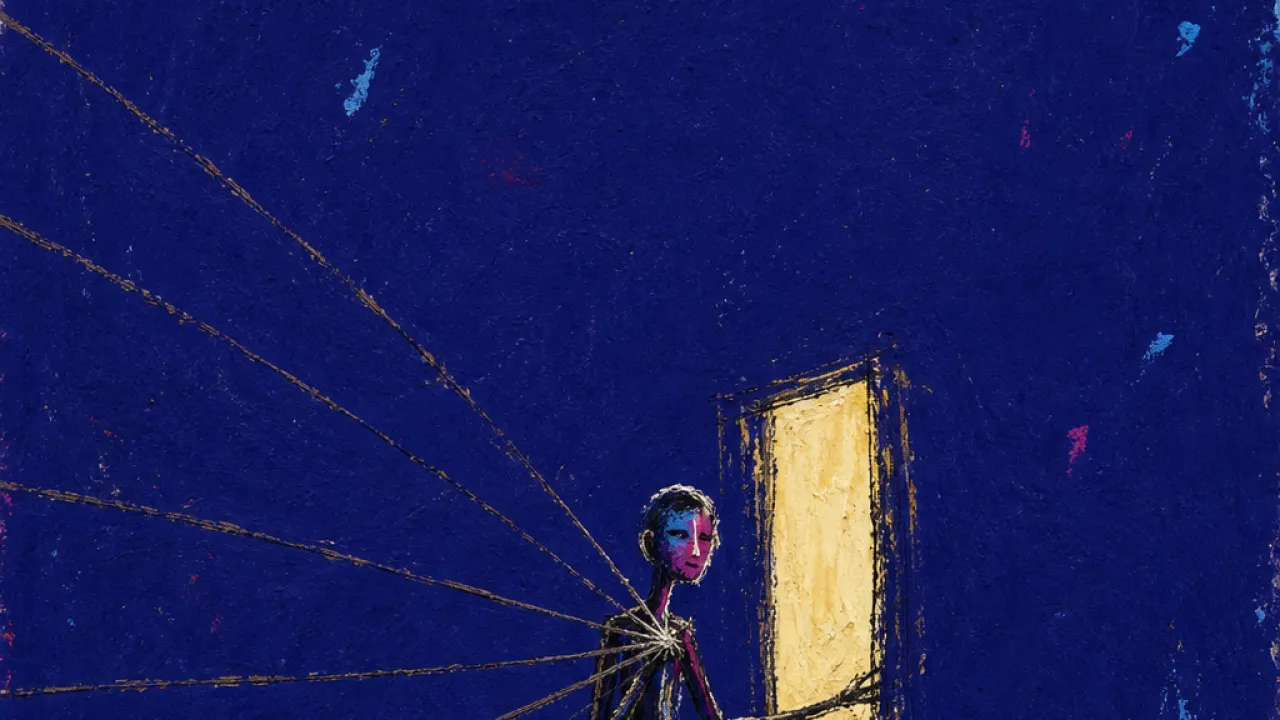
A solitary figure near a lit doorway, held back by invisible strings while a warm circle stays just beyond reach

What is this situation?

Conditional Belonging Pressure — you step into a friend group, workplace circle, campus scene, online community, or chosen-family space and quickly learn that being included comes with fine print. At first, the welcome looks warm: you're added to the group chat, invited to the plans, tagged in the photos, asked to contribute, told you're one of them. Then the rules start appearing in small ways. You can disagree, but only if you soften it enough. You can need space, but not at the wrong time. You can be yourself, as long as that version keeps the mood easy, says yes often enough, laughs at the right jokes, backs the right people, and doesn't name the awkward thing everyone is avoiding. Invitations become a scoreboard you never get to see; one unanswered message, one boundary, one opinion that lands badly, and the room cools by a few degrees. People don't always confront you directly. They pause before replying, shift plans into another chat, make you feel like access is still available but not fully yours. You start checking your tone before sending a text, scanning faces at the table, replaying what you said after you get home, adjusting yourself to stay close to a circle that can quietly move without you. The pressure is not just to belong, but to keep earning belonging in ways no one will say out loud, much like the two figures on the Five of Pentacles, moving past a lit window that suggests shelter without opening the door.

Why it's not you?

The problem isn't that you're too much, too sensitive, or bad at fitting in. The problem is a social setup where access is offered, then quietly measured through compliance, usefulness, silence, or constant availability. When belonging has to be re-earned every day, the pressure belongs to the arrangement, not to you.

Conditional Belonging Pressure in Tarot Cards

Conditional Belonging Pressure turns acceptance into something you have to keep proving, through tone, availability, agreement, usefulness, and staying within the group's unspoken lines. The tightness in your chest before you reply is part of the signal: this is an environmental, structural dynamic, not a private flaw. The Tarot Cards below reflect the outline of that pressure: the gatekeeping, the performance, the fear of being left outside the circle, and the cost of staying acceptable.

The Hierophant
Upright
Two learners kneel before an institutional authority while crossed keys mark the recognised route into knowledge and membership. In an academic programme, the image can mirror a hidden curriculum where approved language, deference, identity performance, and loyalty to established figures influence who receives guidance and peer legitimacy. The keys keep a pathway visible, but they also expose who controls its definition. The scene helps distinguish legitimate academic conventions from belonging tests that punish ordinary questioning, especially when intellectual disagreement produces social isolation or reduced access to informal learning networks.
The Devil
Upright
Two people wear loose chains beneath a figure who occupies the elevated centre of the scene. The arrangement resembles an internalised social contract in which obedience, usefulness, or constant availability has become mentally fused with the possibility of belonging, even when no explicit agreement was ever made. The visible slack in the collars makes the contract available for examination rather than presenting it as destiny. The image reveals a cognitive upgrade point: belonging and compliance have been paired by a particular system, but they are not inherently the same resource, and the costs of that pairing can be named without denying the value of connection.
The Moon
Upright
A narrow path runs between two towers under uncertain moonlight while a dog and wolf respond differently to the same atmosphere. The landscape resembles a group whose mixed signals require constant interpretation: public warmth, private silence, friendly words, and missing invitations all coexist without a reliable explanation. The path remains visible, but the light does not support premature certainty about every shape along it. The image helps you hold two realities at once: ambiguous cues do not confirm every feared rejection, yet a system that repeatedly forces members to decode their standing is itself meaningful evidence about the quality of belonging.
Three of Cups
Reversed
Three friends raise cups inside a tightly coordinated celebration, but reversed, the circle's shared warmth becomes unstable or selectively distributed. Plans can migrate to another chat, private jokes can mark the real boundary, and visible friendliness can continue after intimate access has already been withdrawn. The overturned cups show a friendship resource that has been distorted rather than proving every bond was false. The scene supports a more precise audit of reciprocity: whether your friends can tolerate difference and repair tension, or whether warmth returns only when you resume the approved role.
Eight of Cups
Upright
Eight carefully stacked cups remain standing while a cloaked figure takes the open route into the mountains. Nothing in the arrangement has visibly collapsed, which mirrors the difficulty of leaving a circle that still offers invitations and shared history but never offers secure, unconditional membership. The walking staff and open terrain make a longer direction possible without pretending that departure is emotionally simple. The image reframes your social exit as a response to an incomplete structure: the group may contain genuine connection, yet still require too much self-editing to function as a durable home for your future.
Three of Pentacles
Reversed
Three people gather around visible plans in a setting built for shared work. Reversed, the collaboration stops functioning as an exchange between recognised contributors, allowing a study group or project team to accept your labour while filtering out your questions, methods, or independent opinions. The inverted architecture shows that the learning container, rather than your capacity, is failing to support equal participation. The image makes it possible to separate constructive academic standards from a hidden social curriculum in which access to notes, feedback, and project roles depends on staying agreeable.
Five of Pentacles
Upright
Two people move beneath a glowing window that displays shelter while withholding any obvious point of entry. In friendship, the image resembles being invited often enough to remain attached to the circle while emotional closeness, dependable support, and the right to make mistakes stay behind an invisible threshold. The pair outside the window also preserves companionship beyond the gatekeeping structure. The scene helps you measure friendship through usable access rather than visible affiliation: who follows up privately, who makes room for a boundary, and who remains connected when you are not entertaining, helpful, or immediately available.
Six of Pentacles
Reversed
A standing figure controls the scales and distributes coins to people positioned below him. Reversed, friendship care no longer moves through mutual, flexible reciprocity; favours, availability, introductions, and emotional labour become payments that preserve access to the circle. The inverted scales reveal why giving more cannot stabilise a relationship whose terms are controlled elsewhere. The issue is not ordinary give-and-take but a friendship hierarchy in which yesterday's contribution creates no durable standing and tomorrow's invitation can still depend on another performance.
Two of Swords
Upright
Two crossed swords protect the seated figure while the blindfold prevents a clear reading of the shore, rocks, and water behind her. The image captures a decision made under incomplete social information: you can keep the peace by staying agreeable, or speak plainly and risk discovering how conditional the welcome actually is. The stable seat and balanced blades preserve a pause in which neither option has to be selected automatically. That pause exposes the group's opacity as part of the decision itself, because a healthy choice should not require you to predict hidden punishments before expressing an ordinary boundary or opinion.
Five of Swords
Upright
One figure keeps the swords while two others walk toward the water after the conflict. In friendship, the uneven scene resembles an argument where the dominant person retains the group's sympathy, narrative control, and invitations while the person who objected is expected to return quietly or remain peripheral. The departing figures make distance available, but the abandoned weapons record the cost of the encounter. The image reveals that the central friendship problem is not disagreement itself; it is a repair system that requires one person to surrender their account of what happened before belonging is restored.
Eight of Swords
Upright
A loosely bound figure stands inside an incomplete sword enclosure, with open terrain visible beyond the blindfold. The image captures the cognitive rule that can remain after repeated conditional inclusion: speak less, need less, stay useful, and anticipate the group's reaction before recognising your own position. The bindings are real enough to restrict movement but loose enough to be examined, which prevents the pattern from being reduced to personal weakness. The scene reveals how external sanctions became an internal operating system, while the gaps between the swords preserve the possibility of defining belonging through mutual tolerance rather than pre-emptive self-erasure.
Nine of Swords
Upright
A seated figure covers her face in bed while nine swords hang across the dark wall above her. The social event has ended, but its uncertainty has entered private time as replay: you revisit a joke, pause, unread message, or facial expression because the group never makes its acceptance criteria explicit. The swords remain on the wall rather than touching the figure, creating a visual distinction between the external interaction and its after-hours psychological residue. The image names the real cost of conditional belonging without treating every feared exclusion as confirmed fact, making room to compare the replay with what the group has concretely done.
Six of Wands
Reversed
A laurel-crowned rider moves through a crowd whose raised wands make recognition a public, collective resource. Reversed, the crowd's approval no longer provides stable standing; one missed event, unpopular comment, or shift in usefulness can remove the social endorsement that previously made inclusion look secure. The inverted wreath shows recognition being withheld or made unreliable rather than proving that your contribution has vanished. The image clarifies the scoreboard dynamic: when status depends on repeated public affirmation, belonging can be revoked through silence, reduced visibility, or disappearing invitations without anyone naming the sanction.
Seven of Wands
Upright
A single figure braces against six raised wands coming from below, with mismatched footwear adding to the sense of being caught off guard. In friendship, the scene reflects a boundary meeting coordinated resistance, especially when several friends repeat the same loyalty script and treat your difference as a disruption to the group. The figure retains higher ground and an active defence, which preserves the legitimacy of the boundary despite the numbers involved. The image separates friendship consensus from fairness: several people can share an expectation while that expectation still makes belonging conditional on your compliance.
Ten of Wands
Upright
Ten bundled wands fill the carrier's field of vision while the town remains visible ahead. The load resembles the accumulated replies, favours, plans, emotional smoothing, and last-minute availability through which a group quietly makes you maintain your membership. The destination is still reachable, which distinguishes responsibility from permanent entrapment, but the image makes the cost legible: you are carrying social maintenance that should be distributed across the group. Once that labour is named as part of the access contract, constant responsiveness stops looking like a neutral feature of your personality and becomes an observable demand on your daily system.

Conditional Belonging Pressure in Tarot Card Reading Insights

When Conditional Belonging Pressure shows up in someone's social, work, or community life, it often comes into a reading through questions about where they stand and what access is costing them. The readings below move from the cards into the lived shape of that situation. Tarot Reading Insights from sessions involving this kind of conditional acceptance.

Four Slack Rewrites, One Safe Reply, and a Design Concern Restored

Four Slack Rewrites, One Safe Reply, and a Design Concern Restored

Topic:Introspection Tarot Reading

Struggle:Belonging-Authenticity Split

Context:Conditional Belonging Pressure

Forced Positivity at Work: From a Deleted Sentence to a Boundary

Forced Positivity at Work: From a Deleted Sentence to a Boundary

Topic:Personal Growth Tarot Reading

Struggle:Pseudo Growth Loop

Context:Toxic Positivity Culture

Swallowing Anger to Fit an Inherited Script: Naming What It Protects

Swallowing Anger to Fit an Inherited Script: Naming What It Protects

Topic:Direction Tarot Reading

Struggle:Autonomy Guilt Bind

Context:Social Clock Pressure

The Pinned Group Chat: From Automatic Yes to One Honest Reply

The Pinned Group Chat: From Automatic Yes to One Honest Reply

Topic:Choice Tarot Reading

Struggle:Unseen Cost Bind

Context:Care Reciprocity Test

A Group-Chat Full Yes Became a Care Offer with a Limit Six Days Later

A Group-Chat Full Yes Became a Care Offer with a Limit Six Days Later

Topic:Social Tarot Reading

Struggle:Belonging-Authenticity Split

Context:Performative Care Circle

A Thirty-Second Pause Turned a Verdict Into One Open Question

A Thirty-Second Pause Turned a Verdict Into One Open Question

Topic:Social Tarot Reading

Struggle:Truth-Connection Split

Context:Toxic Positivity Culture

Calling a Circle Elitist While Chasing Its Approval—Weighing Both

Calling a Circle Elitist While Chasing Its Approval—Weighing Both

Topic:Social Tarot Reading

Struggle:Status-Belonging Fusion

Context:Social Gatekeeping Circle

What Changed Between Leaving a Friend Out and Speaking Up in the Chat

What Changed Between Leaving a Friend Out and Speaking Up in the Chat

Topic:Social Tarot Reading

Struggle:Belonging-Authenticity Split

Context:Direct Communication Trial

The Laugh Reaction Replaced a Fair Reply Until Justice Reset the Test

The Laugh Reaction Replaced a Fair Reply Until Justice Reset the Test

Topic:Social Tarot Reading

Struggle:Belonging-Authenticity Split

Context:Direct Communication Trial

Testing Care from an Empty Poll to a Direct Request and a 6:31 Call

Testing Care from an Empty Poll to a Direct Request and a 6:31 Call

Topic:Social Tarot Reading

Struggle:Performative Harmony

Context:Direct Communication Trial

Ten Quiet Minutes: From Group-Chat Consensus to Her Own Judgment

Ten Quiet Minutes: From Group-Chat Consensus to Her Own Judgment

Topic:Social Tarot Reading

Struggle:Belonging-Authenticity Split

Context:Direct Communication Trial

A Group Chat Freeze, a Deleted Draft, Then a Reply That Stayed Sent

A Group Chat Freeze, a Deleted Draft, Then a Reply That Stayed Sent

Topic:Social Tarot Reading

Struggle:Value-Action Split

Context:Silent Group Chat Exclusion

Psychological Contexts Related to Conditional Belonging Pressure