Too Visible Too Soon?

A grounded look at fast social exposure, related tarot cards, and reading insights about visibility, trust, and privacy boundaries.

Risky Social Overexposure

What is this situation?

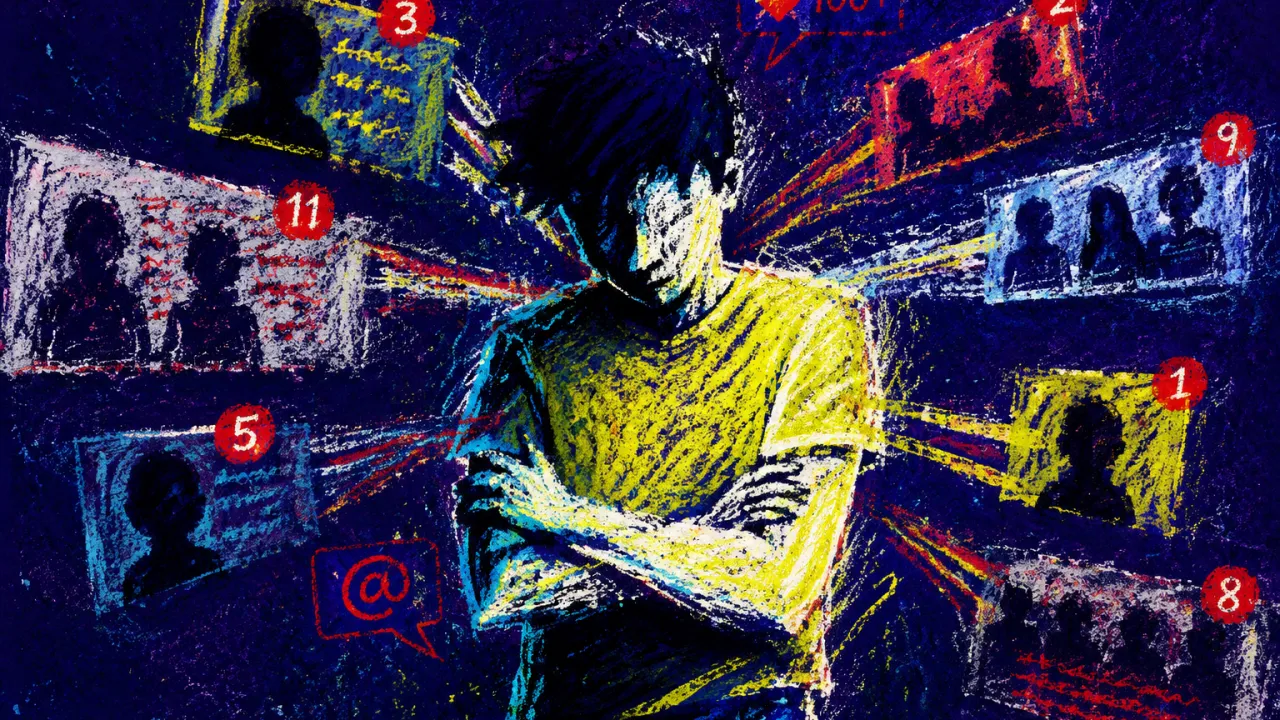
Risky Social Overexposure — you enter a new circle, group chat, campus scene, creator community, workplace-adjacent hangout, or friendship cluster and everything starts moving faster than trust has had time to form. At first it looks warm: people reply quickly, invite you out, react to your posts, ask personal questions, tag you in photos, pull you into inside jokes, and make it feel like belonging is already happening. Then the edges blur. A private detail you mentioned casually becomes a running joke. A photo from one night gets shared beyond the people who were there. A confession you made to one person lands in the group chat. Someone treats your availability like open access, your DMs like a public channel, or your closeness with one person like material everyone can comment on. The power dynamic is subtle because nobody has to be openly cruel for it to become costly; the group controls attention, screenshots, invites, reactions, silence, and who gets to define what was “not that deep.” You start editing yourself before you post, checking who viewed what, wondering which version of you is being passed around, and feeling your body tense when a notification lights up because you no longer know whether it brings connection or exposure. The drain is not just social anxiety; it is the work of tracking where your information, image, loyalty, and reputation have gone once they left your hands, much like The Fool standing open-handed at an unguarded edge, visible before there is any private buffer between display and consequence.

Why it's not you?

The problem is not that you are too open or that you should have known better. Risky Social Overexposure happens when a social environment asks for access before it has shown discretion, reciprocity, or care with what it receives. Posts, screenshots, group jokes, fast intimacy, and public tagging can create a visibility system that moves faster than consent and context.

Risky Social Overexposure in Tarot Cards

In Risky Social Overexposure, the issue is the pace at which access, visibility, and group attention start moving before trust has been demonstrated. The tight feeling after a post, a group-chat reply, or a private detail being repeated is not random; it belongs to an environmental, structural, and dynamic setup where privacy has too little room to form. The cards below do not tell you to disappear or perform openness better; they reflect the shape of exposure without enough containment. These are the Tarot Cards that tend to mirror this kind of social visibility risk.

The Fool Reversed
The Fool's open hand, bright clothes, and unguarded ledge create a scene of exposure before the terrain has been tested. In friendship, that becomes the risk of giving new people private access, emotional availability, or group loyalty before reciprocity has shown up in concrete behavior. You are not being judged for openness; the card maps the point where openness becomes socially expensive without a container. The question becomes where trust has evidence, and where the friendship is still operating on atmosphere.
The Lovers Reversed
The bodies are fully visible in an open garden, with no clothing, walls, or privacy screen to moderate what can be seen. The scene makes vulnerability immediate and beautiful, but also structurally exposed. In friendship, that becomes risky social overexposure when private material moves faster than trust infrastructure. Oversharing, intense disclosure, loyalty tests, or revealing another person's business can make the bond feel intimate before it has proven it can protect what was shared. The abundant garden matters because the problem is not emotional emptiness. There is plenty of relational material here; the issue is whether the friendship has enough boundary, timing, and discretion to hold it without turning exposure into social risk.
The Devil Upright
The naked foreground figures make privacy part of the public scenery. Their tails, the nearby flame, and the closed dark setting show how quickly heat, attention, and exposure can travel inside a contained circle. Risky Social Overexposure is not about being seen in itself. It is the moment when posts, hookups, private confessions, party behavior, or messy disclosures become material for a group's attention economy. The card gives you a clean structural read: the issue is not whether visibility is wrong, but whether the circle has earned access to what it is now watching. Reclaiming agency starts with naming which parts of your life are being converted into social currency.
The Tower Reversed
The falling figures are exposed in open air, framed against a dark background with no controlled transition path. Sparks, smoke, fire, and debris scatter outward, making the rupture visible beyond the tower itself. In a social network, this is what happens when a post, confession, confrontation, association, or impulsive reveal becomes bigger than the original moment. The exposure does not stay contained; it travels through attention, screenshots, reactions, and assumptions. You are dealing with visibility that has outrun consent and context. The card identifies the pressure point as exposure without scaffolding, where the immediate task is to understand what became public, which audience now has access, and what parts of your social position were tied to staying unseen.
The Star Reversed
The exposed body stands in an open field with no wall, garment, or social screen between the figure and the surrounding space. At the same time, both vessels are pouring outward, sending personal material into more than one channel before any boundary has been tested. In a social network, that image maps onto visibility that arrives before trust. A group chat, new friendship cluster, online circle, or professional-adjacent community can look calm and receptive while still lacking the structure needed to protect what you disclose. For You, the card names the thin line between authentic openness and access given away too early. The issue is not that vulnerability is wrong; the issue is whether the social container has earned the right to receive it.
The Sun Reversed
The naked child sits directly under a full sun, with the red flag making the body even more visible. There is no shaded middle ground between the wall and the open field, so exposure arrives before any privacy layer can form. In social terms, this is what happens when visibility outruns trust. You may have shared, posted, confessed, performed, or entered a group too openly for the actual level of relational safety, and the card turns that discomfort into a map of pacing, audience, and boundary control.
Page of Swords Reversed
The Page is fully visible on a high ridge with almost nothing around him to create cover. He has a sword, but no shield, no enclosure, and no private container for what he carries. That exposure translates into a friendship environment where one message, opinion, confession, or vulnerable detail can travel further than intended. The issue is not only whether something was shared; it is whether the social setting had enough protection to hold it safely. The card gives the risk a concrete boundary. You are seeing a structure where visibility is high, privacy is thin, and a sharp piece of communication can quickly become a public object inside a wider circle.
Knight of Swords Reversed
The knight is fully exposed in open terrain, protected by armor but not by walls, privacy, or a defined social room. The sword crosses the boundary of the image, suggesting a signal that travels farther than the body can control. In social networks, that becomes risky overexposure: posting too much in the wrong space, confronting someone where others can watch, entering a circle before trust exists, or making a vulnerable move in a field that has not earned it. Armor can protect the image, but it cannot create relational safety. The card points to the difference between visibility and containment. It does not tell you to disappear; it asks where your message, body, and reputation are being placed before the social environment has proven it can hold them.
Ace of Wands Reversed
The hand is exposed in open air, holding a single wand that immediately draws the eye. Around it, leaves scatter away from the source, making the gesture feel public before it feels contained. The plain below is fertile, but it does not provide much cover. The social field can receive the signal, yet it can also amplify it faster than trust can form. This is the context of sharing too much, joining too visibly, posting too quickly, or making a new group central before its boundaries are known. The card names exposure as a structural risk, giving you a way to reclaim pacing without shutting down connection altogether.
Eight of Wands Reversed
The card places all the action in open air, with no body, wall, or shelter controlling what moves through the field. Reversed, that exposed space becomes a social environment where visibility expands before role, trust, and consent are established. The wands are orderly, which makes the risk easy to underestimate. A post, casual disclosure, public hang, group introduction, or reply chain can look normal while still carrying more exposure than the relationship can safely hold. The speed of the channel makes private context difficult to preserve. The card points to the need for proportion. Visibility can build connection when the ground is ready, but it can also put you into a social position you did not choose. Naming the exposure gives you a clearer way to decide what deserves access and what still needs a boundary.
Page of Wands Reversed
The Page is fully visible in an open desert, dressed in bright colors and lifting the wand as if broadcasting a message. Nothing in the scene creates privacy around the announcement. Friendship becomes risky when private material moves into group chats, public jokes, social posts, or shared stories before consent is clear. You may be dealing with exposure that feels casual to the group but materially changes your trust in the relationship. The card's open-air setting shows the structural issue: once the message leaves the protected space, it is no longer held by the original bond. The overexposure is not about being too sensitive; it is about a missing container for private friendship information.
Knight of Wands Upright
The knight is armored, plumed, and fully visible in an open desert with no private enclosure around him. In friendship, that visual exposure becomes the moment when private closeness is moved onto a public stage: tagged posts, group-chat screenshots, loud inside jokes, or social proof that makes intimacy performative. The bright uniform and raised wand carry the energy of announcement. You may be dealing with a friend or circle that treats visibility as harmless excitement, while your real concern is the loss of control over what parts of the bond become public. The card's open terrain is the key. Once the friendship leaves the protected container, every gesture can be seen, copied, judged, or used as status material, making privacy boundaries part of the core social architecture rather than a minor preference.
Reversed
The knight is elevated, armored, brightly marked, and fully visible against an empty field. His wand and plume broadcast identity before the terrain has given him a stable social container. That is the anatomy of risky social overexposure: posting too much, revealing too quickly, or performing intensity in a circle that has not yet earned access. The card does not shame visibility; it shows why exposure without context can turn social courage into a fragile public surface.

Risky Social Overexposure in Tarot Card Reading Insights

Risky Social Overexposure often shows up when someone brings a fast-moving social circle, a public reveal, or a privacy boundary problem into a reading. The shift from cards to readings shows how other people have approached similar visibility, access, and group-pressure dynamics. Explore the Tarot Reading Insights connected to this situation.

Psychological contexts related to Risky Social Overexposure