Celebrated, Yet On Duty

A grounded look at public celebration pressure, related tarot cards, and tarot reading insights from sessions around this role conflict.

Guest-of-honor Role Conflict
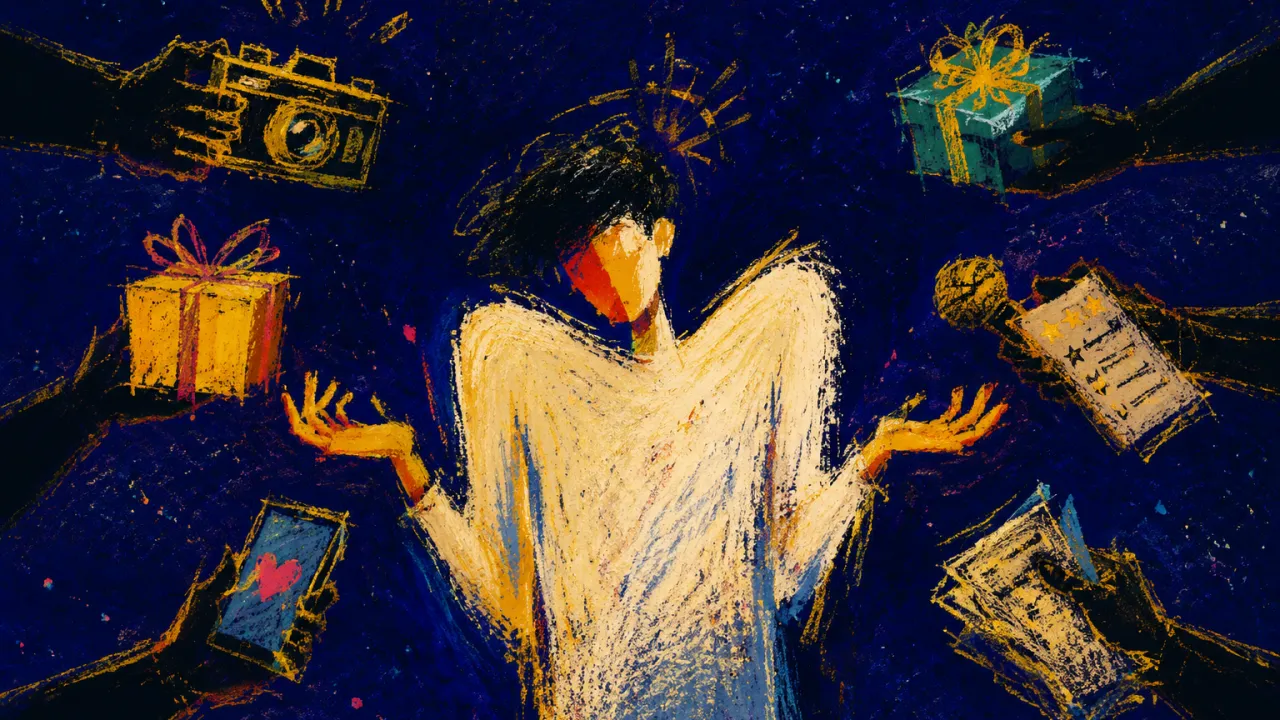
A solitary figure surrounded by cameras, gifts, and reaching hands, shoulders raised as gold light presses inward

What is this situation?

Guest-of-Honor Role Conflict — you arrive at the dinner, party, wedding weekend, award night, graduation event, or family gathering knowing the room is technically here for you, but the moment you step in, the attention starts working like a job. People pull you into photos before you have put your bag down, ask if you are happy, ask if you like the setup, ask why you have not greeted someone yet, and keep reminding you that everyone came all this way. You are placed at the center, but not in control of the center; the schedule, the seating, the speeches, the gifts, the old tensions, and the unspoken expectations have already been arranged around you. If you need a quiet minute, someone reads it as ungrateful; if you spend too long with one group, another group feels skipped; if you say what you prefer, it can sound demanding; if you say nothing, decisions get made over your head. The people around you may mean well, but the role they hand you is crowded: be celebrated, be available, be easygoing, be visibly moved, be thankful in the right tone, and keep the event from becoming awkward. By the end, your face hurts from smiling, your shoulders are up near your ears, and the thing that was supposed to feel like being honored has become a public performance of accepting honor correctly, much like the rider on the Six of Wands, raised above the crowd with a wreath in hand while every eye turns the moment into something that must be carried.

Why it's not you?

The problem is not that you are difficult to celebrate or bad at receiving attention. The conflict is built into the role itself: being made the center of an event while also being expected to host, reassure, thank, pose, and manage everyone else's experience. That is a heavy social setup, not a personal flaw.

Guest-of-honor Role Conflict in Tarot Cards

Guest-of-Honor Role Conflict turns celebration into a monitored role, where the room keeps handing you the job of being gracious, available, and easy to read. The tight smile, the raised shoulders, and the constant scanning for who needs attention are not random details; they mark an environmental, structural dynamic built around public attention and social debt. The Tarot Cards below reflect the shape of that pressure without telling you how you should perform it. Here are the Tarot Cards that tend to mirror this kind of role conflict.

The Hierophant
Upright
The seated hierophant between two pillars, with acolytes below and crossed keys at his feet, places one person inside a visible ceremony governed by other people's symbols and procedures. You are similarly elevated by a script you did not write: the seating, speeches, greetings, and emotional cues arrive as a social institution before you can negotiate them. The formal arrangement gives the gathering coherence, but it also makes compliance look like gratitude. When you ask for quiet or name a preference, the ritual can translate self-direction into a breach of etiquette, leaving you honored in status and subordinate in process.
Two of Pentacles
Upright
The figure turns two pentacles in an endless loop while ships rise and fall behind him, showing balance as continuous adjustment rather than a settled choice. You face the same moving system when every group wants a piece of the honored person's limited attention and each delay becomes someone else's evidence of being overlooked. The looping motion keeps the scene functional, but it also makes the juggler's body the buffer for instability. You can keep switching, smiling, and recalibrating, yet the event's schedule and expectations remain external; the social center is asked to absorb every disruption without gaining authority to redesign the flow.
Eight of Swords
Upright
The blindfolded figure stands bound among eight swords, with the path around her technically open but made unusable by the arrangement. You face a social version of that enclosure when the event leaves you choices only between looking ungrateful, controlling, absent, or unfairly selective. The swords mark the boundaries of a role constructed by other people's interpretations, while the blindfold suggests that the rules are rarely stated in full. You can see the celebration, but not a clean way to move through it on your own terms; the constraint comes from the crowd's reading of every gesture.
Five of Wands
Upright
The five figures raise crossed wands into one crowded patch of space, with no clear owner of the field and no clean route through it. You encounter that structure when every group believes its request is reasonable and the honored role becomes the contested ground where attention is allocated. The scene's friction is not necessarily personal conflict; it is a coordination failure created by simultaneous claims. You are asked to make the room feel unified while navigating a crowd whose separate expectations cannot all be satisfied at the same moment.
Six of Wands
Upright
The rider lifted above the crowd carries a wreath in one hand while every face turns upward, making celebration visibly collective and personally concentrated. You are placed in that same elevated position: the room is organized around your recognition, but the crowd's gaze also makes your expression, availability, and gratitude part of the event's proof. The raised horse and forward movement suggest a victory that can be carried through the room, yet the rider does not control the people, route, or ceremony beneath him. You can be sincerely honored and still find the honor functioning as a public performance contract, where stepping back is read as rejecting the very recognition being offered.
Seven of Wands
Upright
The figure stands on higher ground with one wand against six rising from below, holding a position that is visible but continually challenged. You occupy a comparable social height as the guest of honor: your status is acknowledged, yet each request from the crowd presses against your right to control your own attention. The higher ground offers leverage, not escape. You can state a preference or protect a pause, but the surrounding wands make the boundary look like resistance to the celebration itself, forcing you to defend ordinary limits while appearing grateful for the role.
Ten of Wands
Upright
The figure bends forward beneath a bundle of ten wands, with his face obscured and the destination still ahead. You can recognize the same mechanics when every request arrives attached to the fact that the gathering was organized around you: the honor is visible, but the accumulated coordination work blocks your ability to simply arrive and receive it. The bundled load is made of separate pieces that become heavy because they are carried together. Each photo, thank-you, greeting, and emotional reaction may be small, yet the role fuses them into one continuous obligation, leaving you responsible for the room without corresponding authority over its demands.

Guest-of-honor Role Conflict in Tarot Card Reading Insights

Guest-of-Honor Role Conflict often shows up when being celebrated also means being watched, managed, photographed, and expected to smooth the room for everyone else. Other people have brought this same public-pressure setup into readings when the attention around them started feeling less like a gift and more like a role. Tarot Reading Insights from sessions with this theme are gathered below.
Psychological Contexts Related to Guest-of-honor Role Conflict