Why Do They Keep Asking?

A grounded look at repeated origin questions, related tarot cards, and reading insights from people navigating belonging pressure.

Origin Questioning Pressure
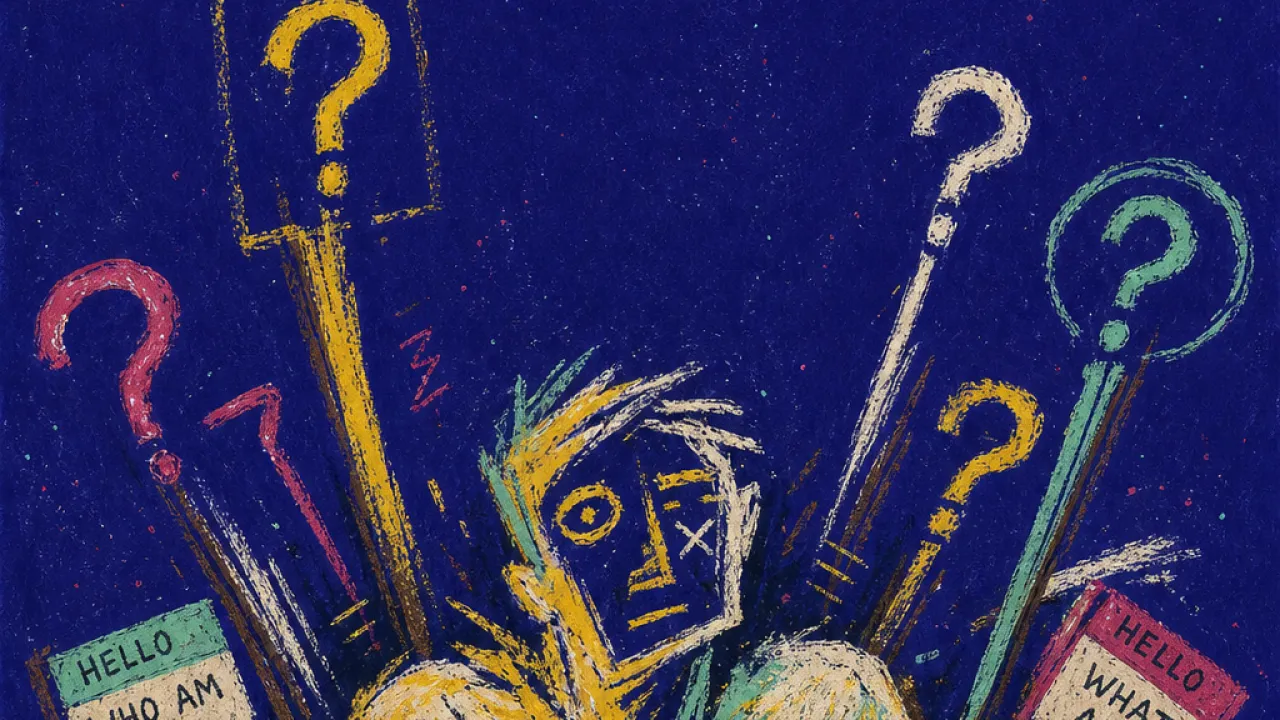
A solitary figure bracing as question-mark staffs press inward, with name tags and map fragments crowding the body

What is this situation?

Origin Questioning Pressure — you are in a classroom, office kitchen, party, first date, or rideshare, and what starts as casual small talk suddenly turns into a soft interrogation about where you are “really” from. Someone hears your accent, reads your name, sees your face, or notices a detail about your family background, and the conversation shifts away from whatever you were doing into a request for explanation. You answer once, but the answer is not enough; there is a follow-up, a correction, a guess, a joke, a comparison to someone they know, or a surprised comment about how fluent you sound. The other person may smile the whole time, which makes the pressure harder to name, but the dynamic is still there: they get to ask, you are expected to clarify, and the room quietly watches how gracefully you handle being made into a question. Over time, this makes ordinary introductions feel loaded, because you start preparing your script before the question arrives: how much to say, how much to refuse, whether to soften the boundary, whether to laugh so the moment does not get awkward. The drain is not only the question itself; it is the repeated demand to make your belonging legible on someone else’s terms, much like the figure on the Seven of Wands, standing his ground while raised staffs keep pushing into the space around him.

Why it's not you?

The issue is not that you are being too sensitive; the issue is that the question puts the burden of explanation on you. Repeatedly asking someone to prove where they fit turns a casual interaction into a test of belonging. That pressure belongs to the setting and the people applying it, not to your ability to answer politely.

Origin Questioning Pressure in Tarot Cards

Origin Questioning Pressure turns a normal room into a place where your name, accent, family background, or face becomes something other people feel entitled to inspect. The tightness that hits when a casual question suddenly asks you to explain your place here is part of an environmental, structural dynamic, not a private overreaction. The Tarot Cards below reflect the shape of that pressure: the raised defenses, the forced explanation, and the repeated demand to prove belonging.

Justice
Reversed
The seated figure holds scales in one hand and a vertical sword in the other, placing evaluation and judgment inside a formal, frontal arrangement. Reversed, that apparatus no longer represents an even standard: one person’s belonging is accepted without evidence, while your accent, name, face, or family background triggers an informal hearing in which the questioner decides whether the answer counts. The inverted structure blocks equal treatment without erasing the possibility of identifying the rule being applied. You can locate the unfairness in the asymmetry of proof: the other person claims the authority to question, revise, and classify, while you are expected to provide information and maintain a pleasant tone throughout the evaluation.
The Moon
Upright
The moon casts uncertain light over a winding path between two towers while a dog and a wolf respond from opposite sides and a creature rises from the water below. The scene mirrors the ambiguity of a smiling origin interrogation: the words can be framed as friendly curiosity, yet the repeated follow-ups, guesses, or surprised comments signal that something more controlling is operating underneath. The path remains visible even though its full route cannot be seen, so the upright image validates uncertainty without requiring an immediate verdict about the other person’s intent. You can examine impact, repetition, and power separately from tone; this makes it possible to name the pressure even when the interaction supplied enough friendliness to trigger later self-doubt.
Five of Pentacles
Upright
Two figures move through snow outside a brightly lit stained-glass window, placing visible belonging and lived exclusion in the same frame. When a room keeps asking where you are “really” from, you may be physically included in the party, office, class, or date while conversationally positioned outside the assumed local norm. The illuminated window confirms that social connection is present, but the arrangement determines who passes as ordinary and who must explain entry. You can name the exchange as soft othering even when nobody openly rejects you; the exclusion lies in being made conditionally legible while everyone else is permitted to belong without presenting an origin credential.
Two of Swords
Upright
The seated figure holds two swords across her chest while a blindfold blocks the other person’s preferred line of access, with the moonlit water behind her preserving a private emotional field. The image captures the immediate decision created by an origin question: explain further, give a minimal answer, redirect, challenge the premise, or refuse while knowing that each option may alter the social atmosphere. Both blades remain under the figure’s control, so the upright pause is an active boundary calculation rather than simple indecision. You can see that the choice is constrained by unequal costs: the asker risks little by probing, while you must weigh privacy, safety, belonging, and the labor of managing any awkwardness created by saying less.
Eight of Swords
Upright
The blindfold, loose bindings, and surrounding swords create a field in which the figure’s movement is constrained before she can fully inspect the available exits. Repeated identity questioning can reproduce that structure internally: you pre-edit your answer, predict the room’s reaction, question whether the smiling tone makes objection unfair, and temporarily lose sight of responses outside the familiar script. The bindings are present but not absolute, and the swords do not form a sealed wall. You can separate the internalized rule that you must answer gracefully from the external facts of the encounter; that distinction makes the source of the restriction clearer without blaming you for adaptations learned through repetition.
Page of Swords
Reversed
The Page’s sword is held high while his attention cuts sideways across a windblown field, suggesting observation that has become sharper than the relationship can support. Reversed in a workplace, this visual maps onto the coworker who notices an accent or name, starts probing, and then circulates guesses, comparisons, or comments under the cover of casual office curiosity. The unstable sword shows communication without sufficient care for context or power, especially when you must keep working with the person after the exchange ends. You can locate the professional strain in the workplace norm that rewards the asker’s openness while requiring you to absorb the risk of refusing, correcting, or appearing insufficiently friendly.
Seven of Wands
Upright
The student-like figure stands alone above a cluster of raised staffs, making his individual position visible while several pressures compete for space around it. In a classroom, an instructor or peer can redirect a discussion toward your accent, name, or presumed country of origin, leaving you to defend your right to participate as a learner rather than as an involuntary cultural representative. The upright stance keeps the figure connected to the field instead of forcing retreat, which reflects the remaining access to academic participation even when the room becomes socially uneven. You can identify the interruption as an added participation tax: attention that could have gone to the lesson is redirected into managing other people’s assumptions and the public tone of your response.
Nine of Wands
Upright
The wounded guard looks sideways while a dense line of staffs records the pressures already survived, turning the background into a visible archive of previous encounters. Internally, repeated “where are you really from?” exchanges can remain active after the room has changed, occupying psychological bandwidth through script rehearsal, tone checking, and predictions about whether the next person will accept the first answer. The figure remains upright and retains a clear field of view, which means the internal buffer is strained rather than erased. You can separate present information from stored social expectation: the readiness to defend yourself has a history, and naming that history reduces the risk of misreading a learned protective response as a personal flaw.
Ten of Wands
Upright
The figure bends beneath ten staffs that fill his field of view while he continues toward a visible town, turning repeated small loads into one obstructive burden. Origin Questioning Pressure accumulates in the same way: no single question may look severe to the room, but guesses, corrections, jokes, fluency comments, and repeated requests for clarification stack into an explanation tax carried by one person. The destination remains visible and the load is finite, so the upright image makes the burden measurable rather than permanent. You can account for the cumulative cost when deciding how much social availability a setting actually deserves; the drain comes from repeated compulsory explanation, not from an inability to handle one casual conversation.

Origin Questioning Pressure in Tarot Card Reading Insights

When Origin Questioning Pressure follows people into workplaces, classrooms, dating apps, and casual conversations, it often ends up inside readings too. These Tarot Reading Insights show what came up when others brought the same pressure to the cards.
Psychological Contexts Related to Origin Questioning Pressure