Posting Pain for Belonging: Choosing an Audience That Can Respond
The 8:47 P.M. Refresh
You edit an intimate caption until it sounds honest enough to earn warmth but polished enough to keep control, then check the views beside your dinner while the fear of being left out quietly runs the whole post.
I met Jordan, a 26-year-old non-binary junior content coordinator in Toronto, after one of those rides home. At 8:47 p.m. on the Line 1 subway, they had opened the Notes app and rewritten a vulnerable caption while fluorescent lights buzzed overhead and the train doors shuddered at every stop. They told me their phone felt warm in their palm, their throat tightened, and their thumb kept hovering over Post.
By the time Jordan sat with me, I could see the afterimage of that ritual: a warm screen, a quiet apartment waiting, and a creator livestream ready to fill the silence. Jordan wanted an online community to witness them, but public pain disclosure had become a way to ask for belonging and then measure belonging through replies. When the attention faded, no direct conversation, boundary, or private action had moved their life.
'Why do I share my pain for online belonging, then stay stuck?' Jordan asked. 'The post did well, so why do I still feel exactly where I started?' Their loneliness was not a vague cloud to me; it was a subway that kept arriving at the same platform, doors opening onto the same empty stretch of track. I could hear the longing underneath the shame and frustration, along with the fear that a quieter version of them would be overlooked.
I told Jordan that I would not treat performative vulnerability as a character flaw, and I would not promise that a card could predict who would respond. We would use a Jungian psychological lens to examine the pattern, separate being witnessed from being supported, and draw a map toward clarity. The cards could organize the evidence; Jordan would remain the person making every choice.
Choosing a Compass: The Transformation Path Grid
I asked Jordan to place both feet on the floor, take one slow breath, and hold the question without trying to improve it. I shuffled slowly, treating the ritual as a psychological threshold: a way to move from the heat of the notification screen into focused observation.
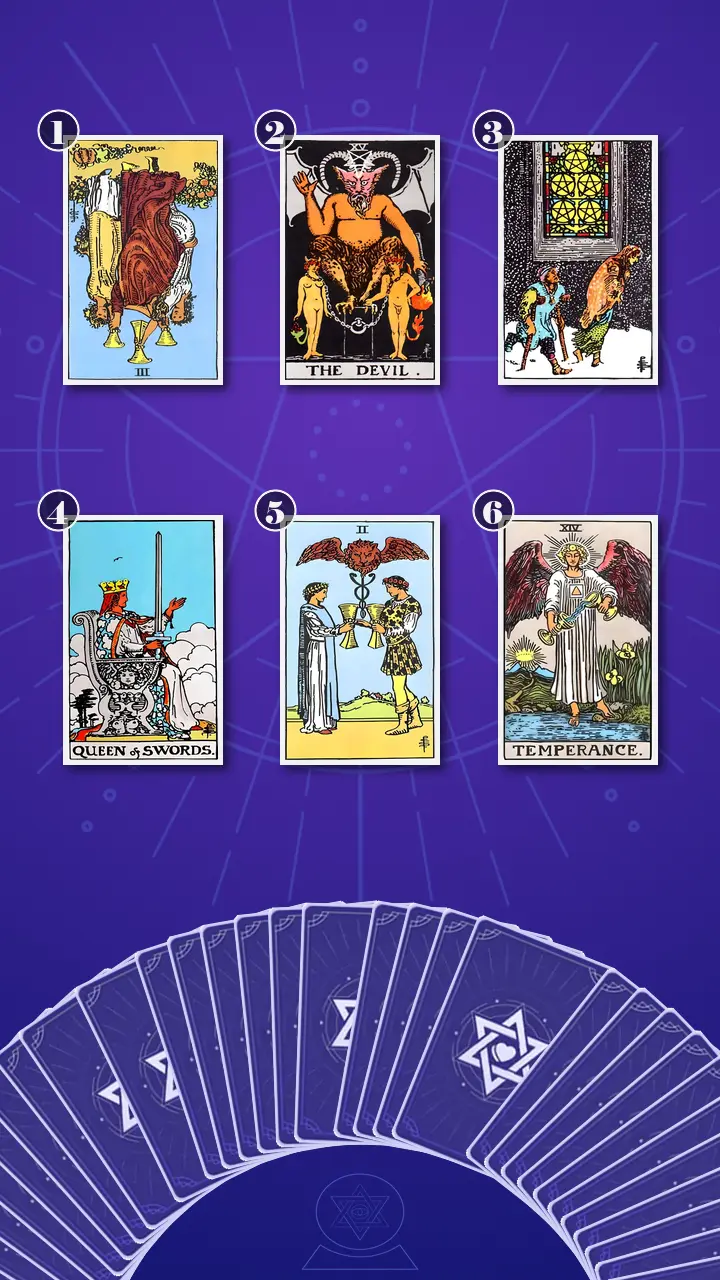
For this reading, I chose the Six-card Transformation Path Grid, specifically the Transformation Path Grid (6) Context Edition. Its six positions follow a repeating system from the visible symptom to the force maintaining it, the root fear beneath it, the turning point, the next action, and the practice that can make change sustainable.
For anyone wondering how tarot works in a consultation like this, I use it as a structured cognitive tool rather than an outside authority. The images give us a shared language for card meanings in context. Jordan can test each interpretation against lived facts, keep what illuminates something real, and reject anything that does not fit. No card outranks their judgment.
This spread suited the question because Jordan was not facing one isolated decision between two clean options. They were caught in a self-reinforcing loop: sharing pain produced a short-term belonging signal, the signal faded, and the same online ritual began again while reciprocal contact and personal movement were postponed. A broad Celtic Cross might have added layers, but this six-card grid gave the loop a direct current-to-blockage-to-root-to-action chain.
I explained the map before turning anything over. The upper row would show the current surface pattern, the maintaining blockage, and the underlying root. Below it, the Queen of Swords would mark the key transformation, the Two of Cups would translate that insight into an action plan, and Temperance would show how vulnerability, online community, and concrete follow-through might coexist. The layout was designed to feel like a loop being rewired into a path.
The Crowd, the Chain, and the Lit Window
Position 1: The Party That Reacts but Does Not Hold
Now I turned over the card representing the current surface pattern: the observable moment when sharing pain becomes a bid for online belonging, including the monitoring of replies and the return of loneliness afterward. It was the Three of Cups, in reversed position.
In the Rider-Waite-Smith image, three celebrants raise their cups beneath a garland of fruit. Reversed, the communal scene is still visible, but its emotional exchange has become imbalanced. The group is easy to see; the nourishment is harder to find.
I connected it directly to Jordan's familiar digital room. They would enter a Discord server or creator livestream chat through a vulnerable caption, receive a quick burst of hearts and thoughtful comments, and feel briefly included. Then the thread would slow, the livestream would keep playing, and no mutual conversation or practical movement would follow. The card did not say that online community was fake. It showed that the public shape of togetherness had become larger than the actual exchange available to Jordan.
In energy terms, the reversal showed an excess of visible group affirmation and a deficiency of dependable reciprocity. Jordan's emotional energy was flowing outward into a crowd, but not returning in a form they could use. The card asked a concrete question: when did a painful moment last become a public post, and what happened in the hour after the audience reacted?
Jordan did not nod. They gave a short, bitter laugh. First, their breath caught and their thumb, still resting near the edge of their phone, stopped moving. Then their eyes lost focus, as if they were replaying the quiet thread after a recent post. Finally, their shoulders dropped a fraction. 'That is too accurate,' they said. 'It is almost rude.'
I let the laugh stay in the room. 'The card is giving us data, not a verdict,' I said. 'You are not wrong for wanting to be witnessed. We are looking at whether this particular form of witnessing creates the kind of support you actually need.' Jordan pressed their lips together, then turned the phone face down.
Position 2: The Chain Made of Notifications
Now I turned over the card representing the maintaining blockage: the force that offers short-term reassurance while preserving the performative vulnerability and healing stagnation loop. The Devil, in upright position, appeared beneath the reversed Three of Cups.
The two figures in the Rider-Waite-Smith image stand beneath the horned central figure with loose chains around their necks. I emphasized the word loose. The image does not require a story about doom or an external power controlling Jordan. It shows a bargain that may be changeable and still feel difficult to leave because it supplies an immediate reward.
The modern scene was precise. Jordan would open a livestream after promising to take a break, post a more revealing story because the previous one had earned attention, and return to the refresh button whenever the chat went quiet. The notification loop worked like an autoplay queue: a reply gave a quick hit of relief, silence created discomfort, and the next disclosure began playing before Jordan had consciously chosen it.
I named the sequence without moral judgment: 'The chain is notification, relief, silence, and another disclosure.' The energy here was attachment and blockage. The pattern was not maintained because Jordan lacked self-awareness; it was maintained because a small, unpredictable reward could temporarily answer a large need. What the ritual gave immediately was reassurance. What it asked Jordan to postpone was direct contact, private reflection, and any action that might create observable movement.
I asked Jordan to complete the sentence aloud: 'I know this does not move anything forward, but what if the next post is the one that makes people stay?'
Their fingers tightened around the phone. Their eyes followed the dark screen, then flicked toward the deck. 'I keep calling it support because it helps for a minute,' they said. I watched them take the phone out of reach instead of demanding that the urge disappear. That small act mattered: the chain had become something observable, and what can be observed can be examined.
Position 3: The Warm Window They Think They Must Earn
Now I turned over the card representing the underlying root: the fear of exclusion and the self-worth belief that makes a quiet, less performed self feel unlikely to belong. The Five of Pentacles, in upright position, landed at the upper right of the grid.
Two bundled figures pass through snow beneath a glowing stained-glass window. One figure leans on a crutch; both look as if warmth exists nearby but not for them. I did not read the image as proof that Jordan was abandoned. I read it as the felt story that distance from the light must mean something personal.
In Jordan's daily life, this was the moment they scrolled past a community member receiving generous replies and assumed the warmth belonged to people with better stories, closer friendships, or more compelling pain. The quiet self seemed to stand outside in the cold. A new disclosure then became less about sharing an experience and more about testing whether anyone would choose Jordan. Silence could feel like evidence about worth rather than information about a particular audience's capacity.
I asked, 'If you shared nothing personal for a week, what would you fear people would decide about you?'
Jordan looked at the window beside my table. Their jaw worked once before they answered. 'That I am forgettable. Or that I was only interesting because I was struggling.' The sentence came out quietly, but their hands had begun rubbing the same place on their sleeve. I told them that the Five of Pentacles described a belonging wound, not a fact about their value. A quieter version of Jordan did not have to audition for the room.
Through my Jungian lens, I could see how a social persona had formed around that fear. It was not a fake self and it was not something to shame. It was a protective version of Jordan that knew exactly how to make pain understandable to strangers, because being understandable had once felt safer than asking one person to stay.
When the Queen of Swords Drew a Boundary
Position 4: The Sentence That Separates Witnessing from Support
The room seemed to grow quieter when I reached the card representing the key transformation: the discernment, boundary, and change in language that could turn public expression into an invitation to reciprocal support. I turned it over slowly. The Queen of Swords, in upright position, faced us with her sword raised at shoulder height and her left hand open.
Her sword did not look like a weapon to me. It looked like a clean line drawn around a disclosure. Her open hand kept the line from becoming a wall. This was the invoked energy of clear discernment, self-trust, honest communication, and privacy that remains available to connection.
I asked Jordan to imagine holding the cursor over Post without pressing it. Then I separated three questions: 'What am I willing to share?' 'Who can respond to this responsibly?' and 'What kind of support am I actually asking for?' The first question belonged to the raised sword. The second chose an audience. The third allowed the open hand to remain extended.
Jordan read the draft again. It was emotionally complete, beautifully phrased, and addressed to nobody in particular. They removed two sentences, copied the central feeling into a direct message, and whispered, 'I can be honest without making my pain audition for a place.' I told them, 'Choose the audience that can participate, not only the audience that can react.'
At this point I used my Persona Fatigue Diagnosis, my way of auditing the massive energy drain caused by maintaining a social mask in a mismatched group. Jordan had been spending extraordinary effort making one public version of pain precise enough for an imagined community, then watching the audience to see whether that version deserved to remain visible. The exhaustion was not evidence that they were too sensitive. It was the cost of keeping the mask perfectly legible.
I also used my Group Archetype Decoding lens. I asked what unconscious role the online ecosystem rewarded. In this case, I saw the role of the Wounded Witness: the version of Jordan most readily recognized when their pain was visible and narratively useful. That role was not manipulative or false. It simply could not carry the whole person. The Queen of Swords gave Jordan permission to ask whether the group was meeting Jordan, or only responding to the role it knew how to read.
Air had entered the spread. The Cups had carried feeling outward, the Devil had fixed it into a repeating bargain, and now the Queen gave feeling a boundary and a sentence. I said the distinction plainly: 'A public response can prove that people noticed your pain; it cannot, by itself, prove that you are supported. The boundary begins when you choose an audience and ask for an exchange that both people can actually participate in.'
At 8:47 P.M. on the Line 1 train, Jordan had edited the caption, watched the warm notification glow, and waited for the room to tell them they belonged. The pain was real, but the post had also been asked to secure belonging, predict the audience's care, and create movement all at once.
You do not have to keep performing pain to earn a place; choose what to share, ask for mutual support, and let the Queen's raised sword mark the boundary between being witnessed and being supported.
For several seconds, Jordan did not move. Their breath paused with the cursor still imagined beneath their finger; their pupils widened, then their gaze went past the card as if replaying the hour after last Sunday's post. Their face tightened before the colour began to leave their cheeks. When they finally inhaled, it came out rough and low. The shoulders held near their ears fell a fraction, and the fingers curled in their sleeve opened one by one. Their eyes shone, not with a theatrical release but with the embarrassment of seeing a private bargain named accurately. 'But does that mean I have been doing it wrong?' they asked, a brief edge of anger protecting a softer fear. I told them the pattern had been trying to secure care with the tools available; clarity did not erase the need that led there. It simply returned choice. Jordan looked from the raised sword to the open hand, swallowed, and let out a long breath that made room around the urge. The radiator clicked once, then went quiet. I asked them to remember last week: was there a moment when this distinction could have changed how they felt or what they did?
Jordan did not need to stop sharing or become private to be safe. This was the emotional transformation in its first visible form: from performing pain to earn online belonging toward discerning disclosure, reciprocal connection, and self-directed movement. The Queen had not demanded silence. She had changed the function of vulnerability from proof of deservingness into an invitation with a chosen boundary.
Two Cups, Then the Long Pour
Position 5: The Two-Person Doorway
Now I turned over the card representing the action plan: the small, bounded, reciprocal behavior Jordan could test this week without treating the cards as a decision-maker. The Two of Cups, in upright position, showed two people facing each other and offering cups at equal height.
The image made mutuality visible. This was no indistinct crowd and no solitary figure performing toward a feed. Both people were participants. In modern life, the card looked like Jordan sending one trusted person a short message: a brief account of the rough day, a clear request for ten minutes of listening, and room for the other person's capacity and response.
The energy was balanced exchange. The water of the Cups was no longer being poured into an undefined audience in the hope that a reaction would become a relationship. It was being offered to one person who could choose whether and how to respond. The purpose was not instant closeness and not the replacement of online community. It was a small One-to-One Reciprocity Test.
Jordan raised a practical objection. 'I do not know who has the capacity. Everyone I know is stretched, and a direct message feels more demanding than a post. What if they say no?'
I answered, 'Then you will have information about capacity, not a verdict on your worth.' I suggested a low-pressure ask with an easy no: 'I had a rough day and could use ten minutes of listening. Do you have room for that this week? No pressure if you are full today.' The boundary protected both people. Jordan could ask without handing the other person responsibility for fixing the situation, and the other person could answer honestly.
Jordan's hand moved toward their notebook. Their shoulders were still guarded, but their pen touched the page. They wrote the name of one friend and did not immediately add an explanation. That restraint was part of the card's lesson: a mutual exchange begins with enough truth to make participation possible, not with a perfect account designed to remove every chance of misunderstanding.
Position 6: The Long Pour That Makes Change Sustainable
Now I turned over the card representing integration: the sustainable relationship between vulnerability, online community, and concrete follow-through. Temperance, in upright position, completed the grid.
The angel pours water between two cups with patient concentration, one foot on land and one in a pool, while a path leads toward mountains and a rising sun. I read this as active adjustment, not passive moderation. Jordan did not need to choose between total exposure and total withdrawal. They needed a workable proportion.
Temperance translated into a modern practice: a public post could name an experience, while private reflection, a direct conversation, and one small next step carried the process forward. After posting, Jordan could set a notification-check window, put the phone face down, and reserve ten minutes for one private action. The repeated pour represented learning by experiment: noticing which forms of sharing left energy for follow-through, then adjusting the ratio.
The energy here was balance with movement. There was no dominant Wand suit demanding a dramatic burst of motivation. Fire appeared as a modest willingness to act and repeat the act. The grounded foot, flowing water, and distant path suggested that sustainable belonging would be built through choices Jordan could observe and refine, not through one emotionally intense disclosure that had to solve everything.
I told Jordan that Temperance was not an instruction to delete social media, answer every comment, or wait until they were perfectly healed before connecting. Online belonging could remain part of their life. The invitation was to stop asking one public post to carry the job of a whole relationship.
Jordan looked back across the grid. Their eyes paused on the reversed cups, then the chains, then the raised sword. 'So I am not trying to share less because sharing is bad,' they said. 'I am trying to leave enough of myself available for what happens next.'
'Exactly,' I said. 'What amount of public sharing leaves enough energy for one private conversation or follow-through this week? That is a question you get to answer through practice.'
Finding Clarity When One Post Is Doing Five Jobs
When I laid the six cards out as a whole, the story became coherent. The reversed Three of Cups showed the visible symptom: a public disclosure entered a lively group and returned a brief signal of inclusion, but not dependable reciprocity. The Devil showed why the ritual repeated: notification, relief, silence, and another disclosure formed a rewarding but constraining parasocial feedback loop. The Five of Pentacles showed the root fear that made the bargain persuasive: warmth seemed to belong to people whose pain stayed visible, while a quieter self stood outside the lit window.
The lower row changed the direction. The Queen of Swords introduced discernment and boundaries. The Two of Cups made support a two-person exchange rather than a broadcast. Temperance integrated public expression with private reflection and measured follow-through. The grid moved from a compressed group scene, through scarcity and attachment, toward a clear sentence, equal-height cups, and a steady pour. I could see the loop being rewired into a path.
The cognitive blind spot was not that Jordan shared too much. It was that one public disclosure had been asked to be a diary, a distress signal, proof of worth, an audience filter, and a substitute for a relationship. Engagement metrics could tell Jordan that a message had been seen. They could not tell Jordan whether the audience had the capacity, consent, or continuity required for support.
The transformation direction was clear: shift from displaying pain to secure belonging toward sharing with discernment and pairing disclosure with one reciprocal, concrete action. That meant separating facts from the story attached to them. The fact might be that a post received fewer replies. The story might be that a quieter self has no place. The Queen's sword could separate those two without denying the hurt.
I told Jordan that the following next steps were experiments, not rules. Each one was deliberately small enough to begin while the throat was tight and the fear of being overlooked was still present.
The Mask Detachment Protocol and the Next Two Cups
- Run a Boundary-First Disclosure auditBefore posting anything vulnerable this week, open the Notes app and set a 10-minute timer. Write three lines: what happened, what I feel, and what support I want from this audience. Then run my Mask Detachment Protocol by adding two more lines: what I am willing to share, and what the group may be asking me to perform. Decide whether the message belongs in public, in a private note, or with one chosen person.If the message feels difficult, write only one sentence about the event and one sentence about the request. Keep private details out unless they are needed for a real response. You can draft without sending, mute notifications, or stop at any point.
- Try a One-to-One Reciprocity TestBefore the end of the week, choose one friend, colleague, or trusted community contact who has enough context and capacity to respond. Send a bounded check-in such as, 'I had a rough day and could use ten minutes of listening. Do you have room for that this week?' Name the feeling, the kind of response wanted, and the time available. After they respond, ask one question about their week so both people can participate.Include an easy no: 'No pressure if you are full today.' A refusal or delay is information about capacity, not evidence about your worth. If texting feels too exposed, try a voice note or ask for a short walk near your usual TTC stop.
- Practice Share-Then-MoveFor one week, pair each vulnerable public post with one private action that could create reciprocal contact or visible movement. Set one notification-check window, such as 20 minutes after posting, then place the phone face down and send a check-in, write the next practical step, or set a time to talk.At the end of the week, note which forms of sharing left you more connected, which produced only temporary relief, and what amount of disclosure left energy for follow-through. Adjust the ratio; do not turn the experiment into another performance standard.
This was the Queen of Swords and the Mask Detachment Protocol working together. I was not asking Jordan to tear off a social mask in front of the whole room. I was helping them set it on the table, notice how much energy it had been consuming, and decide which parts belonged to their core identity and which belonged to the expectations of a particular group.
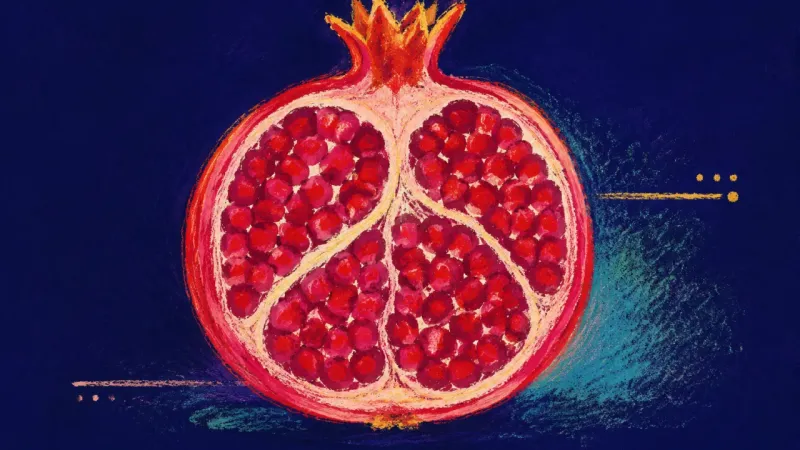
A Quieter Version Does Not Have to Audition
Six days later, I received a message from Jordan: 'I used the 10-minute note and asked a friend for ten minutes. We talked. I muted notifications for twenty minutes and slept through the night, but I still woke up wondering, What if I got it wrong? Then I smiled. At least this time, there was a conversation to continue.'
That was the small proof. The loneliness had not vanished, and the question mark had not been magically removed. But the next morning held a person, a bounded exchange, and a choice Jordan had made before the audience could tell them what the choice meant.
I told Jordan that the cards had not rescued them from uncertainty. They had helped make the pattern visible long enough for Jordan to change its next move. In that Journey to Clarity, the authority stayed where it belonged: with the querent, who could use online community, privacy, language, and reciprocity in proportions that served their life.
When the replies go quiet and your thumb keeps refreshing, you may feel both truths at once: you want someone to turn toward you, and you are scared that without visible pain there will be no reason for them to stay. You do not have to shame either truth before you can respond to it.
If you imagined letting one quieter form of connection count, what would you feel curious to try first: writing the support you want before posting, setting down the phone after a notification window, or offering one equal-height cup to a person who can actually participate?