Seen, But Not Held?

Explore this exposed inner gap through grounded struggle language, related tarot cards, and tarot reading insights from sessions.

Vulnerability Without Containment

What does this feel like?

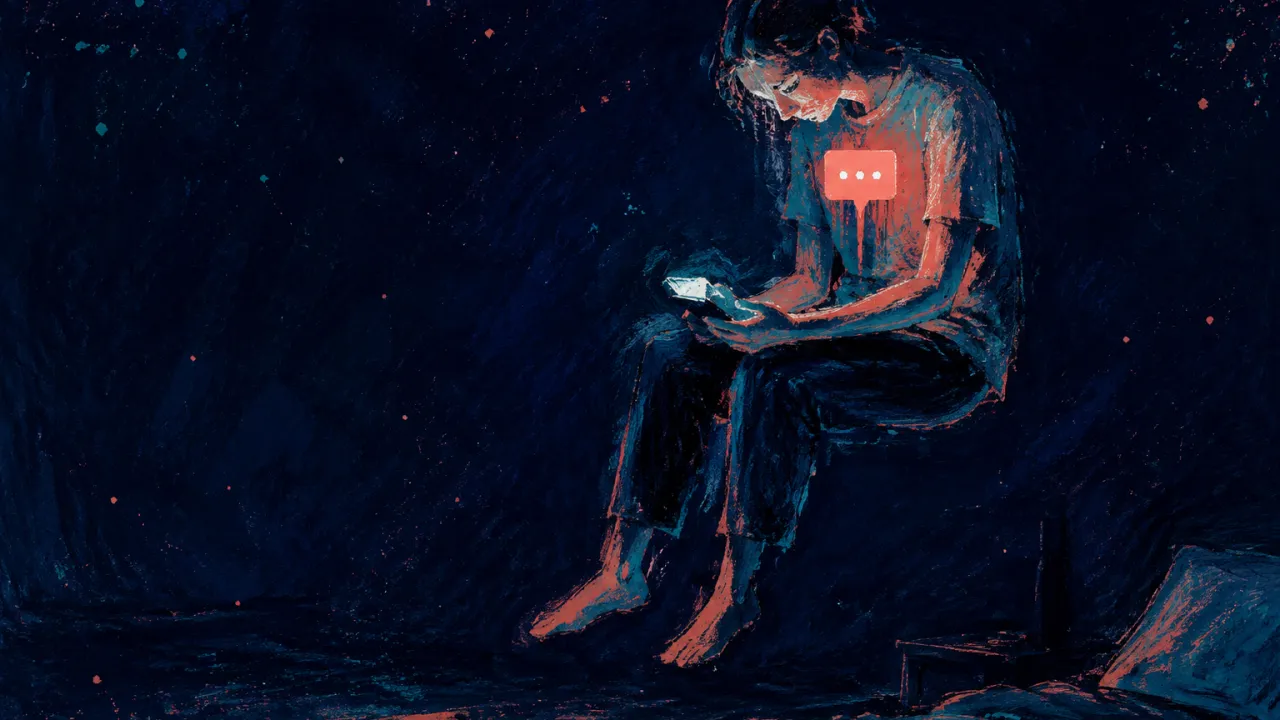
Vulnerability Without Containment is the feeling of saying the honest thing and realizing, a second too late, that honesty did not automatically create a place to hold what came out. It might happen after you send a text that is more direct than usual, after you admit you are hurt, after you tell someone what you need, or after you name something private in yourself that used to stay folded away. For a few moments, there is relief, almost a clean breath, because the hidden thing is no longer trapped inside you. Then your body catches up. Your throat feels open in a way that is not comfortable, your skin feels too aware of the room, your chest waits for a response as if your whole self has been placed on the table. You may start talking faster, softening what you said, adding context, apologizing for the size of your own feeling, trying to build a container out of extra words because the space itself has not offered one. The hard part is not that you cannot be honest; often, you can be painfully honest. The hard part is what happens after the truth arrives and there is no steady rhythm, no agreed pacing, no clear handhold, no sense that what you revealed will be met without being rushed, used, dismissed, or turned back on you. So vulnerability starts to feel less like closeness and more like standing in bright light with nowhere to step back, and you begin to confuse being seen with being unprotected. Over time, the cost is subtle but heavy: you may keep opening the door to yourself, then spend the rest of the day trying to recover from the wind that came through it, much like the figure in The Star, unclothed beneath an open sky, steady at the water's edge but still without a wall, cloak, or shelter around what is being poured out.

What's pulling at you?

You're not stuck because you refuse to be open; you're stuck because openness and safety are not arriving at the same time. One part of you knows the truth needs air, while another part knows that not every room, bond, or conversation has enough steadiness to hold what becomes visible. That is the pull: wanting to be known without wanting to feel left outside yourself afterward.

How It Shows Up?

  • You send the honest text, then immediately lock your phone and place it face-down like the screen is suddenly too bright. Your throat tightens, your palms feel warm, and your chest waits for a reply as if the whole room has gone quiet around it. You can let the message exist without staring at it the entire time.
  • You are sitting across from a friend or partner and you finally say the thing you have been carrying, but as soon as it leaves your mouth, their face becomes impossible to read. Your shoulders lift, your stomach drops, and you start filling the silence with extra explanations before you even know whether they needed them. It is allowed to pause after telling the truth instead of managing the air around it.
  • In a meeting, class, or group chat, you ask for help and instantly feel more visible than supported. Your face gets hot, your jaw sets, and the question hangs there like the open posts of the Four of Wands: a place that looks communal, but still has no walls. You can need structure around being seen; that need is information, not a performance problem.
  • You are alone after opening up, replaying every word while brushing your teeth or sitting on the edge of your bed with one sock still on. Your chest feels exposed from the inside, like something left the cup and kept spilling after the conversation ended. You do not have to decide tonight whether sharing was right; you can just give your body a quieter room to come back to.
  • You notice a familiar tension in one fixed place: the throat before a confession, the ribs after a vulnerable post, the lower belly when someone asks a follow-up question too quickly. Your body feels like The Star's open landscape, clear and uncovered, with no easy corner to step behind. You can respect the signal without turning it into a verdict about yourself.

Vulnerability Without Containment in Tarot Cards

Vulnerability Without Containment lives in the gap between telling the truth and having a place where that truth can safely land. You may recognize it in the tight throat, hot face, or chest-deep exposure that appears right after you share something private. From an existential perspective, the structural framework of this struggle is about exposure arriving before steadiness, rhythm, or return. These Tarot Cards mirror the shape of that gap without explaining it away.

The Lovers Upright
The two human figures are fully uncovered in an open garden, yet their open hands do not meet. Exposure is present before contact, and the spaciousness around them gives the body nowhere to hide. In inner work, that same arrangement can make self-honesty feel physically raw rather than freeing. You may be able to name what is inside, but the exposed material has not yet found a stable internal place to be held. Vulnerability Without Containment belongs to this card because the scene shows openness without a matching holding structure. The struggle is not that the truth is inaccessible; it is that truth arrives before the inner system has built enough containment around it.
The Tower Upright
The figures fall into open space, but that openness does not function as support. Around them is sky, smoke, flame, and height, with no ledge, handhold, or visible container for what has just been exposed. Vulnerability Without Containment is the exact pressure of that image. In introspection, something private becomes visible before there is enough inner structure to receive it, so exposure feels less like honesty and more like losing the walls of the self. The card does not treat vulnerability as a moral virtue or a performance of openness. It shows vulnerability as a spatial event: the self is out in the open, and the real question is whether there is a structure strong enough to hold what has emerged.
The Star Upright
The unclothed figure kneels at the water's edge with one knee on land and one foot touching the pool, exposed under an open sky with no wall, cloak, or shelter. The posture is steady, but its steadiness depends on remaining visible and unarmored while two streams leave the hands. In introspective work, that visual tension mirrors the moment when private material becomes available too fast. You are not simply being sensitive; the card shows a truth-revealing posture where the inner system has opened before a strong enough container has formed around the exposure.
Reversed
The naked body is fully exposed under an open sky, with almost no built boundary around the act of pouring. In the reversed Star, openness can stop being a healing condition and become the only available posture. For personal growth, this is the strain of revealing, processing, and making yourself transparent faster than you can build the container that would make that openness useful. You may call it authenticity, but the nervous system still needs edges, pacing, and private integration before vulnerability can transform anything. The card witnesses exposure without enough holding structure. The struggle is not that you are closed off; it is that your openness has outrun the architecture needed to keep you intact while you change.
The Moon Upright
The crayfish rises out of the pool at the beginning of the road, leaving the hidden water for open land while two alert animals occupy the threshold. Its body is exposed before there is shelter, daylight, or a reliable sign that the path can receive what has surfaced. In love, this image mirrors the moment vulnerability arrives before containment has been built. You may open up and immediately feel unprotected, not because vulnerability is wrong, but because the relationship has not yet shown enough steady structure to hold what is emerging from deeper water.
The Sun Upright
The naked child rides into full sunlight with arms open, while the white horse moves forward without reins and the stone wall holds the garden behind them. The image is not simply openness; it is openness without visible equipment for regulating how much of the self becomes available to the surrounding field. In a family system, that same structure can appear when sincerity, warmth, or emotional honesty arrives before a reliable container exists. You may show the truth of what you feel, only to find that the family frame treats exposure as proof, leverage, or a cue to restore the old version of you. The Sun gives this struggle a clear shape: visibility is nourishing only when it is held by a boundary that can protect growth. Without that containment, the exposed self is not free; it is illuminated before it has somewhere safe to land.
Reversed
The horse has no reins, and the child has no covering, saddle, or bridle to mediate the movement into the open. The wall remains behind them as a sign of containment already crossed, while the sunlight continues to pour over the scene without any visible dimmer. In introspection, that image can describe exposure moving faster than integration. You may be telling the truth, opening old material, or dropping a protective role, but the inner system has not yet built a new way to pace what has become visible. Vulnerability Without Containment is the pressure point where openness stops feeling free and starts feeling unheld. The Sun does not shame vulnerability here; it shows why vulnerability needs a boundary, a rhythm, and a place to land if it is going to become clarity rather than raw exposure.
Ace of Cups Upright
The cup is wide open at the top, flooded from within, and suspended by a hand that touches it lightly rather than enclosing it. Its whole structure is built for reception and overflow, but there is no visible rim, lid, or ground support that separates what enters from what must be carried. In a family system, that visual arrangement mirrors the strain of being emotionally available without a stable container. You may be expected to receive confessions, guilt, affection, criticism, and repair attempts as proof that you are still loving, while the actual structure gives you little room to decide what you can hold. Ace of Cups carries the beauty of openness, but here openness is not automatically safety. The struggle is the difference between a heart that can receive and a family role that treats receiving as unlimited access.
Reversed
The cup's open rim is the center of every movement: the dove descends, water rises and spills, droplets scatter, and the pool waits below. When the holding function weakens, openness stops feeling like connection and starts behaving like exposure. In inner work, that is the moment honesty leaves you raw instead of clear. The card does not shame the opening; it shows that vulnerability needs a bank, a rim, and a place to land before it can become relief.
Five of Cups Reversed
Liquid has left the cups and spread across ground that cannot hold it, while the figure's black cloak seals the body rather than creating contact. The scene shows exposure without an answering container: something intimate is visible, but nothing in the foreground can receive it. In romantic dynamics, that is Vulnerability Without Containment. The card gives shape to the moment when opening up, confessing, or breaking down with a partner leaves you more exposed than met, because the relationship field has no stable vessel for what was released.
Page of Cups Upright
The living fish is held in a vessel built for liquid, not for a creature that needs space, movement, and a fitting environment. The Page's careful stance keeps the cup steady, but steadiness is not the same as containment that can actually sustain what has emerged. In family conversations, vulnerability can become visible without becoming safe. You may reveal something tender and still feel exposed, because the available container is too small, too unstable, or too focused on appearance to hold the full living need behind the disclosure.
Reversed
The fish is alive, but the cup is not its natural environment. In the reversed structure, the small vessel becomes the whole emotional world, while the sea behind it fades into scenery instead of functioning as the larger container. That is the image of vulnerability exposed without enough relational holding. You may have shared tenderness, need, longing, or emotional availability into a bond that has not built the steadiness to receive it, leaving the feeling visible but not truly protected. The card does not frame vulnerability as a mistake. It shows the difference between being open and being contained: love can be present, but without a reciprocal structure around it, the most delicate part of you remains suspended in a vessel too small for what it carries.
Five of Pentacles Upright
The bandaged foot, the crutch, and the thin clothing make need physically visible before any real shelter appears. The body is exposed, supported only by tools that keep it moving but cannot protect it from the weather. In a relationship, this is the structure of vulnerability appearing before containment exists. You may be able to show hurt, dependency, or longing, but the emotional architecture around the bond does not yet provide a place where that exposure can safely land. Vulnerability Without Containment names the gap between revealing the wound and having a reliable relational shelter around it.
Ace of Swords Reversed
The crown and living branches hang from a blade suspended in empty sky, with no table, ground, or second hand to receive their weight. The symbols are visible and elevated, but the structure offers no container beneath what has been lifted into view. In a relationship, this resembles the aftermath of saying something vulnerable when the bond has no stable way to hold it. You may have exposed something real, yet the conversation gives it nowhere safe to land, so openness feels like being left on the point of the sword. AceTarot names this as vulnerability without containment: not a failure of feeling, but a mismatch between exposure and holding capacity. The reversed tension turns revelation into suspension, making the tender material feel unsupported rather than shared.
Three of Swords Upright
The red heart is exposed without ribs, skin, hands, or any surrounding body to regulate contact. Rain and gray air fill the image, but neither element becomes a container; the heart is visible, reachable, and unprotected at the same time. That is the shape of social vulnerability without a holding field. You may be showing up, sharing, posting, networking, or letting people see more of you, yet the circle around you does not provide enough structure to hold what has been revealed. The card locates the pain in exposure without containment, not in the act of wanting connection.
Four of Wands Reversed
The canopy is open on every side: it welcomes, displays, and exposes at the same time. The same posts that mark a place of gathering do not create walls, so the body under them has visibility without full containment. That is the academic tension behind asking for help in a class, seminar, or study group. The card names the problem as a container issue: support may be real, but the space does not always protect the vulnerable act of being seen not knowing.

Vulnerability Without Containment in Tarot Card Reading Insights

When vulnerability leaves you exposed before anything around it feels steady, others have brought that same gap into readings. The shift here is from the cards themselves to the moments people ask what this kind of openness is showing them. Tarot Reading Insights from sessions on Vulnerability Without Containment.

Psychological struggles related to Vulnerability Without Containment