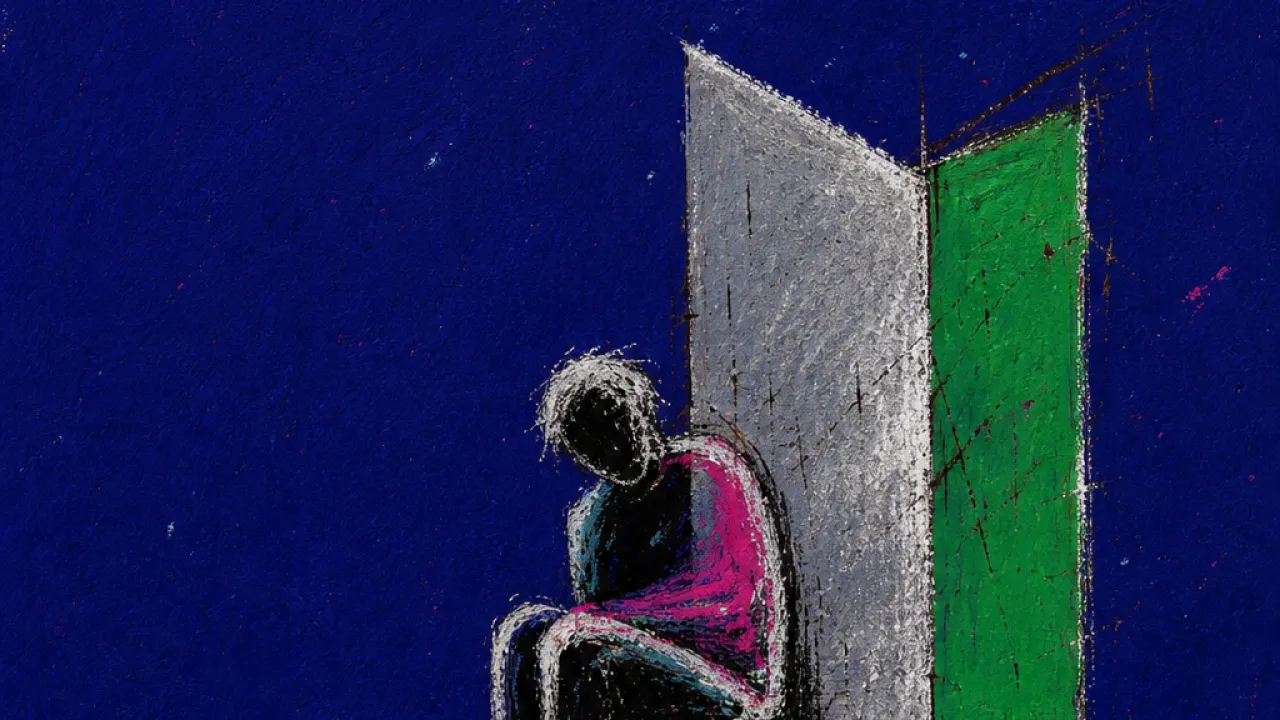
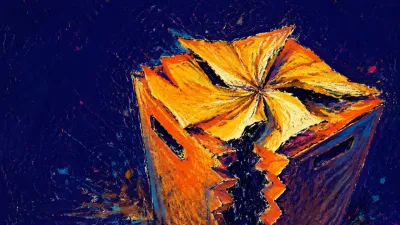
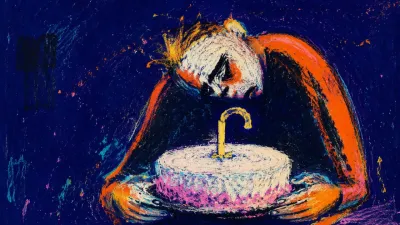
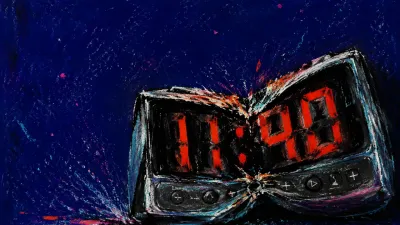
Waiting Room Limbo is the kind of delay where the doorway is visible, but the signal to cross it has not arrived. The braced body, the phone kept close, and the tiny sound you keep monitoring show how the wait lands physically, not just on the calendar. This is an environmental, structural dynamic: the timing is shaped by gates, approval chains, and release points outside your direct control. The Tarot Cards below reflect the outline of this suspended stage.
The High Priestess ReversedThe doorway is visible, but the curtain still hangs between the outer space and whatever comes next. The seated figure does not step through, the pillars do not move, and the water behind the veil remains unreachable from the foreground. That is the architecture of Waiting Room Limbo: not total failure, not real progress, but a suspended stage where the next move depends on a signal that has not arrived. You can still reclaim clarity by distinguishing what is actually pending from what is simply being avoided, but the card first names the external hold that is shaping your timing.
The Empress ReversedThe throne is central, soft, and fully occupied, while the scene offers no visible road out of the garden. The raised scepter signals readiness to appear, yet the lower body remains anchored in a place built for staying. For timing questions, that creates the reality of Waiting Room Limbo. You can have resources, desire, and a recognizable next stage nearby, but the external gate, approval, or seasonal cue has not converted into a usable path.
The Hierophant ReversedThe followers remain below the seated figure while the route forward is visible through steps, keys, and ritual order. The scene contains a path, but the path is paused inside a formal system. Reversed, that pause becomes limbo. You may be close to the next stage, yet still held in a waiting room where someone else controls the announcement, the sequence, or the moment of release. For timing questions, this card helps distinguish a useful waiting period from a stalled holding pattern. The key inquiry is whether the delay is preparing the ground for movement or simply keeping you in place because the gate has not been opened.
The Chariot ReversedThe chariot waits between the city behind it and the open direction ahead, paused near the waterline rather than clearly crossing. The figure is upright and prepared, yet his lower body is visually held inside the squared vehicle, creating a threshold state that is active but not released. Waiting Room Limbo belongs to this card when timing becomes a suspended external condition. You are no longer fully contained by the old structure, but the next phase has not granted a clear path for movement. The image gives that limbo a concrete shape: armor without advance, direction without departure, readiness without permission from the road. In timing work, the card helps locate whether the pause is a necessary staging point or a stale holding pattern that has started to drain momentum.
Strength ReversedThe scene is a frozen contact point: hand, jaw, gaze, and paw all held in suspension. Nothing has fully opened, nothing has fully ended, and the open field provides no external structure that can take over the work of holding the moment. Waiting Room Limbo appears when delay is not restful. You may look inactive from the outside, but the card shows a kind of active holding where attention, timing, and restraint keep being spent while the next stage remains distant. Its value is in naming the waiting period as a real context with cost, not an empty gap in your life.
The Hermit ReversedThe night around the Hermit has no moon, no stars, and no visible road beyond the lantern's small reach. The staff keeps the body upright, but the scene is structured more for holding position than crossing distance. That is the external texture of waiting room limbo. You are not simply choosing to pause; the surrounding field has withheld the signal, permission, or confirmation that would make movement legible, so the work is to recognize the limits of the current timing chamber without surrendering your agency to it.
Wheel of Fortune ReversedThe wheel hangs in clouds with no road, floor, doorway, or horizon to walk toward. The scene contains movement, but the viewer is not given a direct path into that movement. Waiting Room Limbo matches the stage where life is not still, yet your next opening remains controlled by outside cycles, replies, approvals, or conditions. The card gives shape to the suspended interval, making the difference between empty delay and a threshold that has not opened yet.
Justice ReversedThe curtain behind Justice hides the mechanism of the chamber while the figure remains perfectly still. The tools are visible, but the process behind them is not, creating a scene where evaluation seems active without producing movement. Waiting Room Limbo fits timing questions because it describes the suspended interval between action taken and answer received. You are not at the starting line anymore, but the next threshold has not opened. The card's stillness gives this context its realism. The pressure comes from being held in a measurable system without access to its timing, making patience feel less like rest and more like procedural containment.
The Hanged Man UprightSuspended by one ankle from the living T-shaped tree, the figure has a clear center but no ordinary way to move. The rope holds the body in a pause that is visible, structured, and not simply imagined. In love, that visual logic maps onto a relationship waiting room where the bond has weight but no next step. You are dealing with a real external pause: commitment, contact, timing, or readiness is being held in place, and clarity begins by naming the structure that keeps movement deferred.
ReversedThe upside-down figure has no floor beneath him, no road ahead, and no reachable tool in his hands. The body is visible in the center of the scene, but every practical route is suspended from a single external point. In personal growth, this mirrors the stage where you keep waiting for the perfect plan, the perfect approval, or the perfect internal certainty before moving. The card exposes the difference between a real pause that gathers insight and a waiting room that quietly turns non-action into a lifestyle.
Death ReversedThe horizon is visible between the towers, but the foreground is blocked by the mounted rider and the figures caught at ground level. A route exists in the image, yet the bodies nearest the viewer do not have practical access to it. Reversed, this becomes waiting room limbo: the next life stage can be imagined, researched, and described, but every move is deferred until readiness feels complete. In personal growth, the external container is the endless pre-change phase where preparation replaces passage and clarity becomes the condition that keeps the door closed.
The Star ReversedThe scene has space, stars, water, and distance, but it does not show a road opening from the figure's position. The body keeps performing a small repeated action while the larger landscape remains quiet, open, and strangely non-committal. In reversal, that stillness becomes waiting room limbo: the signal exists somewhere above the situation, but the next practical step has not arrived on the ground. You may be doing the maintenance work, checking the signs, and keeping options alive while the external activation point remains unclear. The Star makes this holding pattern visible. It shows the difference between a pause that restores agency and a pause that starts to suspend it, giving shape to the moment when waiting itself becomes the context that needs to be examined.
The Moon ReversedThe path begins, but the scene holds the creature at the crossing point between water and land. The towers promise a later passage, yet the foreground is still dominated by the threshold itself rather than the destination. This is the architecture of a waiting room phase: the old environment no longer contains the whole situation, while the new one has not become fully enterable. In timing questions, that can feel like being delayed by a door that exists but has not opened at the right level of support. The reversed Moon links this context to limbo because the card’s movement is real but suspended. The most practical clarity comes from recognizing that the phase is transitional, so the timing problem is about readiness of access, not personal failure to advance.
Judgement ReversedThe coffins are open, the call is audible, and the figures are upright, yet the scene does not show a bridge into the next terrain. The cold ground and enclosing mountains make the whole field feel suspended between recognition and movement. In timing questions, this is the holding pattern after a signal has arrived but before the route appears. You may have enough clarity to know that something is shifting, while still lacking the external opening that would let the shift become action. Waiting Room Limbo names that activated pause. The card helps keep the pause from becoming self-blame by showing that the bottleneck sits in the missing passage between response and viable movement.
The World ReversedThe dancer floats in blue sky with no ground line beneath the finished wreath. The oval marks completion, but the picture gives no door, road, or next room for the body to enter. That suspended composition captures the waiting room after doing everything that was required. You may have completed the cycle, sent the application, closed the chapter, or prepared the move, while the next external gate stays unavailable; the card makes the limbo visible without turning it into personal inadequacy.
Five of Cups ReversedThe bridge is already built across the river, yet the cloaked figure has not turned toward it. The foreground acts like a holding area where the body stands after the loss but before the crossing. That image matches a waiting room phase in timing work: the next stage is visible enough to create pressure, but not active enough to feel enterable. The stable structure across the water remains separate until the route becomes something more than background information. You can use the card as a map of limbo rather than a verdict on delay. It shows that waiting becomes heavy when the signal to move is unclear, and it points the audit toward what would make the bridge actionable.
Eight of Cups ReversedThe figure occupies the corridor between the cup wall and the mountain path. The old structure is behind him, but the receiving place ahead has not yet appeared as a stable destination. This is limbo as a timing stage, not laziness or indecision. You can be genuinely between cycles, with the previous container no longer workable and the next one not yet open enough to enter. The card gives that suspended corridor a boundary, which makes it easier to see what is actually waiting for a signal.
Knight of Cups ReversedThe rider is close to the river, but the crossing has not happened. The far hills are visible, the cup is present, and the horse is positioned for movement, yet the scene remains suspended at the edge. This is the reality texture of waiting room limbo: the next phase is imaginable but not operational. You are kept engaged by proximity to movement, while the external situation withholds the confirmation needed to leave the threshold. The Knight of Cups makes this limbo feel deceptively graceful. The delay can look like patience or refinement from the outside, but structurally it is a holding zone until the route, recipient, or timing signal becomes concrete enough to move.
Queen of Cups ReversedThe Queen is seated with both hands fixed around the cup, surrounded by water on a small piece of land. A wall rises across the distance, so the image contains another side but withholds a clear route toward it. That spatial setup captures the external texture of limbo: a person can be composed, capable, and centrally placed while the environment itself refuses to produce the next opening. The pressure comes from the absence of a usable passage, not from a lack of investment. Waiting Room Limbo fits the reversed timing field because the scene becomes static rather than restorative. You may be holding your readiness in place while the timeline depends on replies, approvals, market shifts, conversations, or circumstances that have not yet created a usable door.
Ace of Pentacles ReversedThe garden is visible, the archway is open, and the path is laid out, but the card does not show a person already inside the estate. The offered pentacle hovers above the scene, creating a suspended moment between seeing an opening and being able to inhabit it. Waiting Room Limbo fits when timing is governed by thresholds outside your direct control. The structure is not empty; it is full of signs that something could begin, but access is still mediated by gates, conditions, and timing nodes. The card gives this suspended stage a shape. You are not simply doing nothing; you are standing near a threshold where the right move depends on whether the external gate has actually opened enough to support entry.
Six of Pentacles ReversedOne recipient receives coins while the other waits under the scales with an extended hand. The horizon is clear, but the immediate scene is suspended; the next action depends on a release that has not reached everyone yet. This is the physical shape of waiting room limbo. The path may not be closed, but your timing is held in a middle state by a reply, payment, result, application, approval, commitment, or external cycle that has not landed. The card gives the waiting a structure, which matters because limbo often feels like wasted time. Here, the useful question is what can be clarified, prepared, or protected while the scale is still in motion and the next release has not arrived.
Seven of Pentacles ReversedThe figure is close enough to harvest and equipped enough to act, yet the scene remains suspended. Most of the pentacles are still attached to the vine, and the hoe rests in a posture of waiting instead of completion. The card's pressure comes from the almost-ready quality of the field. There is enough progress to keep waiting plausible, but not enough closure to release the decision from its holding pattern. In a decision context, this describes the limbo that forms when every delay can be justified by one more sign, one more result, or one more condition. The structure asks you to distinguish strategic patience from a waiting room that has quietly become the decision itself.
Knight of Pentacles ReversedThe black horse's planted hooves turn the wide field into a holding zone. The rider is equipped, the pentacle is present, and the horizon can be seen, yet none of those elements have become motion. For your direction, this describes the pause after a pause has stopped being strategic. You may be prepared in several visible ways, but the structure around you keeps repeating readiness without translating it into a route, a decision, or a livable next stage. The open space makes the limbo sharper, not softer. There is no wall in the picture, but there is also no road, which means the blockage has to be located in the relationship between resource, timing, role, and movement rather than blamed on a single missing opportunity.
Two of Swords ReversedThe seated body, locked arms, and cold slab show a position that can be held for a while but not indefinitely. The sea behind her is calm, yet the tide is still a moving force, so stillness carries a cost over time. Waiting Room Limbo appears when life direction becomes organized around waiting for clarity, permission, timing, or the perfect internal signal. You are not moving, but you are still spending energy to maintain the pause, and that hidden cost is the pressure point the image exposes.
Three of Swords ReversedGrey cloud and slanting rain fill the whole background, with no road, horizon, floor, or door behind the heart. The blades do not create movement through the scene; they hold the center in place. That visual stillness matches a timing interval where a decision has emotionally landed but the next external condition has not opened. You may have crossed an inner threshold while the world is still offering no usable marker. The card gives the waiting room a shape. Instead of treating the pause as empty time, it reveals the suspended structure around it: what is fixed, what is obscured, and what has not yet become a navigable path.
Four of Swords ReversedThe room offers no road, doorway, or visible horizon; the knight lies in a chamber designed for suspension. The swords remain present, so the conflict has not disappeared, but nothing in the scene shows an active route back into the world. This fits the personal-growth waiting room where readiness becomes the condition for every next step. You may keep postponing action until certainty arrives, but the card reveals that the pause has become its own environment, with pressure preserved rather than transformed.
Six of Swords UprightThe boat is already away from one bank, but the far shore is still pale and unfinished in the distance. The passengers sit compressed and quiet inside the vessel, with their faces hidden and their bodies oriented toward a destination that has not yet become concrete. That in-between geography captures the pressure of waiting after a real transition has already started. You are not standing still, but the outside world has not produced the next solid marker, so the timing problem becomes how to stay coherent inside a passage that offers movement without arrival. The Six of Swords gives this limbo a physical container. It turns the waiting room into a crossing, where the absence of visible results does not erase the fact that the structure is already carrying you away from the previous shore.
ReversedThe boat has begun to leave, but the far shore is pale, distant, and almost without detail. The old bank is no longer the visual center, while the new one has not become a place with workable coordinates. In personal growth, that suspended geography becomes a waiting room: the person prepares, heals, plans, and researches while the actual landing point stays undefined. You may be stuck not because nothing is moving, but because the movement has no concrete arrival terms.
Nine of Swords UprightThe body is upright, but the quilt still holds the lower half in place and the black background gives no horizon, door, or route. The scene has alertness without mobility, like a system that has woken you up before it has given you anywhere to go. For timing questions, that becomes a waiting room rather than a simple delay. You can sense that a phase is ending, but the next phase has not become externally available enough to enter. The swords make the pause feel severe because they cross the field where action would normally begin. The structure shows why waiting can feel active and costly: the body is already mobilized, but the timing environment has not released a path.
Three of Wands ReversedThe body is planted, the hand rests on the wand, and the whole scene points outward while the figure goes nowhere. Motion belongs to the distant ships, not to the person standing on the cliff. Anticipation becomes a holding pattern here. You are caught in a timing structure where the next movement depends on signals, replies, approvals, or conditions that have not yet reached shore.
No cards available for this filter.