In Academic Probation Limbo, the portal status, warning email, and review meeting make the program feel like a corridor with a gate halfway through it. The body-level signal is the same one you notice when your shoulders tighten before opening grades or checking the next deadline. This is an environmental and structural dynamic: the institution is measuring continuation through rules, credits, retakes, and committee review. Here are the Tarot Cards that tend to mirror this kind of threshold.
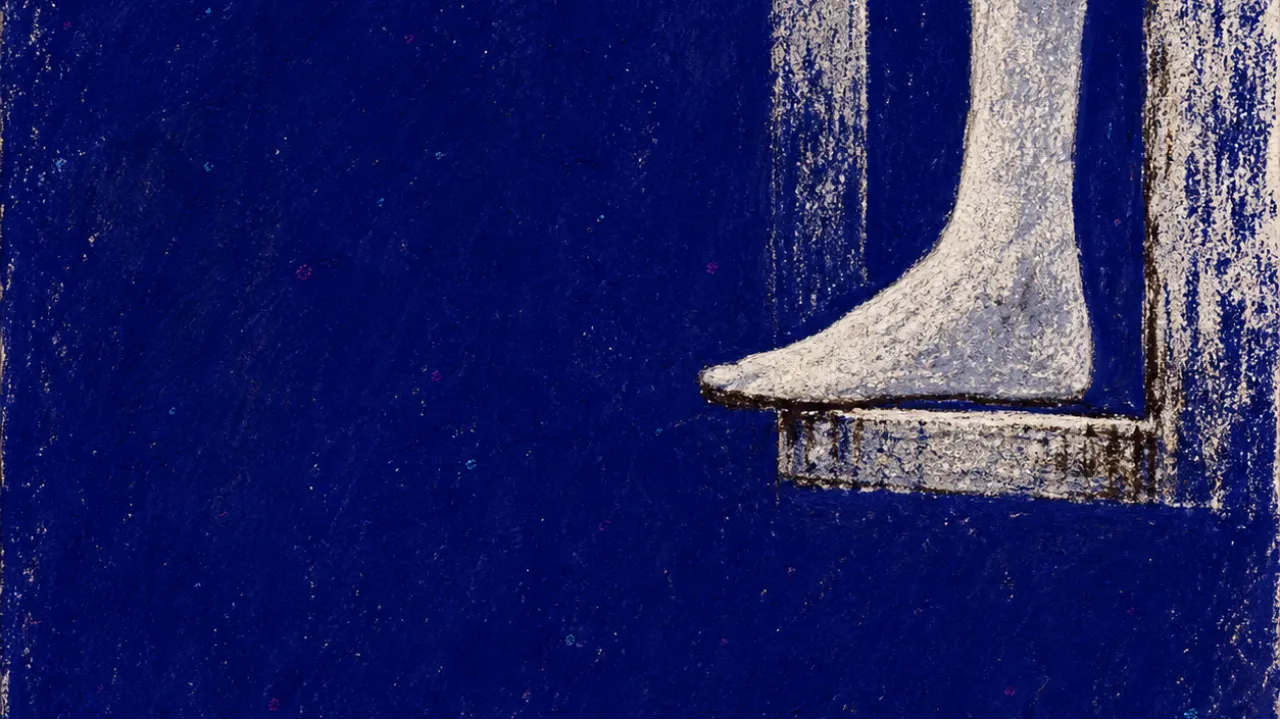
Justice ReversedThe white shoe touching the step below the robe shows contact with the threshold, but the seated figure and closed curtain keep the route controlled by formal judgment. The body is near movement, yet the institutional hall determines whether that movement becomes passage. Academic probation, progression review, failed requirements, and formal warnings carry this same liminal pressure. You are still inside the educational structure, but continuation, funding, course access, or program standing may depend on measured recovery and official review. Justice makes the limbo concrete instead of letting it blur into personal shame. The card identifies the external status gate, the criteria being weighed, and the narrow place where agency returns: not in pretending the status is meaningless, but in seeing exactly what the institution is measuring now.
The Hanged Man ReversedSuspended from one ankle, the figure has no ground to push from and no visible route back into ordinary movement. The body is not choosing a direction; it is held by a single external anchor that decides when movement can resume. Academic probation creates the same kind of institutional suspension. You are still inside the educational frame, but the next stage depends on thresholds, retake rules, and monitored performance, so the card makes the limbo visible as a real external structure rather than a vague personal stall.
Death ReversedThe armored horse advances through the foreground while the figures on the ground have already lost the ability to redirect its movement. The black banner turns the scene into a formal threshold, and the distant route remains visible but unreachable from the compressed space beneath the horse. Academic probation works with the same structure. The student is no longer dealing only with study difficulty; the institution has entered the foreground through grade thresholds, warning status, retake rules, progression requirements, or committee review. This card connects because the pressure is external, procedural, and time-bound. You regain clarity by separating the institutional rule from your whole identity, then seeing which part of the academic system is actually blocking movement: grades, timing, feedback, prerequisites, or the recovery plan itself.
The Tower ReversedThe figures are suspended between the tower and the unseen ground, with no staircase, platform, or visible landing point. The image holds the body in a status gap: no longer securely inside the structure, not yet grounded in a new one. Academic probation has the same architecture. It is not only a set of poor results; it is a conditional position where access, confidence, program standing, and future planning all become harder to locate. The broken vertical axis matters because probation can make the next step feel like it has disappeared. The card gives the situation a map: conditional standing, missing recovery scaffolds, institutional thresholds, and the need to identify a landing path before the system defines one for you.
Judgement ReversedThe figures stand upright but remain inside their coffins, caught between response and release. The trumpet has sounded, yet the ground gives them no clear route out, and the cold field keeps the transition suspended. That suspended posture matches academic probation, conditional continuation, or any school status where you are technically still inside the program but not fully secure within it. The institution allows movement, but only within a monitored corridor where each grade can reopen or close the path. You regain agency by naming the condition instead of treating it as a permanent identity. Limbo has rules, thresholds, and review points; once those are visible, the situation becomes a map rather than a fog.
Five of Cups ReversedThe river cuts the foreground off from the distant castle, making stability visible but not immediately accessible. The spilled cups sit as hard evidence of what has already gone wrong, while the bridge shows that movement back to secure ground depends on crossing a defined structure. In academic probation or conditional progression, the student can often see the stable status they want: passing standing, program continuation, graduation eligibility, or supervisor confidence. The problem is that the route is mediated by requirements, grade thresholds, retakes, meetings, and formal review points. The card's reversed pressure sharpens the limbo. It shows a learning environment where recovery is possible in theory, but the user is standing on the wrong side of a system boundary and needs to identify the actual crossing conditions rather than stare only at the damaged record.
Five of Pentacles ReversedThe injured foot and crutch make every step conditional. The figures continue forward, but the snow, darkness, and lack of a visible destination keep the movement narrow and exposed. In academic life, this becomes the period after a failed semester, warning letter, missed requirement, or stalled thesis milestone. You are still in motion, but the card shows a limbo where each next step carries more weight because the system has placed your progress under constraint.
Three of Swords ReversedThe heart floats in a gray field with no ground, doorway, or horizon behind it. Academic probation has that same suspended quality: the student remains inside the institution, but ordinary forward motion has been replaced by monitoring, conditions, and the constant visibility of prior impact. The swords do not point toward a next step; they hold the center in place. That mirrors the limbo of needing to improve grades, meet requirements, or prove readiness while the status itself keeps the wound visible. The card's value is in separating the probation structure from the student's entire identity. You can see the external frame clearly: a monitored threshold, a narrowed path, and a system that has not fully closed but is no longer letting movement feel normal.
Four of Swords ReversedThe tomb-like slab gives the resting figure a formal boundary, while the swords above keep institutional pressure visibly present. The image is not open-field rest; it is a pause inside a chamber where status, review, and return are all structured by rules. For academic probation or conditional standing, this becomes the suspended period between recovery and removal, where every credit, grade threshold, and deadline carries extra weight. You are dealing with a narrow institutional passage, and the clarity comes from naming the rules that define the passage before they define you.
Six of Swords ReversedThe boat has begun to move, but the far bank is still pale and remote, and the oar only marks the water beside it. The swords stand in careful rows, creating order, but inside a small vessel their order also becomes a set of rigid vertical limits around the passengers. Academic probation carries that same suspended geometry. You are not fully expelled from the system and not fully restored inside it; every class, grade, deadline, and improvement plan becomes part of a monitored crossing. The card captures the limbo of trying to move forward while the structure around you turns progress into proof that must be continuously produced.
Eight of Swords ReversedThe woman stands in low wet ground while the castle sits at a distance on higher terrain. Between her and that stable structure, the swords break the space into narrow passages without offering a clear road. In academic probation or conditional progression, the institution remains visible but not fully reachable. You may still be enrolled, still attached to the program, and still technically able to recover, while grades, resits, credits, or review conditions keep the next stage suspended. The card holds the exact limbo of being neither out nor securely through. It frames recovery as a navigation problem inside constrained rules, where the task is to identify the actual opening rather than treating the entire academic landscape as closed.
Nine of Swords ReversedThe black background removes any horizon, doorway, or visible route beyond the bed. The figure sits beneath a heavy evaluative structure with the lower body covered, unable to translate pressure into movement. That is the academic shape of probation limbo. You may still be enrolled, still submitting work, and still technically moving through the institution, but every grade now carries the weight of status recovery, future access, and whether the path remains open. The card’s reversed pressure turns the room into a holding zone. It shows a system where the next step exists, but the student cannot experience it as stable until the warning status, failed semester, or recovery condition is resolved.
Ten of Swords ReversedThe fallen figure lies at the edge of a crossing that remains visible but unavailable from the ground. The river is calm, the far shore is still there, and the horizon has light, but the body has been stopped before it can move into the next stage. That is the spatial logic of academic probation limbo. Enrollment may still exist, the degree path may still be technically open, and recovery may still be possible, but every next step is now conditional on thresholds, retakes, meetings, or performance rules that narrow the student's movement. The card's value is in naming the threshold rather than dramatizing the fall. You are not looking at a closed map; you are looking at a map where the passage requires a different recovery structure from the one that led to this point.
No cards available for this filter.