Waiting on a DNA Match

A grounded look at DNA match silence, related tarot cards, and reading insights for the contact gap.

Dna Match Contact Limbo
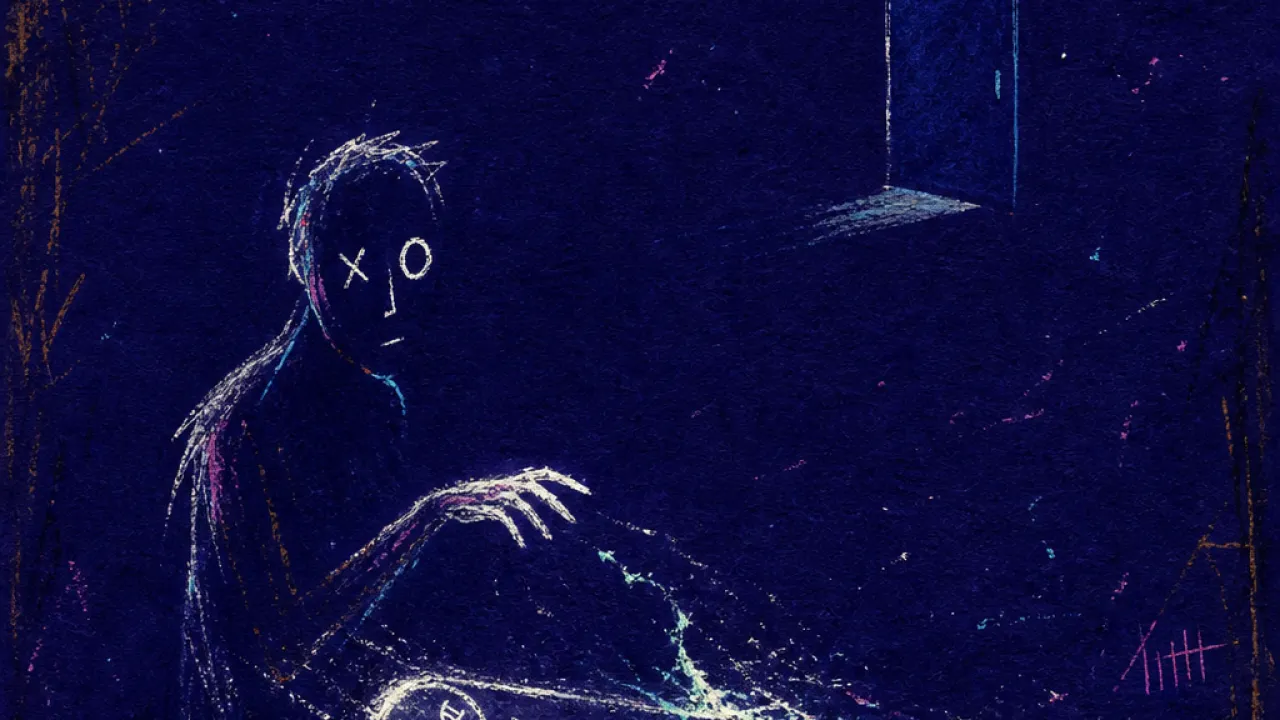
A solitary figure extends fingertips toward a glowing alert as a silver message thread pulls away through a half-open doorway

What is this situation?

DNA Match Contact Limbo — you open Ancestry, 23andMe, or another DNA app and there it is: a name, a percentage, a possible relationship label that turns a normal Tuesday into a waiting room. You scroll the shared centimorgans, compare initials, reread the thin profile, and draft a message that has to sound casual while carrying too much: Hi, I think we might be related. Maybe you hit send and the platform reduces the whole thing to unread, read, last active, no reply; maybe their profile goes private; maybe a relative tells you not to stir things up, or nobody knows the etiquette for contacting someone who may hold a missing piece of your family map. The other person may be absent, cautious, or simply not checking the app, but they still hold the gate to the next piece of information, and the app keeps placing that closed gate in your hand every time an email notification or match update appears. Days turn into checking your inbox at work, on the train, and before bed, your stomach tightening before the page even loads, while search tabs and tree screenshots pile up like evidence with no one to hand them to. The cost is not just curiosity; it is being kept in a half-lit corridor between data and contact, between biological closeness and social distance, much like the figure on The Hanged Man, suspended in plain view while the next movement is held somewhere else.

Why it's not you?

The problem isn't that you're making too much out of a match; the setup itself creates a half-open door and then gives someone else the handle. DNA platforms can surface a biological link without shared timing, contact rules, or family consent already in place, so the silence is part of the structure you are being asked to navigate.

Dna Match Contact Limbo in Tarot Cards

DNA Match Contact Limbo is the moment a platform can name a connection while the next human response stays out of reach. The stomach-tightening refresh before the inbox loads is not separate from the situation; it is how the contact gap lands in the body. This is an environmental, structural dynamic shaped by app design, family privacy boundaries, and one-sided control over whether contact continues. The Tarot Cards below reflect the suspended outline of that contact gap.

The High Priestess
Upright
The High Priestess sits between black and white pillars before a pomegranate-covered veil, holding a scroll that is only partly exposed. The DNA result functions like that partial document: enough information is visible to establish a serious family question, while the names, histories, motives, and consent needed to interpret it remain behind another person's threshold. The upright figure does not force the veil or pretend that partial access is complete access. You can recognise the thin profile, centimorgan count, and family hints as valid evidence while keeping the concealed family narrative separate from assumptions about why it has not been shared.
The Hermit
Upright
The solitary figure stands on a high ridge with a staff and a lantern that illuminates only a small section of the surrounding dark. The growing collection of tree screenshots, search tabs, initials, and centimorgan comparisons can create the same position: you hold enough light to continue investigating, but no companion has yet stepped into the inquiry to confirm the family route. The upright lantern supports careful, limited knowledge rather than total certainty. You can recognise solitary research as a real source of orientation while keeping its boundary visible: records and probabilities may narrow the family map, but they cannot supply the matched person's account or turn private investigation into reciprocal kinship.
Justice
Upright
The seated figure holds scales in one hand and an upright sword in the other between two formal pillars. The measured centimorgans and relationship probabilities belong to the scale side of the situation: they can establish evidence with considerable precision, while the sword marks the separate boundary between biological fact and another person's obligation to recognise or discuss it. The upright balance allows both realities to remain true without collapsing one into the other. You can treat the DNA result as meaningful evidence while also recognising that evidence alone cannot create consent, family membership, reciprocal contact, or a socially agreed relationship.
The Hanged Man
Reversed
The suspended figure is attached to a living family-like structure but cannot place both feet on shared ground. Reversed, the connection remains physically present while the posture loses its capacity to become a meaningful transition, closely mirroring biological kinship that has appeared in data but has not been accepted into a social family map. The bound ankle shows that connection and access are not the same resource. You can see the match clearly and still be unable to establish what role, story, or consent structure surrounds it; the blocked orientation locates that contradiction in the family system rather than in the legitimacy of your question.
The Moon
Upright
The narrow path between two towers is lit by a moon that reveals the landscape without making it fully legible, while the dog, wolf, and emerging crayfish register different responses to the same uncertain environment. A possible-relationship label works in a similar way: it illuminates biological proximity but may leave several family placements, histories, and social meanings open. The upright path remains available even though its destination cannot yet be confirmed. You can keep measured DNA evidence distinct from the stories that silence invites you to generate, preserving uncertainty as a real feature of incomplete contact rather than treating the most alarming explanation as established fact.
Judgement
Reversed
The trumpet sounds above figures rising from enclosed boxes as a buried collective history is called into the present. Reversed, that shared summons fails to become shared participation: the DNA notification reaches one side of the family connection, but the matched relative or wider family system may not be available to answer the same history at the same time. The inverted scene leaves the call audible without assuming that everyone can respond safely or immediately. You can recognise the match as a legitimate family-history event while keeping another person's readiness, consent, and private circumstances outside the claims that the available data can support.
Four of Cups
Upright
The seated figure folds his arms while a hand extends a fourth cup into his field of view, leaving an offer visibly present but not taken up. A carefully worded DNA message occupies the same relational position: it can be delivered and available without becoming a conversation, and the image does not disclose whether the stillness comes from caution, distraction, unreadiness, or refusal. The upright cup remains offered without crossing the other person's boundary. You can recognise that the invitation was real and that its lack of uptake is also real, without converting silence into certainty about your worth, the accuracy of the match, or the recipient's private reasons.
Five of Pentacles
Upright
The two figures move through snow outside a brightly patterned window filled with five pentacles. The image places material evidence of belonging and support in plain sight while keeping the people socially and spatially outside it, matching the contradiction of being biologically close to a family line but unable to enter its conversation. The illuminated window confirms that exclusion from contact does not erase the underlying connection. You can name the current lack of access as a family-system condition rather than treating it as proof that the DNA evidence is meaningless or that you have no legitimate place in the unanswered question.
Seven of Pentacles
Upright
The gardener leans on his tool and studies a crop in which seven pentacles are already visible. The research, message drafting, centimorgan comparison, and family-tree work have produced a real result, but the next return depends on a response that cannot be accelerated by repeating the same labour. The upright crop keeps effort and outcome visible as separate categories. You can recognise that waiting after a concrete contact attempt is not the same as doing nothing, while also seeing that additional checking may increase your investment without changing the other person's readiness or app activity.
Ten of Pentacles
Reversed
The elder, adults, child, dogs, archway, and ten pentacles form a dense picture of lineage distributed across generations. Reversed, that visible architecture no longer supplies a stable place for the new DNA connection: the biological pattern exists, but the established family story, inheritance of knowledge, and recognised roles do not yet accommodate it. The inversion blocks social integration without cancelling the lineage shown on the card. You can see why a percentage match may disrupt several generations of family narrative at once, and why another person's silence may protect an existing structure even as it leaves you carrying data that the structure cannot presently absorb.
Two of Swords
Upright
The blindfolded figure holds two swords in a perfect cross while water and distant land remain visible behind her. That blocked but balanced posture mirrors the choice between sending another message and waiting, widening the inquiry to other relatives and protecting privacy, or keeping the match open and stepping back from active checking. The upright symmetry creates a deliberate holding position rather than forcing a premature answer from incomplete evidence. You can recognise that the options carry different levels of reversibility, exposure, and dependence on family consent, even while the platform presents the situation as one simple contact button.
Eight of Swords
Upright
The blindfolded and loosely bound figure stands inside an uneven enclosure of swords, with a distant building and open gaps visible beyond the wet ground. The DNA match creates a comparable restriction: you can see the outline of a family destination, but access to the next facts depends on another person's message, privacy settings, and willingness to enter the exchange. The upright image does not make every barrier imaginary; the swords are real, even though they do not form a complete wall. You can distinguish hard dependencies that are not yours to remove from platform-generated assumptions that make the enclosure feel total, preserving a clearer view of what remains unknown, what remains possible, and what cannot be compelled.
Nine of Swords
Upright
The figure covers her face in the dark while nine swords occupy the space above a bed patterned with scenes of conflict and connection. The unanswered DNA message supplies very little new information, so the mind is left to cache multiple explanations at once: the relative may be absent, cautious, unaware, private, or unwilling, and none can be verified from silence alone. The upright swords are visible and countable, allowing the separate stories to be examined rather than fused into one verdict. You can see how an external ambiguity has been converted into repeated internal simulations, while preserving the fact that uncertainty about another person's behaviour is not evidence against the legitimacy of your family question.
Three of Wands
Upright
The figure stands between three anchored wands and watches ships move across a wide stretch of water. A DNA message has similarly left your side of the exchange, but distance, platform habits, family caution, and the recipient's private circumstances determine whether anything returns. The upright horizon remains open, yet it does not promise that every visible ship belongs to the watcher. You can hold contact as a possibility without converting every app update or passing day into proof of movement, because the card keeps an open route distinct from a confirmed arrival.
Eight of Wands
Reversed
The eight wands travel together across open air above a river and settled land, forming a clear visual line of transmission. Reversed, that line no longer reads as swift arrival: the DNA platform can technically carry a message while inactivity, privacy settings, mismatched app use, or recipient caution prevent communication from becoming a live exchange. The blocked transit explains why a sent, delivered, or even read status may still fail as a timing forecast. You are dealing with infrastructure that can confirm movement at the message level without confirming relational readiness at the other end.

Dna Match Contact Limbo in Tarot Card Reading Insights

For DNA Match Contact Limbo, people can bring the same waiting inbox, unanswered message, and family-map gap into a reading. The list below shifts from the card patterns to readings shaped by that suspended contact. Tarot Reading Insights from sessions.
Psychological Contexts Related to Dna Match Contact Limbo