A grounded look at course waitlist pressure, relevant tarot cards, and reading insights from related academic uncertainty.
Course Waitlist Limbo
What is this situation?
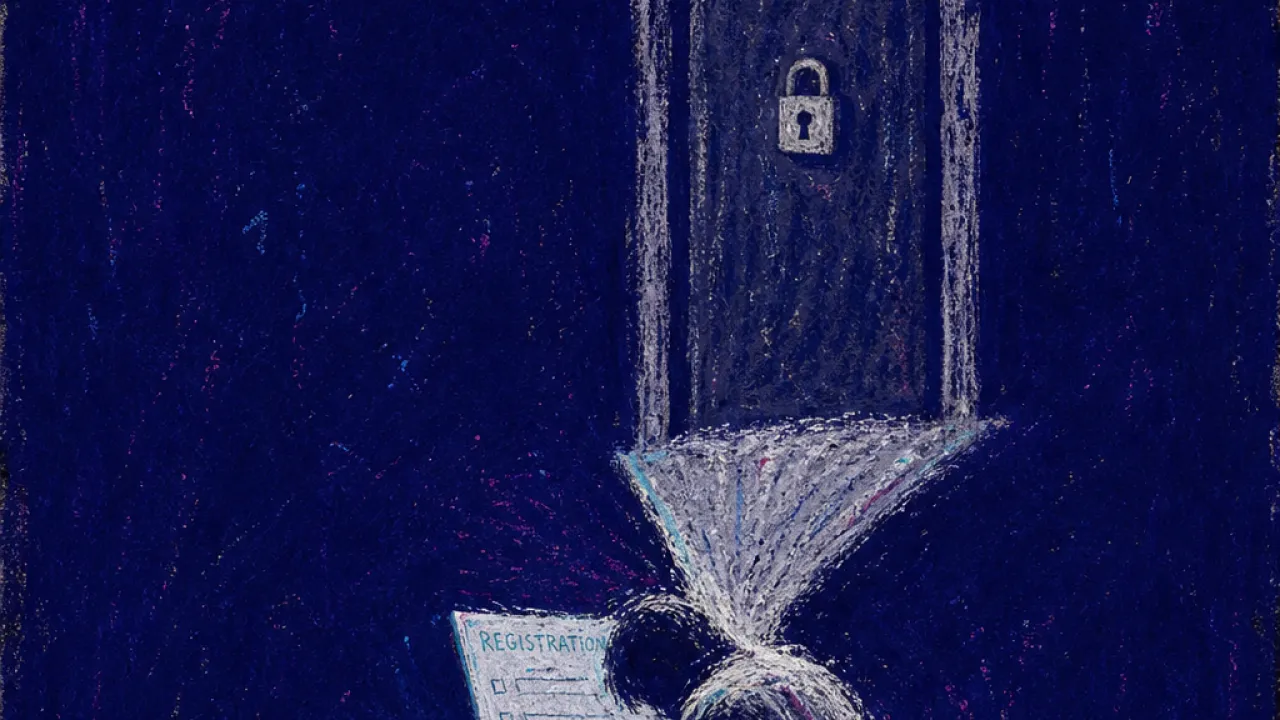
Course Waitlist Limbo — you plan your semester around a class you need, only to find yourself parked on a waitlist with a number beside your name and no clear promise attached to it. At first it feels manageable: you add a backup course, email the professor, check the registration portal, and tell yourself that seats always move around during the first week. Then the term gets closer, tuition deadlines appear, your work schedule needs fixed hours, friends lock in their timetables, and every version of your week depends on whether someone else drops. The people with control over the system stay polite but vague: the advisor says to monitor enrollment, the instructor says they can't override the cap, the department says priorities are handled centrally, and the portal refreshes into the same static number. You start building two lives at once, one where you get into the course and stay on track, another where you scramble for credits that do not quite fit, while the university asks you to keep moving as if the missing seat is a minor detail. The exhaustion comes from being asked to make decisions around a locked door that might open, might not, and will not explain itself, much like The Hanged Man suspended from a single beam, still hanging while the world around him continues on schedule.
Why it's not you?
This is not about you being indecisive or failing to plan. Course caps, priority rules, unclear waitlist movement, and late administrative answers create a setup where your next move is controlled by systems outside your reach. The limbo has a shape, and that shape comes from blocked access, not personal weakness.
Course Waitlist Limbo in Tarot Cards
Course Waitlist Limbo puts your semester in the hands of a system that can hold you at number three for weeks without telling you what that means. The tightness in your chest while you refresh the portal is not separate from the situation; it is one way the pressure of blocked access shows up in the body. This is an environmental and structural dynamic built around scarcity, timing, and opaque control points. The Tarot Cards below reflect the outline of that suspended position without telling you what choice to make.
The seated institutional figure between two pillars, the pair of acolytes below him, and the crossed keys at his feet create a visible hierarchy of teaching and access. Reversed, that hierarchy becomes difficult to navigate: the professor cites the cap, the advisor cites registration policy, and the department cites central priority rules, while the authority symbolized by the keys remains present but functionally out of reach. You are encountering a governance structure, not merely an unhelpful individual. The reversed image makes it possible to ask where discretion actually sits, which rule is mandatory, and whether any recognized exception or substitution route exists. It also clarifies when repeated requests are circulating through roles that can communicate policy but cannot change your enrollment status.
The armored driver stands in a chariot before black and white sphinxes, with no visible reins connecting intention to movement. Reversed, the vehicle's command structure stops translating into forward progress, closely matching a semester plan that cannot move because a required seat, backup timetable, and administrative timeline remain misaligned. You may know exactly where the degree is meant to go while lacking control over the condition that permits movement. The image separates direction from traction: your academic destination can remain valid even while the current route is stalled. That distinction makes it possible to map alternate sequencing without pretending that personal determination can override a closed enrollment cap.
The large wheel turns among figures moving upward and downward, while four winged figures remain stationed in the corners with open books. That contrast maps the enrollment cycle precisely: seats circulate through drops, swaps, missed payments, and priority changes, while published deadlines provide the few fixed points around the motion. The upright wheel allows movement but does not place its timing under your command. You can use known enrollment windows and historical patterns as anchors without converting possibility into a promise. The image clarifies why a waitlist can change suddenly and why your practical safeguards still need to work if the wheel does not turn in your direction before the deadline.
The figure hangs from a single ankle beneath a fixed wooden structure, his body paused while the halo around his head remains active and bright. The scene distinguishes academic readiness from institutional access: you can be prepared to learn, organized for the semester, and clear about the requirement while the enrollment system still holds your place in suspension. The upright Hanged Man preserves a usable field of view inside the delay. You can identify which learning activities, backup credits, or prerequisite preparations remain meaningful without pretending they replace the required seat. The image keeps the blocked access external and concrete while showing that suspended enrollment does not suspend every part of your academic capacity.
The narrow path running between two towers, the dog and wolf reacting beneath the moon, and the creature emerging from dark water create a landscape where the route exists but reliable detail is limited. That atmosphere matches a registration portal that displays a number without explaining movement, odds, or timing, leaving every polite email open to interpretation. The upright Moon makes uncertainty visible without treating every imagined outcome as evidence. You can separate confirmed facts - current position, deadlines, prerequisite rules, backup availability - from projections generated by the information gap. The path remains present between the towers, but it becomes easier to recognize when another portal check supplies new data and when it only reloads the same unresolved state.
The dancing figure is enclosed by a complete laurel wreath while four witnesses occupy the corners of the image. Reversed, the apparently finished boundary no longer closes cleanly, mirroring a degree in which extensive completed work can still be held open by one required class that is offered but inaccessible. The reversed World keeps the scale of the problem accurate. The missing seat can have serious sequencing effects, but it remains one defined completion barrier rather than a collapse of everything you have learned. You can map exactly which requirements depend on the course, which milestones are delayed, and which completed credits remain fully intact regardless of the waitlist outcome.
The figure keeps two pentacles circulating inside one continuous loop while ships rise and fall behind him. That single loop mirrors the way the desired course and backup course remain operationally linked: changing one affects credits, fees, work shifts, attendance, and the viability of the other. The upright motion shows a temporary both-and strategy rather than an immediate forced choice. You can keep both pathways alive while tracking the point at which one begins to damage the other. The card makes the decision dynamic and time-sensitive, clarifying that preserving optionality is useful only while the practical load remains containable.
Two figures move through snow beneath an illuminated stained-glass window containing five pentacles, placing institutional resources visibly above people who cannot presently use them. The course is offered, the instructor is teaching, and enrolled students can access the learning, yet your waitlist position keeps the same resource nearby but unavailable. The upright scene validates material exclusion without turning it into a statement about academic worth. You are dealing with a seat barrier, not proof that you are unqualified or outside the degree's legitimate audience. The lit window also keeps support channels visible: advising, substitutions, provisional attendance, and departmental escalation can be assessed as concrete access routes, even when none can guarantee admission.
A standing figure holds scales in one hand and distributes coins with the other to two kneeling recipients. Reversed, the same arrangement exposes a concentrated allocation structure: the university controls both the scarce seats and the rules for assigning them, while you receive only a queue number and partial explanations about priority. The image does not require assuming personal bias or misconduct. It reveals a power asymmetry built into the process, where access can be procedurally valid yet still opaque to the person organizing a semester around it. You can separate the existence of priority rules from the quality of their communication and identify which consequences - delayed credits, extra tuition, or altered graduation timing - the allocation system transfers onto you.
The worker leaning on his tool studies seven pentacles accumulated on and beside a slow-growing plant. The scene captures the frustrating interval after effort but before a reliable return: you registered on time, contacted the relevant people, and built contingency plans, yet the seat remains outside your control. The upright evaluation does not demand either immediate withdrawal or endless patience. It makes timing measurable through available evidence: queue movement, departmental patterns, attendance cutoffs, and the shrinking usefulness of the backup. You can assess whether the wait still protects a realistic outcome or whether it has become an attention cost attached to a static process.
The blindfolded figure stands bound among eight swords, separated from a distant structure by wet, uneven ground. That physical enclosure mirrors the gap between being admitted to a program and being able to access the specific course needed to progress within it. Available catalogue entries do not automatically become viable substitutes when requirements and schedules surround the decision. The upright image also shows that the enclosure has gaps. You can sort the barriers by type: a hard prerequisite, a temporary cap, an advisor-approved substitution, or a schedule conflict each creates a different academic limit. Seeing those distinctions does not erase the blocked seat, but it prevents the institution's narrow pathway from being misread as a failure of your ability or effort.
No cards available for this filter.
Course Waitlist Limbo in Tarot Card Reading Insights
Course Waitlist Limbo is the kind of stalled academic setup that people often bring into readings when the portal, the professor, and the deadline all point in different directions. The shift here is from the cards themselves to what appeared when others sat with this same suspended question. Tarot Reading Insights from related sessions.