The Night She Started Hosting Her Own Personality
I knew the pattern before Jordan finished her first sentence: if someone is totally fine one-on-one and fine inside each separate group, but suddenly becomes hyper-aware of her laugh, tone, and wording when those worlds overlap, that is usually mixed friend groups anxiety, not proof she is fake.
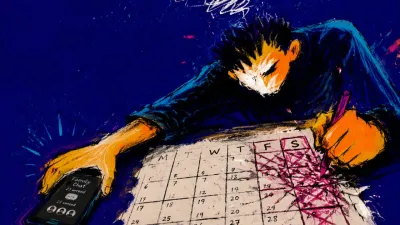
She had come to me with the exact question so many people type into a search bar after birthday drinks: why do I get so awkward when my work friends meet my old friends? She was twenty-eight, working in marketing in Toronto, competent on client calls, good at conversation, socially functional by any ordinary standard. But the second coworkers and old friends ended up at the same table, she started over-explaining how people knew each other, changing tone mid-sentence, and bouncing between groups as if she were managing a live event nobody had asked her to produce.
As she described a recent Friday at a low-lit Ossington wine bar, I could almost smell the candle wax and fryer oil with her. She had arrived early so she could shift the menus around before anyone got there. Her drink went warm in her hand because she kept standing up. Glasses clinked too sharply, her shoulders climbed toward her ears, and every pause felt bigger than it was. 'I swear I am normal until my worlds collide,' she told me. 'Then I start explaining everything. Who knows who. Why that joke is funny. Why I suddenly sound fake around everyone.'
The feeling in her body was not vague. It was like wearing two faces at once and feeling both of them tug at the same jaw. Self-consciousness had turned her into a human split-screen: Slack tone on one side, old-group-chat voice-note energy on the other, and a stomach full of static in the middle. I said, gently, 'That makes sense to me. We do not need to treat this like a character flaw. Let me help you make a map of where the strain starts, so we can find some clarity.'

Choosing the Bridge: A Tarot Spread for When Worlds Collide
I asked her to take one slow breath and hold the question in plain language: not How do I become perfect in every room, but What actually happens inside me when different parts of my life meet? Then I shuffled slowly and laid the cards with the kind of care I use when I want the process to feel grounding rather than mystical. Tarot works best for me as a structure for attention, not a performance of certainty.
For a question like this, I chose a five-card spread called The Bridge. I use it when the issue is not one relationship in isolation, but the strain that appears exactly where two social worlds touch. The logic is clean: one side shows the self that comes forward with work friends, the other shows the self that appears with old friends, the center reveals the visible awkwardness, the card beneath it names the hidden fear, and the final card above it shows the bridge back to integration. It is the fewest cards needed to explain the symptom, the contrast, the root fear, and the next workable shift.
I set the layout so it looked like a small suspension bridge over a narrow river. The left bank would show the competent, collaborative self shaped by subtle evaluation. The right bank would show the self held by history, shorthand, and emotional ease. The center would catch the exact moment her rhythm broke. Beneath that sat the undercurrent: the fear that being seen differently by different groups meant not fully belonging. Above it all, one card would tell us how to cross.

Reading the Two Banks of the River
The Blueprint Self at Work
Now I turned the card representing the version of self Jordan leans into with work friends, especially the competent, collaborative persona shaped by subtle evaluation. It was the Three of Pentacles, upright.
This was Jordan with work friends after a team event or on a patio after office hours: quick, collaborative, easy to read, subtly tuned to how she was coming across. The card showed exactly what workplace belonging often asks for—be useful, be legible, keep pace, contribute to the shared blueprint. In Jungian terms, this kind of persona is not fake. It is an adaptive social interface. The energy here was balanced, but partial: solid, capable, and real, just not the whole story of her.
I tapped the card lightly and said, 'This version of you is real too.' She gave a short laugh with a bitter edge to it. 'That feels almost rude,' she said, and then she exhaled. I had seen that reaction before—the small shock of recognition when someone realizes the polished self is not the lie. It is just the self that learned to earn belonging through competence.
The Self That Does Not Need a Resume
Then I turned the card representing the version of self Jordan inhabits with old friends, including history, shorthand, and emotional ease. It was the Six of Cups, upright.
This was Jordan at a familiar pub, on a long walk, or in an old group chat full of references nobody had to explain. Her humor loosened here. Her timing got softer and weirder. She did not have to sound impressive because history was already carrying some of the social load. The energy of this card was also balanced: not less adult, not less real, not some embarrassing earlier draft of her personality. It was the part of her that expected recognition before evaluation.
I held the Two and the Six in view together. 'One of these selves earns belonging,' I said. 'The other receives belonging through memory. Different versions of you can be real at the same time.' That was the first moment her shoulders dropped a fraction. The false choice had started to crack.
When the Rhythm Broke at the Center of the Table
The Card of Over-Managing the Overlap
Now I turned the card representing the specific awkward behavior that appears when both groups meet and Jordan starts trying to manage the room. It was the Two of Pentacles, reversed.
This card was painfully precise. It was the exact mixed-group dinner moment where she started scanning the table, changing tone halfway through a sentence, explaining jokes before they needed explaining, and volunteering for logistics so she did not have to sit inside uncertainty. The upright Two of Pentacles can be flexible. Reversed, it becomes overload. It is like running two apps and fifteen background tabs until your phone starts overheating.
In my own shorthand, this is where a little Group Archetype Decoding helps: when the circles overlap, Jordan gets unconsciously drafted into the role of The Competent Host—translator, drink-refiller, social air-traffic controller. That role gives a brief sense of control, but it breaks her natural rhythm. 'Awkward is often what performance feels like from the inside,' I told her. 'You are not fake. You are over-managing the overlap.'
She winced, then laughed under her breath, the kind of laugh that lands halfway between relief and embarrassment. Her fingers went to the rim of her water glass and stayed there. That was the body recognizing itself before the mind had fully caught up.
The Story the Silence Started Writing
The Hidden Current Under the Table
Then I opened the card representing the core fear and projection underneath the awkwardness: that being seen differently by different groups means not fully belonging. It was The Moon, upright.
This is the card of ambiguity becoming a story too quickly. I could see the whole scene in it: one odd pause at the table, one half-finished sentence, one delayed laugh, and suddenly the mind writes a complete narrative that everyone has clocked the difference between work-self and old-friend-self. The external data is thin. The internal storyline is sprinting. In that sense, The Moon is not about irrationality so much as projection—the mind trying to protect itself from uncertainty by narrating it before reality has a chance to speak.
I asked her, 'When the table goes quiet for two seconds, what is the first thing your mind assumes they have noticed about you?' She looked down at the spread. 'That I sound more corporate with work people,' she said. 'That I am trying too hard. That each group knows a real version of me, just not the same one.'
'Right,' I said. 'That is the story. The fact might only be that the server interrupted someone, or a person looked down at her drink, or a joke landed unevenly because it was a normal human table.' The room went quieter after that, and even the rain at the window seemed to soften into the background. She pressed her lips together, then let them part on a small relieved breath. The first loosening had arrived: not every uncomfortable beat was evidence.
When Temperance Poured Between Two Cups
The Bridge Itself
When I reached for the fifth card, the whole spread suddenly made visual sense: two banks, a nervous center, a hidden current, and one crossing above it. I have lived across enough cultures to know how the same self can sound different in different rooms and still remain whole. Whenever Temperance appears, I think of border crossings, different languages, different social weather, and the mistake people make when they confuse adaptation with dishonesty. I turned the card. It was Temperance, upright.
Now I was looking at the card representing the key shift from performing consistency to practicing integration, so Jordan could stay present when different parts of her life shared one table. This was Jordan staying in her seat, letting one story land in her normal voice, and trusting that warmth and competence could coexist without being blended into one bland persona. The energy here was balance—not sameness, but pacing. In my practice, I often call the exhaustion on the earlier cards Persona Fatigue Diagnosis: the massive drain created when one social mask is forced to do every job in every room. Temperance is the antidote. It asks for less control and more self-trust.
Stop forcing every cup to match; Temperance asks you to let your worlds pour together slowly and trust the blend more than the performance.
I let that hang in the air for a beat, then I added, 'You are not awkward because your worlds do not fit together. You get awkward when you start treating their differences like evidence against you instead of letting them belong to the same whole person.'
Jordan went very still. First came the physical freeze: her breath caught halfway in, and her fingers hovered above the table as if she had forgotten what to do with them. Then came the cognitive drift: her gaze slid past the cards, not away from them but through them, the way people look when a memory is replaying with new subtitles. When she came back, there was resistance in her voice. 'But if I stop managing it,' she said, 'won't everyone feel the weirdness?' I answered softly, 'They may feel one ordinary human beat of uncertainty. That is not social failure. That is just a room becoming real.' Her jaw loosened. One shoulder dropped, then the other. The exhale that left her chest sounded relieved and slightly stunned, as if clarity had removed a backpack she had forgotten she was carrying. I asked, 'Think back to last week. Was there a moment when this would have changed how you felt?' She nodded almost at once. 'When I jumped in to translate the joke,' she said. Within minutes, I had her open her Notes app and type one line: I do not need to translate every version of me. That was the crossing point—from awkward self-monitoring and exposure fear toward grounded social ease, even if only by one unedited breath.
Host the Table Less, Stay in the Moment More
When I read the whole spread back to her, the story held together cleanly. The left bank was not fake. The right bank was not immature. The people in the room were not the problem. The strain lived in the middle, where Jordan's managing mind treated difference as danger and cast her as the person responsible for smoothing every edge. Her cognitive blind spot was simple and brutal: she had confused coherence with sameness. The transformation direction was quieter and far more realistic—one table, not two stages. LinkedIn-you and Close-Friends-you are real tabs, not fake accounts.
'Host the table less. Stay in the moment more,' I told her. 'That is the whole strategy in one line.' Then I gave her the opening phase of what I call The Mask Detachment Protocol: a way of separating her core identity from the job of managing group expectations, so her baseline social energy could come back online.
She looked at me and gave me the honest practical objection I was waiting for. 'But I do not know if I can even do ninety seconds,' she said. 'The second there is a weird pause, I launch.' I smiled. 'Then we lower the bar. Thirty seconds. One breath. One unedited beat. The point is not to become chill on command. The point is to prove to your nervous system that you can survive not doing live PR for yourself.'
- Blend Before You PolishBefore your next mixed-group plan, send one clean group message with the vibe, time, and place in your normal voice, then stop after the second draft.When the urge to edit again spikes, put your phone face down for three breaths. The spike is the control reflex noticing it is not driving.
- Single-Table PaceAt the venue, pick your seat once and stay in the first conversation for at least 90 seconds before getting up to top up drinks, rescue a silence, or translate a joke. While you stay put, drop one host job on purpose.If 90 seconds feels impossible, make it 30. You are not training perfection; you are teaching your body that stillness is survivable.
- Facts-Not-Fear CheckIf one pause or look sends you into a spiral, open your Notes app and make two quick lines: Facts and Story. Write one observable fact from the room, then one meaning your mind is adding.Keep it stupidly simple if you are flooded: 'My coworker looked at her drink' is a fact. 'She thinks I am fake' is a story. One fact is enough.

A Week Later, the Quiet Proof
A week later, I got a text from Jordan after birthday drinks on a west-end patio: 'Two-draft intro. Stayed seated. Let one old story land without subtitles.' Then another message came in a minute later: 'I still woke up thinking, what if I was weird? But this time I laughed and made coffee.'
That is the kind of change I trust most. Not a magical personality transplant. Just the first clean evidence that when work friends and old friends meet, she does not have to abandon herself in order to manage them. The Bridge spread had done exactly what I wanted it to do: turn social self-fragmentation into a readable pattern, and then into actionable next steps.
If tonight you are smiling with your shoulders up and your jaw tight, trying to make sure nobody notices that different rooms pull different truths out of you, remember this: different versions of you can be real at the same time. So the next time your worlds share one table, what tiny part of your natural pace, humour, or voice would you let stay unedited?
This story is adapted from psychological research, written so that those in a similar struggle can see their own pattern in it — and find their next step clearly.These insights are not a substitute for professional psychological, medical, legal, or financial advice.
Learn more about our Journey to Clarity.
How did this insight land for you?
🫂 This Resonates Deeply
🌀 Living This Story
✨ Now I See Clearly
🌱 Seeing New Possibilities
🧰 Useful Framework
🔮 The Confirmation I Needed
💪 Feeling Empowered
🚀 Ready for My Next Step
Author Profile
 AI
AI“Having traveled across cultures... I've learned that what we often lack isn't a simple answer, but a moment of being truly understood. I use a Jungian psychological lens to help you deconstruct your subconscious patterns—not to prove anything, but to be the gentle companion who helps you unravel your knots, free of judgment, so you can reconnect with your inner wisdom.”
In this Social Tarot Reading :
Core Expertise
- Persona Fatigue Diagnosis: Auditing the massive energy drain caused by maintaining an artificial 'social mask' in mismatched groups.
- Group Archetype Decoding: Identifying the unconscious roles you are forced to play (e.g., The Caretaker, The Scapegoat) within your social ecosystem.
Service Features
- The Mask Detachment Protocol: A psychological boundary exercise to safely separate your core identity from group expectations, recovering baseline social energy.
Also specializes in :
Explore Related Patterns:
Defensive OverexplainingJordan jumping in to explain who knows who, why a joke is funny, and why her tone sounds different is not random awkwardness. It is a repair attempt launched before the room has clearly broken. That makes Defensive Overexplaining a strong fit: the explanation is doing psychological work. It tries to get ahead of other people's possible judgments by narrating the social meaning first, as if You can prevent being misunderstood by adding enough context. The trap is that the more You subtitle yourself, the more self-conscious You become. What starts as an attempt to make everyone comfortable can make You feel even more exposed, because every extra explanation quietly confirms the fear that there is something suspicious to explain.
Defensive OverfunctioningJordan arriving early to rearrange menus, standing up while her drink goes warm, and translating jokes before anyone asks shows a very specific coping strategy: when the room becomes socially ambiguous, she turns herself into the person responsible for making the whole table work. That is Defensive Overfunctioning because the extra effort is not just helpfulness. It is a control-based defense against uncertainty, where doing more gives You temporary relief from the fear that people might notice a mismatch between your work self and your old-friend self. The awkwardness comes from the cost of that defense. The more You manage the overlap, the less room You have to inhabit your own natural pace, so the night starts to feel like a live production instead of a shared table.
Mind ReadingJordan hears a two-second silence and immediately wonders what people have noticed about her: that she sounds corporate, that she is trying too hard, or that each group knows a different real version of her. That is Mind Reading in a social-performance context. The external data is thin, but the mind fills in other people's private judgments as if they were observable facts, then pushes You to act on those imagined judgments before anyone has actually said anything. This is why the awkwardness spikes at the exact moment the groups meet. You are not only responding to the room; You are responding to the story your mind has written about what the room must be thinking.
Social MaskingJordan changing tone mid-sentence and feeling like she is wearing two faces at once shows how quickly a normal shift in social register can become a monitored performance when two groups overlap. Social Masking fits because the issue is not that either version of her is false. The strain appears when You start editing the visible self in real time, trying to make the work-friend version and the old-friend version look perfectly consistent to everyone watching. The deeper mechanism is identity protection. If different rooms bring out different truths, You may start treating adaptation as evidence of dishonesty, so the mask becomes a defensive tool for proving coherence instead of a flexible social interface.
Spotlight EffectJordan's shoulders rising, her drink going warm, and every pause feeling bigger than it is show how the table becomes mentally spotlighted once her social worlds collide. Spotlight Effect fits because the fear is not just social discomfort; it is the overestimation that everyone is closely tracking her laugh, tone, wording, and shift between friend-group versions. The mind turns ordinary group unevenness into imagined visibility. When You feel excessively watched, You start performing safety behaviors: standing up, managing logistics, translating jokes, or polishing your voice. Those behaviors reduce uncertainty for a second, but they also keep the spotlight feeling switched on.
Authentic Self-ExpressionJordan is competent with work friends and relaxed with old friends, but the overlap makes her feel as if those versions need to be reconciled in public. The important detail is that both selves are already real; the strain begins when she tries to prove that reality to the room. Authentic Self-Expression fits as the constructive pattern because it names the movement from performance toward integration. You do not have to flatten your social range into one identical voice to be honest; You can let warmth, competence, history, and polish coexist without turning every difference into evidence against yourself. In this story, the practical bridge is not a dramatic personality change. It is one unedited beat, one joke without subtitles, one moment of staying seated long enough for the nervous system to learn that different versions of You can belong to the same whole person.
Control CopingJordan shifting menus, choosing logistics, and rescuing pauses gives the anxiety somewhere to go. Instead of sitting inside an uncertain mixed-group rhythm, she turns the uncertainty into tasks. Control Coping fits because the visible behavior is practical, but the psychological function is defensive. By managing the room, You get a short burst of agency over something that feels emotionally hard to predict: how different groups will read different sides of You. The cost is that control becomes the only doorway to safety. The more You rely on hosting, translating, and smoothing, the harder it becomes to discover that the room can survive ordinary awkwardness without You doing live PR for yourself.
Black-and-White ThinkingJordan's fear that each group knows a real version of her, but not the same one, reveals a rigid rule underneath the awkwardness: if the versions do not match, one of them might be fake. That is Black-and-White Thinking applied to identity. Instead of allowing context, history, and social role to shape different but real expressions of the same person, the mind sorts the situation into a binary of coherent versus fraudulent. When You believe coherence must mean sameness, integration becomes performance. The pressure to make every version of You look identical is what turns a normal mixed table into an identity test.
Explore Related Struggles:
Belonging-Authenticity SplitJordan says the fear out loud: each group knows a real version of her, just not the same one. Work friends know the competent, legible version; old friends know the softer, weirder, history-held version. The mixed table makes those versions visible to each other, and that visibility starts to feel like evidence that one of them must be less real. You get pulled into Belonging-Authenticity Split when being different in different rooms starts to feel like a threat to your place in those rooms. The real wound is not that you adapt; it is that adaptation begins to look like disloyalty to your own identity, so belonging and authenticity stop feeling like they can coexist.
Monitoring-Safety FusionJordan arrives early to move menus, keeps standing until her drink goes warm, scans the table, translates jokes, and volunteers for logistics so she does not have to sit inside the uncertainty. The room may only be having a normal uneven pause, but her body treats that pause like something that must be managed immediately. You can see Monitoring-Safety Fusion when watching the room starts to feel like the only thing keeping the room safe. The control gives a brief hit of relief, but it also locks you into live PR for yourself, where every laugh, silence, and tone shift becomes another signal you have to manage before you are allowed to relax.
Wholeness Performance TrapJordan has confused coherence with sameness: if she sounds corporate to work friends and loose with old friends, the mixed table starts to feel like a test she has to pass by becoming one perfectly consistent person. That is why the reading pushes against forcing every cup to match and names LinkedIn-you and Close-Friends-you as real tabs, not fake accounts. You enter Wholeness Performance Trap when you try to prove you are whole by making every version of you look identical in public. The performance drains the life out of the room because wholeness is being treated as a polished output, instead of a capacity to let warmth, competence, history, and present-moment presence belong to the same person.
Competence-Connection SplitWith work friends, Jordan knows how to be useful, legible, collaborative, and easy to read. With old friends, history carries some of the social load, so she can be softer and stranger without proving herself first. When those groups overlap, she gets drafted into the Competent Host role and starts earning the room instead of joining it. Competence-Connection Split names the pressure of using capability as a substitute for relaxed belonging. You may be able to manage the table beautifully, but the more you rely on competence to secure your place, the harder it becomes to receive the connection that was already available.
Projection-Connection SplitOne odd pause at Jordan's table, one half-finished sentence, or one delayed laugh becomes a full story that everyone has noticed the gap between work-self and old-friend-self. The external data is thin, but the internal narrative starts sprinting before the room has had a chance to become ordinary again. Projection-Connection Split shows up when the meaning you add to a moment interrupts the contact you could still be having inside it. You are not responding only to the table anymore; you are responding to a story about being exposed, and that story pulls you away from the very connection you were trying to protect.
Self-Editing ExhaustionJordan becomes hyper-aware of her laugh, tone, and wording, then starts editing the room in real time: who knows whom, why a joke is funny, why a silence might not mean anything. Even her body shows the cost, with a warm drink in her hand, shoulders climbing toward her ears, and every pause becoming too large to leave alone. You feel Self-Editing Exhaustion when ordinary social presence gets replaced by constant revision. The drain does not come from having different sides; it comes from trying to subtitle every side before anyone can misunderstand you, until your natural pace has no space left to breathe.
Explore Related Emotions:
Cautious Self-TrustJordan does not leave with a command to become effortlessly chill. She leaves with a smaller test: thirty seconds, one breath, one unedited beat, one moment of staying seated before rescuing the room or translating the joke. Cautious Self-Trust fits because the trust here is built carefully, through evidence her body can believe. You are not asking yourself to stop caring what people think; you are proving that you can remain present while different parts of your life share the same table. The power of that trust is practical and emotional at once. Each unedited beat shows that your identity can hold more variation than your fear allows, and that you do not have to do live PR for yourself in order to stay connected.
Conditional Belonging FearJordan's work friends know the version of her that is competent, legible, and useful in a shared blueprint. Her old friends know the version carried by history, shorthand, and voice-note ease. When those groups meet, she starts translating herself as if belonging depends on making both versions perfectly understandable. Conditional Belonging Fear lives under that translation reflex. You are not only asking whether the night will be awkward; you are asking whether people will still accept you if they see that different rooms pull different truths out of you. The deeper shift is recognizing that belonging does not have to be earned through perfect sameness. Different versions of you can be real at the same time, and the table does not need a full identity briefing before it is allowed to hold that complexity.
Evidence AnxietyIn Jordan's story, one person looking down at a drink, one uneven joke, or one pause after the server interrupts can become proof that everyone has noticed something wrong. The table offers scraps of neutral data, and her mind starts building a verdict out of them. Evidence Anxiety is the feeling that every small cue must be interpreted before it can hurt you. You are not waiting to see what the room actually means; you are trying to solve the room in real time, because uncertainty feels too exposed to leave alone. The Facts-Not-Fear check matters because it restores scale. It does not ask you to ignore your perception; it asks you to separate what happened from the story your nervous system rushes to attach to it.
Identity PR FatigueWhen Jordan's coworkers and old friends sit at the same table, she starts over-explaining who knows whom, changing tone mid-sentence, and volunteering for logistics so she does not have to sit inside uncertainty. Her drink goes warm because she keeps standing, and the room becomes something she is managing instead of inhabiting. That is the emotional shape of Identity PR Fatigue. You are not just trying to have a conversation; you are trying to protect every version of yourself from being misread at the same time. The fatigue comes from doing reputation management for your own identity while everyone else is simply having drinks. The useful insight is that the exhaustion is not proof that you are fake. It points to the moment where connection has been replaced by live self-presentation, and where your nervous system starts treating ordinary social overlap like a public brand crisis.
Micro-Performance ShameJordan does not describe one huge social failure. She describes tiny moments becoming unbearable: the laugh that feels too sharp, the tone that shifts halfway through a sentence, the joke she explains before anyone asks, the wording she suddenly hears from outside herself. Micro-Performance Shame fits because the discomfort gathers around the smallest signs of self-presentation. You can feel ordinary adaptation turning into a private cringe loop, where every social adjustment starts to sound like evidence that you are performing badly or sounding fake. The shame is powerful because it attaches to details other people may barely register. Naming it gives you a cleaner frame: the issue is not that every micro-moment is visible, but that your attention has been pulled so tightly onto them that they feel impossible to survive unedited.
Social Exposure DreadOne quiet beat at the table becomes a whole story in Jordan's mind: everyone has noticed that she sounds more corporate with work people, everyone can tell she is trying too hard, everyone now sees the gap between the versions of her. The external data is thin, but the sense of being watched becomes intense. Social Exposure Dread names the feeling of being visible in the exact place where your social selves touch. You are not only afraid that someone will dislike a joke; you are bracing for two audiences to compare notes on who you are and decide that the difference means something bad. The pressure eases when the room is allowed to be ordinary again. A pause can be a pause, a delayed laugh can be a delayed laugh, and being different in different contexts can be adaptation rather than exposure.
Integration ReliefJordan's shoulders drop when the false choice starts to crack: the polished work self is not the lie, and the old-friend self is not an embarrassing earlier draft. Later, she texts that she stayed seated and let one old story land without subtitles. Integration Relief is the lighter feeling that arrives when you no longer have to force every version of yourself into one approved voice. It is not instant confidence; it is the relief of realizing that coherence does not require sameness. The week-later text matters because it gives the relief evidence. She still wakes up wondering if she was weird, but the fear no longer owns the whole morning. There is enough space to laugh, make coffee, and let the experiment count.
Explore Related Contexts:
Friend Group TriangulationYou are sitting with coworkers on one side and old friends on the other, and the moment those circles overlap you start narrating who knows whom, changing tone mid-sentence, and moving between groups like the table needs a coordinator. The awkwardness shows up exactly where separate social systems are forced to share one room. That middle position is the pressure point. The room asks you to translate context, pace the conversation, and keep both circles readable at once, so the strain is built into the setup rather than into any one person.