Too Many Future Doors

A grounded look at stalled grad applications, linked Tarot Cards, and Tarot Reading Insights from similar admissions-pressure readings.

Grad Application Paralysis
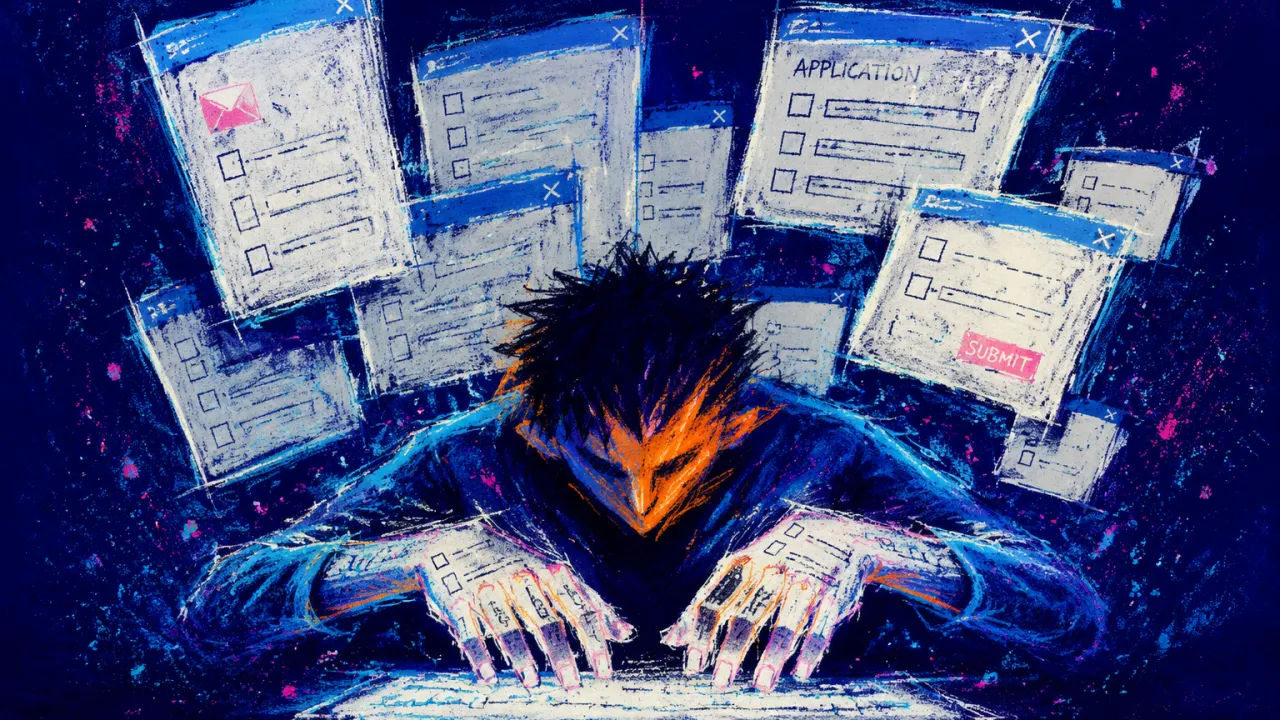
A hunched figure at a desk as glowing application windows press inward, leaving marks across the hands and shoulders

What is this situation?

Grad Application Paralysis — you open your laptop to work on applications and the screen immediately becomes a map of competing demands: program pages, funding notes, deadlines, test score rules, transcript requests, personal statement drafts, writing samples, recommendation reminders, and Reddit threads full of people who seem more prepared than you. It starts as a practical task, maybe one quiet evening at your desk or in a campus library, but it quickly turns into a system where every choice creates three more choices: which schools are realistic, which are worth the fee, which faculty names to mention, which version of yourself belongs in the essay, which recommender might reply in time. The people around you may mean well, but their questions keep landing like pressure points: "Where are you applying?" "Is that program competitive?" "Have you finished your statement yet?" Meanwhile, the application portals stay open like unfinished rooms, each one asking you to translate years of work, doubt, ambition, money, and timing into tidy boxes before midnight. You are not just filling out forms; you are being asked to make a high-stakes identity decision through clunky systems, vague criteria, and invisible admissions expectations. The days pass with tabs left open, drafts renamed again and again, email refreshes for recommenders, and a growing sense that starting one task means exposing everything still unresolved, much like the Seven of Cups, where one figure stands before too many floating options and none of them are solid enough to hold.

Why it's not you?

The issue is not that you're lazy, unserious, or incapable of making a plan. Grad applications are built from opaque rules, expensive choices, dependent timelines, and high-pressure self-presentation, all stacked into one season. That kind of system can make even a capable person stall.

Grad Application Paralysis in Tarot Cards

Grad Application Paralysis often shows up as a desk full of open tabs, portal logins, half-finished essays, and decision charts that still don't tell you where to go. The tightness in your chest when another deadline reminder lands is part of the body cost of being asked to choose under pressure. This is an environmental, structural dynamic built from opaque admissions rules, recommendation dependencies, money questions, and comparison noise. The Tarot Cards below reflect the outline of that pressure without telling you what to decide.

The Magician
Reversed
Four suit tools lie on a single worktable beneath a figure whose raised and lowered hands normally connect intention with material action. Reversed, this complete apparatus loses coordination: transcripts, experience, writing samples, research interests, references, and program knowledge may all be present, yet they do not assemble into a personal statement or submission that feels authoritative enough to send. The tools remain real and differentiated, which prevents the stalled output from being read as an empty skill set. The image exposes a deeper application belief that resources only count once they form a flawless academic identity, creating a gap between what you already possess and what the admissions performance allows you to recognise as usable.
The Hierophant
Upright
Crossed keys, two attending figures, and an institutional authority seated between stone pillars create a scene governed by formal access, inherited convention, and approved ways of presenting knowledge. Graduate admissions places you before a comparable structure: official requirements are published, but successful statements, faculty contact norms, and markers of fit often depend on a hidden curriculum more accessible to applicants with insider guidance. The keys remain in the foreground, indicating that the system has legible conventions even when they are unevenly distributed. The image allows you to separate academic ability from institutional literacy, showing how paralysis can arise when you are expected to perform familiarity with admissions codes that no portal clearly explains.
The Lovers
Reversed
The two figures, the mountain between them, and the overseeing angel place choice inside a larger question of alignment; in reversal, those elements no longer form one coherent direction. Program prestige, funding, research fit, location, career utility, and the life you actually want can begin pulling the application decision toward incompatible standards. The reversed scene exposes why a school list cannot always be solved by adding more rankings or comparison columns. You may be attempting to make one selection carry several conflicting identities at once, so narrowing the list feels less like administration and more like abandoning a possible version of your future.
The Chariot
Reversed
Two differently coloured sphinxes sit before an armoured driver who holds no visible reins, while a structured city stands behind him. Reversed, the image captures a graduate plan pulled by incompatible motives: intellectual interest, employability, prestige, affordability, family expectations, and the wish to escape a current situation may all demand different destinations, leaving you equipped for movement but unable to coordinate it. The driver and vehicle remain assembled, so capability has not disappeared. What is obstructed is governance across competing priorities, and the application system intensifies that conflict by asking for a single confident narrative before those priorities have been reconciled into a direction you can actually steer.
Justice
Reversed
Justice's scales, sword, and squared throne are designed to make standards visible; in reversal, that stabilizing arrangement is turned away from transparent evaluation. Admissions portals still demand exact documents and categorical answers while the criteria used to weigh research potential, fit, or personal statements remain difficult to inspect. This asymmetry makes every application choice feel vulnerable to an invisible ruling. You are expected to present a precise case without access to the full rubric, so repeated editing and second-guessing become understandable responses to an accountability system that operates more clearly for evaluators than for applicants.
The Hanged Man
Reversed
One bound foot suspends a figure from living wood while his free leg remains folded and a halo marks awareness without physical progress. Reversed, the suspended state loses the usefulness of a defined pause: recommendation letters, transcript processing, funding information, and unresolved drafts keep you waiting, but the application clock continues to move outside the frame. The figure still has a clear vantage point, so the scene distinguishes forced delay from total helplessness. It reveals how timing paralysis develops when tasks under your control and dependencies controlled by institutions or recommenders remain mixed together, causing every waiting period to feel like evidence that the whole application must stop.
The Moon
Upright
The dog and wolf respond differently to the same moonlit path, while a crayfish emerges from the water and the distant route passes between two towers. Your internal response to graduate admissions can become similarly divided: one part treats every unknown criterion as danger, another wants to proceed, and comparison stories rising from online spaces continually add new material to interpret. The path is physically present even though its lighting is incomplete. The image reveals that uncertainty has become an emotional environment surrounding the application, making assumptions feel as concrete as published rules and causing each ambiguous signal to reopen the entire question of readiness.
Judgement
Reversed
The angel's trumpet sounds above figures rising from open coffins toward a shared reckoning; in reversal, the call does not translate cleanly into emergence. A personal statement can place you in a similar bind by demanding that years of study, work, doubt, and ambition become one authoritative account of who you are and what comes next. The blocked rising exposes self-presentation as more than a writing task. You are being asked to declare a coherent academic identity before that identity necessarily feels settled, so revision can become an attempt to secure permission for a future self rather than a finite act of communication.
The World
Reversed
A dancer framed by a complete wreath holds two batons while four figures occupy the stable corners of the image. Reversed, that architecture of completion remains present but inaccessible: portals sit at ninety percent, statements return for another edit, and one missing upload or recommendation prevents the application season from becoming a closed cycle. The wreath still defines the boundary of the task, which means the workload is not literally endless. The blocked closure comes from diffuse completion criteria and repeated reopening, where each review generates another possible improvement and every unfinished portal continues consuming attention even when little substantive work remains.
Seven of Cups
Upright
The shadowed observer faces cups containing treasure, danger, admiration, transformation, and an obscured figure, all suspended in the same cloud. A graduate application can activate this entire inner gallery by making each program represent not only a school, but also legitimacy, escape, status, belonging, risk, or a new version of you. The upright scene allows those projections to become visible instead of treating them as objective program facts. You may be unable to choose because the application list is carrying emotional meanings that no ranking, deadline tracker, or admissions forum can resolve on its own.
Two of Pentacles
Upright
Two ships rise on separate waves behind a figure who keeps two pentacles moving through one continuous loop. Each graduate program behaves like one of those moving loads, carrying its own essay prompt, faculty references, document rules, and deadline, while all applications draw from the same limited pool of study time. The figure's balance shows that some coordination capacity is available, but the infinity loop exposes the cost of keeping every school active at once. You can remain busy adapting materials between portals without producing a stable finished version, making application study feel perpetual even when the individual tasks are concrete.
Reversed
Two pentacles move inside one continuous loop while ships behind them occupy different points on unstable waves; in reversal, the cycles no longer stay synchronized. School deadlines, transcript processing, test scores, funding forms, and recommender availability can each be individually known while still refusing to form one reliable calendar. The reversed rhythm exposes sequencing as the bottleneck. You may move one task forward only to discover that it depends on an earlier decision or a slower external channel, so the schedule repeatedly reshuffles and urgency spreads across the entire application set.
Three of Pentacles
Reversed
Three pentacles sit above a cathedral worksite where a craftsperson, a clerical figure, and a person holding plans must coordinate around one piece of work. Reversed, this collaborative structure becomes unreliable: recommenders reply late, advisors provide vague feedback, faculty-fit questions remain unanswered, and your application cannot be completed entirely through individual effort. The plan and built structure are still present, so the application has not lost all coherence. The blockage lies at the interfaces between contributors, revealing how graduate admissions makes you responsible for a final product whose crucial evidence and timing are partly controlled by people with different priorities and levels of availability.
Five of Pentacles
Upright
Two people move through snow outside an illuminated window containing five pentacles, placing visible institutional resources behind a boundary they have not crossed. Application fees, test costs, transcript charges, uncertain funding, and the possibility of future debt can make graduate programs appear academically available while remaining materially difficult to access. The lighted window confirms that support and institutional resources exist, but the exterior position exposes the access gap. You may postpone choosing or submitting because every application fee converts an uncertain educational possibility into an immediate financial loss, forcing affordability and aspiration into conflict before admissions decisions are known.
Eight of Pentacles
Reversed
A craftsperson sits at a bench chiselling one pentacle while completed pieces are displayed in a vertical row and the city remains at a distance. Reversed, this repeatable craft process becomes trapped at the workbench: personal statements are renamed and rewritten, sentence-level polishing replaces submission, and each revision raises the standard that the next version must meet. The tools, materials, and accumulated work remain visible, so the blockage is not a lack of preparation. The scene reveals how an application essay can become a performance of perfect academic identity, causing useful revision to lose its stopping rule and preventing completed labour from being recognised as ready enough for institutional review.
Ace of Swords
Reversed
A hand raises a crowned sword above distant mountains, but in reversal the instrument of distinction no longer holds a stable line. Vague statement prompts, uncertain audience expectations, and the pressure to compress years of experience can prevent your writing from reaching a clear central claim. The reversed blade identifies a communication bottleneck rather than an absence of ideas. You may have abundant material, yet every sentence is forced to serve biography, research fit, ambition, competence, and authenticity at once, leaving the statement unable to decide what it is primarily cutting through.
Two of Swords
Upright
The blindfold, crossed arms, and carefully balanced swords create a defensive stillness in front of emotionally unsettled water. Inside the application process, not choosing can temporarily protect you from discovering that a program is unaffordable, a draft is imperfect, or a desired academic identity is not yet secure. The upright figure does not reduce the stall to irrational avoidance; the posture is holding back consequences that feel difficult to reverse. You can recognize that the pause has a protective function while also seeing how unopened portals and deferred priorities keep the entire application field mentally active.
Eight of Swords
Upright
A blindfold, loose bindings, eight surrounding swords, and a distant stronghold turn partial restriction into the felt shape of total captivity. Inside graduate application paralysis, each legitimate constraint can recruit the others: one unclear requirement activates doubts about the statement, the school list, the recommendations, and whether you belong in graduate study at all. The visible openings between the swords show that the internal map is more closed than the physical scene. This does not erase real admissions barriers; it reveals how several separate obstacles have been cached as one global conclusion, making you unable to access options that remain materially present.
Nine of Swords
Upright
Nine swords line a dark wall above a person sitting upright in bed with their face covered, while a patterned quilt keeps the ordinary world physically present beneath them. This is the private afterlife of unfinished portals and uncertain statements: application decisions replay when the laptop is closed because every unresolved school can still generate a different mistake, missed deadline, or future regret. The swords are mounted on the wall rather than moving through the room, which distinguishes recurring mental projections from new application events. The scene helps you audit how external uncertainty is being stored overnight as repeated internal review, without treating the intensity of that review as reliable evidence that the application itself is failing.
Page of Swords
Reversed
The Page holds a raised sword on uneven ground while wind bends the trees and clouds move quickly behind him; in reversal, alert information gathering loses a stable point of reference. Admissions research can take the same form when program pages, Reddit claims, faculty profiles, rankings, and old applicant stories all demand verification. The reversed Page names a research process that keeps generating questions faster than it resolves them. You may remain highly engaged and intellectually active, yet the information stream makes action less secure because unverified social data and official requirements occupy the same mental workspace.
Ace of Wands
Reversed
The cloud-borne hand offers a sprouting wand above a landscape with a distant castle; in reversal, the line between initial energy and a reachable destination is interrupted. You can want graduate study and still be unable to convert that ambition into the first bounded application action. The reversed wand locates the gap between vision and launch rather than between seriousness and laziness. When beginning one paragraph immediately exposes school choice, funding, references, and identity questions, initiation carries the weight of the entire application before the first task has had a chance to remain small.
Two of Wands
Reversed
The globe held above the battlement places a large professional horizon inside one person's hands, while one wand remains physically fixed to the wall. Reversed, the image captures a career decision that has expanded beyond usable scale: a graduate program is asked to secure subject expertise, employability, status, geographic mobility, and a coherent future identity all at once. The distant landscape confirms that real possibilities exist, but the fortified position shows why they remain difficult to enter. You are being asked to commit time, tuition, and opportunity cost before admissions or labour-market outcomes are known, so prolonged application planning becomes a way of containing career risk without actually resolving it.
Five of Wands
Upright
Five figures raise crossing staffs in a crowded field, each contributing motion without creating a shared direction. Applicant forums, peer updates, family questions, faculty advice, and public acceptance stories can form the same social noise: everyone appears active, but their standards and circumstances do not align. The upright conflict makes the competitive field visible rather than treating comparison as a private defect. You are trying to build one application while being exposed to many incompatible scripts for what a prepared, impressive, or realistic applicant should look like, which can make social information harder to use than to escape.
Six of Wands
Reversed
A wreath-crowned rider moves through a crowd while another wreath is raised above the group, making achievement publicly visible and socially confirmed. Reversed, that validation structure becomes unstable: applicant forums, peer announcements, and repeated questions about where you are applying can make other people's apparent preparedness function as evidence that your own application is already behind. The crowd reveals that comparison is produced through a social field, not generated in isolation. Because application labour is mostly private while polished milestones are publicly shared, you are comparing your unfinished backstage process with other applicants' visible signals of momentum, recognition, or confidence.
Eight of Wands
Reversed
Eight staffs cross an open sky in the same direction above a river and distant landscape, creating a visual system built for rapid, coordinated movement. Reversed, that system becomes a timing bottleneck: delayed recommendation letters, mismatched portal rules, late transcript processing, and clustered deadlines interrupt one another until long periods of waiting collapse into a last-minute rush. The open sky shows that communication channels exist, but they are not arriving in a usable sequence. The image relocates the pressure from personal speed to coordination speed, clarifying why you can feel both motionless and urgently behind when the application depends on messages and materials travelling across several systems.
Ten of Wands
Upright
A bent figure carries ten full-sized staffs toward a visible town, with the load blocking his line of sight before the destination has been reached. Graduate application requirements accumulate in the same way: none is necessarily impossible alone, but the combined weight of essays, samples, transcripts, scores, forms, fees, and recommendations makes the educational task difficult to perceive as a sequence. The town remains close and the path remains intact, so the image does not equate overload with lack of academic readiness. It reveals a mismatch between the applicant's finite capacity and an admissions system that concentrates years of evidence and several institutional dependencies into one short submission period.

Grad Application Paralysis in Tarot Card Reading Insights

When Grad Application Paralysis turns into stalled drafts, missed portal checks, and too many program tabs, other people bring that same admissions pressure into readings. The shift here is from the card list to what comes up when this situation is carried into a spread. Tarot Reading Insights from sessions with this kind of application pressure.
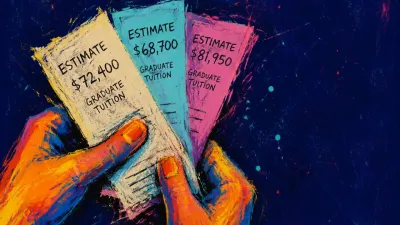
Psychological Contexts Related to Grad Application Paralysis