Too Many Deadlines Open

A grounded look at application deadline pressure, related tarot cards, and tarot reading insights from deadline-heavy sessions.

Application Deadline Spiral
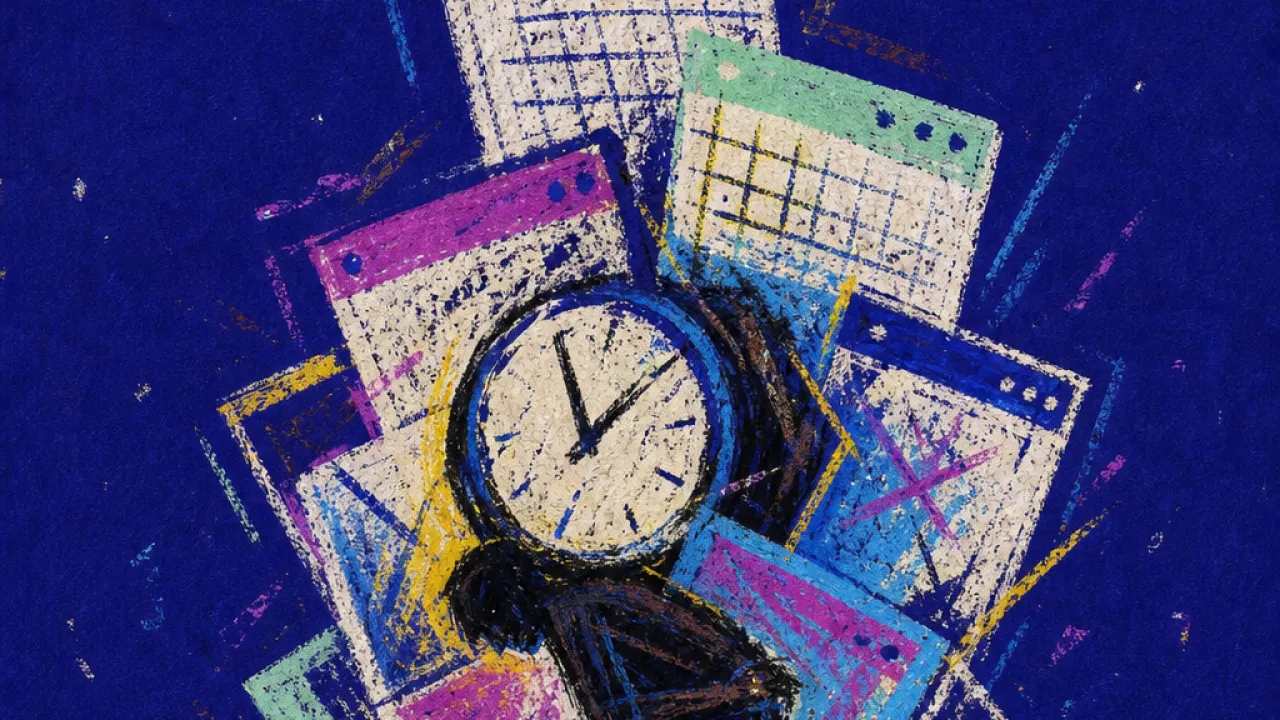
A hunched figure under clock-shaped pressure from glowing calendars, portals, and document tabs in deep indigo space

What is this situation?

Application Deadline Spiral — you enter it the moment one opportunity turns into six open tabs, each with a different portal, password rule, upload limit, and closing time. Maybe it starts with college applications, internships, jobs, scholarships, visas, fellowships, or grad programs; whatever the category, the system asks you to keep becoming a slightly different version of yourself for every form. One page wants a personal statement, another wants a cover letter, another wants a short answer that says the same thing in 250 characters, and another refuses to save unless every box is filled exactly right. Meanwhile, references have not replied, transcripts take days to process, recruiters use vague timelines, and one deadline is in your time zone while another closes at midnight somewhere else. Your evenings stop feeling like evenings because they become document maintenance: renaming files, trimming PDFs, refreshing inboxes, checking whether “submitted” really means submitted, and watching other people post acceptances before you have even finished the next draft. The power sits with institutions and platforms that can ask for precision without giving much clarity back, and you are left trying to keep your life, work, school, and future options from colliding on the same calendar square. By the time you close your laptop, your shoulders are stiff, your eyes are dry, and your stomach drops whenever a reminder notification appears, much like the figure on the Two of Pentacles, trying to keep two moving coins in the air while rough water rises behind them.

Why it's not you?

This is not a personal failure of focus or discipline; the system itself is designed to scatter your attention across portals, deadlines, documents, and unclear requirements. When every opportunity demands a different version of the same proof, the pressure comes from the structure around you, not from a flaw in how you are handling it.

Application Deadline Spiral in Tarot Cards

The Application Deadline Spiral is the kind of situation where your shoulders tighten before you even open the portal, because every tab can turn into another clock. This is an environmental, structural dynamic built from closing windows, uneven instructions, and systems that make you keep translating yourself into new formats. The cards below do not decide which application matters most; they reflect the shape of the pressure around you. Here are the Tarot Cards that often mirror this kind of deadline-driven situation.

The Emperor
Upright
The armoured ruler sits on a rigid stone throne decorated with ram heads, backed by severe mountains and an architecture that leaves little room for negotiation. Employer portals reproduce this structure when they enforce exact file limits, mandatory fields, password rules, automated cutoffs, and standardised evidence while offering applicants limited explanation or flexibility. You are meeting a system designed around institutional control rather than mutual clarity. The throne makes the power location visible, allowing technical requirements and employer authority to be recognised as structural constraints instead of being absorbed as a personal inability to navigate the application correctly.
The Hierophant
Upright
The institutional figure sits between pillars above crossed keys while two acolytes face him from a lower position. University and graduate application systems reproduce this vertical arrangement when institutions define legitimate credentials, acceptable statements, official records, recommendation formats, and the procedural keys required for entry. You are navigating formal educational gatekeeping rather than submitting evidence on equal terms with the institution. The keys make access requirements visible, while the two-level scene clarifies why applicants carry most of the translation work even when universities control the definitions and deadlines.
Wheel of Fortune
Upright
The large wheel turns at the centre while figures rise and descend around it and four observers remain positioned at the corners. Opportunity windows, recruitment rounds, scholarship cycles, admissions seasons, and portal changes create a comparable timing system in which openings and closures move independently of your preferred pace. You can distinguish the part of the cycle that is institutionally scheduled from the part that is genuinely available for your response. The wheel makes changing windows visible as system movement, reducing the pressure to interpret every sudden opening, delayed reply, or altered date as evidence about your personal readiness.
Justice
Upright
The scales remain level while the upright sword introduces a firm line of consequence between two formal pillars. Academic applications similarly depend on exact records, word counts, eligibility rules, timestamps, and document classifications, even when the guidance supplied by admissions or scholarship systems is incomplete. You can separate the procedural assessment from the total value of your academic potential. The scales identify the evidence under review, while the sword makes the hard deadline and compliance threshold visible as institutional mechanisms rather than personal verdicts.
The Hanged Man
Upright
The figure hangs by one foot from a fixed wooden frame, unable to advance physically even though his expression is composed and a halo marks active awareness. Applications enter this suspended state when progress depends on a referee, transcript office, visa document, recruiter, or portal administrator whose timetable you do not control. You can name the difference between inactivity and dependency. The fixed suspension reveals where waiting has been built into the application chain, while the clear expression preserves the ability to observe which deadline is moving and which part of the process is simply outside your authority.
The Moon
Upright
The narrow path continues between two towers under uncertain moonlight while a dog and wolf react from opposite sides and a creature emerges from the water. Vague timelines, hidden evaluation processes, changing portal language, and unclear definitions of completion create the same condition: a route exists, but the available information does not illuminate all of it at once. You are navigating institutional opacity rather than proving that you can predict every outcome. The visible path preserves movement without pretending that recruiters, admissions teams, or platforms have supplied full clarity, separating the direction you can verify from the uncertainty the application system keeps offstage.
Seven of Cups
Upright
The silhouetted figure faces seven cups suspended in clouds, each displaying a different promise, risk, identity, or status symbol. Six open applications can create the same visual field: every option asks for attention immediately, presents a different imagined future, and makes comparison difficult because the opportunities are packaged through aspiration rather than common criteria. You can recognise that having options does not automatically produce usable choice. The cups place the full array in view, making it possible to see how prestige, fear of missing out, uncertain eligibility, and genuine fit have been mixed together by the application rush.
Two of Pentacles
Upright
The figure keeps two linked pentacles moving while ships behind him rise and fall on an unsettled sea. College, scholarship, and graduate applications create the same academic coordination problem when coursework, exams, personal statements, transcripts, recommendation letters, and portal deadlines remain active at once. You are balancing institutional access work alongside learning rather than performing application admin in an empty schedule. The loop makes recurring tasks visible, and the moving ships show why a transcript delay or late recommendation can alter the timing of every other academic obligation.
Three of Pentacles
Upright
The elevated craftsperson works while two other figures consult plans beneath the three pentacles of a formal structure. School and graduate applications depend on the same distributed production process: your academic evidence must align with transcripts, advisor input, recommendation letters, and institutional review. You are responsible for your contribution, but the finished application is not produced by you alone. The shared plans make dependency visible, clarifying why an unanswered recommender or delayed records office can block progress despite substantial preparation on your side.
Eight of Pentacles
Upright
The artisan carves one pentacle after another at a bench while previous pieces remain displayed in a repeated sequence. Graduate statements, scholarship essays, short answers, and research summaries create this exact revision economy, requiring closely related academic evidence to be recut for different prompts and character limits. You can recognise each version as real cognitive labour rather than a trivial copy-and-paste task. The visible sequence preserves the value of careful revision while exposing the institutional duplication created when every program requests a slightly different format for the same academic history.
Two of Swords
Upright
The blindfolded figure holds two crossed swords before a rocky sea, physically maintaining a stalemate while relevant terrain remains outside her sight. Conflicting deadlines or requirements can produce the same structure when two applications demand simultaneous priority but institutions have not provided enough information to compare likely value, timing, or feasibility. You are not facing a decision that can be solved by greater concentration alone; part of the necessary evidence is unavailable or institutionally obscured. The crossed swords make the conflict explicit, allowing the cost of preserving both options to become part of the decision rather than remaining hidden inside repeated tab-switching.
Four of Swords
Reversed
The resting figure remains enclosed by swords, but reversed the chamber no longer contains mental activity or protect recovery. Unfinished statements, uncertain submission statuses, and reminder notifications continue running as psychological background tasks, so closing the laptop does not fully end the application session. You are carrying an open-loop system into rest, not demonstrating an inability to switch off on command. The reversed image makes that interruption visible, allowing deadline vigilance to be recognised as a response to unresolved external demands and unreliable confirmation systems.
Eight of Swords
Upright
The blindfolded and bound figure stands inside a loose enclosure of swords, with muddy ground underfoot and a distant fortified structure controlling the wider landscape. Portal rules, missing references, upload limits, eligibility conditions, and fixed closing times can create the same constrained field, where several routes are physically imaginable but not all are institutionally usable. You are encountering restrictions that have both external and internal effects. The loose bindings preserve the possibility of distinguishing perceived impossibility from actual portal constraints, while the distant structure keeps institutional control visible instead of locating the entire blockage inside your thinking.
Nine of Swords
Upright
The figure sits upright in bed with hands covering the face while nine swords occupy the dark wall above. Application reminders, possible omissions, ambiguous time zones, and uncertainty about whether a portal saved correctly can accumulate into the same night-time inventory of unresolved consequences. You can see that the thoughts are attached to identifiable external stakes rather than treating the entire experience as a personal weakness. The swords' ordered visibility turns a diffuse sense of alarm into a map of separate deadlines, dependencies, and verification gaps that the application system has left open.
Page of Swords
Upright
The Page holds a raised sword while looking sideways as wind drives the clouds and bends the landscape around him. Refreshing inboxes, rereading recruiter messages, monitoring portal statuses, and watching for reference confirmations create the same alert posture, with attention repeatedly redirected toward signals that may change the application's next step. You are responding to an information environment where a single message can alter timing or access. The Page's active observation makes vigilance visible as a functional response, while the unstable weather exposes the cost when monitoring expands until every notification feels operationally urgent.
Knight of Swords
Upright
The knight drives his horse into strong wind with a raised sword while trees and clouds bend around the charge. A closing portal can create the same narrowed momentum, pushing writing, uploading, proofreading, and confirmation checks into a single late-night sprint where speed becomes more visible than the quality of the route. You can recognise the charge as a response to an actual closing window while still seeing the environmental forces shaping it. The raised sword preserves a clear objective, but the wind and forward lean expose the cost of a system that concentrates complex evidence work into the final available hours.
Two of Wands
Upright
The figure stands on a battlement holding a globe, with one wand fixed to the wall and another available in his hand as he surveys distant territory. The application stack is not merely paperwork; it is an attempt to convert several institutional opportunities into a coherent future route while current commitments keep part of your life anchored in place. You have a vantage point from which the applications can be compared as pathways rather than treated as equally urgent browser tabs. The globe and open horizon keep long-range direction available, allowing the institutional workload to be read against the future each opportunity actually opens rather than against deadline pressure alone.
Six of Wands
Upright
The laurel-crowned rider moves through a crowd while another wreath is displayed above him, turning an individual success into a public social event. Acceptance posts and promotion announcements create a similar visibility structure when other people's completed outcomes enter your feed while your own applications are still unfinished, delayed, or awaiting documents. You are seeing a curated recognition stage, not the hidden administrative timeline that preceded it. The crowd and raised symbols make social proof visible as an additional pressure source, allowing public success signals to be separated from the actual deadlines and capacities governing your application process.
Eight of Wands
Upright
Eight wands travel together across open air toward the ground, with no figure available to slow or redirect their arrival. The image captures the compression that occurs when portal alerts, reference emails, interview requests, document updates, and closing dates all move from pending to immediate within the same short window. You are dealing with a genuine acceleration of external events, not merely a subjective sense of being behind. Because the wands share a visible direction, the rush can be understood as a concentrated response window with identifiable incoming demands rather than as unlimited chaos.
Ten of Wands
Upright
The figure approaches the town under ten wands that bend his posture and block the view ahead. In an academic application season, current assignments, exams, statements, funding forms, transcripts, recommendations, and portal checks can become one undifferentiated load carried through nights and weekends. You can see both the educational destination and the access burden accumulated around it. The bundle reveals why adding another program may reduce rather than expand practical opportunity when it consumes the capacity needed to complete existing applications and current study obligations.

Application Deadline Spiral in Tarot Card Reading Insights

When the Application Deadline Spiral starts taking over evenings, weekends, inboxes, and browser tabs, other people have brought that same pressure into readings. These sessions move from the cards into the lived question of what is being asked of them, what is being missed, and what needs sorting first. Tarot Reading Insights from sessions shaped by application pressure.

Psychological Contexts Related to Application Deadline Spiral