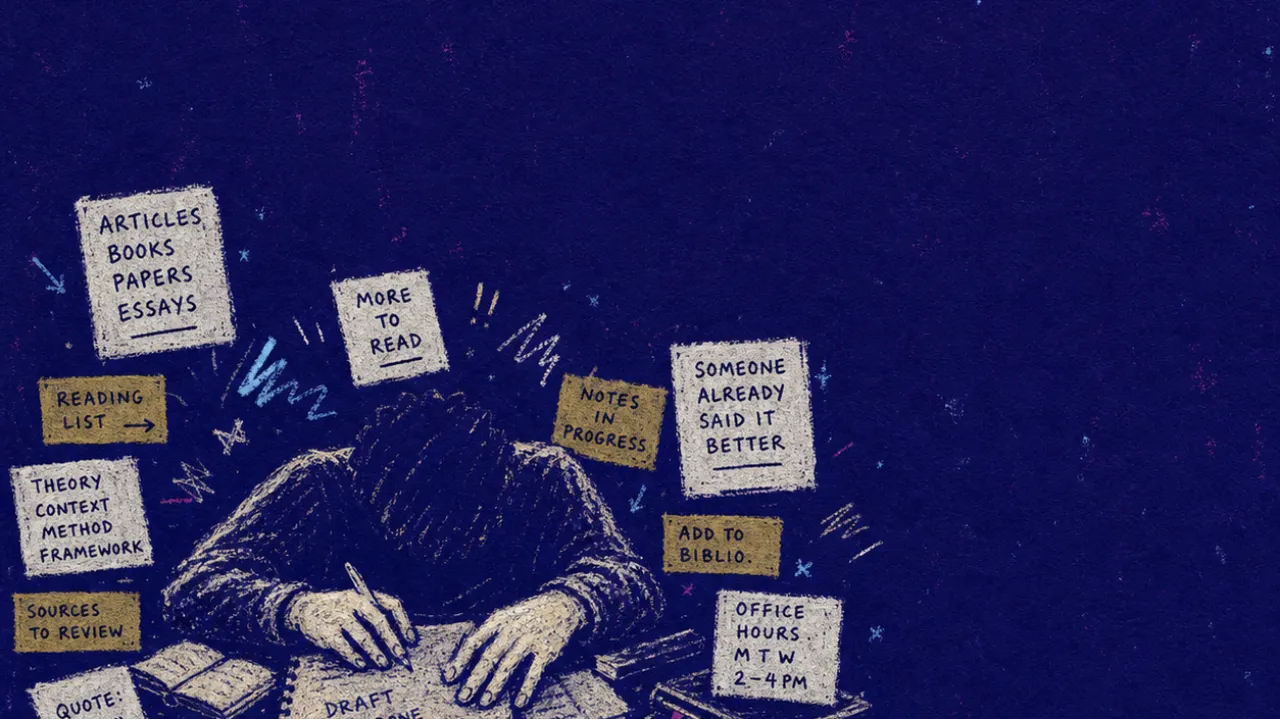
Academic Resource Readiness names the point where books, rubrics, office hours, recordings, and study blocks are already around you, but they still have to become something your week can use. The familiar body signal is the tension of sitting at a full desk and still feeling your shoulders tighten because the material has not yet turned into retention, drafts, or finished work. This is an environmental, structural dynamic: support exists in the academic field, but the channels that convert it into output are not automatically built for you. The Tarot Cards below reflect that threshold between available support and usable academic movement.
The Empress UprightGolden wheat in the foreground, moving water behind the throne, and the scepter held lightly all show a world where support is already in the field. The academic parallel is a course or program where books, office hours, lecture recordings, rubrics, and time blocks exist, but they still have to become usable nourishment rather than background abundance. You are not looking at a lack of material. You are looking at the gap between being surrounded by resources and having a channel that turns them into retention, drafts, and completed work.
The Hierophant UprightAt the Hierophant's feet, the crossed keys sit in open view while the staff, crown, and temple order the learning space. Knowledge is pictured as something with doors, tools, and sanctioned entry points, not as something a learner has to extract alone from blank effort. For study, this points to the moment when academic support exists but still has to be made usable. You may have office hours, rubrics, tutoring, library access, model papers, or a syllabus in front of you, but the real task is turning those resources into a system that can carry the workload.
The Hermit UprightThe lantern in The Hermit's hand is small, contained, and bright enough to matter in a dark academic landscape. Its ordered star does not remove the mountain, but it gives the figure a reliable point of reference for the work immediately ahead. In study terms, this is the moment when the core resources are finally present: the right texts, a usable framework, a clearer research question, or enough conceptual structure to begin. You may still be working alone, but the tools in hand are no longer random scraps. The card links this context to readiness rather than completion. It shows a student or researcher positioned to use what they have gathered, with the next challenge being disciplined application rather than endless searching for another source, method, or explanation.
Wheel of Fortune UprightOpen books sit in all four corners, while layers of symbols and spokes surround the wheel's center. The scene is not empty or unsupported; it is crowded with reference material, tools, and organized knowledge. For academic resource readiness, You are standing before a real supply of materials, but supply is not the same as integration. The card's structure shows the gap between having readings, office hours, notes, and systems available, and actually building a study mechanism that can convert them into durable output.
Death UprightThe white horse, black armor, raised banner, river, boat, towers, and horizon form a complete moving system rather than a pile of disconnected symbols. Even as the foreground is being cleared, the background keeps showing routes, vessels, boundaries, and direction. In academic terms, this points to a reset that has enough material support to become real. The resources may be a clearer reading list, accessible office hours, a usable feedback loop, a study timetable that matches the assessment load, or a supervisor conversation that turns confusion into a navigable next step. The value of the card here is precision. It shows that readiness is not about feeling perfectly prepared; it is about whether the external tools, institutional markers, and learning channels are aligned enough for the next academic move to carry weight.
The Star UprightThe two intact vessels, the pool, the green ground, and the visible streams create a scene where resources are present and moving. Nothing in the image suggests scarcity; the key tension is whether the water lands where it can actually sustain growth. Academic resource readiness works the same way. You may have office hours, tutoring, saved readings, peer notes, library access, or a usable syllabus, but the context becomes meaningful only when those resources enter the real study surface instead of remaining nearby. The oasis matters because it is not an abstract promise; it is a usable environment. This card links to the moment when support is available, but the student's task is to build a channel between available help and actual academic output.
The Sun UprightThe sun fills the card with usable light, and the sunflowers stand upright within a protected garden wall. The resources are not hidden; the scene is saturated with illumination, order, warmth, and visible growth. For study, this is the stage where materials, feedback, office hours, tutoring, research access, or a clearer schedule are finally within reach. You are not being shown effortless success; the card isolates the structural question of whether available academic support can be converted into retention, production, and a sustainable learning system.
Ace of Cups UprightThe intact cup, steady hand, incoming disc, overflowing water, and open pool form a complete resource circuit. Nothing in the scene suggests scarcity; the tension lies in how much is arriving and whether the vessel can make use of it. In academic terms, this points to a moment when readings, office hours, tutoring, peer notes, software, study time, or institutional support are actually available. The friction is no longer a lack of material, but the need to choose, sequence, and absorb what is already within reach. The card makes resource readiness feel active rather than comfortable. You have access to water, but the learning system still has to turn abundance into retention, practice, and output.
Six of Cups UprightSix cups stand full in the garden, each one holding flowers that are already present before any further action is taken. The scene is not defined by scarcity; it is defined by a protected supply of usable material sitting inside an orderly academic container. For study, this points to the strange pressure of having the syllabus, notes, sample answers, recordings, office hours, and old feedback available while progress still feels blocked. You are looking at a resource-ready environment where the real question is not whether support exists, but which available cup can be brought into active use first.
Queen of Cups UprightThe Queen's hands meet the chalice from below and the side, giving the object both support and control. Around her, the crown, throne, shell clasp, and carved seat create a scene where the necessary tools are present and the body does not have to improvise its own ground. For study, this visual structure points to a moment when resources are finally assembled enough to be used: readings are available, the workspace is stable, and the student has a legitimate place from which to think. The challenge is not raw access alone, but whether those resources can be turned into retention, synthesis, and academic output. Academic Resource Readiness captures a supportive but still active threshold. You may have enough external scaffolding to learn well, but the card asks whether the available support is being held with intention or simply admired as potential.
Ace of Pentacles UprightThe golden pentacle is not floating as decoration; it is being held with precise pressure above a garden that already has a gate, a path, and cultivated ground. The image turns support into a usable physical object: available, weighty, and still requiring a stable hand before it can become output. In study, that maps to the moment when the syllabus, readings, office hours, library access, and time blocks are finally present, but they have not yet become a working academic system. You are not looking at a lack of resources; the structure asks whether those resources have a real channel into assignments, revision, and sustained attention.
Six of Pentacles UprightThe falling coins, open hands, and held scales form a visible support system rather than a blank field of effort. Resources are present, measured, and close enough to enter the student's actual workflow. You are not looking at a card of solitary study; you are looking at a scene where progress depends on using available support without treating help as proof of failure. In an academic setting, this maps to tutoring, office hours, library systems, feedback channels, and funding information that can stabilize learning when self-reliance has become inefficient.
Nine of Pentacles UprightThe nine pentacles are not loose coins; they grow through a cultivated vine, surrounded by grapes, a house, a glove, and a trained bird. The scene shows resources as an ecosystem: tools, shelter, time, and handling skill all arranged so that work can mature. In an academic setting, that maps to the moment when the problem is no longer pure lack of access. You may have readings, notes, a study space, software, office hours, or a clearer syllabus in reach, but the pressure sits in converting those supports into retention, writing, and measurable output.
Page of Pentacles UprightThe intact pentacle, clear sky, fertile grass, and earth-colored clothing all point to usable material conditions rather than empty potential. The Page is not reaching for an imaginary prize; he is holding something concrete, stable, and close enough to study. In an academic setting, that becomes a readiness stage where syllabi, readings, tools, feedback files, or practice sets are available, yet the work still depends on turning access into output. You are looking at a system with materials on the table, not a system that has already produced mastery.
Knight of Pentacles UprightThe pentacle is intact in the knight's hand, the armor is complete, and the horse has the strength to carry a long route. The scene shows resources gathered into a usable configuration, but they still need to be translated into work across the field. In a learning environment, this is the stage where notes, tutoring, office hours, library access, software, or feedback channels are available but not yet integrated into a study system. You have a material base; the structural question is whether those tools are positioned where they actually change retention, output, and follow-through.
Queen of Pentacles UprightThe intact pentacle rests securely in the queen’s hands while the garden around her is visibly fertile, ordered, and alive. The carved throne, crown, vines, roses, distant hills, and water form a complete material field rather than a bare workspace. For study, this points to a moment when the academic environment contains usable resources: the right texts, a workable schedule, access to support, and a standard clear enough to be met. The card’s earth symbolism matters here because academic progress is not only insight; it is also storage, repetition, tools, space, and the practical ability to return to the task. The context becomes important when readiness is present but still needs to be claimed. You may already have more scaffolding than your stress narrative admits, and the work is to recognize which resources are real enough to support output instead of continuing to behave as if the desk is empty.
King of Pentacles UprightThe large pentacle held in one hand, the scepter in the other, and the castle behind the throne create a scene where tools, authority, and shelter are already assembled. In an academic setting, that maps to the moment when books, advisor access, study space, and institutional systems exist, but they still need to become a working rhythm. You are not looking at a lack of materials. You are looking at the discipline of converting available support into retained knowledge, finished drafts, and a repeatable study structure.
Ace of Swords UprightThe sword is not floating loose; it has a fitted hilt, a rounded guard, and a hand capable of holding it with control. Around it, the crown, branches, and bright marks create a scene where intellectual materials and recognition structures are present rather than absent. In study terms, this points to a prepared but pressurized setup: the sources, notes, rubric, office hours, or writing structure are available, and the remaining friction is the conversion of access into output. You are facing an academic container that removes some ambiguity while making the next cut of focus more visible.
Ace of Wands UprightGreen banks, trees, a river, and a sprouting wand surround the central hand with usable material. The scene is fertile, but the wand is still in the hand, which means the available environment has not automatically become academic output. In study terms, this matches the moment when support exists but has to be actively connected to the work. You may have office hours, feedback, library access, peer review, or a reading path available, yet the real pressure is whether those resources become part of a functioning learning system before the window narrows.
Two of Wands UprightThe globe, the settled domain below, and the secure castle wall create a scene of available capacity. The figure is not empty-handed; he has a vantage point, a map, a protected platform, and a visible field of resources stretching below him. Academically, this points to a stage where the support system is present but not yet fully converted into output. Readings, supervisor access, library tools, prior knowledge, institutional structure, or time may already be available, yet the work still depends on choosing how those resources will be mobilized. The Two of Wands turns readiness into a real pressure point. You may not need more inputs before moving; the structure asks which existing resource is ready to become an active lever for learning, drafting, or research momentum.
Four of Wands UprightThe full garlands, square pillars, distant building, and visible bridge create a scene where resources are present and the route is legible. Nothing in the foreground has to be improvised from scraps; the materials have already been gathered into a usable frame. In academic life, this resembles the moment when the library access, notes, supervisor comments, peer network, course structure, and time window are finally aligned enough for real work to begin. The card does not describe guaranteed output; it describes the external readiness that makes output possible. That distinction matters because the pressure now shifts from searching for more support to using the support already in place. You are facing a resource environment that can hold the next stage of study, but the bridge still has to be crossed through reading, drafting, revision, and sustained attention.
Queen of Wands UprightThe Queen's tools are already in her hands: a living wand for action, a sunflower for visible growth, and a throne that holds her position without forcing her to scramble for footing. The clear sky and distant pyramids give the scene a sense of available direction rather than immediate obstruction. For study, this points to the stage where resources are present but still need to be actively used. Notes, feedback, references, office hours, peer review, and a workable routine may exist around you, but the academic gain depends on whether those supports are converted into actual learning movement. The card connects readiness with responsibility in a concrete way. It shows that the environment is offering usable structure, while the next pressure point is learning how to coordinate those tools without drifting into passive confidence.
No cards available for this filter.