Grad Application Freeze: From Renamed PDFs to Three Rough Sentences
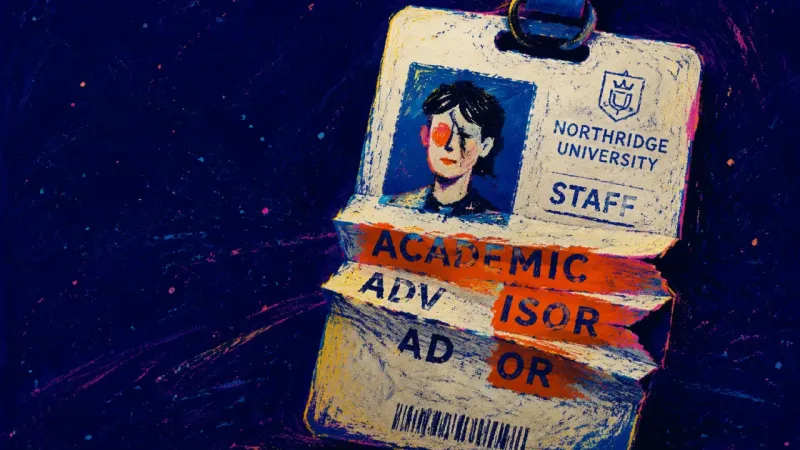
The 9:40 p.m. Grad Application Freeze
I met Alex, a 26-year-old non-binary research assistant in Toronto whose grad school application procrastination began at a strangely precise point: after the portal was open and able to judge what they typed. Alex could manage datasets, supervisor requests, and other people's deadlines during a demanding day on a fixed-term contract. One personal-statement prompt, however, could stop an entire evening.
At 9:40 p.m., I could see the small desk in their shared apartment through our video call. A mug of coffee had gone cold beside the laptop. The radiator ticked against the wall, the fan whirred under the keyboard, and blue-white screen glare flattened the room. Alex changed two opening sentences, checked the formatting, then moved their restless hands to a folder of PDFs and renamed three files that were already perfectly usable.
“I keep preparing to apply instead of actually applying,” they said. “Every sentence feels like evidence for or against me. I close the tab, feel better for maybe ten minutes, and then I hate that I've done it again.”
I watched their shoulders rise towards their ears as they spoke. The anticipatory dread looked less like ordinary uncertainty and more like a smoke alarm wired directly to the application cursor: each evaluative prompt set off the whole system before any real danger, or even any complete sentence, existed.
“I don't hear laziness in that routine,” I told them. “I hear a protection strategy that has become expensive. You want to complete the application, and another part of you wants to keep it private enough that it cannot reject you. We aren't going to use tarot to predict an admissions decision or tell you what you must do. I want us to map what happens between opening the form and closing it, so you can decide where to interrupt the loop.”
Choosing a Ladder Through the Fog
I asked Alex to place both feet on the floor and take one ordinary breath. I shuffled while they held a single question in mind: “What keeps happening when I open the application?” I treat this pause as a way to narrow attention, not as a test of belief or a performance of mysticism.
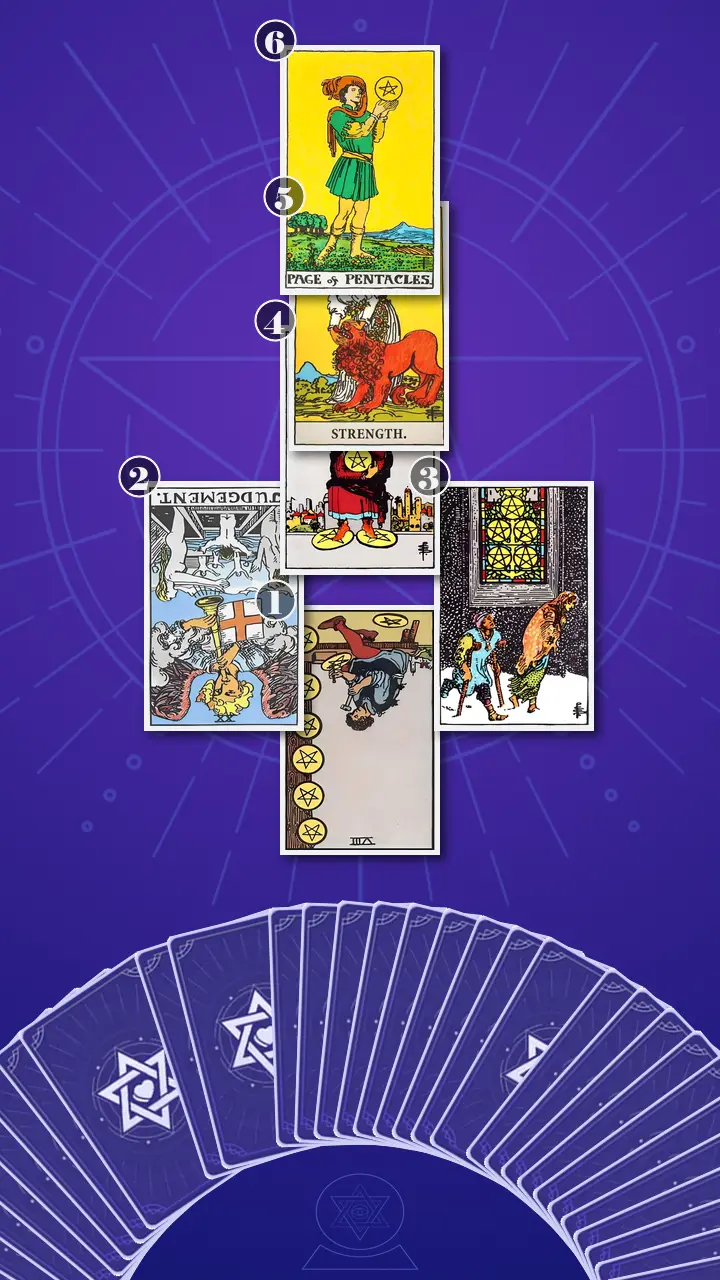
I chose the Four-Layer Insight Ladder · Context Edition, a six-card tarot spread designed to follow a repeating behaviour from visible symptom to practical integration. This is how tarot works in my practice: the cards provide an external symbolic structure, while the querent tests each interpretation against observable life. Card meanings in context become useful when they clarify a pattern, not when they claim authority over someone's future.
I arranged the cards as a narrowing staircase. The bottom card would show the open-edit-reorganise-close routine. Two cards above it would reveal the immediate trigger and the deeper fear. A central hinge would expose the short-term payoff that kept the cycle alive. The last two cards would identify an interruption point and one bounded next action.
I chose this spread because Alex's problem was not only an emotion buried somewhere inside them. It was a self-reinforcing system: evaluation triggered withdrawal, withdrawal created relief, relief cost visible progress, and that missing progress made the next attempt more threatening. The six-card Insight Ladder was the smallest complete map I could use to show the trigger, belonging fear, protective mechanism, leverage point, and practical experiment without turning the reading into an unnecessarily broad life diagnosis.
Where Real Effort Stopped Accumulating
Position One: The Bench Covered in Almost-Finished Work
I turned over the card representing the present-state layer: the observable open, edit, reorganise, and close behaviour. It was the Eight of Pentacles, reversed.
In the upright image, a craftsperson works through a sequence of pentacles. The completed pieces displayed nearby make effort visible and cumulative. Reversed, that sequence is disrupted. The energy of craft is not absent; it is blocked by an excess of correction and a shortage of completion.
I brought Alex back to the desk in front of us. At 9:40 p.m., they had changed two opening sentences, checked the formatting, and renamed three PDFs. The evening contained genuine labour, but the personal statement ended where it began: one polished fragment and no complete new paragraph. It was the application equivalent of editing the title of a Notion task while the task itself remained in “Not started.”
“The problem isn't that you aren't working,” I said. “It's that the work keeps circling around the smallest, safest surface. Your internal measure of progress is ‘How defensible does this feel?’ The application can only measure something more concrete: ‘Is there now a complete field that did not exist before?’”
Alex gave one short laugh, but there was no amusement in it. Their fingers froze against the mug. Their gaze slipped away from the screen as if replaying several evenings in quick succession. Then a breath left their chest and their shoulders dropped by a fraction.
“That's too accurate,” they said. “Honestly, it feels a little brutal. I'm technically working on it, so why is there still nothing I could send?”
“Because activity and completion have become different jobs,” I replied. “The activity protects you from the exposed part of the job. Naming that is not a verdict on your discipline. It simply gives us a more objective unit of progress: one rough, reviewable field rather than another hour spent improving the safest two sentences.”
Position Two: The Verdict That Arrived Before the Draft
I turned over the card representing the root layer's immediate trigger: what became activated each time Alex opened the graduate application. It was Judgement, reversed.
The traditional image contains a trumpet call and figures rising to answer it. In reversal, the invitation is obstructed by an internal judge. The call to respond is still present, but an excess of premature evaluation drowns out the querent's own voice. Expression becomes deficient because criticism has been allowed into the room before a complete thought exists.
For Alex, the trumpet was the prompt asking them to describe their research interests. They did not hear, “Tell us what you want to study.” They heard an imaginary admissions decision before the application existed. They pictured a committee finding the answer vague or unimpressive, deleted any claim that could be questioned, and returned to an eligibility page they had already checked.
“Before I can answer what I want to study, I'm already defending whether I deserve to study it,” Alex said quietly.
I nodded. “You keep preparing to be evaluated because preparing still feels safer than being seen. But a first draft and an admissions decision belong to entirely different stages. When the imagined rejection email is mentally open beside the blank document, the evaluator starts writing the answer by deletion.”
I asked what criticism appeared in the first minute, before a full answer had been written. Alex looked down and rubbed a thumb along the mug's rim.
“That my interests sound ordinary. That I haven't done enough. That they'll read it and think, ‘Why is this person applying?’”
I told them Judgement reversed did not prove that an admissions reader would think any of those things. It showed that Alex was rehearsing the harshest possible response and treating that rehearsal as data. Tarot was helping us separate an observable event, an incomplete sentence on a screen, from a projected conclusion about legitimacy.
The Warm Window Across the Snow
Position Three: The Fear of Being Left Outside
I turned over the card representing the root layer's deeper fear: the concern about worth and belonging that gave the delay its emotional force. It was the Five of Pentacles, upright.
Two figures move through snow beneath an illuminated window. The card often speaks to scarcity, exclusion, and hardship near a place that appears to contain warmth or support. Here its upright energy was highly active: Alex's awareness of possible exclusion had expanded until one application outcome seemed capable of defining their place in academic life.
I described the modern scene reflected in the card. Alex was riding the TTC when a former classmate's LinkedIn announcement appeared: another graduate programme, another polished milestone, another caption that produced the specific collision of “happy for them, panicking about me.” By the time Alex reached home, the university no longer felt like a place where people went to learn. It felt like a warm room already occupied by people who had been found sufficiently impressive.
Looking at the illuminated window, I thought of evenings I had spent in unfamiliar cities, passing buildings where conversation glowed behind the glass in a language I did not yet understand. A threshold can make belonging look like a quality everyone inside possessed before entering. Often, I have learned, the only real difference is that they crossed while still incomplete.
“If they say no,” Alex asked, “what if it means I was never one of those people?”
Their hand tightened around the mug, then released. The question remained between us with the quiet weight of Toronto snow.
“A rejection could be disappointing, expensive in time, and relevant to your next plan,” I said. “I won't minimise that. Your fixed-term contract, income, and housing costs are real considerations. But an admissions outcome cannot carry the much larger burden of deciding whether your work has value or whether you belong in intellectual life. A committee can make a contextual selection decision. It cannot issue a final ruling on your worth.”
Alex went still. Their eyes remained on the stained-glass window in the card. I could see recognition arrive before relief: the harder truth was not simply that they feared a “no,” but that they had been asking the application to certify an identity no application could safely hold.
Position Four: The Safety of Staying in Draft
I turned over the card representing the mechanism layer: the short-term protective payoff that made closing the application feel preferable to continuing. It was the Four of Pentacles, upright.
The central figure grips one pentacle against the chest and pins two beneath the feet. The energy of preservation is in excess. Control offers immediate security, but the same grip restricts movement. The city remains visible in the distance while the body stays fixed.
I asked Alex to remember the last time their cursor hovered over the close button. They recalled the tab disappearing and their jaw loosening almost immediately. For a few minutes, the application could not be judged. It remained private, editable, and full of imagined possibility.
“As long as it stays in Draft, the possibility stays intact,” they said.
“Exactly,” I replied. “An unfinished application cannot reject you, but it cannot represent you either.”
I did not frame that protection as foolish. It had a clear psychological function: closing the portal restored control when Alex felt exposed. The problem was the exchange rate. The delay bought ten minutes of relief with tomorrow's self-trust. By the next evening, the deadline was closer, there was still no complete field, and opening the form seemed to confirm the story that Alex could not handle being evaluated.
I asked, “When you close the unfinished portal, what becomes safer for ten minutes, and what becomes harder by tomorrow?”
Alex's lips pressed together. Their eyes moved from the pentacle held to the figure's chest down to the two pinning the feet.
“My possibility feels safer,” they said. “But I trust myself less.”
That answer revealed the maintaining mechanism without shaming the person who had needed it. The Four of Pentacles was not predicting permanent stagnation. It was making the contract visible: privacy in exchange for participation, immediate control in exchange for a real opportunity.
When Strength Kept the Tab Open
Position Five: Calm Hands at the Lion's Jaws
I turned over the card representing the transformation layer: the response capable of interrupting the procrastination loop at the moment it was triggered. This was the key card, Strength, upright.
The room seemed to become quieter. Even the radiator paused between clicks. On the card, a woman rests calm hands near a lion's open jaws. She does not deny the animal's power, punish it for reacting, or surrender control to it. The infinity sign above her suggests sustained relationship rather than one dramatic victory.
Strength brought balanced energy into a spread dominated by heavy, compressed Pentacles. It did not ask Alex to become fearless, force an all-night writing sprint, or submit before they were ready to review their work. It offered usable courage: the capacity to notice raised shoulders, restless hands, and the urge to escape while keeping one prompt visible long enough to complete a bounded response.
At 9:40 p.m., the coffee was cold, the documents were ready, and Alex was changing the same opening sentence again. Their shoulders rose as the prompt became less like a question and more like a verdict. They had been waiting for that bodily alarm to disappear before allowing themselves to work.
I said, “You do not have to feel safe from judgment before you move. Fear can be present without being given control of the session.”
Repeated delay is not evidence that you need more certainty; choose one small, steady contact with the form, as Strength meets the lion through presence rather than force.
I let the sentence sit in the brief silence that followed.
Alex's breath stopped first. Their fingers remained suspended above the trackpad, and their pupils widened slightly. Then their gaze lost focus, as though the evenings of cold coffee, renamed files, and vanished tabs were replaying behind the screen. Their jaw tightened instead of softening. “But doesn't that mean I've been doing it wrong for weeks?” they asked, anger sharpening the edge of their voice. I heard grief underneath it: the pain of seeing how much effort had gone into staying safe. I told them the strategy had not been irrational; it had delivered the relief it promised, just at a cost that was now too high. Their fist opened one finger at a time. Their shoulders descended, their eyes reddened, and a trembling exhale escaped. Relief arrived with a slight, unsteady blankness: if fear was not the decision-maker, Alex could feel the responsibility of choosing what came next.
“Now, using this new perspective, think back to last week,” I invited. “Was there a moment when this insight could have made the experience feel different?”
Alex remembered hovering over another browser tab after writing one rough sentence. “I thought the urge to leave meant I wasn't ready,” they said. “Maybe it was just the alarm going off.”
That distinction allowed me to bring in a framework I call Performance Anxiety Decoupling. I drew three separate circles on a sheet of paper: the quality of tonight's draft, a future admissions outcome, and Alex's core worth. The inner critic had stacked those circles on top of one another, so an ordinary first sentence felt capable of proving inadequacy. Strength separated them. A draft could need revision. An application could receive a “yes” or a “no” for many contextual reasons. Neither result could function as a total measurement of the person writing it.
I paired that with my Draft Paralysis Deconstruction lens. Perfectionism was not appearing here as exceptionally high standards alone. It was acting as a subconscious defence: if Alex could make every sentence impossible to criticise before it existed, they would never have to feel exposed. The flaw in the defence was practical. No sentence can become strong while it is still being prevented from becoming complete.
“Discomfort can be in the room without running the session,” I said. “The lion can be loud. It does not get the cursor.”
I named the shift I could see beginning. This was a first movement from anticipatory dread and self-protective withdrawal to gentle courage, visible progress, and grounded self-trust. It was not confidence arriving all at once. It was Alex learning that fear could be experienced without being converted into an instruction to stop.
Within the next ten minutes, I asked Alex to choose one application prompt and write three rough sentences beneath it without researching, formatting, deleting, or requesting feedback. I made the boundary explicit: they retained the right to stop. If three sentences felt too exposed, one honest bullet and a note naming the next line would count.
Alex pasted the research-interest prompt into a blank document. Their shoulders rose again after the first sentence. They marked one tally on paper, took an ordinary breath, and returned to the line. The fear did not vanish. Three rough sentences appeared anyway.
The Page and the Learner-Sized Future
Position Six: One Pentacle Held at Eye Level
I turned over the card representing the action layer: the practical step through which the key shift could be tested and repeated without requiring certainty. It was the Page of Pentacles, upright.
The Page studies a single pentacle with full attention. The green field and cultivated ground suggest room for development rather than a demand for instant mastery. Its energy was balanced, receptive Earth: practicality no longer used to weigh down possibility, but to give curiosity one concrete object.
I asked Alex to imagine selecting one 150-word field, placing it in a blank Google Doc, and hiding every other part of the admissions process. They would draft that field to a rough but complete standard, then record one specific revision for the next session. Instead of holding the entire graduate-school future in their head, they would hold one prompt at eye level.
“Today I am not finishing my academic identity,” Alex read from the note I asked them to write. “I am learning how to answer this question.”
“That's the Page,” I said. “You are applying as a learner, not testifying as a finished product.”
This card did not predict admission. It restored a more accurate relationship to the task. Alex was not required to present a fully formed academic self untouched by uncertainty. They were allowed to produce a complete draft, observe what it needed, revise it, and continue. The repeatable pattern would no longer be open, reorganise, and escape. It could become choose, rough-complete, leave a return note, and pause deliberately.
Alex looked at the three sentences already on the screen. Their mouth curved into a small smile that still held disbelief. “They're not good yet,” they said.
“They don't need to be good yet,” I replied. “They need to exist at the stage appropriate to them. Which single field is small enough to meet in twenty minutes this week?”
Alex chose the 150-word description of their current research experience. They also named the next revision before we moved on: add the example from the community-health project. The Page had turned an abstract demand for readiness into a visible, learner-sized application task.
From Protected Possibility to Practical Participation
I placed the cards back into their ladder and read their sequence as one story. The Eight of Pentacles reversed showed that Alex had been expending real effort without creating finished evidence of progress. Judgement reversed revealed why: each prompt triggered an imagined verdict before self-expression could unfold. The Five of Pentacles carried that verdict deeper, towards a fear of exclusion from the academic room Alex longed to enter. The Four of Pentacles showed the protective bargain: keeping the form private preserved possibility and restored short-term control. Strength loosened the grip without demanding fearlessness. The Page of Pentacles then placed one practical task into Alex's hands.
The repeated pentacle had changed function across the spread. At first it was an unfinished product surrounded by disrupted labour. Then it became something clutched for safety and used to immobilise the body. Finally, the Page held one pentacle openly as an object of study. Alex did not need more pressure or a heavier plan. They needed a different relationship to the same application.
I identified the cognitive blind spot directly: Alex had been treating readiness as a prerequisite for drafting and discomfort as evidence that more preparation was required. The cards suggested the opposite. Readiness could grow from completing one imperfect, bounded task while discomfort was present. A deliberate pause after visible progress would build more self-trust than an unplanned escape after another round of productive procrastination.
When I proposed a twenty-minute practice, Alex raised a practical objection. “But some nights I genuinely have nothing left after work. Even twenty minutes feels like one more thing I'm failing to fit in.”
“Then we don't turn the experiment into another test,” I said. “A depleted evening is information. You can reschedule deliberately. The important distinction is between choosing not to begin because your energy budget is spent and being pulled away by an alarm after you begin. We will make the minimum version small enough that it does not require a heroic night.”
The Inner-Critic Mute Protocol and the Next Three Moves
- Mute the premature verdict. Before one weekday session, take sixty seconds for my Inner-Critic Mute Protocol: write, “The committee is not in this room. This is a first draft. My worth is not under review.” Close LinkedIn, programme-research, and feedback tabs before starting. If the critic returns, do not debate it. Mark one tally on paper, take one ordinary breath, and bring the cursor back to the current sentence.
- Create one rough-complete field. Open a blank document, paste in the shortest unfinished prompt, and draft for twenty minutes without deleting or seeking feedback. Define success as one complete rough field, not a polished personal statement. The minimum version is three rough sentences. If that feels too exposed, write one honest bullet and name the next line before stopping.
- Pause with a return route. When the timer ends, stop deliberately. Move the field from “Not started” to “Rough complete,” then leave one specific note such as, “Next: add the community-health project example.” Schedule the next short session before closing the document. Do not compensate for past delay with an all-day push. One field, one timer, and one written finish line are enough for this experiment.
I reminded Alex that this was actionable advice, not a prescription and not a promise about the outcome. They could shorten, move, or decline any part of the practice. The cards had identified a possible leverage point; only Alex could test whether it created more freedom in their actual life. The authority remained with them.

Three Sentences and a Quiet Return
Three days later, I received a message from Alex with a screenshot. The 150-word research-experience field had moved into “Rough complete.” Beneath it was the return note: “Next: tighten the final sentence and add the community-health example.” No polished Notion rebuild, no new programme-research tabs, and no request for reassurance before the answer existed.
Alex wrote, “I slept through the night. My first thought this morning was still, ‘What if it isn't good enough?’ I laughed, opened the return note, and made coffee.”
I did not mistake that small change for a solved application, guaranteed admission, or the end of personal statement anxiety. I saw something more credible: Alex had felt the alarm, completed a reviewable unit, and paused by choice. Their courage was visible in three imperfect sentences and a clear way back.
For me, that was the real Journey to Clarity. The tarot spread had not handed Alex a verdict. It had made the avoidance loop objective enough to examine and specific enough to interrupt. Alex transformed the insight into movement, and that movement began rebuilding trust from the inside.
If resting a hand on the keyboard makes your chest tighten because an application feels like evidence for or against your worth, I hope you remember the calm hands in Strength. Noticing the lion at the cursor already places you somewhere different from the starting point; fear can be present without being appointed to run the session.
If the form became one Page-sized encounter rather than a verdict on your finished identity, which single prompt would you feel curious enough to hold at eye level next?