Why Does Speaking Feel Exposed?

Explore the lock between voice and visibility, related tarot cards, and tarot reading insights from shared dilemmas.

Voice-visibility Lock
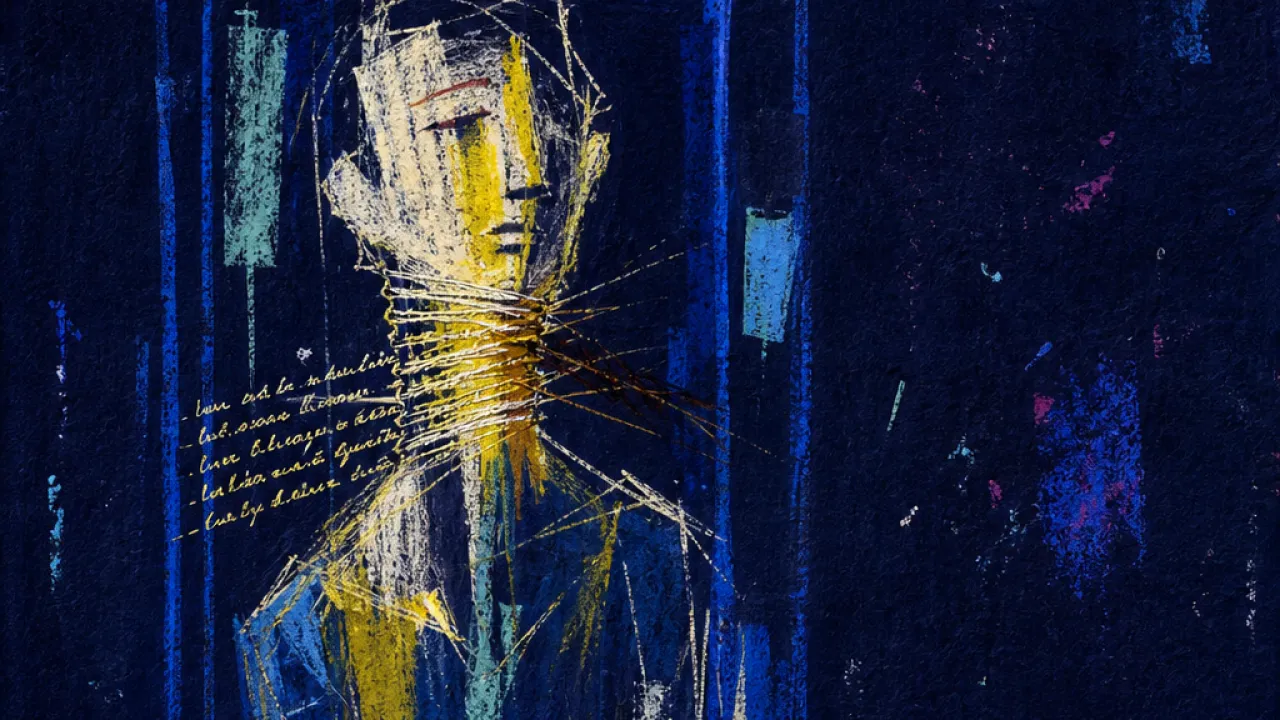
A figure enclosed in a glass booth under a white spotlight, throat wrapped in gold text lines against cold blue space

What does this feel like?

Voice-Visibility Lock is what happens when having something to say and being seen saying it feel like two different risks at once. You are in a meeting, a group chat, a seminar, a date, staring at the little box where your words are supposed to go, and your body freezes before your mind even finishes the sentence. Your thumb hovers over send, your mouth opens and closes once, your throat pulls tight at the base like a knot being tugged from the inside. The thought itself is clear; it is the visibility around the thought that changes everything. You can explain it perfectly in your head, in the shower, on the walk home, in a note you will never post, but the moment there is an audience - even one person you trust - the words lose their edges and turn into something safer, smaller, easier to ignore. You tell yourself it is not worth saying, that someone else already said it better, that you will bring it up later, and later becomes a private room where all your unsent sentences pile up. The cost is subtle at first: people know your work, your humor, your presence, but not the part of you that keeps editing itself out before it can be met. After a while, your voice starts living behind glass; you can see it, you can hear it internally, but reaching for it in front of others feels like touching a locked door, much like the figure on the Eight of Swords, standing in open ground but wrapped tight, surrounded by blades that turn open space into a cage.

What's pulling at you?

You're not silent because you have nothing to say; you're caught between the need for your words to matter and the need to avoid the spotlight that comes with them. One part of you wants to be known accurately, while another part keeps shrinking the sentence until it cannot draw attention. The lock forms in that split second where speaking up would make you more visible than staying quiet.

How It Shows Up?

  • You are in a Zoom call, lecture, stand-up, or team meeting, and you know the answer before anyone else says it. Your cursor is on the unmute button, your shoulders climb toward your ears, and your throat tightens as if the room has moved closer to your neck. By the time someone else says almost the same thing, your breath drops out in a tiny release, and your forearms settle across the desk like a quiet Two of Swords. You can let the missed moment exist without turning it into a verdict on your whole voice.
  • You are alone with your phone at 1 AM, writing a post, a text, or a comment that finally says what you mean. The cursor blinks back at you like The Hermit's lantern, small and bright in the dark, while your thumb hovers over send and your stomach pulls inward. You reread the sentence until it stops sounding like you, then delete one honest word at a time. A draft can stay a draft tonight without needing a full explanation.
  • A friend or partner asks what you think, and the answer rises fast, then stalls right behind your teeth. You smile, nod, and offer the version that keeps the room temperature steady, while your chest feels tight and your tongue rests heavy against the roof of your mouth. The unsaid thing stays with you after the conversation ends, not loud, just present. It is allowed to need a minute before your words arrive.
  • You are at dinner or in a crowded bar, and the group keeps moving faster than your sentence can enter. You start with a soft 'I was thinking...' but someone talks over the first few words, and you laugh it off while your cheeks warm and your hands disappear under the table. The room becomes a spotlight with no clear center, and you feel visible without feeling heard. You can notice the lock without forcing yourself to perform openness.
  • Your body keeps a record of the words you almost said: the tight band at the throat, the ache at the jaw hinge, the shallow breath that never quite reaches your ribs. You notice it after sending a polite reply, after leaving class, after closing the laptop with three unsent lines still glowing on the screen. It has the stillness of the Eight of Swords, a body held in place while the mouth remains uncovered. One slow breath can be enough contact with the body for now.

Voice-visibility Lock in Tarot Cards

That split second when your thumb hovers over send and your throat tightens is where Voice-Visibility Lock becomes easy to see. From an existential perspective, the structural framework is the pull between wanting your words to matter and wanting to avoid the spotlight that comes with them. The cards below do not explain it away; they let the outline sit in front of you instead of behind your teeth. These are the Tarot Cards that mirror the shape of this lock.

The High Priestess
Upright
The High Priestess sits motionless between black and white pillars, with a scroll on her lap and a veil guarding the background. The image makes hidden knowledge and selective silence materially visible. You can recognize the same structure when your inner sentence is precise but the act of allowing another person to hear it feels like crossing a guarded threshold. The scroll represents content that has not vanished; it is being held under private authority. Your internal voice can remain vivid while the veil turns self-expression into a question of access, audience, and how much of the self may be exposed at once.
The Hermit
Upright
The Hermit stands alone above the landscape with a lantern held close to his body. The small light reveals an inward field of attention while the mountain and surrounding darkness keep that field separate from other people. You can recognize the same arrangement when private rehearsal gives you a clear sentence but the transition into audible, relational speech feels like leaving the only place where the thought is controlled. The lantern does not suggest that the voice is absent; it shows that the voice has been kept in a narrow radius of safety. Your inner work may be genuine and detailed while remaining disconnected from the social encounter that would allow it to be heard and answered.
Reversed
The cloaked figure stands alone on an elevated, empty landscape, holding a lantern that illuminates only the space immediately around him. In reversal, that contained light becomes a closed circuit: your thoughts remain precise in solitude, but private clarity no longer prepares you for contact with an audience. You can compose the sentence in a draft, rehearse it on the walk home, and hear exactly how it should sound when no one is listening. The lock forms when solitary refinement becomes a substitute for being witnessed, leaving your voice carefully preserved but permanently outside the shared room.
Judgement
Reversed
The angel's trumpet calls the enclosed figures into a new visible position, making transformation dependent on response. The coffins represent an old arrangement, while the open field demands that what was hidden become available to recognition. Reversed, the call is heard but the transition remains blocked when growth would require your voice to be seen. You can understand what needs to change and still avoid the public act that would make the change real in your relationships, work, or identity. The card names the gap as a stalled emergence: insight has arrived, but visibility has not yet become usable agency.
Page of Cups
Reversed
The young figure holds a cup from which a fish unexpectedly emerges, creating a small, intimate message that cannot be fully controlled once it appears. The figure's attention is fixed on the strange offering, and the cup sits directly between inner feeling and outward presentation. In its reversed orientation, the message's direction is disrupted, echoing the text drafted, softened, or deleted before a partner can receive it. You can want emotional honesty while experiencing sincerity as an awkward exposure rather than a simple gift. The card locates the love-based lock in the moment a genuine feeling becomes visible enough to change how the other person sees you.
Three of Pentacles
Upright
The craftsman works high on a bench while two observers hold a plan beneath the cathedral arches. The scene makes learning collaborative and visible: skill is developed through being watched, discussed, and placed into a shared design. You can feel the lock when a seminar, tutorial, or assessed presentation asks you to explain an idea while peers and instructors are actively looking at you. The card does not question the work in your hands; it shows the social threshold required for that work to count in a learning environment. Your silence can preserve private competence while preventing the feedback and recognition that come through visible participation.
Two of Swords
Upright
The blindfolded figure sits beside still water with two swords crossed over her chest. The crossed blades create a gate between the body and the world, while the blindfold prevents a clear reading of what will happen after the gate is lowered. You can feel that structure internally when one part of you wants to speak and another part treats visibility as an avoidable threat. The posture does not erase the thought; it keeps the thought and the response in suspended opposition. Your mind may continue rehearsing precise language, but the inner conflict remains active because neither expression nor protection has been allowed to become a settled position.
Five of Swords
Upright
A central figure collects the swords while two others leave the scene, their lowered posture making the outcome publicly legible. The card's space is organized around winning an exchange and making someone else absorb the loss. You can feel that structure at work when a meeting, critique, or negotiation makes every opinion seem like a contest that can reduce your professional standing. Keeping quiet protects you from an immediate defeat, but it also removes your judgment from the room where power and recognition are being distributed. The voice-visibility lock appears as a rational-looking retreat from a field whose social cost feels larger than the contribution.
Seven of Swords
Upright
The figure carries five swords away from the camp while two remain behind, and his backward glance keeps the abandoned field in view. The image shows thought being selectively removed from a shared environment rather than destroyed. You can recognize that pattern when you edit an honest sentence repeatedly, keeping only what cannot attract too much attention. The retreat creates a private zone where the voice can remain under your control. Your self-censorship may feel like careful management of social risk, but it also makes the inner world more isolated because no other person can respond to what has been quietly taken away.
Eight of Swords
Upright
The bound figure stands in an enclosure that looks complete from her restricted viewpoint but contains visible openings from the viewer's position. Her uncovered mouth keeps the developmental task precise: the issue is not manufacturing a voice, but revising the internal model that equates using it with intolerable exposure. You may keep waiting to feel entirely safe, eloquent, and unobserved before practicing visible expression. The lock persists because every successful act of private clarity leaves the public prediction untested, preserving a self-concept in which your voice exists but cannot safely belong to the visible world.
Nine of Swords
Upright
A figure sits on the edge of a bed with both hands over the face, while nine swords line the wall above in a rigid horizontal row. The swords are not attacking from outside; they hang as a mental archive of words, judgments, and imagined consequences. You can recognize that arrangement when an unsent sentence returns at night and the missed moment becomes a private scene replayed without resolution. The card gives the afterlife of silence a concrete shape: the audience has left, but its imagined judgment remains in the room. Your self-criticism can keep reviewing what you almost said, making the next visible attempt feel burdened by every previous pause.
Page of Swords
Reversed
The young figure holds a sword of thought in full view while turning across a landscape animated by wind, clouds, and birds. Reversed, the active scanning becomes an academic bottleneck: awareness of classmates, instructors, wording, and possible correction crowds the channel that should carry the answer outward. You may keep refining a seminar comment until it sounds detached from what you first understood, or remain silent while someone else states the same point. The lock does not erase knowledge; it redirects cognitive bandwidth from articulation toward managing the visibility of being the person who articulates it.
Five of Wands
Upright
Five figures raise staffs across a shared field, their bodies and tools overlapping without a clear speaker's position. The scene makes intellectual exchange look like simultaneous competition rather than a sequence of invitations. You can feel the same pressure in a seminar when the discussion accelerates and your first sentence has to fight for a place before the idea can be evaluated. The staffs give physical form to the fear that visibility will mean interruption, correction, or public comparison. Your silence can preserve the appearance of composure while keeping your reasoning outside the academic conversation where it might have gained recognition.
Seven of Wands
Reversed
The lone figure occupies higher ground while several staffs rise toward him from below, making his position both visible and contested. Reversed, the scene captures the seminar moment when offering an interpretation seems to expose not only the idea but also your intelligence, preparation, and right to speak. You can understand the material and still lose access to the sentence once classmates or an instructor become its audience. The lock sits between knowledge and academic participation: anticipated challenge consumes the attention that would otherwise carry your thought into the room.

Voice-visibility Lock in Tarot Card Reading Insights

Voice-Visibility Lock often enters readings as the sentence you typed, deleted, and kept carrying in your throat. Others bring this same stuck place into readings when they want to look at what staying quiet is costing them. Tarot Reading Insights from sessions shaped by this question.
When a Teammate Claimed the Code, Frozen Silence Became One Sentence

When a Teammate Claimed the Code, Frozen Silence Became One Sentence

Topic:Career Tarot Reading

Struggle:Clarity-Exposure Split

Context:Collaboration Credit Imbalance
Inherited Anger at Work: Holding the Boundary, Changing the Delivery

Inherited Anger at Work: Holding the Boundary, Changing the Delivery

Topic:Career Tarot Reading

Struggle:Oppositional Identity Lock

Context:Old Guard Leadership

Sending One Preference: From 'Whatever Works' to Equal Space

Sending One Preference: From 'Whatever Works' to Equal Space

Topic:Friendship Tarot Reading

Struggle:Reciprocity Deficit

Context:Main Character Friend Dynamic
Wanting Friends but Leaving After Class Turns Toward a Small Ask

Wanting Friends but Leaving After Class Turns Toward a Small Ask

Topic:Social Tarot Reading

Pattern:Social Masking

Context:Unspoken Social Rules
From Discord Lurking to Kinder Visibility: Belonging in Small Replies

From Discord Lurking to Kinder Visibility: Belonging in Small Replies

Topic:Social Tarot Reading

Struggle:Observer-Self Split

Context:Social Performance Loop

When Conflict Hits Mute, Replace the Notes-App Essay With One Line

When Conflict Hits Mute, Replace the Notes-App Essay With One Line

Topic:Personal Growth Tarot Reading

Struggle:Boundary Rigidity

Context:Direct Communication Trial

Freezing on 'What Do You Need?' The Shift to One Honest Sentence

Freezing on 'What Do You Need?' The Shift to One Honest Sentence

Topic:Love Tarot Reading

Struggle:Permission Paralysis

Context:Direct Communication Trial

The Bio Field Stayed Blank—Until Three Facts and One Human Line

The Bio Field Stayed Blank—Until Three Facts and One Human Line

Topic:Choice Tarot Reading

Struggle:Feedback Disconnection

Context:Personal Brand Performance
The Chat Message I Deleted—and the One Sentence I Finally Said Out Loud

The Chat Message I Deleted—and the One Sentence I Finally Said Out Loud

Topic:Study Tarot Reading

Struggle:Observer-Self Split

Context:Executive Presence Test
The Slack Message Rewritten at 9:12 PM—And the 'No-Sorry Draft' Pivot

The Slack Message Rewritten at 9:12 PM—And the 'No-Sorry Draft' Pivot

Topic:Family Tarot Reading

Struggle:Inner Tribunal Lock

Context:Family Infantilization

"Jordan can take that"—And the moment I stopped fixing it in DMs

Topic:Career Tarot Reading

Struggle:Boundary Collapse

Context:Responsibility Without Authority

The 'Sorry if I Overreacted' Text—and the Shame Loop Behind It

The 'Sorry if I Overreacted' Text—and the Shame Loop Behind It

Topic:Introspection Tarot Reading

Struggle:Inner Tribunal Lock

Context:Direct Communication Trial

Psychological Struggles Related to Voice-visibility Lock