Finding Clarity in the 9:57 a.m. Zoom Self-View Stare
If you keep a “talking points” doc open ten minutes before standup and still stay muted once cameras are on, this is for you.
Jordan met me over video from Toronto—condo living room turned home office, that particular Monday light that feels a little too clean and a little too harsh. It was 9:57 a.m. on her end. The coffee beside her trackpad had already gone lukewarm. Zoom was connecting. A Google Doc titled talking points sat open on a second monitor like an anxiety container with bullet points inside.
When her camera tile popped up, I watched her shoulders creep toward her ears as if they were trying to hide. Her jaw set—one of those almost invisible clenches you only notice once you’ve been trapped inside it yourself. The laptop fan hummed like it was also holding its breath.
“I want to be seen as competent,” she said, and the way she said seen landed like a heavy word. “I have good points. I can literally hear them in my head. But when the camera’s on… it’s like I’m being graded. I go quiet. I nod. I take notes like I’m trying to earn participation marks.”
I could hear the contradiction underneath: she wanted to contribute in Zoom meetings—be visible in a job where visibility is the hallway—but she was also terrified that visibility would expose her as an impostor.
The fear wasn’t abstract. It had a body. It lived in that tight throat and chest, the shallow breathing, the frozen jaw right at the moment she hovered over unmute—like her voice was a door that suddenly had a deadbolt she didn’t remember installing.
“You’re not lazy,” I told her. “You’re bracing. Let’s make this less like a verdict and more like a map. Our whole Journey to Clarity today is: why your nervous system treats ‘camera on’ like danger—and what one repeatable next step can loosen that loop.”
Choosing the Compass: How Tarot Works for a Career Crossroads Moment
I asked Jordan to take one slow inhale, then let the exhale be longer than the inhale—nothing mystical, just a nervous-system cue that says, we’re here. I shuffled on my side of the screen. In Tokyo, it was evening; outside my window the city lights looked like a small constellation scattered across glass.
“For this,” I said, “I’m using a spread called the Five-Card Cross · Context Edition. It’s based on a classic structure—present, challenge, foundation, near future, outcome—but tuned for one specific thing: that exact camera-on freeze moment.”
If you’ve ever searched “why do I freeze when my Zoom camera is on?” you already know the problem isn’t lack of intelligence. It’s a self-reinforcing loop: pressure spikes, you protect yourself with silence, you get short-term relief, and then you pay later with rumination and less self-trust. This spread maps that loop in real time so we can break it with a micro-action, not a personality overhaul.
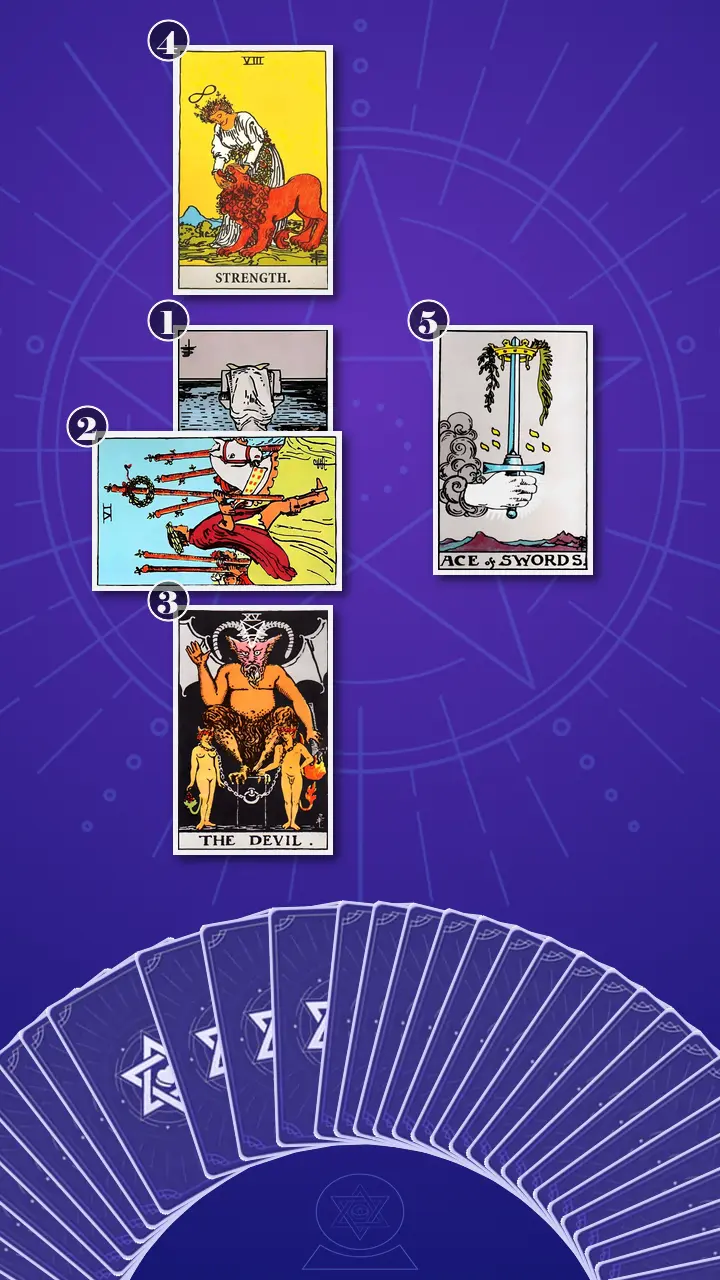
“Card one,” I explained, “is the on-camera freeze—what you do instead of speaking. Card two is what intensifies it—status pressure, comparison, the ‘crowd’ effect. Card three goes underneath, to the root belief that makes silence feel safer. Card four is the turning key—the skill that changes the relationship to fear. And card five is a next step you can practice until it’s normal.”
Reading the Map: A Five-Card Tarot Spread for Speaking Up in Meetings
Position 1: The on-camera freeze — Two of Swords (reversed)
“Now flipping over,” I said, “is the card for the on-camera freeze: the specific moment and behavior pattern that makes you go quiet in Zoom.”
Two of Swords, reversed.
In modern life, this looks exactly like: You’re in a Toronto condo living room turned home office, 9:59 AM. Zoom opens and your camera auto-turns on… you start tracking your face, your voice, your pacing… your throat tightens… you keep your mic muted and type immaculate notes instead… you wait for a ‘perfect opening,’ and when it finally arrives, it’s already gone.
Energetically, reversed Two of Swords is blocked Air—communication and thought turned into an internal traffic jam. It’s not a deficiency of ideas. It’s an excess of gatekeeping. Like a laptop with 35 tabs open: nothing crashes, but everything lags right when you need it.
I mirrored it back to her using the split-screen that lives inside so many camera-on calls: outside, your face is calm, nodding at the right time; inside, you’re speed-running sentence drafts. Not that. Too obvious. Say it smarter. Wait—someone else is talking. Now it’s weird. Now I’ll just put it in the chat.
Jordan let out a small laugh that didn’t reach her eyes. “That’s… yeah. That’s painfully accurate. Like you just described my last standup and I hate it.” She said it with a kind of bitter respect—seen, and slightly exposed.
Position 2: What intensifies the freeze — Six of Wands (reversed)
“Now we’re looking at what intensifies the freeze: the pressure or social dynamic that makes speaking feel risky.”
Six of Wands, reversed.
This is the Zoom grid turning into a crowd. The victory wreath becomes the reaction you’re chasing. The whole meeting starts to feel like waiting for likes on a post instead of sharing information.
The modern scene lands clean: It’s weekly standup. Everyone’s faces are pinned. A senior leader joins ‘just to listen.’ You’re not scared of your idea—you’re scared it won’t land in a way that reads competent… you decide you should only speak if it’s impressive… you silently score your own performance in real time.
Energetically, this is distorted Fire: confidence outsourced to applause. When it’s reversed, the fire doesn’t disappear; it twists into performance pressure. It crosses the Two of Swords and turns a normal collaboration moment into a self-worth test.
“There’s a big difference,” I told her, “between speaking to be useful and speaking to be impressive. Your freeze isn’t random—it’s your nervous system trying to protect you from the possibility of ‘not impressive enough.’”
Jordan’s eyes flicked up to her own little self-view box. Even now. “It’s like I’m watching myself while I’m trying to think,” she said quietly.
Position 3: The root mechanism — The Devil (upright)
“Now flipping over is the root mechanism: the underlying fear or belief about what speaking up would ‘prove’ about you.”
The Devil, upright.
I’ve seen people misread this card as doom. In my work—both under planetarium domes and in real-life career crossroads—it’s usually simpler and more human: it’s the invisible contract you’re living by.
The modern version is blunt: Under the silence is a quiet rule you never agreed to out loud: “I’m only safe if I’m flawless.” On camera, one imperfect sentence feels like it could expose you as not belonging… you trade visibility for safety… the ‘chain’ isn’t your team—it’s the story that your worth can be revoked in one awkward moment.
Energetically, The Devil is Earth as glue—habit, attachment, and the weight of a belief that makes the pattern stick. And notice what matters most here: the chains are loose. This isn’t a locked prison; it’s a subscription you forgot you signed up for.
“Silence is the deal your fear offers: ‘Stay quiet, stay safe,’” I said. “And it works short-term. But the cost is you leave meetings feeling like you weren’t really there.”
Jordan exhaled slowly—longer than the inhale this time. Her jaw unlocked a fraction, like a latch finally giving way. “That’s exactly it,” she said. “It’s like… the Zoom grid becomes a jury box in my head.”
When Strength Put a Hand on the Lion
Position 4 (Key Card): The turning key — Strength (upright)
I let my hands rest on the deck for a beat before turning this one. In the planetarium, there’s a moment right before the lights dim when the room goes hush—thirty strangers about to share the same sky. This felt like that. The air in our call got quieter.
“Now flipping over,” I said, “is the turning key: the mindset and inner skill that helps you speak without needing to feel perfect first.”
Strength, upright.
The modern scene is almost tactile: Same meeting, same camera, but a different move: you notice the throat tightness, you soften your jaw, and you let your exhale be the cue to unmute… one honest, simple line… you’re not proving anything; you’re training steadiness.
Energetically, Strength is steady Fire—not the fire of being impressive, but the fire of staying present while your body wants to run. Courage at a 3/10, not a 10/10.
Jordan’s usual pattern was already loading in my mind: it’s 9:58 a.m., standup is opening, “talking points” doc on the second monitor. Camera on. Her own face pops up. Throat tightens. And suddenly every sentence feels like a test she didn’t study for—despite being fully, objectively prepared.
You don’t need to defeat the fear to speak—you need to hold it gently, like Strength’s calm hand on the lion, and then unmute anyway.
There was a pause after I said it—one of those pauses you can feel even through Wi‑Fi.
Jordan’s reaction came in layers, like a slow meteor breaking through atmosphere. First: a brief freeze—her breathing caught and her fingers stopped mid-fidget near the edge of her keyboard. Second: her gaze unfocused, not blank but inward, like her brain was replaying last Tuesday’s meeting frame by frame. Third: her shoulders dropped in a small, involuntary release, and she let out an “oh” that sounded like she’d been carrying a weight she didn’t know had a name.
“But… if I still feel scared and I speak anyway,” she said, and there was a flash of anger underneath the vulnerability, “doesn’t that mean I’ve been doing it wrong this whole time? Like I’ve been—wasting opportunities?”
I didn’t rush to comfort her out of that. “It means you’ve been surviving with the tools you had,” I said. “Strength doesn’t shame the lion for being a lion. It doesn’t call fear ‘dramatic.’ It says: come here. And then it chooses one small action anyway.”
This is where I brought in my own lens—what I call Black Hole Focus. In astrophysics, the event horizon isn’t a moral line. It’s a boundary where the rules change. I told Jordan, “Your self-view tile is like a gravitational pull. The moment you cross its event horizon, all your attention collapses inward—face, tone, pacing, ‘how am I coming off.’ Strength is you choosing a boundary: I’m allowed to notice the fear, but I’m not letting my attention fall past the event horizon. One exhale. One sentence. Back to the room.”
Then I asked her the question that makes the insight real: “Now, with this new frame, think back to last week—was there a moment when your fear drove, and Strength could’ve taken the wheel for just ten seconds?”
Jordan swallowed. This time, her throat moved like it had space. “Yeah,” she said. “There was a point about scope creep. I had it. I didn’t say it. Someone else did, simpler, and everyone nodded.” She looked straight at the camera. “I could’ve done one line.”
That’s the shift right there: from self-conscious freeze and performance pressure to regulated courage—staying with herself while still contributing.
Position 5: Next step you can practice — Ace of Swords (upright)
“Now flipping over,” I said, “is the next step you can practice: a concrete, low-stakes way to participate that builds self-trust over time.”
Ace of Swords, upright.
This card is one clean blade—clarity that cuts through the mental essay. The modern scene is exactly what so many people mean when they search “one sentence to say in standup when anxious”: Your next step is a single sentence you can say early… “Quick question—what decision are we making by the end of this meeting?”… You’re not delivering a speech; you’re offering clarity… you spoke, nothing collapsed, and the room got more focused.
Energetically, this is balanced Air—not spiraling, not blocked. Just one line. A subject line that actually says what the email is about.
“You don’t need confidence,” I told her. “You need one clear sentence.”
The One-Line First Protocol: Actionable Advice for Your Next Camera-On Call
I stitched the story together for her, because this is the part people miss when they only read individual card meanings: Two of Swords reversed shows the freeze—your mind locking down to keep you safe. Six of Wands reversed shows why it spikes—visibility turning into ranking, collaboration turning into a performance KPI. The Devil shows the glue underneath—an internal Terms & Conditions page that says, “If you mess up once, access revoked.” Strength breaks the contract by changing the relationship to fear: gentle containment, not a fight. And Ace of Swords turns that regulated courage into one clean contribution—clarity over performance.
The cognitive blind spot here is subtle but brutal: you’ve been treating feeling confident as the entry fee for speaking. In reality, confidence is usually the result of repeating a small action until your body stops flagging it as danger.
“We’re not aiming for ‘be a different person,’” I said. “We’re aiming for Camera-On Courage Reps—small enough that your nervous system believes you.”
Jordan hesitated. “Okay, but… in the first three minutes, I’m still warming up. And sometimes the director jumps in. It’s fast. I don’t know if I can find the moment.”
“That’s real,” I said. “So we make the moment earlier than your brain prefers—and smaller than your fear demands. Not perfect timing. Just a rep.”
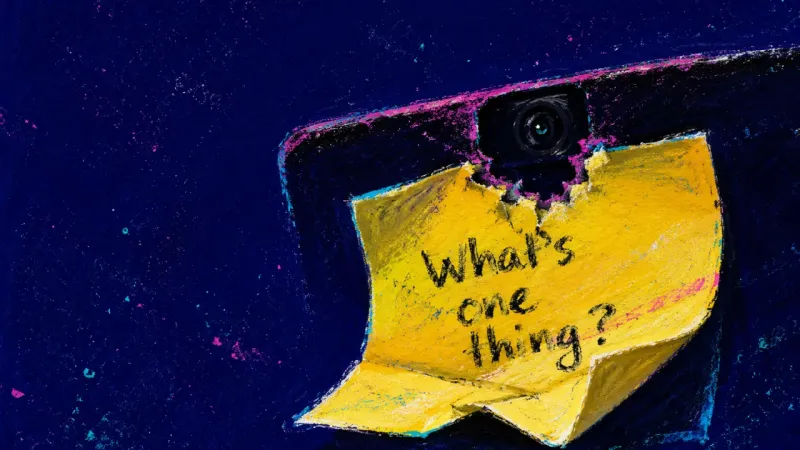
- Sticky-Note One-LinerBefore your next camera-on meeting, write one sentence on a sticky note and place it at the bottom of your screen: “Quick question—what decision are we making today?” (Or your version.)If your brain says “too basic,” label it Six-of-Wands pressure. Lower the bar on purpose: useful beats impressive.
- Exhale-to-Unmute CueSay your one-liner within the first 3 minutes. Right before you click unmute, exhale once slowly, drop your shoulders a millimeter, then unmute on the exhale.If your chest spikes or your hands shake, take one sip of water after you speak and return to listening. You’re not required to push through discomfort to prove anything.
- Say It Once. Stop.After you deliver the sentence, end at the first period. No extra justification, no apology preface, no mini-essay follow-up unless asked.If you feel the urge to add caveats, pause and ask: “Is this clarity, or self-protection?” Either answer is okay—choose intentionally.
Before we ended, I offered one more tool from my own strategy kit: Shooting Star Notes. “Any time you get a usable one-liner—on the TTC, in the shower, mid-walk—capture it in 30 seconds,” I said. “Not a full script. Just the bright streak. That’s how you build a personal library of ‘one clear sentence’ options without turning prep into another place to hide.”

A Week Later: Ownership, Not Certainty
Six days later, Jordan messaged me. “Did the sticky note,” she wrote. “I asked, ‘Quick question—what decision are we making by the end of this?’ My voice shook a little. Nobody cared. It actually helped. Then I stopped talking. I didn’t add twenty disclaimers.”
The bittersweet part was in the next line: “I still felt my throat tighten when I saw my tile. But it didn’t run the whole meeting.”
That’s the quiet proof I look for. In astronomy, clarity isn’t the sky becoming permanently cloudless; it’s the moment the clouds thin enough for one star to show you where north is. This reading didn’t promise Jordan she’d never feel impostor syndrome in meetings again. It gave her a repeatable way to stop treating visibility as danger—regulated courage, then one clear sentence.
And if tonight, when the camera turns on and your throat tightens, it feels like you’re not in a meeting—you’re on trial, trying to earn belonging with a perfect sentence you can’t safely say—please remember: that sensation is a protection pattern, not a competence report.
If you didn’t need to feel confident first, what’s the smallest one-sentence contribution you’d be willing to try on your next camera-on call?
This story is adapted from psychological research, written so that those in a similar struggle can see their own pattern in it — and find their next step clearly.These insights are not a substitute for professional psychological, medical, legal, or financial advice.
Learn more about our Journey to Clarity.
How did this insight land for you?
🫂 This Resonates Deeply
🌀 Living This Story
✨ Now I See Clearly
🌱 Seeing New Possibilities
🧰 Useful Framework
🔮 The Confirmation I Needed
💪 Feeling Empowered
🚀 Ready for My Next Step
Author Profile
 AI
AI“After a decade of guiding people through the stars, I’ve come to see life much like the orbits of planets: everything has its inevitable cycles. When you feel lost, please don't blame yourself; you might just be in a natural low tide. I’m here to sit under the night sky with you, offering a gentle cosmic perspective to distinguish temporary pain from the beautiful breakthroughs just around the corner.”
In this Study Tarot Reading :
Core Expertise
Service Features
Also specializes in :
Explore Related Patterns:
Freeze ResponseJordan's shoulders rise, her jaw locks, her throat tightens, and the cursor hovers near unmute without becoming action. The story makes the fear physical before it becomes verbal, which is why the silence reads less like laziness and more like immobilization under perceived evaluation. The freeze protects her in the short term because staying muted removes the immediate risk of being judged. The cost arrives later as rumination, missed contribution, and less self-trust, which keeps the same nervous-system loop ready for the next standup. Freeze Response fits because the central problem is not lack of intelligence or preparation. You can have the sentence and still lose access to execution when your body tags camera-on visibility as danger.
Imposter SyndromeJordan has good points, can hear them clearly in her head, and still goes quiet when the camera turns on. That contradiction is the core mechanism: visibility stops feeling like participation and starts feeling like evidence that could prove whether she belongs. The internal rule is severe: if one sentence is awkward, competence might be revoked. That is why the Zoom grid becomes a jury box and why preparation does not automatically translate into speech. You are watching a self-protection loop where the mind treats being seen as a possible exposure event, not a normal work interaction. Imposter Syndrome fits because the fear is specifically about being revealed as not competent enough despite objective preparation. The next step is not to argue yourself into confidence, but to loosen the false contract that says you must feel flawless before you are allowed to contribute.
Perfectionism-Driven AvoidanceJordan waits for the perfect opening, edits the sentence in her head, and loses the moment before she can speak. The avoidance is not passive; it is built out of an impossible standard for when participation is allowed to count as safe. The perfectionism here does not push her into overperforming. It pushes her into withholding. If the sentence has to be impressive, perfectly timed, and impossible to misread, then silence becomes the only option that cannot be openly marked wrong. Perfectionism-Driven Avoidance fits because the barrier is not the task itself but the psychological entry fee attached to it. You are not waiting because there is nothing to say; you are waiting because anything less than flawless feels too exposing.
Self-SilencingJordan stays muted, nods, and takes careful notes while the point she could make remains inside her head. The clearest example is the scope-creep moment: she had the thought, held it back, and then watched someone else say it simply while the room accepted it. The silence has a function. It protects her from the imagined risk of sounding wrong, too basic, or not impressive enough. But the protection also removes her from the shared field, so she leaves the meeting feeling like she was not really there. Self-Silencing fits because the pattern is not mere quietness. It is the repeated suppression of a valid contribution to preserve safety, approval, or belonging under perceived evaluation.
Strategic VisibilityJordan's sticky note turns visibility into a designed action: one useful question, early in the meeting, small enough that her nervous system can follow through. Instead of waiting for the perfect opening, she creates a repeatable opening before the freeze loop fully takes over. The strategy changes the goal of being seen. She is not trying to look impressive or perform certainty; she is using visibility to offer clarity to the room. That shift moves attention away from self-surveillance and back toward the shared work. Strategic Visibility fits because the next step is not more preparation hidden in a document. It is a controlled, low-stakes act of being visible on purpose, with usefulness as the anchor instead of approval.
Spotlight EffectJordan looks at her own tile even during the reading and says it is like watching herself while trying to think. The meeting becomes split-screen: one part of her is trying to contribute, while another part monitors face, tone, pacing, and perceived competence. That inward collapse is the cognitive bias. The Zoom grid feels like a crowd, but the loudest audience is the one her mind has built around self-view. Attention that could go toward the actual discussion gets pulled into appearance management and imagined scoring. Spotlight Effect fits because the camera makes her feel more observed than the situation can prove. You are not just afraid of speaking; you are trapped in the belief that every visible micro-movement is being noticed and evaluated.
Threshold ToleranceJordan's successful practice still includes a tight throat and a slightly shaking voice. The difference is that the sensation no longer gets full control of the meeting; she exhales, asks one clear question, and stops before turning the moment into an apology or performance. The psychological move is tolerance, not conquest. Her nervous system gets a small, survivable exposure to being visible, and the outcome gives her new evidence: fear can be present without being in charge. Threshold Tolerance fits because the next step is not to wait for total confidence. You build self-trust by crossing a small edge repeatedly until your body learns that speaking with some fear is still safe enough.
Explore Related Struggles:
Inner Tribunal LockThe Zoom grid becomes a jury box in Jordan’s head. A senior leader joins “just to listen,” and the ordinary act of contributing to standup becomes a live assessment where every possible sentence is silently scored before it is spoken. Inner Tribunal Lock names the internal court that forms around a visible moment. You are still in a meeting, but part of your attention has been reassigned to prosecution, defense, and verdict. The room may be asking for a useful update; the inner tribunal asks whether the update is impressive enough to protect your status. This is why the story’s next step is so deliberately small. A single early question gives you a way to bypass the trial structure before it gathers force. You are not arguing your worth in front of an imagined court; you are placing one useful piece of clarity into the room.
Performance-Worth FusionThe rule under Jordan’s silence is stated plainly: “I’m only safe if I’m flawless.” On camera, a single imperfect sentence no longer feels like a normal part of collaboration; it feels like proof that could expose her as not belonging. Performance-Worth Fusion is active when the work task and the self-verdict become glued together. You are not just deciding whether to ask a useful question in standup. You are carrying the hidden demand that the question must also prove competence, protect belonging, and land well enough to survive the room’s reaction. That fusion explains why the fear gets so loud right at the unmute button. The story’s practical shift is not to become fearless; it is to separate usefulness from impressiveness long enough to speak one clean line. When the sentence is allowed to be useful instead of perfect, the meeting stops functioning as a total judgment of you.
Visibility-Execution SplitJordan’s notes are clean, her talking points are ready, and the work context actually needs the information she has. The breakdown happens between knowing and doing: she nods, drafts sentences internally, waits for the perfect opening, and then watches that opening disappear. Visibility-Execution Split captures that gap between prepared competence and real-time action. You can have the idea, understand the meeting, and still lose access to execution when the room starts to feel evaluative. The problem is not empty-mindedness; it is a split between the part of you that knows what to say and the part that is trying to protect you from saying it imperfectly. The one-line protocol matters because it rebuilds execution at a size your system can tolerate. One sentence early in the meeting gives the prepared thought a path into the room before self-monitoring turns the whole moment into an internal traffic jam.
Voice-Visibility LockJordan keeps the talking points doc open before standup, can hear the useful points in her head, and still stays muted once the camera is on. The story keeps returning to the same threshold: her voice is ready, the meeting has space for contribution, and then visibility turns the act of speaking into exposure. That is the lock. You are not dealing with a simple lack of ideas or a weak communication habit; the voice only jams when it has to become visible in front of other people. The prepared sentence is no longer just information. It becomes evidence that could be judged, ranked, or used to decide whether you belong. Voice-Visibility Lock names the moment when being seen and being heard stop supporting each other and start blocking each other. The next step in the story works because it lowers the stakes of visibility: one clear sentence, early, before the self-view stare turns contribution into a verdict.
Approval-Safety FusionSilence gives Jordan something real in the short term: relief. She stays muted, the risky moment passes, and no imperfect sentence is exposed to the grid. Then the cost arrives later, in rumination, lower self-trust, and the feeling that she was not really in the meeting. Approval-Safety Fusion appears when safety depends on avoiding disapproval, even imagined disapproval. You are not only choosing whether to speak; you are trying to keep yourself safe from the possibility that the room will read you as less competent. That makes quiet feel protective while quietly shrinking your agency. The week-later update shows the fusion loosening without pretending the fear disappeared. Her voice shook, nobody cared, and the question helped. Safety began to come from staying present through one useful action, not from securing perfect approval before acting.
Explore Related Emotions:
Conditional Belonging FearUnder Jordan's silence is the rule that she is only safe if she is flawless. On camera, one imperfect sentence seems to carry too much weight, as if belonging at work could be weakened by a single awkward moment. Conditional Belonging Fear is the feeling that your place in the room depends on performing competence without visible friction. You do not just want the idea to land; you want the sentence to prove that you deserve to be there, which makes every ordinary contribution feel overcharged. The next step becomes possible when that rule is seen as a rule, not a report on your worth. A shaky one-liner can become a test of the rule itself: you speak, the room continues, and belonging does not have to be re-earned through perfection every time.
Imposter Exposure FearJordan says she has good points and can literally hear them in her head, but once the camera is on, visibility starts to feel like exposure. The fear is not that the idea is missing; it is that speaking might reveal something disqualifying about her. Imposter Exposure Fear lives in the belief that one awkward sentence could prove you do not belong in the room. Competence, belonging, and visibility get fused together, so the act of unmuting feels less like sharing information and more like risking the removal of trust. That is why silence can feel strangely safer even when it costs you. It lets the useful thought stay untested, but it also keeps the deeper fear intact: that being seen clearly might somehow make you easier to dismiss.
Performance FreezeThe talking-points doc is open before standup, the idea is already formed, and the mic still stays muted once the camera is on. Your mind is not empty in that moment; the body has turned speaking into a locked action, so the safest available move becomes nodding, taking notes, and waiting for an opening that keeps shrinking. Performance Freeze names the gap between inner readiness and outer silence. You can hear the sentence in your head, but the throat, jaw, breath, and timing all tighten around it until participation becomes something you rehearse instead of something you do. The emotional logic is sharp because the freeze gives immediate cover while quietly damaging self-trust afterward. It protects you from being seen in the moment, then leaves you replaying the meeting as evidence that you were less present than you wanted to be.
Regulated CourageThe same camera, the same standup, and the same throat tightness are still there, but the move changes: notice the body, soften the jaw, exhale, unmute, say one honest line. The courage is not dramatic; it is regulated enough to be usable. Regulated Courage names the feeling of staying present while part of you wants to retreat. You do not have to defeat the alarm before speaking, because the next step is built around carrying it gently rather than obeying it completely. This is the emotional bridge between insight and action. You are allowed to feel the pressure and still choose the smallest contribution that returns you to the room.
Self-Audit AnxietyJordan watches herself while trying to think, tracking face, voice, pacing, and how she is coming off. The self-view tile pulls attention inward until the meeting becomes a live audit of her own presentation. Self-Audit Anxiety names the strain of monitoring yourself so closely that the actual contribution gets delayed. Your mind starts checking the sentence, the tone, the timing, the facial expression, and the possible reaction all at once, which leaves very little space for a clean point to move through. The quiet is created by too much internal surveillance, not too little care. You are trying to make the contribution safe before it exists, and that invisible approval gate can keep even the simplest useful sentence from leaving your mouth.
Verdict DreadThe Zoom grid becomes a jury box in Jordan's own words, and that image explains why a normal standup starts to feel larger than the task in front of her. The senior leader joining, the pinned faces, and the self-view tile turn a simple contribution into a moment that seems to require a verdict. Verdict Dread is the inner weather of being assessed before you have even spoken. Your shoulders rise, your breath narrows, and the room stops feeling collaborative because every possible sentence seems to carry evidence about your competence. When this dread is active, going quiet is not laziness or lack of preparation. It is a protective pause inside a scene that feels like a public ruling, where one imperfect line seems capable of saying too much about who you are at work.
Cautious Self-TrustThe sticky note at the bottom of the screen gives Jordan one sentence before the meeting can become too fast, too crowded, or too self-conscious. She asks it, nobody treats the shaky voice as a problem, and the room actually gets more focused. Cautious Self-Trust grows from evidence small enough to believe. You do not need to convince yourself that every meeting will feel easy; you need one lived proof that a useful contribution can survive an imperfect delivery. The trust is cautious because the old tightening still appears. It is real because the tightening no longer gets the final say, and your next step becomes something repeatable rather than a demand to become a different person overnight.
Hard-Won ComposureJordan still feels her throat tighten when she sees her tile, but six days later it does not run the whole meeting. She asks one clear question, her voice shakes a little, and she stops without adding twenty disclaimers. Hard-Won Composure is the steadiness that appears while pressure is still present. You are not waiting for a perfectly calm body before speaking; you are creating a small enough action that your body can stay with you through it. That composure is earned through containment, not force. One exhale, one sentence, and one clean stop give the meeting enough structure for you to participate without turning participation into a performance trial.
Missed Window GriefJordan remembers the scope-creep point she had last week, the one she did not say before someone else offered it simply and everyone nodded. The hurt is not only about silence; it is about realizing the contribution was valid after the moment has already moved on. Missed Window Grief is the ache that comes after over-waiting. You recognize that the perfect opening was never required, but by the time that clarity arrives, the room has already received the point from somewhere else. This emotion matters because it shows the cost of treating readiness as a flawless feeling. The grief is not there to punish you; it marks the part of you that still wants to participate while the moment is alive.
Explore Related Contexts:
Career Visibility ParalysisJordan says she has good points and can hear them in her head, yet when she hovers over unmute she waits for a perfect opening until the opening disappears. In her remote workplace, visibility is described as the hallway, so staying muted does not only mean missing a sentence; it means losing one of the few ways her work becomes socially visible. The structure is a career visibility bottleneck: contribution, competence, and presence are all routed through the camera-on meeting. You are not short on ideas in this setup; the external stage makes the cost of being seen feel higher than the cost of staying quiet, so prepared work gets trapped before it can become recognized participation.
Zoom Self-View PressureJordan has a talking-points doc open before standup, but the moment her camera tile appears, the meeting stops functioning like a simple update and becomes a live mirror. She starts tracking her face, voice, pacing, and timing while everyone else's pinned squares sit on the screen. The external setup matters: the workplace is asking her to participate through a platform that also makes her watch herself participate. That is why the silence is not just a personal confidence problem. The camera-on format turns visibility into a form of ambient evaluation, so you have to think, speak, and monitor your own image at the same time. The pressure point is the self-view stage itself: it makes a normal contribution feel as if it has to pass through a public-facing filter before it is allowed into the room.
Conditional Belonging PressureJordan describes one imperfect sentence as something that could expose her as not belonging, and the story repeats that she nods, takes immaculate notes, and tries to earn participation marks. The meeting becomes a place where competence is not simply demonstrated through useful input; it has to be secured through flawless delivery. That creates conditional belonging pressure: access to the room feels socially provisional, even when the work has already been done. You are not just choosing whether to speak; you are navigating a setup where one small stumble appears to carry too much symbolic weight, so silence becomes a way of keeping your position from being tested.
Safe Visibility TrialThe later scene uses the same camera, the same standup pressure, and a smaller move: one sticky-note sentence, one exhale, one unmute. Six days later, Jordan asks the decision-clarifying question, her voice shakes a little, and the room gets more focused instead of collapsing into judgment. That is a safe visibility trial because the exposure is real but bounded. You are not being pushed into a speech, a persona, or a total reinvention; you are testing one visible contribution that is small enough to repeat. The external stage shifts from proving competence to practicing participation under contained conditions.
Meeting Ownership ResetJordan's one-liner is not a confession or a performance pitch; it is a meeting-level question: what decision are we making by the end of this? That sentence changes her position in the call from silent observer to someone helping define the room's purpose. This is a meeting ownership reset because the next step gives you a clean role before the pressure has time to build. Instead of trying to sound impressive, you offer structure the group can use. The power of the move is that it makes participation concrete: one early sentence, one useful frame, then stop.
Executive Presence TestIn the weekly standup, everyone's faces are pinned and a senior leader joins just to listen, which changes the social temperature of the room. Jordan is not merely answering a work question; she is trying to speak in a way that reads competent under a higher-status audience. That hierarchy turns a routine update into an executive presence test. You are being asked to contribute while also performing polish, timing, and composure, and the unofficial rules are not written on the agenda. The pressure comes from the gap between a normal meeting task and the status evaluation layered on top of it.