Rejected Again, Still Waiting?

Explore the fallout of repeated job search rejection, related tarot cards, and reading insights from similar hiring pressure.

Job Search Rejection Fallout

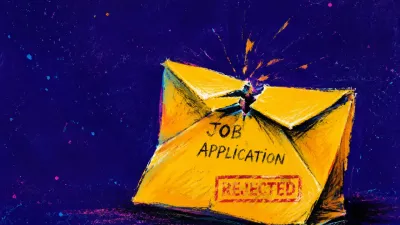
A hunched figure under glowing inbox light as locked doors and silent screens press cold marks across bent shoulders

What is this situation?

Job Search Rejection Fallout — it starts after you hit submit on an application you actually cared about, the one you tailored your resume for, rewrote the cover letter around, and maybe even let yourself imagine on your commute or between classes or during a lunch break at your current job. At first, the process looks normal: a careers portal, a confirmation email, a recruiter message, a screening call, a panel interview, a thank-you note sent within the hour. Then the waiting takes over. Your inbox becomes a place you keep checking without meaning to, your phone lights up and your chest tightens before you even see who it is, and the same phrase keeps arriving in different formats: “we’ve decided to move forward with other candidates.” Sometimes there is no phrase at all, just a status page stuck on “under review,” a recruiter who was warm last Tuesday and unreachable by Friday, or a hiring manager who praised your experience and then disappeared behind a silence you are expected to accept professionally. The power sits on one side of the screen: they know the budget, the shortlist, the internal candidate, the timing, the reason, and you are left performing availability, enthusiasm, and resilience with almost no information. You tweak your resume again, swap keywords, message people on LinkedIn, watch former classmates announce new roles, and try not to let every rejection rewrite the way you read your own skills. The fallout is not just one “no”; it is the accumulation of small closures with no explanation, doors that do not slam so much as stay politely locked, much like the figures on the Five of Pentacles moving through the cold beside a lit window that proves there is warmth inside, just not an entrance opening for them.

Why it's not you?

The issue is not that you are too sensitive about rejection or somehow missing a secret standard everyone else understands. Modern hiring systems are often opaque, automated, delayed, and noncommittal, with employers holding the information while applicants carry the uncertainty. That imbalance is the shape of the situation, not a personal flaw.

Job Search Rejection Fallout in Tarot Cards

Job Search Rejection Fallout has a very specific texture: the inbox refresh, the empty calendar slot after an interview, the shoulders tightening before you open another automated email. That body-level bracing is not random; it comes from an environmental, structural dynamic where employers control the timeline, the feedback, and the visibility of the decision. The Tarot Cards below do not decide your next move for you; they mirror the shape of being held outside a process that keeps asking for more while giving little back. Here are the Tarot Cards that tend to reflect this kind of job search rejection fallout.

The Emperor
Reversed
The Emperor sits armoured on a stone throne backed by bare mountains, concentrating authority in a rigid and defended position. Reversed, that authority becomes an unresponsive hiring hierarchy in which decision-makers control access, criteria, timing, and explanation while applicants have little meaningful leverage. The throne still identifies where power is located, but the route through it is blocked by rigidity rather than lack of applicant effort. You can read silence and arbitrary closure as features of an imbalanced organisational structure, not as proof that you failed to perform deference correctly.
The Hierophant
Upright
A seated institutional authority faces two petitioners while crossed keys lie visibly at the threshold. The composition mirrors formal hiring systems in which credential rules, approved language, screening conventions, and organisational fit determine who is admitted to the professional structure. The keys are present, suggesting that institutional pathways exist, but access is mediated by people and standards positioned above the applicants. You can see repeated rejection as contact with a gatekeeping system whose conventions may be narrow or hidden, rather than reducing every outcome to a defect in your underlying ability.
The Chariot
Reversed
The charioteer faces forward, but the two sphinxes below him pull through opposing positions without visible reins connecting intention to movement. Reversed, the vehicle becomes an image of career effort that cannot convert into traction because employers, timelines, and selection systems control essential parts of the route. The armour and vehicle remain present, so capability has not vanished; the blocked element is coordination between effort and external movement. You can separate a stalled hiring process from a failed career identity and see why applying harder does not automatically restore direction.
Strength
Reversed
A flower-crowned figure calmly meets a lion at close range beneath an infinity symbol, combining instinctive force with steady relational control. Reversed, access to that steadiness is obstructed: repeated rejection makes professional self-trust harder to hold, and each new application demands confidence that the hiring system has been steadily eroding. The lion remains powerful and the human figure remains present, so the image does not depict missing ability. You can understand the confidence gap as a disrupted relationship with existing capacity, shaped by cumulative nonrecognition rather than by proof that the capacity itself has vanished.
Wheel of Fortune
Reversed
A large wheel turns among figures rising and descending around its rim, placing individual position inside a larger moving cycle. Reversed, the cycle does not translate effort into traction, echoing searches shaped by hiring freezes, budgets, internal candidates, automated screening, and timing factors that applicants cannot inspect. The wheel remains a changing mechanism rather than a permanent sentence. You can recognise repeated rejection as partly produced by moving external contingencies, preventing a run of bad outcomes from being treated as a stable measurement of your skill.
Justice
Reversed
Justice holds a sword and scales between two pillars, displaying the tools of reasoned evaluation and accountable decision-making. Reversed, those tools remain visible but lose credibility, matching recruitment processes that claim objective merit while hiding weighting, exceptions, internal candidates, or inconsistent standards. The blocked scales locate the problem in the quality and transparency of the evaluation, not automatically in the evaluated applicant. You can question what the decision actually measured without needing to deny that a decision occurred or invent a more punishing explanation for it.
The Hanged Man
Upright
A figure hangs motionless from a living tree while a halo shows that awareness remains active inside the suspension. The scene mirrors the applicant's forced pause after submitting or interviewing, when the employer controls the next signal and professional etiquette discourages repeated contact. The figure's composed posture keeps the wait from becoming an image of personal failure. You can recognise suspended agency as a designed feature of the hiring relationship while retaining the ability to observe what the delay is costing and what information it does not provide.
The Devil
Upright
Two figures remain chained beneath a dominating figure, with the loops visible around their necks and the pedestal fixing the hierarchy in place. The structure mirrors an internal loop still governed by employer signals: one more inbox check, one more portal refresh, one more comparison with someone who was selected. The chains are loose enough to reveal that the loop is maintained, not absolute. You can see how information scarcity and intermittent hiring signals keep self-evaluation attached to the employer’s screen, which relocates the problem from defective willpower to a pattern with identifiable leverage points.
The Tower
Upright
Lightning strikes a crowned tower as figures fall and the structure's upper certainty breaks open. The scene captures a sudden rejection after a promising interview process, when the imagined salary, commute, team, escape from a current role, or post-graduation plan collapses at once. The broken tower makes the failed projection visible instead of leaving it fused with your whole career. You can recognise that an employer's no destroyed a specific expected structure, creating real fallout while also exposing which parts of the future had been resting on an outcome you did not control.
The Star
Reversed
A kneeling figure pours water into both land and pool beneath a large guiding star, but reversed the cycle of replenishment is obstructed. Repeated rejection can consume the emotional resource needed to approach new applications with openness, leaving hope drained faster than the search restores it. The water and stars remain present in the physical scene even while their relationship is blocked. You can identify discouragement as accumulated depletion caused by the hiring cycle, rather than accepting low hope as an objective forecast of future employability.
The Moon
Upright
A narrow path runs between two towers under uncertain moonlight while a dog and wolf react from opposite sides and a creature rises from dark water. The scene maps a hiring process in which the route exists but budgets, shortlists, internal candidates, and decision reasons remain outside clear view. The path continues through the ambiguity, preserving movement without pretending the landscape is fully knowable. You can recognise that the search is generating uncertain signals and strong reactions at the same time, keeping missing employer information separate from imagined conclusions about your ability.
Judgement
Reversed
A trumpet sounds over figures rising from fixed containers, depicting a call that reorganises how prior experience is understood. Reversed, the transition is blocked because employer rejection has been granted too much authority over the meaning of your career record. The figures remain capable of rising even though recognition has not arrived from above. You can identify growth here as rebuilding an evidence standard in which hiring outcomes are informative but limited, allowing your skills, values, and working history to be interpreted beyond the verdict of a single gatekeeper.
The World
Reversed
A wreath encloses a central figure in a complete, witnessed frame. Reversed, the frame fails to close, mirroring a recruitment process that reaches a panel interview or apparent final stage but ends in silence, an unchanged portal, or a generic message that explains nothing. The nearly complete structure shows why this form of rejection consumes more attention than an early decline: the process solicited substantial investment before withholding resolution. You can assign the missing closure to the employer's unfinished communication rather than treating it as a professional task you somehow failed to complete.
Three of Cups
Reversed
Three figures raise their cups inside a close celebratory circle while fruit and flowers cover the ground beneath them. Reversed, that circle becomes difficult to enter when classmates, colleagues, or LinkedIn contacts announce new roles while your own search keeps producing closed doors. The shared harvest shows why these updates can register as social evidence rather than neutral news. You are encountering a public success ritual that can magnify private exclusion, even though the visible celebration does not reveal the networks, timing, or institutional advantages behind each outcome.
Five of Cups
Upright
A cloaked figure gives full attention to three spilled cups while two intact cups stand outside his immediate view. The image mirrors the attentional narrowing that follows repeated rejection, when every prior no becomes easy to retrieve and evidence of skill, support, or remaining opportunity becomes cognitively quieter. The upright cups and bridge remain materially present, so the card does not require loss to be minimised. You can see how disappointment is organising perception and distinguish what has genuinely closed from what the fallout is temporarily making difficult to notice.
Ace of Pentacles
Reversed
A hand extends a pentacle above a cultivated garden and an archway leading toward distant ground. Reversed, the material opening cannot be securely received, matching an offer-shaped possibility that ends in non-selection, a rescinded process, or a role that closes after significant applicant investment. The garden and path remain visible, but access to the concrete resource is interrupted at the point of transfer. You can identify the rejection as a lost employment opportunity with real financial and developmental consequences without treating it as proof that no other material opening can exist.
Three of Pentacles
Reversed
An artisan presents skilled work inside a stone building while two other figures inspect plans and participate in the evaluation. Reversed, the shared assessment structure breaks down, echoing applications where your portfolio, experience, or interview performance is reviewed through unclear criteria and never converted into recognised contribution. The craftsmanship remains carved into the building even when recognition is blocked. You can separate the existence of skill from a particular panel's willingness or ability to value it, especially when the evaluators provide no account of the mismatch.
Five of Pentacles
Upright
Two visibly strained figures move outside a glowing pentacle window, placing exclusion in the body and the surrounding environment rather than hiding it as an abstract idea. Repeated hiring rejection can make that outside position migrate inward, turning employer-controlled access into shame, scarcity, and doubt about whether you belong anywhere professionally. The shared movement and illuminated window preserve evidence that exclusion is a condition with social and material causes. You can observe the internal fallout without treating it as an accurate mirror of your worth, because the image keeps the gate and the excluded person visibly separate.
Six of Pentacles
Reversed
A standing figure holds scales while distributing coins to people positioned below him. Reversed, the exchange becomes a gatekeeping structure in which employers possess the salary, criteria, shortlist, and explanatory power while applicants perform enthusiasm and availability without reciprocal transparency. The coins and scales remain visible, but fair access to them is obstructed by one-sided control. You can locate the imbalance in the hiring arrangement itself, distinguishing unequal information and resource distribution from any belief that you failed to earn basic clarity.
Seven of Pentacles
Reversed
A worker pauses beside a cultivated vine and looks directly at the pentacles produced by sustained labour. Reversed, the visible investment does not become a usable career return: custom applications, interview rounds, take-home tasks, and follow-ups generate another generic rejection or no response at all. The vine confirms that the work exists even when the harvest mechanism fails. You can audit where effort is being absorbed by hiring funnels without automatically assuming that more polishing, more keywords, or more unpaid preparation will correct a system that is not returning information.
Eight of Pentacles
Reversed
A worker repeats the same detailed task across a sequence of pentacles while the city sits at a distance. Reversed, repetition stops producing credible advancement, mirroring the cycle of rewriting resumes, swapping keywords, refining cover letters, and rehearsing answers without enough feedback to know whether the changes address the actual gate. The bench still contains evidence of sustained effort, but the route from effort to recognition is blocked. You can see the application loop as labour performed under poor learning conditions, preventing sheer repetition from becoming the sole measure of commitment or competence.
Ace of Swords
Reversed
A hand raises a crowned sword above distant mountains, offering a clean line of truth and discrimination. Reversed, that line is obstructed, matching rejection messages that announce a result while withholding the specific evidence needed to understand what happened. The sword remains present, but usable clarity does not reach the applicant. You can recognise the feedback void as a blocked information resource, preventing a generic no from masquerading as a precise diagnosis of your resume, interview, or career viability.
Two of Swords
Upright
A blindfolded figure holds two swords in exact balance while rocks break up the water behind her. The image captures a decision made without usable visibility: keep applying in the same way, revise the strategy again, widen the search, or step back, even though employers have supplied no explanation that would rank those options. The blades are held rather than permanently fixed, and the shoreline remains behind the blindfold. You can see that the impasse is being maintained by missing information and competing protective choices, not by an absence of possible decisions.
Three of Swords
Upright
Three blades enter an exposed heart while rain fills the background, showing an external impact that has become internally lodged. A rejection after meaningful preparation can remain in your psychological cache as replayed interview answers, imagined mistakes, and the memory of a future that briefly felt available. The wound is clearly located, which makes differentiation possible: the message hurt because the role mattered and the process invited investment. You can name the specific loss without allowing the pain to supply a broader verdict the employer never had enough evidence to make.
Five of Swords
Upright
One figure gathers swords while two others walk away beneath a jagged sky, making the winner-loser structure of the encounter explicit. Hiring similarly turns a pool of qualified people into one selected candidate and many professionally composed departures, even when the differences between them are narrow or shaped by hidden preferences. The departing figures retain the ability to leave the contest rather than letting its result define every other arena. You can identify the zero-sum design of selection as a source of rejection fallout and avoid mistaking relative non-selection for objective absence of skill.
Eight of Swords
Upright
A bound, blindfolded figure stands among eight swords on muddy ground while a fortress remains visible in the distance. The enclosure represents genuine external restriction, but its gaps show that the mind cannot accurately map the whole field while employer criteria and alternatives remain hidden. The image holds structural constraint and cognitive narrowing in the same frame. You can challenge the belief that every route is closed without denying the real doors that employers have closed, creating a more accurate distinction between current access limits and permanent professional incapacity.
Nine of Swords
Upright
A figure sits upright in bed beneath nine horizontal swords, with private distress continuing after the public day has ended. The scene matches the way an unresolved search enters off-hours through inbox dread, replayed interviews, imagined resume flaws, and anticipation of another standard rejection message. The swords hang on the wall rather than entering the body, preserving a distinction between thoughts generated by uncertainty and established facts. You can audit which conclusions came from actual employer information and which were produced because silence left the mind to complete the missing explanation.
Page of Swords
Upright
The Page stands alert with a raised sword while wind moves through the clouds and trees around him. That watchful posture mirrors the way an opaque hiring process turns email, phone notifications, LinkedIn, and applicant portals into an ambient monitoring system inside your ordinary day. Because the Page remains observant rather than defeated, the image also preserves access to evidence. You can recognise that repeated checking is being produced by unresolved external signals, separating the employer's communication vacuum from any claim about your professional worth.
Three of Wands
Reversed
A figure stands between three staffs and looks across the water toward ships travelling beyond the shoreline. Reversed, the expected expansion does not become an accessible route: applications were sent outward, but the hoped-for move into a new company, industry, city, or level keeps returning as delay or refusal. The ships still place a wider market on the horizon, even though access to it is obstructed. You can read the stalled expansion as a problem of reach, timing, and entry conditions rather than allowing each employer’s decision to define the full scale of your potential direction.
Five of Wands
Upright
Five figures crowd the same patch of ground with raised staffs crossing in different directions, making individual movement difficult to distinguish from the contest. The image mirrors a shortlist or applicant pool in which several capable people compete for one controlled opening and most participants must leave without the role. The figures are active rather than passive, so the scene preserves evidence of effort and capability across the group. You can recognise that nonselection may reflect a congested, comparative process with limited capacity, not a clean division between one qualified person and everyone else being unworthy.
Six of Wands
Reversed
A mounted figure carries a laurel-crowned wand through a crowd, making professional recognition public and socially confirmed. Reversed, the wreath is withheld or destabilised, closely matching non-selection after you have performed your credentials before recruiters, panels, or hiring managers. The rider, wand, and accumulated experience remain present even when public validation does not arrive. You can distinguish the absence of employer recognition from the absence of professional substance, especially when the decision process remains hidden.
Eight of Wands
Reversed
Eight staffs cross an open sky in a coordinated line above a river and green landscape. Reversed, the hiring channel loses that coordination: the recruiter who sounded enthusiastic stops replying, decision dates move, and automated messages replace the direct communication established during interviews. The staffs remain in motion even when their direction is disrupted, reflecting how processes can continue internally while applicants receive no usable signal. You can identify communication failure as part of the employer’s process rather than treating every delay as hidden evidence that you performed badly.
Nine of Wands
Upright
A visibly bandaged figure stands with one wand in hand while eight prior staffs form a record behind him. The image shows growth under repeated external impact without pretending that resilience means returning to each application untouched or endlessly available. The boundary behind the figure and the wand he still controls preserve both learning and agency. You can integrate the cost of rejection into a more selective, evidence-aware way of engaging with hiring systems, rather than turning persistence into compulsory exposure or caution into permanent withdrawal.
Ten of Wands
Upright
A figure carries ten staffs in a bundle so dense that the destination ahead is difficult to see. The image captures the cumulative professional workload created by multiple applications, interview rounds, follow-ups, networking messages, portal accounts, and the emotional reset required after each rejection. The town is still reachable in the composition, but the present carrying method obscures it. You can name the job search as a substantial work stream in its own right and stop using exhaustion from that workload as evidence that you lack professional stamina.

Job Search Rejection Fallout in Tarot Card Reading Insights

When Job Search Rejection Fallout starts turning every email notification into a checkpoint, other people bring that same waiting, silence, and repeated rejection into readings. The focus shifts from the cards themselves to what appears when this job-search pressure enters the room. Tarot Reading Insights from sessions around this kind of fallout are gathered below.

Psychological Contexts Related to Job Search Rejection Fallout