Stuck In An Old Role?

Explore the workplace bind of being kept in an outdated role, with related tarot cards and tarot reading insights.

Workplace Identity Freeze
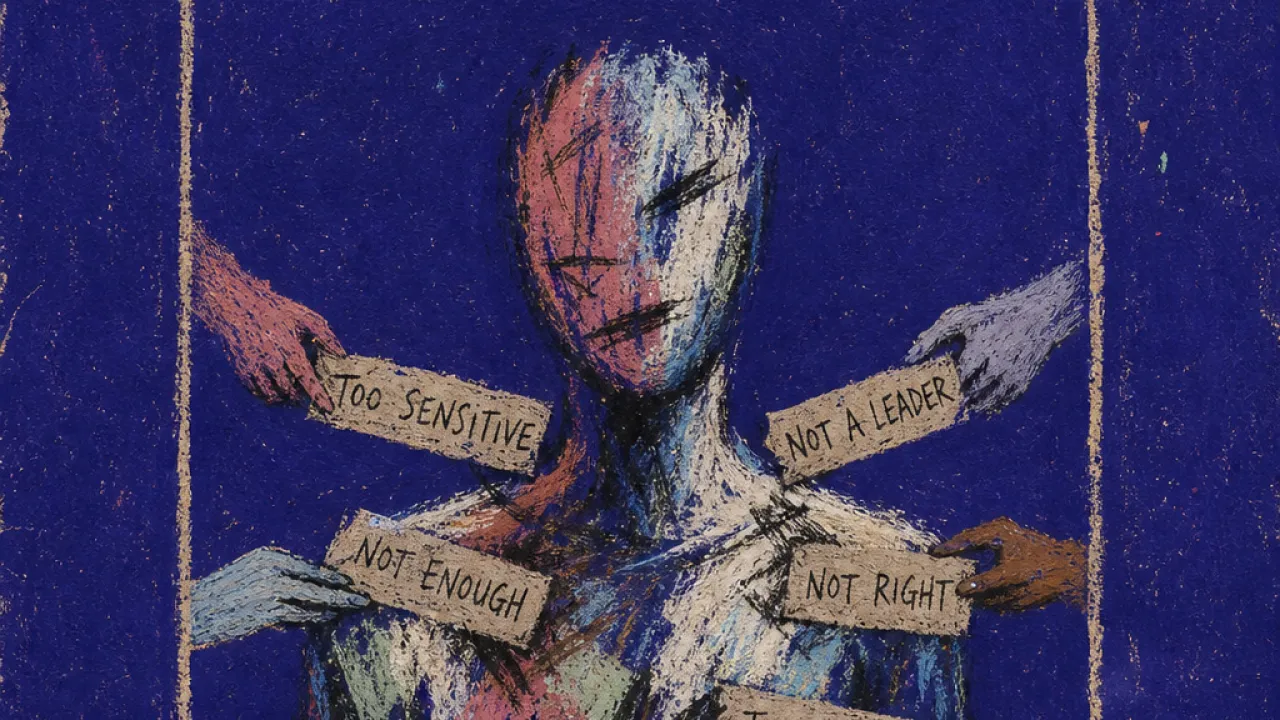
A solitary figure boxed inside an old name tag outline, with office hands pinning labels across shoulders and chest

What is this situation?

Workplace Identity Freeze — you step into the job as one version of yourself, and months or years later the workplace keeps greeting that version like nothing has changed. At first it looks harmless: people remember you as the junior hire, the fixer, the quiet one, the spreadsheet person, the support person, the person who is good at cleaning up after other people's decisions. Then the pattern hardens. You take on bigger work, learn new systems, lead parts of projects, bring sharper ideas into meetings, but the room still assigns you the same old slot before you even speak. A manager praises your reliability while handing the visible stretch work to someone newer; a colleague says, "You're so good at this," and drops the same low-growth task on your desk again; your attempts to name what you want next are met with vague nods, calendar delays, or a polished version of "we still need you where you are." Your body starts tracking the script before your mind can argue with it: your chest tightens when someone introduces you by an old role, your jaw locks when your work is described as "helping out," and your shoulders brace when a meeting turns into another round of being useful but unseen. The job is not just using your skills; it is freezing your public identity in place, making every future-facing move pass through people who are more comfortable with the old label, much like the figure on the Eight of Swords, standing bound while the blades around her define the narrow space she is allowed to occupy.

Why it's not you?

The problem is not that you lack range or that you are failing to prove yourself. The problem is a workplace that keeps converting your growth back into the role it already knows how to use. When recognition, stretch work, and decision-making access stay locked to an old label, the freeze belongs to the environment, not to you.

Workplace Identity Freeze in Tarot Cards

Workplace Identity Freeze names the moment a job keeps treating you like the person you were hired as, even after your work has outgrown that frame. That tightness in your chest when someone introduces you by the same old role is not random; it tracks an environmental and structural dynamic in the way recognition moves here. The Tarot Cards below do not decide your next move; they reflect the outline of a workplace that keeps pinning your name tag to an older version of you.

The Emperor
Reversed
The armored ruler sits on a stone throne marked by rams, with a rigid landscape behind him and authority concentrated in one fixed seat. Reversed, that throne becomes an organizational control point where hierarchy protects familiar reporting lines and treats an old role as the safest place to keep you. You can bring leadership into the work without being granted the mandate that makes leadership count. The structure shows how a manager or senior gatekeeper can praise your dependability while retaining control over visibility, decision rights, and the assignments that would change how the team sees you.
The Hierophant
Upright
The central religious authority sits between pillars with keys at his feet while two followers kneel in an orderly arrangement. The formal gate, repeated posture, and sanctioned roles mirror a workplace culture that teaches everyone where each person belongs before their current contribution can revise the map. You may be included in the group precisely because you perform the approved support function, while access to more visible work depends on adopting a different status recognized by the institution. The structure shows social belonging operating through role conformity, so the old identity survives as a condition of being considered dependable and easy to place.
Wheel of Fortune
Reversed
The large wheel turns between fixed figures and changing creatures, making repetition, rotation, and shifting position visible in one mechanism. Reversed, the same workplace cycle keeps returning you to the familiar assignment: new projects arrive, but the role attached to your name does not move with them. You may be waiting for the next review, reorganization, or manager to reset the pattern, only to find the old identity carried into each new cycle. The structure reveals timing pressure created by institutional repetition, where a calendar event changes but the underlying allocation of opportunity remains fixed.
Justice
Reversed
The seated figure holds a sword upright and balances scales between two pillars, placing judgment inside a formal frame. Reversed, the scales describe an evaluation system that weighs your current output through an outdated role label, so expanded responsibility does not receive equivalent credit. You may enter reviews with evidence of larger work and still encounter criteria that remain vague, selective, or controlled by the same people benefiting from your old position. The structure makes the freeze visible as a recognition and classification problem: the record exists, but the workplace is not applying its own measure evenly.
The Hanged Man
Reversed
The figure hangs by one foot from a living tree, suspended above the ground with a halo around the head and no route forward visible. Reversed, that suspension becomes an institutional delay: promotion talks, role changes, and ownership decisions remain paused while the old workplace identity continues doing the work. You may be told that the timing is not right or that the team still needs you where you are, but the waiting period has no clear conversion point. The structure distinguishes a deliberate pause from a stalled cycle in which your career movement is traded for the organization's convenience.
Death
Reversed
The white horse, fallen ruler, and rising sun place an old order beside the evidence of a new one. Reversed, the workplace keeps the former professional identity in circulation, so development is treated as additional capacity for the old role rather than as a reason to rebuild the role itself. You may have changed your methods, judgment, and ambitions while the organization's language remains attached to the version of you it first hired. The structure names a stalled cognitive upgrade: the underlying system has evolved, but the public identity used to route opportunity has not been replaced.
Judgement
Reversed
An angel sounds a trumpet above figures rising from enclosed boxes, creating a scene of public review and renewed recognition. Reversed, the call fails to update the record: the workplace keeps resurrecting your earlier job identity while treating later work as background evidence rather than a new professional mandate. You can present a changed scope, stronger judgment, and leadership in practice, yet the people controlling your next step may continue listening for the old version of your contribution. The structure exposes a stalled professional reckoning, where the past is repeatedly summoned but the present is not formally acknowledged.
The World
Reversed
The dancer's body is framed by a laurel wreath while the four figures at the corners hold the full field of experience around her. Reversed, that frame remains incomplete for the worker: skills, systems knowledge, and leadership practice have expanded, but the workplace has not integrated them into a new public identity. You may be operating at a broader level while still explaining yourself through the role that came first. The structure makes the growth gap precise, showing how an organization can consume development as extra output without allowing it to reorganize the assumptions, title, and authority surrounding you.
Eight of Cups
Upright
A cloaked figure walks away from eight carefully stacked cups toward dark hills and a rising moon, leaving a familiar arrangement behind. The departure captures the point at which a stable job can no longer compensate for being repeatedly assigned an identity that your actual work has outgrown. You may be weighing an exit not because the role contains no value, but because its structure keeps converting every new capability into the same old task. The image frames the choice as a question of whether continued familiarity is worth the opportunity cost of remaining unseen.
Four of Pentacles
Upright
The seated figure clamps one pentacle to the chest, pins another beneath each foot, and wears a fourth like a crown against the city behind him. The fixed posture renders status and control as possessions to be guarded, matching a workplace that holds you in the role it already knows how to monetize and manage. You may be trusted with the work that keeps the system stable while being denied the authority that would make your growth visible. The pattern is a form of organizational holding: your reliability becomes something the team protects, and that protection quietly prevents your role from becoming larger.
Six of Pentacles
Reversed
A richly dressed figure distributes coins from one hand while holding scales, and two people kneel below to receive what is allocated. Reversed, the scene shows access and recognition moving through a one-sided exchange: your labor is available to the system, but decision rights and visible opportunity remain rationed above you. You may be called dependable because you absorb the work that others do not want, while the same dependency is used to keep you in a recipient or support position. The structure reveals how praise can substitute for a fair redistribution of ownership, sponsorship, and career-making work.
Seven of Pentacles
Upright
The worker leans on a staff and studies a cluster of pentacles growing from the bush, pausing to assess what sustained effort has produced. The scene mirrors months or years of expanded contribution that can be visibly mature while the workplace still refuses to harvest it as promotion, ownership, or a new role. You may be asked to wait for the next cycle even though the evidence has been accumulating for a long time. The structure separates productive patience from indefinite deferral, making the timing problem visible in the gap between a developed body of work and an organization that keeps postponing the status change.
Eight of Pentacles
Upright
The craftsperson sits at a narrow bench with one completed pentacle after another fixed to the wall, while the next piece remains in hand. The repeated workstation captures how a workplace can turn demonstrated mastery into a permanent production lane, sending every new request back to the task you already know how to complete. You may be learning systems and improving the quality of the work, yet the visible pattern only confirms that you are useful in the same place. The structure distinguishes skill accumulation from role expansion: output grows, but ownership, sponsorship, and the chance to define the work remain outside your assigned station.
Page of Pentacles
Reversed
The young figure holds a single pentacle at eye level in an open field, absorbed in the first material promise of learning and work. Reversed, that apprentice image becomes a stalled status marker: the workplace keeps reading you as someone still waiting to qualify even after your actual responsibilities have outgrown the entry point. You may be carrying complex deliverables while managers continue to frame your contribution as potential, assistance, or early-career support. The image exposes a developmental label that has stopped being descriptive and has become a gate around title, sponsorship, and access to higher-stakes work.
Two of Swords
Upright
The blindfolded figure crosses two swords over the chest, seated between dark water and a rocky shore beneath a quiet moon. The blocked posture mirrors the stay, challenge, or exit decision that appears when every available option is filtered through the same workplace label and the same people controlling access. You may have evidence that the role no longer fits, but the cost of losing income, sponsorship, or team stability can keep the decision suspended. The structure identifies a constrained choice: the issue is not a lack of options on paper, but the power imbalance that makes each route carry an uncertain professional price.
Eight of Swords
Upright
The blindfold, crossed bindings, and ring of swords create a narrow enclosure around a body that is still standing in open ground. The external blades mirror how repeated workplace introductions can become an anticipatory body script, with your shoulders bracing and your speech narrowing before another meeting assigns the familiar role. You may find yourself monitoring whether you sound too ambitious, correcting your ideas back into support language, or preparing to accept the task the room expects. The structure keeps the source of the pressure visible: the internal cache is carrying an external label, not proving that your identity has actually stopped developing.
Two of Wands
Upright
A figure stands on a wall holding a globe, with one wand fixed beside him and the other in hand as he looks across a wide landscape. The scene holds two scales of professional identity at once: the known position that keeps you contained and the larger direction your expanding work makes visible. You can see a future role without having the organizational permission to move toward it. The structure turns career direction into a question of whether the workplace will recognize the distance between the position it assigned and the horizon your capability now points toward.
Six of Wands
Reversed
The laurel-bearing rider moves through a crowd with a raised staff, but the reversed procession no longer converts visible effort into public standing. The scene mirrors a workplace where your contribution is used and noticed in private while the credit, stretch assignment, or promotion narrative is attached to someone else. You can be the person who makes the project work and still be introduced as support when the room distributes status. The reversed public scene exposes a recognition bottleneck: the organization benefits from your performance without updating the identity it presents to decision-makers.
Ten of Wands
Upright
The figure bends beneath a bundle of ten wands, with the destination hidden behind the load and the face turned away from the wider landscape. The image mirrors the fixer identity: you keep carrying the tasks that stabilize other people's decisions, but the burden blocks the visibility and time required to claim a larger role. More responsibility can therefore produce less career mobility when every new problem is routed through the person already known to absorb it. The structure separates workload growth from status growth, showing how being indispensable for cleanup can keep your future-facing work out of view.

Workplace Identity Freeze in Tarot Card Reading Insights

Workplace Identity Freeze is something people bring into readings when their job keeps seeing an outdated version of them. The shift from cards to readings shows how this situation appears when someone asks for a clearer view of the pattern. Tarot Reading Insights from sessions around this kind of workplace bind.
Golden-Handcuff Paralysis: Closing One Listing, Testing One Need

Golden-Handcuff Paralysis: Closing One Listing, Testing One Need

Topic:Choice Tarot Reading

Struggle:Unseen Cost Bind

Context:Third Path Search

She Called Her Comfortable Job Safe Until One Message Tested the Label

She Called Her Comfortable Job Safe Until One Message Tested the Label

Topic:Career Tarot Reading

Struggle:Short-Term Maintenance Trap

Context:Career Stability Lock-In

A Saved Job Listing Became a Live Test, Not a Verdict on Four Years

A Saved Job Listing Became a Live Test, Not a Verdict on Four Years

Topic:Career Tarot Reading

Struggle:Sunk Cost Paralysis

Context:Sunk Cost Exit Dilemma

Shrinking Ideas to Seem Collaborative: One Intact Recommendation

Shrinking Ideas to Seem Collaborative: One Intact Recommendation

Topic:Career Tarot Reading

Struggle:Permission Paralysis

Context:Safe Visibility Trial

The Sunk-Cost Identity Trap: From Career Progress to Present Evidence

The Sunk-Cost Identity Trap: From Career Progress to Present Evidence

Topic:Choice Tarot Reading

Struggle:Sunk Cost Paralysis

Context:Third Path Search

After Slack Praise: An Open Tracker, Three Review Lines, Then an RSVP

After Slack Praise: An Open Tracker, Three Review Lines, Then an RSVP

Topic:Career Tarot Reading

Struggle:Metric-Compass Fusion

Context:Post-Achievement Plateau

Sunday Night Google Calendar Dread—and the 12-Minute

Sunday Night Google Calendar Dread—and the 12-Minute "Mine" Block

Topic:Direction Tarot Reading

Struggle:Boundary Control Strain

Context:Always On Availability

Hovering over “Save” on LinkedIn—And a calmer way to choose pronouns

Hovering over “Save” on LinkedIn—And a calmer way to choose pronouns

Topic:Introspection Tarot Reading

Struggle:All-or-Nothing Belonging

Context:Safe Visibility Trial

9:58 PM Notes Rewrites—And the Three Anchors That Get You Started

9:58 PM Notes Rewrites—And the Three Anchors That Get You Started

Topic:Personal Growth Tarot Reading

Struggle:Perfect Readiness Trap

Context:Personal Brand Performance

The Zoom Moment My Throat Locked—and the One Line That Bought Me Time

The Zoom Moment My Throat Locked—and the One Line That Bought Me Time

Topic:Introspection Tarot Reading

Struggle:Clarity-Exposure Split

Context:Direct Communication Trial

From Workplace Identity Freeze to a Steady Voice: The One-Line Reset

From Workplace Identity Freeze to a Steady Voice: The One-Line Reset

Topic:Career Tarot Reading

Struggle:Approval-Safety Fusion

Context:Group Chat Tribunal