When the Framework Starts Watching

Explore the pressure of structured self-review, related tarot cards, and reading insights from sessions about reflection frameworks.

Reflection Structure Trial
What is this situation?

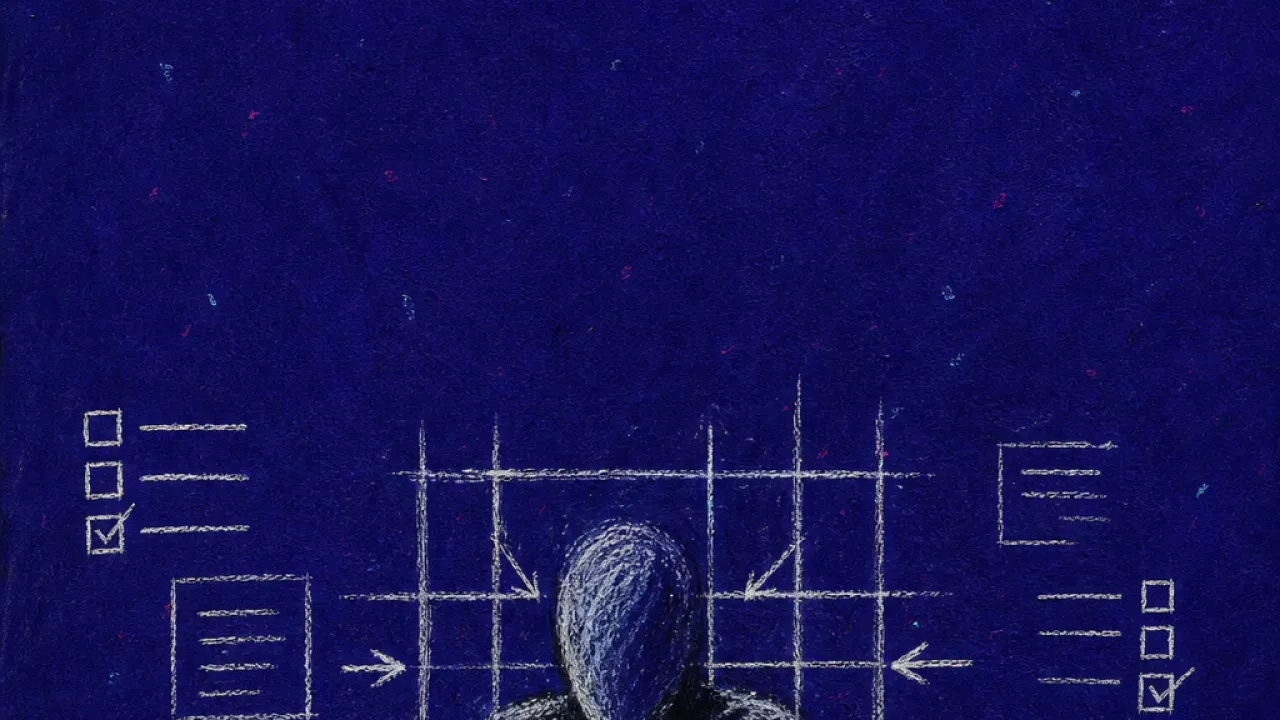
Reflection Structure Trial: you realize the structure around your introspection has become its own room, and you are being asked to step into it on schedule. It might start with a journaling app reminder after work, a saved tarot spread on your phone, a coaching worksheet in your inbox, a Notion template full of weekly review questions, or a friend asking what pattern you are noticing after the same conflict repeats. At first the frame is useful: it gives the messy week a place to land, turns scattered voice notes into dates and headings, and lets one difficult conversation become something you can look at without being swallowed by it. Then the setup starts to press back. The cursor blinks under a prompt that asks for clarity before the day has even finished landing; your jaw locks, your shoulders draw inward, and the boxes on the page seem to decide what counts as a valid insight. Every check-in wants an update, every spread wants a question, every template wants the raw material of your life converted into themes, lessons, and next steps. The people around the process may be well-meaning, but the frame still creates a subtle power dynamic: the system gets to ask, organize, compare, and measure, while you keep supplying proof that the work is happening. The cost is not reflection itself; it is the constant translation of lived experience into something neat enough to record. You end up wondering whether the structure is holding the process or whether you are performing for the structure, much like the Wheel of Fortune, where even turning is held inside rings, spokes, letters, and four figures reading from the corners.

Why it's not you?

The issue is not that you are bad at reflecting or that you need to force a cleaner version of yourself onto the page. The pressure comes from the setup itself: prompts, check-ins, templates, and accountability loops can start asking for constant evidence that the work is productive. When a container turns every unclear moment into something to log, sort, and prove, the strain belongs to the container.

Reflection Structure Trial in Tarot Cards

In a Reflection Structure Trial, the frame that was supposed to hold reflection can start shaping the whole experience. That jaw-locking cursor moment and the shoulders drawing inward show how the body registers a setup that keeps asking for clean answers. This is an environmental, structural dynamic: prompts, check-ins, and templates decide the edges of what gets noticed, recorded, or performed. The Tarot Cards below mirror those edges through vessels, frames, scales, wheels, and bodies held inside ordered spaces.

Wheel of Fortune Upright
The four figures at the corners hold open books while the wheel turns in the center. Their placement creates a stable frame around change, as if observation, record, and interpretation are required to make movement readable. In personal growth, this points to the trial of building a reflection structure that can hold up when moods, routines, and circumstances shift. Without a frame, each new realization can feel important in the moment and disappear before it changes anything. The card supports this context because its wisdom is not loose inspiration; it is organized attention around a moving system. You are not being asked to force constant insight, but to create a structure where patterns can be observed often enough to become actionable.
Justice Upright
Seated between the two pillars, the figure occupies a deliberate chamber rather than an open field. The sword, scales, crown, and stone seat form a complete review apparatus, giving self-examination a boundary, a method, and a standard. For personal growth, the scene points to the trial of using structure without letting structure become a performance. You are dealing with the pressure of being witnessed by a framework: feedback, journaling, coaching, or accountability that asks vague intention to become observable practice.
The Hanged Man Upright
The T-shaped frame, single rope, and folded leg impose a clean geometry on a body that would otherwise be in free fall. The restraint is visible, but it also creates a container where perception can sharpen because constant movement has been interrupted. In personal growth work, this matches a period where reflection only becomes useful when it has a shape: a journaling cadence, a study container, a prompt sequence, or an accountability rhythm. You are not looking at endless introspection; the structure reveals whether your self-work has a floor, a boundary, and a way back into action.
Temperance Upright
The angel's hands hold the cups at precise angles, and the liquid travels cleanly between them without spilling. The plain robe, the triangle held within the square, and the quiet shoreline all create a visible practice container. For introspection, this points to an external structure that can hold inner material without turning it into chaos or performance. You may need a repeatable frame, such as time, privacy, prompts, or reduced input, so the work has a vessel instead of depending on mood alone.
The Star Upright
The eight-pointed star and the seven surrounding lights form a grid rather than a blur. Beneath them, the figure repeats a careful action: one vessel to the pool, one vessel to the ground, one rhythm held between inner reflection and practical life. That visual order translates into the trial of building a reflection structure. You may not need more intensity; the system may need a stable container where inner material can be returned to at regular intervals without becoming scattered self-analysis. The Star connects insight to repetition. A ritual, spread, journal, or quiet nightly review becomes meaningful here only when it helps the water move somewhere, instead of keeping You suspended in beautiful but unusable awareness.
The Moon Upright
The Moon's surface, rays, descending drops, shoreline, and twin towers all create boundaries inside an otherwise uncertain night scene. The image is not pure chaos; it is ambiguity held inside repeated forms, thresholds, and visible edges. For personal growth, that makes the card a test of whether reflection has enough structure to become useful. Without a container, the pool remains endless, the moonlight stays indirect, and every signal can start competing with every other signal. Reflection Structure Trial fits this card because the Moon asks for disciplined contact with uncertainty rather than a rush toward premature certainty. You are not being shown a finished answer; you are being shown the conditions under which unclear material can be reviewed without taking over the whole field.
The Sun Upright
The sun’s rays are patterned rather than chaotic, and the card arranges its world into clear layers: source above, child in motion, flowers growing, wall containing the garden below. The brightness is powerful because it has structure. That is the exact external container many introspective periods require. Reflection without rhythm can become another open tab in the mind, while this card shows light becoming useful through repetition, boundary, and placement. The sunflowers stand upright because they have a stable line of orientation. The trial here is whether your inner work has enough form to hold insight, or whether clarity keeps arriving without a place to land.
Judgement Upright
The mountains around the scene create a closed arena, while the trumpet and flag give the review a fixed signal rather than a vague inner drift. The figures are not wandering through limitless space; they are held inside a defined field where response becomes possible. That contained geometry is why the card fits a reflection structure trial. In introspection, a reading, retreat, journaling protocol, guided audit, or scheduled check-in can become the external frame that keeps deep material from scattering into endless rumination. You are not being shown a demand to think harder. The image points to the value of a container strong enough to hold what has surfaced, so the review becomes a structured encounter with evidence rather than another loose loop of private self-analysis.
Ace of Cups Upright
The Ace of Cups is built around containers: the hand contains the cup, the cup receives the disc, and the pool receives the falling streams. The image is not just emotional abundance. It is a diagram of how subtle material becomes usable when a vessel is stable enough to hold it. For personal growth, this points to the trial of building a reflection structure before the next wave of insight arrives. Journaling, coaching, values work, solo review, or a recurring audit practice becomes the rim of the cup: not the source of the water, but the shape that prevents it from scattering. You are not being asked to produce more revelations. The structure of the card highlights the practical bottleneck between noticing and metabolizing, where growth depends on whether your inner material has a repeatable place to be received.
Two of Cups Upright
The caduceus rises between the two figures like a central axis, keeping the exchange from becoming shapeless closeness. The cups carry feeling, but the staff gives the meeting structure: two people, two vessels, one visible line of balance between them. In introspection, that is the difference between spiraling through inner material and giving it a form that can actually be examined. A reflection structure may be a trusted conversation, a journaling ritual, a coaching frame, or any repeatable container where hidden material is brought forward without flooding the whole field. The clear sky and distant houses add a practical horizon to the scene. This is not insight for aesthetic self-awareness; it is a trial of whether your inner audit has enough structure to re-enter daily life with more precision, less leakage, and fewer unspoken assumptions.
Page of Cups Upright
The cup is a small container held at shoulder height, separate from the moving sea behind the Page. The fish does not appear in open water; it appears inside a vessel, which makes the emotional signal inspectable rather than diffuse. That visual structure fits a personal growth phase where reflection needs form. Journaling, values review, coaching prompts, or habit audits are not the whole transformation, but they can create the boundary that keeps raw insight from flooding the entire day. The Page's still body shows a trial of containment rather than a finished system. You are not being asked to turn every feeling into a project; the card highlights whether the current reflective structure can hold enough truth to become useful.
Knight of Cups Upright
The cup, reins, armor, and quiet horse create a small system of containment. Nothing in the scene is chaotic, yet every object has to be held in the right relation for the rider to keep moving. Reflection Structure Trial belongs to this card because inner work needs more than intensity. You need a form that can hold what comes up: a reading rhythm, a journal practice, a private review, or a defined space where emotional material does not take over the whole day. The card frames structure as protection for sensitivity. The cup can stay open because the reins, armor, and pace keep the process from becoming a flood.
Queen of Cups Upright
The Queen’s two hands hold the lidded chalice with precision, while the throne and shoreline give the object a stable frame. Nothing in the image is spilling; the private contents are contained, named by shape, and given a seat. That visual structure fits an introspection practice that is still being tested. You are not dealing with raw feeling in open water; you are building a repeatable container for what surfaces, so reflection becomes legible instead of endless.
King of Cups Upright
With the cup, scepter, and shell throne held in a stable triangle above moving water, the card begins with a container rather than a breakthrough. The sea is active, but the king is not submerged; his tools give shape to contact without letting the waves decide the whole scene. This maps directly onto a personal growth stage where reflection needs architecture. You are not dealing with a lack of insight as much as a need for a structure that can hold insight long enough for it to become usable, repeatable, and less dependent on mood or momentum. The throne on the sea shows why the trial matters: a growth practice can be protective without becoming avoidance. When the container is sound, journaling, coaching, meditation, or private review becomes a working platform between raw material and lived change.
Ace of Pentacles Upright
The pentacle is not loosely displayed; it is held with a careful grip, and the garden below is ordered by fence, gate, lawn, and path. The visual system turns abundance into something structured, bordered, and usable. That makes the card a strong mirror for a reflection container that is still being tested. You may have the raw material for self-review, but the question is whether the external frame around it is precise enough to hold what comes up without turning into another vague promise. The trial is practical rather than dramatic. The image points to a structure that can be entered, repeated, and adjusted until reflection becomes a reliable place to process inner material instead of another open tab in the mind.
Three of Pentacles Upright
The sculptor on the raised workbench does not work from vague inspiration alone; his hammer meets the pillar while a blueprint and two witnesses hold the larger structure in view. The card turns inner repair into a visible craft process, where raw material needs tools, sequence, feedback, and a protected worksite. For introspection, this points to a real-world container that can hold the work without swallowing it: a journaling system, a guided reflection practice, a coach, a therapist-adjacent support space, or a trusted accountability setup. The value is not that someone else owns your inner life, but that the structure makes hidden material easier to inspect. You are not simply thinking harder in private. You are testing whether the right scaffolding can turn psychological clutter into a workable design, with enough outside reflection to sharpen the process and enough personal agency to keep the work yours.
Eight of Pentacles Upright
The bench, hammer, chisel, apron, and ordered line of pentacles make the inner process look like a protected workshop rather than a vague mood. Each tool has a job, each coin has a stage, and the craftsperson’s attention is held by a repeatable container. For introspection, that visual structure maps onto the moment when self-audit stops being a midnight spiral and starts needing a reliable frame. You are not being asked to produce a perfect inner state; the scene highlights the external scaffolding that lets private material be approached in measured passes without flooding the whole day.
Page of Pentacles Upright
The pentacle is not lying on the ground or scattered among other objects; it is lifted into a precise line between hand and eye. The Page turns attention into a physical practice, with the body, gaze, and object all arranged around one stable point. That arrangement suits an introspection phase where inner material needs a container rather than more intensity. Journaling prompts, therapy homework, reflection rituals, or a weekly check-in can become the pentacle: a concrete form that keeps attention from dissolving into vague self-analysis. You are not simply trying to think harder about yourself. The structure of the card points to the need for a repeatable frame, because the issue is not the absence of insight but the absence of a reliable place where insight can be examined without drifting, spiraling, or becoming another unfinished tab.
Knight of Pentacles Upright
The black horse stands still under a rider who is fully equipped, not inactive. The reins, armor, pentacle, and open field create a picture of movement held inside structure, where progress depends on timing, containment, and repeatable attention rather than a dramatic breakthrough. For inner work, that image maps onto the need for a practical reflection container. You are not just looking for feelings to surface; you are testing whether a rhythm, boundary, or method can hold what surfaces long enough to make it readable. The card turns introspection into a structured trial, where clarity is built through steady contact with the material rather than one intense moment of revelation.
Queen of Pentacles Upright
With both hands around the pentacle, the Queen does not scatter her attention across the garden; she gives one material object a steady frame. The carved throne, crown, and shaded rose arch turn reflection into something held by structure rather than mood. That visual logic fits a Reflection Structure Trial because your inner work is not floating in open space. You are testing whether a routine, room, journal, schedule, or trusted container can make hidden material safe enough to inspect without turning the process into another performance.
Ace of Swords Upright
The sword's guard, central blade, crown, and repeated light marks create a strict vertical order. Nothing in the composition is blurred into the next thing: hand, tool, criterion, and reward each occupy a readable place. That order fits a growth phase where reflection has to stop being atmospheric and become structured. You are not just thinking about yourself; you are testing whether your insights can survive contact with criteria, review, and repetition. The card's clean axis makes the pressure visible: without a container, reflection disperses back into sky.
Two of Swords Upright
The blindfold, calm sea, and quiet shore form a controlled container for perception. The scene removes excess input so the body can register the tide, the moon, and the pressure of the swords without being pulled into immediate movement. For lifestyle work, this points to the external need for a real reflection structure: time, privacy, and a bounded space where routines can be audited without another demand taking over. You are being shown a setting where clarity depends on architecture, not on forcing another burst of willpower.
Four of Swords Upright
The chapel wall turns the four swords into a strict geometry, with the body placed beneath a pattern that is quiet but highly organized. The hands are centered at the chest, not reaching outward, making reflection a physical posture rather than a loose intention. This links to the moment when growth requires a container strong enough to hold attention. You may not need another revelation; the real test is whether solitude, review, journaling, or ritual can become a structure that stops your insights from evaporating.
Eight of Swords Upright
Eight swords planted upright around a blindfolded woman create a visible perimeter, but the blades do not touch her and the openings remain physically present. The body is restrained, yet the scene also shows a container with legible edges: white bands, vertical swords, muddy ground, and a distant castle that fixes the horizon. For inner work, this maps to a reflection setup that is still being tested. You are not being handed instant release; you are being shown how a structured container can keep the process from scattering while you recover enough orientation to make a deliberate move.
Nine of Swords Upright
The swords are not scattered; they are arranged in a strict row above the bed, making the pressure visible as a pattern rather than a blur. The figure sits upright inside a bounded night scene, caught in a pause where the material can either become another spiral or be given structure. In personal growth, this is the trial of whether reflection has a container strong enough to hold what it uncovers. You may be reviewing choices, beliefs, and habits with unusual intensity, but the work needs boundaries around time, method, and feedback so the review does not become self-surveillance. The Nine of Swords supports this context because it shows painful awareness reaching the surface in a form that can be counted, named, and contained. The task is not to erase the pressure; it is to build a reflective structure that keeps the pressure from taking over the whole room.
Queen of Swords Upright
The vertical sword rising from a still seated body turns thought into a formal instrument. The crown, throne, and clear sky above the cloud band create a visual system of standards, not a rush of inspiration. This maps onto a personal growth stage where reflection needs structure before it can become movement. The pressure is not simply to think more deeply; the pressure is to build criteria clear enough to sort real commitments from attractive noise, so the next version of your life is not shaped by vague aspiration alone.
King of Swords Upright
Seated upright on the cold stone throne, the King holds one sword in a clean vertical line while his robe stays plain and unornamented. The image is built around an external frame: a fixed seat, a clear instrument, and a visible standard for sorting what matters from what is noise. For personal growth, this points to a reflection structure that is still being tested rather than a finished identity. You are not being asked to produce constant breakthroughs; the pressure is to build a reliable court of review where thoughts, habits, and evidence can be weighed without being swallowed by the next shiny framework.
Four of Wands Upright
Four upright wands make a square before any person touches them, and the garland gives that square a repeatable ritual form. The scene is not loose inspiration; it is celebration built on a visible frame. In an introspection context, that frame becomes the outside structure that keeps inner work from becoming endless rumination. You get a place, a cadence, and a boundary for looking inward, so the hidden material has somewhere to land instead of taking over the whole day.
Ten of Wands Upright
The distant building gives the heavy carry a defined endpoint. The wands are not scattered across the field; they are difficult, dense, and awkward, but still gathered into a form that can be transported. That visual order matters for inner work. A reflection structure trial is the stage where private material needs a container strong enough to hold it: a journal practice, a retreat rhythm, a guided reading, a quiet routine, or any boundary that turns a vague backlog into a process with edges. The card links introspection to form rather than endless rumination. You are not asked to carry everything forever; the image asks whether the material has a destination, a stopping point, and a structure that prevents the inner work from becoming another uncontrolled pile.
Page of Wands Upright
The Page's entire stance is organized around one vertical wand: hands, gaze, and posture all arrange themselves around a single stabilizing object. In the open desert, that object becomes the only real structure in the scene. That is why Reflection Structure Trial belongs here. You may not need more raw introspection; you may need a container that can hold it consistently, so the material that surfaces in private does not scatter back into noise the moment daily pressure returns.

Reflection Structure Trial in Tarot Card Reading Insights

Reflection Structure Trial also shows up when people bring structured self-review, journaling, spreads, or check-ins into a reading and ask whether the frame is supporting the work or tightening around it. The readings below move from the cards into how others sat with that same kind of setup. Tarot Reading Insights from related sessions.

Psychological contexts related to Reflection Structure Trial