When Sunday Scaries Start Putting Your Whole Life on Trial
If you are in that late-20s city-tech phase where Sunday stops feeling like a weekend around 4 p.m. and Google Calendar starts looking like a threat, this is for your Sunday Scaries. When Taylor sat down with me, she did not begin with a polished career question. She said, 'Every Sunday feels like evidence that something is off.'
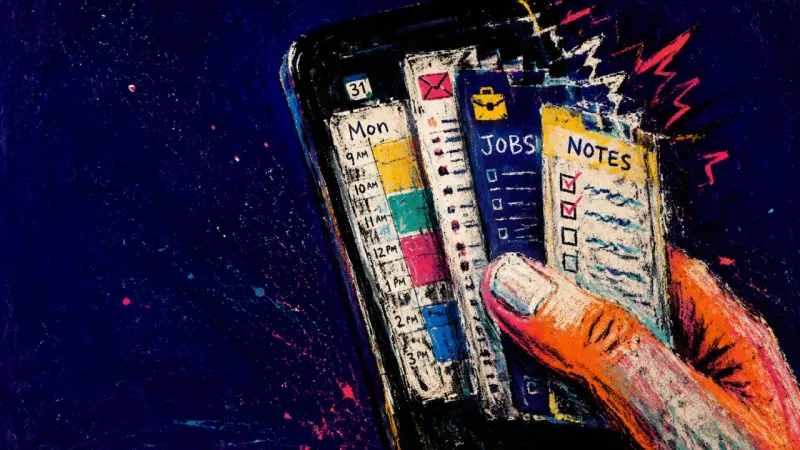
She described 9:47 p.m. in her East London flat: Netflix still running in the background, a lamp throwing that tired yellow light across the room, her phone hot in her hand as she toggled between Slack previews, LinkedIn jobs, and a Notes app to-do list. The TV murmured at nobody. The radiator hissed. Her tea had gone lukewarm beside her. She kept calling it planning, but what she was really doing was trying to solve her entire future before bed.
I could almost feel the dread she meant: not an abstract anxiety, but the bodily kind that arrives like a lift dropping one floor too fast. First the jaw locks. Then the chest tightens. Then the stomach sinks as the Monday calendar blooms into solid blue meeting blocks. In that moment, a work problem stops looking like a work problem and starts looking like a verdict on the whole architecture of a life.
'I do not know if I need a new job or a new personality,' she told me with a brittle little laugh. Under that joke sat the real contradiction: clarity about whether this was the wrong job, and fear that if it was, that somehow meant the wrong life. Her role was stable on paper, which only deepened the shame. Dramatic quitting looks cute in a TikTok montage; it feels different beside London rent and a cautious Monzo balance.
It was the sort of question people type into a search bar close to midnight: burnout or wrong job, why do I feel sick every Sunday before work, career pivot without quitting. I have spent a lifetime watching fog roll over Highland fields, and I know how easily one bank of mist can make an entire landscape look lost. So I answered her gently. 'That makes sense,' I said. 'What feels like a life crisis is sometimes a badly sorted pile of signals. Let us not force a verdict tonight. Let us make a map and see what is actually on fire.'

Choosing the Compass: How This Tarot Spread Works for Wrong Job or Wrong Life Anxiety
I asked Taylor to take one slow breath and notice where the dread landed first in her body before she tried to explain it. Then I shuffled. For me, that moment is not theatre. It is a psychological threshold. The mind stops performing competence for a second, and the truth gets a chance to speak in a more usable voice.
For this reading I chose the Transformation Path Grid · Context Edition, a six-card spread I use when a question looks binary on the surface but is tangled underneath. If you have ever wondered how tarot works in a career clarity reading, this is one honest answer: it does not rush to predict whether you should quit by Friday. It separates symptom, environment, root fear, turning point, next step, and integration.
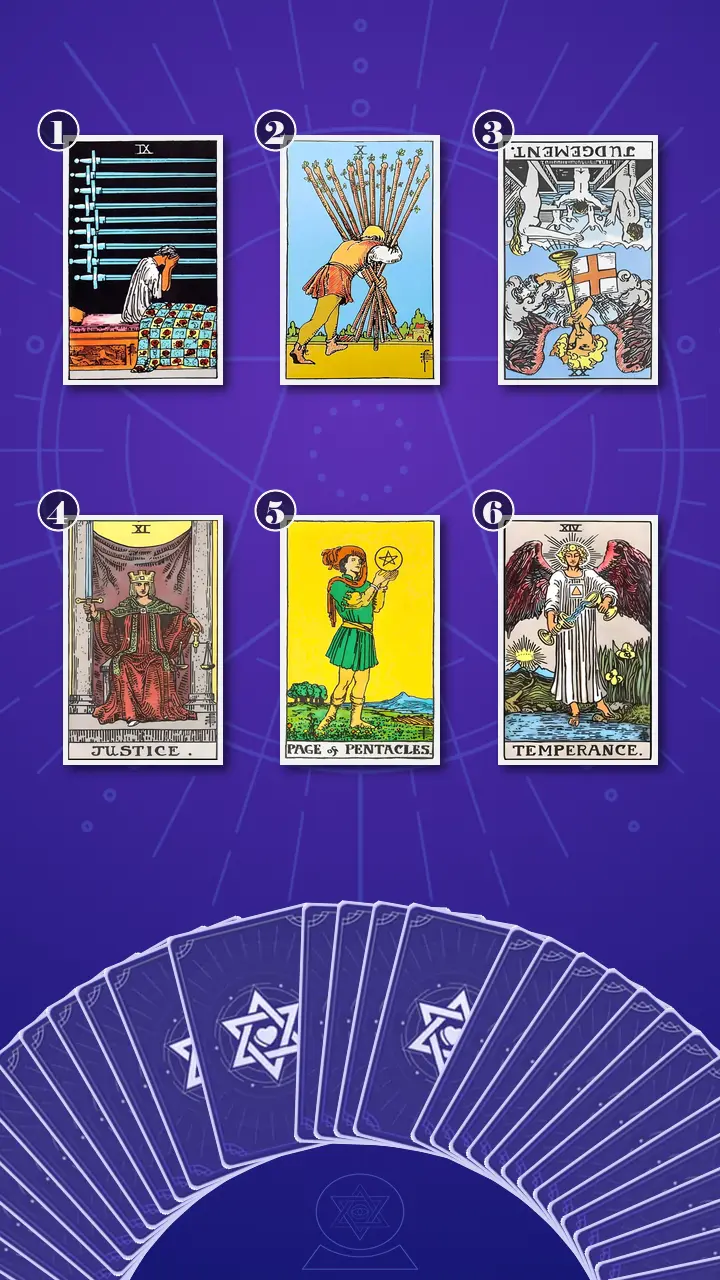
A simple decision spread would have pushed Taylor too quickly toward a false either-or: wrong job or wrong life. But that was exactly the trap she was already living in. This spread is more precise. I laid three cards across the top row as the diagnostic layer, then three beneath them as the transformation layer. It let me track the exact chain she was caught in: present symptom, active blockage, deeper root, key catalyst, grounded experiment, and the steadier self-understanding that could follow.
I told her what I would be listening for. The first card would show the Sunday-night loop exactly as she lived it. The next two would split the problem between real job strain and the deeper identity fear beneath it. And the fourth card, the key turning point, would show where blurred dread could begin becoming finding clarity.
Reading the Knot in Daylight
The Bedroom Wall of Apps
'Now we turn the card that reveals the immediate Sunday-night symptom from your diagnosis,' I said, and laid down the Nine of Swords, upright.
There it was: the figure jolting upright in bed, face in hands, the row of swords fixed above like thoughts mounted on a wall. In modern life, I told her, those swords often look less like blades and more like the row of apps she keeps reopening: Google Calendar, Slack previews, LinkedIn jobs, Notes. At 11:43 p.m., she is not responding to Monday itself. She is responding to imagined versions of Monday and treating each thought like incoming evidence that something is badly wrong.
Upright, the energy here is excess Air. Too much anticipatory thinking. Too much future rehearsal. The nervous system goes into fight-or-flight before any real event has happened. It is Severance in reverse: technically home, but the body still has not clocked out. So I asked her the question this position always asks in plain language: 'Last Sunday, what did you open first when the mood shifted, and what story landed right after?'
She gave a short laugh that carried more ache than amusement. 'That is so accurate it is almost rude,' she said. Her fingers froze around her mug, then tapped once against the ceramic. The recognition landed exactly where it needed to. She was not broken. She was describable.
The Weight Before the Laptop Opens
'Now we turn the card that shows the main blockage in the current environment, especially what Monday is reacting to at the job level rather than at the whole-life level,' I said. The Ten of Wands came out upright.
The bent figure carrying too much toward town told the next truth. Before Taylor even opens her laptop, she is already carrying client expectations, unread threads, smoothing-over, tone management, and the pressure to be the competent one. Not just tasks. Mood. Pace. Other people’s urgency. The job asks her to carry both workload and emotional weather, which is why Monday feels heavy in her shoulders before it reaches her calendar.
Upright, this is excess Fire turned burden. Effort has tipped into overfunctioning. I asked, 'Which part feels heavy before it even begins: client-facing performance, unread messages, being always on, or the sense that everyone needs something from you at once?'
She exhaled for longer this time. Her shoulders, which had been sitting almost level with her ears when we began, dropped by a fraction. 'The tone,' she said. 'I can do the actual job. I just should not have to carry it like this.' That sentence mattered. Overload can be real without becoming your identity. I wanted her body to know that before her mind started arguing again.
The Inner Courtroom
'Now we turn the card that uncovers the deeper root in the psychological mechanics, especially the fear that discomfort proves a lack of control or a failed life choice,' I said. Judgement, reversed.
Even reversed, the trumpet, the banner, the rising figures were unmistakable. But in shadow, the call to review becomes a sentence. One draining Sunday night becomes a full hearing on every choice since university. Maybe I chose wrong. Maybe I am behind. Maybe I am the kind of person who will never be satisfied. In real life, this is the promotion post, the city-break photo dump, the polished morning routine reel that lands at exactly the wrong moment and suddenly makes your Notes app feel like evidence against you.
Reversed, this is blocked awakening. The review is not missing; it is contaminated by shame. Here I brought in one of my oldest diagnostic lenses, what I call Generational Pattern Reading. I do not use it to blame families or collapse adulthood into childhood. I use it to notice the inherited rules people carry about usefulness, control, and worth. The way Taylor spoke about being reliable had an old texture to it, like a coat seam worn by many hands before her.
'Somewhere along the line,' I said gently, 'you may have learned that being good means being capable, responsive, and easy to need. So when your body objects, you do not hear a request for recalibration. You hear a charge sheet.'
She went very still. First her breath paused. Then her gaze slipped off the cards and blurred, as if she were replaying a dozen Sundays at once. When she spoke, her voice was quieter. 'If I quit and I am still unhappy, then it means I am the problem.' There it was: the deeper fear beneath the surface loop. Not just fear of change, but fear that discomfort proves she cannot trust herself to build a life she actually wants.
When Justice Held the Scales
From Defendant to Auditor
By the time I reached the fourth position, the room had changed. The lamp still threw its tired yellow circle across her table, but the noise inside it had thinned. Outside my window, rain had shifted from a hard tapping to a softer silver mist. We were about to turn the key card, the one that identifies the cognitive shift that separates specific misalignment from global self-condemnation.
I turned over Justice, upright.
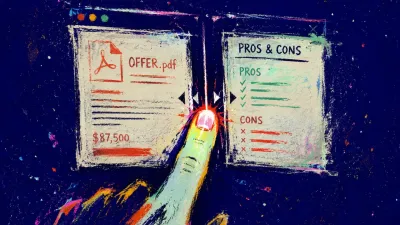
The upright sword. The balanced scales. The square throne that does not wobble. Justice is one of the clearest cards I know for career decisions, especially when someone is trapped in wrong job or wrong life anxiety. This card does not ask for drama. It asks for proportion. In modern terms, it is Taylor opening a document and separating what is objectively unsustainable in the job, what is broadly out of balance in her life, and what panic has added on top.
This is balanced Air: discernment instead of catastrophic over-analysis. When I see Justice after Judgement reversed, my mind flashes not to punishment but to my grandmother’s stone kitchen table in the Highlands, where we separated seed from husk by hand because muddle wasted the whole season. Clarity was never about becoming harsher. It was about becoming more exact.
She was still caught in the old thought: I must make the correct decision about my entire life before I am allowed to relax.
You do not need to put your whole life on trial every Sunday; hold the scales to what is truly draining you, and let honest balance rather than panic guide the next move.
I let the sentence sit between us.
For a beat, Taylor did not soften. She frowned. 'But does that not mean I have been reading all of this wrong?' she asked, and there was a flash of anger in it: bright, brief, almost protective. It was not resistance to the card. It was grief for how much energy she had spent prosecuting herself.
Then the reaction came in layers. Her inhale caught high in her chest. Her thumb stopped moving against the mug handle. Her eyes lost focus for a second, like she had dropped back into last Sunday’s sofa scene and was watching it from farther away. When she looked at me again, the skin around her eyes had gone pink. Her jaw unclenched visibly. One shoulder lowered, then the other, as if her body had finally been told it did not have to serve as a courtroom bench. She let out a shaky breath that was half laugh, half relief, and then came that quieter, stranger feeling that often follows real insight: the small dizziness of no longer carrying the old verdict, and the new responsibility of having to look at the facts instead.
'So the feeling can be real,' she said slowly, 'without the scale being right.'
'Exactly,' I said. 'A hard Monday is not a court ruling on your whole life.' Then I asked her, 'Using this new lens, can you think of a moment last week when the feeling was accurate about strain but inaccurate about scale?'
She nodded almost at once. 'Sunday, when I saw my calendar. The actual problem was four client calls back-to-back and one account I already knew would be messy. But I turned it into: I chose the wrong career, maybe the wrong city, maybe the wrong everything.'
That was the crossing point. Not perfect certainty. Something better: from panic-fueled self-prosecution to clear-eyed discernment and steadier agency.
One Honest Data Point
'Now we turn the card that translates the transformation framework into one small, grounded next experiment rather than a total life overhaul,' I said. The Page of Pentacles appeared upright.
I love this card for people who keep trying to redesign their future at 11:56 p.m. The Page studies one pentacle at eye level while the mountain waits in the distance. In Taylor’s world, that meant no cinematic quitting speech, no midnight identity rebrand, no 47-minute job-board spiral that produces nothing. It meant one honest data point: update the top third of the CV, book one 20-minute informational chat, or track energy across five workdays with a simple +, -, or flat.
Upright, this is balanced Earth. Small. Testable. Grounded. A/B testing your week instead of announcing a full reinvention. 'You do not need a total reinvention to collect one honest data point,' I told her. 'Pilot episode, not series finale.'
She smiled for real then, the first unguarded smile of the session. Not because the future was solved, but because it had shrunk back down to human size.
A Week That Can Breathe
'And finally, the card that shows the integrated state that becomes possible when Monday is treated as information instead of a verdict on identity,' I said. Temperance, upright.
The angel pouring between two cups, one foot in water and one on land, never promises instant certainty. It promises better mixing. In modern life, this looks like a week where work stress, recovery, and next-step exploration can coexist without swallowing one another. Monday is still Monday, but it stops being the only lens through which Taylor judges her worth, future, or life design.
Upright, Temperance is balance in motion. Crossfading between work, rest, and exploration instead of hard-cutting between panic and numbness. So I asked her, 'If next Sunday felt even 15% steadier instead of perfectly solved, what would be different at six o’clock in your body, your screen habits, and your evening?'
'I would probably still feel it,' she said. 'But I would not open four apps and call it clarity.' That answer told me the card had landed. She was no longer asking for a fantasy ending. She was imagining rhythm.
From Verdict to Data: Your Next 48 Hours
When I laid the whole spread back together, the story it told was clean. The Nine of Swords showed the symptom: Sunday-night work dread turning into a whole-life verdict before Monday had even started. The Ten of Wands named the real job strain underneath it: invisible emotional labor, too much responsiveness, a body already braced before 9 a.m. Judgement reversed exposed the cognitive blind spot: every honest review kept sliding into self-condemnation, as if discomfort had to mean failed identity rather than specific misalignment. Justice interrupted that pattern. The Page of Pentacles turned insight into experiment. Temperance showed the destination: not instant certainty, but a more habitable rhythm.
The blind spot, I told her, was scale. She had been hearing a smoke detector in one room and deciding the entire city was on fire. The transformation direction was simpler and harder at once: shift from treating discomfort as proof your whole life is wrong to treating it as data about what is specifically out of balance and what can be tested next.
So I gave her actionable advice, small enough to survive a real London week:
- The 8-Minute Sunday Audit On Sunday evening, open your Notes app and make three headings: 'Job facts', 'Life imbalances', and 'Story I’m adding'. Put no more than three bullets under each. This is your Justice practice: less inner courtroom, more fair audit. Set a timer for eight minutes and stop when it ends. If shame spikes, write one bullet per column and close the app.
- The Invisible Load List On Monday afternoon, list the tasks you carry that your title does not fully name: calming clients, chasing updates, smoothing tension, anticipating needs. Then reduce one recurring weight this week by using one clean boundary sentence in Slack or email, such as 'I can get to this tomorrow' or 'I need to prioritize X first.' Pick a lower-stakes thread first. This is not a personality transplant; it is one boundary, once.
- The Mini Fit Test For five workdays, after key meetings or tasks, mark your energy with one symbol: '+', '-', or 'flat'. If you want a second experiment, book one 20-minute informational chat with someone in a different role, team, or company. Do not force meaning too early. Look for patterns on Friday, not explanations on Monday night.
Because I also work with Seasonal Ritual Design, I added one more layer from my own practice: treat Sunday dusk like a threshold, not a courtroom summons. Kettle on. Eight-minute audit. Screens closed. One hand around the mug, both feet on the floor. I have seen season after season teach the same thing: transitions go better when they are marked, not ignored.

A Week Later, the Jaw Unclenched
Six days later, Taylor sent me a message just after breakfast. 'Did the audit. Put four back-to-back client calls under Job facts and no actual recovery time on weekends under Life imbalances. Wrote I have ruined my life under Story I’m adding and immediately realized how dramatic it looked in black and white.' She had also let one non-urgent Slack message wait until Monday morning and started the +, -, flat tracker in her Notes app.
It was not a film ending. She told me she still woke on Thursday with the old thought, 'What if I am still the problem?' but this time she smiled, made coffee, and logged a '-' after a client escalation instead of diagnosing her entire existence. Clear, but still tender. That is how real change often looks at first.
I thought back to the spread and felt grateful for its honesty. This Journey to Clarity had not told her whether to stay forever or leave by next month. It had given her something more useful: a way to separate burnout, role misfit, and wider life imbalance without turning them into one giant sentence about her worth.
When one look at Monday makes your jaw lock and your stomach drop, it is hard not to wonder whether you are stuck in the wrong job, or whether you somehow drifted into the wrong life. But the moment you move from self-prosecution to a fair audit, the fog begins to thin. So if you treated this week’s dread as data instead of a verdict, which column would you fill first: job facts, life imbalance, or the story panic keeps trying to write for you?
This story is adapted from psychological research, written so that those in a similar struggle can see their own pattern in it — and find their next step clearly.These insights are not a substitute for professional psychological, medical, legal, or financial advice.
Learn more about our Journey to Clarity.
How did this insight land for you?
🫂 This Resonates Deeply
🌀 Living This Story
✨ Now I See Clearly
🌱 Seeing New Possibilities
🧰 Useful Framework
🔮 The Confirmation I Needed
💪 Feeling Empowered
🚀 Ready for My Next Step
Author Profile
 AI
AI“As the seventh generation of a Highland healing family, I see modern anxieties as a simple, temporary disconnection from nature's rhythm. I bring 67 years of lived seasons not to instruct you, but to hold space for you. Using tarot as a mirror, I want to gently guide you out of the chaos, helping you breathe deeply and rediscover the organic, steady heartbeat of your own life.”
In this Family Tarot Reading :
Core Expertise
Service Features
Also specializes in :
Explore Related Patterns:
Boundary DiscernmentTaylor's overload is not only about volume. It is also about the blurred line between her actual responsibilities and the emotional weather she has been carrying for clients, threads, tone, and urgency. That is why one non-urgent Slack message waiting until Monday becomes psychologically meaningful. Boundary Discernment is the pattern of sorting what belongs to you from what has simply become attached to you through habit, pressure, or fear of disappointing people. You do not need to become detached or careless; you need enough separation to tell the difference between a real responsibility and an absorbed demand. The story grounds this in one clean sentence, not a personality overhaul: 'I can get to this tomorrow' or 'I need to prioritize X first.' That small boundary works because it interrupts the older equation that being good means being endlessly capable, responsive, and easy to need.
Defensive OverfunctioningTaylor names the part that matters: she can do the actual job, but she should not have to carry it like this. Before the laptop opens, she is already holding client expectations, unread threads, smoothing-over, tone management, and the pressure to be the competent one. That is Defensive Overfunctioning. The coping strategy is to get ahead of everyone else's needs, absorb emotional weather, and perform reliability so well that uncertainty has less room to threaten you. You become useful before anyone can accuse you of falling short. In the story, this pattern is adaptive enough to keep Taylor functioning, but costly enough to make Monday live in her shoulders before it reaches her calendar. The audit does not shame her competence; it separates competence from over-responsibility, so she can see which burdens belong to the role and which have been absorbed as identity.
Anxiety SpiralTaylor's Sunday night begins with a familiar chain: Netflix running in the background, tea going cold, her phone hot in her hand as she toggles between Slack, LinkedIn, Calendar, and Notes. The behavior is framed as planning, but the pattern underneath is a nervous system trying to manufacture control before Monday has even arrived. That is the engine of an Anxiety Spiral. One preview leads to one imagined problem, which leads to one bigger life question, until the original signal loses proportion. You are no longer responding to a Monday calendar; you are responding to a future rehearsal that keeps recruiting more evidence for danger. The key detail is that Taylor's dread is not fake. Her job strain is real, especially the invisible load of tone management and client urgency. The spiral begins when real strain gets processed through repeated checking and catastrophic future simulation, making a specific work problem feel like proof that the whole life is structurally wrong.
CatastrophizingTaylor sees four client calls and one messy account on the calendar, then the thought expands into the wrong career, the wrong city, and eventually the wrong everything. The factual trigger is narrow, but the conclusion becomes global. That scale distortion is Catastrophizing. The mind treats discomfort as advance evidence of disaster, then tries to protect you by reaching the biggest possible conclusion before reality has had a chance to speak. You feel urgency because the nervous system is reacting to an imagined verdict, not just to Monday's actual demands. In Taylor's case, the pattern becomes especially painful because the catastrophe is not only professional. It attaches to identity. If the job is wrong, then maybe the self is wrong; if leaving does not fix everything, then maybe she cannot trust herself. That is why the story needs a fair audit rather than another midnight trial.
Reality TestingTaylor's turning point comes when she separates four back-to-back client calls, no real recovery time, and the added story that she has ruined her life. The same dread remains visible, but it is no longer allowed to merge every category into one verdict. Reality Testing is the cognitive move from inner courtroom to fair audit. It checks the feeling against observable data without dismissing the feeling. You can say, 'This strain is real,' while also saying, 'The scale my panic is assigning to it may not be accurate.' That is why the three-column Sunday audit fits the story so precisely. Job facts, life imbalances, and story added by panic are different kinds of evidence. Once Taylor can keep them separate, her next move can be based on proportion instead of self-condemnation.
Values-Based Decision MakingTaylor's next step is deliberately small: update part of the CV, book one informational chat, or track energy across five workdays. The scale matters because the old pattern tries to demand a total life decision at the exact moment her nervous system is least resourced. Values-Based Decision Making turns the question from 'What dramatic verdict proves who I am?' into 'What data helps me understand what fits?' You make a move that is aligned with curiosity, capacity, and reality, rather than panic's demand for instant certainty. In Taylor's story, this does not solve the stay-or-leave question overnight. It gives her a cleaner method for approaching it. A small experiment lets the future become searchable through evidence instead of rewritten through fear.
Explore Related Struggles:
Identity Verdict LockTaylor looks at a Sunday calendar with four client calls and one messy account, then watches the thought jump from a hard Monday to the wrong career, wrong city, and wrong everything. You can feel the lock in that jump: the evidence is specific, but the sentence her mind writes is total. The struggle is not that the feeling is fake. Her jaw, chest, and stomach are responding to real strain, especially the invisible load around clients, tone, and constant responsiveness. The bind forms when one accurate signal about overload gets converted into a ruling on who she is and whether she can build a life she trusts. Identity Verdict Lock fits because the story keeps showing evidence being scaled too high. Clarity begins when the dread is allowed to stay real while the verdict is taken off the whole self.
Life Audit ExhaustionTaylor's flat is quiet, but the room is full of unfinished verdicts. Netflix runs in the background, her tea cools beside her, and the phone keeps pulling her between Slack, LinkedIn, and Notes as if enough checking could settle the entire future before sleep. The exhaustion comes from the scale of the review. A workweek with real pressure turns into a hearing on every decision since university, and the act of trying to gain clarity drains the recovery time that could have helped her hear herself more accurately. Life Audit Exhaustion names the cost of turning every transition point into a total review of the self. You are not only tired from the job in this structure; you are tired from repeatedly making your whole life answer for one overloaded evening.
Rest-Permission SplitNetflix is still running, the tea has gone lukewarm, and Taylor is technically at home, but her body is already inside Monday. The evening cannot become rest because the calendar, Slack previews, and job-search tabs keep asking her to prove she has a plan. You can see the split in the rule she is living under: relaxation is not allowed until the bigger life question is solved. That rule makes recovery dependent on certainty, so the very time that should restore her becomes another arena for performance. Rest-Permission Split fits because Taylor is not simply failing to switch off. The story shows rest being withheld until she can justify it through control, clarity, or a correct decision about the future.
Burden Identity FusionBefore Taylor opens her laptop, she is already carrying client expectations, unread threads, smoothing-over, tone management, and the pressure to be the competent one. The weight is not only the task list; it is the emotional weather she feels responsible for holding steady. That burden becomes harder to question because reliability has been tied to goodness. When your role teaches you that being valued means being capable, responsive, and easy to need, your own limits can start sounding like evidence against your character instead of information about capacity. Burden Identity Fusion fits because the load has fused with the self-image. The work asks too much, but the deeper bind is that setting it down feels like becoming less worthy, less reliable, or less good.
Binary Choice LockTaylor arrives with a question that is already too narrow for the evidence: wrong job or wrong life. That framing sounds clear, but it forces every signal into two oversized doors before the facts have been separated. The story shows multiple things happening at once. There is real job strain, a weekend recovery deficit, invisible emotional labor, social comparison, and an old rule about needing to be capable and easy to need. When all of that is compressed into one binary, you lose the ability to see partial misfit, fixable load, and deeper identity fear as different categories. Binary Choice Lock fits because the problem is not simply indecision. The trap is the forced architecture of the decision itself, where only a total stay or total exit seems emotionally available.
Panic Productivity TrapAt 9:47 p.m., Taylor's thumb keeps moving across Slack previews, LinkedIn jobs, and the Notes app. She calls it planning, but the movement is trying to create relief faster than real discernment can arrive. The activity has the shape of control while producing more pressure. Slack sharpens urgency, LinkedIn multiplies possible exits, and Notes turns anxiety into tasks, yet none of these screens can answer the actual question of what is job strain, what is life imbalance, and what is panic adding on top. Panic Productivity Trap fits because action is being used to outrun uncertainty. You are doing more, checking more, and preparing more, but the loop keeps you inside the threat rather than moving you toward a grounded next step.
Explore Related Emotions:
Clarity ReliefWhen Justice appears, Taylor starts separating what is objectively unsustainable at work, what is out of balance in life, and what panic has added on top. Her jaw unclenches, her shoulders lower, and she says the feeling can be real without the scale being right. Clarity Relief is the release that comes when the facts finally stop merging into one giant accusation. You do not need the whole future solved to feel a little more oxygen; you need enough proportion to know which part of the problem is actually asking for attention.
Grounded AgencyThe Page of Pentacles turns the future from a midnight reinvention into one honest data point: update part of a CV, book one short chat, or track energy across five workdays. A week later, Taylor lets one non-urgent Slack message wait and logs a '-' after a client escalation instead of diagnosing her entire existence. Grounded Agency names the steadier feeling that arrives when action becomes small enough to actually use. You are not forcing a grand answer out of a Sunday night; you are collecting evidence, protecting one boundary, and letting the next move be concrete.
Scope Creep DreadTaylor can identify the concrete strain: four back-to-back client calls, one messy account, unread threads, and no real recovery time. Yet by Sunday night, those facts swell into wrong career, wrong city, wrong everything. Scope Creep Dread fits because the scale of the feeling keeps outrunning the scale of the evidence. You are responding to real pressure, but panic keeps adding floors to the building until a hard Monday looks like proof that the whole life structure is unsafe.
Shame SpiralTaylor's role is stable on paper, and that stability does not calm the discomfort; it sharpens it. When she wonders whether quitting and still being unhappy would prove she is the problem, the job question becomes a loop of self-accusation. Shame Spiral fits the way her review of the situation keeps sliding from facts into self-blame. You are trying to read a signal from your body, but every signal gets pulled into a harsher story about being ungrateful, unreliable, or somehow built wrong.
Sunday ScariesAt 9:47 p.m., Taylor is in her East London flat with Netflix still running, tea gone lukewarm, and her phone moving between Slack previews, LinkedIn jobs, and a Notes to-do list. The room is physically weekend, but her body is already bracing for Monday: jaw locked, chest tight, stomach dropping as the calendar turns into blue meeting blocks. Sunday Scaries fits because Sunday loses its shelter and becomes a countdown. The feeling is not only dislike of work; it is the moment planning starts acting like self-defense. You can still be at home and feel Monday arrive inside your body before the week has actually started.
Verdict DreadOne draining Sunday night becomes a full hearing on every choice since university, and the question shifts from 'is this job too much?' to 'am I the problem?' Taylor's joke about needing a new job or a new personality shows how fast the calendar turns into an inner courtroom. Verdict Dread names the pressure of treating a real signal as a ruling on your worth. You are not just weighing a role; you are standing under a sentence that says every tired reaction must prove something total about who you are and whether your life has been built correctly.
Invisible Labor DreadBefore the laptop opens, Taylor is already carrying client expectations, tone management, smoothing-over, and other people's urgency. She says she can do the actual job; what drains her is having to carry the mood around the job as if it were part of the role. Invisible Labor Dread names the body's reaction to work that is heavy precisely because it is hard to list. You dread Monday not only because of tasks, but because you can feel the unspoken emotional load waiting to be picked up again.
Cautious Self-TrustOn Thursday, Taylor still wakes with the old thought, 'What if I am still the problem?' but she smiles, makes coffee, and logs the client escalation as data. The signal is still tender, but she no longer has to turn tenderness into proof against herself. Cautious Self-Trust names that fragile return to your own read of reality. You can admit that Monday hurts, question the fit of the role, and still trust that your discomfort is information rather than evidence that you cannot build a life that fits.
Pattern Recognition CalmWriting 'I have ruined my life' under 'Story I'm adding' makes the drama visible in black and white. The same Sunday signal can now sit beside job facts and life imbalances instead of swallowing both. Pattern Recognition Calm fits the moment the loop becomes readable. You still notice the old thought, but it no longer has total authority; once the pattern is on the page, you can relate to it as information rather than live inside it as weather.
Explore Related Contexts:
Career Identity AuditTaylor's turning point comes when the problem is divided into job facts, life imbalances, and the story being added. Four back-to-back client calls, no real weekend recovery, and the thought that she has ruined her life no longer sit in one undifferentiated pile. That structure creates a more usable external stage for decision-making. Instead of forcing an immediate stay-or-leave verdict, Taylor can audit the role, the wider life setup, and the extra meaning that gets attached when the week feels too heavy. Career Identity Audit fits the constructive side of the story. You are seeing a practical review of work identity and life structure that preserves agency: the job can be examined, the imbalance can be named, and the next experiment can be chosen without putting the whole self on trial.
Career Stability Lock-InTaylor's role is stable on paper, and that detail matters because it changes the pressure of the decision. Leaving is not framed as an easy dramatic exit; it sits beside London rent, a cautious Monzo balance, and the uncomfortable fact that a respectable job can still feel hard to inhabit. The structure here is a familiar city-career bind: stability provides protection, but it also raises the cost of questioning the role. Because the job looks legitimate from the outside, Taylor has to justify her dissatisfaction against the material security the role appears to offer. Career Stability Lock-In names that bind without turning it into personal failure. You are looking at a position where the security is real, the strain is also real, and the next move requires more precision than simply staying because the role is stable or leaving because Sunday feels unbearable.
Career Transition FogTaylor moves between Slack previews, LinkedIn jobs, and Notes app planning while asking whether the problem is the job or the whole life around it. The search for a next step is active, but it is happening at night, under pressure, and without a clean map. That creates a transition state where signals are mixed together: role strain, possible misfit, money constraints, city life, recovery gaps, and the fear of choosing wrong again. The available actions are practical, but before they are sorted, they appear as scattered options rather than a path. Career Transition Fog fits because Taylor is not simply deciding between two neat alternatives. You are seeing a career threshold where the question of leaving, adjusting, testing, or staying has become clouded by too many overlapping inputs, and the first useful move is to separate the evidence before forcing a conclusion.
Office Emotional LaborTaylor says she can do the actual job, but she should not have to carry it like this. The load she names is not only client work or calendar volume; it is smoothing things over, managing tone, absorbing urgency, and being the competent one before she has even opened the laptop. Those details point to a role where interpersonal regulation has become part of the job without being properly named as work. The external environment asks Taylor to manage not just deliverables, but the emotional weather around those deliverables, especially in client-facing moments and unread threads. Office Emotional Labor captures that hidden layer of pressure. You are not just dealing with tasks; you are dealing with a workplace structure that turns responsiveness, composure, and tone management into an invisible second shift, which makes Monday feel heavy before the formal workload even begins.
Quarter-Life CrisisTaylor's question keeps expanding: wrong job becomes wrong career, wrong city, wrong everything. A single Sunday evening starts reviewing choices since university, which places the work problem inside a wider late-20s life-stage audit. The external setup is recognisable: a stable city-tech role, rent pressure, comparison to polished online lives, and the expectation that adulthood should now be coherent. Those forces make a specific job strain feel like evidence in a much larger case about whether the life structure is working. Quarter-Life Crisis is relevant because the story is not only about workload. You are seeing the friction point where career identity, financial reality, city life, and future direction all press on the same question, making Taylor's need for clarity both practical and existentially charged without reducing it to a personal flaw.
Sunday Scaries LoopTaylor's Sunday starts collapsing around 4 p.m., then narrows into a late-night loop of Slack previews, LinkedIn jobs, calendar blocks, and Notes app planning. Monday has not happened yet, but the external signals of Monday are already filling the room and turning the end of the weekend into a pressure system. The strongest structural factor is not a vague bad mood; it is the way work becomes visible before it becomes active. Calendar blocks, unread threads, client expectations, and job-search tabs all arrive at once, so the workweek appears as a completed verdict before Taylor has any chance to move through it in real time. That is why Sunday Scaries Loop fits this story so tightly. You are looking at a recurring pre-work stage where the next week is rehearsed, audited, and catastrophized from inside a supposedly off-duty evening, making the question feel much bigger than Monday while still being anchored in Monday's concrete demands.
Always On AvailabilityTaylor is in her East London flat with Netflix running, tea cooling, and the workweek supposedly still hours away, yet her phone keeps pulling Slack previews and calendar pressure into the evening. Home is physically separate from the office, but the work channel remains active inside it. The external pressure here is a boundary system that never fully closes. Unread threads, client expectations, and visible meeting blocks keep Taylor mentally available before Monday starts, while the phone becomes the object that carries the workplace across the weekend threshold. Always On Availability fits because the story shows work demanding readiness outside the formal workday. You are seeing a job environment where off-hours are not protected cleanly enough, so rest, planning, job searching, and anticipatory work all compete inside the same Sunday night.
Invisible WorkloadTaylor's own list makes the hidden work visible: calming clients, chasing updates, smoothing tension, anticipating needs, and managing the tone around the actual job. These demands sit around the formal workload rather than appearing neatly inside the job description. The structural issue is that uncounted work still consumes real capacity. Because these tasks are not fully named by the role, they can become harder to push back on, measure, or redistribute, even though they shape the entire feel of the week. Invisible Workload fits because Taylor's Monday heaviness begins before the laptop opens. You are seeing a job where the draining parts are partly off the official ledger, which makes the first step less about blaming herself and more about naming what the role is actually asking her to carry.
Reflection Structure TrialTaylor is given one small structure instead of a total life overhaul: an eight-minute Sunday audit, a five-day energy tracker, and one possible 20-minute informational chat. The intervention stays deliberately small because the existing pressure comes from trying to solve the whole future at night. The external support here is the container itself. By limiting the review to job facts, life imbalances, and the story being added, Taylor gains a way to collect evidence without letting every signal become a verdict. Reflection Structure Trial fits because the story shows a real-world experiment in progress, not a finished transformation. You are looking at a temporary but workable structure that helps Taylor test what is actually draining her, gather data across a normal workweek, and keep the next decision human-sized.