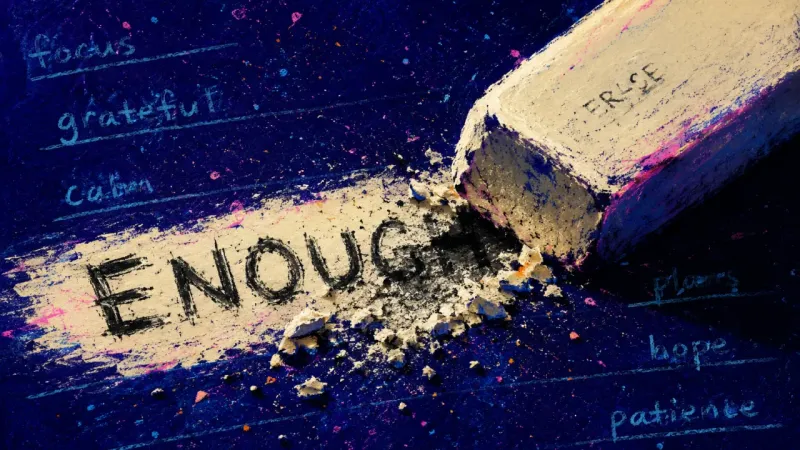
Why Do I Edit My Feelings Before I Write? The 11:38 p.m. Freeze
If you work in a wording-heavy job, live half your life in Slack and Google Docs, and still open your journal at night only to replace the real feeling with a safer one, I can usually tell within a minute that this is not a writing problem. It is a trust problem.
When Maya sat down with me, she said, “Why does even my private journal sound like it went through an editor.” As she spoke, she described a scene so precisely I could almost see it over her shoulder: 11:38 p.m. in her downtown Toronto condo, cross-legged on the bed, a linen notebook open beside a half-cold peppermint tea, the radiator clicking, her phone still glowing from the last Slack notification. She wrote, I think I was a little upset, stared at the word upset, scratched it out, and replaced it with off.
That one swap held the whole conflict. She wanted the page to hold the truth, but she treated the page as if it might judge her for having one. Wanting honest self-expression while fearing that unfiltered feelings would become too messy to control had turned even private journaling into a tiny performance review.
I could hear the apprehension in her before I named it. It was the kind that tightens the throat like a drawstring and leaves the hand hovering above the page as if one honest word might set off an alarm. She was not empty. She was bracing.
I told her, gently, “I don’t think you’re going blank because you have nothing to say. I think you’re editing the truth before it lands. Let’s not force a breakthrough. Let’s draw a map through the fog and find some clarity.”

Choosing the Shadow Spread for a Page That No Longer Feels Private
I asked Maya to take one slow breath with her notebook closed in both hands while I shuffled. Not as theatre, and not as mysticism for its own sake, but as a reset. A reading works best when it gives the nervous system a clean threshold: now we are observing the pattern, not drowning in it.
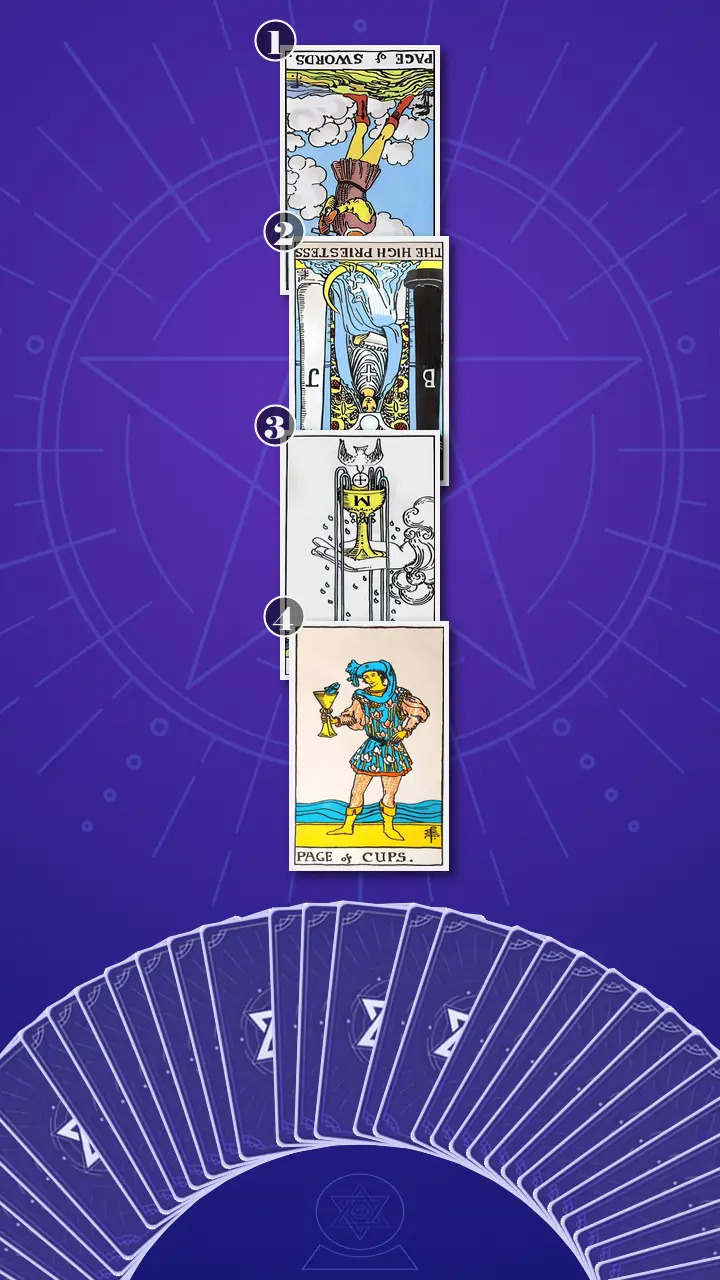
For her, I chose The Shadow Spread, a four-card layout I often use when the question lives entirely inside the self. It is especially useful for emotional self-censorship and blank-page journaling blocks because it does not waste time on prediction. Instead, it tracks the loop with precision: the visible pattern, the hidden mechanism, the medicine, and the practice that makes the shift repeatable.
In other words, this is how tarot works when it is useful. The cards do not replace thought; they organize it. They give us card meanings in context. The first position would show the exact moment her feelings were being edited before they reached the page. The second would reveal why raw feeling felt unsafe unless she could defend it. The third would show the key shift from performance to honest first contact. The fourth would offer a small journaling practice she could actually use this week.
Track Changes in the Soul
The Red Pen Before the Sentence
Now I turned over the card representing the observable self-censorship pattern from the diagnosis: the moment she edits, softens, or withholds a feeling before it reaches the page.
Page of Swords, reversed.
I told her this was the card of inner editorial surveillance. In modern life, it looks exactly like what she had described: sitting down after a long day meaning to be real, writing one direct feeling word, then immediately tightening it the way she would tighten copy at work. The private page starts acting like a draft for public review, so the entry becomes polished but emotionally vacant. It is like having Track Changes turned on in your brain while writing a journal entry no one else will ever see.
Reversed, the Page’s energy is not balanced curiosity. It is excess Air used defensively. The mind arrives too early, sword already raised, scanning for tone and risk before it listens. The inner sequence is brutal in its efficiency: too much -> tone it down -> now it sounds fine but not true. That is how overediting emotions before they reach the journal page starts to feel normal.
Maya let out one sharp breath and gave a small, pained laugh. “That is so accurate it’s almost rude,” she said. Her fingers went to the rim of her mug, then stopped there, still. I nodded and said, “Yes. And the toned-down version is often the lonelier version.” I watched that line land.
The Hidden Scroll Behind the Clean Summary
Then I turned the card for the hidden cause: the belief that raw feeling is unsafe or invalid unless it is controlled and made coherent first.
The High Priestess, reversed.
This card told me the deeper problem was not that Maya lacked feelings. It was that she mistrusted inner knowing unless it could pass a rational audit. I showed her the image of the partly hidden scroll and said, “This is your half-written journal line. The truth already exists, but it stays behind the veil until it feels defensible enough to show itself.” In real life, that is the moment after a conversation when she already knows she felt dismissed, but instead of writing that, she begins building a case: maybe they were tired, maybe she misread it, maybe she is overreacting.
Reversed, the Priestess shows blocked Water. Feeling is present, but access is restricted. The block is not lack of intuition; it is mistrust of intuition. She keeps refreshing the browser tab for proof even though her body already knows what happened. Or, as I put it to her, “You do not need a case file to feel this.”
Here my old archaeological mind stirred. I have spent years brushing dust from fragments that were easy to miss precisely because they were not dramatic. Truth is often first encountered as a trace, not a thesis. The High Priestess reversed is the inner oracle treated as inadmissible evidence.
Maya went very quiet. First her breath paused. Then her gaze slipped past the cards as if she were replaying old scenes on a private screen. Finally her shoulders lowered a fraction, and she said, almost to herself, “I always think I need a closing argument before I’m allowed to write ‘hurt.’” The face she made then was softer, and sadder, than the laugh from before. Defence had begun to loosen.
When the Ace of Cups Broke the Seal
The Card That Turned the Page from Courtroom to Container
When I turned the third card, the atmosphere changed. Even through the quiet of the room, it felt as if the air had stepped back to let something simpler speak. This was the card for the transformation itself: the shift from emotional performance to honest first contact with feeling.
Ace of Cups, upright.
I told Maya this was the antidote. Not more analysis, not a better framework, not a prettier prompt from TikTok or Substack. The breakthrough looked much smaller and much more radical: writing, in plain language, I felt hurt before explaining who was fair, what the context was, or whether she should feel that way. The overflowing chalice says the point is not perfect containment. The point is contact.
She frowned immediately. “But if I do that,” she said, “won’t I just spiral? Won’t it get dramatic?” It was a good question, and a real one.
I told her I have a lens I use called Ancient Reflection, and it comes straight from fieldwork. When we uncovered a fragment at a dig, we never rewrote it before recording it. We logged it as found, soil still clinging to it, because the untouched first layer was evidence. If we cleaned and edited too soon, we lost the context that told the truth. Your first feeling is like that. It is not the final interpretation. It is the original inscription.
Stop asking your heart to pass an editorial review, and let the cup overflow before you decide what the feeling means.
I let the sentence sit between us. Then I added, more quietly, “The page is not asking you to be reasonable. It is asking you to be honest first.”
Her reaction came in three small waves. First, a freeze: lips parted, breath caught, hand suspended above her notebook without moving. Then the thought reached somewhere deeper; her eyes lost focus for a second, the way they do when a memory is replaying at full volume. Finally came the release. Her jaw unclenched. Her shoulders dropped. She pressed her thumb to the corner of the page and said, with a tremor she was not hiding anymore, “So the problem isn’t that I’m bad at journaling. It’s that I don’t let the first version exist.” She looked almost annoyed for half a beat, then relieved, then strangely tender with herself. Pressure leaving a sealed bottle is rarely cinematic; it is usually just quiet enough that you can hear your own body exhale.
I invited her to test the new frame immediately. “Think back to last Friday,” I said. “If you had trusted the first layer instead of the cleaned-up summary, what might you have written?” She swallowed, looked down, and answered, “I felt dismissed. And then I felt stupid for caring.”
That was the hinge. Not perfection, not catharsis. A movement from hyper-monitored emotional self-censorship to honest first contact with feeling and steadier self-trust. The journal was no longer a courtroom. It was beginning to act like a container.
The Tender Beginner Who Does Not Need to Sound Wise
The last card showed how to live that shift in daily life: a small, self-trusting writing practice she could repeat this week.
Page of Cups, upright.
I smiled when I saw it. After the Ace opens the gate, the Page of Cups teaches how not to slam it shut again. In real life, this is the awkward first sentence that sounds slightly clumsy, young, or unfinished, but is still true. Instead of waiting to sound mature, insightful, or fully regulated, Maya is asked to treat journaling like a gentle check-in with the softer part of herself. Leave one clumsy sentence alive. Let the fish rise from the cup, even if it arrives a little strange.
This card carries balanced Water in beginner form. No grand purge. No forcing. Just curiosity replacing critique. I told her, “Think of it less like producing a polished entry and more like answering a DM from your softer self instead of leaving it on read.”
That got the first real smile of the session. Small, but real. She nodded and said, “That I could actually do.”
The Cup Before Sword Method
By then the story in the cards was clear. First, the reversed Page of Swords showed the visible habit: she edits feelings before journaling the way she edits copy at work, mistaking composure for clarity. Then the reversed High Priestess revealed the deeper engine: she believes a feeling must be justified before it is allowed to exist. The Ace of Cups overturned that logic by making honesty the first move, not the prize at the end of good behaviour. And the Page of Cups turned the insight into a livable rhythm.
The cognitive blind spot was this: Maya thought the page went blank because she needed a better word, a better prompt, or a better explanation. In fact, the blankness began the moment she treated private feeling like public testimony. The transformation direction was simple and profound: from treating journaling as a performance of emotional control to using it as a private first draft where the feeling is allowed to arrive before it is explained.
Because the spread was light on Earth, I did not want to leave her with insight alone. Insight without ritual evaporates. So I gave her a structure from my own toolkit that I call Celestial Tracking. When ancient navigators had no road beneath them, they oriented by fixed points overhead. When your inner ground feels shaky, you do the same. For this week, your fixed points are feeling, body, need. Honest first. Meaning later.
- North Star SentenceTonight, open any notebook or Notes app and write: “The uncensored version is...” Then write for exactly 60 seconds without deleting, fixing tone, or adding context first.If your brain says, “This sounds dramatic,” assume that is the old filter doing its job. One sentence is enough. You can stop after 60 seconds.
- Three-Star Check-InAfter dinner on two weeknights, write only three lines: one feeling, one body sensation, and one thing you needed. For example: “hurt / tight throat / reassurance.”Attach it to an existing routine like making tea or plugging in your phone. Keep it under two minutes so your inner editor gets bored.
- No Case File Until Line SixStart one page this week with “I do not need a case file to feel this,” and do not use the words “I think” in the first five lines.If you freeze, pick one plain word only: hurt, angry, or sad. If even that feels heavy, name one sensation instead.

A Week Later, the Sentence Stayed
A week later, Maya sent me a message just before midnight. “I wrote, ‘I felt dismissed and embarrassed,’ and I didn’t fix it,” she said. She had not solved her whole inner life, and that was not the point. She told me she slept well that night, though the first thought when she woke was still, What if I overreacted? This time, she noticed the thought, smiled at it, and let the sentence stay.
That is the kind of proof I trust most. Not a dramatic reinvention. Just a quieter body, a truer page, and one less act of disappearing from your own experience. This is why I return to a Shadow Spread tarot reading for emotional self-censorship and blank-page journaling blocks: it helps the hidden mechanism come into view, and then it gives the truth somewhere simple to land.
Sometimes the loneliest part is not the feeling itself, but the moment you tighten your throat, hold your breath, and start editing your own truth so you can still look composed to yourself.
If tonight your page did not need you to be coherent first—if it could be a container instead of a courtroom—what is one plain-feeling sentence you might let it hold?
This story is adapted from psychological research, written so that those in a similar struggle can see their own pattern in it — and find their next step clearly.These insights are not a substitute for professional psychological, medical, legal, or financial advice.
Learn more about our Journey to Clarity.
How did this insight land for you?
🫂 This Resonates Deeply
🌀 Living This Story
✨ Now I See Clearly
🌱 Seeing New Possibilities
🧰 Useful Framework
🔮 The Confirmation I Needed
💪 Feeling Empowered
🚀 Ready for My Next Step
Author Profile
 AI
AI“Having spent a lifetime at Cambridge and on archaeological digs, I’ve witnessed the rise and fall of countless civilizations. Please know that your current struggles are not a permanent fate, but merely a necessary fracture before rebuilding. I won't lecture you; instead, I invite you to sit with me in the ruins, using a patient, historical perspective to gently dust off the true, enduring value hidden beneath your temporary doubts.”
In this Personal Growth Tarot Reading :
Core Expertise
- Cognitive Paradigm Excavation: Treating your current growth bottleneck as the necessary collapse of an obsolete intellectual era.
- Core Philosophy Stratigraphy: Identifying which foundational beliefs must be carried forward to your next life stage and which must be left in the past.
Service Features
- The Paradigm Shift Manifesto: A rigorous intellectual exercise to definitively articulate the new governing laws and core values of your next life chapter.
Also specializes in :
Explore Related Patterns:
Emotional GatekeepingMaya says she always thinks she needs a closing argument before she is allowed to write 'hurt.' That sentence reveals the gate: the feeling is already there, but it cannot enter the page until it becomes coherent, fair, and defensible. Emotional Gatekeeping fits because the issue is not a lack of emotion; it is an internal permission system that decides which emotions are acceptable enough to be recorded. You end up managing access to your own inner life, allowing the cleaned-up summary through while the first, truer layer waits outside the door.
Emotional Self-CensorshipAt 11:38 p.m., Maya writes 'I think I was a little upset,' then scratches out 'upset' and replaces it with 'off.' You can see the defense in that tiny word swap: the feeling is not absent, but it is made less claimable before the page is allowed to hold it. The private notebook has started behaving like a public document, so self-expression becomes a performance of being composed. Emotional Self-Censorship fits because the coping move happens before the sentence fully exists; you edit the emotional charge down to a version that feels safer, then pay for that safety with distance from your own experience.
Inner CriticThe private journal starts acting like a draft for public review, complete with Track Changes running in Maya's head. Even when no one else will read the page, a sentence has to pass a tone check before it is allowed to stay. Inner Critic fits because the pressure is not only about word choice; it is an internal surveillance system that scans for drama, overreaction, mess, and risk. You go blank because the part of you trying to protect you from judgment arrives so early that the feeling never gets a clean first draft.
IntellectualizationAfter a conversation where Maya already knows she felt dismissed, she begins building a case: maybe they were tired, maybe she misread it, maybe she is overreacting. The feeling is treated as raw data that cannot be entered until the reasoning department has approved it. Intellectualization fits because analysis is being used as emotional containment. You are not trying to be dishonest with yourself; the mind is trying to make the feeling defensible before it becomes vulnerable, which turns the journal from a place of contact into a private courtroom.
Perfectionism-Driven AvoidanceMaya keeps reaching for a better word, a better prompt, or a better explanation when the page goes blank. The block begins when the journal entry has to sound mature, regulated, and reasonable before the first feeling is even allowed to be clumsy. Perfectionism-Driven Avoidance fits because the standard of a 'good' entry becomes the reason the honest entry never starts. You avoid the vulnerability of an unfinished sentence by trying to perfect its tone first, and the result is a page that looks controlled but does not let the real feeling arrive.
Authentic Self-ExpressionA week later, Maya writes 'I felt dismissed and embarrassed' and does not fix it. The important move is small but structurally different: the feeling is recorded before it is explained, defended, minimized, or polished. Authentic Self-Expression fits as the adaptive pattern that interrupts the old loop. You let the first version exist as evidence, not as a final verdict, which turns the page back into a container and gives the mind permission to interpret later instead of censoring first.
Explore Related Struggles:
Clarity-Exposure SplitMaya opens the notebook because she wants the page to hold the truth, then brakes at the exact word that would make the truth clear. The direct sentence is desired and defended against in the same movement. You are looking at a split between clarity and exposure. To write plainly would give the feeling shape, but it would also make the unedited version visible enough to feel risky, messy, or difficult to control. Clarity-Exposure Split captures the live tension in that moment before the edit. The struggle is not confusion alone; it is the sense that seeing yourself clearly may also mean being unable to hide from what the clear sentence reveals.
Inner Tribunal LockMaya says she always thinks she needs a closing argument before she is allowed to write 'hurt.' That line turns the notebook into a courtroom: feeling becomes testimony, and the first draft has to defend itself before it is admitted. You can feel the lock in the order of operations. Instead of 'I felt dismissed' coming first, the mind asks whether the other person was tired, whether the context was fair, whether caring makes her dramatic, and whether the feeling can survive cross-examination. Inner Tribunal Lock names the struggle of living under an internal review board. The page is not rejecting you; the harder truth is that the judge has moved inside, and the sentence waits for permission from a system built to question it.
Self-Editing ExhaustionAt 11:38 p.m., Maya writes 'I think I was a little upset,' then crosses out 'upset' and replaces it with 'off.' The sentence is not blocked; it is cleaned before it can tell the truth, as if the same red pen from Slack and Google Docs followed her into bed. You can see the exhaustion in the tiny loop: too much, tone it down, now it sounds fine but not true. The page receives work-shaped language instead of first-contact feeling, so the journal entry looks composed while the part that needed a place to land stays outside the sentence. Self-Editing Exhaustion names the cost of using mental polish as emotional safety. You are not failing at expression because nothing is there; the struggle is that the real version keeps getting spent in the act of making it acceptable.
Voice-Safety FusionMaya is alone with a linen notebook, yet the page is treated like an audience with standards. Her throat tightens, her hand hovers, and the direct word has to be made smaller before it is allowed to stay. You are watching expression get fused with threat management. The voice is not absent; it is routed through a safety filter so quickly that the safer sentence appears before the honest one has a chance to exist. Voice-Safety Fusion fits because the story's core friction is not about finding prettier language. It is about a voice that has learned to survive by sounding less exposed, even when nobody else is in the room.
Internal Authority CollapseAfter a conversation, Maya already knows she felt dismissed, but she does not write it first. She starts refreshing the case for proof: maybe they were tired, maybe she misread it, maybe she is overreacting. You can see the authority shift away from direct experience. The body registers something through a tight throat and caught breath, but the sentence waits for outside logic to certify what the body has already marked. Internal Authority Collapse describes that transfer of power. The issue is not that your inner signal is unclear; it is that the signal is being treated as insufficient until a stronger, more rational voice signs off on it.
Emotional Containment StrainWhen Maya is invited to write 'I felt hurt' before explaining it, she immediately asks whether that will make her spiral or become dramatic. The page is available, but it no longer feels like a place that can hold the first layer without needing to manage it. You can see the containment problem in how quickly context tries to arrive. Fairness, tone, maturity, and explanation rush in to stabilize the feeling before the feeling has been allowed to touch the page. Emotional Containment Strain names the pressure of needing a private vessel strong enough for the uncensored version. The work is not to make the feeling smaller; it is to rebuild a container where the first sentence can exist before meaning is demanded from it.
Explore Related Emotions:
Evidence AnxietyAfter a conversation, Maya already knows she felt dismissed, but instead of writing that, she starts building the case: maybe they were tired, maybe she misread it, maybe she is overreacting. The feeling has arrived, but it is made to wait outside the door until it can prove itself. Evidence Anxiety is the pressure to justify an inner state before allowing it to be real. You are not simply asking what happened; you are trying to make the feeling legally defensible before you let it touch the page. That is why the phrase "I need a closing argument before I’m allowed to write hurt" lands so deeply. The journal becomes less like a witness and more like a court record, and the first feeling is treated as suspect until it comes with enough supporting material.
Micro-Performance ShameMaya says even her private journal sounds like it went through an editor. That line matters because nobody else is reading the notebook; the performance has moved inward, where even a private sentence can feel like something she might be judged for having written. Micro-Performance Shame lives in that tiny adjustment from "upset" to "off." It is not a grand public embarrassment; it is the small internal flinch that says the rawer word might make you look dramatic, needy, or less composed even to yourself. The shame does not stop her from writing entirely. It makes her write a safer version, which is more painful in its own way because the entry remains technically acceptable while the real feeling is quietly removed.
Performance FreezeAt 11:38 p.m., Maya is cross-legged on her bed with the journal open, the tea half-cold, and her phone still glowing from Slack. She has a real feeling close enough to write, but her throat tightens and her hand hovers before the sentence can become fully honest. That suspended hand is the emotional logic of Performance Freeze. The page is not empty; it is overloaded with the pressure of being accurate, reasonable, and safe before the first word has even landed. You can feel the body treating one plain feeling word as if it might trigger a review. The freeze protects composure at the cost of contact. It keeps the entry from becoming messy, but it also keeps the truth from becoming reachable, which is why the journal starts to feel blank even when the feeling is already there.
Privacy AnxietyHer phone is still glowing from the last Slack notification while the notebook lies open beside the half-cold tea. The physical room is private, but the atmosphere of work review has followed her into bed. Privacy Anxiety appears when the page no longer feels like a sealed room. The tools and habits of public wording bleed into the journal, so even an uncensored sentence can feel exposed before anyone else has seen it. You can see why the page becomes harder to trust. It is supposed to be a container, but it has absorbed the logic of comments, edits, and invisible readers, so the first instinct is to protect the feeling from being too visible.
Self-Audit AnxietyMaya writes "upset," stares at the word, scratches it out, and replaces it with "off." The edit is tiny, but it carries the whole internal review system: check the tone, reduce the charge, make the sentence harder to accuse. Self-Audit Anxiety shows up when your own mind becomes the reviewer before your own heart gets to speak. The private page turns into a monitored draft, and the first feeling has to pass through a filter of plausibility, restraint, and reputational cleanliness. The cost is subtle but heavy. You still produce words, but they no longer feel like contact; they feel like a clean summary written for an invisible evaluator inside you.
Cautious Self-TrustA week later, Maya writes, "I felt dismissed and embarrassed," and does not fix it. The old thought still appears in the morning, asking whether she overreacted, but this time she notices it and lets the sentence stay. Cautious Self-Trust is not the fantasy of never doubting yourself again. It is the quieter capacity to recognize the old filter without automatically obeying it. You allow the first layer to remain visible long enough to learn from it. The trust is cautious because the audit is still nearby. Its power is in the small refusal to erase the sentence just because a second thought arrived to question it.
Truth ReliefMaya’s jaw unclenches, her shoulders drop, and she realizes the problem is not that she is bad at journaling. It is that she has not been letting the first version exist. Truth Relief arrives when the page stops demanding a cleaned-up summary and starts holding the original inscription. You do not have to decide what the feeling means before letting it appear; the contact itself releases pressure. The relief is quiet rather than cinematic. It sounds like one sentence staying on the page, one less act of disappearing from your own experience, and a body that no longer has to hold its breath to remain composed.
Cautious VulnerabilityWhen Maya says, "I felt dismissed. And then I felt stupid for caring," the sentence is not polished or fully protected. It is plain, slightly exposed, and allowed to exist before she explains it away. Cautious Vulnerability is the emotional weather of that first honest contact. You are not forcing a dramatic confession; you are letting one true line step forward without immediately covering it in context, fairness, or tone management. The vulnerability is careful because the system that edits her is still present. What changes is that the softer part of her is no longer left on read; it receives a small answer, and that answer is enough to begin.
Explore Related Contexts:
Shared Doc Visibility PressureMaya lives half her life in Slack and Google Docs, and the last Slack notification is still glowing beside the notebook at 11:38 p.m. The physical scene matters: the private page is open, but the tools of public review are still present in the room. Collaborative document culture trains a sentence to expect comments, edits, visibility, and tone checks. Maya's journal inherits that atmosphere, so even a line no one else will read starts to feel like a draft waiting for review. The blank page is not empty; it is crowded by an imagined audience. For You, the pressure is not only about writing better. It is about rebuilding the difference between a shareable document and a private first layer. The sentence needs somewhere to exist before it becomes presentable.
Tone PolicingMaya writes that she was a little upset, then scratches out the direct word and replaces it with something safer. The edit is tiny, but it shows the whole external pressure field around her language: a feeling cannot simply arrive; it has to sound measured, reasonable, and low-risk before it is allowed to stay. Her wording-heavy work life makes that reflex useful in public settings, where tone can affect how a message lands. Once that same rule enters the notebook, private feeling is treated like risky copy. The page stops functioning as a place for first contact and starts behaving like a review panel. For You, this context names the pressure behind the blank page. The block is not a lack of language; it is a language environment where honesty has been trained to pass through tone control first. Seeing that structure gives You a clearer choice between raw capture and public-facing polish.
Work Life Boundary CreepMaya is cross-legged on the bed with tea, a notebook, and the radiator clicking, but her phone is still lit from Slack. The story places work communication inside the exact moment that is supposed to belong to private reflection. The boundary breach is not only the notification itself. The job's wording standards follow her into the bedroom, turning a journal line into something that must be edited, softened, and made acceptable. Work remains active as an ambient rule system even after the workday should be over. For You, this context explains why the page can feel frozen before the first honest sentence lands. The private ritual is competing with leftover work signals, and the first step toward agency is recognizing where the job's communication logic has crossed into personal space.