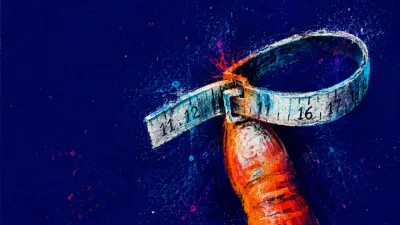
Binary Choice Lock lives in the moment when two defensible paths start behaving like the only possible map, and your body begins holding the decision as a tight chest, a braced jaw, or shallow breath. From an existential perspective, the structural framework of this struggle is about mistaking a two-option frame for the full field of movement. The cards below do not choose for you; they make the outline of the lock visible. These Tarot Cards reflect the shapes that often appear around this kind of either-or pressure.
The High Priestess UprightThe black and white pillars give the scene a hard two-option frame, yet the High Priestess occupies the narrow center where neither pillar is the whole gate. The veil behind her suggests that the living route is not identical to either visible extreme. When a decision has been reduced to stay or go, accept or refuse, A or B, that visual geometry exposes the trap of treating the frame as the truth. You regain choice power by seeing that the binary is a structure around the threshold, not the full field of movement.
The Emperor UprightTwo hands hold two different emblems, and the Emperor's central axis divides the field into a left-right geometry of sanctioned alternatives. The surrounding territory is wide, but the body faces forward from one fixed seat, making comparison more visible than movement. For a choice reading, this image captures the trap of treating the decision as only A or B because both options can be defended. The problem is not that the options are meaningless; it is that the frame has become so official that the possibility of changing the frame is pushed out of view. You are meeting a structure where both paths can look correct while neither gives the whole truth. The card holds the split still long enough to show that the missing leverage may not be inside either option, but in the binary that has been accepted as the board.
The Hierophant UprightTwo acolytes kneel before two crossed keys, framed by two stone pillars and paired symbols of rose and lily. The image does not simply show choice; it shows choice arranged into an authorised pair, with the deeper temple space sitting behind the figure who controls the frame. In a decision spread, that arrangement points to a binary that may have been accepted too early. You are not only stuck between A and B; you are caught inside the rule system that made A and B appear like the only serious options. Binary Choice Lock is the moment when both paths feel legitimate, costly, and incomplete, because the real question is whether the map itself has excluded the third route.
The Lovers UprightTwo naked figures stand before two different trees while a mountain rises at the center, turning the garden into a visible fork rather than a simple scene of attraction. The serpent, angel, and open distance make choice physically loaded: every route carries a cost, and none can be tested without crossing an exposed threshold. You may recognize this as the moment where personal growth stops being an idea and becomes a commitment that would change who you are allowed to be. The struggle is not lack of options; it is the way each option seems to cancel a different version of your selfhood, leaving you suspended at the gate of your next life stage.
The Chariot UprightThe black and white sphinxes sit before the same chariot, each holding a different direction in the body of the path. They are not enemies to be erased; they are opposing forces that must be integrated before the vehicle can move without tearing its own direction apart. In family life, Binary Choice Lock appears when the system turns every act of individuation into a moral extreme. You are made to feel that there are only two positions: stay loyal or become selfish, keep contact or cut yourself off, protect your peace or abandon the family story. The Chariot reveals the trap inside that framing. The real struggle is not choosing one sphinx against the other; it is seeing how the family system has narrowed movement until every path feels like a verdict on who you are.
ReversedThe black and white sphinxes sit at the front of the chariot as opposite powers that must somehow carry one vehicle. Around them, the image stacks several reference points at once: city behind, open road ahead, stars above, cube below, and command centered in the driver. Academic choice can become just as polarized. A major, thesis topic, grad school plan, or career-linked study path may start to feel like a single irreversible verdict: passion or stability, prestige or authenticity, staying or starting over. The reversed Chariot makes Binary Choice Lock visible because its opposing forces do not disappear; they harden into a front line. The struggle is not that you have options, but that the academic system has compressed complexity into two directions that both feel too loaded to choose freely.
Wheel of Fortune UprightThe Sphinx occupies the top of the wheel while one figure rises and another descends along the same rim. The image makes opposition look absolute: up or down, ascent or fall, top or bottom. That is the geometry of Binary Choice Lock. In a choice reading, You may feel trapped between A and B because the situation has been flattened into two visible positions on the wheel, while the wider sky around it is no longer being treated as part of the map. The card does not erase the seriousness of the two options. It shows how the frame itself can become the trap when the decision is forced to stay on a circular track with no third coordinate.
Justice UprightThe scales hang level in one hand while the sword rises straight in the other, so the card does not show a casual preference; it shows a body turned into a judging mechanism. The figure has to hold both instruments at once, keeping the evaluation open while the cut already waits in the opposite hand. For a major choice, that geometry mirrors the pressure of two defensible futures that refuse to collapse into a simple answer. You are not stuck because nothing matters; you are stuck because both sides carry enough weight to feel legitimate, and the final cut would make one version of your life official. The pillars and veil intensify the lock by making the choice feel formal, witnessed, and hard to reverse. The struggle has a precise shape here: the need for a clean verdict is pressing against a reality that still has two balanced claims on you.
The Hanged Man UprightThe white space around the Hanged Man looks open, yet the body has no path away from the T-shaped frame. His crossed leg completes a closed visual geometry, and the tree that supports him also defines the limits of his movement. In a choice spread, that field becomes the experience of being surrounded by possibility while the actual decision keeps narrowing into two fixed routes. The card does not show a lack of space; it shows space that cannot be used because the structure of the situation keeps pulling the body back to the same axis. Binary Choice Lock is the shape of that restriction. You may be comparing A and B as if they are the whole reality, while the card quietly exposes the deeper issue: the frame itself has become too narrow to reveal the third path.
Temperance ReversedThe two cups become a closed circuit when the transfer is treated as the whole event, and the split stance between water and stone hardens into a fixed operating position. The open path behind the angel is still present, but the foreground loop can absorb all attention. In a choice spread, that structure names the lock that forms when two acceptable options are treated as mutually exclusive containers. You are not simply unable to pick; the decision field has narrowed until the possibility of blending, sequencing, or reframing the options is pushed out of view.
The Tower UprightTwo figures fall to opposite sides of the same tower, but neither side offers a stable landing. The image creates a hard split while quietly showing that both sides still belong to the same collapsing architecture. In a two-option choice, this points to the bind where A and B look separate but may be carrying the same structural failure. The pressure is not only which side to choose; it is whether the frame that made the choice binary is still trustworthy.
The Moon UprightThe dog and wolf flank the path while two towers narrow the horizon into a paired gate. The image keeps presenting doubles, but the route itself runs through the middle, making the binary feel louder than the actual movement. You are caught where two legitimate options start to behave like the only possible world. The card shows Binary Choice Lock as a field where opposition becomes so visually dominant that the unseen third position has to be recovered before choice can become agency.
The World UprightThe central figure holds two wands with almost equal authority, while the wreath keeps the whole movement inside one complete oval. Nothing in the image points to one wand as lesser; the body has to sustain balance between mirrored tools rather than release into a single direction. That visual balance maps the pressure of choosing between two valid options. You are not stuck because one path is obviously false; you are stuck because both paths carry enough wholeness to keep the decision field symmetrical, and clarity only returns when the hidden asymmetry is named.
Ace of Cups ReversedThe reversed image compresses the dove, cup, streams, and pool into a strained vertical channel. What was once a ceremonial flow now feels like a forced route where every symbol must pass through the same narrow line. Binary Choice Lock appears when a decision field collapses into two overcharged options, as if the only possible movement is yes or no, stay or leave, choose this or lose everything else. The card's reversed structure shows how emotional force can narrow the map until desire, approval, and consequence are fused into one pressured corridor. In choice work, this struggle asks to be seen before the user tries to decide. The real block may not be the two options themselves, but the collapsed field that has made a third shape, a staged transition, or a different question temporarily invisible.
Two of Cups UprightThe two cups face each other across a narrow central space, mirrored enough that neither side visually overpowers the other. The caduceus rises exactly between them, turning the gap into an axis that keeps attention locked on the pair. Binary Choice Lock appears when a decision field becomes too symmetrical to move through. You can keep comparing two apparently valid paths until the comparison itself becomes the container, while the third line of movement stays hidden in the space between them.
King of Cups UprightThe king’s two hands divide the scene into opposing functions: the Cup receives emotional value, while the scepter holds command. Around him, the ship and the dolphin also sit on different sides of the same sea, turning the open water into a field of competing references. This becomes a crossroads structure when the decision is framed as two legitimate paths that cannot both be lived at once. The body remains centered, but the symbols pull authority in separate directions. The card does not reduce the problem to choosing faster. It names the lock created when two options both feel valid, and the decision frame becomes so binary that a third leverage point disappears from view.
Two of Pentacles UprightThe two pentacles do not float as independent objects; they are tied into one looping system that requires both hands, constant motion, and a narrowed stance. The figure can keep them moving, but the very cord that creates flow also prevents either coin from being treated as a separate, settled choice. That is the shape of Binary Choice Lock in a decision reading. You are not only comparing two options; you are carrying the mechanical pressure of keeping both options alive, as if choosing one would instantly collapse the other side of the loop. The card gives this struggle a visible boundary: the problem is not a lack of intelligence or desire for clarity, but a choice structure where the options have become too interdependent to evaluate cleanly. Seeing the loop as a loop is the first act of taking choice back from the pressure of simultaneous preservation.
Ace of Swords UprightThe blade stands as a narrow vertical line with two sharpened edges, dividing the open sky while olive and palm hang on opposite sides of the crown. The visual field offers symmetry, but the tool at the center is not neutral: either edge can separate, define, and exclude. In a decision between two plausible options, the card carries the pressure of being forced to make one line do all the work. You feel trapped not because both paths are meaningless, but because the frame has reduced the whole question to a blade with only two sides.
Two of Swords UprightThe two swords form a clean V across the woman's body, making the image look balanced while also turning the space in front of her into a barricade. The crescent moon sits between the blades, suggesting a subtler signal caught inside a hard two-sided frame. In personal growth, this becomes the moment when the next version of yourself is forced into a false binary: discipline or freedom, ambition or rest, intuition or logic, safety or reinvention. The card shows how a two-option frame can feel rational because it is symmetrical, even when it blocks the living middle space where real change would begin. The distant shore remains visible in the scene, but the woman cannot use that wider field while blindfolded and braced. You may be looking for the correct side to choose when the deeper struggle is that the whole map has been narrowed too early.
ReversedThe two swords divide the space in front of the heart into opposing lines, each one held with equal force. The body has made balance out of opposition, but that balance depends on not letting either side win. In love, this becomes the trap of reducing the relationship to two impossible options. Stay and you may lose yourself in the tension; leave and you may lose the connection, the history, or the imagined future that still matters. The reversed Two of Swords makes Binary Choice Lock visible because the scene contains more space than the posture can use. You are not trapped only by the options themselves, but by a decision structure that has erased the third path before it can be felt.
Eight of Swords UprightThe woman is not locked in a sealed room; she is held inside a narrow arrangement of vertical blades. The open sky and distant castle prove that the world is wider than the enclosure, but the immediate geometry forces attention onto the nearest threats. Binary Choice Lock appears when a decision is experienced as two blade-lined corridors rather than a field with multiple forms of movement. You may be choosing between two "correct" options, but the card shows how a pressured mind can compress the whole map until only stay-or-go, yes-or-no, accept-or-reject seems real. The red robe under white bindings sharpens the conflict: desire is active, but the decision frame keeps tightening around it. The struggle is not that the options are equal; it is that the structure of the choice has become so narrow that the real cost, timing, and possible third configuration cannot yet be seen.
Page of Swords UprightThe Page's body is arranged like a living fork in the road. The sword commits to one side while the face checks the other, and the open sky does not translate into easy movement because the feet still have to survive the ridge beneath them. Binary Choice Lock forms when the decision frame itself becomes too narrow to hold the truth of the situation. You may be treating two options as the only possible exits because the pressure of the moment has turned the question into a blade: choose this or choose that. The card's deeper tension is not simply between two paths, but between the apparent openness of possibility and the cramped footing of a forced choice. It asks for the structure of the question to be audited before either answer is allowed to define your agency.
Queen of Swords UprightOne blade rises as a single ruling axis while the Queen's body turns sideways and her open hand reaches into the field. The scene offers a straight line of judgment, but not a flexible path through the terrain. That is the structure of a decision becoming too binary. You may be treating a living field of tradeoffs as if it must resolve into one clean verdict, and the pressure comes from being forced to choose inside a frame that has already narrowed your agency.
King of Swords UprightThe upright sword divides the front-facing composition into a hard central line, while the throne keeps the figure squarely fixed in one official position. The scene has sky on both sides, yet the king's gaze follows the blade as if the field must be split before it can be understood. In a choice reading, that visual pressure names the trap of forcing a complex life field into two mutually exclusive doors. You feel caught because each option starts to look like a verdict on the whole self, not simply a path with tradeoffs.
Two of Wands ReversedThe two wands do not stand as equal roads; one is held, one is fixed, and the figure is caught between their different kinds of claim. The card's architecture narrows the horizon into a pressured choice between staying secured and moving outward. Binary Choice Lock takes shape when a wide future collapses into a false either-or. The psyche starts treating direction as a single irreversible fork, so every option feels like it requires abandoning an essential part of the self. In a direction reading, this card shows that the stuck point may not be the lack of a correct answer. The structure itself has compressed the question too tightly, hiding the third path that can only appear once the false binary is seen.
Three of Wands ReversedThe reversed landscape compresses a complex geography into an apparent edge: land behind, sea ahead. Yet the card contains more than two variables: the ships, the far shore, the planted wands, and the body’s own position all create different ways to define movement. Binary Choice Lock forms when this complexity collapses into a forced either-or. The decision starts to feel like one door must close absolutely for another to exist, even though the actual field contains timing, leverage, partial movement, and reframing. In a choice reading, the card does not certify one side of the binary. It exposes how the binary itself may be absorbing agency, making you fight inside a frame that is too narrow for the decision’s real structure.
No cards available for this filter.