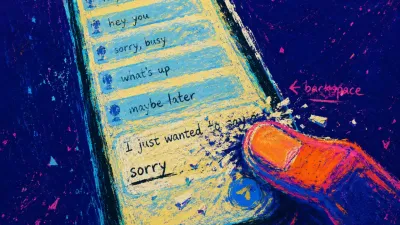
That tight pause in your chest, the one that makes every move feel dependent on the next clean signal, is the shape of Timing Dependence Anxiety. It is a universal emotional experience: the body can feel ready while attention keeps reaching outward for permission. The Tarot Cards below mirror that held breath, that narrowed focus on timing, and the uneasy feeling of being ready before the world has confirmed the moment.
Six of Pentacles UprightThe kneeling figures look up toward the hand that releases the coins, while the scales hang beside them as the visible instrument of timing and permission. The scene is not just about having or lacking resources; it is about waiting for an external measure to decide when movement can happen. You may feel ready in one part of yourself while another part keeps scanning for the correct signal. Timing Dependence Anxiety grows from that split: the inner hand is already extended, but the moment still appears to be controlled by conditions outside your reach. In a timing reading, the Six of Pentacles makes the dependency pattern concrete without turning it into blame. It asks what part of the delay is genuine calibration, and what part has become an emotional habit of waiting for the world to certify your next move.
Seven of Pentacles UprightThe ripe-looking pentacles hang close enough to matter, but the figure does not reach for them. Attention gathers around timing: whether the fruit is ready, whether the moment has arrived, whether acting now would preserve or waste what has been grown. In love, that suspended timing can make your inner steadiness depend on when the other person defines the relationship, responds, repairs, commits, or changes. The horizon is visible, yet the emotional system stays locked on the next signal from the bond. Timing Dependence Anxiety belongs to this card because Seven of Pentacles is not about absence; it is about the pressure created by almost-ready evidence. You are not reacting to nothing. You are trying to live inside a relationship where the next emotional move feels powerful enough to change the whole harvest.
Nine of Pentacles ReversedThe falcon is trained, hooded, and perched on a protected hand, so its power is present but mediated through restraint. The garden's boundaries and the owned landscape make movement look authorized rather than spontaneous. For timing questions, that image holds the feeling of waiting for an external signal before trusting your own pace. You may feel that action is only valid once something outside you confirms the moment, even when the deeper work is distinguishing timing from permission.
Page of Pentacles ReversedThe Page’s attention is locked onto the pentacle as if this one object contains the answer. The field around him is spacious, but his eyes stay with the single signal held at face height. Reversed, the visual focus can become dependence on one marker to authorize movement. The coin stops being a useful reference point and starts functioning like the only thing that can make the timing feel real. Timing Dependence Anxiety fits because the card shows how a practical sign can become too small a container for the whole decision. In timing work, it names the feeling of waiting for one message, number, offer, or milestone before you can trust your own readiness to act.
Knight of Pentacles ReversedThe horse has the strength to advance, but the rider holds the moment in suspension with the pentacle raised and the horizon still ahead. The whole image concentrates movement into timing, as if one step too early or too late could change the value of what is being carried. In love, that visual pause becomes the pressure of waiting for the perfect moment to define, confess, ask, or leave. You may keep scanning the relationship for signs, but the search for the exact right timing starts to drain the emotional clarity you were hoping to protect. Timing Dependence Anxiety fits the reversed Knight of Pentacles because the card's careful pacing has become a gate that never opens. The feeling is not thoughtful patience anymore; it is a nervous dependence on a perfect window before your truth can be allowed to move.
Queen of Pentacles ReversedThe Queen's gaze is absorbed by the pentacle while the river, foothills, and mountains continue beyond her immediate position. The image contains both a concentrated object of certainty and a much wider path that cannot be fully controlled from the throne. Timing Dependence Anxiety forms when the pentacle becomes the only acceptable signal. Instead of reading the whole field, attention narrows onto one hoped-for confirmation, one clean sign, one perfect condition that would make action feel unquestionably safe. The body remains seated because the wider landscape feels too uncertain without that exact cue. In a timing reading, this emotion points to the strain of outsourcing agency to the next sign of readiness. The card does not remove uncertainty; it shows where the search for certainty may be delaying contact with the broader pattern already visible around you.
Ace of Swords UprightThe sword holds the crown on one sharp point, suspended in a sky with almost nothing else to soften the scene. The hand's grip is strong, but that strength can also make the whole image feel as if everything depends on keeping this one signal from slipping. Timing Dependence Anxiety grows when a decision window becomes emotionally overvalued. In the card, the crown is not spread across a landscape; it is concentrated on the blade. That concentration mirrors the feeling that one opening, one date, one reply, or one move has become the measure of whether the whole cycle is working. You are not wrong to notice timing pressure, but the card exposes how quickly a clean signal can turn into a psychological bottleneck. The deeper work is seeing the window clearly without handing your entire sense of agency to it.
Two of Swords ReversedThe moon's pull on the tide places the scene inside a cycle the woman cannot command. She sits at the shoreline with her back to the water, holding still while the boundary behind her may rise, recede, or shift beyond sight. Timing Dependence Anxiety forms when your sense of safety becomes tied to an external opening you cannot fully read. The card gives that dependence a precise image: readiness held in the body while the environment controls the rhythm of release. The blindfold keeps the anxiety from turning into simple planning. It shows the ache of needing the right moment while knowing that the moment is partly shaped by conditions outside immediate control.
Three of Swords ReversedThe heart in the Three of Swords has no eyes, hands, or surrounding body to orient itself. It is all exposed center, receiving pressure from multiple directions without an internal reference point visible on the card. Reversed in a timing reading, this can become Timing Dependence Anxiety: the feeling that your steadiness depends entirely on the perfect external moment arriving. Without a visible inner gaze, the card mirrors the way attention can scatter into signs, clocks, milestones, and outside confirmation. The pain is not the desire for good timing; it is the loss of contact with your own pacing. The swords become external markers that seem to decide whether the heart is safe to move, leaving you suspended until the outside world grants permission.
Seven of Swords UprightThe scene is set at the edge of day and night, with the figure leaving the camp while still looking back at it. The timing of the act is not background decoration; it is the condition that makes the whole movement possible. This is where Timing Dependence Anxiety takes shape. You may feel that your plan, launch, confession, pivot, or retreat depends too heavily on an external window staying open, so your attention keeps returning to signs, delays, and small shifts in the atmosphere. The Seven of Swords mirrors that fragile dependence through its dusk light, guarded movement, and backward glance. It shows a nervous intelligence that knows timing matters, while also revealing how easily awareness of timing can become an inner surveillance loop.
Eight of Swords ReversedThe woman’s next step depends on more than willpower: one foot meets water, the ground is muddy, and the distant castle requires orientation before movement can become useful. The scene makes timing feel like an external permission system that must be decoded before the body can act. Timing Dependence Anxiety grows from that exact structure. You may keep waiting for a signal clean enough to remove doubt, as if the right window has to authorize your agency before you can use it. The card exposes the cost of that dependence without mocking the need for timing. It shows that cycles and conditions matter, while also revealing how easily the search for confirmation can become another binding.
Nine of Swords ReversedThe quilt’s signs are present, but they are repeated, partial, and out of sequence. Instead of forming a usable map, they become visual noise beneath a figure who cannot look directly at the room she is in. Timing Dependence Anxiety emerges when the need for an external signal becomes stronger than contact with the present body. The covered face and absent horizon show a mind searching for authorization outside itself because its own rhythm feels scrambled. In timing work, this card does not mock the search for signs; it audits the cost of needing them too much. It reflects the moment when every delay, coincidence, or symbolic hint starts carrying more authority than your own readiness, leaving you tense, suggestible, and unable to act from grounded timing.
Page of Swords ReversedThe Page stands in a landscape ruled by wind, ridge, cloud, and distance, with no closed room or stable container around him. The environment is readable, but it does not offer a fixed guarantee before he acts. Timing Dependence Anxiety grows from that exposed dependence on external conditions. You may keep looking for the one signal that will make action feel unquestionably safe, while every new variable extends the waiting loop. In a timing question, this card points to the uneasy transfer of agency from your own readiness into the weather around the decision. The Page's lesson is not to ignore conditions, but to see when the search for perfect timing has become the thing holding the sword still.
Queen of Swords ReversedThe Queen looks toward the edge of the card, while the bird and distant trees sit far beyond the throne. The sword is ready, but the landscape gives only sparse signals, as if the next opening has to be inferred from a thin horizon. Timing Dependence Anxiety grows when your inner authority starts waiting for the outside world to confirm every move. The card does not hand control to the calendar; it shows the strain of letting the calendar become the only permission system you trust.
Ace of Wands ReversedThe hand holding the wand comes from cloud, not from the land below. Its grip is strong, but its source is suspended above the visible terrain, while the path toward the castle depends on river, hills, and distance coming into workable relation. That structure can make timing feel like something you are waiting to receive instead of something you can help clarify. The spark is present, yet the card shows a split between activation and grounded participation, which can intensify the search for one perfect signal. You may feel unable to trust movement unless the moment seems unmistakably confirmed. Timing Dependence Anxiety names the uneasy reliance on external alignment, where waiting for the cleanest opening starts to erode your sense of agency.
Three of Wands ReversedThe ships are active, but they are not in the figure's hand. His palm holds the wand on land while the moving objects that matter most travel across water, governed by distance, current, and arrival. That separation creates an anxious dependence on timing signals outside immediate control. You may have agency, preparation, and intent, yet the emotional system keeps tracking external openings as if they decide whether your effort is real. In a timing question, Timing Dependence Anxiety names the strain of waiting for the world to confirm your next move. The card reflects a psychological field where the task is not to dominate the tide, but to see exactly which parts of the timing system are yours to hold and which are only yours to read.
Five of Wands ReversedEach figure is drawn into the movements of the others, with no single body holding a private lane. The horizon remains available in the background, but attention is captured by the immediate collision zone. Timing Dependence Anxiety forms when your inner clock starts taking its cues from everyone else’s motion. You keep looking outward for the right moment, but the field is too crowded to offer clean permission. The reversed Five of Wands makes that dependence feel unstable rather than collaborative. It shows a psyche trying to time its own next step through external noise, social comparison, and the fear of moving out of sequence.
Six of Wands ReversedThe rider's path exists because the surrounding figures form it. Their raised wands and lined bodies create a shared rhythm, so forward motion is visibly supported by something outside the rider's own will. In timing work, that support can become anxious when the inner system starts believing it cannot move without the field first arranging itself perfectly. You may wait for the right reply, the right mood, the right market, the right invitation, or the right sign until timing itself feels owned by the outside world. Timing Dependence Anxiety belongs to the reversed Six of Wands because the card's support structure can become a dependency structure. The question is not whether conditions matter; it is whether your agency has disappeared into the search for perfect alignment.
Seven of Wands ReversedThe cliff, stream, and lower wands turn timing into a set of external pressure lines around the body. The figure can hold the position only through constant attention to angle, footing, and incoming force. Timing Dependence Anxiety forms when the inner sense of when to move becomes outsourced to the next signal, the next opening, or the next reduction in pressure. You may feel unable to trust action unless the window is perfectly confirmed, and the card makes that dependency visible as a body waiting for the ground to stop shifting.
Eight of Wands ReversedThe wands are suspended in the crucial interval before arrival, while the stream below divides the land into two banks. The whole image is built around timing: movement has begun, contact is close, but the final landing has not yet happened. In friendship, Timing Dependence Anxiety forms when the clock starts carrying emotional meaning. A delayed reply, a late invite, a slow apology, or a message left on read can begin to feel like evidence about your place in the bond, even before any direct conversation confirms it. This feeling belongs to the Eight of Wands because the card makes arrival feel charged. The emotional question is not simply whether a friend cares; it is how quickly their signal reaches you, and what your system starts to believe during the waiting space.
Nine of Wands ReversedThe figure stands exactly where the fence breaks, using his body and the held wand to complete the line. The whole structure looks functional, but it also depends on one person staying locked in place. Timing Dependence Anxiety emerges when the external opening feels so important that your whole inner state starts hanging from it. In this card, the hands gripping the wand show how easily readiness can turn into overdependence on the next signal, the next window, or the next permission to move. For timing work, the image is a clean audit of where agency has narrowed. It asks you to notice when the moment matters, and when the idea of the perfect moment has started holding your nervous system hostage.
No cards available for this filter.