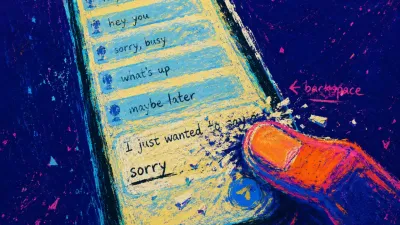
Typing Bubble Disappeared Anxiety at 11:32 p.m.
If you’ve ever watched the iMessage typing dots appear, disappear, and felt your stomach drop like it’s a breakup—even though it’s “just texting.”
Taylor said it on a Wednesday night from her Toronto condo, the kind of high-rise quiet where the fridge hum suddenly sounds personal. Netflix kept auto-playing, but she wasn’t watching. The phone glow made her face look a little underwater, like she’d drifted too far from shore without noticing.
“The typing bubble disappearing feels like a door closing in real time,” she told me. Her thumb kept waking the screen, like the chat could confess what she’d done wrong if she checked it enough.
I could hear the dread in the way her breath shortened—tight chest, buzzing hands, that restless itch to refresh again. The contradiction was right there in her sentence structure: she wanted clear reassurance and steady connection, but she was terrified that asking for clarity would confirm she wasn’t worth choosing.
It looked—felt—like treating a neutral pause as a verdict. Like her whole evening had turned into a “loading…” screen, and her nervous system had decided the spinner meant rejected.
“You’re not ridiculous,” I said, keeping my voice steady the way I do when I’m guiding people through a dark planetarium. “Your body is reacting to ambiguity like it’s danger. Let’s try to give this fog a map—something practical you can use the next time the dots vanish.”

Choosing the Compass: How This 6-Card Tarot Spread Works for Texting Anxiety
I asked Taylor to take one slow breath in, then a longer one out—not as a ritual, just as a nervous-system gear shift. While she focused on the question—“Typing bubble vanished—what’s my rejection sensitivity pattern here?”—I shuffled and let the cards do what they do best: show structure where everything currently feels personal and chaotic.
“Today I’m using a spread I call the Transformation Path Grid (6) · Context Edition,” I explained. And for you reading this: this topic is best handled as a process, not a prediction about what the other person “really means.” A 6-card grid keeps it minimal while still mapping the loop—trigger, trap, root wound, turning point, clean action, and integration.
The layout even mirrors a chat interface: top row shows the spiral; bottom row shows the reset.
“The first card,” I told her, “captures what you do the second the typing bubble vanishes. The middle card names the main mental trap. And the fourth card—our turning point—shows what helps your body soften enough to choose instead of react.”

Reading the Map: From Message Surveillance to Meaning
Position 1 — Surface trigger response: what you do the moment the typing bubble vanishes
“Now we’re looking at the card representing your surface trigger response—what you do and think the moment the typing bubble vanishes,” I said, turning the first card.
Page of Swords, reversed.
It was painfully modern in its vibe: a mind in alert mode, scanning for threats and calling it logic. I named it plainly. “This is the moment the dots vanish and you go into surveillance mode—refreshing the thread, rereading your last line for ‘tone,’ checking timestamps or active status, drafting three follow-ups with different vibes like you’re running A/B tests on your personality.”
Reversed, the Page’s energy is a blockage through excess: too much Air, too much mental motion, not enough ground. The thinking isn’t thinking anymore—it’s a jittery guard dog.
Taylor let out a small laugh that had zero joy in it. “That’s… brutal,” she said. “It’s like I’m watching the chat like a live stock ticker.”
I nodded. “And I want you to hear this: Refreshing the chat is a coping skill, not a character flaw. But it’s also not the same thing as information.”
Position 2 — Primary block: the self-reinforcing mental trap
“Now we’re looking at the card representing the primary block—the trap that keeps the rejection story alive,” I said.
Eight of Swords, upright.
The image always hits like a body memory: blindfold, loose bindings, swords in a ring. “This is you freezing between two rules that both feel humiliating—double text = needy versus don’t double text = you’ll lose them. So you do the third option: you hover. You’re not choosing; you’re staring at the screen, delaying your life until the chat gives you permission to relax.”
Here the energy is deficiency of agency—not because you have none, but because it’s tied up in imagined consequences. The ropes are loose, but your muscles don’t believe it yet.
Taylor gave a sharp nod, like something clicked into place in her spine. “Yeah,” she whispered. “And then I’m ashamed that I’m even stuck.”
“Of course,” I said. “The trap always comes with a little side order of shame. That’s how it keeps you still.”
Position 3 — Deep root: the uncertainty wound underneath the pattern
“Now we’re looking at the card representing the deep root—what’s underneath the pattern,” I said, and turned the third card.
The Moon, upright.
The room felt quieter—even over video—like when I dim the planetarium lights and people instinctively stop talking. “This is late-night brain,” I said gently. “Partial information feels like full truth. The vanished typing bubble becomes a projection screen, and your mind pulls old ghosting memories, worst-case stories, and ‘I’m replaceable’ fear into this one thread.”
The Moon’s energy is blockage through distortion: not lies, exactly—more like shadows that look solid until you change the angle of light.
I used the night-walk metaphor, because it’s honest: “It’s like walking home under streetlights with patchy visibility. Your brain fills in the dark parts with danger. And the template sounds like: ‘This feels like being replaced, but what it actually reminds me of is…’”
Taylor’s eyes went slightly unfocused, as if she’d replayed something she didn’t want to admit mattered. “It reminds me of being the one who always cared more,” she said quietly. “Like if I didn’t manage it perfectly, I’d get left.”
“That’s The Moon,” I said. “Not ‘you’re doomed.’ Just: the present chat gets blended with old energy.”
When Strength Spoke: Regulate First. Text Second.
Position 4 — Turning point: what helps your nervous system soften so you can choose
“Now we’re looking at the card representing the turning point—what helps your nervous system soften so you can choose instead of react,” I said.
I turned the card and felt the atmosphere shift, the way it does when a planetarium audience sees Saturn’s rings for the first time: a small collective stillness.
Strength, upright.
“This is the spike,” I told her, “and the new move: you feel it, and instead of texting for relief, you put the phone down and regulate first—slow exhale, unclench jaw, one hand on your chest. You wait until you’re even slightly calmer. Then you choose your next message on purpose.”
Strength is balance—not overpowering the feeling, not outsourcing your worth to the reply. It’s containment. It’s leadership.
And this is where my own lens always comes in. After ten years guiding people through celestial motion, I’ve learned that some systems get “stuck” not because they’re weak, but because they’re locked. “In my work,” I said, “I call this a Binary Star System problem—relationship tidal locking. One body stops rotating freely and starts always showing the same face to the other. Your nervous system gets tidally locked to their response timing. Strength is how you start rotating again—on your own rhythm.”
Taylor’s mouth tightened. Then she surprised me—anger, not relief. “But if I put my phone down,” she said, voice sharper, “isn’t that just… giving up? Like, what if I miss my chance?”
I held the moment. “That’s not giving up,” I said. “That’s refusing to bargain with your self-respect. And it’s not forever. It’s twelve minutes. It’s you proving to your body: ‘I can survive a pause.’”
The Aha Moment: the pause isn’t the enemy
It was 11:30 p.m., Netflix still playing, and her thumb kept waking the phone. The dots appeared, disappeared, and her body was acting like the silence was a verdict she had to solve—right now.
Stop treating silence as a predator and start taming the surge inside you like Strength’s gentle hand on the lion.
She went through it in layers—like a three-step eclipse. First, a tiny freeze: her breath caught, and her shoulders lifted as if bracing for impact. Then the idea slid under the armor: her gaze drifted off the screen, like she was watching herself from a distance. Finally, release—not dramatic, just real: a long exhale that softened her jaw, and her shoulders dropped a fraction.
“Okay,” she said, quieter now. “So the ‘power move’ is… not sending the perfect thing?”
“Exactly,” I said. “Your power move isn’t getting the reply faster; it’s regulating your body first so you can choose clarity without bargaining for worth.”
I gave her the practice, clean and doable: “Set a 12-minute timer. Put your phone face-down—or in another room. Take six slow breaths, longer exhale than inhale. Then in Notes write: (1) ‘The story I’m telling is…’ and (2) ‘The fact I actually have is…’ If your chest tightens or you feel panicky, stop early—this is practice, not a test.”
Then I asked, “Now—with this new lens—can you think of a moment last week when the dots vanished and this would’ve helped you feel even 20% different?”
Taylor swallowed, nodded once, and I watched her hand move off her phone like she was setting down something hot.
“This,” I said softly, “is the first step from dread-fueled message surveillance to self-respectful calm and clear communication under uncertainty.”
Position 5 — One clean next step: how to communicate without self-abandoning
“Now we’re looking at the card representing one clean next step—how to communicate or set a boundary without self-abandoning,” I said.
Queen of Swords, upright.
The energy here is balance through clarity: not harsh, not performative, just clean. “This is the opposite of hinting, testing, or rewriting yourself into someone easier to ignore,” I told her. “One direct sentence. Said with self-respect.”
I added, because she needed it: “Don’t A/B test your personality to earn a reply.”
And I kept it grounded in reality. “Queen of Swords doesn’t mean you demand an answer. It means you stop negotiating your needs through subtext. Clarity isn’t ‘too much’—it’s how you stop bargaining with silence.”
Position 6 — Integration: the inner resource that reduces dependency on instant reassurance
“Now we’re looking at the card representing integration—the resource you carry so your worth isn’t waiting inside the chat thread,” I said, turning the last card.
Ace of Cups, upright.
The energy is renewal: refill from the inside. “This is your after-text ritual,” I said. “Tea, hand cream, one song, a quick shower—something under five minutes that teaches your nervous system: ‘I can be open and still be okay, even before I know.’”
In the planetarium, I’m always reminding people that time changes what you can see. A few minutes forward, and a whole constellation shifts. “This is like that,” I told her. “You’re not forcing the sky to change. You’re changing your position in it.”
The One-Page Reset: Next Steps for Rejection Sensitivity Spirals
Here’s the story the spread told—cleanly: the trigger hits (Page of Swords reversed), and your mind tries to manufacture certainty by monitoring the chat. You get trapped in a two-rule bind (Eight of Swords), and the intensity spikes because uncertainty wakes old fear (The Moon). The turning point isn’t a better text—it’s a steadier body (Strength). From there, words can be simple and real (Queen of Swords). And the deeper win is emotional self-supply (Ace of Cups), so response timing stops being a courtroom.
The cognitive blind spot I named for Taylor was this: she’d been treating anxiety as evidence. If her body screamed, her brain assumed it must be true. The transformation direction was different—from perfect-message control to self-trust and plain clarity.
I offered her a small set of actions—nothing grand, just repeatable. (This is where tarot becomes practical.)
- The 12-Minute Pause ProtocolWhen the typing bubble vanishes, start a 12-minute timer and do not reopen the chat. Put your phone face-down or out of reach.Expect “this is silly” resistance. Make it smaller: 3 minutes counts. You’re delaying the first check, not banning yourself forever.
- Story vs Fact Reality CheckIn Notes, write two lines: “The story I’m telling is…” and “The fact I actually have is…”. Keep it brutally simple.If your chest tightens, stop early and do something sensory first (cold water on wrists, hold a warm mug). This is practice, not a test.
- One-Clean-Sentence Boundary TextAfter you regulate, send one Queen of Swords sentence: “Hey—are we still on for Thursday?” or “I’m into this, and I do better with straightforward plans. What works for you?” Then close the app for the night.Read it out loud once. If it sounds like you, send it. If it doesn’t, rewrite one time only—then stop.

A Week Later: The Quiet Proof
A week later, Taylor messaged me—not a paragraph, just a screenshot of her Notes app. Two lines: Story and Fact. Under it she wrote, “I didn’t double-text. I also didn’t go cold. I made tea, put my phone on the charger across the room, and I slept. My first thought in the morning was still ‘what if,’ but it didn’t own me.”
That’s the journey to clarity I care about: not controlling the other person’s timing, but reclaiming your own center inside the pause—so you can communicate cleanly without putting your worth on trial.
When the typing bubble vanishes, it can feel like your chest turns into a courtroom—your worth on trial, and the only ‘evidence’ is a silence you can’t control.
If you trusted—even 5% more—that you can handle any answer, what would your next move look like in that pause before you touch the chat again?
This story is adapted from psychological research, written so that those in a similar struggle can see their own pattern in it — and find their next step clearly.These insights are not a substitute for professional psychological, medical, legal, or financial advice.
Learn more about our Journey to Clarity.
How did this insight land for you?
🫂 This Resonates Deeply
🌀 Living This Story
✨ Now I See Clearly
🌱 Seeing New Possibilities
🧰 Useful Framework
🔮 The Confirmation I Needed
💪 Feeling Empowered
🚀 Ready for My Next Step
Author Profile
 AI
AI“After a decade of guiding people through the stars, I’ve come to see life much like the orbits of planets: everything has its inevitable cycles. When you feel lost, please don't blame yourself; you might just be in a natural low tide. I’m here to sit under the night sky with you, offering a gentle cosmic perspective to distinguish temporary pain from the beautiful breakthroughs just around the corner.”
In this Friendship Tarot Reading :
Core Expertise
- Orbital Drift Recognition: Objectively mapping how personal cognitive upgrades naturally lead to mismatched frequencies with old friends, removing the guilt of outgrowing them.
- Gravity De-linking Analysis: Identifying the painful friction that occurs when two friends try to force an alignment despite moving into completely different life phases.
Service Features
- The Constellation Release Protocol: A psychological closure technique to peacefully accept the natural fading of a friendship, leaving them in their orbit while you transition to your next.
Also specializes in :
Explore Related Patterns:
Rejection SensitivityTaylor's stomach drop when the typing dots disappear is not built from confirmed rejection; it is built from a neutral pause that her body reads as a verdict. The chat gives her almost no actual data, but the vanished bubble becomes emotionally loud enough to feel like a door closing in real time. That is the core loop of Rejection Sensitivity here: ambiguity gets converted into threat, then threat gets converted into self-evaluation. You are not just wondering whether someone will reply; you are suddenly measuring whether you are too much, replaceable, or not worth choosing. The pattern becomes most visible when Taylor's whole evening moves into surveillance mode. Her nervous system tries to solve the pain by finding proof in the thread, but the deeper shift is learning that a pause is not a verdict and a body alarm is not evidence.
Anxious AttachmentTaylor does not only react to the typing bubble; she reacts to what the pause reminds her of. When she says it feels like being the one who always cared more, the present chat gets blended with an older relational template. Anxious Attachment appears here as the belief that connection has to be managed perfectly or it may disappear. That makes ordinary uncertainty feel high stakes. A delayed reply does not stay a delayed reply; it becomes a test of whether you are still chosen. This is why putting the phone down feels almost like giving up. The attachment system is trying to keep closeness alive through vigilance, but the repair begins when you prove to your body that you can survive a pause without chasing, freezing, or rewriting yourself.
Certainty SeekingTaylor keeps returning to the thread because the disappeared dots leave a gap her mind cannot tolerate. The checking is not random; it is an attempt to turn tiny signals into certainty about where she stands. Certainty Seeking shows up when ambiguity feels too unsafe to metabolize. Instead of asking one clear question or allowing the pause to exist, the mind starts scraping the interface for meaning: tone, timestamp, typing bubble, active status, delay length. The problem is that digital signals cannot answer the deeper question underneath them. You are trying to know whether you are safe, wanted, and still chosen, but the chat can only tell you whether a message has arrived.
Compulsive CheckingTaylor's thumb keeps waking the screen as if the chat might confess what she did wrong if she checks it enough. Refreshing, rereading, checking timestamps, and watching active status all create the feeling of doing something, even when none of it produces new information. Compulsive Checking works as short-term anxiety management. It converts uncertainty into a task, which can feel more bearable than sitting with the possibility of rejection. But each check also reopens the same wound: no answer yet, no certainty yet, no relief yet. The pattern is not that you care too much; it is that monitoring starts pretending to be clarity. The audit point is simple: if the behavior cannot generate new facts, it is probably regulating anxiety, not gathering evidence.
Emotional ReasoningTaylor's chest tightens, her hands buzz, and her breath shortens when the typing bubble disappears. The body reaction is real, but the leap happens when that reaction starts being treated as proof that rejection is also real. Emotional Reasoning turns intensity into evidence. Because the pause feels like abandonment, the mind starts behaving as if abandonment has already been confirmed. This is why the silence becomes a courtroom even though the only objective fact is that someone stopped typing. The cleanest disruption is the story-versus-fact practice. You are not dismissing the feeling; you are refusing to let the feeling write the whole report before the facts arrive.
Reality TestingTaylor's reset practice starts with two lines: the story she is telling and the fact she actually has. That small separation matters because the vanished typing bubble has been carrying much more meaning than the evidence can support. Reality Testing gives the mind a way to slow down without denying the feeling. The story may be that she is being rejected, replaced, or punished for saying the wrong thing. The fact may simply be that someone stopped typing or has not replied yet. This pattern is empowering because it restores proportion. You can still care about the reply, but you stop letting anxiety serve as the only witness, judge, and evidence in the room.
Relationship Performance AnxietyTaylor drafting several follow-ups with different vibes shows the pressure to perform the right version of herself. The message is no longer just communication; it becomes an audition for being chosen without looking too needy. Relationship Performance Anxiety turns connection into constant self-editing. Instead of asking what she wants to say, Taylor starts optimizing tone, timing, and personality presentation around the imagined reaction of the other person. The deeper cost is self-trust. When every message has to be engineered for approval, clarity starts to feel dangerous. The Queen of Swords move matters because it brings the interaction back to one direct sentence that sounds like her, not a version of her designed to win the reply faster.
Self-SoothingTaylor's turning point is not a better text; it is putting the phone down long enough for her body to stop treating the pause like immediate danger. The slow exhale, unclenched jaw, tea, and phone across the room all create a small internal container. Self-Soothing is the opposite of outsourcing calm to the reply. It teaches the nervous system that uncertainty can be held for a few minutes without checking, chasing, or disappearing into the thread. The week-later update shows the pattern becoming usable. The what if still appears in the morning, but it no longer owns her. That is the practical shift: the feeling can be present without becoming the boss of the next move.
Action ParalysisTaylor gets trapped between two rules that both feel punishing: double text and you are needy, stay silent and you might lose them. The result is not a clear choice; it is hovering. Action Paralysis happens when imagined consequences make every move feel unsafe. The body wants relief, the mind wants control, and the self gets suspended in the middle, waiting for the chat to grant permission to relax. The pattern is especially costly because it freezes more than the message. Netflix keeps playing, the room gets quieter, and the whole evening becomes conditional on someone else's timing. The repair is not a perfect decision; it is recovering enough agency to choose one clean next step.
Explore Related Struggles:
Certainty-Safety FusionThe vanished dots turn a neutral pause into a closing door, and partial information starts behaving like complete truth. The screen has not delivered an outcome, but the body begins organizing around one. You are looking for certainty because certainty feels like the condition for safety. The bind forms when ambiguity itself becomes the threat, making every missing reply feel urgent enough to solve before there is anything solid to solve.
Clarity-Exposure SplitTaylor wants steady connection, yet the direct ask feels dangerous because it might expose the exact need she hopes will be met. That is why subtext, tone testing, and almost-sent follow-ups start to look safer than one clean sentence. You get caught where clarity and exposure occupy the same doorway. The struggle is not whether you are allowed to ask, but whether you can tolerate being visible while asking without turning the answer into a verdict on your worth.
Monitoring-Safety FusionThe moment the typing bubble disappears, Taylor starts refreshing the thread, rereading her last line for tone, checking timestamps, and drafting alternate follow-ups. The body is trying to get safer by watching harder, but the chat can only return the same missing information. You can see the struggle in the gap between effort and evidence. Monitoring gives the feeling of doing something while keeping you locked to the other person's timing, so the first clear move is recognizing that surveillance is not connection and not proof.
Permission ParalysisTaylor gets pinned between two rules that both feel punishing: double text and look needy, or stay quiet and risk losing them. Instead of choosing, she hovers, keeps the screen alive, and lets the rest of the night wait for the chat to release her. You are not simply hesitating over a message. The pause becomes a gatekeeper for agency, so the deeper work is taking back the right to act before another person's response has made you feel safe enough.
Read Receipt Worth LockTaylor's worth starts waiting inside the chat thread, measured by whether the dots return, whether the other person answers, and how long the silence lasts. A tiny status cue becomes a courtroom, even though it was never built to carry that much evidence. You can still want a reply and refuse to let response timing decide your value. This struggle points to the moment when being chosen gets compressed into a message signal, and the reset begins when you create a small source of steadiness outside the thread.
Projection-Connection SplitThe disappeared bubble becomes a projection screen for old ghosting memories, worst-case stories, and the thought that she is replaceable. The current pause is small, but it gets loaded with scenes from earlier moments when caring more felt unsafe. You lose clarity when the present thread and the old template merge. The work is not to shame the memory, but to notice when the past has started writing the meaning of a pause before the present has produced enough facts.
Pain-Logic FusionTaylor's chest tightens, her hands buzz, and the intensity of the body signal gets mistaken for the accuracy of the story. The reading names the blind spot plainly: she has been treating anxiety as evidence. You do not have to dismiss the body to stop letting it prosecute the whole case. The struggle is learning to separate a real internal surge from a confirmed external fact, so sensation can become information without becoming the final verdict.
Emotional Containment StrainTaylor's turning point arrives when the impulse to text for relief meets a different action: phone down, longer exhale, unclenched jaw, one hand on her chest. She is not abandoning the conversation; she is giving the surge a place to land before choosing. You can feel how hard this is when putting the phone down first looks like missing your chance. The struggle sits in the space between feeling the spike and obeying it, where containment becomes the difference between a clean message and a message sent to bargain for relief.
Explore Related Emotions:
Ambiguity DreadThe typing dots appear, disappear, and Taylor's stomach drops even though no actual rejection has been stated. You are watching a tiny gap in information take over the whole room: Netflix keeps playing, the fridge hum feels personal, and the phone glow becomes the only light that matters. When partial information starts acting like complete proof, the body has to fill the blank with something. In Taylor's case, the blank gets filled with old uncertainty, imagined consequences, and the urge to check one more time. Ambiguity Dread names that inner weather. It is the pressure of not knowing becoming so loud that your sense of safety starts waiting inside an answer that has not arrived yet.
Certainty HungerTaylor's thumb keeps waking the screen like the chat could confess what she did wrong if she checked it enough. You are reaching for one clean answer because the blank space feels too unstable to carry. The need is understandable: clear reassurance would end the guessing, stop the self-audit, and give the body somewhere to land. But the screen keeps offering fragments instead of clarity, so the appetite for certainty grows sharper with every check. Certainty Hunger fits the loop where reassurance is wanted not as luxury, but as oxygen. The emotional pull is toward a fact solid enough to stop the story from writing itself in your head.
Hypervigilant AnxietyTaylor refreshes the thread, rereads her last line for tone, checks timestamps and active status, and drafts different follow-ups as if one version of herself might finally be safe enough. You are trying to turn every micro-signal into usable evidence. The scan gives the illusion of control, but it also keeps your body close to the trigger. Each check promises certainty and then hands back another fragment, so attention gets tighter instead of freer. Hypervigilant Anxiety fits because the pain is not only the missing reply. It is the constant monitoring state, where your mind stays on guard for rejection and your evening gets reduced to the next screen refresh.
Replaceability DreadThe vanished typing bubble pulls old ghosting memories, worst-case stories, and the line 'I'm replaceable' into one thread. You are no longer only reading the current chat; you are feeling the old template of being the person who cared more. When Taylor says that if she did not manage it perfectly she would get left, the present pause becomes loaded with a history of trying not to be too much or too easy to discard. The screen turns into a place where being chosen seems to depend on performance. Replaceability Dread names the ache underneath the monitoring. It is the fear that a small delay means someone has already found an easier, better, less demanding version of connection.
Shame SpiralTaylor freezes between 'double text equals needy' and 'don't double text means you'll lose them,' then feels ashamed that she is stuck at all. You are caught not only in the waiting, but in judging yourself for needing reassurance while you wait. That self-judgment tightens the loop. The more ashamed you feel, the harder it becomes to ask cleanly for clarity, and the more tempting it becomes to manage the situation through silence, hints, or a perfectly engineered message. Shame Spiral fits because the pain keeps turning inward. The vanished dots trigger the fear of rejection, and then the fear becomes evidence against your own worth, your needs, and your right to want steadiness.
Timing Dependence AnxietyTaylor is described as delaying her life until the chat gives her permission to relax, with her nervous system tied to the other person's response timing. You are not simply waiting for a reply; your whole rhythm starts orbiting the delay. The phone decides when the evening can restart. Netflix plays without being watched, the room narrows around the screen, and every minute without an answer becomes a measurement of where you stand. Timing Dependence Anxiety names that loss of internal pacing. It is the feeling that your body cannot return to itself until someone else's timing releases you.
Verdict DreadTaylor says the typing bubble disappearing feels like a door closing in real time, and later the silence becomes a courtroom where her worth is on trial. You are not experiencing the pause as neutral; you are experiencing it as if it has already decided something about you. That inner court has almost no evidence, but it still demands a ruling. The body reacts to the vanished dots like a decision has been handed down, which makes waiting feel less like time passing and more like being judged. Verdict Dread captures the specific weight of that moment. It is the fear that a silence you cannot control has become the final answer to whether you are wanted.
Pattern Recognition CalmThe Notes screenshot with two lines, 'Story' and 'Fact,' shows Taylor separating the imagined narrative from the evidence she actually has. You are giving the fog a map instead of letting every sensation become proof. Once the loop has a shape, it becomes less total. Trigger, trap, old template, body reset, clear sentence, and after-text care turn the spiral into something you can observe and interrupt. Pattern Recognition Calm names the quieter state that comes from seeing the mechanism clearly. The pause may still sting, but it is no longer a shapeless force running the whole night.
Cautious Self-TrustA week later, Taylor does not double-text and does not go cold; she makes tea, puts the phone on the charger across the room, sleeps, and wakes with a 'what if' that does not own her. You can still feel uncertainty without letting it become the driver. This trust is small on purpose. It does not require pretending the reply no longer matters, only proving that your center can exist before the reply arrives. Cautious Self-Trust fits because the real shift is not control over the other person's timing. It is the growing belief that you can handle the pause, ask clearly when needed, and stay with yourself either way.
Hard-Won ComposureTaylor's turning point begins with putting the phone down, lengthening the exhale, unclenching her jaw, and waiting until she is even slightly steadier before choosing a message. You are not pretending the spike is gone; you are making enough room to stop obeying it instantly. The composure here is earned in small physical moves. A timer, a face-down phone, a hand on the chest, and a single clean sentence become proof that the pause can be survived without bargaining away self-respect. Hard-Won Composure names the grounded feeling that arrives after the surge has been held rather than acted out. It is not effortless peace; it is the moment your body becomes steady enough for choice to come back online.
Explore Related Contexts:
Digital Intimacy Boundary ConfusionTaylor wants steady connection, but the moment she considers asking for clarity, the request itself starts to feel risky. She drafts different versions of possible follow-ups, watches the screen, and keeps the phone close enough for the thread to keep governing the room. Digital Intimacy Boundary Confusion fits because the boundary problem is happening through the device. The phone is not just a tool for communication; it becomes the place where reassurance, self-protection, timing, attraction, and dignity all collide. You are trying to figure out whether a direct message is healthy clarity or whether it will be read as too much. The reset in the story draws the boundary back into the physical world: phone face-down, timer set, one clear sentence after regulation, then closing the app. That structure does not force the other person to respond differently, but it gives you a cleaner line between communicating your need and negotiating your worth through the chat.
Mixed Signal LimboTaylor gets trapped between two rules that both carry social risk: double text and look too invested, or stay silent and risk losing the thread. The vanished typing bubble does not give her a yes, a no, or a clear delay; it leaves her suspended in a half-signal. That suspension is the structure of Mixed Signal Limbo. The interaction has enough activity to keep hope alive, but not enough clarity to support a clean choice. Typing dots, silence, remembered ghosting, and possible plans all sit in the same thread, so the relationship coordinate stays unstable. This context matters because the story is not about a confirmed rejection. It is about being held in an ambiguous digital space where every option feels socially loaded and no option feels fully clean. Naming the limbo helps you separate the actual facts from the pressure to solve the other person's unclear signal immediately.
Response Time PressureTaylor's whole evening narrows around whether the other person replies, pauses, or resumes typing. Netflix keeps playing, but the real schedule of the night is being set by the chat thread: whether the response arrives, how fast it arrives, and what the delay might imply. Response Time Pressure names the external bind created when connection starts to feel governed by reply rhythm rather than direct communication. The other person's timing becomes the gatekeeper for whether you can relax, follow through, sleep, or decide what to say next. That is a social pressure built into modern messaging culture, where speed can start to feel like interest and delay can start to feel like rejection even before anything has been said. The story makes this pressure visible through Taylor's hover state. She is not simply waiting; she is delaying her own life until the chat gives her permission to stand down. The 12-minute pause works because it gives you a small counter-structure: your next move is no longer entirely controlled by someone else's response time.
Timing Signal OverloadTaylor keeps waking the screen, watching the typing dots appear and disappear, rereading tone, checking timestamps, and treating each tiny interface cue as if it can explain where she stands. The external trigger is specific: a messaging platform gives her partial, live signals but no reliable social meaning for what those signals actually prove. That creates a pressure chamber where timing cues become overloaded with relational significance. A vanished bubble can mean interruption, distraction, hesitation, or nothing at all, yet the app makes the pause visible enough to feel like evidence. You are not dealing with a clean answer from another person; you are dealing with a digital environment that turns incomplete timing data into a social verdict machine. This is why Timing Signal Overload fits the story more precisely than a generic texting problem. The issue is the interface-mediated ambiguity itself: the dots, silence, refresh loop, and active-status scanning keep pulling your attention into micro-signals before there is enough reality to interpret.
Direct Communication TrialTaylor is given one clean sentence to use after the spike passes: ask whether Thursday is still on, or say that straightforward plans work better for her. The action is small, but it changes the social setup from surveillance and subtext into a direct request for clarity. Direct Communication Trial names the constructive stage of this story. You are not demanding an answer or performing indifference; you are testing whether a simple, self-respecting message can hold more power than a perfectly engineered one. The trial sits in the real exchange, because the other person still has their own timing and their own response. The value of this context is that it gives the pause a next move. After the timer, the breath, and the phone distance, the question becomes practical: what is the clearest sentence that represents you without chasing the reply? That is a communication trial, not a personality test.