When Money Feels Like Evidence

A grounded look at money shame, related tarot cards, and tarot reading insights from sessions circling this bind.

Money Shame Bind
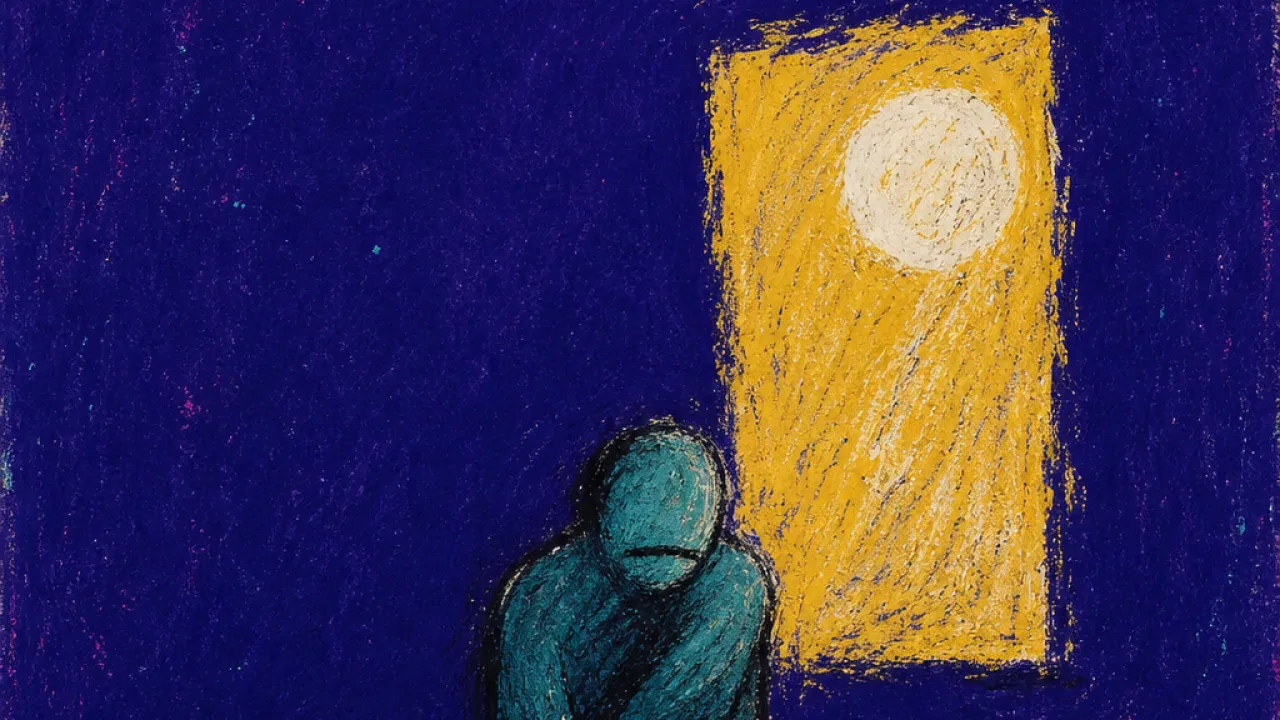
A figure boxed in outside a lit window, phone glow and receipts scattered as cold teal presses against harsh gold

What does this feel like?

Money Shame Bind — you feel it in the tiny pause before you tap your banking app, the way your thumb hovers like the screen might say something about who you are, not just what you have. You are standing in line for coffee, or sitting on your bed with a laptop open, or answering a friend's casual 'wanna grab dinner?' text, and suddenly your body is doing math before your mind has agreed to participate. Your stomach tightens, your shoulders rise, and a heat creeps up your neck that feels completely out of proportion to the moment. You tell yourself it is just money, just a bill, just a price, just a number, but the number seems to carry a voice: you should be further along, you should be better at this, you should not have wanted that, you should not need to check. So you perform normal. You split the bill with a joke. You say 'I'm easy' while scanning the menu for the safest option. You buy the thing and then punish yourself for wanting it. You skip the thing and then feel small for needing to skip it. The bind is not simply about having enough or not enough; it is the way money turns into a mirror you did not ask for, reflecting status, freedom, adulthood, desirability, discipline, and whether you think you are allowed to take up space. You can be careful and still feel exposed. You can be generous and still feel guilty. You can earn more and still carry the same flinch, because the shame keeps moving the finish line. Over time, your world gets quieter and more cramped: fewer spontaneous plans, fewer honest answers, fewer moments where you can say what you want without first calculating whether wanting it makes you irresponsible. The cost is not only financial; it is the steady shrinking of your ease, much like the two figures on the Five of Pentacles, walking through the cold beneath a lit window, close to warmth but still feeling kept outside by what they lack.

What's pulling at you?

Money is not only acting like money here; it is acting like a scoreboard, a mirror, and a social pass all at once. You are stuck between wanting to make clear choices with the resources you have and feeling as if every choice exposes something about your value, maturity, or place among other people.

How It Shows Up?

  • You open your banking app while standing in line for coffee, shielding the screen with your thumb even though no one is looking. Your stomach tightens before the numbers load, and your face goes still in that practiced way, as if a casual latte could turn into evidence against you. You close the app too fast, then reopen it, then close it again, caught between wanting clarity and not wanting the hit of seeing it. You can let the screen go dark for a minute; checking does not have to become a trial of your worth.
  • A friend suggests dinner somewhere 'not too expensive,' and you smile like that solves it, but your chest has already gone tight. You scan the menu before anyone notices, pretending to be undecided while your eyes jump to the cheapest thing that won't make you look obvious. The conversation keeps moving, glasses clink, everyone seems relaxed, and you feel yourself split in two: one person laughing at the table, another counting quietly under the table like the figure clutching pentacles close to the body. It is allowed to choose what fits your night without turning the choice into a confession.
  • You sit down to handle bills, subscriptions, or shared rent details, and the page feels louder than it should. Your shoulders creep upward, your jaw locks, and every line item seems to ask a question you do not want to answer out loud. You start making a plan, then abandon it halfway because the plan feels like proof that you should have known better sooner. You can come back to one line at a time; the whole page does not need to be faced in one breath.
  • Someone casually talks about savings, salaries, trips, or buying something new, and you feel your body perform normal before your mind catches up. You nod, ask the right follow-up question, and keep your voice easy, while heat climbs up your neck and your hands disappear into your sleeves. It is not envy exactly; it is the sudden sense of being outside a lit window, like the cold street in the Five of Pentacles, close enough to see warmth but not sure you are allowed in. You can notice that distance without deciding it says everything about you.
  • Late at night, you replay a purchase that was supposed to feel small: the delivery order, the hoodie, the concert ticket, the extra charge you forgot about. Your tongue presses against the back of your teeth, your breathing gets shallow, and the receipt becomes a tiny courtroom in your head. You tell yourself you are careless, then tell yourself everyone spends money, then start calculating again, unable to find a place to land. You can let the receipt stay a receipt; it does not have to become a verdict.

Money Shame Bind in Tarot Cards

Money Shame Bind lives in the split between wanting ordinary ease around money and feeling quietly exposed every time a number, menu, or receipt appears. You can feel it in the tight stomach before the banking app loads, the locked jaw over a bill, or the heat rising up your neck when other people talk casually about spending. From an existential perspective, the structural framework here is about what happens when money stops being a tool and starts feeling like a public measure of your place in the room. The Tarot Cards below mirror that outline without explaining it away.

The Hierophant
Upright
The Hierophant sits between two pillars while acolytes kneel before him, and crossed keys mark access to an authorized order. The ritual arrangement shows belonging as something governed by visible rules, inherited standards, and a central authority that decides what counts as proper participation. You can meet those rules in social expectations about independence, salaries, homes, travel, generosity, and what a financially competent adult is supposed to look like. The standard may never be stated directly, but you still perform ease, hide the calculation, and read a casual invitation as a test of whether you belong among people who seem to know the code. The card locates money shame in a social script rather than in a single purchase. The pressure comes from trying to pass an unspoken respectability ritual while fearing that your actual resources will reveal you as an outsider to the order.
Justice
Upright
The seated figure holds an upright sword in one hand and scales in the other, framed by pillars and a red curtain. Weighing and judgment occupy the same balanced posture, so the scene gives every fact the potential to become evidence in a verdict. You can feel that verdict forming while checking a balance, reviewing a bill, or replaying a purchase. The number may be accurate, but your inner process adds a second inquiry: whether the decision proves discipline, maturity, restraint, or the right to participate with other people. The sword and scales identify the exact split in the bind. You want clear accounting that can support a proportionate choice, but the same accounting becomes an inner tribunal when financial facts are made to determine your moral standing.
The Devil
Upright
The two figures are chained beneath a structure that magnifies material power, yet the loops around their necks are visibly wider than absolute restraints. That image captures a growth problem sustained by fusion: money has become evidence of virtue, freedom, desirability, and adulthood, so changing one habit cannot by itself dismantle the whole meaning system. You may repeatedly set stricter targets and interpret any deviation as renewed proof of failure. The card identifies the leverage point in the structure itself: the shame remains binding while material performance is allowed to author your entire identity, regardless of whether the numbers improve.
Judgement
Upright
An angel sounds a trumpet over figures rising from coffins, their arms lifted toward a call that brings the buried past into the present. The scene is a public reckoning with an old identity, not a quiet update; what was stored away is made visible and asked to answer. You can experience that summons through old money stories, past mistakes, family expectations, or the memory of being told what responsible people do. Even when your current resources change, those earlier verdicts can return as if they are still deciding whether you have earned the right to feel secure, generous, or at ease. The card locates personal growth at the point where a new self is expected to emerge from an inherited financial narrative. The shame persists when reassessment is experienced as another trial, so earning more or making better choices cannot by itself close the review.
Two of Pentacles
Upright
The young figure keeps two pentacles moving inside an infinity loop while two ships pitch across the rough water behind him. The motion is competent but never settled; the body has to keep balancing because the conditions keep shifting. You can recognize the same rhythm in a budget, a rent split, or a coffee decision. Money is not just being allocated; each allocation is being used to test whether you are disciplined enough, adult enough, or entitled to want anything beyond the safest option. The card holds the bind in motion: practical flexibility keeps the day functioning, while the need to keep performing balance prevents the numbers from becoming neutral information. You are not failing because the system requires attention; the friction lies in how every adjustment is made to carry a verdict.
Four of Pentacles
Upright
A crowned figure uses the whole body to possess four pentacles, with material control occupying the places associated with thought, value, and movement. The image exposes a cognitive architecture in which being responsible has narrowed into never releasing, never miscalculating, and never appearing to need. You may pursue growth by tightening discipline, yet each tighter rule further fuses competence with control. The card witnesses why more willpower alone cannot complete the process: the system treats flexibility as moral failure, so even improved financial behaviour can leave the underlying identity structure unchanged.
Five of Pentacles
Upright
The five pentacles occupy a bright window while the human figures remain below in the snow, visually separating material symbols from human dignity. That composition exposes the cognitive fusion at the centre of Money Shame Bind: resources have been elevated into a complete measure of identity while the person carrying the strain is reduced to an outsider position. You may try to grow through stricter control, higher earnings, or more self-denial, only to find that the shame moves the required threshold. The card locates the deeper developmental task without prescribing a performance target: material facts and personal value must become distinguishable before increased resources can produce increased freedom.
Six of Pentacles
Upright
A well-dressed figure holds a balance in one hand while distributing coins to two kneeling recipients. The exchange is visible, measured, and arranged vertically: one person controls the resource and the scale while others wait to receive. You can encounter that hierarchy in the social spaces where someone pays, someone earns more, or someone can join without checking the price. Generosity may bring relief and still make you feel placed below the people who have the power to make participation possible, while refusing help can become another performance of independence. The scale makes money a public measure rather than a private fact. The card identifies the bind between wanting equitable access to the group and fearing that every act of giving or receiving will reveal your rank within it.
Reversed
The figure holding the scales also decides who receives the coins, combining judgment and support in a single position of authority. Reversed, that structure becomes difficult to trust, mirroring family assistance that carries comparison, surveillance, gratitude demands, or an implied downgrade in adult status. You may need help while feeling that accepting it gives the family permission to define you through the need. The card witnesses the bind without idealizing support: shame can distort a workable exchange, and family money can also contain real power conditions that deserve to be named separately from your worth.
Seven of Pentacles
Upright
The figure leans on a hoe and studies the pentacles growing from the soil instead of looking toward a finished destination. His labor has produced evidence, but the material return remains under review. You can bring that posture into career development when salary, title, savings, or professional stability becomes the harvest by which you measure your direction. Work may be real and sustained, yet the current return can make you question your competence, trajectory, or right to claim that you are progressing. The cultivated ground and waiting body show why earning more does not automatically end the bind. When compensation becomes the scoreboard for career legitimacy, every stage can feel like an unfinished result.
Eight of Pentacles
Upright
The artisan bends over a workbench, carving one pentacle after another while completed coins line the wall beside him. The repeated craft makes effort visible as a series of outputs, with the worker physically enclosed by the products of his labor. You can experience that enclosure when skill, income, and personal value are treated as interchangeable measures. You work harder to make the ledger prove your worth, then feel ashamed when compensation, recognition, or the ability to afford ordinary life does not rise quickly enough to match the effort. The card holds a precise workplace friction: disciplined output keeps the system moving, but repetition can turn work into a permanent audition. Money becomes the receipt for competence, so even real mastery fails to create a stable sense of being enough.
Ten of Pentacles
Reversed
An elder sits within an archway shared by younger family members, animals, and ten pentacles, making wealth inseparable from lineage and belonging. Reversed, the apparent continuity fractures into conditional membership, inherited expectations, or unequal access to family resources. You may feel that needing help, earning differently, or failing to reproduce a family standard places you outside the adult circle. The card witnesses how money shame can be transmitted as a belonging rule, while also revealing that the rule belongs to a family structure and is not an objective measure of your human value.
Queen of Pentacles
Reversed
The queen's gaze rests intently on the pentacle she cradles while a richly living landscape surrounds her. Reversed, the material symbol absorbs the field of attention so completely that existing care, effort, and context become psychologically unavailable; the number in your hands appears to contain the whole truth. You may interpret financial strain as evidence that you are incapable of caring for yourself, even when the surrounding reality contains competence, adaptation, and support. The card witnesses how shame narrows perception, turning one resource measure into a total assessment of safety and self-trust.
King of Pentacles
Reversed
The king occupies a materially saturated throne and holds the pentacle as an emblem of established command. Reversed, the emblem overtakes the person: financial competence becomes the required foundation for identity, so uncertainty, need, or a modest life can feel incompatible with being fully adult. You may pursue greater control and external proof while the standard for legitimacy keeps escalating. The card locates the developmental lock in the model of maturity itself, where growth is measured only by accumulation and visible command, leaving no stable place for interdependence, experimentation, or changing priorities.
Eight of Swords
Upright
The blindfolded figure stands bound within a circle of swords, with a castle visible beyond the perimeter and water gathered around her feet. The scene shows a person separated from orientation, surrounded by interpretations that make movement feel more dangerous than remaining still. You can bring that structure into an attempt to change your relationship with money. New habits, clearer information, or a different definition of enough may be available, but the old shame frame makes each experiment feel like a risk of being exposed as careless, immature, or unable to manage your life. The card locates the growth gap between insight and usable movement. The limitation is not simply that you lack options; it is that the internal frame keeps converting change into a threat to identity, so the same loop reproduces itself even after you understand it.
Nine of Swords
Upright
A figure sits upright in bed with both hands covering the face while nine swords line the dark wall overhead. The night setting and compressed posture mirror the late replay of a purchase, forgotten charge, or balance check after the practical moment has ended but the internal trial continues. You may move between accusation, justification, and fresh calculation without finding a stable conclusion. The card witnesses the mental cost of Money Shame Bind at its most private: the receipt remains finite, but shame expands it into a total review of discipline, maturity, and whether wanting anything was permissible.

Money Shame Bind in Tarot Card Reading Insights

Money Shame Bind is the moment a receipt, a dinner invite, or a salary conversation starts carrying more weight than the money itself. Other people bring this same bind into readings when they want the cards to show what is happening beneath the numbers. Tarot Reading Insights from sessions that circle this pattern are gathered below.

Sibling Debt, Family Guilt, and the Text That Finally Named $350

Sibling Debt, Family Guilt, and the Text That Finally Named $350

Topic:Family Tarot Reading

Struggle:Reciprocity Deficit

Context:Scorekeeping Relationship

When a Friend's Coffee Feels Like Debt, Letting Reciprocity Breathe

When a Friend's Coffee Feels Like Debt, Letting Reciprocity Breathe

Topic:Personal Growth Tarot Reading

Struggle:Inner Tribunal Lock

Context:Scorekeeping Friendship

Parents Asking About Savings—and Learning to Hear Facts, Not Verdicts

Parents Asking About Savings—and Learning to Hear Facts, Not Verdicts

Topic:Family Tarot Reading

Struggle:Inner Tribunal Lock

Context:Cost-of-Living Pressure

On the Commute Home, a Deleted Budget Draft Turns Toward Honesty

On the Commute Home, a Deleted Budget Draft Turns Toward Honesty

Topic:Friendship Tarot Reading

Struggle:Belonging-Authenticity Split

Context:Friend Group Money Pressure

A 'Still Good for Tonight?' Text, a Laundry Chair, a Smaller Yes

A 'Still Good for Tonight?' Text, a Laundry Chair, a Smaller Yes

Topic:Choice Tarot Reading

Struggle:Mental Bandwidth Depletion

Context:Love in Survival Mode

Asking for a Raise Felt Selfish Until It Became a Fairness Question

Asking for a Raise Felt Selfish Until It Became a Fairness Question

Topic:Love Tarot Reading

Struggle:Reciprocity Deficit

Context:Authority Approval Bottleneck

When Tap-to-Pay Declines Feel Personal: Rewriting the Worth Verdict

When Tap-to-Pay Declines Feel Personal: Rewriting the Worth Verdict

Topic:Personal Growth Tarot Reading

Struggle:Support Access Split

Context:Resource Readiness Check

The Splitwise Notification That Hit Like a Gavel—And the Tab Switch

The Splitwise Notification That Hit Like a Gavel—And the Tab Switch

Topic:Friendship Tarot Reading

Struggle:Clarity-Exposure Split

Context:Peer Reimbursement Limbo

The Quote Draft I Kept Backspacing—Until I Let Scope Do the Talking

The Quote Draft I Kept Backspacing—Until I Let Scope Do the Talking

Topic:Career Tarot Reading

Struggle:Value-Action Split

Context:Compensation Alignment Gap

The iPad Tip Presets in a Crowded Cafe, and the Rule That Stopped the Replay

The iPad Tip Presets in a Crowded Cafe, and the Rule That Stopped the Replay

Topic:Personal Growth Tarot Reading

Struggle:Mental Bandwidth Depletion

Context:Social Performance Loop

From Money Anxiety to Budget Feedback: Rewriting an Old Scarcity Script

From Money Anxiety to Budget Feedback: Rewriting an Old Scarcity Script

Topic:Family Tarot Reading

Struggle:Scarcity Compass Lock

Context:Family Script Pressure

From Card-Decline Humiliation to One Calm Next Step: Rewriting Money Shame

From Card-Decline Humiliation to One Calm Next Step: Rewriting Money Shame

Topic:Introspection Tarot Reading

Struggle:Resource Integration Strain

Context:Family Script Pressure

Psychological Struggles Related to Money Shame Bind