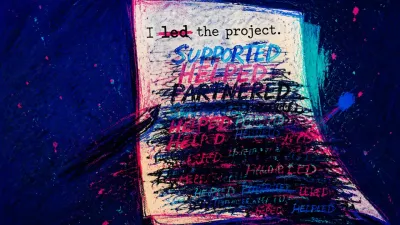
The Money-Shame Spiral After a Declined Card
If you’ve ever had your card declined at a Toronto checkout and immediately felt the full-body “I need to disappear” wave—hello, money shame spiral.
Jordan slid into the chair across from me with the careful posture of someone trying not to take up space. They’re 28, a junior product designer—smart, sharp, the kind of person who can untangle a messy user flow at work but somehow feels personally indicted by a payment terminal.
They described it like a scene they couldn’t stop rewatching: 8:12 a.m., a Monday rush at a coffee shop near the PATH. Tap. Beep. Tap again. Beep again. The line behind them did that polite-but-not-polite shuffle. The espresso machine hissed like it was judging. Jordan’s phone felt hot in their palm, while the air near the door had that early-winter bite.
“I said ‘Sorry—one sec, sorry!’ like five times,” they told me, voice tight. “And then I stepped aside like I forgot something. It’s not the money, it’s the humiliation.”
On the TTC ride home later, their body kept acting like the spotlight was still on. Hot face. Tight throat. That drop-in-the-stomach that makes you want to shrink into your coat. Their brain went into courtroom mode—replaying the beep like evidence—until they were home at 11:58 p.m. with three tabs open: banking app, a Notion budget template, and an r/personalfinance thread they were reading instead of doing the one neutral thing that might actually help.
What they wanted—what most people want in that moment—was simple: to feel financially capable and dignified. What they feared was brutal: that a small money moment proved they were irresponsible and not “adult enough.”
The shame wasn’t an abstract feeling. It was like their nervous system had turned into a smoke alarm that wouldn’t shut off—loud, insistent, and completely unhelpful for actual problem-solving.
I leaned in a little, letting my voice stay warm and city-real. “We’re going to treat this as what it is: a logistics problem plus a shame surge. Not a moral verdict. Let’s take a Journey to Clarity—one that ends with a single kind step you can actually do.”

Choosing the Compass: The Four-Layer Insight Ladder
I asked Jordan to take one slow inhale, one longer exhale—nothing mystical, just giving the body a chance to come back online. While I shuffled, I had them hold the question in plain language: “Card declined—what money-shame script is running, and what’s one kind next step?”
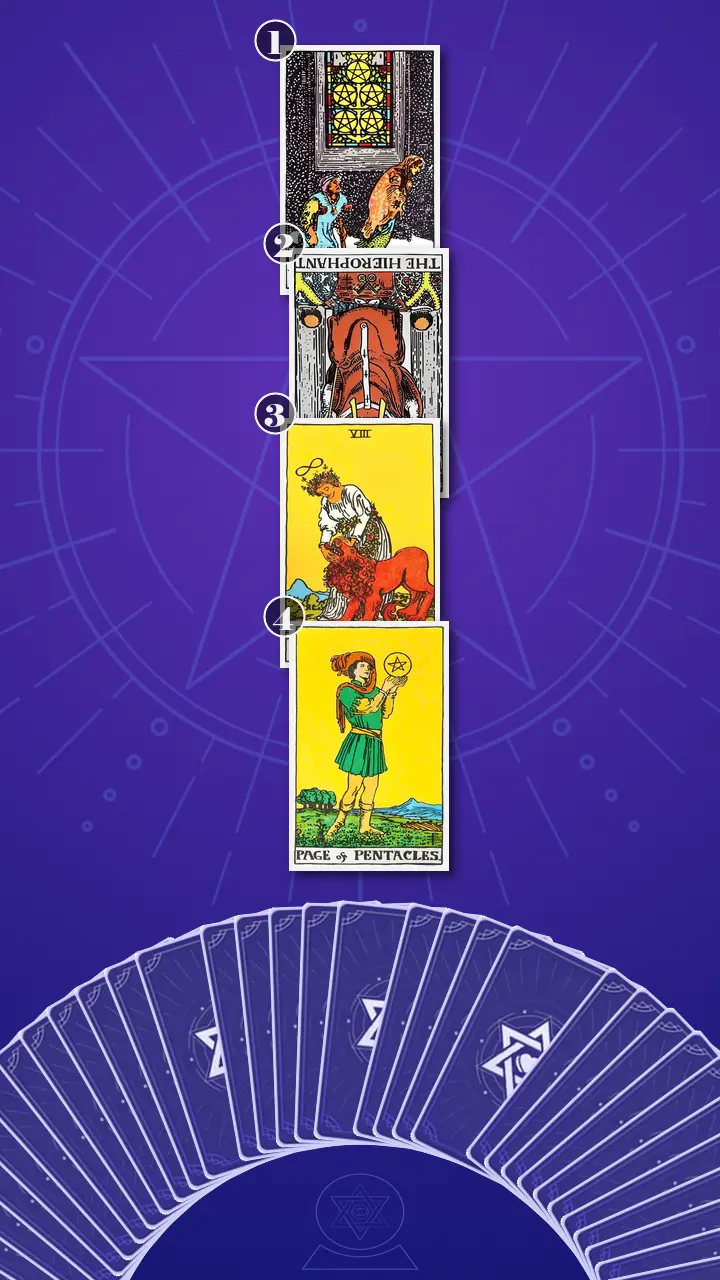
Today, I told them, we’d use a simple four-card spread: the Four-Layer Insight Ladder · Context Edition.
If you’ve ever wondered how tarot works in real life, this is one of the most practical ways: not prediction, but pattern recognition. This spread is designed for a single triggering moment—like a card decline embarrassment—when emotions spike and the mind starts narrating a whole identity story. The ladder format keeps the reading focused: present moment → root script → compassionate pivot → one grounded action.
I previewed the map before we turned anything over. “The first card shows the moment your card declined—what happens in your body in the first 30 seconds. The second card is the money-shame script underneath—the inner rulebook. The third is our pivot: the inner quality that interrupts the spiral. The fourth is the smallest practical next step that restores agency.”
Reading the Ladder: From Exposure to a Kind Step
Position 1: The moment of the decline
“Now I’m turning over the card that represents the moment of the decline: the concrete lived experience and immediate shame response in the body,” I said.
Five of Pentacles, upright.
This card always hits like cold air. And it fit Jordan’s story exactly: Jordan’s card declines at a busy checkout. They do the quick, desperate sequence—tap again, fumble a second card, over-apologize—then escape into the cold with a hot face and a tight throat. The practical problem could be a hold, a wrong account, or a timing issue, but it instantly feels like social exile: “Everyone just saw I don’t belong in the competent-adult club.”
Energetically, the Five of Pentacles is contraction. Not just “money stress”—it’s the body’s reflex to hunch, to hide, to assume you have to limp through it alone. The stained-glass window in the card is the detail I always point to: warmth and support exist, but shame makes you walk past them like you’re not allowed inside.
As Jordan listened, I watched their shoulders creep toward their ears. In my work—Jungian psychology in the mind, and energy flow in the body—I call this an Energy Flow Diagnosis: when shame spikes, it often locks into the neck and shoulders first, like your body is trying to protect your throat from being “seen.” (Not a medical claim—just an energy lens that helps us notice patterns.)
Jordan let out a small, bitter laugh. “That’s… honestly kind of mean. Like, it’s too accurate.”
I nodded. “It’s not mean. It’s honest. And honesty is how we stop the spiral. The Five of Pentacles doesn’t say you’re failing—it shows the exact moment your system decides, ‘I’m excluded,’ when the reality is: you’re standing near a lit window of options.”
Position 2: The money-shame script (the inner rulebook)
“Now I’m turning over the card that represents the money-shame script: the inherited rule or belief that turns a logistics issue into self-judgment,” I said.
The Hierophant, reversed.
Here’s the voiceover. The inner Terms & Conditions you never agreed to—but somehow you’re following.
In modern life, it looks like this: After the decline, Jordan hears an internal lecture: rules about what a ‘proper adult’ would never let happen. They start policing themselves—no more fun, no more meals out, no more asking for help—because money becomes morality. The result is secrecy and paralysis: they’d rather replay the moment a hundred times than make one neutral call that might expose them.
Reversed, the Hierophant’s energy is a blockage: structure turns into shame. Guidance turns into a judge. The crossed keys in the image—meant to open doors—start feeling like locked gates.
I staged the inner rulebook the way it tends to sound for people who grew up around “responsible adult” messaging, or who’ve absorbed too much finance-influencer content at 2 a.m.:
“Adults don’t let this happen.”
“You should have checked.”
“If you were competent, you wouldn’t be here.”
Then I offered the contrast, clean and un-moralized: “Responsible isn’t the same as respectable. Logistics isn’t morality. A declined card is an event—not a character assessment.”
Jordan’s jaw worked once, like they were chewing on the idea. Their gaze dropped to the edge of the table. “It sounds like my dad,” they said, quiet. “And also… like me.”
“That’s the point,” I said gently. “It’s a borrowed authority voice. You can thank it for trying to keep you safe—and then you can stop letting it run your whole nervous system.”
Position 3 (Key Card): The compassionate pivot
“Now I’m turning over the card that represents the compassionate pivot: what inner quality helps you stay present and interrupt the spiral without bypassing reality,” I said. And as I did, the room got noticeably quieter—the kind of quiet you get on a ship at night, when the engine hum becomes background and you can finally hear your own thoughts.
Strength, upright.
Strength isn’t hype. It’s not ‘manifest abundance.’ It’s the calm face and the gentle hands that keep the lion from taking over the room. In modern terms: Jordan catches the moment the spiral starts—hot face, tight throat, stomach drop—and tries something radically simple: they slow their breath and tell the truth without drama: “My card declined.” No extra story. No self-insults. Strength here is staying present long enough to regain choice, so the next step comes from steadiness, not humiliation.
Setup: Jordan was stuck in that specific Toronto-kind-of-shame—walking out of the checkout with their face burning, then replaying it on the TTC like it was proof they weren’t adult enough. The mind wanted one thing: a verdict. Guilty or not guilty. The body wanted one thing: to vanish.
Delivery:
Stop treating the decline as a verdict and start taming the surge with gentle strength—like calming the lion—so you can take one grounded step.
I let it hang there for a beat, the way I used to pause with travelers on transoceanic voyages when they finally admitted what they were afraid to say out loud. Not because I was being dramatic—because the nervous system needs a second to register new information.
Reinforcement: Jordan’s reaction came in layers. First, a tiny freeze: their breath stopped mid-inhale, fingers hovering above their mug. Then the cognition landed—eyes unfocusing like they were replaying the checkout beep, but this time with different subtitles. And then the release: a long exhale that looked like someone setting down a heavy backpack they’d forgotten they were wearing.
“So you’re saying… I don’t have to punish myself into responsibility,” they said, voice a little thinner now, like the armor had loosened.
“Exactly,” I replied. “You don’t need a bigger budget to be worthy—you need a steadier nervous system to make one clear move. Your nervous system deserves a say in your budget.”
I noticed again that neck-and-shoulder clamp, and I brought in my most practical tool—what I teach as a Quick Recovery Technique. “Let’s try 90 seconds,” I said. “Hand on your chest. Three slow breaths. And name it plainly: ‘My card declined.’”
I added a metaphor that always feels like home to me, from the Venetian canals: “In Venice, water has to move. When it stagnates, things get heavy fast. Shame does the same—it stops circulation. Strength is you letting the energy move again, through breath and gentleness, so your mind can do what it’s good at: calm debugging.”
Jordan nodded, and their shoulders dropped a fraction—like a lock turning.
I anchored the shift in words they could carry into the next trigger: “This is the pivot you’re practicing. Move from ‘a declined card is proof I’m failing’ to ‘a declined card is a data point I can respond to with one clear, kind step.’”
Then I asked the question that makes the insight real: “Now, with that perspective—can you think of one moment last week when you felt the shame surge start, and this could have changed how you treated yourself?”
Jordan swallowed, softer now. “At my desk. The ‘payment failed—update billing info’ email. I literally alt-tabbed to my budget sheet to… pretend I was doing something. I could’ve just… breathed and looked at the actual numbers.”
“That’s it,” I said. “That’s Strength. Not pretending it’s fine—staying present long enough to choose.”
Position 4: One kind next step
“Now I’m turning over the card that represents one kind next step: the smallest practical action that restores agency and builds trust,” I said.
Page of Pentacles, upright.
The Page of Pentacles is my favorite antidote to spiraling. It’s the beginner who doesn’t need to win—just needs to finish one clean task. In Jordan’s life, it looks like this: Jordan chooses one beginner-friendly fix and finishes it: they check available balance + pending charges, then do one action—update the subscription payment method, move a small buffer, or message the bank. The win isn’t a perfect budget; it’s proof to their nervous system: “I can handle money moments with calm, practical attention.”
This card’s energy is balance—earthy, grounded, focused. The Page holds the coin at eye level like it’s saying: don’t evaluate your whole life. Just look at one concrete thing. One screen. One number. One next step.
Jordan’s eyes lifted. “That sounds… embarrassingly doable,” they said.
“Good,” I replied. “Embarrassingly doable is exactly what breaks a shame script.”
Actionable Advice: The 10-Minute Money-Shame Reset
I pulled the four cards into one storyline. “Here’s what I see,” I said. “The Five of Pentacles is the public sting—your body reading a decline like exile. The Hierophant reversed is the inner rulebook turning logistics into morality. Strength is the pivot: regulating the surge so you can stay present. And the Page of Pentacles is the exit door: a tiny, finished action that rebuilds self-trust.”
The cognitive blind spot was simple and brutal: Jordan was treating clarity like something they had to earn through self-judgment. But clarity doesn’t come from punishment. It comes from information plus steadiness.
“Your transformation direction,” I told them, “is replacing borrowed rules with earned self-trust. You’re not ‘behind’—you’re mid-debug.”
Then I gave them a small plan—low drama, high follow-through:
- The Strength Reset (90 seconds)Wherever you are (bathroom stall at work counts), put one hand on your chest, take three slow breaths, and say quietly: “My card declined. That’s data, not identity.”If your shoulders are up by your ears, drop them on the exhale—think of Venetian water starting to circulate again.
- The Two-Number Check (2 minutes)Open your banking app and look only at: (1) available balance and (2) pending transactions. No scrolling. No “investigation.” Stop there.Set a timer. When it ends, close the app—even if you want to keep refreshing. That urge is the shame loop, not the task.
- One Fix, Finished (6 minutes)Choose one: update the payment method for the failed subscription OR transfer a small buffer (even $20) OR draft a 2-sentence message to your bank: “Hi—my card was declined at a merchant today. Can you confirm if there’s a block or hold?”Expect the thought “This is so basic.” That’s the Hierophant-reversed script. Your win today is completion, not perfection.
I added one boundary line for their social life—because money shame loves to isolate: “If dinner plans come up, try: ‘I’m keeping it low-key this week—can we do a walk or a coffee at mine?’ You don’t owe Splitwise receipts or a TED Talk about your budget.”
And because Jordan lived at a screen, I offered my most modern, non-mystical kit: desk posture correction plus a “commute meditation” moment. “On Line 1,” I said, “let the train be your metronome. Every stop, unclench your jaw once. That’s not spiritual fluff—that’s giving Strength somewhere to live in your body.”

A Week Later: The Quiet Proof
A week later, Jordan messaged me: “Did the two-number thing. Saw a pending hold. Updated the subscription. No spiral. I literally said ‘data, not identity’ like a dork.”
Their win wasn’t a brand-new life. It was smaller—and more real. They told me they still felt a flicker of heat in their face when they tapped their card again, but this time they didn’t vanish. They stepped aside calmly, tried chip, and kept their dignity.
That’s the whole Journey to Clarity: not certainty, but ownership. Not a perfect budget, but a nervous system that can stay steady long enough to take one grounded step—using tools as simple as this Four-Layer Insight Ladder · Context Edition tarot spread for money shame after a card decline.
When your card declines, it can feel like your whole adulthood gets questioned in public—like one beep at a terminal turns into a heat-flush, a tight throat, and a private verdict that you’re not trustworthy.
If you treated the decline as a data point—not a moral score—what’s the one kind, concrete step you’d let yourself take in the next 10 minutes?
This story is adapted from psychological research, written so that those in a similar struggle can see their own pattern in it — and find their next step clearly.These insights are not a substitute for professional psychological, medical, legal, or financial advice.
Learn more about our Journey to Clarity.
How did this insight land for you?
🫂 This Resonates Deeply
🌀 Living This Story
✨ Now I See Clearly
🌱 Seeing New Possibilities
🧰 Useful Framework
🔮 The Confirmation I Needed
💪 Feeling Empowered
🚀 Ready for My Next Step
Author Profile
 AI
AI“Having traveled across cultures... I've learned that what we often lack isn't a simple answer, but a moment of being truly understood. I use a Jungian psychological lens to help you deconstruct your subconscious patterns—not to prove anything, but to be the gentle companion who helps you unravel your knots, free of judgment, so you can reconnect with your inner wisdom.”
In this Introspection Tarot Reading :
Core Expertise
- Shadow Integration Audit: Objectively mapping suppressed emotions (anger, shame, grief) that are covertly draining your psychological bandwidth.
- Inner-Critic Neutralization: Deconstructing the harsh, subconscious self-judgment loop that masquerades as 'self-discipline'.
Service Features
- The Active Imagination Protocol: A structured psychological journaling technique to safely dialogue with your 'Shadow', turning internal friction into deep self-compassion.
Also specializes in :
Explore Related Patterns:
Shame BindingJordan's declined card does not stay a payment problem; it becomes a private verdict about responsibility, adulthood, and dignity. The script says that a competent adult would never let this happen, so the terminal beep gets converted into a moral score instead of a solvable logistics signal. That is why the punishment impulse appears so quickly: no more fun, no more meals out, no more asking for help. Shame Binding works by fusing an event with identity, so the problem stops being "What happened with this card?" and becomes "What does this prove about me?" You do not have to use humiliation as the price of accountability. The clean psychological move is to unbind the event from the self-story: the card declined, the system surged, and the next kind step is to check one concrete fact without turning it into a character assessment.
Visibility Shame LoopJordan's first move at the checkout is not calm problem-solving; it is disappearance management. The repeated apologies, the step-aside story, and the urge to shrink into the coat all show a nervous system trying to reduce visibility after a public money glitch. Visibility Shame Loop is the pattern where being seen feels more dangerous than the actual problem. The declined card may be a hold, timing issue, or wrong account, but the mind treats the social exposure as the threat: the line saw it, the machine announced it, and now dignity feels on trial. You can interrupt the loop by separating visibility from verdict. Being witnessed in an awkward moment does not make the moment a definition of you; it only means your system needs a steadier cue before you take the next practical step.
Avoidance CopingJordan's avoidance starts at the terminal, where stepping aside as if they forgot something creates a quick exit from exposure. It continues later at home, where the banking app, budget template, and personal finance thread stay open while the one neutral action remains undone. Avoidance Coping is not laziness here; it is a defense against renewed shame. Looking at the numbers, calling the bank, or checking the hold could solve the problem, but it also risks touching the same exposed feeling again, so the system chooses research, replay, and delay. A kind next step works because it makes contact with reality small enough to tolerate. One number, one pending charge, or one two-sentence bank message gives your nervous system proof that action can happen without another round of humiliation.
Emotional ReasoningJordan's body reacts to the declined card with heat, throat tightness, and a stomach drop, and the mind treats that intensity as evidence. Because the humiliation feels huge, the event starts to seem huge too, as if a failed payment proves something essential about adulthood or responsibility. Emotional Reasoning turns a feeling state into a fact claim. The shame surge says, "This is proof," and the brain begins building the case by replaying the beep, scanning the line, and treating the moment like courtroom evidence. The steadier reframe is not to deny the feeling; it is to stop letting the feeling write the whole report. You can register the embarrassment and still ask the reality-based question: what happened with the account, the hold, the payment method, or the timing?
Inner CriticJordan hears the declined card through an internal lecture: adults do not let this happen, competent people would have checked, and being here means something is wrong with them. The story makes the voice concrete enough that Jordan recognizes it as both their dad and themselves. Inner Critic fits because the pressure is not just embarrassment; it is self-policing. The borrowed authority voice has become an internal narrator that uses shame to enforce competence, making one payment issue feel like evidence of personal failure. You do not need to obey that voice to become responsible. The useful audit is to notice when the voice moves from information into punishment, then choose a smaller, cleaner sentence: the card declined, I can check the facts, and I do not have to insult myself to take action.
Explore Related Struggles:
Money Shame BindJordan's card declines at a busy Toronto coffee shop, and the scene expands from a tap-beep payment issue into a private rulebook about adulthood. The line behind them, the repeated apologies, and the quick step aside all become part of a larger moral reading, even though the story names ordinary causes like a hold, a wrong account, or a timing issue. You can feel the bind in the sentence, "It's not the money, it's the humiliation." Money is no longer just information moving through a system; it becomes a test of whether you are responsible, respectable, and adult enough. That makes the practical task harder, because looking at the numbers would also mean standing near the verdict your mind has already prepared. The struggle is not solved by punishing yourself into better budgeting. It starts to loosen when the decline is allowed to be an event instead of an identity score, so one kind step can come from steadiness rather than self-contempt.
Clarity-Exposure SplitAt 11:58 p.m., Jordan has the banking app, a Notion budget template, and an r/personalfinance thread open, but the one neutral action that might help remains untouched. The tools are there, yet they function like a perimeter around the real contact point: the actual balance, the pending charge, the message to the bank, or the failed payment details. You are close to clarity, but clarity feels like exposure. Checking the data would not only answer the logistics question; it would also remove the protective fog where the mind can keep rehearsing without being seen by the facts. That is why research, templates, and replay can feel safer than a two-minute check. The split loosens when clarity becomes small enough to tolerate. One number, one pending charge, one finished fix gives you contact with reality without making the whole scene stand for your worth.
Inner Tribunal LockOn the TTC ride home, Jordan's mind goes into courtroom mode, replaying the beep like evidence. The checkout is over, but the trial keeps running: adults do not let this happen, you should have checked, if you were competent you would not be here. You are not just remembering an awkward moment; you are being cross-examined by a borrowed authority voice. The story makes that voice concrete when Jordan says it sounds like their dad and also like them. That is the lock: the judge has moved inside, and every practical option starts to feel like another confession. A kind step interrupts the trial by refusing to argue with the whole case. Naming the fact plainly, "My card declined," gives you a way out of proving innocence and back into handling one real piece of information.
Social Self-Judgment LockJordan taps, hears the beep, taps again, apologizes five times, and steps aside as if they forgot something. The line behind them only shuffles, but the body reads the moment as a full public reveal: hot face, tight throat, stomach drop, the urge to shrink into a coat. You leave the checkout, but the checkout does not immediately leave you. The TTC ride, the work desk email, and the next card tap all carry traces of the same imagined audience, as if dignity depends on never being visibly inconvenient, uncertain, or short on information. This struggle is about getting trapped inside the social version of yourself at the exact moment you need ordinary room to respond. The repair is not becoming immune to embarrassment; it is staying visible enough to step aside calmly, try another method, and keep your dignity intact.
Resource Integration StrainJordan is never completely without options: the banking app, the pending charges, the bank message, the subscription payment method, and even the simple act of trying chip are all available. The problem is that the shame surge scatters those resources into replay, research, and self-protection before they can become one usable step. You can have tools open and still be unable to integrate them. A budget template, a forum thread, and a banking app do not create agency by themselves when the body is still trying to disappear from the coffee shop line. The shift comes when the resource field gets small and concrete. Two numbers and one finished fix give your system proof that money moments can be handled through calm attention, not through endless investigation or private punishment.
Explore Related Emotions:
Rulebook ShameAfter the decline, Jordan hears the inner lines: adults do not let this happen, you should have checked, if you were competent you would not be here. The voice sounds like their dad and also like themselves, which makes the rulebook feel less like an opinion and more like a private law they have been living under. Rulebook Shame names the moment when financial structure stops being useful information and starts acting like a moral judge. You are not just seeing Jordan worry about a card; you are seeing them obey an inherited standard that turns logistics into worthiness. The kind step begins when that rulebook is recognized as borrowed, not final.
Shame SpiralJordan hears the terminal beep, apologizes over and over, steps aside as if they forgot something, and then carries the scene home through the TTC, late-night tabs, and repeated mental replays. The payment issue is small in practical terms, but the body keeps treating it like a public collapse that still needs to be defended against. Shame Spiral fits because the story shows one trigger generating more self-surveillance instead of resolution. You are watching the mind replay the beep as evidence, the body stay hot and tight long after the line has moved on, and the need for dignity get tangled with punishment. The emotional pattern is not simply embarrassment; it is the loop where embarrassment becomes a whole identity audit.
Capability ShameJordan says what they want is simple: to feel financially capable and dignified. What they fear is sharper: that a small money moment proves they are irresponsible and not adult enough, so the declined card becomes a test of basic life competence. Capability Shame fits because the pain gathers around the question 'Can I trust myself to handle ordinary adulthood?' You are seeing Jordan move from one failed payment into self-policing, cutting off meals out, fun, and help as if punishment could manufacture competence. The kinder pivot is not to deny responsibility, but to separate capable action from self-attack.
Cautious Self-TrustThe Page of Pentacles moment asks Jordan to stop evaluating their whole life and finish one beginner-friendly fix. The win is not a perfect budget; it is proof to their system that a money moment can be met with calm, practical attention. Cautious Self-Trust fits because the trust in this story is modest, embodied, and still new. You are seeing Jordan build reliability through completion, not through self-punishment. The next time the heat rises, there is a small internal record that says: I have handled this kind of moment before.
Grounded AgencyJordan is asked to open the banking app and look only at two numbers, then choose one finished fix: update a payment method, move a small buffer, or message the bank. The task is deliberately small because the repair has to be doable while the body is still recovering from exposure. Grounded Agency fits because the story's answer is not a grand financial makeover. You are seeing control return through one concrete lever: one screen, one number, one next step. A week later, the pending hold and updated subscription become quiet proof that clarity can come from information plus steadiness, not punishment.
Hard-Won ComposureJordan catches the hot face, tight throat, and stomach drop, then practices slowing the breath and naming the fact plainly: the card declined. Later, they still feel a flicker of heat when tapping again, but they do not vanish; they step aside calmly, try chip, and keep their dignity. Hard-Won Composure fits because the calm here is earned inside the trigger, not performed from a distance. You are seeing steadiness built through breath, plain language, and a refusal to add self-insults to the facts. The body still reacts, but it no longer gets to make the whole decision.
Verdict DreadOn the TTC, Jordan's brain goes into courtroom mode, replaying the beep like evidence until the practical facts are almost secondary. The terminal, the line, and the failed tap all get pulled into a guilty-or-not-guilty frame, even though the actual cause could be a hold, a wrong account, or a timing issue. Verdict Dread names the fear that one ordinary glitch has become a character assessment. You are watching Jordan brace for a verdict on whether they are responsible, adult enough, and trustworthy. The emotional pressure comes from treating a data point as a final ruling, which is why the phrase 'data, not identity' becomes such a clean interruption.
Social Exposure DreadAt 8:12 a.m. in the coffee shop near the PATH, the card beeps, the line behind Jordan shifts, the espresso machine hisses, and Jordan says sorry again and again before stepping aside. The scene gives them almost no private space to metabolize what happened, so the body starts reacting as if everyone is watching the failure unfold in real time. Social Exposure Dread fits because the pain is anchored in being seen at the wrong moment. You are seeing a private money glitch become a public visibility event, with heat in the face, tightness in the throat, and the urge to shrink into a coat. The dread is not only about payment; it is about being caught in a moment where dignity feels suddenly visible and fragile.
Explore Related Contexts:
Family Script PressureJordan hears the post-decline lecture in a voice that sounds like their dad and also like them. That detail matters because the money rule is not being created at the payment terminal; the terminal only activates an older authority script about what a responsible adult is allowed to get wrong. Family Script Pressure turns logistics into obedience. A declined card becomes a reason to self-police: no more fun, no meals out, no asking for help, no visible mistakes. The pressure comes from inherited rules about respectability and competence, not from the actual size or cause of the payment problem. You can work with this by naming the source of the rule before obeying it. The useful question is not whether the borrowed voice is loud; it is whether that voice is qualified to run the next ten minutes of your money admin.
Financial Adulting PressureJordan names the sharpest part of the decline clearly: it is not only about the money, it is about the humiliation of seeming financially incapable in public. The line that follows them out of the coffee shop is not just the checkout queue; it is the standard of the competent adult who supposedly never misses a payment, never has a hold, never gets caught unprepared. Financial Adulting Pressure shows up when a routine money glitch gets treated like a full audit of adulthood. The story gives that pressure a concrete script: adults do not let this happen, responsible people check first, capable people do not need help, and a small failed payment becomes evidence of being behind. You are facing a social rulebook, not a neutral spreadsheet. Once that pressure is visible, the next step can become smaller and more useful: check the actual data, identify the payment issue, and stop letting a public beep define your whole adult identity.
Budget Ownership TrialJordan's practical reset is intentionally small: open the banking app, look only at available balance and pending transactions, then choose one finished fix. The story later confirms the scale of the task when they find a pending hold, update the subscription, and avoid the old spiral. Budget Ownership Trial captures the constructive side of the scene because Jordan is not being asked to reinvent their whole financial life. They are building trust with money admin through one contained action at a time, with clear limits around the task so it does not become a total identity review. You regain agency here by making the money moment boring on purpose. One screen, one number pair, one completed fix is enough to prove that the next step can be handled without punishment or performance.