When Friendship Has a Cover Charge

A clear look at spending pressure in friendships, related tarot cards, and tarot reading insights from similar social-money dynamics.

Friend Group Money Pressure
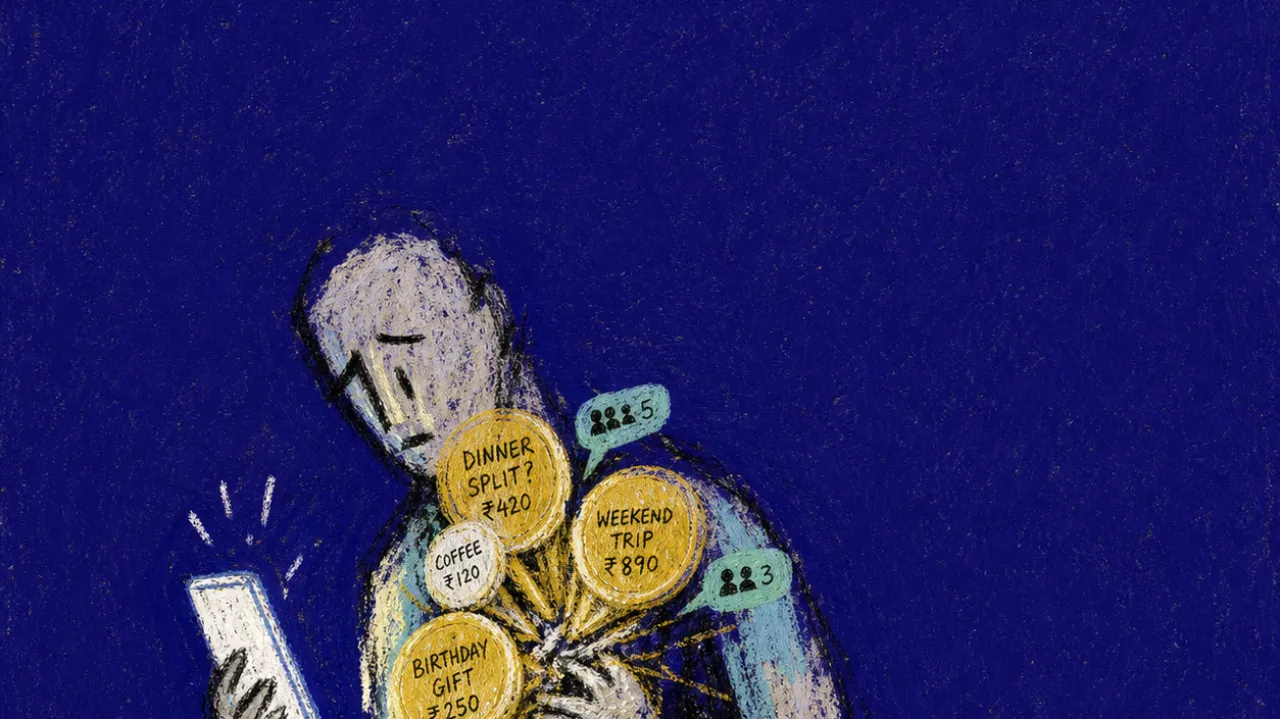
A solitary figure holding a glowing phone as coin-like payment requests press into their chest in deep indigo space

What is this situation?

Friend Group Money Pressure — you open the group chat and there it is again: a birthday dinner at a place with no prices on the menu, a weekend trip someone already half-planned, concert tickets that need to be bought today, a casual “let’s just split it evenly” after you ordered the cheapest thing. At first, it looks like normal friendship logistics: Venmo requests, reservations, shared Airbnbs, last-minute rideshares, gifts everyone is “putting in for.” But over time, the pattern gets sharper. The friends with more flexible money set the pace, and everyone else is expected to keep up without making it awkward. If you say you’re watching your budget, someone laughs it off, says it’s only this once, or tells you not to be boring. If you skip, the photos go up without you, the inside jokes move on, and the next invite lands with a smaller kind of pressure attached. You start checking your bank app before replying, rehearsing excuses that don’t expose too much, doing mental math while people talk about plans as if cost is just a detail. The exhaustion comes from the way belonging keeps getting tied to spending, until friendship starts to feel like a cover charge, much like the figures on the Five of Pentacles, walking past a bright window that looks warm but not open to them.

Why it's not you?

The issue is not that you are cheap, difficult, or bad at friendship. This situation puts money at the center of access, and then treats hesitation as a personal flaw. When a group makes spending the default price of inclusion, the pressure belongs to the setup, not to you.

Friend Group Money Pressure in Tarot Cards

Friend Group Money Pressure turns ordinary plans into a running test of whether you can afford to stay included. The tightness in your chest when the group chat lights up is tied to an environmental, structural dynamic: the friend group has built connection around spending, and the cost keeps moving. The Tarot Cards below do not decide what you should pay for or skip; they reflect the outline of a social space where money has become the gatekeeper.

The Hierophant
Upright
The two kneeling followers, crossed keys, and raised hand place access inside a rule-bound hierarchy. Upright, the route into the group remains open, but only through compliance with a shared code established by the people who hold social authority. You encounter that hierarchy when expensive dinners, trips, and tickets are treated as the normal language of participation. The formal arrangement on the card exposes how a casual friend group can develop an unwritten membership rule: spend at the established pace or risk being marked as insufficiently involved.
Wheel of Fortune
Reversed
The great wheel, the figures carried around its rim, and the fixed observers in the corners create a picture of movement governed by a larger cycle. Reversed, the rotation becomes difficult to stabilize, so each new birthday, trip, concert, or booking deadline can arrive before your cash flow has recovered from the last one. You experience the social calendar as an external rhythm that repeatedly determines when money must be available. The image separates that timing pressure from personal disorganization: the group keeps turning discretionary events into urgent financial checkpoints, leaving little room to choose a sustainable pace.
Justice
Upright
The level scales, direct sword, and squarely seated figure make comparison possible without relying on the crowd's mood. Upright, the image provides an accessible standard for separating what is genuinely fair from what merely keeps an expensive group plan socially convenient. You gain a clearer cognitive frame when belonging and spending are measured as different variables rather than collapsed into one test of loyalty. The balanced structure reveals that a budget limit can be accurate information about resources even when friends interpret it as a negative statement about the relationship.
Reversed
The scales, upright sword, and centred adjudicator form a system designed to compare contributions against clear standards. Reversed, that system loses integrity: an equal split can be presented as neutral even when you ordered less, covered a ride, paid the deposit, or are still waiting for reimbursement. You are then asked to absorb the difference quietly so the group can preserve a frictionless atmosphere. The inverted balance exposes how convenience for higher spenders becomes an unfair cost allocation, while your attempt to name the mismatch is treated as the real disruption.
The Devil
Upright
The two figures share the same pedestal and wear matching chains beneath a dominant material symbol. Upright, the scene shows a relationship structure held together by a costly bargain whose terms are visible, even though challenging them may threaten the connection. You experience that bargain when spending is used to demonstrate loyalty and declining a plan carries relational consequences. The chains reveal why the friendship can feel compulsory without anyone issuing a direct ultimatum: access, memories, and future invitations are all quietly attached to financial compliance.
Three of Cups
Reversed
The three figures lift their cups inside a compact celebratory circle, with no open place visibly reserved for a fourth participant. Reversed, the warmth of the gathering becomes conditional, and abundance starts to determine who can remain present often enough to count as part of the group. You experience that reversal when missing a costly plan also means missing the memories and inside jokes that reinforce closeness. The scene reveals why the pressure exceeds the price of one event: each absence can alter your position inside the friendship network.
Eight of Cups
Upright
The stacked cups remain standing while a cloaked figure takes an open path toward the mountains beneath an eclipsed sky. Upright, the scene makes movement possible without pretending that what is being left behind had no emotional value. You reach this directional question when the group repeatedly refuses to separate friendship from expensive participation. The intact cups reveal that leaving a consumption-heavy social pattern is not the same as declaring every shared memory worthless; it is an audit of whether that environment can support your longer-term material reality.
Two of Pentacles
Reversed
The two coins, looping band, unstable stance, and ships rising on steep waves form a system that depends on continuous adjustment. Reversed, the loop loses reliability, so another dinner, deposit, ticket, or payment request can no longer be absorbed without displacing a basic expense. You live inside that disruption when social plans force rent, groceries, transport, and savings to be recalculated in real time. The inverted juggling pattern reveals that the problem is not one isolated purchase; it is a friend-group spending rhythm that demands more flexibility than your daily financial system contains.
Four of Pentacles
Upright
The figure secures one coin to the chest, places two beneath the feet, and balances another above the head while the city remains at a distance. Upright, the resources are still present and controllable, but maintaining that stability requires a closed posture against demands arriving from the surrounding social world. You mirror that posture when you check your bank app before opening the group chat or protect rent money from another apparently casual plan. The image reveals budget guarding as a response to repeated boundary pressure, while the distant city captures the social trade-off created when financial safety and participation are made to compete.
Five of Pentacles
Upright
The paired figures pass beneath a glowing pentacle window that appears warm enough to promise community but offers no visible entrance. Upright, support remains conceptually nearby, yet the people most affected by material limits are still positioned outside its practical reach. You feel that contradiction when friends say they value you but organise closeness almost entirely through plans you cannot afford. The scene exposes the friendship gap between stated care and accessible participation: emotional warmth is displayed inside the group while the financial terms leave you walking past it.
Six of Pentacles
Reversed
The scales, descending coins, and unequal body positions show that resource exchange also determines who has authority inside the interaction. Reversed, the person controlling the money can set friendship terms that appear generous or efficient while leaving others dependent, indebted, or unable to question the arrangement. You encounter that power imbalance when higher-income friends choose the venue, front the booking, or minimise concerns because they can absorb the cost. The inverted exchange exposes why speaking up feels difficult: the same people controlling access to the experience also control the financial frame through which your objection will be judged.
King of Pentacles
Reversed
The enthroned figure rests among visible wealth while holding a pentacle as though material capacity confirms the right to set terms. Reversed, the stable resource base becomes inaccessible as a shared foundation and instead operates as leverage within the relationship. You meet that leverage when richer friends dominate decisions and then judge your inability to keep pace as a character problem. The inverted abundance exposes a friendship structure in which one member's financial comfort defines normality, while everyone else's limits must be explained, defended, or concealed.
Two of Swords
Upright
The crossed swords hold two live options in suspension while the blindfold blocks the information needed to compare them cleanly. Upright, the seated position provides a temporary pause, but neither path can be chosen without acknowledging the emotional water and difficult terrain behind the decision. You enter that pause when the apparent options are to spend beyond your limit or miss another friendship milestone. The image reveals why replying to a simple invitation can feel disproportionately hard: the group has attached belonging consequences to a financial choice while leaving those consequences unspoken.
Seven of Swords
Upright
The figure carries selected swords away from the social camp while looking back to monitor whether the departure has been noticed. Upright, the open ground provides an indirect exit route, but the backward glance shows the attention required to protect information while remaining connected to the group. You reproduce that strategy when you invent scheduling conflicts, vague family obligations, or other excuses rather than saying a plan is unaffordable. The scene reveals concealment as a social adaptation to budget shaming: privacy protects you from immediate exposure, but it also prevents the friendship from confronting its actual access problem.
Eight of Swords
Upright
The blindfolded figure stands inside a fence of swords, with binding around the body and a visible route through the wet ground. Upright, the scene shows a genuinely constrained choice while also preserving evidence that the enclosure is social and situational rather than absolute. You feel that enclosure when every option appears to carry damage: attend and destabilise your budget, decline and lose access, or disclose your finances and risk being judged. The loose spacing between the swords reveals the missing option that group pressure obscures, namely participation terms that do not require financial overextension.
Seven of Wands
Upright
The lone figure holds higher ground while six staffs rise from below, turning one position into something that must be defended repeatedly. Upright, the elevated footing gives you a viable place to stand, but the mismatched shoes show how little preparation the group leaves for each new demand. You occupy that position when a simple budget limit triggers jokes, persuasion, or another round of reasons why this plan should be the exception. The image makes the asymmetry visible: the group can apply pressure collectively, while you must restate an individual financial boundary each time.
Eight of Wands
Upright
Eight staffs travel together through open air toward the same destination, creating a scene with speed but no visible pause for consultation. Upright, the path is unobstructed, so tickets, deposits, reservations, and payment requests can move through the group chat faster than individual budgets can be checked. You feel that velocity when a costly decision must supposedly be made today or the group will miss out. The image reveals how speed narrows consent: the plan looks collectively settled before affordability has been discussed, and hesitation is recast as the obstacle delaying everyone else.
Ten of Wands
Upright
The bundled staffs block the carrier's view, bend the body forward, and still have to be transported toward the distant town. Upright, the destination remains reachable, but every additional commitment adds weight to a daily system already responsible for carrying the whole stack. You encounter that accumulation when dinner, a birthday gift, a weekend deposit, rideshares, and unpaid reimbursements stop functioning as separate small expenses. The compressed bundle reveals the actual lifestyle cost: group participation occupies cash flow, planning attention, and recovery time all at once.

Friend Group Money Pressure in Tarot Card Reading Insights

Friend Group Money Pressure shows up when friendship starts to feel priced through dinners, trips, tickets, gifts, and split bills. Other people have brought this same kind of spending pressure into readings, looking at what the cards reflected back in those moments. Explore the Tarot Reading Insights connected to this situation.

Psychological Contexts Related to Friend Group Money Pressure