Why I Cancel Dates Last Minute Begins at 6:18 p.m.
When Maya came onto my screen from her Toronto apartment, she did not call herself avoidant or flaky. She said she could be funny on Hinge all week and then shut down the second a plan became real—usually right after checking her bank app, seeing the laundry chair, and feeling the whole evening tilt out of reach. I knew this pattern immediately: not low interest, but last-minute dating withdrawal caused by burnout, debt anxiety, and shame about being seen while life feels messy.
Behind her, clean laundry was still living on a chair. Her laptop glowed with a budgeting spreadsheet. The room smelled faintly, she told me, of detergent and cold takeout, and every few minutes a streetcar shivered past outside her window. She touched her jaw as she talked. 'A casual still good for tonight? text can ruin my whole body,' she said. 'I do want to date. I just never seem to have the bandwidth when it is actually time to go.'
What I saw was not indecision. It was overwhelm with a quieter layer of shame—like trying to open the front door while carrying every grocery bag in one trip, then blaming yourself for dropping the one that was supposed to be enjoyable. Her shoulders had that heavy, upward pull I know well; the stomach knot was already there before the date even existed in real life. She wanted intimacy and dates, but the moment laundry, debt, and burnout made closeness feel exposing, she pulled back as if retreat itself were the responsible choice.
I said it gently, because I wanted her nervous system to hear it before her defenses did: 'You are not flaky; you are trying not to be seen depleted.' Her face changed at that. 'Sometimes I’m being practical is heartbreak in office wear,' I added, and this time she laughed once, quietly. Then I leaned a little closer to the camera. 'Let’s make a map for the fog. Not to judge whether dating should work, but to understand why it keeps feeling too expensive to be witnessed.'

Choosing the Compass: The Five-Card Cross for Dating Burnout
I asked Maya to put both feet on the floor and hold one precise moment in mind: the second a still good for tonight? text lands and her stomach drops. Then I shuffled slowly on my side of the screen. For me, that pause is never theater. It is a way of helping the mind stop doom-scrolling long enough for the real pattern to surface.
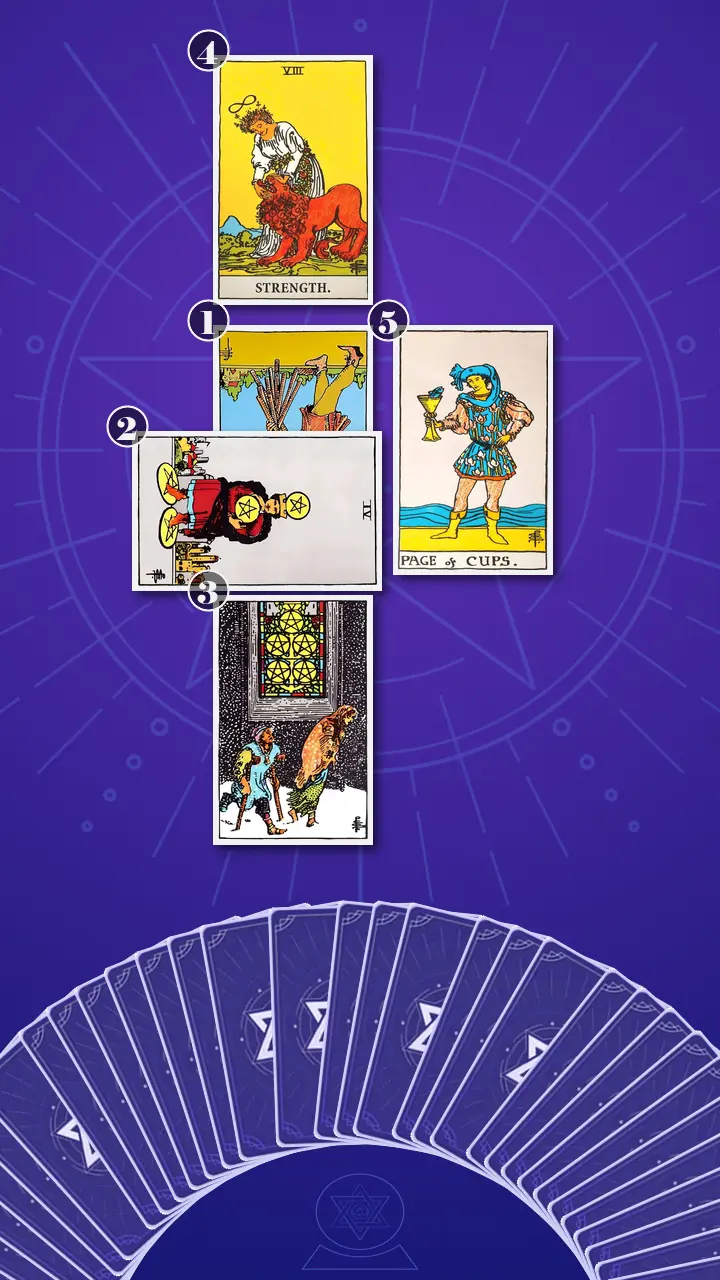
For this session, I used a Five-Card Cross · Context Edition. It is one of my favorite ways to answer questions like why do I cancel dates last minute even when I like the person, because five cards are enough to trace the whole arc without drowning someone in symbolism. The spread moves cleanly from the visible symptom to the blocking strategy, then down into the root fear, up into the medicine, and finally outward into a grounded next step.
I told her exactly what I would be listening for. The first card would show the present condition as she is living it. The second would cross it with the immediate pressure—where time, money, and emotional energy tighten. The third would uncover the deeper story underneath practical excuses. The fourth, our key card, would name the inner quality that could shift the whole pattern. The fifth would translate that insight into actionable advice she could actually use this week.
Reading the Map: Where the Door Starts Closing
The Date Becomes One More Task
I turned the card representing the observable pattern from her diagnosis: canceling dates and retreating when ordinary life stress spikes. It was the Ten of Wands, reversed.
I told her this was the Thursday-evening scene in one image: Slack leftovers still buzzing in the brain, the laundry chair waiting at home, the budget spreadsheet open, the makeup bag untouched, the phone glowing with a plan she genuinely wanted at lunch and suddenly could not carry by dinner. In tarot terms, this is overloaded fire collapsing. The energy is not missing; it is overrun. The date becomes the first block deleted in a week of Google Calendar Tetris because her whole system is triaging pressure.
I asked her what usually becomes louder than her interest in the final hour—the laundry, the bank balance, unread work messages, exhaustion, or the fear of being seen tired. 'Honestly?' she said. 'All of it at once.'
'So it isn’t that I don’t care,' she added.
'Exactly,' I said. 'This card doesn’t read as indifference. It reads as a nervous system deciding connection is the least urgent bag to carry, even when it matters.' She gave a small, bitter laugh and rubbed her forehead. 'That is accurate enough to be rude.' The laugh told me her shame was loosening just enough to let recognition in.
The Locked Budget App Over the Heart
I turned the card representing the immediate blocking strategy: tightening around time, money, and emotional energy to feel in control. The card was the Four of Pentacles, upright.
This was silent resource lockdown. I described the exact modern-life scenario the card carried: the text arrives, and before she even replies she is calculating transit, one drink, tomorrow’s lunch, the effort of conversation, whether she has the energy to be charming, whether there will be an awkward pause if she orders the cheapest thing. What began as understandable caution has hardened into excess earth energy—too much grip, too little movement. It is like putting a budget app where openness would normally go.
The old image on the card shows a coin pressed over the chest and two more pinned beneath the feet. I have always loved how honest that symbolism is. Protecting resources can also immobilize the body. 'I tell myself I’m conserving money or energy,' I said, 'but what I hear underneath is that you are also guarding the chance someone could see how behind you feel.'
Her arms crossed before she noticed them doing it. Her breath went shallow. 'Yes,' she said after a long beat. 'I check my chequing account before I answer. Like... every time.'
Standing Outside the Warm Café
I turned the card representing the deeper root of the pattern: the fear that being seen in debt and burnout will confirm unworthiness or instability. It was the Five of Pentacles, upright.
This is the card I watch people feel before they can explain it. I told Maya that beneath the practical excuses was a much older sentence: if someone sees the actual state of my life right now—debt, burnout, unfinished chores, careful spending—they will quietly decide I am unstable, less desirable, or too much work. That is shame-based self-exclusion. Not just dating with burnout and money stress, but acting as if closeness must be earned after the hard season is over.
The image matters here: two figures limping through snow beside a lit window. I translated it the way I often do for people in big cities: it is like standing outside a warm café convincing yourself you are not the kind of person who belongs inside. Support may be nearby. Care may be nearby. But shame makes the door feel locked from your side. In Jungian work, I call this the false verdict of the depleted self—the temporary state that starts masquerading as identity.
She went very still. First her breath paused. Then her gaze slipped past me to the laundry chair behind her, as if the room had suddenly become evidence in a case against her. Then came the release, quiet and raw: 'I never invite anyone over,' she said. Outside her window, a streetcar bell rang, thin and bright, and the sound landed in the silence like something naming the moment for us.
When Strength Put a Hand on the Lion
Not Force, but Steadiness
Before I turned the fourth card, the room changed. Even through the screen, I could hear the radiator click in her apartment and the small hush that follows when someone is about to hear the part they have been bracing against. This was the key card in the Five-Card Cross · Context Edition—the antidote, the one that tells me how the pattern can begin to move.
I turned it over. Strength, upright.
I told her this was not a card about pushing through exhaustion, pretending debt is not stressful, or forcing herself onto dates when her body is already on 2 percent battery with nineteen apps open in the background. Strength is regulated courage. It is the part of her that can stay warm and honest without either suppressing fear or obeying it. In modern life, it sounds like: I do want to see you, and I need a version of tonight that fits my real energy and budget.
Whenever Strength appears in a case like this, I use one of my own lenses, the Choice X-Ray. Years ago, training intuition on transoceanic cruises, I learned that a captain never asks only, Can we dock? The real question is: what does each option cost, and what does it protect? Under this X-ray, canceling saves exposure tonight, saves money tonight, saves the effort of being perceived while tired. But it also buys more silence, more shame, and more evidence for the story that closeness must wait until life is flawless. An honest downshift costs a little vulnerability tonight and buys self-trust tomorrow.
I asked her to picture the Wednesday-night loop again: laptop open to the budgeting sheet, clean laundry still living on the chair, phone glowing with a plan she had been excited about yesterday. Her shoulders rise, her stomach knots, and canceling suddenly feels more adult than going.
Stop hiding until the apartment, bank account, and energy are flawless; practice gentle honesty instead, and let Strength's calm hand on the lion teach you that softness can hold intensity.
She froze first—breath held, fingers suspended over the mug beside her laptop. Then I watched the thought travel through her: her eyes unfocused, as if she were replaying half a dozen canceled Thursdays at once. When she came back, it was not relief at first. It was anger. 'But if that’s true,' she said, voice thinner now, 'then I made all of those dates into some kind of test. I acted like if I couldn’t do them perfectly, I should disappear.'
'No,' I said, and I kept my tone steady. 'It means you built a smart protection strategy for moments when you felt under-resourced. It helped you avoid exposure. It just started charging hidden fees.' The phrase made her blink, then laugh once through her nose. Her shoulders dropped a fraction. Her jaw unclenched. Her eyes brightened with that strange vulnerable look I know well—the one that comes when clarity lands and leaves a little dizziness behind because now there is responsibility with the freedom. 'Dating is not an audit of how together your life looks tonight,' I told her. 'The issue is not that you want too much connection. It is that you have been treating honest limits as proof you do not deserve it.'
I let that settle, then asked, 'Now, with this new lens, can you think of a moment last week when this insight might have made you feel different?' She nodded slowly. 'Thursday,' she said. 'I could have said I was interested, just low on money and energy. I didn’t have to vanish.' That was the step. Not from confusion to perfection, but from hiding until life feels fully sorted to showing up with calm honesty and self-trust.
The Smallest Honest Yes
I turned the card representing the grounded next step: a low-pressure way to re-enter connection without pretending to be fully sorted. It was the Page of Cups, upright.
I love this card because it never asks for a polished launch. It asks for a beta version of honesty. The fish rising from the cup is awkward, tender, a little surprising—exactly like the first sincere message after typing and deleting for twenty minutes. In lived terms, this is not a grand romantic comeback. It is coffee near a TTC stop with a clear end time. A lunch walk. A simple reschedule text that says interest is still there even if bandwidth is not.
This is balanced water after so much collapsed fire and clenched earth. Feeling can move again, but in manageable doses. 'A smaller honest yes is better for connection than a polished disappearance,' I said. For the first time that evening, Maya smiled without wincing. 'I could do a 45-minute coffee,' she said. 'That actually sounds possible.'
Finding Clarity in a Bandwidth-First Date Plan
When I stepped back from the whole spread, the story was clean. The Ten of Wands reversed showed the visible symptom: by the time the date arrives, her system is already carrying work residue, laundry shame, money stress, and plain human fatigue. The Four of Pentacles showed what happens next: she grips time, money, and emotional energy so tightly that safety turns rigid. The Five of Pentacles named the real wound underneath: the fear that being seen in a hard season will make her less wanted. Strength interrupted that loop by offering embodied courage and self-compassion, and the Page of Cups translated it into a human-sized re-entry.
The blind spot was not the laundry, the debt, or the burnout themselves. It was letting shame decide what those things mean. She had been treating unfinished life admin as proof she should retreat from closeness, when in reality it was often a cover for the sharper fear of being witnessed while under-resourced. And because this spread held almost no airy distance, I told her something important: more thinking alone will not solve it. The shift has to be lived in the body, in the message, in the smaller plan. Honest limits are not a confession of failure.
I gave her a practical framework from my cruise years, my Port Decision Model. When weather is rough, a good captain does not force a dramatic arrival or cancel the whole voyage out of panic. She chooses a safer dock, a shorter stop, a cleaner window. That is bandwidth-first dating through honest limits, smaller plans, and sincere rescheduling instead of disappearing.
- The Two-Sentence Honesty TextTonight, save this in your Notes app for the next person you actually want to see: 'I do want to see you. I’m low on energy or budget tonight, so I could do coffee, a walk, or another day if that works for you.' Use it with a current match or someone you canceled on recently.If sending it feels too exposed, draft it and stop there. The first win is telling the truth to yourself.
- The Five-Minute Cancel CheckBefore any cancellation this week, set a five-minute timer, put both feet on the floor, and name which resource is actually tight: money, energy, mess, or emotional bandwidth. Then decide whether you need rest, honesty, or a reschedule.Do not let shame write the message. If the answer is truly no, send it early enough that a cleaner reschedule is still possible.
- The 45-Minute Port WindowWithin the next 48 hours, choose one low-pressure format you could genuinely show up for: a 45-minute coffee, tea near a TTC stop, or a lunch walk with a clear end time and a spend ceiling you decide in advance. If it is someone you already canceled on and still like, send one honest reschedule within 72 hours instead of waiting until life is perfect.Treat smaller as smarter, not sadder. Reality testing beats perfection: one workable date teaches more than three unsent plans.

A Week Later, the Quiet Proof
Six days later, Maya sent me a message. She had used the Notes app text almost word for word. Instead of disappearing, she told a man she liked that she was low on bandwidth and asked if he would be up for a short coffee near a streetcar stop on Sunday afternoon. He said yes.
She told me the date was not cinematic. She ordered tea, not a cocktail. She kept it to forty-five minutes. On the ride home, she still had that first thought—What if I seemed tired?—but this time she smiled at it instead of building a case against herself. Clear, but still a little tender.
From my side of the screen, that was the whole Journey to Clarity. Not becoming a flawless version of herself before love could begin, but trusting herself enough to be seen with honest edges. From hiding until life felt together to showing up imperfectly with steadier hands.
And if I can leave you with one thing, it is this: sometimes the hardest part is not the date itself—it is the stomach-drop moment when someone might see the real apartment, the real bank balance, the real tired version of you, and you are scared that being witnessed there will make you easier to leave.
If you did not have to prove you were fully sorted first, what might one honest, lower-pressure version of showing up look like for you?
This story is adapted from psychological research, written so that those in a similar struggle can see their own pattern in it — and find their next step clearly.These insights are not a substitute for professional psychological, medical, legal, or financial advice.
Learn more about our Journey to Clarity.
How did this insight land for you?
🫂 This Resonates Deeply
🌀 Living This Story
✨ Now I See Clearly
🌱 Seeing New Possibilities
🧰 Useful Framework
🔮 The Confirmation I Needed
💪 Feeling Empowered
🚀 Ready for My Next Step
Author Profile
 AI
AI“Having traveled across cultures... I've learned that what we often lack isn't a simple answer, but a moment of being truly understood. I use a Jungian psychological lens to help you deconstruct your subconscious patterns—not to prove anything, but to be the gentle companion who helps you unravel your knots, free of judgment, so you can reconnect with your inner wisdom.”
In this Choice Tarot Reading :
Core Expertise
- Fear-Driven Logic Decoupling: Separating authentic desire from the subconscious fear of failure in your decision matrix.
- Hidden Cost Deconstruction: Identifying and quantifying the unstated psychological 'emotional bills' attached to each option.
Service Features
- The Shadow Choice Experiment: A 48-hour paper exercise to intentionally 'choose' the most feared option, forcing your subconscious to reveal its true defense mechanisms and breaking the paralysis.
Also specializes in :
Explore Related Patterns:
Avoidance CopingMaya being funny on Hinge all week and then shutting down the second a plan becomes real is the behavioral core of Avoidance Coping. The cancellation is not presented as lack of interest; it is a pressure-release valve when the bank app, laundry chair, work residue, and body tension arrive all at once. The coping function is immediate relief. By pulling back, You reduce exposure, money pressure, emotional effort, and the risk of being seen depleted. The problem is that the same move also prevents the relationship from receiving accurate information, so the nervous system learns that disappearance is the safest way to handle closeness. The story makes the loop visible because Maya later realizes she could have said she was interested but low on money and energy. That moment shows the difference between a true no and an avoidant escape hatch: one protects a boundary, while the other protects shame from being witnessed.
Perfectionism-Driven AvoidanceMaya saying she acted like she should disappear if she could not do the date perfectly gives Perfectionism-Driven Avoidance its exact shape. The perfection standard is not about flawless makeup or a cinematic night out; it is the hidden rule that her apartment, bank account, energy, and mood must all look acceptable before connection is allowed. That rule turns a date into an audit. You are no longer deciding whether a plan fits your real life tonight; you are deciding whether your current life can survive being observed. When the answer feels uncertain, avoidance starts to look like maturity, practicality, or responsibility. The deeper mechanism is all-or-nothing self-protection. Instead of letting a smaller version of the date exist, the mind deletes the whole encounter to avoid the shame of showing up imperfectly. Maya's later 45-minute coffee matters because it breaks the false binary between polished arrival and total disappearance.
Visibility Shame LoopMaya looking past the screen toward the laundry chair after naming that she never invites anyone over shows how visibility has become fused with shame. The room is no longer just a room, the debt is no longer just a balance, and the tired body is no longer just tired; together they start feeling like evidence in a case against her desirability. Visibility Shame Loop forms when a temporary life state starts masquerading as identity. You do not simply think, 'I am low on bandwidth tonight.' You start fearing, 'If someone sees me like this, they will know I am unstable, too much work, or easier to leave.' That projection turns closeness into exposure before the other person has done anything. The loop is self-sealing because hiding protects the shame in the short term while making it feel more true over time. Maya stands outside the warm cafe in her own mind, not because the door is objectively locked, but because shame has convinced her that being seen while under-resourced means she does not belong inside.
Financial HypervigilanceMaya checking her chequing account before answering a date text is the cleanest anchor for Financial Hypervigilance. The bank app stops being a neutral tool and becomes a threat scanner, measuring whether connection is affordable in money, energy, social ease, and the risk of looking behind. This pattern works by narrowing attention to resource danger before the date has a chance to be emotionally real. Transit, one drink, tomorrow's lunch, and the cheapest possible order become part of the same internal audit, so the body treats a casual plan like a financial and relational exposure event. For You, the key signal is the word 'every time.' The repetition suggests that the checking ritual is not just practical budgeting; it is a defensive loop that promises control while making closeness feel increasingly expensive to attempt.
Relationship Performance AnxietyMaya calculating whether she has enough energy to be charming, and later wondering whether she seemed tired after the coffee, shows that the date has become a performance arena. The anxiety is not simply about liking the person; it is about whether she can present a version of herself that will not reveal depletion. Relationship Performance Anxiety works by turning mutual connection into a one-person evaluation. You scan for signs that your tiredness, budget limits, awkward pauses, or low-polish choices might lower your perceived value. The other person becomes less of a date and more of an imagined reviewer. The pattern is quieter than full withdrawal, but it feeds the withdrawal. If showing up means performing being fine, then canceling can feel like the only way to avoid failing the performance. Maya's progress comes from discovering that a date can be smaller, plainer, and still relationally real.
Secure VulnerabilityMaya sending a low-bandwidth coffee request instead of disappearing shows Secure Vulnerability beginning to replace hiding. She does not pretend debt, fatigue, and budget pressure are irrelevant; she lets the other person see a real constraint without turning it into a confession of failure. This pattern is not oversharing or forcing intimacy. It is regulated honesty: You stay connected to desire while naming the boundary that makes the connection possible. The vulnerability is secure because it includes self-protection, clear limits, and room for the other person to respond. The shift matters because it breaks the belief that You must be fully sorted before You can be witnessed. Maya's 45-minute coffee is not dramatic, but it proves that visibility can be scaled down rather than avoided entirely.
Assertive CommunicationMaya's saved text, 'I do want to see you. I'm low on energy or budget tonight,' is Assertive Communication in its most useful form. It names desire and constraint in the same breath, which means the date no longer has to choose between performance and disappearance. The psychological mechanism is boundary clarity without emotional shutdown. You stop making a silent decision for both people and instead give the other person accurate information: interest is present, capacity is limited, and a smaller plan may work better. That kind of message directly interrupts the cancellation loop. It turns vague avoidance into a negotiable reality, where coffee, a walk, or another day can protect bandwidth without converting honest limits into proof that connection should be abandoned.
Explore Related Struggles:
Capacity-Identity FusionWhen Maya looks past the screen at the laundry chair, the room starts to feel like evidence against her. You can hear the temporary facts of a hard season turning into a verdict: debt, burnout, and unfinished chores begin to speak as if they define who is allowed to be wanted. Capacity-Identity Fusion is the lock between what you can carry right now and who you believe you are. Low bandwidth becomes instability, a messy apartment becomes undesirability, and needing a smaller plan becomes proof that closeness has to wait. The story matters because it separates state from self. You may be depleted, behind, or careful with money tonight, but those conditions do not have to become your identity in the eyes of another person before you even give them a chance to respond.
Money Shame BindMaya checks her chequing account before she answers, and the date immediately starts carrying more than the price of transit or one drink. You can see the financial math become social math: what if ordering the cheapest thing, being careful, or feeling behind changes how desirable you seem? Money Shame Bind forms when budget pressure gets tied to relational worth. The issue is not simply that money is tight; it is that tightness starts to feel like something that will be read on your body, your choices, and your place in someone else's desire. That bind turns an ordinary spending limit into a visibility threat. A low-cost date could be realistic, but shame makes it feel like evidence, so pulling back starts to look safer than letting someone meet you inside your actual financial reality.
Perfect Readiness TrapMaya realizes she has been treating each date like a test: if she cannot do it cleanly, cheaply, energetically, and without visible mess, she should disappear. You can want connection and still keep moving the entrance point farther away by deciding that life has to look fully sorted first. Perfect Readiness Trap is the structure where preparation becomes a gate that never opens. The apartment needs to be better, the bank account needs to feel safer, the body needs more energy, and only then will it feel acceptable to be witnessed. The trap loses power when showing up becomes adjustable instead of all or nothing. A shorter coffee, a clear budget, or an honest reschedule does not prove you are failing at dating; it proves the connection no longer has to wait for a flawless version of your life to arrive.
Resource Control BindBefore Maya answers the text, she is already counting transit, the drink, tomorrow's lunch, the cost of conversation, and the effort of appearing fine. You can call that being practical, but the story shows practicality hardening into a full-body lock around every resource that might be spent. Resource Control Bind appears when conserving time, money, and energy stops being a supportive boundary and starts becoming the only setting available. The grip protects the evening from exposure, but it also pins connection beneath the same protective weight. The bind is painful because it begins with intelligence: you really may need a cheaper, shorter, gentler plan. The trouble starts when control becomes so rigid that the only acceptable option is disappearance, even when a smaller honest yes would have protected your resources without cutting off the person.
Visibility-Safety SplitMaya does not lose interest when the date becomes real; the room, the bank app, the laundry chair, and the tired body all enter the plan at the same time. You can want closeness and still feel your system brace when being seen starts to include the parts of life you have been trying to keep offstage. Visibility-Safety Split names the point where connection stops feeling merely exciting and starts feeling exposing. The date is not just a drink or coffee anymore; it becomes a possible inspection of whether you are stable enough, sorted enough, or easy enough to be wanted. The pullback makes sense inside that structure, but it also keeps safety and connection on opposite sides of the door. Clarity begins when the question shifts from whether you should disappear to what level of honesty would let you stay visible without abandoning your own limits.
Mental Bandwidth DepletionAt the final-hour checkpoint, the date is no longer sitting by itself. Slack residue, unfinished laundry, budgeting, transit, conversation effort, and physical exhaustion all pile onto the same small decision, so the plan that felt possible earlier starts to feel structurally impossible by dinner. Mental Bandwidth Depletion is not about lacking desire. It is the moment your system is already carrying so much that connection gets misfiled as another demand, even when it is the thing you wanted. Canceling can create immediate relief because it removes one load from the stack. The hidden cost is that the body learns to treat connection as the first thing to delete whenever capacity gets tight, which makes each future date arrive with more pressure already attached.
Explore Related Emotions:
Cautious VulnerabilityMaya does not leap from cancellation into a grand romantic comeback. She chooses tea, a forty-five-minute window, a streetcar stop, and a format small enough for her actual body and budget to inhabit. Cautious Vulnerability names that measured opening. You are seeing her let herself be visible in a controlled dose, with enough structure around the date that honesty does not feel like total exposure. The tenderness of this emotion is important. It is not full ease, and it is not avoidance. It is the first workable middle ground between hiding until everything is perfect and overwhelming herself with a version of dating she cannot sustain.
Chronic OverwhelmMaya can keep a bright thread going on Hinge all week, but once the plan has to become a real evening, the bank app, laundry chair, work residue, and tired body all arrive in the same room. The date does not disappear because desire is absent; it gets buried under too many competing demands at the exact moment action is required. That pileup creates an inner system where every option feels like another bag to carry. Even connection, which she genuinely wants, starts to register as one more task with costs attached: transit, money, presentation, conversation, recovery time, and the risk of being seen depleted. Chronic Overwhelm fits because the story keeps showing pressure as cumulative rather than temporary. You are looking at an emotional climate where the body is already over capacity before romance enters the frame, so pulling back becomes a triage reflex rather than a simple preference.
Exposure DreadA casual 'still good for tonight?' text lands, and Maya's body reacts before the date has even happened: stomach dropping, shoulders pulling up, jaw tightening. The threat is not the person on the other end of the phone as much as the possibility that tonight might reveal the real apartment, the real bank balance, and the real tired version of her. Exposure Dread names the moment when being perceived starts to feel expensive. You can want intimacy and still brace against the visibility it requires, especially when ordinary limits begin to look like evidence that you are not ready, not polished, or not desirable enough to be met where you are. The story keeps returning to that same threshold: the door, the text, the unfinished room, the warm café she imagines herself standing outside. The dread is not about dating in the abstract; it is about being witnessed before life looks fully sorted.
Guarded LongingMaya says she does want to date, and the story backs that up: she can be funny, engaged, and interested before the plan becomes real. The pullback begins when closeness would require her to bring her actual bandwidth, budget, and messy apartment into the field of contact. Guarded Longing names that split between desire and protection. You are watching interest move toward connection, then stop at the place where honesty would have to replace polish. Retreat starts to feel responsible because it protects the parts of her life she does not want evaluated. The café image makes this emotional shape especially clear. Care may be nearby, but she imagines herself outside the lit window, not because she wants isolation, but because wanting in while feeling under-resourced can make the door feel locked from her side.
Performance FreezeMaya can perform ease in the low-stakes space of messaging, but when the date becomes embodied, her shoulders rise and her stomach knots. The plan turns from a possible connection into a live test of whether she can look functional, charming, affordable, rested, and emotionally available at the same time. Performance Freeze is the point where that imagined test becomes too much for the body to execute. You can see it when canceling suddenly feels more adult than going, not because disappearing is what she wants, but because showing up imperfectly feels like failing in public. Her own words sharpen the link: she realizes she acted as if she had to disappear if she could not do the dates perfectly. The freeze is not laziness; it is the body stopping at the edge of a performance standard that connection was never supposed to require.
Regulated CourageMaya's shift begins with a sentence that can hold both truths: she wants to see the person, and she is low on energy or budget tonight. Nothing about that sentence pretends the laundry, debt, or fatigue have vanished; it simply stops making them a reason to disappear. Regulated Courage is the steadiness that lets you stay in contact without overriding your body. In Maya's story, courage does not look like forcing a full night out on two percent battery. It looks like choosing coffee, a walk, a clear end time, or a sincere reschedule while keeping her interest visible. That matters because her old pattern treated retreat as the only responsible option. This new feeling gives her a different kind of responsibility: one that protects her resources and her capacity for connection at the same time.
Resource Readiness ShameThe clean laundry on the chair and the budgeting spreadsheet on the laptop are not just background details in Maya's apartment. They become the objects her mind points to when a date asks her to step into visibility: proof, in that moment, that she is not resourced enough to be wanted comfortably. Resource Readiness Shame captures the belief that connection has to wait until money, chores, energy, and self-presentation are all under control. You are not simply seeing caution around spending or fatigue; you are seeing a private eligibility test where unfinished life admin starts deciding whether closeness is allowed. That is why the withdrawal feels so convincing to her. It wears the language of practicality, but underneath it, the story keeps showing a sharper verdict: if she is seen in this hard season, she might be quietly assessed as less stable, less desirable, or too much work.
Social Exposure DreadMaya's fear gathers around the social moment when someone might see what she is managing: the apartment, the bank balance, the tired body, the unfinished chores. She never invites anyone over, and the date text becomes charged because it brings another person closer to the parts of life she has been keeping offstage. Social Exposure Dread is more specific than general unease. You are seeing the fear of being perceived in a state that feels under-resourced, then having that perception turn into rejection, judgment, or quiet withdrawal from the other person. This is why honest limits feel so hard for her to send. Saying she is low on money or energy would be a simple relational truth in one frame, but in her body it feels like handing someone evidence that she is easier to leave.
Quiet Self-TrustSix days later, Maya sends the honest text, keeps the date short, orders tea, and goes home still hearing the old question: what if I seemed tired? The difference is that she smiles at the thought instead of building a case against herself. Quiet Self-Trust fits because the change is small but structurally meaningful. You are watching her believe her own limits enough to name them, believe her own interest enough to keep it visible, and believe her own perception enough not to let one worried thought rewrite the whole date. This feeling stays quiet because her life is not suddenly flawless. The trust comes from proving that she can show up with honest edges and still remain on her own side afterward.
Scarcity AnxietyBefore Maya answers the date text, her mind starts calculating transit, one drink, tomorrow's lunch, the effort of conversation, and whether she has enough energy to be charming. The plan becomes a ledger before it becomes an experience. Scarcity Anxiety fits because the story shows time, money, and emotional bandwidth shrinking at once. Protecting resources is reasonable, but here the grip becomes so tight that movement itself starts to feel unsafe, as if one ordinary date could spend something she cannot replace. This feeling sits close to the surface of her cancellations. You can hear it in the repeated chequing-account checks and in the way a wanted plan gets converted into cost, risk, and depletion before she has a chance to feel her own interest.
Shame SpiralMaya looks past the screen to the laundry chair as if the room has suddenly started testifying against her. Later, after the short coffee, the old thought still appears on the ride home: what if she seemed tired? Shame Spiral fits because the story shows a practical detail becoming a broader self-verdict. One unfinished task, one low-energy night, or one visible limit can quickly turn into a case about whether she is desirable, stable, or ready to be close to anyone. The spiral is powerful because it feels like evidence while it is happening. You can see how fast the mind moves from a real constraint to a harsh conclusion, and how much of her withdrawal is an attempt to stop that conclusion from being seen by someone else.
Shame ReliefWhen Maya hears that she is not flaky, but trying not to be seen depleted, her face changes. Later, her shoulders drop and her jaw unclenches as the cancellation pattern is named as protection rather than a character flaw. Shame Relief is the first loosening after a harsh private verdict. You can feel it in the small laugh, the softened body, and the moment recognition becomes possible without another layer of self-attack. The relief matters because it opens space for agency. Once the pattern is no longer framed as proof that she is defective, she can ask a more useful question: what honest, lower-pressure version of showing up would protect my limits without erasing my desire?
Explore Related Contexts:
Adulting Performance PressureThe laundry chair, budgeting spreadsheet, untouched makeup bag, and never-invite-anyone-over rule turn ordinary life admin into a readiness exam. Maya is not just preparing for a date; she is measuring whether her apartment, bank account, body, and schedule look adult enough to be seen. Adulting Performance Pressure is the social script underneath the cancellation loop. It tells you that dating should happen only after the room is clean, the money is stable, the energy is polished, and the life admin is handled. Under that pressure, pulling back can look responsible because the date stops being a meeting with another person and starts becoming an audit of how together your life appears tonight.
Cost-of-Living PressureBefore Maya replies, she is already pricing the evening: transit, one drink, tomorrow's lunch, the chequing balance, and the debt sitting behind the budget spreadsheet. A casual date does not arrive as a harmless social invitation; it arrives as another line item inside an urban week that is already financially tight. Cost-of-Living Pressure names the external squeeze around the dating decision. You can want connection and still have the real cost of showing up narrow your options, especially when the plan requires spending money, spending energy, and performing ease at the same time. The pullback becomes easier to understand when the date is seen as part of a larger resource environment, not as a standalone social choice.
Last-Minute Dating PatternMaya can be funny on Hinge all week, then the moment a 'still good for tonight?' text makes the plan real, she checks her bank app, sees the laundry chair, and the evening starts to feel out of reach. The cancellation does not begin at the door of the bar; it begins in the final-hour collision between a real plan, a visible apartment, a budget screen, and the demand to become socially available on command. That is why this pattern sits in the structure of last-minute dating withdrawal rather than simple disinterest. You are watching connection get triaged at the exact point where it stops being abstract and starts requiring transit, money, conversation, clothes, time, and visibility. The pullback is a social scheduling failure produced by under-resourced conditions, not a clean verdict on desire.
Love in Survival ModeSlack residue, unfinished laundry, a budget sheet, debt, cold takeout, and fatigue are all in the room before Maya has even decided whether to put on makeup. By dinner, the date has to compete with the whole stack: work residue still buzzing, chores still visible, money still tight, and the body already moving through the evening with limited fuel. Love in Survival Mode describes the external stage where dating is wanted but has to pass through the same scarcity filter as groceries, transit, sleep, and tomorrow's lunch. You are not only deciding whether someone is attractive or whether the conversation could be good; you are deciding whether connection can safely fit inside a life that is already running close to capacity.
Money Shame SpiralMaya checks her chequing account before she answers, every time. From there, one date becomes a chain of calculations: transit, one drink, tomorrow's lunch, the awkwardness of ordering the cheapest thing, and the possibility that careful spending will be visible to someone she wants to impress. Money Shame Spiral fits because the financial pressure does not stay inside a spreadsheet. It moves into the timing of the reply, the imagined restaurant table, the choice to cancel, and the private rule that closeness should wait until the bank balance looks less exposing. You are seeing how debt and dating costs can turn ordinary attraction into a public test of whether life looks together enough.
Dating Performance LoopMaya can keep Hinge banter alive all week, but in the final hour she starts calculating whether she has the energy to be charming, what ordering the cheapest thing might signal, whether there will be an awkward pause, and whether the untouched makeup bag is another task she cannot carry. The date becomes less like a meeting and more like a live performance with hidden costs. Dating Performance Loop captures how the social format itself starts demanding polish. You are not just choosing whether to meet someone; you are managing charm, spending optics, appearance, conversation flow, and the pressure to make the date look effortless. When that performance load lands on top of debt, chores, and fatigue, canceling can become the quickest way to exit the stage.
Small-Space Domestic ExposureMaya's camera frame holds the Toronto apartment, clean laundry on a chair, a budgeting spreadsheet, the smell of detergent and cold takeout, and the streetcar passing outside. The room is not treated as neutral background; it becomes a visible record of money pressure, fatigue, unfinished chores, and the private state of her week. Small-Space Domestic Exposure matters because dating eventually threatens to cross from app banter and public coffee into the reality of where and how someone lives. You are seeing a small apartment become a social stage where mess, debt, and depleted routines could be witnessed. The pullback protects privacy, but it also keeps connection outside the door.