Why Can't Help Reach You?
Define the split between visible help and unreachable access, then explore related tarot cards and reading insights.

Support Access Split
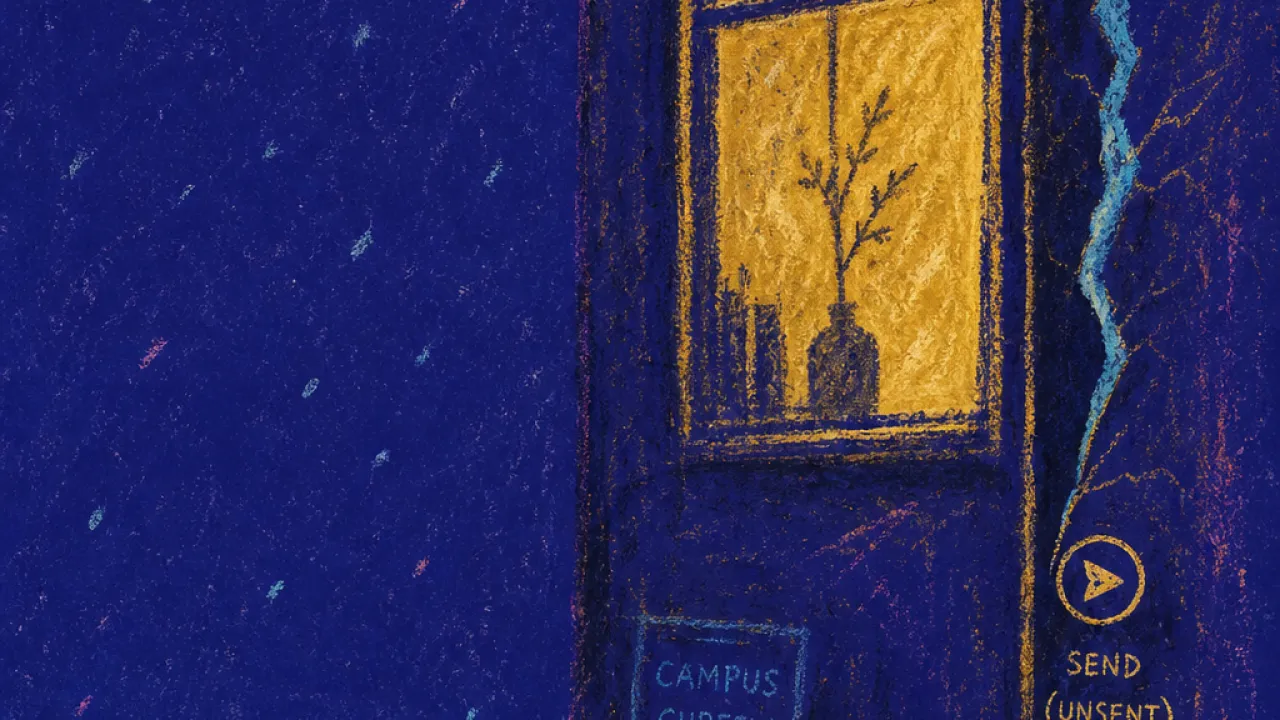
What does this feel like?
Support Access Split is the moment you can see help from where you are sitting, but your body reacts as if the door to it has been removed. You are staring at a booking link for office hours, a pinned group chat, a manager's open-door line, or a friend's 'text me anytime,' and instead of relief you feel your thumb freeze over the screen. Your throat tightens before you have written a sentence. Your shoulders lift as if someone might read the need off your posture. The resource is there, maybe even close, but reaching for it seems to turn a practical step into a public confession: I could not handle this alone, I am behind, I need more than I was supposed to need. So you keep moving around the help instead of toward it. You save the link, draft the message, delete it, tell yourself tomorrow will be easier, then carry the same unfinished weight into another day. The hardest part is that you are not confused about what might help. You can name the tutor, the mentor, the friend, the policy, the budget, the feedback channel. What you cannot find is the inner bridge between knowing it exists and letting your body cross the threshold. The cost is quiet but heavy: you start living near support as if it belongs to another room, close enough to intensify the cold but sealed enough to keep you outside, much like the figures in the Five of Pentacles, passing beneath a glowing window because no visible doorway appears where need can enter.
What's pulling at you?
You're not stuck because help is absent; you're stuck because the route toward help feels loaded with exposure, waiting, or someone else's control. One part of you knows support could steady the next step, while another part protects your competence and equal footing so tightly that the bridge to support starts to feel like a threat.
How It Shows Up?
- You open your laptop late at night and the office-hours link is right there, blue and underlined, while your cursor sits beside a half-written message. Your throat tightens, your jaw locks, and the thought comes in fast: if I ask now, they'll know I was not keeping up. The screen feels like a warm window with glass over it, close enough to glow but not close enough to hold. It is okay to leave the draft open for a few minutes and let your breathing catch up.
- Your friend sends 'I'm here if you need anything,' and you stare at the message until the words stop feeling like language. Your thumb hovers, your stomach drops, and the reply you can manage is a little joke or a heart reaction, because naming the need would make it bigger in the room. You put the phone face-down like the screen has asked you to kneel under a scale. You can let the message sit without turning your silence into a verdict.
- In a meeting, your manager says their door is open, and everyone nods as if the door is obvious. You feel your shoulders rise, your ribs tighten, and a small heat creep up your neck because the support you need would have to become a request, a budget line, a witness to the workload you have been absorbing. The praise in the room feels light; the backing you need has weight. You can notice the difference without forcing yourself to ask in that exact moment.
- At a party, study group, or friend-of-a-friend dinner, you stand near the edge of the conversation with a drink in your hand and an open seat beside someone kind. Your body angles toward the exit before you decide anything, your chest goes tight, and the room feels like a square of garlanded wands with the house still far behind the bridge. People are close, but closeness has not yet become a place to land. You can leave early or stay quiet without making the night mean more than it can hold.
- You notice it in your body before you notice it in your thoughts: the moment you consider asking, your hands get colder and your shoulders fold slightly inward. Your chest compresses as if a narrow doorway has appeared inside your ribs, and even a simple message starts to feel like stepping into a room where your need will be measured. The tightness can simply be noticed before it is acted on. You can take one slower breath and stay with what your body is telling you.
Support Access Split in Tarot Cards
Support Access Split lives in the second when help is visible, the message box is open, and your throat tightens before you can type what you need. From an existential angle, the structural framework is the gap between needing a bridge and fearing what crossing it will cost your competence, footing, or control. The cards below do not explain the gap away; they make its outline visible. These Tarot Cards mirror the shape of support that can be seen but not yet reached.
Support Access Split in Tarot Card Reading Insights
When Support Access Split shows up, people often bring the same quiet line into a reading: I know help is there, but I cannot get myself through the door. These readings move from the cards into moments with office hours, friends, managers, and open invites that still feel unreachable. Tarot Reading Insights from sessions that circle this split.

One Name Moved Down a Launch Caption—Then Credit Split from Support
Topic:Social Tarot Reading
Struggle:Value-Action Split
Context:Direct Communication Trial

Acting Younger for Family Help: Name the Need, Keep Your Choice
Topic:Family Tarot Reading
Struggle:Inherited Role Lock
Context:Conditional Family Support

Sending a Couples Therapy Enquiry: Choosing Practice Over Performance
Topic:Love Tarot Reading
Struggle:Social Self-Judgment Lock
Context:Scorekeeping Relationship

A Recommendation Draft Rewritten Again: Sending Without a Verdict
Topic:Timing Tarot Reading
Struggle:Mentor Approval Lock
Context:Academic Resource Readiness

Workplace Hyper-Independence: Choosing a Bounded Ask Before Crisis
Topic:Personal Growth Tarot Reading
Struggle:Support Access Split
Context:Resource Blind Spot

An Offer From the Past, an Unsent Reply, and One Bounded Yes
Topic:Choice Tarot Reading
Struggle:Unspoken Expectation Load
Context:Unspoken Expectations Gap

After Deleting an Apology, Three Lines Lead Back to the Study Group
Topic:Study Tarot Reading
Struggle:Perfect Readiness Trap
Context:Study Group Integration Trial

Sending a Five-Sentence Reference Request: Rehearsal to Follow-Through
Topic:Study Tarot Reading
Struggle:Support Access Split
Context:Recommendation Letter Crossroads

When "I've Got It" Deepens Powerlessness: Choosing Bounded Help
Topic:Introspection Tarot Reading
Struggle:Agency-Fate Split
Context:Help Refusal Loop

Overfunctioning to Prove Worth: From Automatic Yes to Shared Ownership
Topic:Introspection Tarot Reading
Struggle:Unspoken Expectation Load
Context:Unspoken Expectations Gap