Finding Clarity in the “What’s Your Rate?” Email
If you keep a “market rates” spreadsheet open like it’s armor, but still end up adding freebies and typing “I’m flexible” unprompted, you’re not being generous—you’re negotiating your self-worth in real time.
Taylor showed up to my studio call from a cramped East Village kitchen at 8:43 on a Monday. The Keurig sputtered like it was personally offended to be awake. Her laptop screen was turned up too bright for the gray morning light, and Gmail sat open with one subject line that had already hijacked her body: “What’s your rate?”
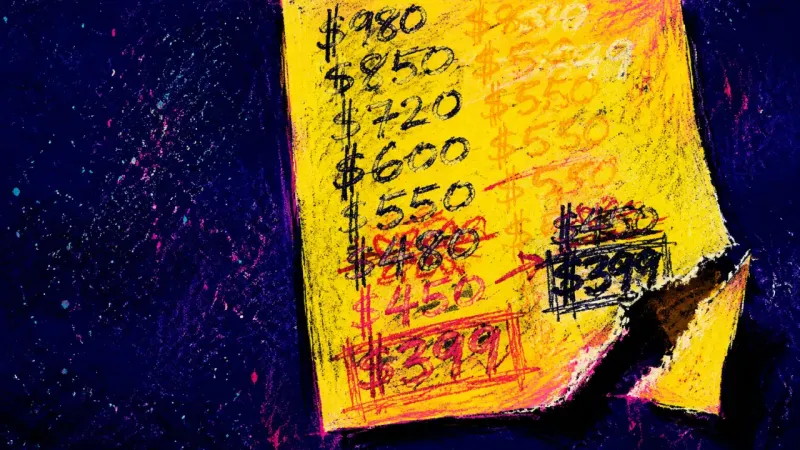
She did what she always does: Notes app, then a half-built spreadsheet, then a competitor’s “starting at” page. Her coffee tasted suddenly bitter, like someone had swapped the beans mid-sip. When she typed a number, her backspace key started to look worn from the repetition. She pressed her palm against her stomach for a second without realizing it.
“I want to be paid fairly,” she said, staring at the draft like it might accuse her. “But the second I type the number, I feel… exposed. Like if I quote high and they disappear, that means I misread everything and I’m not actually good.”
I watched her breathing go shallow—tight stomach, quick mind, shoulders creeping up. The feeling wasn’t a vague anxiety; it was more like trying to hold a glass of water perfectly still while someone is watching for the tiniest tremor. Charging a fair quote for her work versus the fear of being judged as greedy and losing the opportunity—that was the whole tug-of-war, right there on her keyboard.
“We’re not here to ‘fix’ you,” I told her. “We’re here to map the mechanism. Let’s see where the undercharging actually starts—and what would make quoting feel like structure instead of a trial. We’re aiming for clarity you can use in the next email.”

Choosing the Compass: A Tarot Spread for Pricing Anxiety
I asked Taylor to take one slow breath—not as ceremony, just as a reset. “Feel your feet,” I said. “This is an email, not a courtroom.” While she did, I shuffled slowly, the way I used to brush dust from pottery fragments on digs: patient, practical, focused on what’s real.
“Today we’ll use an original spread I call the Four-Layer Insight Ladder · Context Edition,” I explained. “It’s a six-card vertical ladder—like climbing out of an inherited script into a self-authored agreement.”
For anyone reading who’s curious about how tarot works in a situation like this: a spread is simply a structured way to ask better questions. This one is built for quote requests and undercharging because Taylor isn’t choosing between two external options. She’s confronting an inherited belief that compresses her asking. The ladder is the smallest map that still shows: the live symptom, the freeze moment, the old money story underneath, the hidden cost, the stabilizing reframe, and the real-world communication move.
“The first card,” I said, “will show the observable pricing behavior—what happens on the screen. The third card will name the inherited rule running in the background. And the final card will give us the ‘email voice’—how to communicate the quote with clean structure: scope, terms, boundaries.”

Reading the Map: Card Meanings in Context
The Symptom in Real Time (Position 1)
“Now we turn over the card that represents the observable pricing behavior when the quote request arrives—the real-time symptom.”
Six of Pentacles, reversed.
I didn’t have to reach far to translate it into her Monday-morning reality, because this card is basically the screenshot of her inbox spiral. You draft a quote for a branding package, then immediately start trimming the price and padding the scope: “I’ll throw in two extra concepts,” “I can do an extra round of revisions,” “I’ll include social templates.” Not because the project needs it, but because you’re trying to control the client’s reaction by making your offer feel like a “no-brainer.”
Reversed, the energy here is a blockage in fair exchange. The giving is over-functioning; the receiving is negotiated down before it even arrives. In plain terms: the scale isn’t balanced, and you keep placing yourself beneath it.
Taylor let out a small laugh—sharp, almost embarrassed. Then her face tightened, like the laugh had scraped something tender. “That’s… too accurate,” she said. “Like, it’s kind of brutal.”
“Brutal, but not personal,” I said gently. “This is a pattern, not a character flaw. And patterns can be redesigned.”
The Five-Minute Freeze (Position 2)
“Now we turn over the card that represents what happens internally in the first five minutes after seeing ‘What’s your rate?’—the freeze mechanism.”
Two of Swords, upright.
This one always reads like a browser-history confession. In the first five minutes after seeing “What’s your rate?”, you go emotionally offline and operational: open a rate calculator, pull up competitor tabs, reread the thread, search “how to price brand identity,” and keep toggling so you don’t have to feel exposed.
I spoke it as a montage, because that’s how avoidance moves—fast, efficient, almost impressive:
“Notes app → rate calculator → competitor site → draft email → back to Notes. One more reference point. One more benchmark. If you just research a little more, you’ll feel certain… but you’re actually avoiding the vulnerability of choosing.”
In tarot terms, the Two of Swords is protective Air. Here it’s a deficiency of decision paired with an excess of analysis. The blindfold isn’t stupidity; it’s self-defense: If I don’t decide, I can’t be judged.
Taylor’s shoulders dropped a millimeter, like her body heard the word “protection” and stopped arguing for a second. She nodded once, slow. The recognition wasn’t relieving yet—but it was clarifying.
The Old Money Story Under the Keyboard (Position 3)
“Now we turn over the card that represents the inherited rule about money, worth, and what’s acceptable to ask for—the old money story.”
The Hierophant, upright.
Under your pricing is an inherited rulebook you didn’t consciously agree to: “Good people don’t talk about money directly,” “Being low-maintenance is respectable,” “Asking for a lot makes you look greedy,” “Real professionals don’t need to say the number out loud.”
The Hierophant isn’t always a villain. He’s a librarian of norms. But in Taylor’s case, the energy is an excess of borrowed authority. The moment she types a number, she’s not just answering a client—she’s answering an internal compliance officer who flags her price as “too much” before anyone sees it.
I’ve spent years teaching history at Cambridge, and before that, years in the field as an archaeologist. The Hierophant reminds me of standing in front of a museum case: the label tells you what the object is supposed to mean, and people stop looking closely. But the artifact itself always has more to say.
“Whose voice do you hear when you’re about to type the rate?” I asked.
Taylor stared off-camera for a second, eyes unfocusing the way they do when a memory loads. “Honestly? My dad. And… like, this whole vibe of ‘don’t be difficult.’ If you’re ‘easy to work with,’ you’ll be okay.”
The Shadow Bill (Position 4)
“Now we turn over the card that represents what undercharging silently creates over time—the shadow bill.”
Five of Pentacles, upright.
This is where the story stops being about ‘pricing math’ and starts being about belonging. The hidden cost shows up as a constant low-grade survival stress: you say yes to work that doesn’t hold the scope, you work late to ‘make it worth it,’ and you brace for the next gap in income. When a client questions your price, your mind doesn’t translate it as “budget fit”—it translates it as “I don’t belong at this level.”
The energy here is a blockage of safety—Earth energy that’s supposed to feel resourced, but instead feels like cold pavement. And now I used the echo I most wanted her to see: the split-screen.
On the left: a proposal with extra freebies, the apologetic softeners, the “I’m flexible” line slipped in like a peace offering. Shoulders hunched over the keyboard, trying to shrink the number.
On the right: 11:58 PM, radiator clanking, Chase balance open, jaw clenched while she adds “bonus deliverables” because it feels less risky to overwork than to be seen asking for what she needs.
Undercharging buys short-term relief, then charges interest in energy.
Taylor’s reaction came in a three-step chain: first a tiny freeze—she stopped bouncing her leg. Then her gaze slipped away from the screen as if replaying a dozen late nights. Then, finally, a long exhale through her nose that sounded like resignation mixed with anger. “Sometimes you’re not protecting income—you’re protecting belonging,” she said quietly, almost like she hated how true it was.
When The Empress Spoke: The Permission You Don’t Need
The Inner Anchor (Position 5 — Key Card)
I held the deck for a moment before turning the next card. The air in the room felt different—still, like the second right before you open exam results, except this time the grade wasn’t about her talent. This was the antidote card.
“Now we turn over the card that represents the internal anchor that helps you quote from value and embodiment rather than fear of judgment.”
The Empress, upright.
You treat your creative energy like something worth tending. Before replying, you ground: feet on the floor, hand on your chest, one deep breath. You choose a fee that supports you to do the work well without shrinking your life—sleep, time, focus, actual weekends. Instead of pricing to prevent rejection, you price to sustain your ecosystem.
Here the energy is balance: giving and receiving as two halves of one living system. Not the hustle-gospel version of abundance. The practical, bodily version—what you can sustain.
Setup. Taylor was still trapped in the old loop: coffee going cold, Gmail open, stomach clenching as she typed a number and deleted it, editing her own confidence out of the email because certainty felt like the only shield. She kept trying to earn safety by being the cheapest option, the easiest yes.
Delivery.
Stop trying to earn permission to be paid, and start pricing like you’re tending something valuable—The Empress asks you to receive as naturally as you give.
I let it sit. No extra explanation. Just air around the sentence.
Reinforcement. Taylor’s face went still in a way that wasn’t numb—it was like her brain stopped running for half a beat. Her eyes widened slightly, then softened, glassy at the edges. Her shoulders lowered, not dramatically, but as if she’d been holding them up to protect her throat and had forgotten. One hand slid to her chest without instruction this time, fingers splayed over her sternum. She inhaled, shaky at first, then deeper. On the exhale, her jaw unclenched, and a sound came out—half laugh, half relief.
“But if I do that,” she said, and there was a flash of anger in it, “doesn’t it mean I’ve been doing it wrong? Like… I’ve been giving everything away.”
“It means you’ve been surviving with the tools you had,” I replied. “And now you’re upgrading the tool.”
This is where I used what I call Skill Archaeology—my habit of excavating what’s already there but ignored. “If I dug through your last year of projects like layers in a site,” I said, “I’d find evidence of value you’ve stopped counting: speed, taste, client management, decision-making, the way you prevent brand chaos before it happens. Those are not freebies. They’re the pillars holding the work up.”
“Now,” I added, “use this new lens and look back at last week: was there a moment when a client asked about budget, and you made yourself smaller first? What would have felt different if you’d let the quote be a boundary instead of a plea?”
Taylor closed her eyes for a second. “Thursday,” she said. “They asked if I could ‘keep it lean.’ And I immediately offered a discount instead of asking what ‘lean’ meant.” Her voice got quieter. “I could’ve just… changed the scope.”
That was the shift: from contracted self-doubt and people-pleasing pricing toward grounded self-worth and clean, direct pricing communication. Not a personality makeover—an internal anchor.
The One-Page Boundary-First Quote
Integration in the Inbox (Position 6)
“Now we turn over the card that represents how to communicate the quote with clean structure: scope, terms, boundaries.”
King of Swords, upright.
You send the quote like a professional agreement, not an emotional essay. The email is clean: (1) scope summary, (2) project fee, (3) timeline, (4) revisions/terms, (5) next step. You remove the preemptive apology and the bait-to-accept.
This is Air energy used well: clarity as a container. It’s the opposite of spiraling. It’s the opposite of begging. It’s also the line I want every freelancer to tattoo on their draft folder:
Pricing isn’t a personality test. It’s project structure.
When you let structure hold the line, you stop bargaining with yourself before the client even replies.
I pulled the whole ladder together for her: “You start with imbalance (Six of Pentacles reversed): you over-give to manage their reaction. Then you freeze (Two of Swords): you tab-switch to avoid the vulnerability of choosing. Under that is the inherited rule (Hierophant): ‘be respectable, be low-maintenance, don’t be too much.’ The shadow bill is scarcity and exclusion fear (Five of Pentacles): a ‘no’ becomes ‘I don’t belong.’ The medicine is The Empress: receiving as part of making, pricing as tending your ecosystem. And the practice is the King of Swords: clean terms so the number doesn’t have to carry your feelings.”
The blind spot was painfully simple: Taylor kept trying to earn safety by being cheaper and easier, but what would actually build trust was clear scope, clean boundaries, and self-respecting pricing.
“We’re going to turn this into something you can do in under half an hour,” I said. “I call it Megalith Transport—the way ancient builders moved impossible stones: not with one heroic heave, but with repeatable, specific steps.”
- Do the Fair vs Fear SplitBefore you send your next quote, write two numbers in Notes: (1) your fair scope-based price, (2) your fear-based price. Circle the fair price. If they need it lower, you only discuss scope changes—not self-discounting.Expect resistance (“They’ll ghost”). Do it privately first; no sending required. If anxiety spikes, make it a 7-minute version.
- Run a 20-Minute Quoting TimerSet a timer for 20 minutes. Draft the quote. When it ends, stop editing and save the draft. No new competitor tabs after the timer—especially not LinkedIn.If your body tightens (stomach, jaw), take one sip of water and step away for two minutes. Clarity beats panic-speed.
- Send the 5-Line Quote EmailSend your quote in five lines: Scope / Fee / Timeline / Revisions & Terms / Next step. Replace “I’m flexible” with: “If you’d like to adjust the budget, I can offer a reduced-scope option.”If you worry it sounds cold, add one friendly opener line—then let the structure do the work.

A Week Later: The Quiet Proof
Six days later, Taylor emailed me a screenshot—not of a client’s glowing praise, just her own sent message. The subject line was boring. The quote was clean. No “no worries,” no preemptive discount. She wrote, “My stomach still did the thing, but I didn’t backspace the number.”
She didn’t tell me the client said yes. She told me she slept through the night. In New York, that can be a kind of wealth all its own. Clearer structure, steadier nervous system—proof that this wasn’t about becoming fearless. It was about becoming legible to herself.
When you’re about to hit send and your stomach tightens, it’s not just a number on the screen—you’re bracing for the moment someone might decide you’re “too much,” so you make yourself smaller first.
If you let your quote be a boundary instead of a plea, what’s one line you’d want to write tonight that you wouldn’t need to “walk back” later?
This story is adapted from psychological research, written so that those in a similar struggle can see their own pattern in it — and find their next step clearly.These insights are not a substitute for professional psychological, medical, legal, or financial advice.
Learn more about our Journey to Clarity.
How did this insight land for you?
🫂 This Resonates Deeply
🌀 Living This Story
✨ Now I See Clearly
🌱 Seeing New Possibilities
🧰 Useful Framework
🔮 The Confirmation I Needed
💪 Feeling Empowered
🚀 Ready for My Next Step
Author Profile
 AI
AI“Having spent a lifetime at Cambridge and on archaeological digs, I’ve witnessed the rise and fall of countless civilizations. Please know that your current struggles are not a permanent fate, but merely a necessary fracture before rebuilding. I won't lecture you; instead, I invite you to sit with me in the ruins, using a patient, historical perspective to gently dust off the true, enduring value hidden beneath your temporary doubts.”
In this Career Tarot Reading :
Core Expertise
- Core Competency Excavation: Digging through the 'strata' of your past roles to uncover undervalued, highly transferable foundational skills.
- Career Epoch Analogies: Contextualizing your career plateau as the end of one professional era and the necessary foundation for the next.
Service Features
- The Resume Stratigraphy Review: A structured framework to rewrite your professional narrative, highlighting immutable assets over obsolete job titles.
Also specializes in :
Explore Related Patterns:
Boundary DiffusionTaylor's quote keeps leaking beyond its edges: the fee gets smaller, the deliverables get larger, and I'm flexible appears before the client has asked for flexibility. The line between project structure and emotional safety becomes hard to hold. Boundary Diffusion fits because the client budget, Taylor's worth, and the scope of work start blending into one overloaded decision. You can see the practical consequence when keep it lean triggers an immediate discount instead of a scope question. The pattern makes her absorb pressure that should belong to the agreement, so the quote stops protecting time, energy, and terms.
Defensive OverfunctioningTaylor adds bonus deliverables to make the offer feel impossible to refuse, then later works late to make the underpriced project feel justified. The extra labor is not coming from the actual scope; it is coming from the pressure to neutralize the client's possible doubt. Defensive Overfunctioning fits because doing more becomes a way to manage relational risk. You can see the defense clearly: if the quote is padded enough, generous enough, and easy enough, maybe no one will judge the number. The cost is that Taylor turns her own energy into the cushion that protects the client from discomfort.
Guilt-Driven People-PleasingTaylor's draft starts with a professional quote, then quickly turns into extra concepts, extra revisions, social templates, and the unprompted line I'm flexible. The inherited rule underneath is not simply be nice; it is the moral pressure to be low-maintenance, easy to accept, and never visibly asking for too much. That is why Guilt-Driven People-Pleasing fits the mechanism. You can see Taylor using generosity as a defense against being judged greedy or difficult, so the fee gets lowered before the client has even responded. The pattern gives short-term relief because it reduces the chance of friction, but it also teaches her nervous system that belonging has to be purchased through self-discounting.
Permission SeekingTaylor is not only replying to a client when she types the number; she is also answering an internal compliance officer that flags the fee before anyone else sees it. Her dad's voice and the old don't be difficult rule turn a routine quote into a moment where she waits to find out whether she is allowed to ask. Permission Seeking names that hidden transaction. You can see the quote stop functioning as a professional boundary and start functioning like a request for authorization. The undercharge is not random generosity; it is the price she pays to make the ask feel pre-approved by an imagined authority, the client, and the old money script at the same time.
Rejection SensitivityThe client has not rejected Taylor yet, but the subject line What is your rate already hijacks her body: tight stomach, shallow breathing, shoulders creeping up. Before any response exists, her system is preparing for the possibility that the quote will make someone disappear. Rejection Sensitivity fits because Taylor's mind turns pricing feedback into a verdict on belonging and competence. You can see the leap from they may not have the budget to I do not belong at this level. The pattern makes the safest move feel like shrinking first, because a smaller ask seems less likely to trigger abandonment, judgment, or exclusion.
Authority HypervigilanceTaylor names her dad's voice and the wider don't be difficult atmosphere when she is about to type the rate. The actual email is from a client, but the pressure in the room comes from an older authority system that polices money, respectability, and how much space she is allowed to take. Authority Hypervigilance fits because Taylor is scanning for invisible rule violations before she is scanning the project itself. You can see the inherited monitor asking whether the number is too much, whether directness is rude, whether being easy to work with is the only safe identity. The undercharge becomes a compliance move: safer to obey the old rule than risk being seen as difficult.
Scarcity MindsetThe shadow bill shows up in Taylor's late nights, the bank balance open, and the pressure to make an underpriced project worth it after the scope has already expanded. The cheaper number calms the immediate fear, but it leaves her bracing for the next income gap. Scarcity Mindset fits because the quote is being shaped by threat prediction rather than by scope and sustainability. You can see how a client questioning price becomes I do not belong at this level instead of this may be a budget fit issue. The pattern makes short-term acceptance feel safer than long-term stability, even when that acceptance costs sleep, focus, and energy.
Imposter SyndromeTaylor says that if she quotes high and the client disappears, it means she misread everything and is not actually good. That sentence turns a pricing decision into a competence trial, where the client's response becomes evidence for or against her legitimacy. Imposter Syndrome fits because the fear is not only losing the job; it is being exposed as someone who overestimated her own value. You can see the distortion when her real contributions, including speed, taste, client management, decision-making, and preventing brand chaos, stop counting as evidence. The undercharge becomes a way to stay below the visibility line where her skill might be challenged.
Analysis ParalysisTaylor's first five minutes after the rate request are a fast loop of Notes app, spreadsheet, competitor tabs, calculator, draft email, and back to Notes. It looks productive from the outside, but the motion is built to delay the moment when she has to choose a number and stand behind it. Analysis Paralysis fits because the research is not just information gathering; it is a defense against exposure. You can feel the bargain: if there is one more benchmark, one more rate page, one more formula, then the quote might feel certain enough to send. The problem is that certainty never arrives, so the decision stays suspended while the fear keeps running the room.
Assertive CommunicationSix days later, Taylor sends a clean quote: no no worries, no preemptive discount, and no backspacing the number. The structure is simple, but psychologically it matters because the email finally separates fee, scope, timeline, revisions, terms, and next step. Assertive Communication fits as the replacement pattern, not the old wound. You can see Taylor letting the quote become a professional agreement instead of an emotional essay. The key shift is that a lower budget no longer means lowering herself; it means offering a reduced-scope option, so the boundary stays intact while the conversation remains workable.
Explore Related Struggles:
Approval-Safety FusionTaylor keeps trying to control the client's response before it happens. The proposal gets cheaper, the scope gets wider, and the email gets softer because the offer has to feel impossible to reject. You can feel the trade happening in real time: clarity is exchanged for acceptability. The quote is no longer just communicating work terms; it is being engineered to prevent the sting of a no. Approval-Safety Fusion fits because client acceptance becomes the thing that tells her she is safe. The undercharge is not only about money; it is an attempt to secure belonging by becoming the easiest possible yes.
Boundary CollapseTaylor's quote starts losing its edges before the client has pushed back. She types 'I'm flexible,' adds bonus deliverables, offers discounts, and later recognizes that when someone asked to keep things lean, she reduced the price instead of changing the scope. That is where the fee stops acting like a boundary. You are still sending an email, but the structure of the work has begun to dissolve because the need to keep the opportunity alive is stronger than the need to protect the container. Boundary Collapse fits because the undercharging shows up as blurred scope, blurred terms, and blurred self-positioning. The work is still valuable, but the line around it keeps giving way at the exact moment it needs to hold.
Low-Maintenance Worth LockTaylor hears the quote request through an old rulebook: good people do not talk about money directly, asking for a lot looks greedy, and being easy to work with keeps you safe. The clearest trace is the moment she names her dad and the wider instruction to not be difficult as the voice that arrives before the client has said anything. That inherited standard turns professional pricing into a respectability test. You are not simply choosing a fee; you are negotiating with a learned belief that your value becomes safer when it is quiet, discounted, and convenient for someone else. Low-Maintenance Worth Lock fits because the undercharging is not random generosity. It is the structure of being trained to make your needs small enough to be accepted, then mistaking that smallness for professionalism.
Money Shame BindThe number on Taylor's screen does not behave like a neutral project fee. The moment she types it, her body tightens and the draft starts to feel accusatory, as if asking clearly could expose her as greedy, wrong, or not good enough. You can see the bind in the way money becomes morally loaded before the client even replies. A higher quote is not processed as a scope-based business decision; it is processed as a possible violation of the old rule that decent people should not ask too directly. Money Shame Bind names the pressure point underneath the undercharging. The fee carries more than pricing logic; it carries the fear that wanting fair compensation will make you look like too much.
Clarity-Exposure SplitTaylor has the tools for clarity open in front of her: the spreadsheet, the calculator, the competitor pages, the draft. Still, the clean number feels dangerous because once it is written plainly, it can be seen, questioned, rejected, or used as evidence against her competence. You are watching clarity become exposure. The more precise the quote gets, the less it feels like a professional container and the more it feels like standing under a spotlight with no cover. Clarity-Exposure Split fits because the very thing that would make the email stronger is also what makes Taylor feel most unprotected. The struggle is not confusion about pricing alone; it is the way clean self-expression turns into a felt risk.
Value-Action SplitTaylor says she wants to be paid fairly, then watches her own hands start editing the fairness out of the email. The number appears, the backspace key takes over, and the proposal quietly fills with extras meant to make the fee feel less risky. That friction is the center of the split. You know the work has value, but the action taken at the keyboard moves in the opposite direction, turning a fair scope-based quote into a smaller, more apologetic ask. Value-Action Split fits because the story is built around the gap between what Taylor recognizes as true and what she can let herself do under pressure. The struggle is not a lack of knowledge; it is the inability to keep action aligned with known value when visibility and judgment enter the room.
Systemic DepletionTaylor's undercharging does not end when the email is sent. It follows her into late nights, extra deliverables, jaw-clenched budget checking, and the feeling that she has to work harder to make an already discounted project worth it. The imbalance becomes a closed energy system. You give more to make the client feel secure, receive less than the work requires, then spend your own time and recovery covering the gap. Systemic Depletion fits because the story shows a whole exchange pattern draining itself from the inside. The issue is not one low quote; it is a recurring structure where short-term relief costs long-term capacity.
Explore Related Emotions:
Belonging ShameWhen Taylor imagines a client questioning her price, her mind does not translate it as “budget fit.” It translates it as “I don’t belong at this level.” That line moves the story out of simple pricing strategy and into the ache of whether she is allowed to take up professional space. You can see the shame in the way she makes herself smaller before anyone asks her to. The discount, the freebies, and the apologetic flexibility are not only negotiation moves. They are attempts to avoid the social pain of being seen as too much, too expensive, or not legitimate enough for the room she is trying to stand in. Belonging Shame fits because the undercharge is being used as a membership fee. She is paying in time, scope, sleep, and confidence to feel less at risk of exclusion. The quote request exposes an old equation: if she is cheaper and easier, maybe she gets to stay.
Exposure DreadThe subject line “What’s your rate?” lands in Taylor’s inbox and immediately moves through her body: stomach tight, breath shallow, shoulders rising, fingers deleting the number before anyone has even reacted. The email is ordinary on the surface, but the act of naming a fee becomes a moment of being exposed. You are not just watching someone price a branding package. You are watching a professional decision turn into a live verdict on whether she has misread her own value. The quote starts carrying too much emotional evidence: if the client disappears, it might not simply mean budget mismatch; it might feel like proof that she asked for more than she was allowed to ask. Exposure Dread fits because the fear is not only rejection. It is the dread of becoming visible at the exact point where self-worth, money, and competence meet. The worn backspace key shows the emotional logic clearly: if the number never stays on the screen, the vulnerable part of her never has to be judged.
Low-Maintenance ShameTaylor hears the old rule under the keyboard: be easy to work with, do not be difficult, do not ask for too much. Before the client has made any demand, she starts adding extra concepts, extra revisions, social templates, and the soft little line “I’m flexible.” You can trace the shame through how quickly she edits her own ask into something smaller and more agreeable. The money story does not simply say “charge less.” It says direct need makes you look greedy, demanding, or socially unsafe. Being low-maintenance becomes a way to stay acceptable. Low-Maintenance Shame fits because the pressure is moralized, not merely financial. She is not only afraid of losing the job; she is afraid the quote will reveal a version of herself that violates the inherited rulebook. Undercharging becomes a performance of acceptability, and the cost is that her real value has to keep shrinking to stay welcome.
Permission AnxietyTaylor keeps trying to earn permission to be paid by becoming the easiest yes. The fee does not feel like something she can state from the work itself; it feels like something that must be approved by an inherited rulebook, a client’s imagined reaction, and the old instruction not to be difficult. You can hear that permission structure in the way the price is flagged before it is even sent. An internal authority gets to decide what is too much, what is respectable, and what a “good” person is allowed to ask for. The client has not rejected her, but her own system is already asking her to lower the number. Permission Anxiety fits because the core tension is self-authorization under pressure. She is not simply uncertain about the market rate. She is trying to locate the point at which her desire to be paid fairly becomes socially acceptable. The emotional weather is the tight wait for approval that may never actually arrive.
Self-Betrayal AcheTaylor says plainly that she wants to be paid fairly, but the moment the number appears, she starts trimming it, padding the scope, and editing her own confidence out of the email. The painful split is visible: one part of her knows the work has value, while another part rushes to make the ask less costly for someone else to receive. You can feel the ache in the phrase “I’ve been giving everything away.” It is not just regret about past discounts. It is the recognition that she has repeatedly abandoned her own sustainability in order to keep the relationship smooth before the relationship has even been tested. Self-Betrayal Ache fits because the wound comes from watching herself cross her own line in real time. The quote becomes a plea when it could have been a boundary, and the client’s imagined comfort gets prioritized over her sleep, focus, weekends, and steadiness. Naming that ache gives her a clearer place to intervene.
Performance FreezeTaylor does not go still in the obvious way. She opens Notes, builds part of a spreadsheet, checks competitor pages, drafts, deletes, recalculates, rereads, and keeps moving around the decision without fully making it. The activity looks productive, but its rhythm keeps her suspended just outside the exposed moment of choosing. You can see the freeze in the precision of the loop. More data becomes a shield against the vulnerability of setting a number. The body is braced, the mind is fast, and the decision stays untouched in the middle of all that motion. Performance Freeze is the right label because the stuckness appears exactly where competence is being displayed. She is not avoiding the email because she is careless; she is trying to perform enough certainty that no one can judge the tremor underneath. The quote becomes a stage, and the spreadsheet becomes a place to hide in plain sight.
Scarcity AnxietyThe shadow bill shows up late at night: radiator clanking, bank balance open, jaw clenched, extra deliverables added because overworking feels less risky than asking cleanly for what the project requires. Undercharging briefly soothes the client-facing moment, then moves the pressure into Taylor’s body, calendar, sleep, and income gaps. You can feel how scarcity turns every quote into a survival calculation. A client question about price stops being a neutral question about scope and starts sounding like evidence that she may not belong at that level. The number is no longer just a fee; it becomes a fragile bridge between opportunity and exclusion. Scarcity Anxiety fits because the story keeps showing resource pressure as a bodily climate. She tries to protect future income by lowering the ask, but the lower ask creates the exact depletion she was trying to avoid. The fear of not having enough begins to organize how much of herself she gives away.
Cautious Self-TrustTaylor remembers Thursday, when a client asked whether she could “keep it lean” and she immediately offered a discount instead of asking what “lean” meant. The recognition is quiet but important: she could have changed the scope. She could have let the project structure answer instead of making herself smaller. You can see trust forming in the gap between body reaction and behavior. Her stomach still does the thing, but she does not backspace the number. The old reflex remains available, yet it no longer fully owns the action. Cautious Self-Trust fits because this is not instant confidence. It is the first reliable evidence that she can notice the pressure, stay with herself, and choose a cleaner line. The trust is cautious because it is newly built; it is real because it shows up inside the exact situation that used to collapse her ask.
Clarity ReliefTaylor’s body changes when the undercharging loop is mapped as a mechanism instead of a character flaw. Her shoulders lower, her jaw unclenches, and the moment lands with a half laugh, half release. The pattern has not disappeared, but it has become visible enough to stop feeling like a private defect. You can feel the relief in the ladder itself: symptom, freeze, inherited rule, hidden cost, stabilizing reframe, communication move. Each layer gives the problem a shape. Once the shape is visible, the quote request is no longer an amorphous threat; it becomes a sequence she can understand and edit. Clarity Relief fits because the emotional release comes from legibility. Taylor does not need a vague reassurance that she is worth more. She needs to see where the undercharging starts, what rule it obeys, what it costs, and what sentence can replace the old reflex. The relief is clean because the next move is clear.
Grounded AgencyTaylor’s shift begins with physical and practical anchors: feet on the floor, one breath, a fair-versus-fear split, a 20-minute timer, and a five-line quote email. These steps do not erase the pressure, but they stop the inbox from becoming an endless emotional arena. You can see agency returning through the container. Instead of chasing another competitor tab or adding another free deliverable, she has a repeatable way to decide, write, and send. The structure gives her enough room to act from the project’s needs rather than from the client reaction she is trying to pre-manage. Grounded Agency fits because the power here is not abstract confidence. It is the felt ability to make one clean move while staying connected to the body, the scope, and the actual terms of the work. She is not waiting to feel perfectly safe before choosing; she is building a process that helps choice become possible.
Quiet Self-RespectSix days later, Taylor sends the quote with the number still in it. There is no “no worries,” no preemptive discount, and no apology smuggled into the structure. Her stomach still reacts, but the backspace key no longer gets the final say. You can read the self-respect in how small and concrete the shift is. She does not need to become fearless to act differently. The five-line email lets scope, fee, timeline, revisions, and next step hold the boundary so her nervous system does not have to carry the entire emotional weight of the exchange. Quiet Self-Respect fits because the story’s resolution is steady rather than triumphant. She sleeps through the night not because the client has validated her, but because she has become more legible to herself. The quote is no longer a plea for acceptance; it is a clean statement of what the work requires.
Explore Related Contexts:
Compensation Alignment GapTaylor drafts a quote for branding work and immediately starts trimming the fee while adding extra concepts, extra revisions, and social templates. The deal becomes distorted before it reaches the client: the value of the work rises while the price and boundaries fall. That is the structural gap. Your labor, taste, speed, client management, and decision-making are all carrying the project, but the quote does not yet reflect what those inputs cost to deliver sustainably. The market spreadsheet gives reference points, but it cannot decide whether the exchange actually matches the scope. Compensation Alignment Gap fits because the problem is not only charging less; it is the mismatch between what the project requires and what the agreement protects. When the fee is forced downward while deliverables expand, the undercharge becomes a system, not a one-off concession.
Conditional Belonging PressureTaylor names the core exchange herself when she says sometimes you are not protecting income, you are protecting belonging. In the draft, a high quote is not treated as a possible budget mismatch; it becomes proof that she misread the room, that the client may disappear, and that she might not belong at that professional level. The external pressure is conditional acceptance. You are allowed to stay in the opportunity as long as you are easy, inexpensive, flexible, and not too much. That condition pushes the negotiation away from scope and toward self-erasure. Conditional Belonging Pressure fits because the client email becomes a gatekeeping moment before anyone has rejected anything. The task is not to become indifferent to the client; it is to notice when belonging is being purchased with a discount you never meant to offer.
Money Shame SpiralTaylor is not simply deciding a number; she opens the rate email, checks spreadsheets and competitor pages, then starts backspacing the quote while an inherited rulebook speaks through the draft. The rules are explicit in the story: good people do not talk about money directly, being low-maintenance is respectable, asking for a lot looks greedy, and her dad's 'don't be difficult' voice still organizes the moment. That turns pricing into a moral exam instead of a business exchange. You are not only comparing rates; you are negotiating whether asking to be paid fairly will make you seem excessive, ungrateful, or hard to work with. The undercharge begins where social approval gets fused with financial restraint. Money Shame Spiral fits because the pressure keeps looping through the same external script: soften the number, add the free thing, make the offer easier to accept, then absorb the hidden cost later. Naming that script gives you a map for separating the fee from the old rule that says being paid requires being smaller.
Creative Career Legitimacy ScrutinyTaylor is quoting a branding package, but the moment she types the fee she starts measuring whether she is actually good enough to ask for it. A disappearing client, in her mind, would not simply mean bad timing or budget mismatch; it would mean she misread her own professional level. That turns creative pricing into a legitimacy test. You are not only selling deliverables; you are exposing taste, judgment, speed, client management, and the invisible work that prevents brand chaos. When those skills have been treated like freebies, naming their value can feel like stepping into a spotlight without a script. Creative Career Legitimacy Scrutiny fits because the external market is asking her to price work whose value is partly intangible. The pressure is real, but it becomes easier to navigate when the quote describes the structure of the project instead of asking the number to prove your talent.
Financial Boundary NegotiationTaylor's later email is clean: scope, fee, timeline, revisions and terms, then the next step. She removes the preemptive apology, the bait-to-accept, and the flexible line that used to weaken the boundary before the client replied. That changes the scene from emotional pleading to financial boundary negotiation. You are still being warm and workable, but the agreement now has edges: if the budget changes, the scope changes; if the project expands, the terms have to hold it. Financial Boundary Negotiation fits because the story ends with a sent quote that does not walk the number back. The practical structure gives the fee a job to do, so your next move is not to over-explain your worth but to make the exchange legible.
Freelance Stability GapThe shadow bill shows up at 11:58 PM with the radiator clanking, the bank balance open, and bonus deliverables being added because overwork feels less risky than being seen asking for enough. The story also says she braces for the next gap in income, which places the quote inside the instability of freelance work rather than a single email. Freelance Stability Gap fits because undercharging is tied to the uneven resource base around independent creative work. You are managing cash flow, future gaps, client approval, and project sustainability at the same time, so a lower fee can feel like a short-term safety move even when it weakens the month ahead. The point of naming this context is to keep the pressure external and visible. A quote is not just a number; it is one of the structures that decides whether the work can support the life required to produce it.