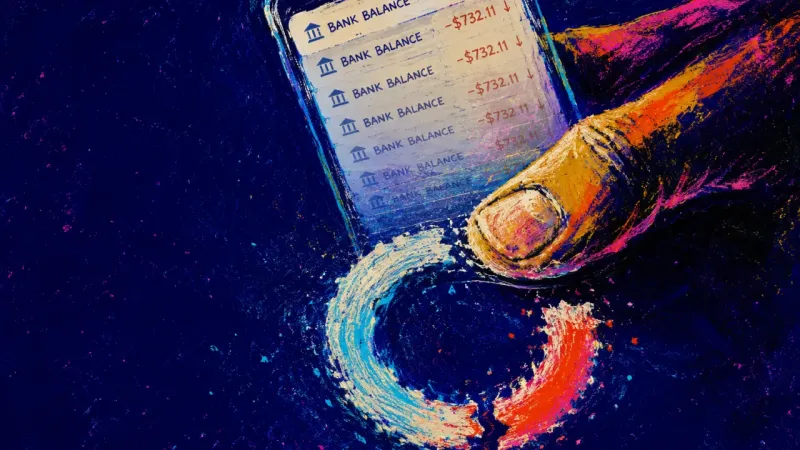
The Tap-to-Pay Declined Shame Spiral, in the Space of One Beep
If you’re an early-career NYC professional who can run a project at work—but one tap-to-pay declined at a bodega makes you spiral into bank-app refreshing and “am I secretly failing at adulthood?” shame, you’re not alone.
Jordan came into my café on a gray morning that smelled like wet sidewalk and espresso. They didn’t sit like someone “in crisis.” They sat like someone who’d been holding their breath since last night and forgot how to exhale.
“It was Trader Joe’s,” they said, and I could tell they didn’t mean groceries. They meant the moment. The line near Union Square, the fluorescent buzz, the cart that clipped their heel. They hovered their iPhone over the terminal—like they’d done a thousand times—and the screen flashed Declined. Their cheeks went hot, their shoulders pulled up as if bracing for impact, and their chest tightened like it was trying to make them smaller.
“I know it’s just a payment issue,” Jordan said, staring at the steam rising from the cup in their hands. “But it feels like it’s me.”
What they were really asking me—under the logistics—was the question I hear all the time in this city: Why do I feel ashamed when my card gets declined? Why does a tiny tech glitch turn into a full-body identity verdict?
I watched their thumb move in small, familiar motions over their phone screen, like it wanted to open the banking app on autopilot. The feeling in the room was contracted—like a drawstring pulled tight. Shame has that effect: it doesn’t just hurt; it narrows your whole world down to a single public second.
“A payment glitch is not a personality test,” I told them, gently. “And we can treat this like what it is: a moment your nervous system recorded as danger. Today, let’s make it practical. Let’s find clarity—without pretending it didn’t sting.”

Choosing the Compass: A Minimal Tarot Spread for Anxiety and Shame Spirals
I slid a small linen cloth across the table—the same one I use before the morning rush, when I want the counter to feel like a clean beginning. I asked Jordan to take one slow breath, not as a ritual for “luck,” but as a way to tell the body: we’re here now, not in that checkout line.
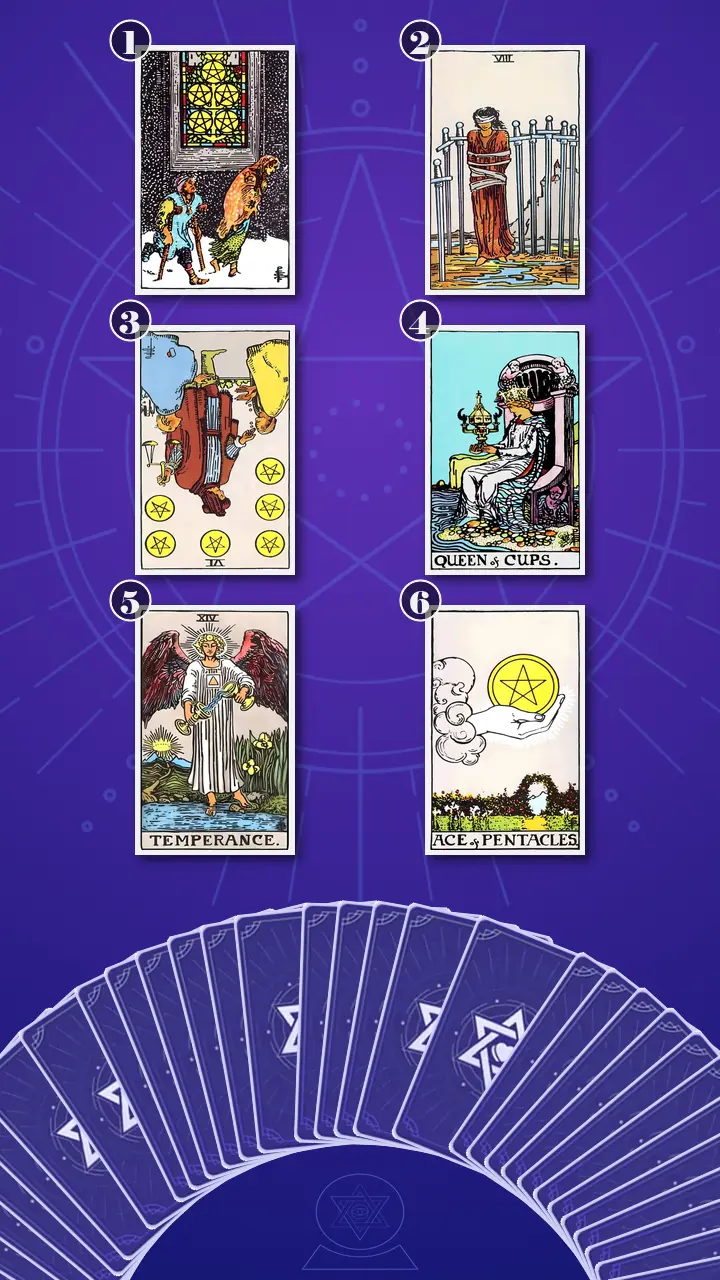
“Today,” I said, “we’ll use a six-card spread I designed for moments like this: the Four-Layer Insight Ladder · Context Edition.”
If you’ve ever Googled how tarot works and felt like you got either pure mysticism or pure entertainment, here’s the simple version: I use tarot as a structured mirror. The cards don’t hand down a sentence. They help us separate facts from the story—especially when shame tries to write the story for you.
This spread works because it keeps the card count minimal while still doing something most people skip: it separates the symptom (the sting), the amplifier (the spiral), the root belief (the hidden rule), the resource (what steadies you), the turning point (the reframe), and the next step (the tangible action). It’s made for deep inner work when the outer event is small—but the meaning-making is loud.
“We’ll read it like a small staircase,” I added. “The first card shows the public moment that felt like a verdict. The third card touches the root contract underneath. And the fifth card is the turning point—where you get choice back.”
Reading the Map: From Glitch to Spiral
Position 1: The public moment that turns into “I’m not enough”
“Now we turn over the card that represents the observable moment where the tap-to-pay decline turns into a felt verdict about being ‘not enough’,” I said.
Five of Pentacles, upright.
In modern life, this is that busy checkout in NYC—bodega, Trader Joe’s, pharmacy—where the decline happens and suddenly it’s not about the dollars. It’s the split-second feeling of being outside the warm window while everyone else looks effortlessly sorted. You scan faces. You rehearse explanations. You try to exit fast so you don’t get labeled as the messy one.
Energy-wise, Five of Pentacles is scarcity in excess—Earth energy showing up as exclusion. Not necessarily “you have no money,” but “you don’t belong.” The card’s stained-glass window always gets me: warmth is visible, close enough to touch, and yet the body feels locked out.
Jordan let out a short laugh—one of those laughs that’s basically a flinch.
“That’s… brutal,” they said, and their eyes flicked toward the door like they could hear an imaginary line forming behind them. “It’s so accurate it’s kind of mean.”
“It’s accurate,” I said, “and it’s kind. It’s naming the real injury. Your nervous system experienced that beep like a social exile.”
I asked, “In that exact second, what did you assume the people behind you concluded about you?”
Jordan’s jaw tightened. “That I’m not stable. That I’m doing life wrong.”
Position 2: The real-time loop that escalates the incident
“Now we turn over the card that represents the real-time thought loop and body-bracing that escalates the incident into a spiral,” I said.
Eight of Swords, upright.
This is the part that happens minutes later, when you’re already out the door but the decline tone is still looping in your head. You refresh your banking app repeatedly, move tiny amounts between accounts—“I’ll just transfer it real quick”—and replay what you should’ve done. Options exist (another card, cash, trying again), but your mind narrows to one conclusion: I failed.
Eight of Swords is Air energy in blockage: thoughts circling so tightly they become a cage. I’ve seen people refresh their bank app like it’s a slot machine for reassurance—pull the lever, maybe this time the feeling changes. But numbers don’t fix shame. They just give it more surface area.
I leaned in slightly. “Information happened. Shame wrote a headline. The decline was the information. The headline was, ‘Jordan is not enough.’”
Jordan’s fingers stopped moving on their phone. Just for a second. Their shoulders stayed high, but their gaze softened—like the mind recognized itself on the card.
Position 3: The hidden contract underneath it all
“Now we turn over the card that represents the core belief tying worth, adulthood, and belonging to smooth financial performance and ‘never needing help’,” I said.
Six of Pentacles, reversed.
Under the spiral is a quiet rule: smooth payment equals being a real adult; needing a workaround equals being less. So when a friend offers to spot you, you either refuse too hard—or you accept with an apology tour and a Venmo memo that reads like evidence.
Reversed, this card shows Earth energy in imbalance. The scales aren’t measuring money. They’re measuring dignity. It’s like carrying an invisible social-ladder spreadsheet in your pocket, auditing your rank in real time based on how frictionless your transactions look.
My mind flicked—quickly, quietly—to my own café register. I’ve had mornings where the card reader lagged while a line formed, and I could feel the collective impatience ripple like heat. The machine malfunctioned, but people’s bodies read it as moral theatre. That’s why I never rush someone through that moment. I’ve seen how fast the nervous system turns a delay into a verdict.
“This,” I said, tapping the reversed scales on the card, “is the worth-audit.”
Jordan went still in a three-beat sequence: their breath paused; their eyes unfocused like a memory replayed; then they swallowed hard.
“I do that,” they admitted. “If someone offers to cover something, I feel… downgraded. And then I hate myself for feeling that.”
“That’s exactly the contract,” I said. “If I never need help, I get to belong. It’s a harsh deal. And it makes a tap-to-pay decline feel like public proof you broke the rules.”
Position 4: The part of you that can hold the feeling without turning it into a trial
“Now we turn over the card that represents the inner capacity that can hold embarrassment without collapsing into self-judgment,” I said.
Queen of Cups, upright.
In modern life, this looks boring from the outside: one quiet minute in a bathroom stall, on the subway, or on the sidewalk where you stop strategizing and simply name what happened—“That felt awful.” No proving. No rewriting the week’s budget. Just containment.
Queen of Cups is Water energy in balance. The lidded cup matters: you can feel embarrassed without spilling it into your identity. You can hold the sensation—hot face, tight chest—without assigning it a character story.
I told Jordan, “Put one hand on your chest for a second. Name the feeling like it’s a push notification. One word.”
They did it, awkwardly at first, palm pressed through their coat. “Exposed,” they said.
And there it was—the first believable loosening. Their shoulders dropped a millimeter. Not relief. Permission.
When Temperance Poured Between Two Cups
When I reached for the next card, the café seemed to quiet around us—the espresso machine settling between cycles, the street noise softened by the window glass. “We’re turning over the core card,” I said. “The bridge.”
Position 5 (Key Lesson): The reframe that restores choice
“Now we turn over the card that represents the key cognitive-emotional reframe that breaks the identity story and restores choice,” I said.
Temperance, upright.
This is the ‘third option’ response. Instead of swinging between “I’m fine” and “I’m a disaster,” you blend facts and feelings. Facts: terminals fail, networks lag, cards get flagged. Feelings: you felt exposed. Then you choose one proportionate step—without punishment—so the moment becomes something you handled, not something that defines you.
Temperance is integration in balance: one foot in water (emotion), one foot on land (reality). It’s the moment your nervous system stops treating a glitch like a threat.
Here’s where my coffee brain always kicks in. I’ve spent twenty years watching people try to hard-cut their internal state—like going from espresso to ice water. It never works. Calm isn’t a switch. It’s a blend. In Venice, my grandmother used to read patterns in coffee grounds—Grounds Divination, she called it—because the sediment never forms from one motion. It forms from repeated, gentle swirling. Temperance is that swirl: the meaning mixer.
Jordan nodded, but I could feel the old reflex still buzzing in them: Okay, but how do I stop the verdict?
So I slowed down and gave them the setup plainly: think of that moment in line—the beep, the pause, your face heating up—then the reflex to refresh your bank app like it’ll rewrite what people thought of you.
Your worth isn’t a transaction—so stop letting the terminal score you.
They froze in a clean three-step wave. First: a tiny inhale that didn’t complete, like the body forgot it was allowed to breathe. Second: their eyes widened and then went glassy, not with drama, but with recognition—like a private truth got named out loud. Third: their shoulders finally lowered, and the breath came out shaky, almost annoyed.
“But… if I stop letting it score me,” Jordan said, voice tight, “doesn’t that mean I’ve been wrong? Like I’ve been doing all this… for nothing?” There was a flash of anger there—at the card reader, at the city, at themselves.
I kept my tone steady. “It doesn’t mean you were wrong. It means you were trying to stay safe with the tools you had. Temperance isn’t a judgment. It’s an update.”
I added, carefully, because this is the pivot: “Stop treating a decline as a verdict and start mixing reality with compassion like Temperance pouring between cups until your nervous system settles.”
Jordan blinked hard. Their mouth pulled into a half-smile that looked like grief and relief negotiating. “Yeah,” they whispered. “Since when did a payment terminal get promoted to judge and jury of my adulthood?”
“Exactly,” I said. “And this right here is the shift—from shame-driven catastrophizing after a payment decline to grounded enoughness and self-trust with a calm, practical response. Not perfect confidence. Just enough steadiness to choose your next step.”
I asked them, “Now, with this new lens—can you think of a moment last week where this would’ve changed how you felt?”
Jordan looked down at the table like it was a map. “On the F train,” they said. “I refreshed my bank app… five times. I wasn’t checking money. I was checking if I was allowed to relax.”
Position 6: The one grounded next step that protects dignity
“Now we turn over the card that represents a small, concrete, dignity-preserving action to rebuild safety and agency after the trigger,” I said.
Ace of Pentacles, upright.
This card is almost aggressively simple. One coin in an open hand. One path through a garden gate. In modern terms: set up one material support that makes future glitches smaller—backup card in Apple Wallet, a tiny buffer, a no-drama script—so you don’t have to spend hours in mental replay.
Ace of Pentacles is Earth energy in balance: tangible, steady, not performative. And it carries the line I wish every New Yorker could tape to their phone: One solid backup plan beats a hundred mental replays.
Jordan exhaled through their nose, almost laughing again, but this time it sounded lighter. “Okay,” they said. “But I’m going to say something annoying.”
“Go ahead.”
“I don’t even have five minutes,” they said. “Because if I’m not working, I’m catching up. And if I’m not catching up, I’m trying not to spend.”
“That’s not annoying,” I said. “That’s the loop talking. We’ll make the next step so small it can’t argue with you.”
The Dignified Backup Plan (Without Turning It Into Self-Punishment)
Here’s the story the whole spread told, in one line: a public glitch (Five of Pentacles) triggered a mental prison (Eight of Swords) because a hidden worth-contract got activated (Six of Pentacles reversed). The way out wasn’t more proof or stricter budgeting—it was emotional containment (Queen of Cups), then integration (Temperance), then one clean material support (Ace of Pentacles).
The cognitive blind spot was clear: Jordan wasn’t responding to a payment problem. They were responding to a worth audit—as if dignity had to be earned through frictionless money performance. The transformation direction was equally clear: shift from interpreting a payment glitch as a character score to treating it as neutral information you can respond to with calm, practical steps.
“You don’t have to punish yourself to be prepared,” I told them. “We’re going to build a ‘dignified backup’ the way I close the café at night—small, repeatable actions that tell your nervous system, we’re safe.”
Then I gave Jordan three next steps—practical, specific, and deliberately small.
- Apple Wallet Reality Check (Tonight, 2 minutes)Open Apple Wallet and confirm (1) your default card, (2) a backup card, and (3) that the backup is active. Then take one screenshot of the settings so you don’t re-check five times later.If shame says “you should already have this handled,” name it (“shame”) and do the two-minute version anyway. Small on purpose.
- The One-Sentence Checkout Script (Write it once)In your Notes app, write: “Let me try another card.” Practice saying it out loud once at home so your body has a path when you’re stressed and people are behind you in line.Keep it boring. Boring is stabilizing. You’re not explaining your worth—you’re moving the transaction along.
- The 10-Minute Temperance Reset (Facts vs Feelings)Once this week—after any money-trigger moment—write two bullet lists: FACTS (3 bullets: what objectively happened) and FEELINGS (3 bullets: what it brought up). Then choose exactly one action from the FACTS list (check settings, move $20 to a buffer, decide your backup is X).If you feel worse mid-way, you can stop at the lists. The win is separating reality from the headline.
To make it even more embodied, I offered a tiny twist from my café toolkit: Aroma Anchoring. “Pick one scent you already associate with steadiness,” I said. “Coffee, citrus, even your shampoo. After you do the Facts vs Feelings list, smell it on purpose for ten seconds. It’s a cue to your nervous system: the verdict is over.”

A Week Later: The Quiet Proof
A week later, Jordan DM’d me a screenshot: Apple Wallet, two cards set, backup active. Under it they wrote, “Did the screenshot thing. Didn’t reopen it. That feels… new.”
They didn’t tell me their entire relationship with money was healed. They told me something better: the next time they felt the urge to refresh their bank app, they did the two-column list instead. Then they went to bed.
Clear, but still human: they slept a full night, and in the morning their first thought was still, “What if it happens again?”—but this time they made coffee, took a breath, and didn’t turn the thought into a trial.
That’s the Journey to Clarity I trust most: not big declarations, but small proofs. Not “I’m above shame,” but “I can hold it, and still act with self-respect.”
We’ve all had that split second where the terminal says “Declined,” your face heats up, your shoulders lock, and your brain tries to turn a tiny glitch into a full-body verdict about whether you’re stable, competent, and allowed to belong.
If you let a declined tap-to-pay be just a moment—not a verdict—what’s one calm, practical thing you’d choose next time that would still feel dignified to you?
This story is adapted from psychological research, written so that those in a similar struggle can see their own pattern in it — and find their next step clearly.These insights are not a substitute for professional psychological, medical, legal, or financial advice.
Learn more about our Journey to Clarity.
How did this insight land for you?
🫂 This Resonates Deeply
🌀 Living This Story
✨ Now I See Clearly
🌱 Seeing New Possibilities
🧰 Useful Framework
🔮 The Confirmation I Needed
💪 Feeling Empowered
🚀 Ready for My Next Step
Author Profile
 AI
AI“For twenty years, I’ve listened to stories unfold over the warm aroma of coffee. I don’t believe life’s complexities always require grand theories to be solved; often, we just need a safe place to tidy up our reality. I don’t offer high-minded preaching—just grounded, heartfelt insights to help you regain your sense of control amidst the clutter of daily life.”
In this Personal Growth Tarot Reading :
Core Expertise
Service Features
Also specializes in :
Explore Related Patterns:
Hyper-IndependenceJordan’s reaction to someone offering to cover something is not simple awkwardness; they feel downgraded, then turn on themselves for feeling that way. The story names the hidden contract directly: if they never need help, they get to belong. Hyper-Independence fits because needing a workaround is treated as a threat to dignity rather than a normal part of being human in a city full of broken terminals, delayed transfers, and imperfect systems. Independence becomes less about agency and more about never being seen in need. You are not being pushed toward dependence or passivity. The pattern asks a sharper question: when did ordinary support start feeling like evidence that you had lost rank, and what would it be like to let help be practical instead of humiliating?
Anxiety SpiralJordan leaves the checkout line, but the decline tone keeps looping in their head. The sequence is concrete: replay what should have happened, refresh the bank app, tighten around the thought, and let the headline become “I failed.” Anxiety Spiral fits because the story shows escalation rather than a single anxious moment. A neutral payment issue becomes body bracing, then mental replay, then reassurance seeking, then a global conclusion about adulthood. You are not dealing with one isolated thought. You are dealing with a loop that feeds itself, which is why the practical next step has to interrupt the sequence early: name the feeling, separate facts from feelings, and choose one proportionate action before the spiral starts demanding proof.
Compulsive CheckingJordan’s thumb moving toward the banking app on autopilot, then refreshing it five times on the F train, shows a reassurance ritual trying to solve an identity alarm with more data. The practical question is money, but the psychological function of the checking is to confirm whether the body is allowed to stop bracing. Compulsive Checking fits because the behavior briefly creates the illusion of control while keeping the shame loop active. Each refresh promises closure, but it also reopens the same question: am I stable, competent, and safe enough to relax? You are not being shown a budgeting problem disguised as psychology. You are being shown how a nervous system can turn one declined beep into a monitoring loop, where the app becomes a courtroom and every balance check is treated like evidence.
Emotional RegulationJordan placing a hand on their chest and naming the feeling as “exposed” gives the body a different instruction than the checkout line did. Instead of proving, explaining, or reopening the app, they start by containing the sensation. Emotional Regulation fits because the story shows a concrete shift from body alarm to grounded choice. The feeling is not bypassed; it is named, held, and separated from the identity headline. You can still feel embarrassed and act with self-respect. That is the useful signal in this pattern: the goal is not perfect calm, but enough regulation to choose the next practical step without turning the moment into punishment.
Shame BindingJordan’s declined tap-to-pay becomes a character score, not because the machine said anything about them, but because the hidden worth contract was already waiting underneath. The story keeps returning to the same translation: a payment problem becomes “I’m not enough.” Shame Binding fits because embarrassment gets attached to identity. The body feels exposed, the mind searches for proof, and the public moment becomes a verdict about dignity, competence, and belonging. You do not have to erase the sting for the pattern to loosen. The key move is to unbind the feeling from the self-story: this was a painful public moment, not a final report on who you are.
Spotlight EffectJordan standing in the Trader Joe’s line, scanning faces and imagining that strangers have decided they are unstable, turns a brief payment issue into a public identity trial. The checkout line becomes psychologically oversized because shame makes the room feel like it is watching more closely than it probably is. Spotlight Effect fits because Jordan’s attention fuses with imagined audience judgment. The mind fills in other people’s conclusions before any real evidence appears, and that projected verdict intensifies the body response: hot cheeks, raised shoulders, and the urge to exit fast. You are not being asked to pretend the moment was not embarrassing. The pattern is narrower and more useful: when shame takes over, it can make a few strangers feel like a panel of judges, and clarity begins by separating actual observation from assumed social judgment.
Achievement FusionJordan does not experience the declined tap as only a failed transaction; the terminal becomes “judge and jury” of their adulthood. Smooth financial performance is treated as proof that they are stable, competent, and allowed to belong. Achievement Fusion fits because worth gets fused with a visible performance marker. In this story, the marker is not a promotion or grade; it is the frictionless ability to pay without delay, explanation, or help. You are seeing how a performance-based identity can shrink down into one tiny public beep. The next step is not to prove harder, but to detach self-worth from the terminal’s outcome so the event can become something you handle rather than something that defines you.
Emotional ReasoningJordan says, “I know it’s just a payment issue, but it feels like it’s me,” while their body responds with heat, tightness, and a shrinking posture. The feeling is real, but the story shows the feeling being used as proof that the declined payment revealed something true about their worth. Emotional Reasoning fits because the body alarm becomes the evidence source. Instead of reading the beep as neutral information, Jordan’s nervous system treats embarrassment as confirmation that they are failing at adulthood. You can respect the intensity of the feeling without letting it write the verdict. The psychological shift is not to dismiss shame, but to stop using shame as a fact-checker for identity.
Assertive CommunicationJordan’s one-sentence checkout script, “Let me try another card,” gives the body a path when people are behind them in line. It is deliberately plain, because the goal is to move the transaction along without turning the moment into a defense speech. Assertive Communication fits because the script creates a boundary between the practical problem and the imagined need to justify the self. Jordan does not have to apologize for existing, explain their finances, or perform competence for strangers. You are seeing a small but powerful behavioral reframe: dignity is protected by clear action, not by overexplaining. The next step is not dramatic confidence; it is having one sentence ready when shame tries to take the microphone.
Explore Related Struggles:
Money Shame BindJordan's card does not simply decline at Trader Joe's; the screen flashes Declined and the moment starts measuring whether they are stable, competent, and doing adulthood correctly. Their cheeks heat, their shoulders pull up, and the line behind them becomes the place where a payment issue starts auditing their dignity. You get caught in this bind when money friction stops being information and starts acting like a moral score. A declined tap, a friend offering to cover something, or a backup card becoming necessary all begin to feel like evidence that you have fallen in rank. The pressure point is not the transaction itself. It is the rule underneath it: if you never need help, never show friction, and never interrupt the smooth surface of adulthood, then you get to belong. Seeing that rule clearly gives you room to answer the payment problem without letting it rewrite your worth.
Identity Verdict LockThe declined tap lasts one beep, but Jordan's body keeps carrying it after the store is gone. The terminal gives a payment result, while their mind supplies a much larger headline about being unstable, messy, and secretly failing at adulthood. You get locked when one external signal is allowed to become the whole identity verdict. The problem is no longer whether the card works; it becomes whether you are the kind of person who deserves ease, respect, and a place in the line without apologizing for existing. That lock loosens when the event is returned to its proper size. A terminal can report friction, a network lag, or a flagged card, but it cannot score your adulthood. The next step begins with separating what happened from what the moment claimed about you.
Status-Belonging FusionThe Union Square checkout line becomes more than a line. Jordan imagines faces behind them, hears the fluorescent buzz, and feels the declined payment as being outside the warm window while everyone else looks effortlessly sorted. You are not only trying to buy groceries in that moment. You are trying to stay inside a social picture where stable people move smoothly, pay cleanly, and never hold up the line. When the transaction glitches, belonging starts to feel conditional on visible polish. This fusion makes ordinary public friction feel like exile. Pulling it apart means recognizing that social belonging cannot be earned through perfect transaction performance, and that a brief pause at a terminal does not remove your place among other people.
Explore Related Emotions:
Belonging ShameThe declined payment makes Jordan feel outside the warm window while everyone else appears effortlessly sorted. The injury is not only embarrassment; it is the sudden sense of being pushed out of the group of people who know how to function. Belonging Shame appears when acceptance feels conditional on never needing help, never causing delay, and never showing financial friction in public. You are trying to remain included by looking smooth, self-contained, and easy to process. The hidden contract, 'If I never need help, I get to belong,' gives this emotion its center. The shame is relational because it asks whether one awkward moment is enough to make you the messy one, the unstable one, or the person who no longer fits.
Not-Enough PanicJordan says the clearest line in the whole story while looking at the steam from their cup: 'I know it's just a payment issue, but it feels like it's me.' That sentence turns a payment glitch into a direct question of personal adequacy. Not-Enough Panic shows up when your body reacts as if a tiny error has revealed something final about your competence. The panic is not only about money; it is about the sudden fear that the adult self you have been trying to build is more fragile than everyone else's. The later question, 'Doesn't that mean I've been wrong?' shows how deep the panic runs. You are not just looking for a workaround at checkout; you are trying to find out whether one public failure means the whole structure of your self-trust has been miscalibrated.
Shame SpiralA single declined tap-to-pay does not stay inside the transaction for Jordan. The beep at Trader Joe's becomes heat in their cheeks, shoulders pulled up, a tight chest, and the automatic reach for the banking app as if another refresh could undo what happened in public. That is the shape of Shame Spiral: one small external error gets pulled into a larger self-story before the body has time to exhale. You are not only reacting to payment friction; you are watching your mind turn a moment of inconvenience into evidence that you are unstable, behind, or failing at adulthood. The emotional logic is tight because the story keeps returning to the same loop: public exposure, private checking, then a harsher verdict about the self. Naming it as Shame Spiral gives the experience a boundary, so the spiral can be observed as a process rather than accepted as proof.
Verdict DreadJordan does not treat the terminal as a machine for long. By the middle of the reading, the language has shifted into trial language: verdict, judge and jury, character score, proof that the rules of adulthood have been broken. Verdict Dread names the fear that ordinary friction will suddenly become a ruling on your whole identity. You are not only afraid something will go wrong; you are afraid the wrong thing will be interpreted as the truth about you. The dread is especially strong because the story shows Jordan collapsing multiple categories into one conclusion: a payment delay becomes failure, needing a workaround becomes being less, and a public beep becomes evidence. This label keeps the focus on the emotional weather of being judged, rather than letting the terminal keep its borrowed authority.
Cautious Self-TrustJordan sends a screenshot showing two cards set and the backup active, then adds, 'Didn't reopen it. That feels... new.' The newness is not perfect confidence; it is the decision to let one check be enough. Cautious Self-Trust fits because the fear has not vanished. The next morning still begins with 'What if it happens again?', but Jordan makes coffee, breathes, and does not turn the thought into a trial. This is trust in an early, realistic form. You are not pretending the trigger is gone; you are learning that a feeling can be present without forcing another round of self-audit.
Grounded AgencyJordan's fingers stop moving on the phone for one second when the loop is named. That pause is small, but it is the first place where the automatic checking loses total control. Grounded Agency grows through practical separation: facts on one side, feelings on the other, one proportionate action chosen from reality rather than punishment. You are not asked to become fearless; you are asked to recover the ability to choose your next step while the feeling is still present. A week later, Jordan uses the two-column list instead of refreshing the bank app and goes to bed. That is why this emotion belongs in the upright current of the story: it shows self-command returning through small, repeatable proof.
Quiet Self-RespectThe checkout script is deliberately boring: 'Let me try another card.' Jordan does not have to explain, apologize, perform competence, or turn the moment into a public defense of their worth. Quiet Self-Respect is the emotional steadiness of protecting dignity without making a scene inside yourself. You still prepare, but the preparation is not self-punishment; it is a small structure that lets you move through friction without surrendering your sense of personhood. The ending makes this feeling explicit: not 'I'm above shame,' but 'I can hold it, and still act with self-respect.' That is a grounded form of enoughness, built through ordinary actions that do not ask the terminal to define you.
Scarcity AnxietyJordan keeps returning to the bank app even after the checkout moment is over. The repeated refreshing and tiny account movements make the phone feel less like a tool and more like a reassurance machine that never fully reassures. Scarcity Anxiety here is not a claim about Jordan's actual finances. It is the felt sense that one glitch could expose a lack of safety, stability, or social permission to relax. The anxiety lingers into the next morning as 'What if it happens again?' That aftershock shows why the emotion belongs in the story: the declined payment has become a future-facing fear, not just a completed inconvenience.
Self-Audit AnxietyJordan's phone checking is not described as simple budgeting. The story names it as an invisible social-ladder spreadsheet, with every smooth or awkward transaction becoming data in an internal ranking system. Self-Audit Anxiety captures the pressure of constantly checking whether you are still acceptable. You are not only checking balances or settings; you are checking whether you have earned enough stability to stop worrying. This is why the phrase 'I was checking if I was allowed to relax' lands so sharply. The anxiety has turned self-worth into an ongoing audit, and the next step is not more punishment but a cleaner separation between useful information and emotional scoring.
Dependency ShameWhen the story imagines a friend offering to spot Jordan, the response is not neutral. Jordan either refuses too hard or accepts with an apology tour, as if the help itself has lowered their status. Dependency Shame names the sting of needing support when your dignity has been tied to never needing a workaround. You are not simply grateful or inconvenienced; you feel downgraded by the moment of receiving. That shame matters because it feeds the payment spiral from underneath. If needing help means being less, then a declined tap-to-pay is not a small logistical snag; it becomes public evidence that you failed the private rule of self-sufficiency.
Clarity ReliefJordan's shoulders finally lower after the payment terminal is named as a false judge of adulthood. The breath that comes out is shaky, almost annoyed, because clarity has arrived before the old reflex has fully left. Clarity Relief comes from sorting the incident into parts: the public moment, the loop, the root belief, the resource, the reframe, and the next step. You are no longer trapped inside one loud headline about failure. The relief is not fluffy or absolute. It is the clean feeling of seeing the mechanism clearly enough to stop treating every painful thought as an instruction.
Exposure DreadJordan's body reacts before the story has words: hot cheeks, raised shoulders, a chest tightening as if it could make them smaller. Later, when asked to name the feeling in one word, they choose 'Exposed.' Exposure Dread is the fear of private vulnerability becoming publicly readable. You may know the event is small, but your body behaves as though something sensitive has been pulled into view without consent. The evidence stays physical throughout the story. Heat, bracing, shrinking, and the imagined line behind them create a clear emotional atmosphere where visibility itself feels risky.
Explore Related Contexts:
External Scorecard PressureJordan describes the declined payment as if the terminal has been promoted to judge and jury of adulthood. The story even names the invisible social-ladder spreadsheet: rank gets audited in real time based on how frictionless the transaction looks. This is the external scorecard at work. You are not only responding to a beep; you are responding to a performance environment where competence is constantly inferred from speed, payment access, and the ability to never need help. The way out is to demote the scorecard. A declined tap can become neutral information again when you pair facts with one practical action, instead of letting a machine-generated response define your place in the room.
Financial Adulting PressureJordan can run a project at work, yet one declined tap makes the question become whether they are secretly failing at adulthood. The hidden rule is stated plainly in the reading: smooth payment equals being a real adult, and needing a workaround equals being less. That rule belongs to an early-career city environment where stability is performed through frictionless logistics: Apple Wallet works, money moves cleanly, Venmo looks composed, and nobody has to pause the line. You are facing a social script that treats financial smoothness as proof of maturity, even when the actual event may be a terminal lag, a flagged card, or a default-card issue. Seeing the pressure as a script keeps it from owning the whole moment. The next step is not stricter self-punishment; it is a proportionate adult response, such as a backup card, a small buffer, and a sentence that moves the transaction along.
Money Shame SpiralJordan leaves the checkout, but the decline tone keeps replaying through repeated bank-app refreshes, tiny account transfers, and mental replays of what should have happened. Later on the F train, they refresh five times and recognize that they are not only checking money; they are checking whether they are allowed to relax. The spiral is built from a real external setup: cashless systems make money status feel instantly visible, while finance apps offer endless micro-checks that look practical but keep the incident active. You are not simply thinking about a purchase; you are being pulled through a loop where the tool designed for information becomes a scoreboard for dignity. The next point of agency is to separate the payment fact from the money-status storyline. A facts-versus-feelings list or one material check can break the loop because it returns the app to its proper role: a tool, not a courtroom.