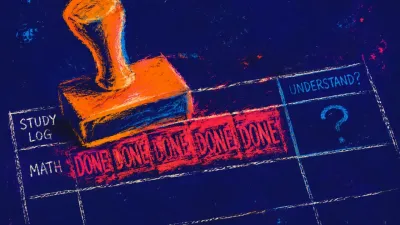
Explore how streaks and badges reshape study, which tarot cards mirror it, and what related reading insights reveal.
Gamified Learning Trap
What is this situation?
Gamified Learning Trap — you open a study app because you want a clearer way into a language, exam, coding course, or new skill, and at first the small rewards make the work feel structured. Then the screen starts setting the pace: a flame icon marks your streak, a progress bar tells you how far behind you are, badges pop up for easy tasks, and the leaderboard places your name above or below people you have never met. The lesson itself becomes secondary to the counter; on the bus, between shifts, or right before bed, you choose the quickest drill because the day cannot end with the streak broken. Group chats fill with screenshots, the app sends reminders at the exact hour you usually check, and harder material gets postponed because it risks slowing the score. Your shoulders tighten over a five-minute task that should have been low-stakes, because the platform has quietly turned learning into a daily performance where missing one small square feels like falling out of line. What began as a useful tool becomes a room of counters, checks, and tiny public rankings pressing you back toward the screen, much like the chained figures on The Devil, standing under a central figure while the whole scene is organized around the pedestal.
Why it's not you?
The issue is not that you lack discipline or that you care too much about points; the platform is designed to make points feel like proof of learning. Streaks, leaderboards, badges, timed prompts, and lockouts are not neutral decoration. They are the architecture of a system that turns attention into a score that keeps pulling you back to the screen.
Gamified Learning Trap in Tarot Cards
In the Gamified Learning Trap, the flame icon, progress bar, and before-bed reminder turn study time into something your body has to answer to, even when your shoulders are already tight. This is an environmental and structural dynamic, built into timers, rankings, badges, and lockouts rather than into your character. The cards below do not tell you whether to keep or quit a platform; they reflect the counters, checks, and public rankings pressing around the learning. Here are the Tarot Cards that tend to mirror this situation.
The charioteer stands over two opposing sphinxes without visible reins, while the decorated vehicle supplies a strong image of advancement. In the blocked form, the app gives you movement signals but weak steering: levels rise and bars fill, yet your concept of progress remains divided between what the dashboard reports and what you can independently perform. The resulting cognition equates motion with direction because both are displayed through the same interface. Without an internal steering criterion, you can complete more lessons while avoiding the mistakes, uncertainty, and harder applications that would reveal whether the learning system is actually evolving.
A large wheel dominates the image while figures rise, fall, and circle around its mechanism. In the blocked form of this cycle, the daily reset, reminder, lesson, reward, and renewed countdown keep you moving through the same engagement sequence even when the repetition no longer tracks what you need to learn. The mechanism controls the visible tempo, leaving interruptions to feel like falls from the wheel rather than ordinary variations in study capacity. Because the cycle is platform-made, not a natural measure of competence, its repetition can be examined separately from the slower cycles of practice, forgetting, review, and consolidation that actual learning requires.
The central figure, elevated pedestal, and attached participants show an entire meaning system arranged around one authority. In gamified learning, the comparable authority is the score: it begins to define what counts as effort, consistency, success, and failure, even when those definitions conflict with the slower development of real competence. The chains remain visible and removable, so the structure can be named without denying the motivation or access the app initially provided. You can rebuild the concept of progress around recall, application, error tolerance, and increasing difficulty, allowing points to become limited feedback rather than the foundation of your learning identity.
A trumpet sounds above rising figures who orient themselves toward an external call. In the blocked expression, the app's notification, score summary, and streak warning become the calls that determine whether you believe progress has occurred, while quieter evidence—recall, confidence with difficulty, or independent performance—fails to register. The assessment system therefore speaks before your own evaluation has formed. When the platform alone announces success or failure, your learning identity remains dependent on criteria designed for measurable engagement, leaving meaningful but unscored growth difficult to recognise.
A figure faces seven cloud-borne cups filled with dramatic rewards, status symbols, and concealed risks. The dashboard equivalent is a field of badges, boosts, point multipliers, streak repairs, and easy lesson prompts whose visual clarity exceeds the educational value of the material behind them. The full array is available to inspect, so the image supports a more precise study audit. You can compare each option by whether it exposes errors, increases difficulty, or requires independent recall; this reveals which cup contains learning and which mainly extends the reward experience.
Eight carefully stacked cups remain behind as a traveller walks toward a difficult mountain path beneath the moon. The completed-looking display resembles a mature streak or badge collection: it is real accumulated activity, but you can still recognise that the visible stack no longer answers the deeper question of whether your learning direction is producing mastery. The open path makes departure from the reward structure legible without erasing the work already done. You can treat prior app activity as evidence about what supported you, then direct effort toward harder material, another learning environment, or a less quantified route that better matches the skill you intended to build.
Nine cups are arranged like trophies behind a seated figure whose folded arms complete a display of visible attainment. Reversed, the collection remains intact but access to genuine satisfaction is blocked; the image mirrors an account full of badges, points, and completed levels that cannot answer whether the underlying skill has become usable. The platform keeps accomplishment symbols readily available while making deeper progress less legible and slower to confirm. You may therefore collect more proof, expecting the next milestone to settle the question of competence, only to find that the same uncertainty returns once the animation fades.
Two pentacles move inside an infinity-shaped loop while ships pitch on the water behind the juggling figure. In the blocked form of this image, the loop no longer represents flexible coordination; it becomes an endless maintenance cycle in which you squeeze a point-bearing lesson between shifts, transport, meals, and sleep without creating protected space for deeper study. The platform rewards keeping both tokens in motion, even when the wider environment is unstable. That leaves your routine responsive to a counter rather than to available energy, and the apparent convenience of five-minute drills can conceal how often the system interrupts recovery or displaces the more demanding work you originally intended to do.
The figure presses one pentacle to the chest, balances another over the head, and anchors both feet on the remaining coins. The count has occupied thought, self-protection, and movement, paralleling the way a streak can become something you guard as proof that your learning identity is intact. The coins are real records of prior participation, but the closed posture reveals what happens when losing the record feels equivalent to losing the work. You can separate retained knowledge from retained app status, making room to recognise that a reset changes the display without repossessing the vocabulary, concepts, or skills already acquired.
The visible pentacles invite the worker to inspect what has accumulated, while the tool and unfinished vine show that the underlying process is still incomplete. Reversed, attention becomes trapped at the inspection stage: progress bars and totals are checked repeatedly while difficult practice is shortened or abandoned because its return is not immediate. The app keeps measurement available at every moment but blocks a stable relationship with work whose results emerge later. You may spend more attention asking whether the score moved than noticing what you can recall, explain, or apply, allowing progress monitoring to consume part of the study process itself.
The craftsperson's bench and repeated pentacles provide a visible model of practice becoming skill through successive work. In the blocked version, the row becomes a production count detached from development: you may internalise the belief that enough completed app units automatically equal mastery, even when the tasks remain easy and highly scaffolded. That belief narrows growth to what the platform can count. When error, transfer, and independent creation carry no comparable badge, the learning system can avoid precisely the friction that would update your abilities and your understanding of what competence requires.
The Page holds a single pentacle at eye level while the open field and distant mountain remain beyond the immediate object. In the blocked expression, the token absorbs the learner's attention so completely that the larger educational terrain becomes inaccessible: you monitor score, badges, and progress bars while difficult course material waits outside the frame of action. The image preserves genuine interest in learning, but its focus has narrowed onto the symbol used to represent progress. When the representation becomes more compelling than the field, a five-minute point-bearing task can feel complete even though the next demanding concept has not been approached.
A stationary horse stands in a worked field while the Knight fixes attention on a single pentacle. In the obstructed form of this routine, consistency has hardened into maintenance: you keep presenting the daily token and repeating the safest lesson, but the study process does not move into unfamiliar terrain. The field shows that real work has occurred, yet the immobile horse exposes the difference between regularity and progression. A streak can preserve contact with the subject while also concealing stalled difficulty, especially when every harder task threatens the smooth rhythm the platform rewards.
One figure holds the collected swords while two others walk away beneath a turbulent sky, making the scene's unequal outcome unmistakable. A ranked study league creates the same zero-sum frame: your rise is displayed relative to someone else's fall, even though learning itself does not require another person to lose. Upright, the route to a visible win remains open and the platform supplies clear rules for taking it through more lessons, more points, or faster completion. You can secure rank, but the contest may leave resentment, compulsive checking, or social withdrawal behind because the system has converted peers into evidence of victory or defeat.
The figure's selective haul shows intelligence applied to extracting the easiest available gain, while the untouched swords remain outside the chosen strategy. As a growth pattern, the image mirrors a platform training you to optimise what can be counted, avoid what threatens the score, and call the successful extraction progress. Upright, strategic adaptation is accessible and can produce consistent rewards, so the behaviour is reinforced by evidence that it works. You may become increasingly skilled at satisfying the system while the deeper capacity to tolerate mistakes, persist without applause, and test knowledge outside familiar prompts receives fewer opportunities to develop.
A blindfolded and bound figure stands inside a partial enclosure of swords while an open route remains physically present. The scene mirrors a learning menu that is technically optional but psychologically narrowed by streak loss, leaderboard decline, and reminders: you can leave or choose harder work, yet the app has made those routes feel costly or invisible. The enclosure is incomplete, but access to that fact is obstructed. Platform design can therefore produce a genuine decision constraint without removing formal choice, leaving you to repeat the safest drill because the score has become the most legible evidence that studying occurred.
A person sits upright in bed with their face in their hands while nine swords occupy the dark space above. The scene directly echoes the late-night study prompt that turns a five-minute drill into unfinished psychological business: you may be physically ready to sleep while the missing streak square remains mentally present. The bed and patterned cover keep the experience grounded in a specific routine rather than treating the pressure as a personal defect. The app has inserted a scored obligation into the rest period, so the internal discomfort can be read as the visible cost of a badly timed external demand rather than as reliable evidence that another drill is necessary.
Five learners appear to be moving their wands against one another rather than building a common structure, and the crowded action leaves little room for deliberate craft. In a study app, the equivalent is rushing through lessons to beat rankings or point thresholds, allowing competitive motion to replace attention to comprehension. Upright, the contest can supply accessible energy, urgency, and repetition, which may initially increase participation. You can study more often because the platform keeps the challenge alive, but the available energy is directed toward outperforming the field, making retention and difficult practice secondary unless they also improve rank.
The elevated rider carries a laurel while the surrounding crowd makes success publicly visible. In the blocked form, the recognition system becomes a poor educational compass: you can study for rank, league status, or a shareable streak while receiving little feedback about what you misunderstand or cannot yet perform alone. The public victory scene remains impressive, but its educational evidence is thin. A leaderboard can verify that you returned and scored; it cannot establish whether you retained vocabulary, solved a new problem, or transferred a skill outside the app, leaving recognition and mastery structurally misaligned.
Eight wands travel rapidly through open air toward the same destination, with no figure present to pause, sort, or redirect their arrival. The visual resembles a stream of timed reminders, streak warnings, league updates, and badge prompts converging on the exact hours when the platform has learned you are likely to respond. Upright, the communication channel is fast, clear, and fully available, so a prompt can move you from notification to lesson almost instantly. You gain momentum with minimal setup, but the same accessibility lets the app establish the pace, compress reflection, and convert an arbitrary reset into a repeated demand for immediate action.
The guarded line of eight wands records what has already been endured, while the ninth wand is held ready for the next challenge. A streak uses accumulated days in the same way: every completed square raises the perceived cost of missing the next one, so the approach of a reset can feel more urgent as the history grows longer. Upright, the path to preservation remains open and requires only one more action, making continued defence highly feasible. You can save the count today, but each successful rescue strengthens the same timing structure, leaving tomorrow's deadline with even more accumulated value to threaten.
No cards available for this filter.
Gamified Learning Trap in Tarot Card Reading Insights
For anyone caught in a Gamified Learning Trap, the pressure of streaks, badges, and rankings can follow them straight into a reading. The pieces below shift from the card list into readings where people brought that score-driven learning setup to the table. Tarot Reading Insights from sessions.