Learning App Streak Procrastination: Measure the Skill, Not the Badge
The Green Checkmark at 11:40 p.m.
Protecting a learning app streak while postponing deliberate practice that would build real skill can look like consistency from the outside. I am Alison Melody, and Alex, a 26-year-old non-binary junior marketing coordinator in Toronto, came to my table carrying the particular fatigue of a career crossroads that had been postponed one small task at a time.
At 11:40 p.m. on a Tuesday, after work, Alex tapped through a three-minute learning-app exercise in their apartment kitchen. The kettle clicked itself off, the fridge hummed beneath the cold blue light of the phone, and their restless thumb waited for the green streak animation. When the longer data-analysis module remained unopened, their jaw tightened and their shoulders sank.
'At least I kept the streak alive,' Alex told me. Then they looked down at their hands. 'But why do I keep finishing the smallest lesson and avoiding the course that might actually teach me something? The badge says I am consistent, so why do I still feel behind?'
I could hear the central contradiction clearly: the visible number offered control, while real learning required slower practice, uncertain feedback, and a direction that could not be chosen perfectly in advance. The guilt in Alex's voice felt like a browser download frozen at 99 percent: too complete to abandon, too unfinished to trust, and draining power every time they checked it.
I did not hear laziness or a character flaw. I heard learning app procrastination disguised as consistency, reinforced by brief relief and followed by the same heavy question. I told Alex that we could examine the pattern without shaming it. The cards would not decide their career or predict a fixed future; they would help us turn a blurred inner rhythm into something observable. 'Today,' I said, 'we are taking a Journey to Clarity. Let us draw a map of the fog, then let you choose where to walk.'
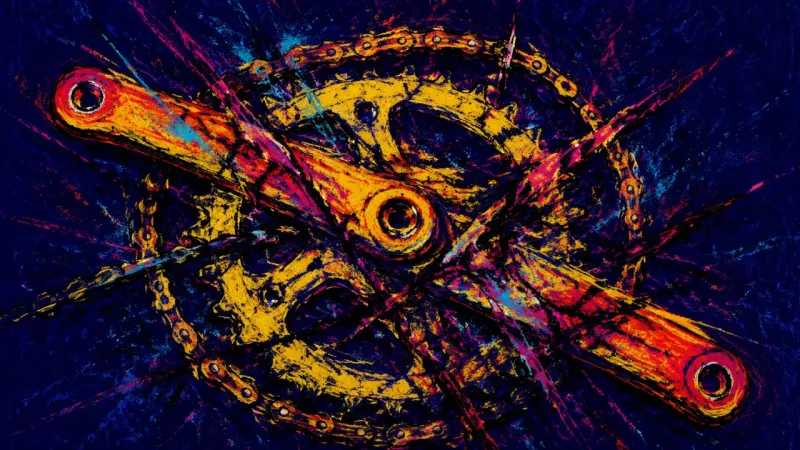
Choosing the Workbench: A Six-Card Transformation Path Grid
I invited Alex to put both feet on the floor, take one unhurried breath, and name the question in plain language. I shuffled slowly while they held the image of the unopened course module in mind. The purpose was not a supernatural test; it was a clean transition from reacting to the phone's prompt to observing the choices beneath it.
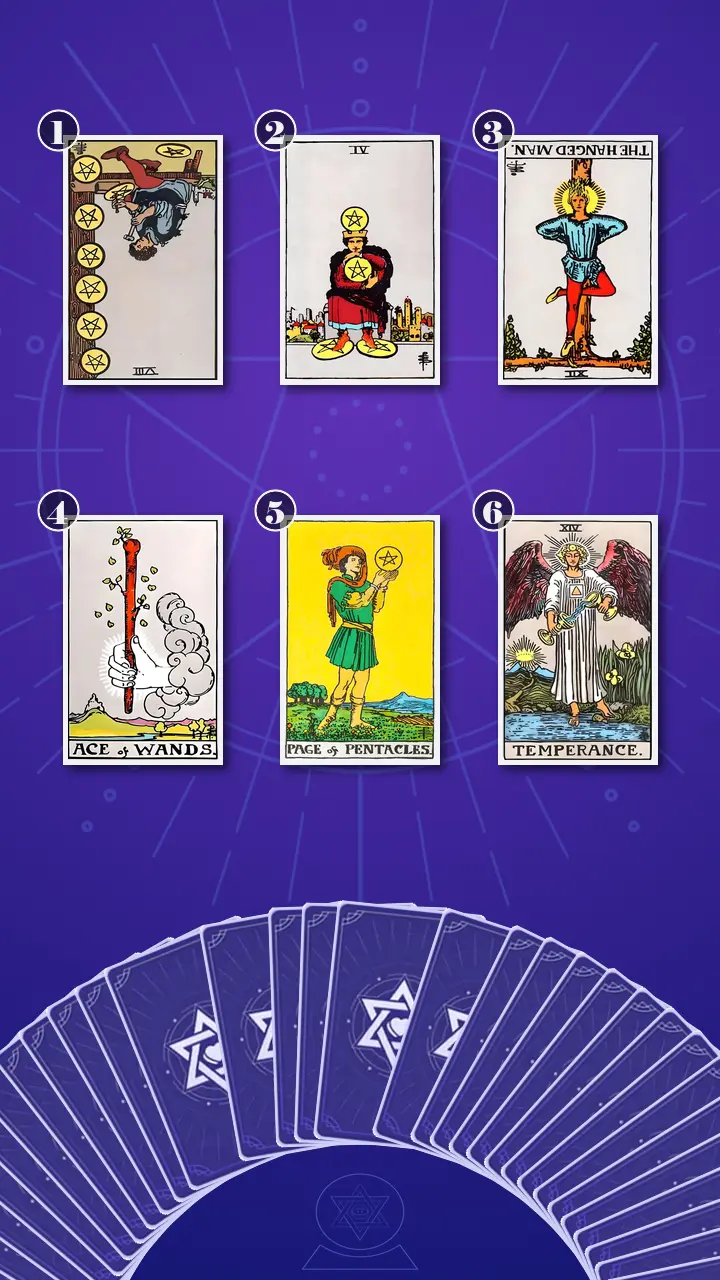
For this reading, I used the Transformation Path Grid (6) - Context Edition, a six-card tarot spread for the streak-protection loop. For anyone wondering how tarot works in a practical consultation, this spread is useful because Alex was not facing one external decision among fixed options. They were caught in a repeated self-reinforcing behavior: the streak created immediate relief, relief postponed deliberate practice, and the resulting lack of progress made the longer lesson feel even harder.
The upper row would show the current pattern, the blockage, and the root beneath the direction stagnation. The lower row would show the catalyst, the practical action, and the integration point. I chose six positions because they gave us the fewest sufficient layers: enough to understand the loop, without adding so much information that decision fatigue became another form of avoidance. Every card would be read in context, as a prompt for self-examination and actionable next steps.
The Closed Loop on the Workbench
The Reversed Eight of Pentacles: Activity Without Apprenticeship
I began at the upper-left of the grid, turning over the card representing the current pattern: the observable behavior of completing the smallest app task, protecting the streak, and postponing sustained learning.
It was the Eight of Pentacles, in reversed position.
In the RWS image, a bowed worker sits at a bench while the pentacles are displayed one by one. Upright, that is disciplined repetition in service of craft. Reversed, the energy is blocked and diverted: effort still exists, but it has been reduced to repetitive output that does not enter apprenticeship. I saw the 11:40 p.m. checkmark in the card immediately. Alex completes the shortest available exercise, watches the progress bar move, and closes the longer data-analysis module. The activity is real, but the useful question is whether it produces reviewable evidence of skill.
'This is not saying you did nothing,' I said. 'It is asking whether the task you chose was building the craft or only proving that you touched the app.'
Alex gave a short, bitter laugh. 'That is too accurate. Almost rude.'
Their breath caught, and their thumb stopped rubbing the phone's edge. Their eyes went unfocused as if a string of late-night checkmarks were replaying behind them. Then the laugh softened into a long exhale, and one shoulder dropped. The recognition was not comfortable, but it loosened the first layer of self-judgment. I asked which task was preserving the metric and which small practice block might create evidence this week.
The Four of Pentacles: Guarding Proof
Next, I turned over the card representing the blockage: the attachment to a countable streak as a controllable substitute for direction, mastery, and uncertain feedback.
It was the Four of Pentacles, in upright position.
The RWS figure clutches one pentacle against the chest, stands on two more, and guards another above the head. The posture is not evil or foolish; it is the body language of keeping a resource safe. Here, the upright energy had become an excess of control. The streak was a small, visible asset that could be protected, while a difficult lesson could expose confusion or slow progress without offering a guaranteed win.
I translated the image into the late-night phone posture: the thumb hovering over the streak screen, shoulders raised, jaw tight, the number treated like something that could be lost. I asked Alex to finish the sentence that seemed to sit underneath the reflex: 'If I let this count disappear, then...'
Alex stared at the Four of Pentacles for a moment. Their hand closed around the phone, then opened again. 'Then the whole effort will look wasted,' they said quietly. After another pause, they added, 'I am not protecting learning. I am protecting proof that I have not stopped.'
I let that distinction stand without pushing it into a verdict. A preserved streak can offer a genuine cue and a brief sense of continuity. It simply cannot show what Alex can explain, build, compare, or do. Protecting the number can keep the lesson unopened, especially when the number feels more certain than the learning.
The Hanged Man Reversed: Twenty-Seven Tabs of Waiting
I turned to the upper-right card, representing the root: the hidden influence beneath procrastination, including the reluctance to choose a direction and test it through experience.
The card was The Hanged Man, in reversed position.
In the RWS image, a figure hangs by one foot, seeing the world from an inverted angle, with a halo suggesting insight through surrender. Reversed, the energy remains suspended without becoming purposeful perspective. Alex keeps comparing another course, saving another tutorial, and researching one more career pivot before opening the practice file that could provide direct information. The browser becomes a Toronto apartment with 27 doors open, each promising a better answer, while none stays open long enough to reveal what the work actually feels like.
I heard the inner sentence as Alex had given it to me: 'I just need more information before I commit.' I placed that beside the tight jaw and restless scrolling that appeared whenever a longer lesson opened. The conflict was not information before practice; it was certainty before practice. Direction is evidence collected by doing, not a feeling that has to arrive first.
Alex grew quiet. Their fingers hovered above the table as if they were about to refresh another page, then settled flat against the wood. I asked, 'What might one practice task tell you that another course comparison cannot?'
'Whether I actually want to keep going,' Alex said. 'And maybe whether I am avoiding the work because it is wrong for me, or because it is the first thing that could give me an honest answer.'
I nodded. The reversed Hanged Man did not accuse Alex of wasting time. It made the suspension visible, which meant the suspension could become an experiment rather than a personal identity.
When the Ace of Wands Offered One Living Spark
The Lower-Left Hand: A Beginning Before Certainty
The room became very still as I moved to the lower-left card, the one representing the catalyst: the smallest meaningful shift that could interrupt the gamified loop and create direction through a chosen learning action.
I turned over the Ace of Wands, in upright position.
The RWS hand emerging from a cloud offered a budding wand, fresh leaves reaching into open air, with a distant castle and mountains beyond it. The fire here was not a demand to transform everything overnight. It was initiative, curiosity, embodied motivation, and the willingness to begin while the route remained incomplete. The energy had returned to balance because it was no longer being spent on defending a number; it could become a chosen act.
I brought in my signature lens, Somatic Rhythm Mapping. After ten years of sound-energy research, I have learned to listen for tempo before I ask for more effort. I do not use the word arrhythmia as a medical label here. I use it as a practical image for a daily architecture whose beats have fallen out of sync. The app offered Alex a three-minute rhythm that matched a depleted evening. The meaningful module arrived as an open-ended 42-minute demand, with no guaranteed score. Their desire was present, but the entry tempo was dissonant.
I have known that helpless pause myself, the moment when wanting to move forward makes the body feel heavier instead of lighter. Seeing the Ace of Wands, I did not hear a command to force a heroic study session. I heard an invitation to make the first beat small enough for the body to join it.
At 11:40 p.m. in a Toronto apartment, the phone is warm in your hand, the kettle has gone quiet, and you finish a three-minute lesson. The streak ticks upward. The longer module stays unopened, and the relief lasts just long enough to notice.
Alex was caught between needing a complete route before moving and fearing that a first serious attempt would expose a lack of talent or direction. The card did not ask for a final career decision. It asked for one live piece of evidence, chosen before the app could choose for them.
The old belief that visible consistency must come before meaningful learning is released; a single chosen practice can create direction now, like the Ace of Wands' hand offering one living spark.
You do not need to protect a streak to prove you are learning. One real practice can create more direction than another perfect checkmark.
For one beat, Alex froze. Their breath paused halfway in, thumb hovering above an invisible streak screen, and fingers tightened on the edge of the table. Then their pupils widened and their gaze lost focus, replaying the late-night checkmark, the cold blue progress bar, the blank spreadsheet, and the 27 open tabs. A streetcar bell sounded outside and seemed to give the room back its depth. Their jaw loosened first. Their shoulders sank next, as if someone had unhooked a weight. Finally, their hand opened. Alex did not look suddenly certain; their face held recognition, grief for the time spent guarding the number, and a new, unsteady curiosity. When they spoke, the first sound was a low, doubtful 'Oh.' The next breath came out longer, with a small tremor. 'So I can learn what the practice tells me, instead of waiting for the app to tell me I am on track.' The release mattered, but so did the brief blankness after it: a clear path still asks for a choice.
I asked, 'Now use this new perspective to think back to last week. Was there a moment when this insight could have made you feel different?'
Alex named Tuesday night, when the data-analysis lesson had opened to the first exercise and their hand had reached for the phone before they filled a single cell. The Ace of Wands had not revealed a destiny. It had changed the function of action: the first attempt could teach them about interest, energy, and fit instead of serving as a test of identity. This was the first movement from guilty, metric-driven stagnation toward grounded confidence in practice-based direction.
The Page of Pentacles: One Skill, One Tangible Piece
I placed the next card in the lower center, representing the action: the practical next step that could translate the catalyst into observable evidence of learning without requiring certainty first.
It was the Page of Pentacles, in upright position.
The Page studies one pentacle with a steady gaze, surrounded by green field, plowed earth, and distant mountains. The energy is grounded and balanced. It does not need to collect every option; it can give patient attention to one tangible opportunity. For Alex, that meant spending 20 minutes building one small spreadsheet, completing one exercise by hand, or writing down the method learned. One skill, one output, one brief review was enough to make the path visible for the next step.
Alex picked up a pen and wrote the words 'clean two columns' in the margin of my notebook. Their shoulders remained tired, but their hands had stopped searching for the phone. I could see curiosity taking a quieter form: not a rush of motivation, just a willingness to see what happened when practice was allowed to produce information.
Temperance: Letting the Cue Serve the Craft
Finally, I turned over the lower-right card, representing integration: how useful consistency cues and deeper learning could coexist without making either the streak or the study session a verdict on Alex's worth.
It was Temperance, in upright position.
The RWS angel blends liquid between two cups, with one foot on land and one in water, while a path leads toward distant light. The energy is integration, proportion, and sustainable rhythm. Alex did not need to delete the learning app, despise badges, or replace one rigid scorekeeping system with another. The app could remain an optional cue after a meaningful practice block. The order mattered because the order returned agency.
I said the phrase I wanted Alex to remember: A streak can be a cue without becoming your proof. A short check-in and a deeper block could share the same week when neither was asked to define whether the day counted. Temperance offered a flexible rhythm that could survive a missed day and still return to the skill.
Alex leaned back and looked across the lower row. The expression on their face was lighter but not triumphant. 'I still might feel bad if I lose it,' they said. 'But I do not have to let that feeling decide what I practice.'
'Exactly,' I said. 'The feeling can be present without becoming the manager of your evening.'
The Practice Before the Proof
When I read the six cards together, I saw a closed loop becoming an open route. The reversed Eight of Pentacles showed effort diverted into low-stakes completion. The Four of Pentacles tightened around the count because the count felt safer than uncertain feedback. The reversed Hanged Man kept Alex suspended through course comparisons and saved tutorials. Then the Ace of Wands offered a chosen spark, the Page of Pentacles gave it a reviewable piece of work, and Temperance showed how to make that rhythm sustainable.
The blind spot was not a lack of discipline. It was the assumption that visible continuity equals meaningful progress, and that a serious learning block must be long, polished, and safe before it is worth beginning. The transformation direction was precise: choose one meaningful learning task before opening the streak app, and measure the session by focused practice completed rather than by the badge preserved. Progress could be redefined around one focused, reviewable skill practice before preserving badges or streaks.
I used my second diagnostic lens, Execution Block Dismantling, to find the dissonant chords at the point of entry. The friction was not simply the size of the course. It was the chain of opening an undefined module, choosing among too many tasks, anticipating imperfect performance, and then receiving a perfectly clear phone prompt. Once I separated those chords, the next move became smaller and more practical.
For that reason, I offered Alex my Frictionless Tempo Calibration, a three-day micro-habit sequencing experiment. The sequence was simple: expose the chosen task before opening the app, make the first practice block ten minutes, then decide whether the app still belonged in the evening. The experiment adjusted task-entry rhythm rather than demanding a new personality. It was a way to rebuild momentum without triggering burnout.
- Practice Before the StreakOn the next three available evenings after your marketing shift, open the existing data-analysis course before the streak app. At your desk, choose one named task, such as cleaning two columns in the sample spreadsheet or completing the first worked example, and practice for 10 to 15 uninterrupted minutes.Put the lesson in a browser tab or write it on a sticky note before touching the app, then set a 10-minute timer. Stop when it ends if your energy is low. The app can come afterward, or not at all.
- Make One-Skill EvidenceFor seven days, stay with one skill from the course. After each practice block, create one small output and record the date, the task, and one sentence beginning with 'I learned...' in Notion or a plain notes app. At the end of the week, review the work rather than the streak and circle the task that gave you the clearest evidence of interest or understanding.Keep the log factual, not impressive. A cleaned spreadsheet, three handwritten formulas, a short analysis paragraph, or a two-minute version of the task all count. If the work feels too large, reduce the task instead of using the badge as a substitute.
I reminded Alex that these were experiments, not commandments. They could pause, change the skill, keep the app, lose the streak, or revise the timing. The point was to let practice-based evidence guide the next choice, while keeping the choice in their hands.
A Week Later, the Blank Cell Was Not Blank
Three days later, I received a message from Alex: 'I cleaned two columns before I opened the app.' They attached a screenshot of one small chart. It was not a portfolio, a certificate, or a polished LinkedIn update. The next morning, they still wondered whether data analysis was the right direction, but they opened the file again instead of researching another course.
That was the bittersweet proof I wanted them to have: clearer, but still vulnerable; lighter, but not magically finished. The streak might continue or disappear. Something more useful had begun to accumulate, a record of what Alex could do, what held their attention, and what the work itself was saying.
I think of that as the first quiet movement in the Journey to Clarity: from metric control to practice-based direction, from guilt and brief relief to grounded confidence in experience. Tarot did not hand Alex an answer. The cards made the rhythm visible, and Alex became the person who could change the next beat.
When the longer lesson makes your jaw tighten and your shoulders sink, it can feel safer to keep the streak alive than risk discovering that slow progress may not give you the control or direction you hoped for. Seeing that pattern is not failure; it is the first readable beat.
If one imperfect practice block could be information rather than a verdict, what would you feel curious enough to open before the app tonight?